
Work has started on the construction of aFossil Museum at Varnavasi village in Southern India's Tamil Nadu State.
The aimof the museum is to showcase the region's rich fossil heritage for paleontologists, locals and tourist alike.
Tamil Nadu's Rich Fossil History
Varanavasi is a suitable location for the fossil museum as the region is highlyfossiliferous. Over 25 sites in the state have beenmarked as National Geological Monuments. These include two national Fossil Woodparks, atTiruvakkarai andSathanur. The latteris a site with petrified woods and tree trunks dating back 120 million years whilst the former has fossil trees that are much younger at 20 million years.The sites around the location of the fossil museum atVaranavasi have rich depositswith Albian to Maastrichtian sediments, divided into several groups. The Cretaceous marine fossils in the areahave providedimportantpaleontological discoveries. There is also evidence of some Quaternary formation too.
The fossil museum would, like other famous paleontological museums such as The Royal Tyrrell Museum inAlberta, Canada, be both an institute for scientific work -preserving, conserving and studying thepaleontology of the region- but also a visitor attraction showcasing the region's geological history.
The Fossil Museum and Education
Visitors to the fossil museum will gainfirst-hand knowledge ofthe geological context of the fossils on display.They will also gain an additional perspective of the tertiary and quaternary formations and prehistoric archaeology of the widerstate.Theareahas a large number of cement factories.So one important role of the newmuseum will be to educate factory executives aboutthe importance of the area's paleontology. This would encourage local factories to support the museum by seeking theirhelp and advice during mining operations or other development.
The fossil museum will also house both aresearch laboratory and anaudiovisual unit.
The State government has givenpriority for the construction of themuseum. Ithas set aside₹2 crore (approximately £240, 000) for the purpose. Just over half of this will be aloocated to the building itself, the remainder to the exhibits.
As to the footprint of the museum, the ground floor wil take up470 square metres (5, 059 square feet). The first floor will add an additional 140 square metres (1, 507 square feet).
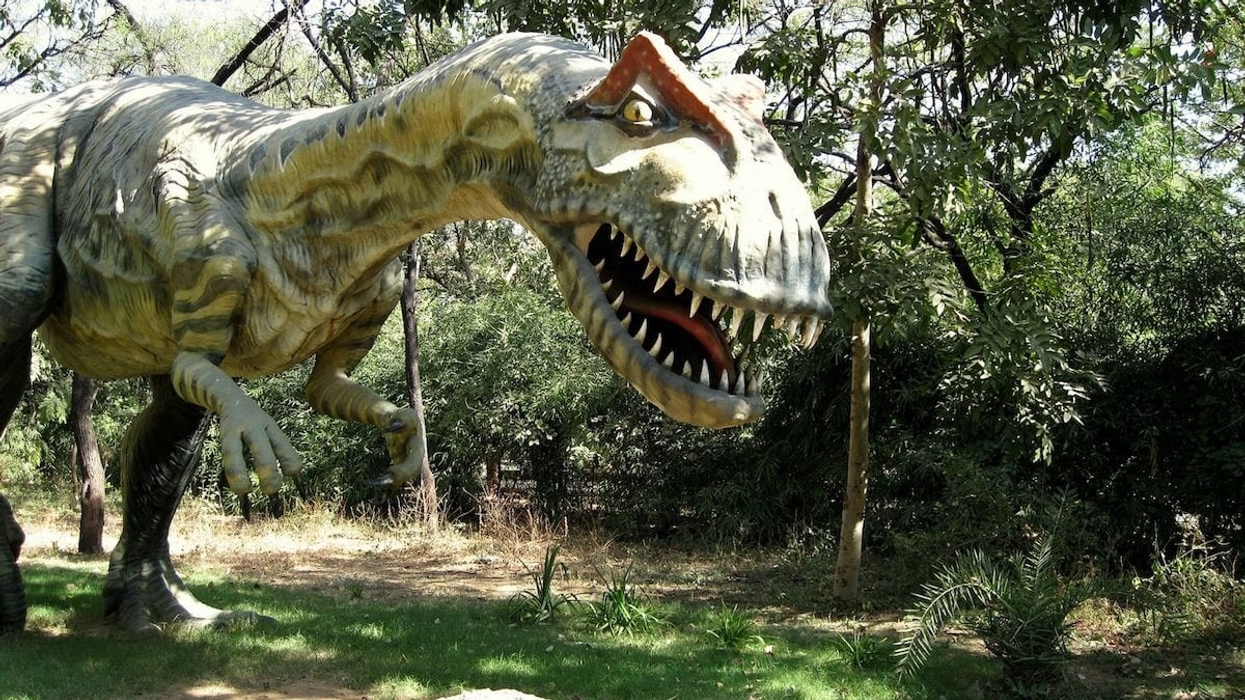
Images, Fossil woodcredit: Ranjith Kumar Inbasekaran, Allosaurus Chobist Flick cc.