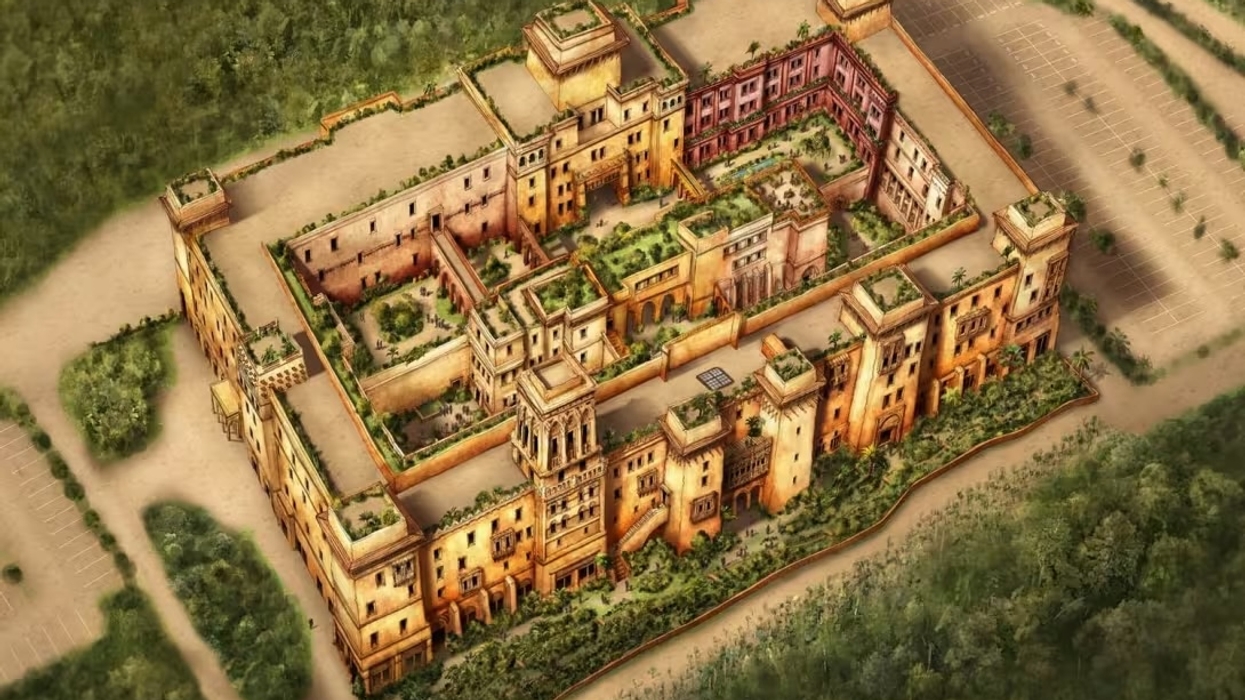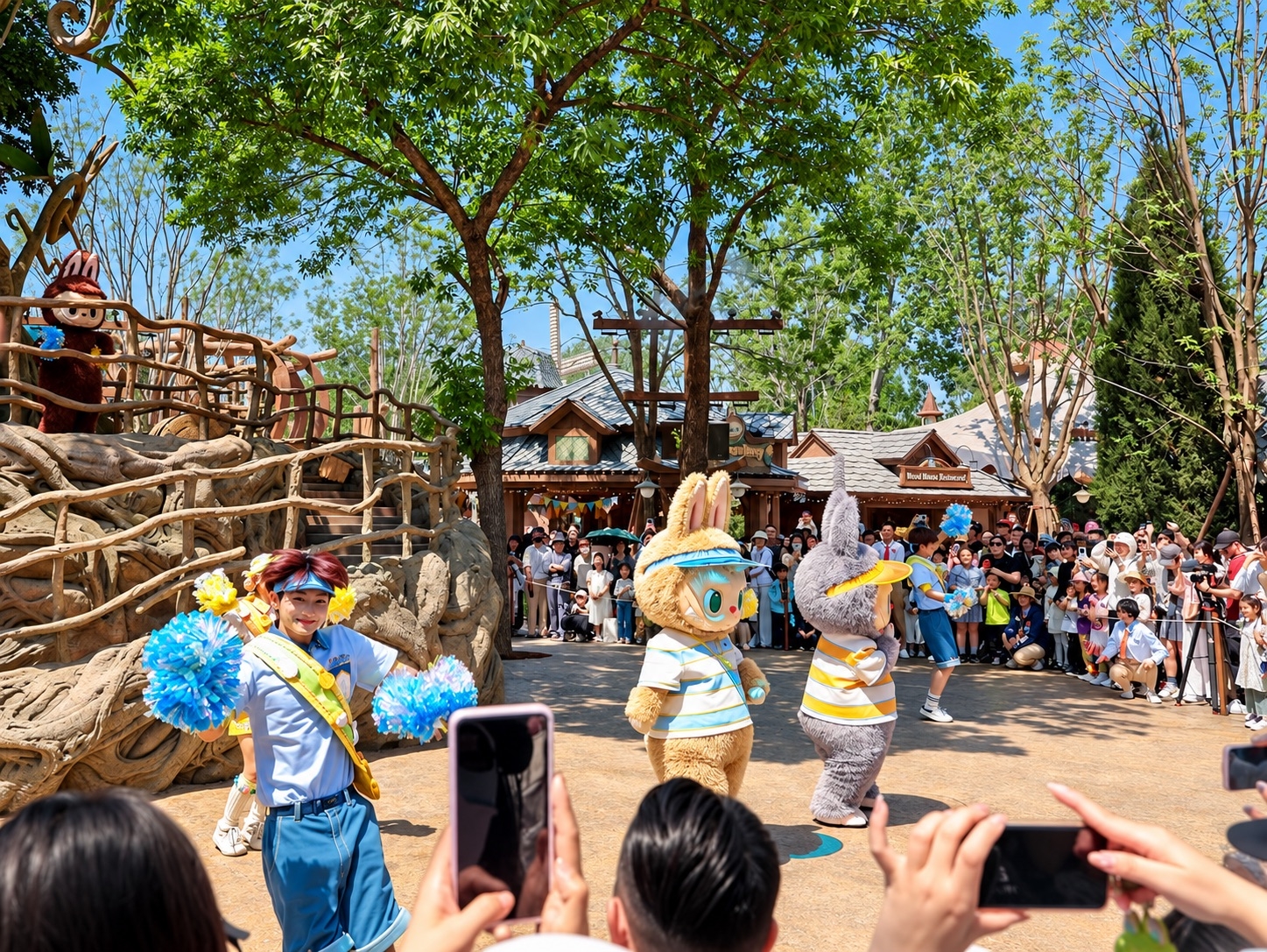
Visiting POP LAND in Beijing with Yipeng Ma, executive producer at POP LAND, as my guide, I discovered a park within a park. Set inside Beijing’s Chaoyang Park, with its green spaces and expansive lake, it created a setting where families and fans could enjoy themselves among familiar characters.
Some moments stayed with me: a performance beneath the LABUBU treehouse, the dreamlike MOLLY’s Castle, the scent wafting from the POP BAKERY, and the care evident in the rides and buildings.
Together, those details made the surroundings feel like a world with its own identity, inviting visitors to become part of it.
It felt familiar, yet unique; I remembered collecting figures and finding places for them in my living room. Within POP LAND, that personal relationship took on another dimension: characters I knew as collectable objects became part of an environment I could explore alongside others.
At POP LAND in Beijing, POP MART is learning what it takes to turn character relationships into physical experiences. Its first theme park, which opened in 2023, brings together attractions, entertainment, and environments shaped by the artists behind its IP.
It also gives the company something rare, yet essential for its next stage of development: direct experience designing, building, and operating a destination.
Across the globe, POP MART has recently benefited from tremendous growth.
Founded by Grant Wang in 2010, the company began as a retailer of art toy collectables. In 2025, LABUBU's worldwide success propelled POP MART further onto the world stage, with dozens of new stores opening in Asia, Europe, and the Americas.
As part of its growth strategy, POP MART is evolving into a truly international organisation. Themed entertainment industry veteran and blooloop 50 theme park influencer Jason McManus has joined POP MART as VP of creative and entertainment development within the newly formed POP MART Global Parks & Experiences.
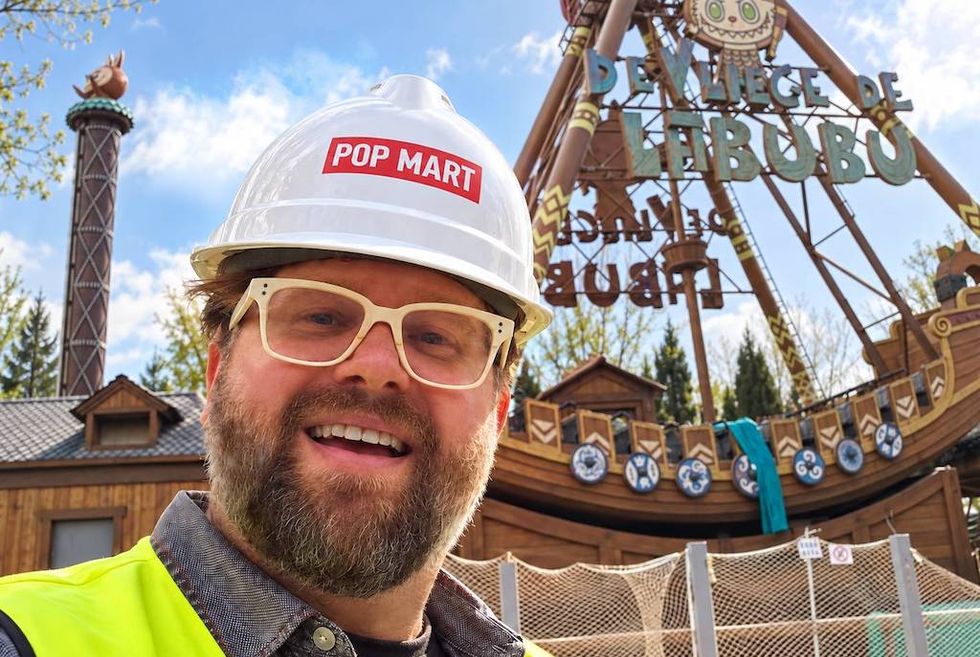
Attractions industry expert Jason McManus joins the POP MART team
Speaking to blooloop, McManus and Ma explain how POP MART is embarking on a new adventure into the world of theme parks.
Ma describes POP LAND’s achievements so far as the beginning of a longer learning process. Balancing the IP's artistic identity with the demands of running an attraction remains a central challenge.
“To build and design a park is difficult, but to operate a park is extremely difficult,” he says.
For McManus, acknowledging those challenges is part of what makes the company’s approach appealing.
“Creatively, we’re starting with growing what we have in POP LAND in Beijing,” he says.
“We have the incredible opportunity of having a laboratory for experimentation right in our own backyard. Pretty much in real-time, we get to experiment with our guest experiences, learning from what we see in the park, taking those lessons and iterating on them until we find our own unique recipes.”
Alongside that development, the team is opening conversations about future projects and partnerships. POP LAND provides a launch pad for exploring them.
POP MART’s journey from IP to experiences
Building a park is no easy task. To Ma, POP LAND is still in the early stages of a long learning process. The main challenge is balancing the IP’s artistic, distinctive identity with the demands of a physical destination with various attractions.
“Our brand is unique in that our IPs are more than just the character and the worlds they live in,” says McManus. “Our brand is also about the amazing artists behind each IP as well. Our fans form relationships with the art behind the ecosystem, not just the character itself.”
There is a balance between art and business, with authorship and expression running through the products. The experience team's task is to carry those qualities into the places and activities being developed around the characters as their artists imagined.
“We’re building rich, explorable worlds that hold up in every detail you can see, feel, touch, and interact with, not just backstories,” he says. “And to be a true leader in attractions now, that world has to have depth.”
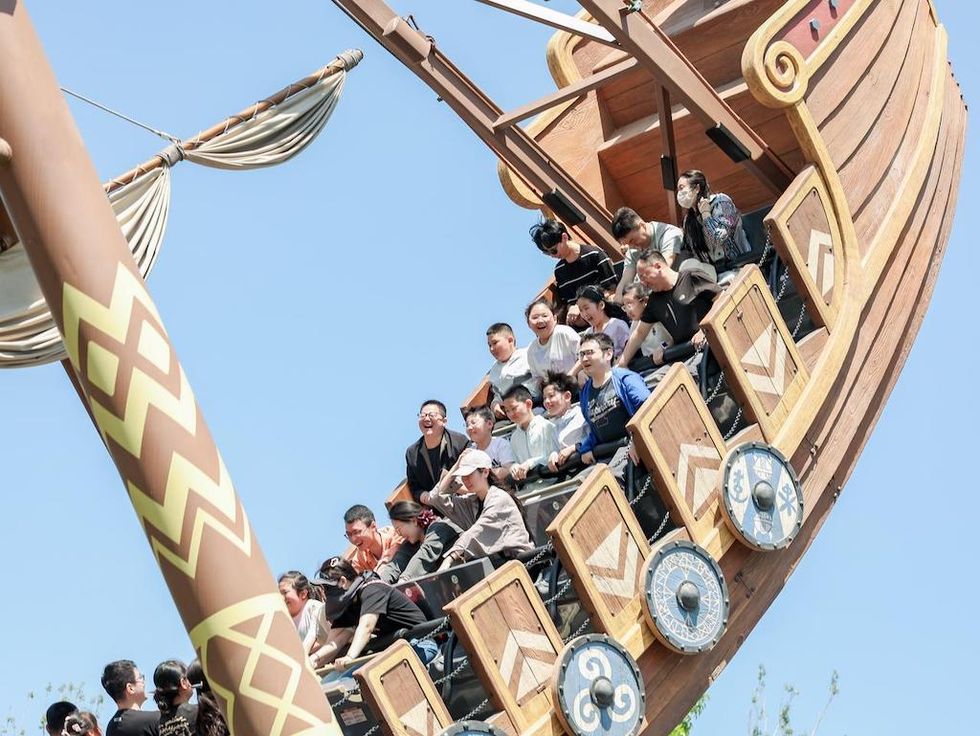
POP LAND guests enjoying a pirate ship ride
Image courtesy of POP MART
The expansions around LABUBU and DIMOO show how that approach became the key to designing POP LAND in Beijing.
For the LABUBU area, namely Monsterland, a 2026 park expansion featuring the popular LABUBU and related characters in the THE MONSTERS family, Ma points to a painting by artist Kasing Lung: a fictional map of the Nordic forest where the characters live.
The artwork gives the team a visual foundation for developing the area while carrying the artist’s wish into the park. Ma also highlights LABUBU’s picture-book origins, an important distinction for a character many people first encounter through collectables.
The park team worked with Kasing Lung, guiding the artist through the attraction design process, then developed the concepts through testing, material and texture adjustments, 3D model reviews, and extensive mock-ups.
For the DIMOO WORLD IP expansions, Ma also highlights fine details like the colour-shifting pearlescent clear coat used on the rides, comparing the finish to specialist automotive paint.
These important details align the finished attraction with the aesthetic that audiences recognise in the artist’s work. They also demonstrate the development needed to preserve that identity as it translates from a collector toy into a different physical form.
Connecting with fans
The recent expansions offer lessons in how the relationship between audience and IP is forged.
The park gives collecting and fandom a shared physical setting, while the attractions and storytelling create opportunities to deepen what those characters mean to visitors.
McManus identifies a strength across POP MART’s parks, retail stores, marketing pop-ups, and standalone attractions, such as its food-and-beverage-centred POP BAKERY concept: they give people space to express their enthusiasm for the brand.
“The things that have been most successful are the places and moments where we acknowledge and allow our fans to celebrate the joy of just being fans of what they love,” says McManus.
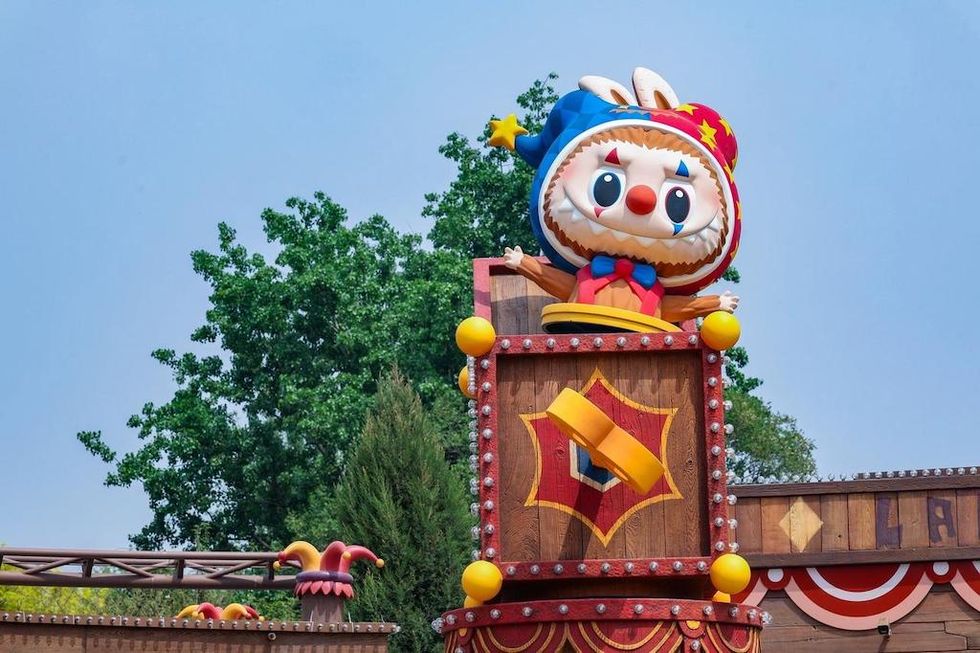
LABUBU theming at POP LAND
Image courtesy of POP MART
At POP LAND, the character itself can generate an immediate response. Visitors recognise LABUBU costumed character friends in the park, a logo or even a silhouette incorporated into fencing. The visual identity already connects with the audience.
The team works with artists to find the right stories and turn them into real-life experiences through rides, carnival games, and live entertainment. But POP LAND also differs from traditional theme parks born from films and television shows because POP MART started with designer toys.
Legoland extends construction and play into visitor activities; Sanrio Puroland creates opportunities to meet favourite characters; and Mattel’s planned Barbie Beach House combines brand nostalgia with interactive retail and entertainment. Each draws on audiences' existing relationships with its products and characters.
For audiences who first encounter its characters through products, POP MART’s experiences can extend an existing relationship: choosing a favourite character, following its artist, and expressing attachment to their work can become starting points for engaging with a place.
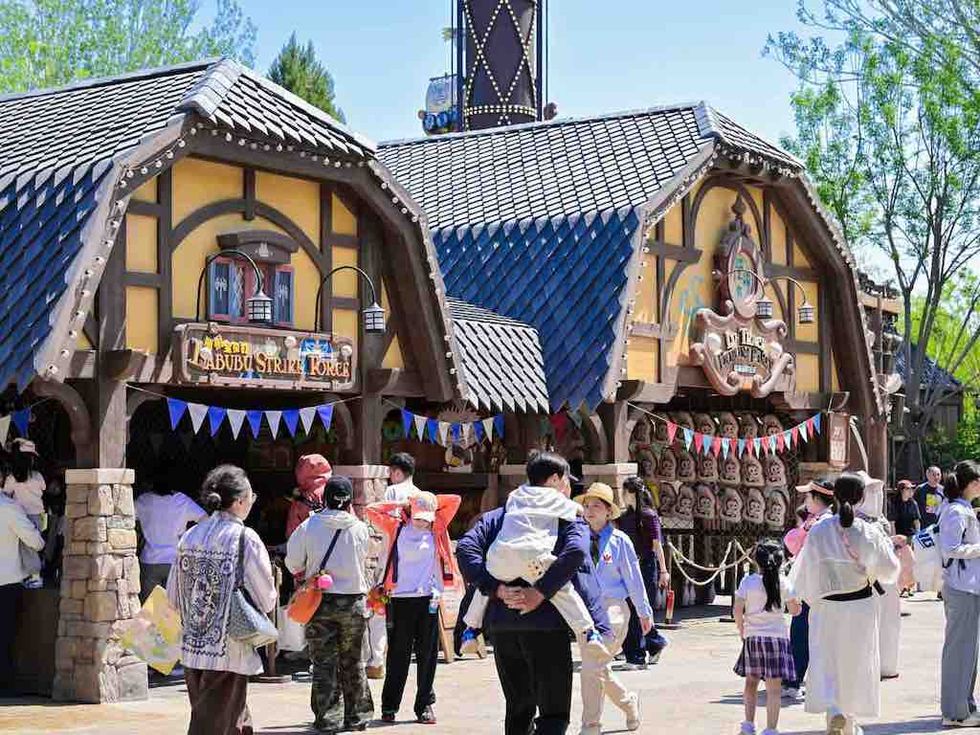
POP LAND offers rides, character experiences, retail, food and beverage, and more
Image courtesy of POP MART
POP LAND also gives people plenty of space to embrace their enthusiasm for the brand.
But Ma recognises that this is just the beginning. POP LAND’s goal is to “accomplish something extremely high quality in the future.”
“Narrative and storytelling will always need to be there as the foundation,” Ma says. “We'll never accomplish anything content-wise without a good story, without facts and a backstory to create an immersive environment.”
For the experience business, this gives world-building a purpose beyond the appearance of an environment. The aim is to build a relationship between the visitor and the place through characters and ideas that matter to them.
That relationship sits at the centre of POP LAND’s creative ambition.
One creative team across Beijing and Los Angeles
McManus joined POP MART in mid-October. His appointment reflects the company’s investment in the capabilities it needs for the next stage.
He initially worked with POP MART as a consultant on the planning of future phases. His new role aims to help shape the international direction of the parks and experiences business.
A key part of that work is establishing the Los Angeles-based studio, expanding upon the capabilities already in place in Beijing.
“It’s all building upon one creative studio that has basically a global presence,” he says.
“While we have people that are based in different regions and time zones, we’re all working together as one team on projects, taking advantage of the latest tools and technologies to work collaboratively and cross-culturally throughout the world.”
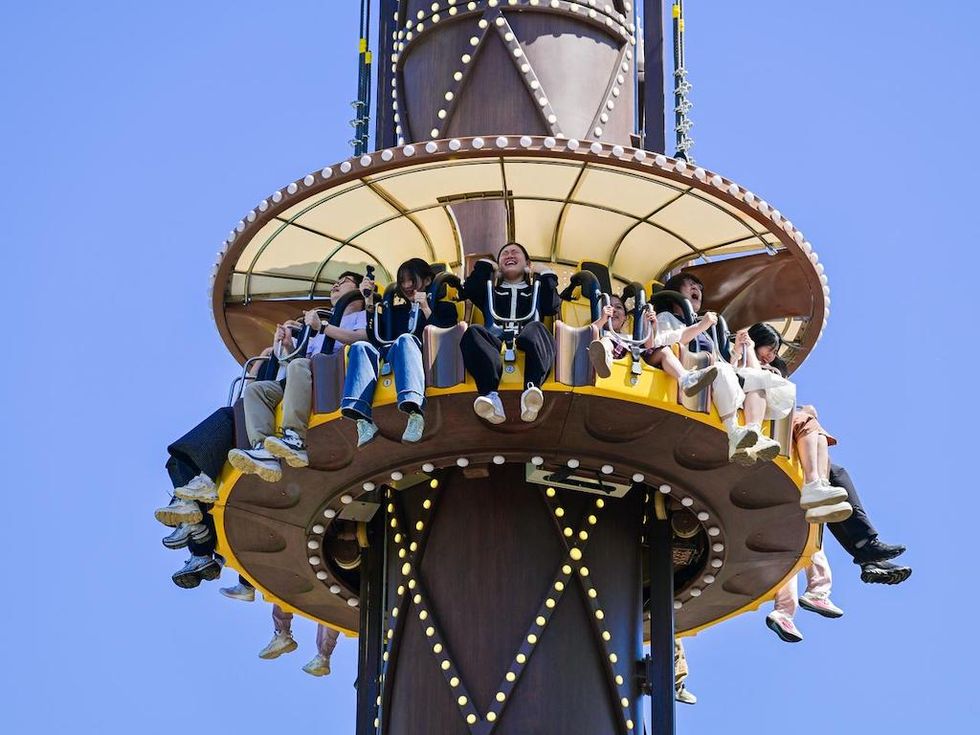
Guests enjoy a drop-tower ride at POP LAND
Image courtesy of POP MART
The structure brings together artists, producers, engineers, and designers worldwide. McManus envisions a 24-hour project cycle, with collaboration continuing across time zones and drawing on a broad range of diverse expertise.
Ma shares that view. “The fact that we can collaborate instantaneously, anywhere, is our biggest benefit.”
McManus describes POP MART as an international business whose working culture retains a strong spirit of creation. He says that energy brings a sense of adventure in pursuing different markets and an appetite to move ideas toward delivery.
The studio structure is intended to make that possible. McManus’s role therefore encompasses both creative direction and business development: Expanding what the team can deliver while building relationships that support its growth.
For him, international collaboration also supports localisation. POP MART has developed a deep understanding of its Asian audiences. However, as the business expands, it recognises that different regions will have different needs.
“We have a deep respect for the guest culture in each of our regions, and our goal is to present the stories in a way our audiences with diverse backgrounds can resonate with,” he says.
Another key requirement for anyone joining is understanding where POP MART’s value comes from.
Ma says that appreciating the distinctive relationship between its art, characters and audience is necessary to translate that value into compelling design and new products.
Into the world with a POP MART spirit
POP MART now seeks to explore possibilities within the global experience market. That growth starts with its first theme park, POP LAND Beijing.
Phase 2 of the park has officially entered the planning and design stage, with new areas themed around SKULLPANDA and Twinkle Twinkle IPs, plus new additions and innovations to the park’s overall guest experience.
For future development, the ambition is to build experiences with greater connective meaning. McManus sees strong storytelling and scenic execution as established expectations; the opportunity is to create settings where fans can connect through the shared values of the characters they see and the worlds they visit.
“To be a true leader in the attractions world now, the places you build must have a concept or thesis that is clearly represented through some form of identity,” he says.
Building on that idea, POP MART is seeing a wide range of possibilities.
“We’re willing to take risks to experiment to see what works for us and what doesn’t”, McManus says. We believe in taking risks and experimenting to find our own unique offering.”
“Making art is the very heart of what we do at POP MART,” he adds.
McManus describes potential partnerships to bring POP MART’s retail and entertainment capabilities into public spaces that have not traditionally featured IP storytelling.
These possibilities give the company several ways to grow in a market. The creative work behind a character world could support a substantial destination, a smaller attraction or an experience delivered within an existing setting.
Ma sees similar adaptability within individual characters. He describes LABUBU’s potential as a “super IP”, with content that could work across many sectors. The breadth of that ambition is clear, although detailed plans remain undisclosed.
For the attractions industry, POP MART’s expansion could create opportunities for different kinds of collaborators, depending on each experience's setting, scale, and form.
Partnerships will help shape how those possibilities develop. McManus says the company is already talking to potential partners and looking to expand its relationships. A willingness to experiment is central to what it is seeking.
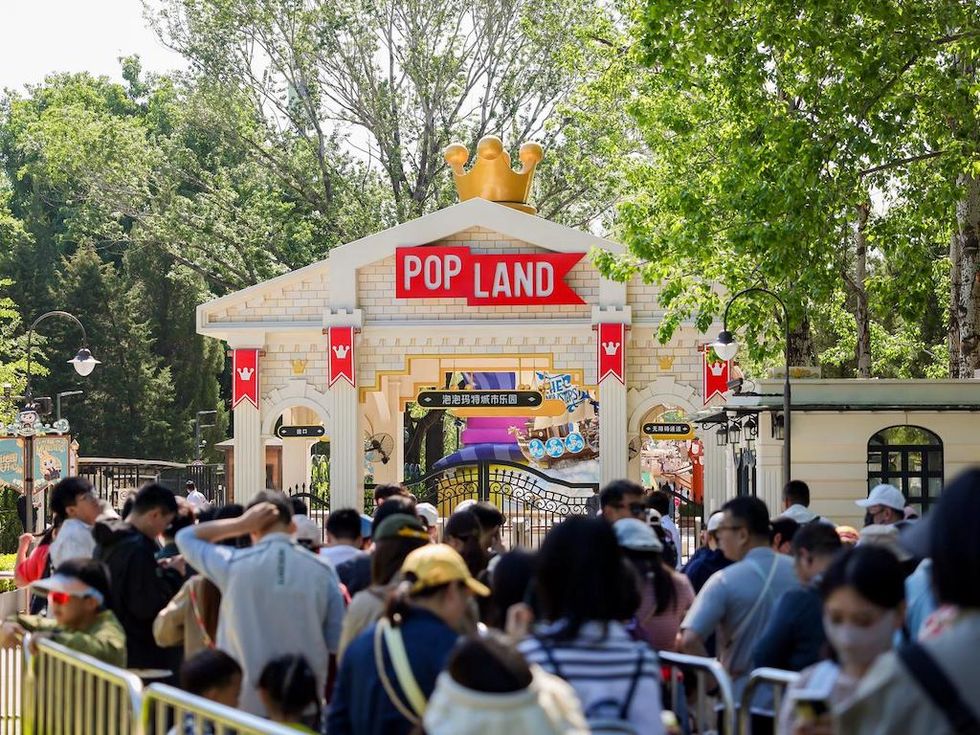
Guests eagerly awaiting their visit to POP LAND in Beijing
Image courtesy of POP MART
He recognises the attractions industry’s long history and the lessons it offers. POP MART’s creative culture also fosters an appetite for questioning established approaches and exploring new ideas.
He describes a “punk rock mindset” within the company: a spirit of artistic energy that informs how it creates products and experiences. Prospective partners need to understand the value of that approach and be willing to go for the ride.
“We’re looking for partners that want to go on that adventure with us and who are excited about the opportunity as well as the potential risks and rewards of believing in something enough to want to try new things,” he says.
McManus also expects collaboration with more artists to continue as the brand and its product slate expands. POP LAND in Beijing provides a working base for exploring them.
Looking ahead, McManus expects the next five years to be a significant period for the company’s ambitions for parks and experiences.
“We’ve laid out a global map and are already setting our sights on a lot of ambitious projects right now,” he says, adding that audiences will see new activity soon.
For the industry, McManus’s message is an open invitation to potential partners: bring an understanding of the IP, a willingness to experiment and an interest in discovering how far an imaginary world can grow.