
Bea is a journalist specialising in entertainment, attractions and tech with 15 years' experience. She has written and edited for publications including CNET, BuzzFeed, Digital Spy, Evening Standard and BBC. Bea graduated from King's College London and has an MA in journalism.
Saint Louis Zoo has announced the upcoming closure of the Emerson Children's Zoo in order to reimagine the 3.5-acre family area, with a temporary dinosaur exhibit opening in its place in spring 2021.
"For 51 years, the Saint Louis Zoo has offered a special area for its youngest visitors to connect with nature," said Jeffrey P Bonner, president and CEO of Saint Louis Zoo.
"Since 1969, the goal of the Children's Zoo never changed, to provide dynamic experiences for all children that will inspire a love of animals and learning. The mission of connecting families and children with animals will carry forward in the planning for this new area."
The Children's Zoo will remain open with free admission until the end of October, with additional safety measures in place.
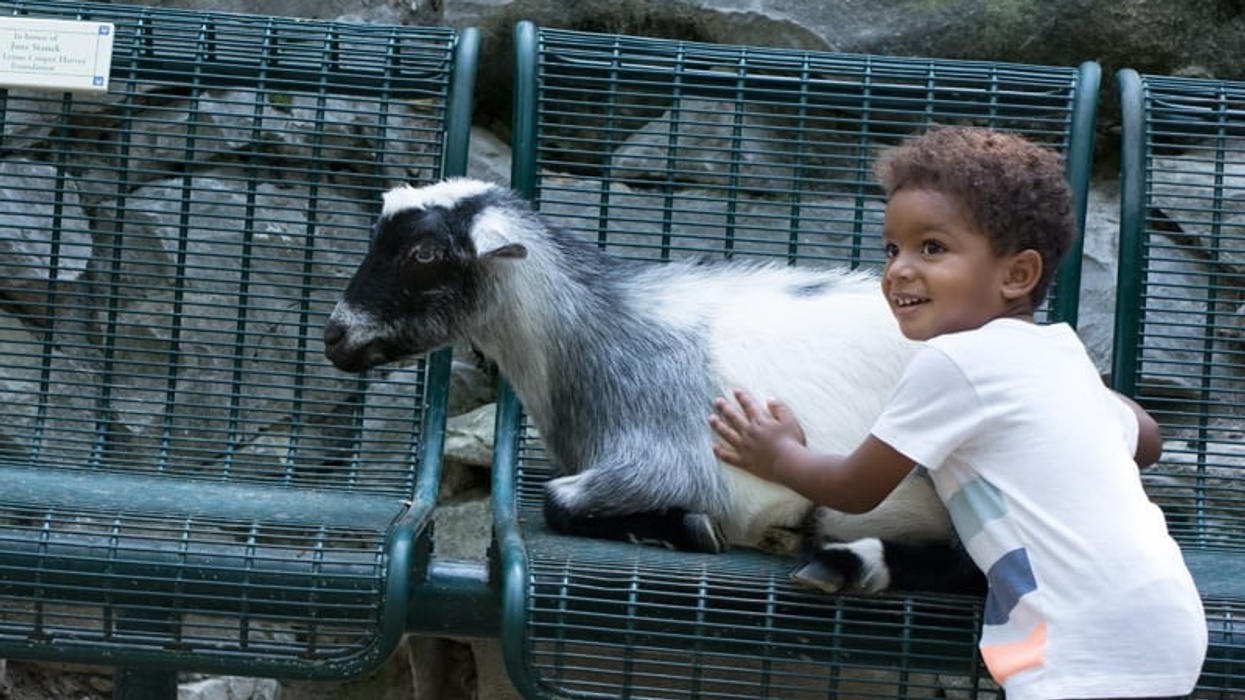
However, the animal shows, indoor building, water bubblers, goat yard, farm-play yard and playground remain closed at the Children's Zoo.
Dinoroarus exhibit opening in spring 2021
https://www.youtube.com/watch?v=oaLOhoIBhgc
In addition, keeper and docent animal handling for one-on-one guest connections have been eliminated during the coronavirus crisis for human and animal safety.
"It was a heart-wrenching decision to close the Children's Zoo, however, safety is our highest priority," said Bonner. "The Children's Zoo was designed for high-touch and interactive experiences, which is not conducive to a COVID or post-COVID environment."
Animals living at the Children's Zoo are in the process of relocation to other parts of the Saint Louis Zoo and other facilities.
The Tasmanian devils will remain in their current habitat, and the various animals can still be seen at the Children's Zoo, including domestic goats, alpacas, Pot-bellied pigs, river otters, burros, reptiles and American crows.
Children's Zoo "not conductive" to COVID-19 environment
https://www.instagram.com/p/CDt_I3BA5xV/
Plans are underway for the temporary dinosaur exhibit, named Dinoroarus, which will boast 15 different groupings of colourful dinosaurs that move realistically.
Visitors will enjoy the dinosaurs as they roar and eat the vegetation, from a life-size brontosaurus to the tyrannosaurus rex.
"We had a similar exhibit like this back in 2008, but this time, we have much more space to include many more life-size animatronic dinosaurs in a one-of-a-kind walk-through experience," said Bonner.
"Dinoroarus will give us a chance to talk about difficult topics like extinction and how some predecessors of dinosaurs, like turtles and crocodiles, are still with us, as well as how some descendants of dinosaurs, like birds, still grace our lives."
Bea is a journalist specialising in entertainment, attractions and tech with 15 years' experience. She has written and edited for publications including CNET, BuzzFeed, Digital Spy, Evening Standard and BBC. Bea graduated from King's College London and has an MA in journalism.
Cloward H2O, an expert in aquatic design, reveals how delivering a successful surf park involves more than just selecting the appropriate wave technology or securing an appealing location.
The best projects rely on strong industry knowledge, proven expertise, and careful design. As surf parks evolve from stand-alone attractions to parts of larger destinations, insights from the broader attractions and aquatic industries have become more valuable.
As the demand for top-tier surf experiences continues to grow, Cloward H2O is dedicated to helping developers turn innovative ideas into dependable, high-quality destinations.
Its mission is to guarantee that each surf park offers consistent waves, excellent water quality, and a memorable guest experience.
A reliable partner
Cloward H2O collaborates closely with leading wave system developers and aquatic technology suppliers, enabling the creation of environments that blend excitement with durability.
By leveraging expertise in wave mechanics, water treatment, and circulation systems, it designs surf experiences that excite guests while adhering to top operational standards.
For the company, the “wow factor” goes beyond the wave, encompassing pristine water quality, smooth system performance, and assurance that every component is durable and well-engineered.
Cloward H2O supports surf park development, from initial concepts to final commissioning, offering expert guidance at each key phase.
The team works with clients, architects, and wave suppliers to develop designs that integrate seamlessly with the overall destination, enhancing the guest experience. Once a concept is finalised, the firm engineers systems for water circulation, filtration, and treatment, emphasising performance, safety, and sustainability with proven and innovative technologies.
Throughout construction, it works closely with project teams to ensure smooth progress, providing technical support and safeguarding the original vision until project completion.
Developers choose Cloward H2O for its reliable integration of proven practices and innovative technologies, ensuring modern advancements enhance surf park projects.
The company serves as a collaborator, guiding concepts through construction while keeping stakeholders informed and aligned. With extensive experience in the water park industry, the team minimises risks and improves project outcomes.
Committed to sustainability, Cloward H2O emphasises environmentally responsible water and energy solutions that support long-term success.
The Cloward H2O process involves initial project onboarding to understand client goals, followed by conceptual aquatic design support if needed. Approved concepts are then developed into detailed technical plans that meet industry standards.
During construction, Cloward H2O offers ongoing support to ensure proper installation. Finally, the team assists with testing, commissioning, and operator training to ensure everything functions smoothly from day one.
Although surf parks are still a developing industry, the company considers water parks a valuable source of operational knowledge accumulated over decades. Important lessons include prioritising safety, creating inclusive guest experiences, investing in dependable infrastructure, and designing for smooth, efficient operations.
Environmental responsibility is now also a key priority for the company. Water conservation, energy efficiency, and sustainable materials are expected standards rather than choices.
Moreover, successful attractions adapt to seasonal changes, leverage guest data effectively, and build strong brands through active community involvement.
Rising to the challenge
Surf park projects face significant challenges, including high upfront investment, advanced technological requirements, and complex regulatory frameworks. Choosing the right site is essential, says Cloward H2O, as it affects both construction feasibility and future visitor numbers.
Operational complexity also presents a hurdle. Ensuring consistent wave performance, water quality, and guest satisfaction demands skilled teams and well-designed systems.
As competition increases, surf parks must also set themselves apart through innovative design, strong branding, and superior experience quality.
The firm adds that design is crucial for the success of any aquatic attraction. Careful layout planning boosts guest movement, minimises congestion, and enhances safety.
Effective theming and appealing aesthetics strengthen brand identity, while sustainable designs ensure long-term durability. Common mistakes involve inadequate circulation plans, underestimating maintenance requirements, neglecting accessibility, and not incorporating sustainability early on.
Achieving a balance between innovation and practicality is vital to prevent expensive operational problems later.
Successful projects start with a clear understanding of market demand and guest expectations. Then, designers should focus on safety, operational efficiency, and creating immersive experiences, while utilising modern technology and planning for future growth, explains Cloward H2O.
Collaboration among stakeholders, thorough simulation and planning, and an emphasis on durability help ensure that attractions remain relevant and profitable in the long term.
Based in Lindon, Utah, Cloward H2O typically oversees 50 to 55 active projects globally. The company’s teams consist of seasoned senior engineers and designers, backed by mentored mid-level and junior staff, enabling the firm to uphold quality while managing complex, multi-project tasks.
Disneyland Paris is teasing some of the new restaurants opening at Disney Adventure World later this month.
Launching on 29 March, Disney Adventure World is a €2 billion transformation of the former Walt Disney Studios Park and houses the new World of Frozen land.
New restaurants in the reimagined theme park include the Frozen-inspired Nordic Crowns Tavern and the Disney princess-themed Regal View Restaurant & Lounge.
Starting with the Nordic Crowns Tavern, this will be a cosy, welcoming dining establishment based on Frozen.
Located close to the harbour, the tavern features warm, wood-panelled décor with nautical theming and elements, as well as official portraits of Elsa and Anna.
Other nods to the Frozen stories include portraits of Olaf, Lieutenant Mattias, and the water spirit Nokk.
A cat perched above the entrance door is inspired by one of two cats that appear in 2017 short film Olaf’s Frozen Adventure. The other cat can be found at Golden Crocus Inn at Hong Kong Disneyland.
For the exterior design, the teams at Walt Disney Imagineering took inspiration from Bergen in Norway, particularly its UNESCO-listed Bryggen district.
“We also applied Anna and Elsa’s colours to the two buildings at the entrance to Nordic Crowns Tavern, with green on one side and blue and purple on the other, echoing the dresses they wear at Elsa’s coronation,” said Emma Yeates, senior manage of show design at Walt Disney Imagineering in Paris.
As for F&B, Disneyland Paris' food and beverage teams have created a menu based on Norwegian and broader Scandinavian cuisine.
The Regal View Restaurant & Lounge, meanwhile, is situated between the gardens of Adventure Way, right next to Adventure Bay.
Described as the summer residence for Disney princess characters, the restaurant includes several references to Raya from 2021 film Raya and the Last Dragon, Disneyland Paris has revealed.
"We wanted to make sure that the Disney princess characters were represented in a style that felt suitable for the restaurant," said Bowie Faas, principal creative producer at Walt Disney Imagineering.
"We therefore created these unique portraits in an Art Nouveau style, specifically designed for the Regal View Restaurant & Lounge."
"The result is sophisticated and blends perfectly with the setting," he added.
SSA Group has been working on a transformative approach to operations. By weaving its signature 452 Hospitality ethos, rooted in a legacy of welcome and human connection, into Scout, a new AI-driven operating system, the company demonstrates how AI can enhance rather than replace the human side of hospitality.
For nearly 60 years, SSA Group has been a staple in the cultural attractions sector, collaborating with zoos, aquariums, and museums to provide comprehensive guest services. As a family-owned business, the company has continually adapted, but its core mission remains centred on a simple, powerful concept: hospitality.
We speak with CEO Sean McNicholas and vice president of people and culture, Jason Stover, to unpack Scout's mission and learn how it can open the door to both greater efficiency and more memorable moments.
SSA reimagines the industry
Starting by looking at the bigger picture, McNicholas says: “What I love about SSA and our family business is our curiosity for continuing to reimagine the industry.
"Those are pillars of our plan. We approach 60 years as a family business in 2030, and what’s exciting to us is continuing to innovate, not just our business, but the guest experience for our clients and partners.”
Sean McNicholas and Jason Stover
This culture of curiosity is what prompted McNicholas and Stover to investigate the potential of artificial intelligence long before it became the industry buzzword it is today.
"Five or six years ago, Jason came to me as one of the early adopters of AI. We started talking about it, and the more we looked at tools like AI, we asked a very simple question: what one, two, or three areas could AI positively impact our business?"
For SSA, the goal was not to replace staff or remove the human element from the museum or zoo experience through automation. Instead, the emphasis was on liberation.
"The thing that became clear was how tools like AI could help us become more efficient with data, back-end systems, and administrative work," adds McNicholas.
"If we can be more efficient there, we can spend more time meeting guests where they need us, which is on the front line.”
The outcome of this exploration is Scout, an AI-assisted tool and ‘unified intelligence layer’ designed specifically for cultural attractions.
Scout is positioned not as a replacement for human workers, but as a co-pilot. It is an operating system that gathers data from across the industry to provide real-time insights. Unlike general-purpose AI tools, Scout has been built for the sector's operational realities.
"AI is trending now, but it’s not new," says Stover.
"I’ve been with SSA for almost 30 years, and my journey with AI in this company has existed since day one. When I first became a manager, we were already experimenting with predictive analytics, trying to forecast attendance and staffing.
"That was AI at the time."
However, the leap to generative AI offered a new opportunity to support SSA's secret sauce: its people.
Stover employs a cinematic analogy to describe Scout’s role within the workforce:
"I compare it to Tony Stark," he says. "He’s brilliant, but he doesn’t become Iron Man until he has Jarvis. That’s what Scout is. It’s a co-pilot that takes away routine, monotonous work so our people can focus on what matters."
Real-time, useful insights
Designed to support guest-journey walkthroughs, the platform collects real-time observations and converts them into actionable insights tailored to each attraction.
The tool was created in accordance with SSA’s core belief that technology should never replace connection; it should enhance it. The idea is that data and design can collaborate to create memorable guest experiences.
This supports SSA’s wider focus on innovation, which aims to turn curiosity into meaningful change that advances partners' missions. By automating data analysis, Scout helps operators make more informed decisions about designs, platforms, and revenue strategies.
"Guest expectations are evolving faster than ever," says Stover. "Scout was built to meet this moment as a tech-forward AI tool that allows us to keep experiences deeply personal.”
The heart of the system: 452 Hospitality
Although the technology is impressive, the engine driving Scout remains entirely human. At the centre of Scout’s design is 452 Hospitality, the cultural ethos that defines SSA Group’s purpose and character.
Named after 452 Leyden Street, the Denver home where SSA’s founders first lived and practised hospitality, 452 has since become both a numeric and philosophical code for what the company stands for: a spirit of welcome, belonging, and genuine human connection.
At 452 Leyden Street, anyone could come in for a meal, a chat, or a place to rest. And that sense of genuine warmth now lives on in every SSA service encounter.
Today, 452 Hospitality reflects SSA’s ongoing dedication to creating authentic, memorable moments that uplift guests, partners, and colleagues alike.
That same spirit guides Scout’s purpose: rather than replacing people, the AI system aims to enable staff to embody 452 Hospitality more fully, freeing them from administrative burdens so they can provide the personal engagement that makes guests feel welcome and valued.
In practice, this involves a particular method for engaging with guests and monitoring operations. Scout develops a digital framework for this using the SOQ model: Observation, Opinion, and Question.
"Scout is being trained by the entire zoo, aquarium, and cultural attraction industry," Stover says. "Every conversation, every audit, every partner insight gets ingested and shapes how Scout operates.”
Within the Scout ecosystem, there are various ‘agents’ dedicated to different tasks, such as labour optimisation and inventory management. However, the ‘452 agent’ is unique.
"It has vision and voice capabilities. As you walk through operations, it analyses images and observations in real time and evaluates them against our hospitality standards. It acts as a co-pilot for auditors and operators, making observations, offering insights, and matching them with best practices and solutions.
“You might miss something as a human, but Scout won’t.”
Scout in action
The deployment of Scout is already producing tangible outcomes, progressing from theoretical ideas to solving complex on-site issues. This highlights SSA’s focus on turning insights into action by combining data, technology, and human connection.
McNicholas emphasises that the team is "continually evolving Scout by testing it across multiple attractions," noting that "every new site adds more data and sharper insights.”
Stover offers an example of Scout’s operational intelligence in action from a working session with the Detroit Zoo. The team was exploring a complex “what-if” scenario: opening a new entrance near a new exhibit while navigating compliance considerations, budget constraints, and a nearby rail track.
“Using Scout as a sandbox alongside their team, we pressure-tested the constraints, surfaced relevant regulatory considerations, explored alternative approaches like repurposed shipping containers, and generated rough-order cost ranges. It was less about committing to a final plan and more about accelerating discovery.”
“What’s exciting is that every audit surfaces a new real-world question, and we ask: Should this become a new sub-agent? That’s how Scout keeps evolving.”
Another success story comes from the Dallas Zoo, where Scout was instrumental in helping the zoo team explore their own AI journey while SSA conducted an inter-department relationship audit.
Scout is tailored to each user’s psychology
What makes Scout different from typical business AI tools is its incorporation of behavioural psychology. Acknowledging that strong operations don't happen by accident, SSA has combined leadership development with its technological roadmap.
Stover, whose background is in people and culture, insisted that if they were to create co-pilots, they had to understand the humans who would use them. So, instead of providing generic recommendations, Scout adapts its guidance to each leader's thinking and communication style.
"One of the first things we decided was that if we were going to build AI co-pilots, they needed to integrate Behavioural Essentials," Stover says. "We already use behavioural assessments that give leaders a 21-point profile, with strengths, tendencies, and blind spots. We’ve now incorporated that into Scout.”
This means that when a manager logs into Scout, the system is tailored to their specific personality profile.
"It understands how I communicate, where I might need softer language, or where I might need more structure," Stover says.
He adds that McNicholas served as the ‘guinea pig’ for this feature:
"We merged his traits and blind spots into Scout as he was working through our future roadmap. Scout isn’t just an AI tool; it understands your psychological makeup and helps cover your blind spots as you operate in your role.”
The future of the workforce
A common concern about AI is the risk of job displacement. However, SSA’s leadership firmly states that their investment in technology aims to safeguard, not eliminate, their workforce.
"As CEO, culture is my responsibility, and culture starts with values," McNicholas says. "Hospitality, human-to-human interaction, has always been our foundation. I don’t want a world of all robots and automation. I love people too much.
“That’s why Scout exists. It helps us live what we love to do: creating special moments for people.”
Stover shares this view, considering AI as a safeguard against the decline of interpersonal skills observed in other industries:
"We have to be proactive in shaping the future. Many companies will use AI purely to impact the bottom line. That’s their choice. But SSA has always been people-focused. We’re adopting AI safely and intentionally to better our people. As interpersonal skills decline elsewhere, we’re protecting them by freeing people up to reconnect.”
The efficiency gains are clear. Stover notes that tasks like scheduling, which previously took hours to analyse against weather and sales history, now happen in seconds. "That frees managers up to spend time with their team. That’s the point.
“We’re hospitality people. We want to be in front of guests, not behind a screen.”
A vision for 2030
Looking ahead, SSA has set bold goals for the next five years. As the company approaches its 60th anniversary in 2030, the vision is for a fully enabled workforce where each employee has a digital partner.
"By 2030, every person in our company will have a co-pilot that helps them be more efficient," predicts McNicholas. "We’ll also bring a unified revenue strategy to attractions, something the industry lacks.”
He also believes the metrics of success are shifting. It is no longer enough to simply count heads at the gate:
"The future metrics won’t just be attendance. They’ll be revenue, guest experience, and fulfilment," he says.
"There’s more competition than ever, and we have to be the place where guests leave thinking, 'That felt right.' To do that, our people need tools like Scout so they can spend more time creating those moments.
“That’s how we reimagine the industry.”
The future of hospitality
Summing up the benefits, COO Travis Kight says:
"AI is the future of hospitality, but not in the way most imagine. We see AI as a co-pilot, not a replacement, designed to protect the human connection that defines our industry.
“Tools like Scout allow us to turn data into real-time insights, freeing our teams from repetitive tasks so they can focus on creating unforgettable guest experiences.
"As Sean mentioned, by 2030, our vision is for every team member to have a digital partner that amplifies their strengths, covers blind spots, and helps us deliver hospitality at a level the industry has never seen.
“AI isn’t about automation. It’s about empowerment.”
As SSA Group looks towards the attractions of tomorrow, its message is clear: the path to the future is built on data, but the goal remains human connection.
By anchoring Scout in 452 Hospitality's philosophy of creating meaningful, human-centred moments, SSA isn’t just adopting AI for efficiency. It’s enhancing its ability to deliver heartfelt experiences that define its brand and shape the future of the guest experience.
"That’s the foundation of Scout," Stover says. "If a tool doesn’t protect hospitality or make us better people-facing operators, it doesn’t get built.”
When women step into construction, architecture, and design, they bring precision, patience, and a collaborative spirit that reshapes the built environment. Through mentorship, knowledge-sharing, and support across trades, they strengthen teams and elevate projects.
When we make space for women in construction, we build not only better spaces but stronger industries.
When we think about construction and architecture, many of us instinctively picture a male-dominated profession. For generations, architecture has been perceived as a field led primarily by men.
Yet, in interior design, a closely related discipline, the trend is strikingly different. The 2023/2024 diversity survey by the British Institute of Interior Design (BIID) reports that approximately 90% of interior designers are female.
This contrast raises an important question: why has architecture historically been male-led, and why are we now witnessing a meaningful shift?
A visible shift in leadership
The industry is evolving. We are increasingly seeing successful, high-profile projects led by women - projects that are not only ambitious but culturally significant.
Transformation plans for the National Gallery, London. Image courtesy of Selldorf Architects.
Meanwhile, the transformation of the National Gallery was entrusted to Selldorf Architects, founded by Annabelle Selldorf, who was named one of the 100 most influential people in 2025.
These are not isolated examples. They represent a broader shift in visibility, recognition, and influence. They also demonstrate something powerful: women are not just participating in architecture - they are shaping its future.
What women bring to the design process
In architecture, design and construction, the work goes far beyond creating buildings - it is about shaping human experience. It is about how people move, feel, gather, and connect within a space.
Female architects and designers often bring a strong emphasis on usability and comfort. They demonstrate greater sensitivity to safety and inclusivity, along with careful attention to human-scale details. Their work is often guided by empathetic, user-centred thinking.
Women frequently prioritise how diverse communities will interact with a space. From public institutions to commercial interiors, this approach ensures environments are not only visually compelling but also welcoming, safe, and accessible.
Design becomes less about monumentality and more about meaning.
The power of diverse teams
At Lumsden Design, diversity is embedded into how we operate. With 72% of the team being female and an international mix of backgrounds, collaboration becomes the foundation of success.
This diversity has an impact on the global projects we are involved in, particularly for cultural and visitor-attraction organisations such as Netflix, Natural History Museum of Denmark, and Warner Bros. Discovery.
Netflix House - the morning exterior facade of Dallas, showcasing the iconic Red Envelope entrance, creating an instantly recognisable brand moment
A combination of ethnicities, genders, and cultural experiences expands creative potential and allows for all voices to be heard. It enhances cultural sensitivity and strengthens problem-solving capabilities.
In an industry where design is a form of storytelling, this breadth of perspective prevents generic, one-size-fits-all solutions and makes it unique to a destination.
This approach directly aligns with the principles of the experience economy - where it’s not about delivering products or services alone, but it’s about creating meaningful, memorable experiences and curating emotional, immersive journeys.
Leadership beyond ego
Female-led design is often characterised by functionality, attention to detail, and innovation grounded in empathy. There is typically less focus on ego and more on collective success.
Mentorship plays a crucial role. Leadership becomes less about personal ambition and more about nurturing talent, elevating others, and creating space for growth. By fostering curiosity and collaboration, teams develop stronger commitment and long-term progression.
Inclusive organisations are significantly more capable of meeting financial goals, and a higher representation of women in leadership correlates with greater radical innovation.
Why? Because leadership styles complement one another.
Traditionally, male leadership has been associated with agentic qualities—goal-driven, decisive, performance-oriented. Female leadership often brings communal and empathetic strengths—emotional intelligence, communication, collaboration, and people-focused management.
When these approaches work together, they create a dynamic that outperforms homogeneous teams. Employee morale improves. Staff turnover decreases. Creativity increases.
The result is not compromised - it is a competitive advantage.
A new era for architecture, design & construction
Architecture and design are storytelling disciplines. They shape how we experience culture, commerce, and community. To tell richer stories, we need richer perspectives.
The growing presence of women in architecture is not about replacing one dominance with another. It is about balance. It is about recognising that the most innovative, resilient, and successful teams are those built on diversity—of gender, culture, experience, and thought.
The profession is evolving from a historically male-led industry to a more inclusive, collaborative field. And as the examples from the British Museum and the National Gallery demonstrate, women are not just contributing—they are leading at the highest level.
Gender-diverse leadership is no longer optional. It is essential to the future of architecture and business alike.
The buildings we design today will shape the world of tomorrow. It is only right that the people shaping them reflect the full diversity of the communities they serve.
Announcing the news on social media, Universal shared images of the new cars onX and released a teaser video of the ride on Instagram.
Per the announcement, ride vehicles will feature four iconic designs, including the Mazda RX-7, Nissan Skyline GT-R, Toyota Supra, and the previously announced Dodge Charger
Universal captioned the post: "Four iconic designs, one fast ride. The Mazda RX-7, Nissan Skyline GT-R, and Toyota Supra join the iconic Dodge Charger to complete the lineup for Fast & Furious: Hollywood Drift."
Opening at the California theme park this summer,Fast & Furious: Hollywood Drift will be the fastest coaster in Universal's lineup, reaching speeds of up to 72 mph.
As the park’s first-ever high-speed outdoor coaster, guests will race along 4,100 feet of aerial track in 360-degree rotating vehicles, designed to resemble iconic cars from Fast & Furious.
Located on the Upper Lot of Universal Studios Hollywood, Fast & Furious: Hollywood Drift will include a queue experience situated within a garage-like structure.
Speaking last year, Scott Strobl, executive vice president and general manager of Universal Studios Hollywood, said: "Watching the progress of this incredible roller coaster come to life is truly spectacular."
Four iconic designs
He continued: "Fast & Furious: Hollywood Drift will be a powerful game changer for Universal Studios Hollywood that will not only transform the topography of our destination but will infuse an entirely new level of adrenaline to our already dynamic theme park."
Teasing what to expect from the new coaster, Universal said in a press release: "Fast & Furious: Hollywood Drift will put guests in the driver seat of the high-speed thrills of Universal Pictures’ Fast & Furious universe like never before."