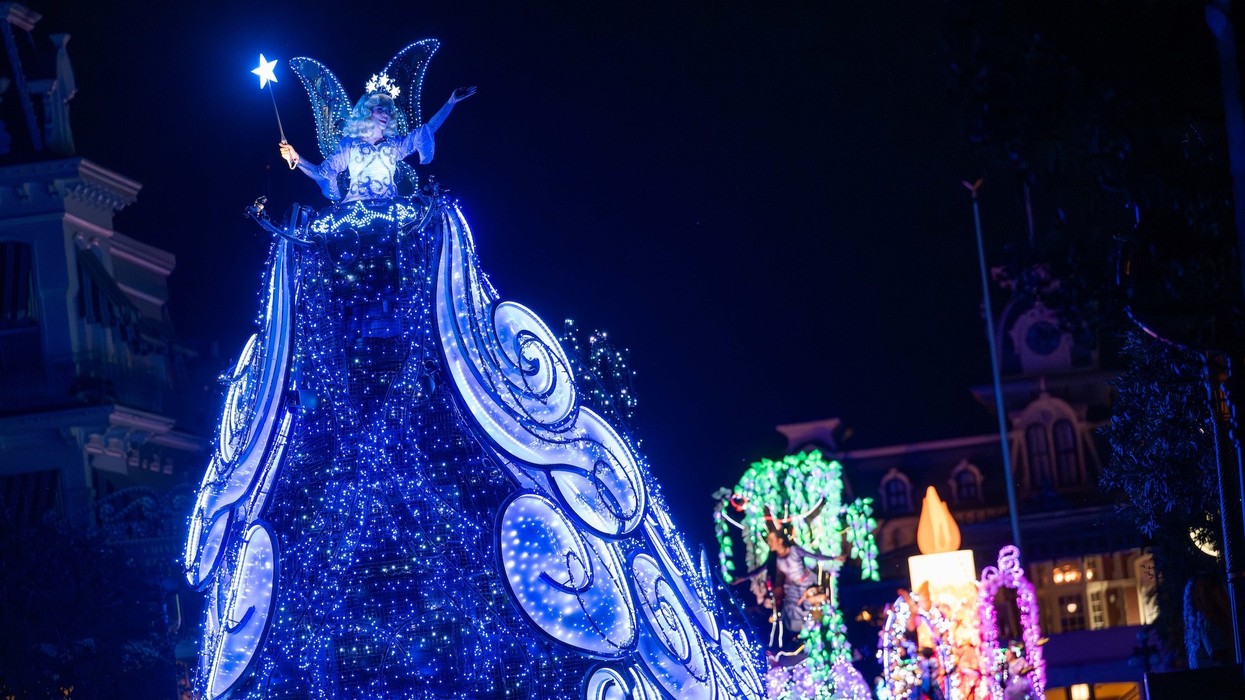
Disney Starlight is a constellation of Disney dreams, brought to life by the magic of the Blue Fairy. Featuring stories and Characters both classic and contemporary, Guests are transported into dreamscapes that are created and kissed by the magic of starlight. Through its storytelling, music soundscape, and visual architecture created by light, Disney Starlight nods to the rich legacy of electrical parades of the past, with eyes set firmly on the future.
The Disney Live Entertainment Visual Media Production team leveraged Unreal Engine to previsualize the floats in 3D space.
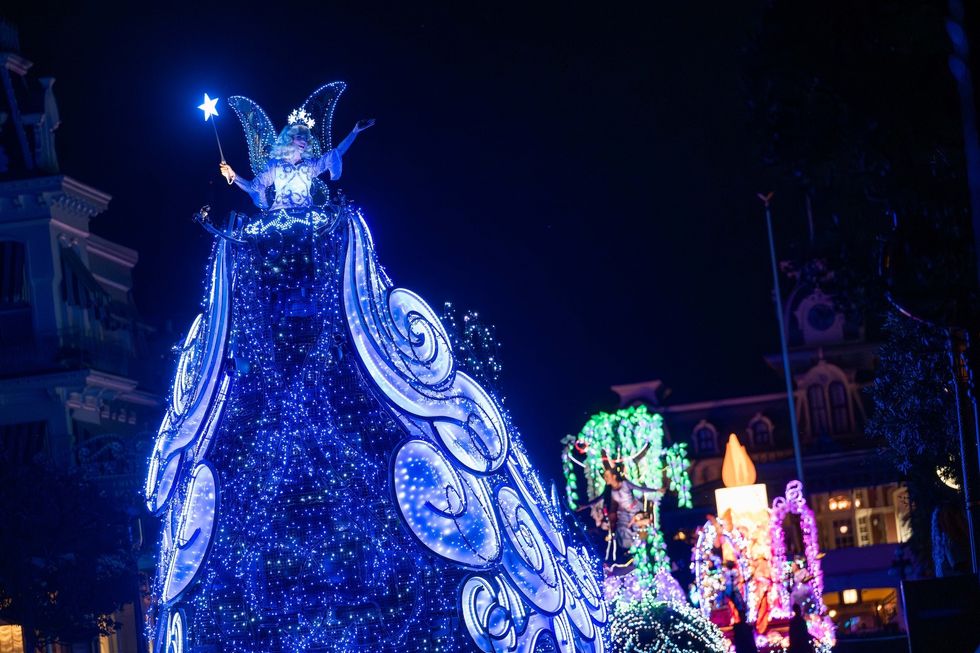
This tool allowed the creative team to visualise early in development how video content would be viewed on the float from multiple angles, using a digital environment model of Main Street USA.
For the first time on a Disney-produced parade, Disney Live Entertainment Lighting Design was able to utilise previsualization software to fully re-create three-dimensional floats in the digital environment as a tool for pre-programming.
This method allowed for more realistic representation of lighting elements, enabling designers to be more accurate in programming/creative reviews without having to be present on site with the float, and was used for the Blue Fairy and Whimsy (Finale) units.
The last float of the parade showcases Jiminy Cricket as he would appear if made out of Starlight. To stay true to his original classic look, he is a hand-drawn 2D animated character, but an entirely new visual effects pipeline was created by our team of artists at DLE Visual Media Production to paint and stylise him.
This pipeline was a blend of frame by frame painting, mixed with simulated 3D lighting to guide the team of digital painters, and finished off with magical VFX to make Jiminy look consistent with the "Starlight" content on the other floats. Jiminy interacts and plays with "whisps" of the Starlight magic on screen, which became a character all of its own.
Jiminy took 11 months to create from start to finish. Ten artists and animators contributed to his creation, in collaboration with and under the guidance of legendary Disney animator Eric Goldberg.
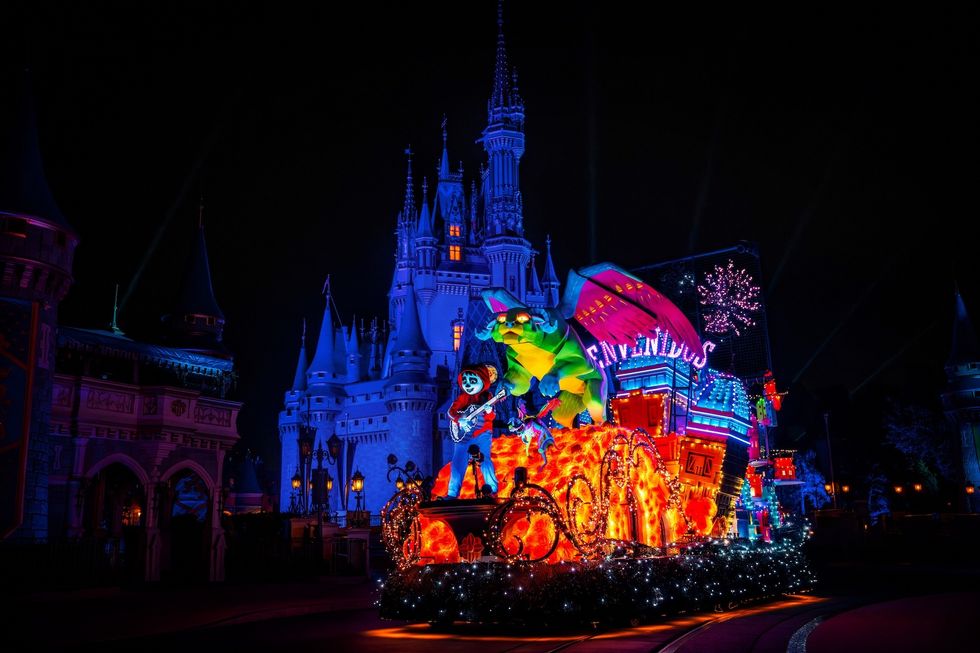
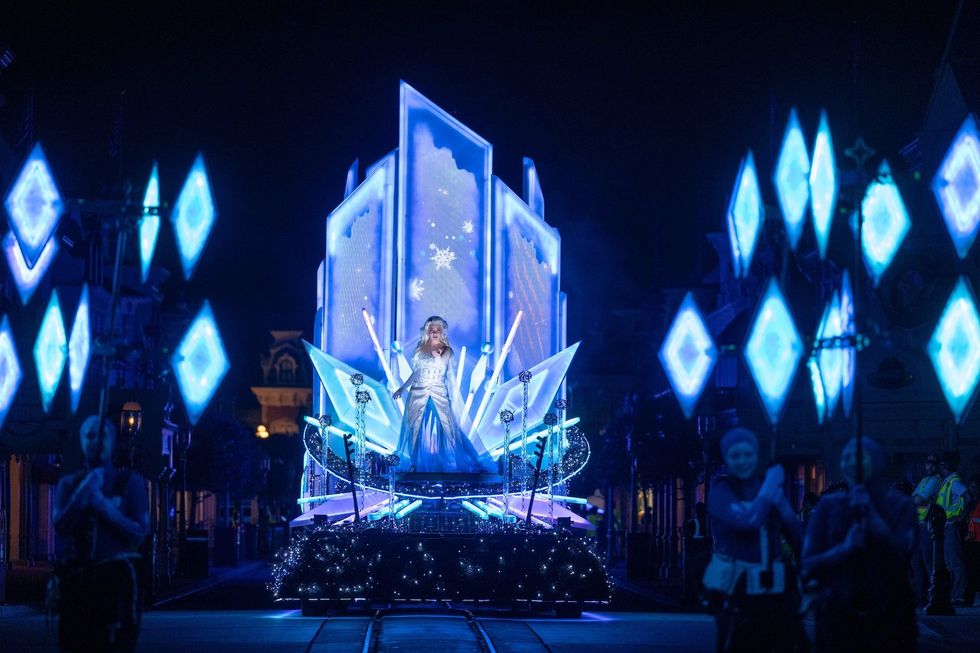
Starlight is the first parade that is comprised of 100% individually controlled pixels. There are over 250,000 individually controllable lights in Starlight, with over 800,000 control channels in use.
Moana float has the most pixels with over 50,000!
There is over 1 mile of COB neon in use in Disney Starlight.
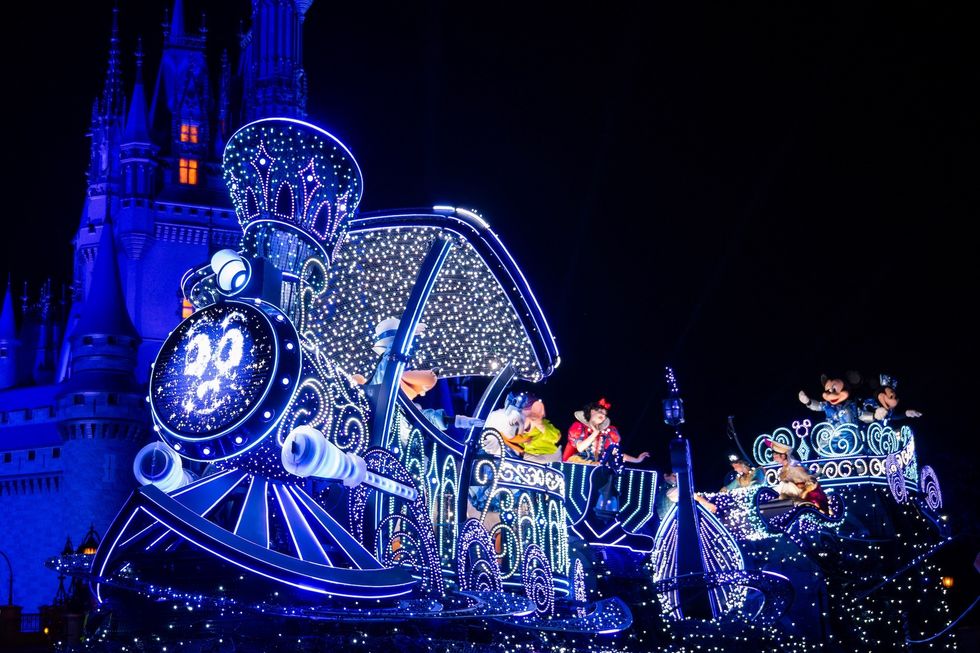
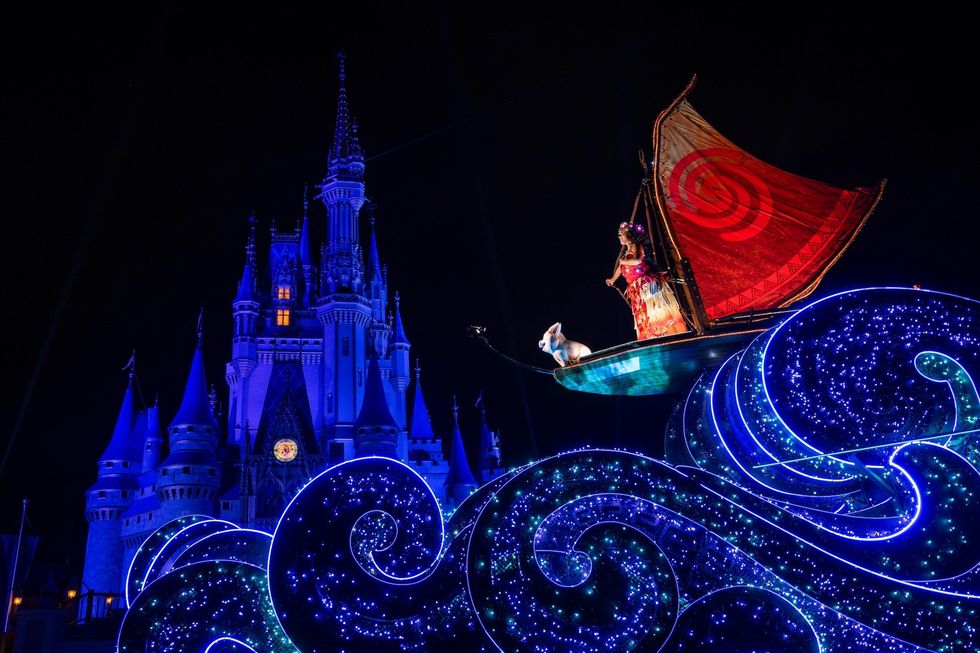
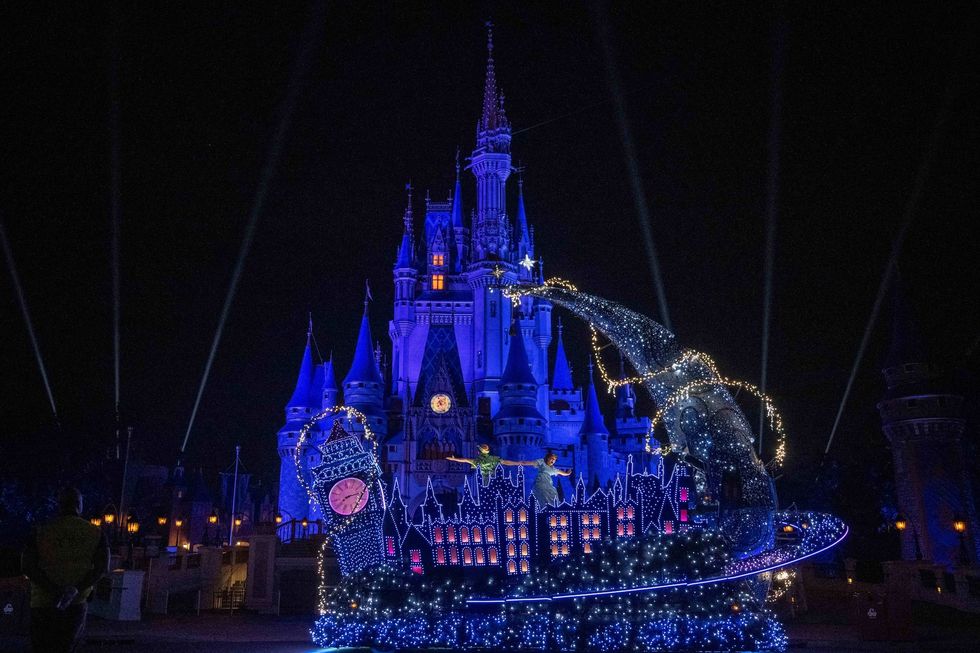
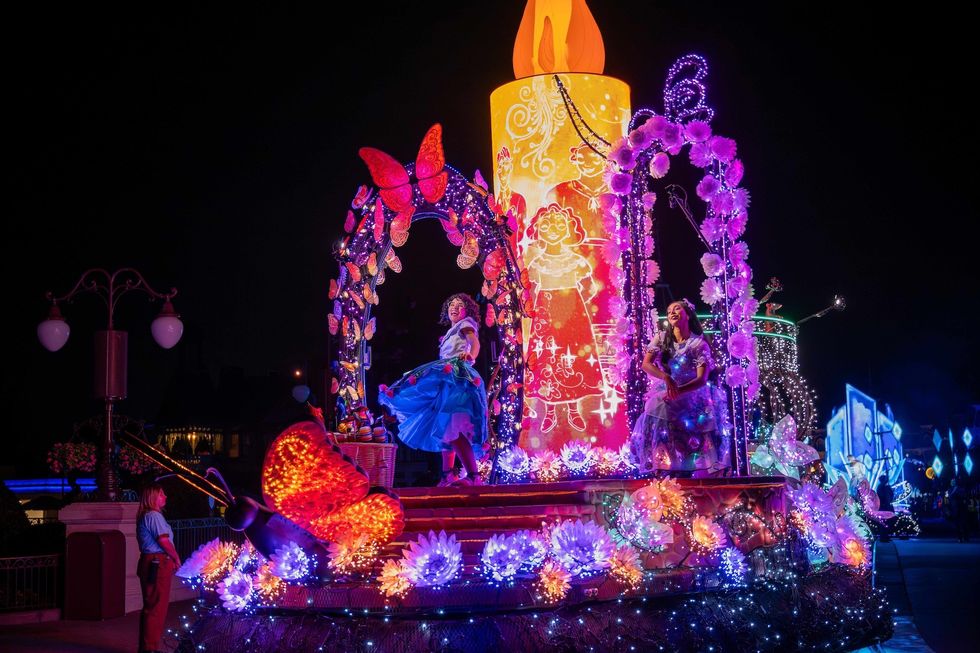
The lighting control system, Mosaic, is generally designed for architectural installations. The DLE Lighting Team used its capabilities to fully pixel map and flexibly program the floats without the need for an external video source. Creatively, this gave the team full flexibility to add additional layers of colour and intensity without additional strands of lights. The dynamic life that full controllability gave to these floats was something not previously possible with standard light strands.
The water lighting effects on the Moana float are created using UV fixtures with an animation wheel, allowing the team to create the appearance of reflections off the water, as well as create magical reveal moments of UV treated features on the canoe sail and Gramma Tala’s distinctive tattoos.
Starlight is the first Walt Disney World parade to incorporate interactive/connected technologies, such as MagicBand+, as the parade travels through the park. Transmitters were installed on each float, so that no matter where on the route the Guest experiences the parade, their MagicBand+ product will react. During each Magical Moment, there are pre-programmed lighting and haptic reactions for Guests with MagicBand+ products.
Costumes – this is the first Walt Disney World electrical parade to use 100% LED technology in its costumes. The LED power requirements allow for much lighter and fewer batteries per costume. The costume controls wirelessly broadcast on each unit, allowing the Lighting Design team to program each costume to follow timecode.