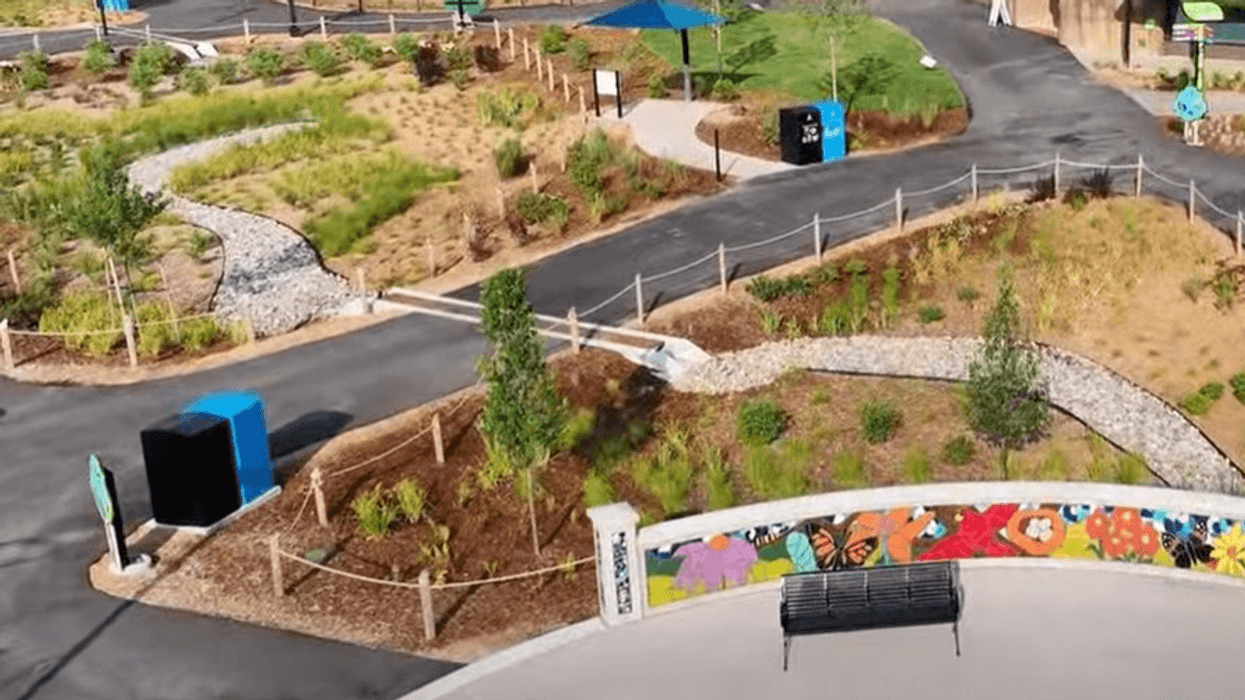
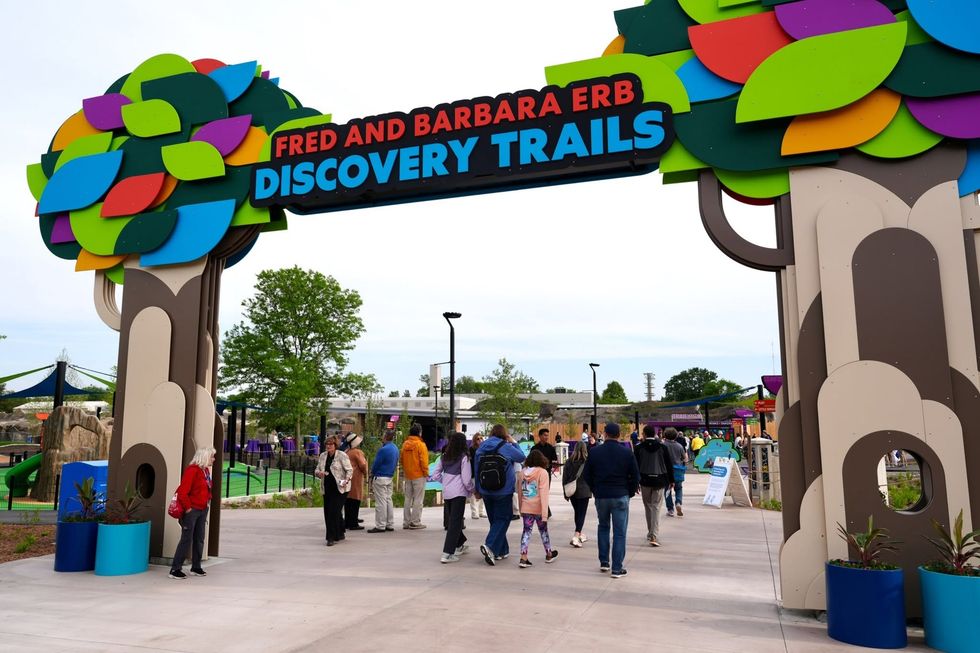
MoMost zoo expansions treat sustainability as a feature added to an attraction. At the Fred and Barbara Erb Discovery Trails, the landscape itself is the infrastructure. This 7-acre, $20 million family experience at the Detroit Zoo earned SITES Gold certification from Green Business Certification Inc. in July 2026, scoring 115 points across all ten SITES categories with zero credits denied. SITES is the most comprehensive rating system for sustainable landscapes. Before a single point can be earned, a project must meet 18 mandatory prerequisites. Discovery Trails met all 18 and achieved 37 additional credits.
Fred and Barbara Erb Discovery Trails
The Detroit Zoological Society
Turning a sewer problem into a guest amenity. Before construction, 100% of stormwater from this site flowed into the regional combined sewer, which feeds the Red Run subwatershed, the Clinton River and Lake St. Clair. Combined sewers overflow during heavy storms, and those storms are becoming more frequent as the climate changes. Discovery Trails now manages 100% of its runoff on site.
The Detroit Zoological Society logo
The Detroit Zoological Society
Fred and Barbara Erb Discovery Trails
The Detroit Zoological Society
The system is designed for a 100-year, 24-hour storm and keeps an estimated 6 million gallons of stormwater out of the sewer system. It combines about 0.9 acres of bioretention and rain gardens, about 4,100 square feet of permeable clay pavers, and extended detention. Because 89% of these stormwater features are designed as visible amenities, guests walk beside the system that protects their watershed. The project earned a SITES Exemplary Performance credit for exceeding the benchmark for rainfall capture. Native and adapted plantings cut potable irrigation water by 61%.
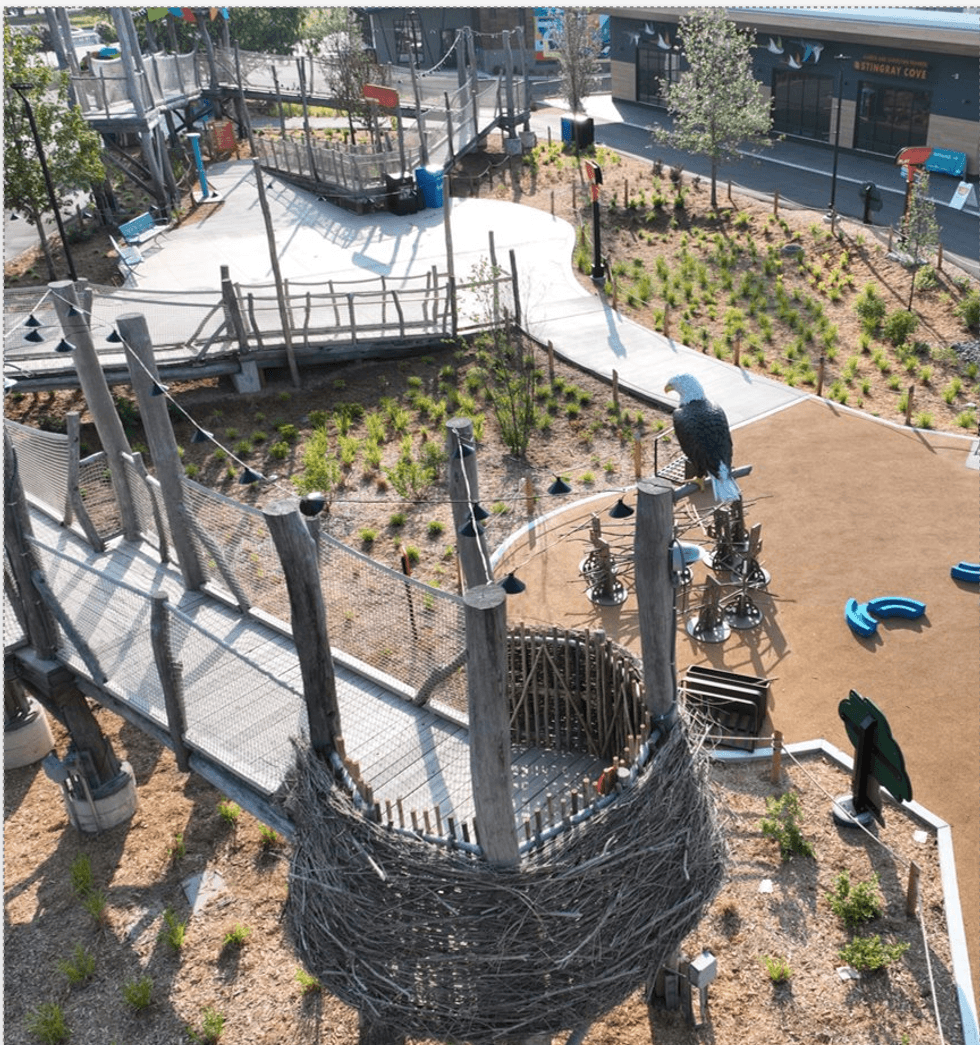
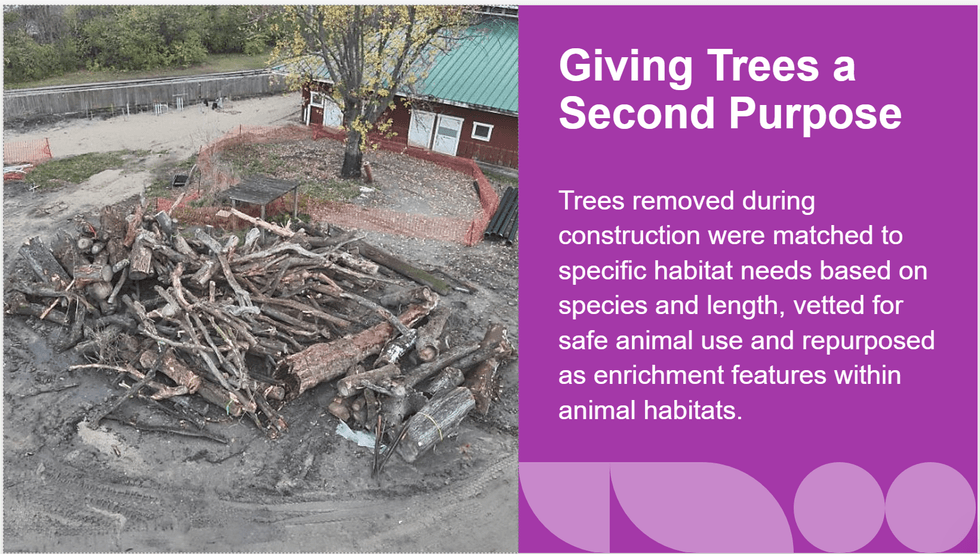
Materials with a second life. Black locust is invasive in the Great Lakes region. During habitat restoration, the Zoo removed black locust trees and milled them into Treetop Crossing and the Canopy Trail, an accessible walkway that lifts families 14 feet into the trees. Other trees removed during construction were matched to specific animal habitats by species and length, vetted for animal safety and installed as enrichment. Across the project, 30% of materials by cost contain recycled content, 31% were sourced within the region, and 31% of infrastructure is designed for disassembly and reuse. Recycled-content products include 100% crushed concrete, 93% recycled ductile iron water main and 90% recycled rubber safety surfacing.
Fred and Barbara Erb Discovery Trails
The Detroit Zoological Society
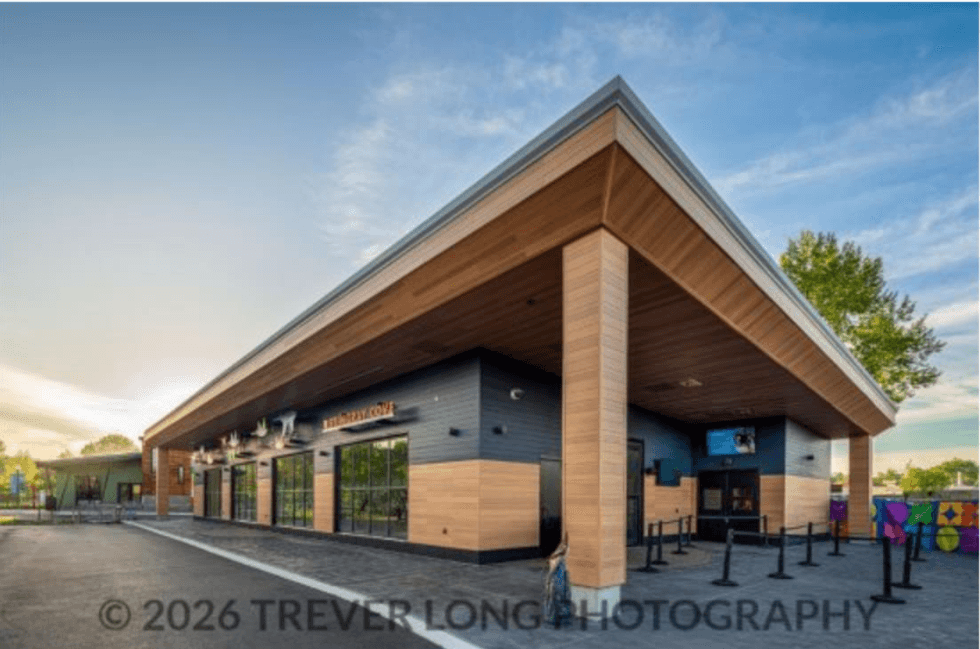
Construction that respects people and place. The project diverted 89% of construction and demolition waste from landfill, 26,560 tons in total, most of it removed concrete and asphalt. 98% of contracted construction workers earned a living wage. Vegetation and soil protection zones preserved healthy native trees and soils, and disturbed soils were tested and restored.
Fred and Barbara Erb Discovery Trails
The Detroit Zoological Society
Operations built to last. Site lighting and equipment use 43% less energy than the baseline, and landscape electricity comes from green power. Shade trees and reflective paving reduce urban heat. A plant health care plan minimizes pesticide and fertilizer use, and all landscape trimmings are composted. New galvanneal waste-sorting stations were designed for the Zoo, with signage that targets the most common items to reduce contamination and lids that deter bees and hornets.
Fred and Barbara Erb Discovery Trails
The Detroit Zoological Society
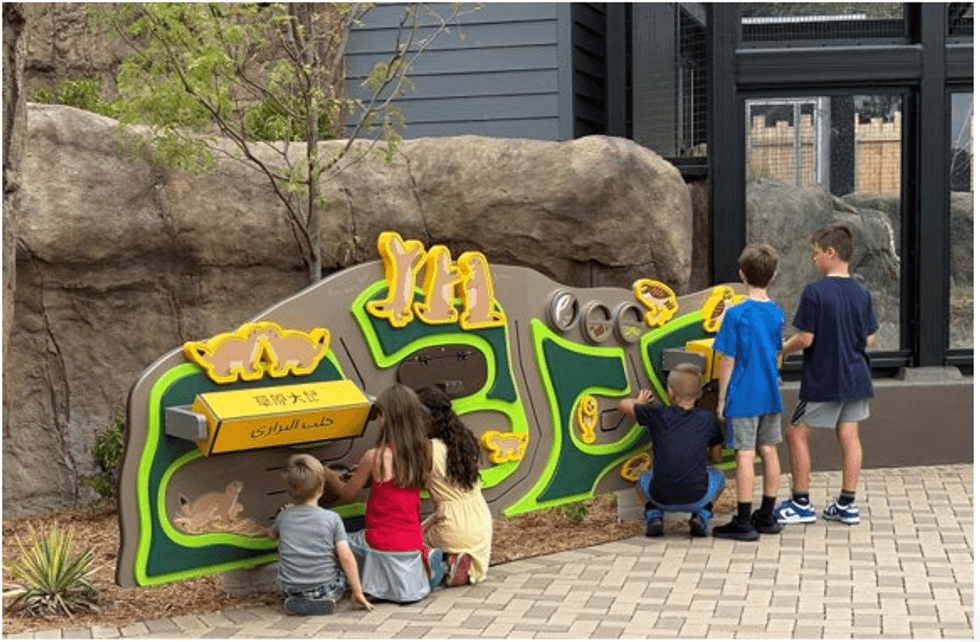
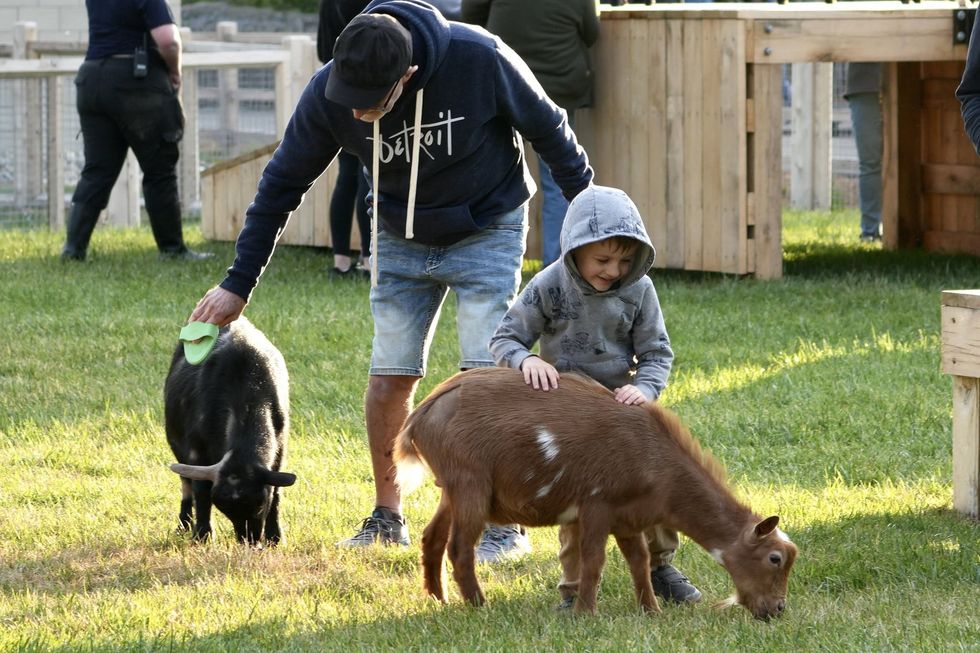
Empowering visitors to act. Interpretation appears in three formats along the trails and shows guests stormwater and native-planting ideas they can use at home. The landscape becomes the classroom. The Zoo extends this work beyond its fence through the Clinton River Watershed Council's Adopt-a-Stream program and the Clinton River Water Festival.
Fred and Barbara Erb Discovery Trails
The Detroit Zoological Society
UN SDG alignment: SDG 6 (clean water), SDG 8 (decent work, through living wages and local hiring), SDG 11 (resilient cities), SDG 12 (responsible materials), SDG 13 (climate adaptation) and SDG 15 (life on land, through invasive removal and native habitat).
Discovery Trails is the Detroit Zoological Society's first voluntary third-party sustainability certification. It now sets the development standard for every future project at the Zoo, and it shows that a high-energy family attraction can also restore its watershed.