Everybody checks the weather. Almost nobody understands how we know it.
How We Know the Weather | The Systems Behind the Forecast Become the Experience
TechFulcrum
That was the design problem. Weather has no single object. You cannot put a forecast in a case, and the systems behind one are largely invisible: software, satellites in orbit, and radar installations the public rarely sees.
So we made the systems behind the forecast into the exhibit.
How We Know the Weather | The Systems Behind the Forecast Become the Experience
TechFulcrum
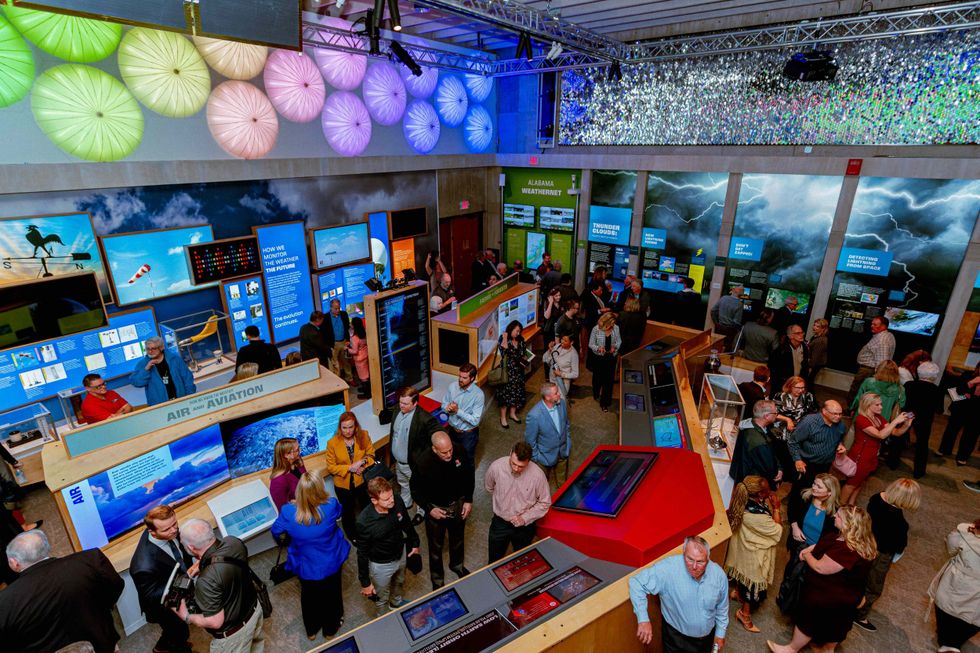
How We Know the Weather occupies 2,500 square feet inside the U.S. Space & Rocket Center in Huntsville, Alabama. It opened to the public on March 31, 2025, with approximately 30 interactive displays, live data feeds, and sensory experiences. The Baron Critical Weather Institute conceived and commissioned the exhibition. Design Force led its design and fabrication, while TechFulcrum designed and implemented its technology systems.

TechFulcrum logo
TechFulcrum
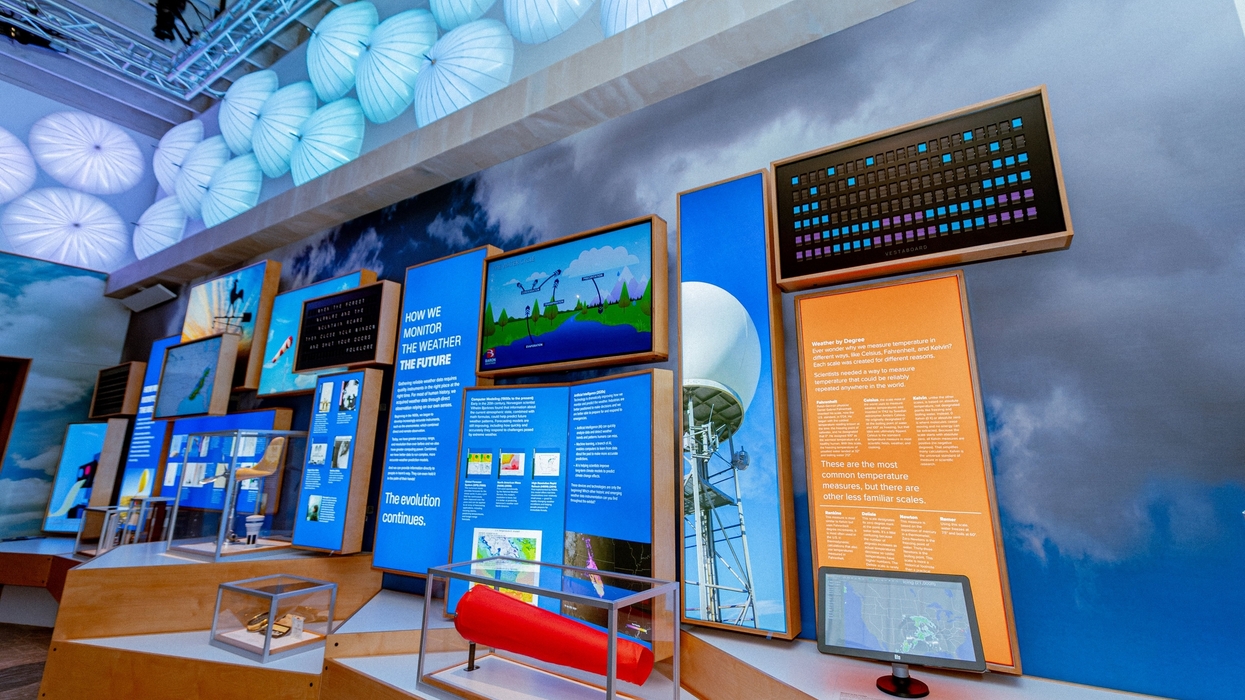
The central organizing decision was to turn the process of weather observation into a physical experience. Instruments, data, and weather phenomena became things visitors could encounter at full scale rather than subjects explained only through screens.
One of its central innovations is the use of real operational weather technology and live environmental data as part of the learning experience, rather than relying only on prerecorded media or simulations.
How We Know the Weather | The Systems Behind the Forecast Become the Experience
TechFulcrum
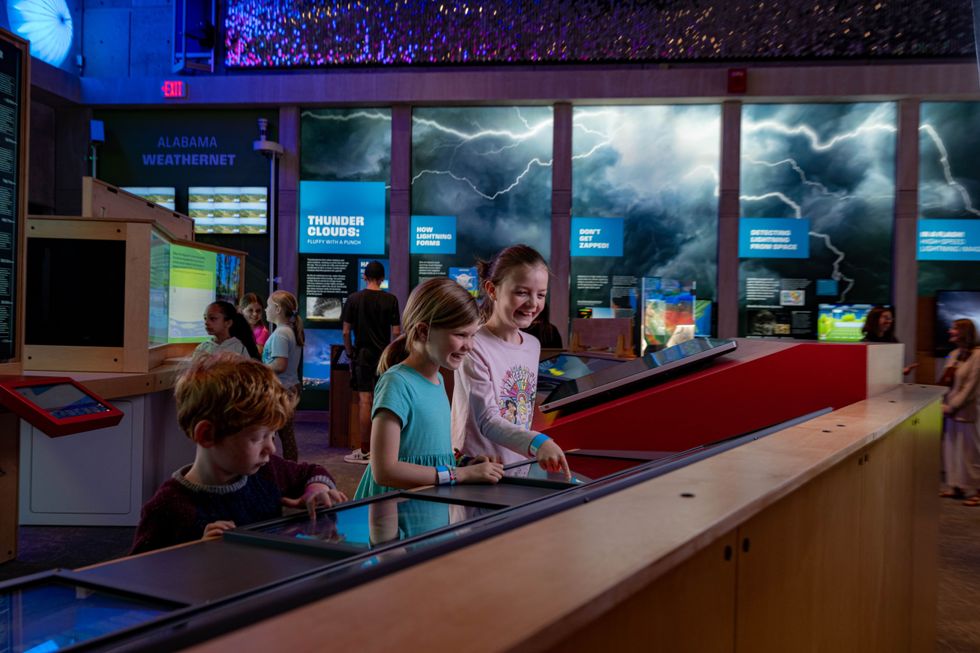
As visitors learn how a particular detection technology works, they can often see that same technology reporting on the real world at that moment, and, in many cases, on conditions in their own region. The goal was to turn weather science from something abstract into something immediately observable: explanation becomes exploration.
Our partners gave us access to extensive live and historical datasets, professional meteorological tools, and the scientists who use them. We then designed the technology layer that translates that information into experiences that are understandable and engaging for a broad public audience.
How We Know the Weather | The Systems Behind the Forecast Become the Experience
TechFulcrum
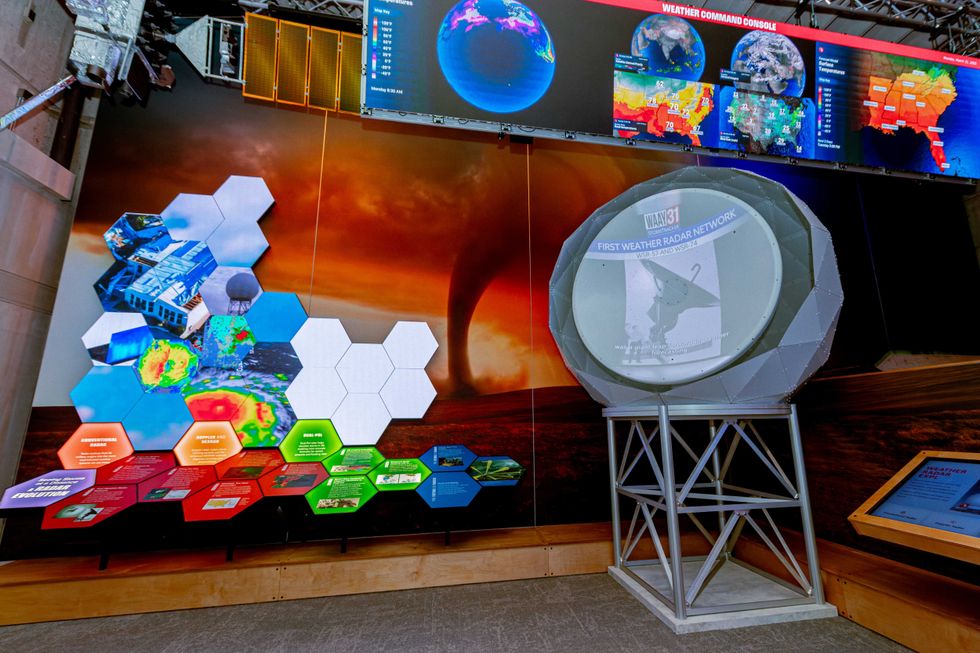
The Weather Command Center is a large LED wall at the heart of the gallery. It uses Baron Lynx, professional meteorological visualization software used by television meteorologists to create on-air weather graphics. Instead of recreating a simplified version for the museum, the exhibition brings professional weather visualization technology directly into the gallery, displaying live satellite imagery, radar information and forecast models as conditions develop.
The Alabama WeatherNet station is an interactive touchscreen connected to a statewide network of cameras and weather sensors used for weather monitoring and emergency awareness. Visitors can select camera locations around Alabama and explore current measurements such as temperature, wind, rainfall and humidity. This allows them to compare conditions across the state and connect the exhibition directly to places they recognize.
How We Know the Weather | The Systems Behind the Forecast Become the Experience
TechFulcrum
The Alabama WeatherNet station is an interactive touchscreen connected to a statewide network of cameras and weather sensors used for weather monitoring and emergency awareness. Visitors can select camera locations around Alabama and explore current measurements such as temperature, wind, rainfall and humidity. This allows them to compare conditions across the state and connect the exhibition directly to places they recognize.
Supporting these experiences is a custom automated data pipeline built specifically for the exhibition. Live feeds from different sources are ingested, processed and reformatted into pixel-precise layouts for each display. Watchdog processes monitor the system, restart stalled components, retry failed connections and fall back to stored content when live sources become unavailable. This infrastructure allows continuously changing scientific data to function reliably as permanent museum media without requiring staff intervention.
How We Know the Weather | The Systems Behind the Forecast Become the Experience
TechFulcrum
The radar exhibit takes a different approach by using the instrument itself as the display. A real weather radar has been opened to expose its dish and internal hardware. Projection from the overhead truss maps video directly onto the radar dish, where Huntsville television meteorologists explain how radar detects storms. Rather than separating the artifact from its interpretation, the physical technology becomes the projection surface on which its own operation is explained.
Beside it, the hexagonal LED wall uses a custom display geometry inspired by the honeycomb structure of a radar dome. Animation tracing the history of weather radar was designed specifically around the nontraditional shape of the LED canvas rather than adapted from a conventional rectangular video.
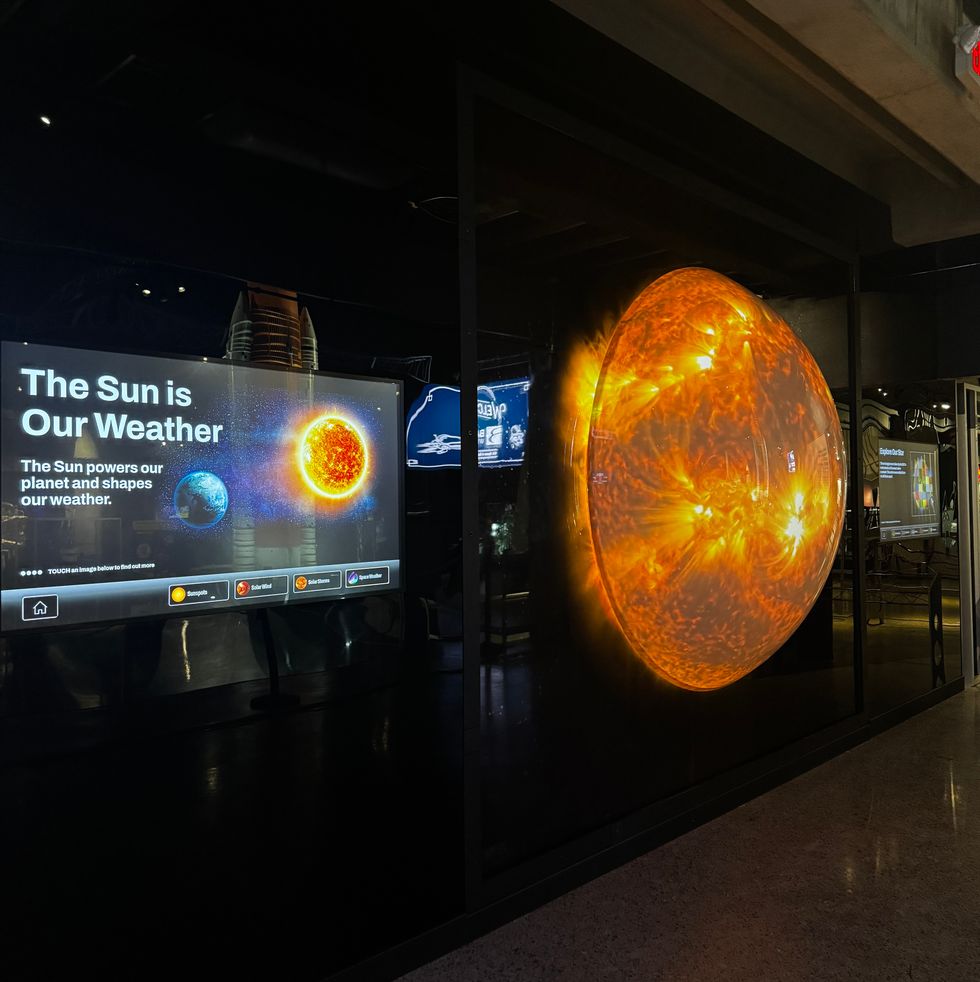
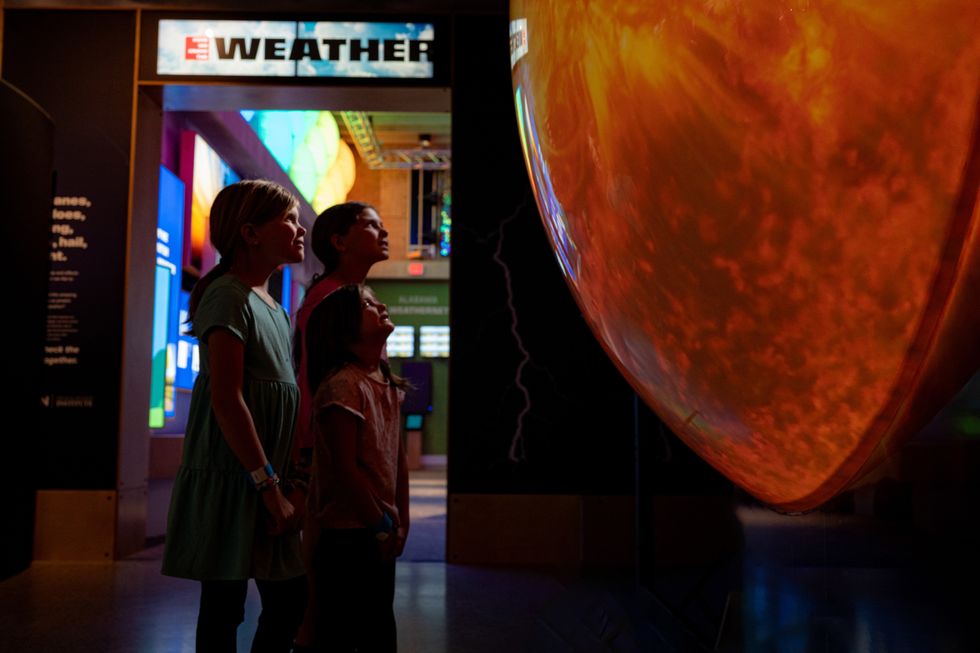
The Solarium introduces visitors to solar weather through another custom projection system. A dome projects outward from the center of a flat wall, with both surfaces functioning as a continuous rear-projection canvas. Real solar imagery wraps across the dome while flares and eruptions extend beyond it onto the surrounding wall. The combination of physical geometry, projection mapping and scientific imagery gives visitors an intuitive sense of the Sun as a dynamic three-dimensional body rather than a flat photograph. Nearby touchscreens explain the satellites and instruments responsible for collecting the imagery and how solar activity affects Earth.
How We Know the Weather | The Systems Behind the Forecast Become the Experience
TechFulcrum
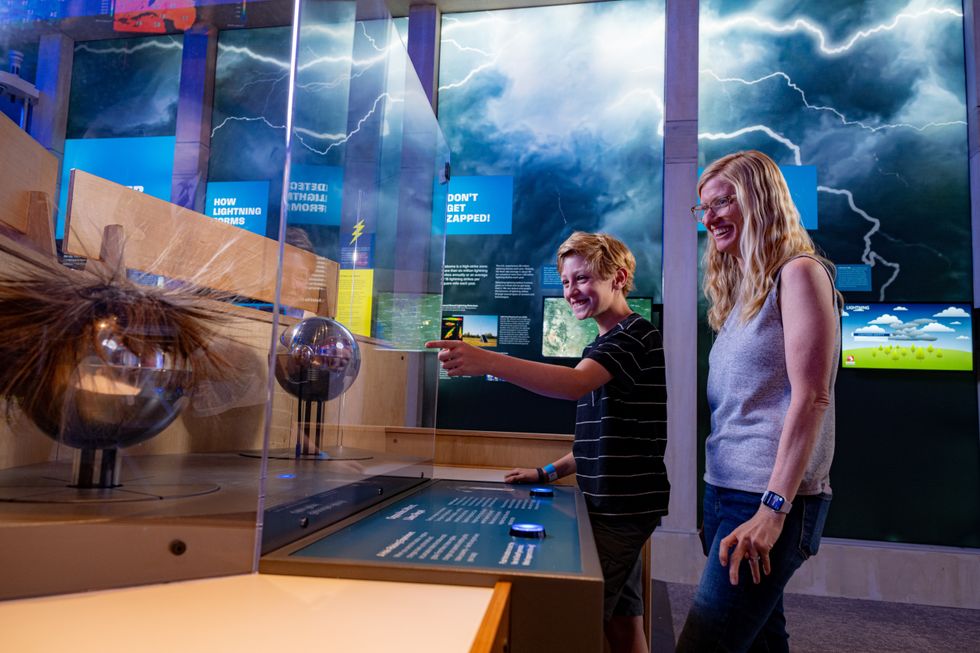
Other parts of the gallery deliberately move away from screens and let visitors experience scientific principles physically. Guests can activate a Van de Graaff generator, observe a visible electrical discharge across a spark gap, interact with airflow at the wind wall, place their hands into mist in the cloud bowl, and see themselves through ultraviolet and infrared imaging systems to understand how instruments can perceive wavelengths our eyes cannot. Directional audio allows many of these experiences to operate simultaneously within an open gallery without creating an overwhelming sound environment.
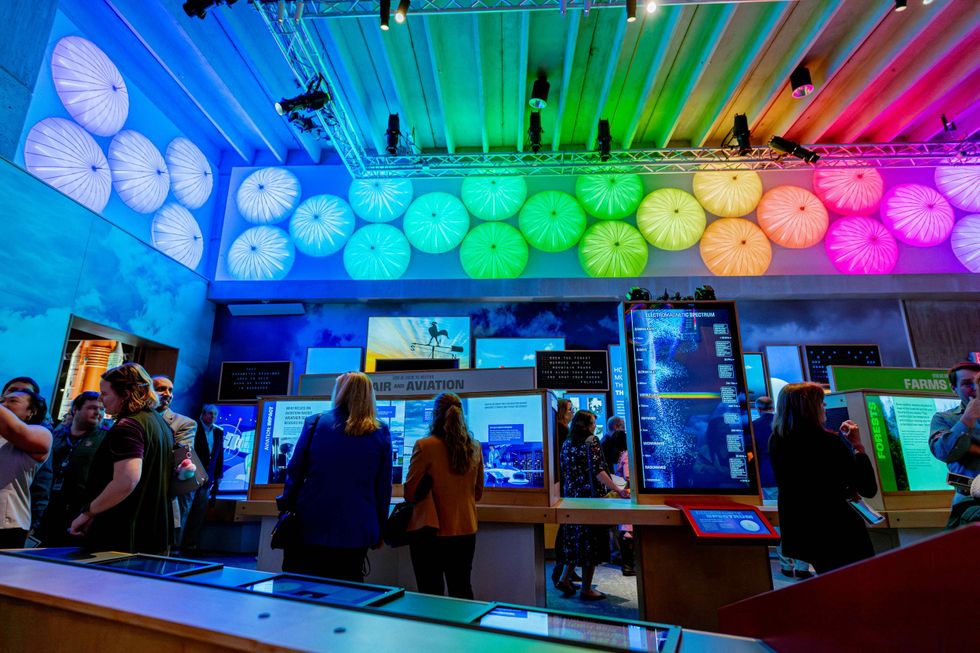
Overhead, 28 suspended umbrellas fitted with programmable RGB lighting create an animated environmental layer across the gallery, allowing the physical space itself to respond visually to the weather theme.
Finally, The Power of the Twister turns tornado preparedness into a three-minute multisensory experience inside a recreated storm shelter. A television broadcast is interrupted by a tornado warning while simulated exterior views show the storm approaching. Synchronized video, lighting, audio, subwoofers and tactile transducers embedded in the walls and benches reproduce the sensory escalation of severe weather before the simulated power fails.
Professional meteorological software, live sensor networks, satellite imagery, custom data processing, projection mapping, interactive displays, physical demonstrations and immersive media are all used to explain the systems that scientists rely on to understand weather.
The result is an exhibition in which the content is never entirely static. Conditions outside the museum continually become part of the experience inside it, allowing visitors to understand not only how we know the weather, but to see those systems actively knowing it in real time.