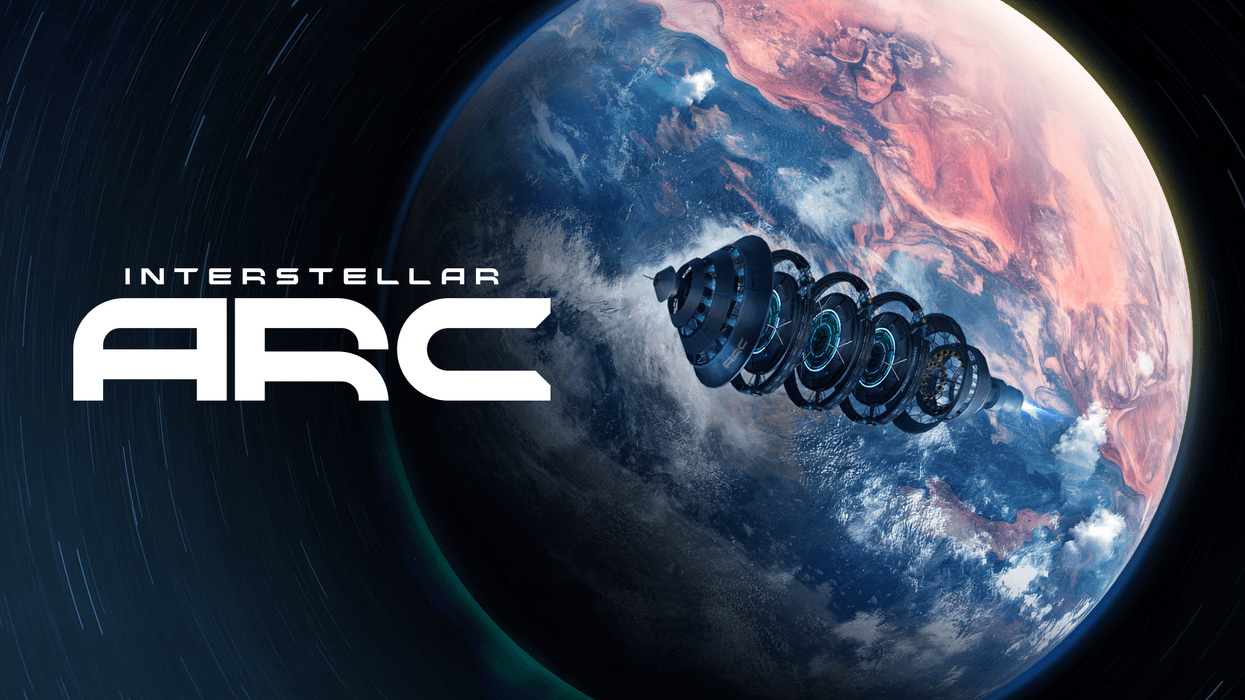

Interstellar Arc doesn’t just place visitors inside a story: it draws them into a living, breathing universe. Designed with cinematic scale and scientific grounding, the experience unfolds aboard a vast interstellar spaceship, complete with a rotating virtual centrifuge reminiscent of 2001: A Space Odyssey. This spaceship environment anchors participants in the physical logic of space travel, making a futuristic world feel not only plausible, but tangible. By blending science and fiction, emotion and environment, Interstellar Arc offers more than immersion: it offers presence. It invites audiences to step into the future, and feel what it might truly be like to be part of humanity’s next great leap.
At its core, Interstellar Arc is inspired by humanity’s timeless drive to explore beyond what we know. Since the dawn of the space age in the 1950s, space exploration has symbolised our collective desire to look outward and find our place in the universe. Yet, in the 21st century, we remain at the very beginning of that journey.

Interstellar Arc poses the questions: where does the project of space exploration ultimately lead? What lies ahead, beyond our solar system? What is our shared horizon and purpose as a species? The installation becomes both a reflection on humanity’s place in the cosmos and an invitation to imagine something bigger. Together.
What sets Interstellar Arc apart isn’t just its narrative vision, but its unprecedented scale and technological innovation. Spanning more than 20,000 square feet, it is the largest contiguous, high-fidelity, wireless VR environment ever deployed. Unlike modular arena VR, Interstellar Arc functions as a single continuous space, a technical leap that allows hundreds of participants to roam freely, interact, and remain perfectly synchronised in real time with millisecond latency and seamless tracking. This level of concurrency, fidelity, and scale has never been attempted before.
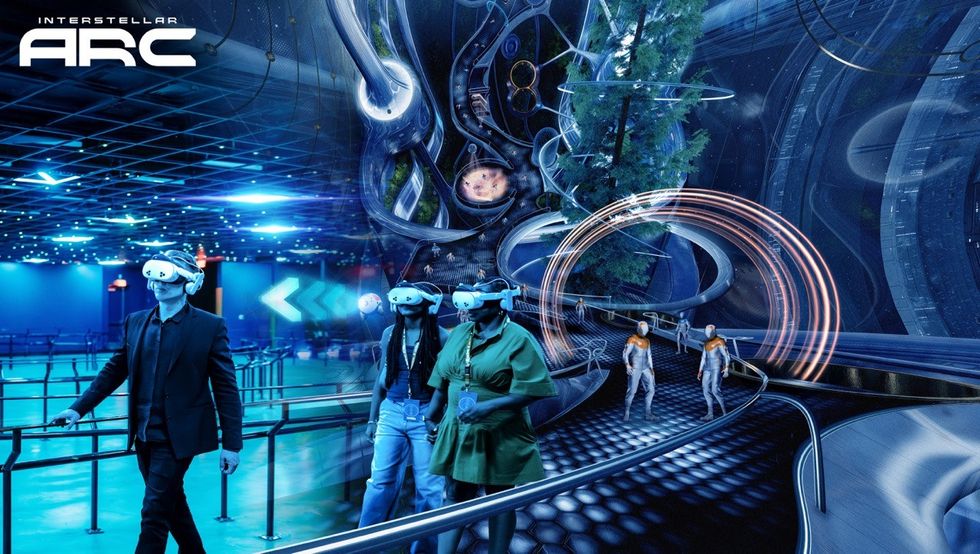
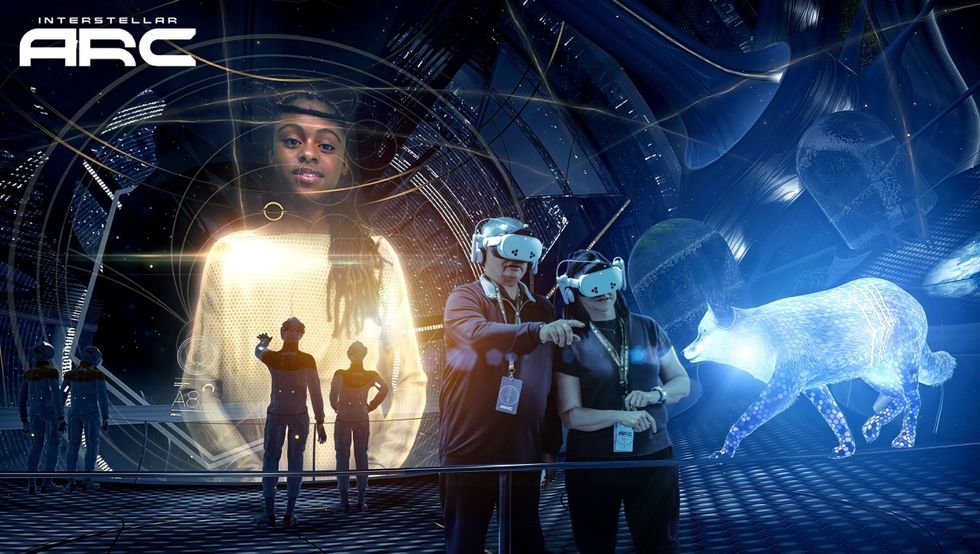
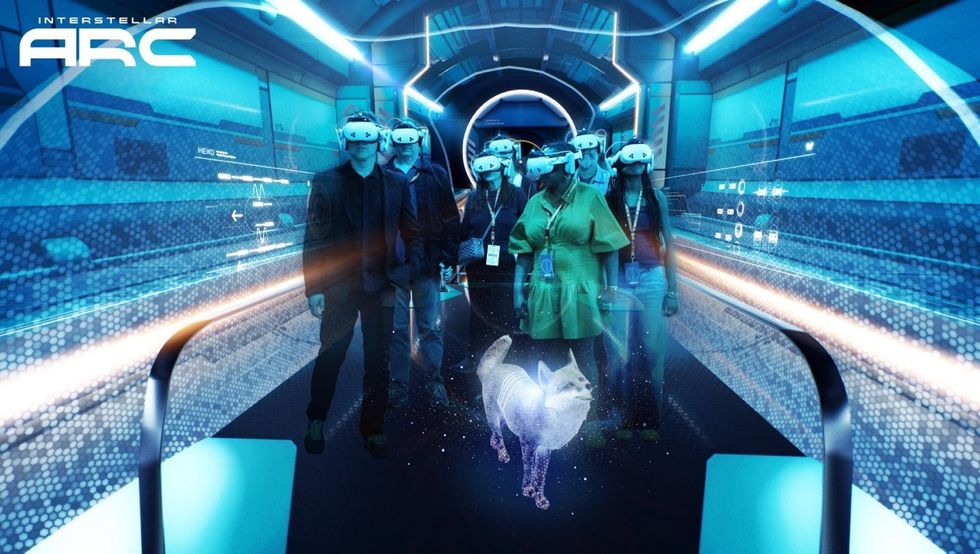
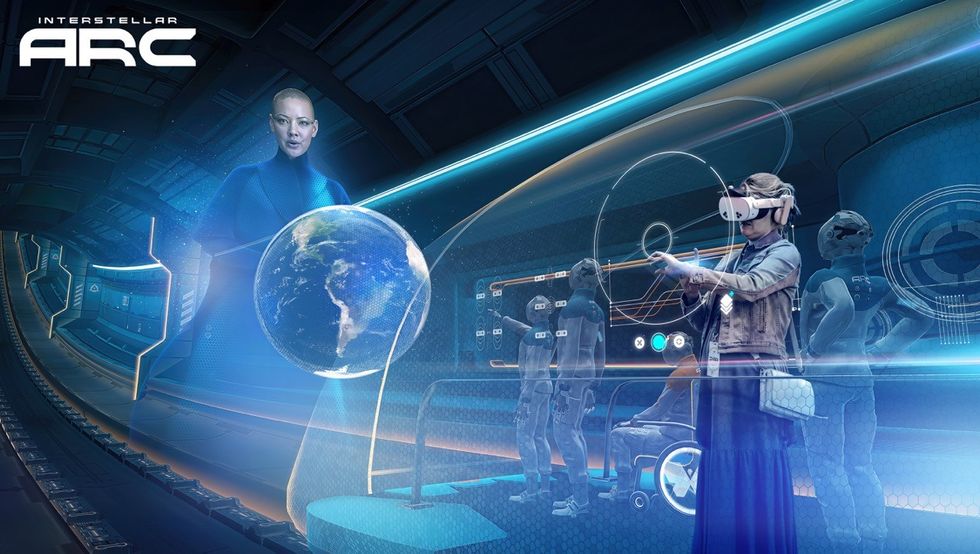
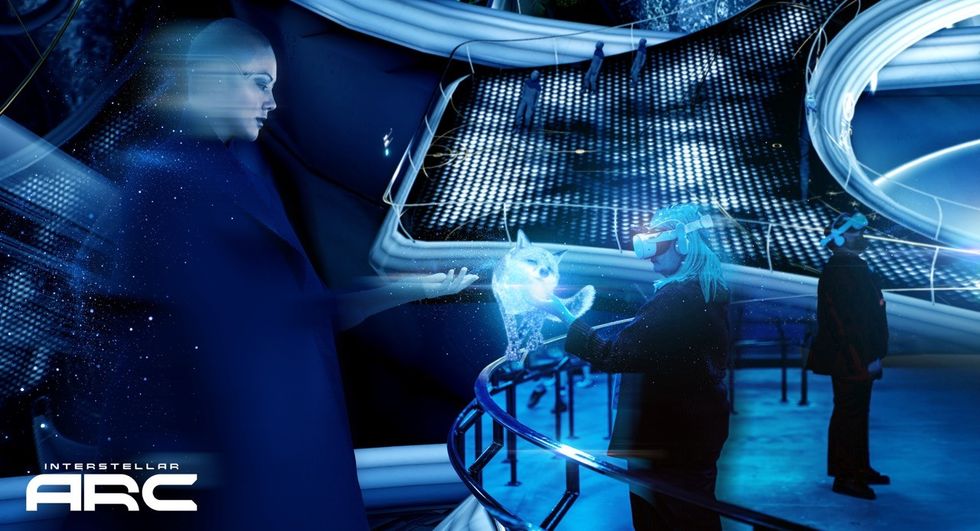
The project also debuts a breakthrough in VR locomotion. Visitors can explore a massive rotating centrifuge habitat, an architectural form impossible to construct at human scale, through a proprietary redirection and path-mapping system. This innovation re-maps natural steps onto curved and sloped geometry while users remain on flat ground, creating the convincing illusion of walking inside a rotating world. Combined with the visual fidelity pushed to the limits of the Quest 3 platform, the result is a richly detailed, expansive world layered on top of advanced locomotion and throughput systems.
And the immersion begins well before the headset goes on. From the moment guests enter the physical installation, designed as a futuristic spaceport, the journey unfolds seamlessly, extending before and beyond the VR show itself. By integrating narrative design, architecture, and interactive technology, Interstellar Arc transforms into more than a VR experience: it is a multi-sensory voyage that bridges the real and the virtual.
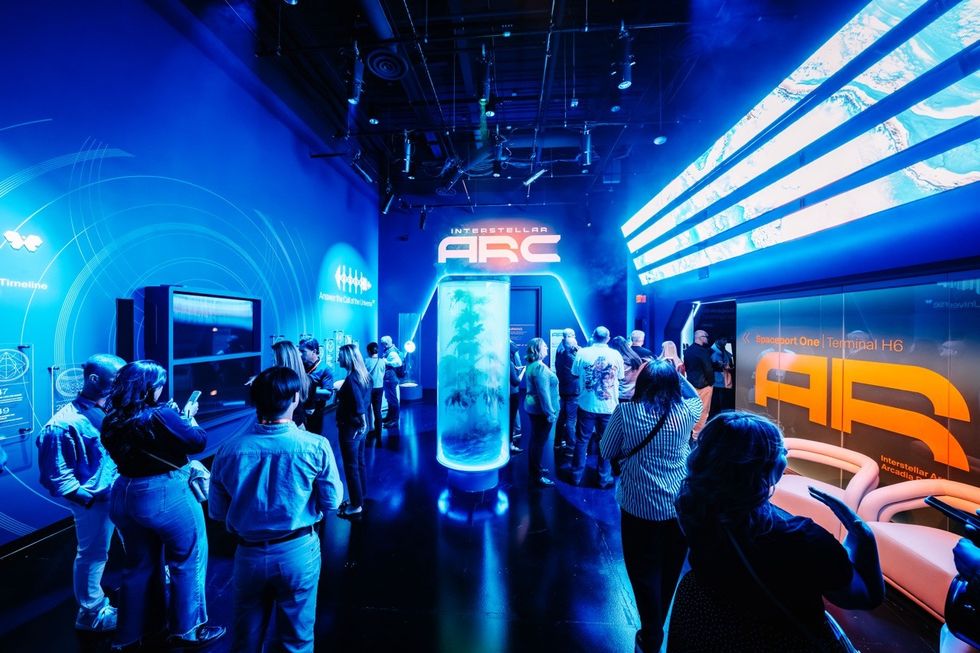

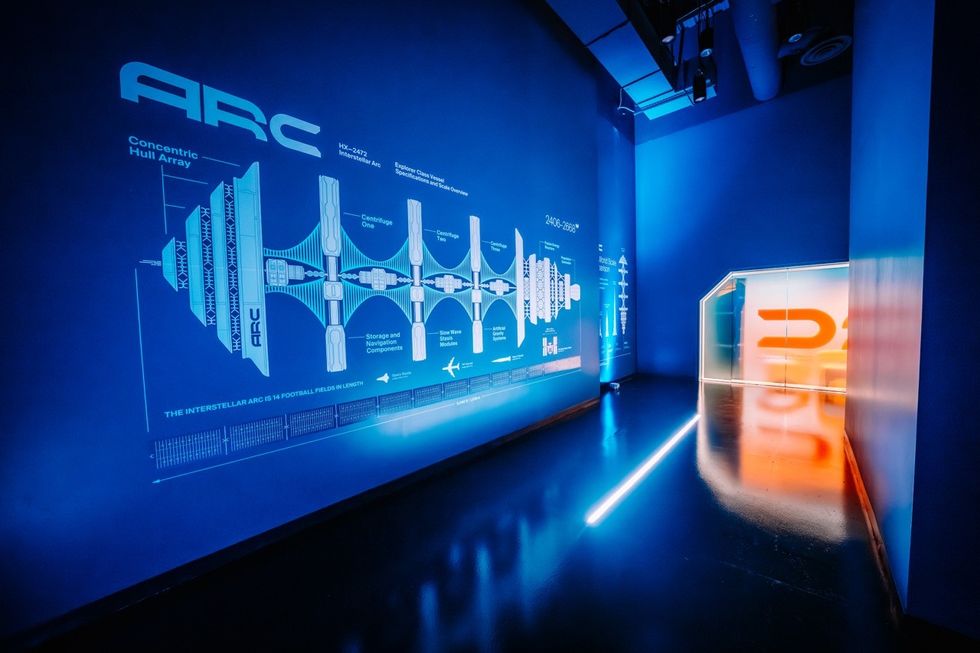

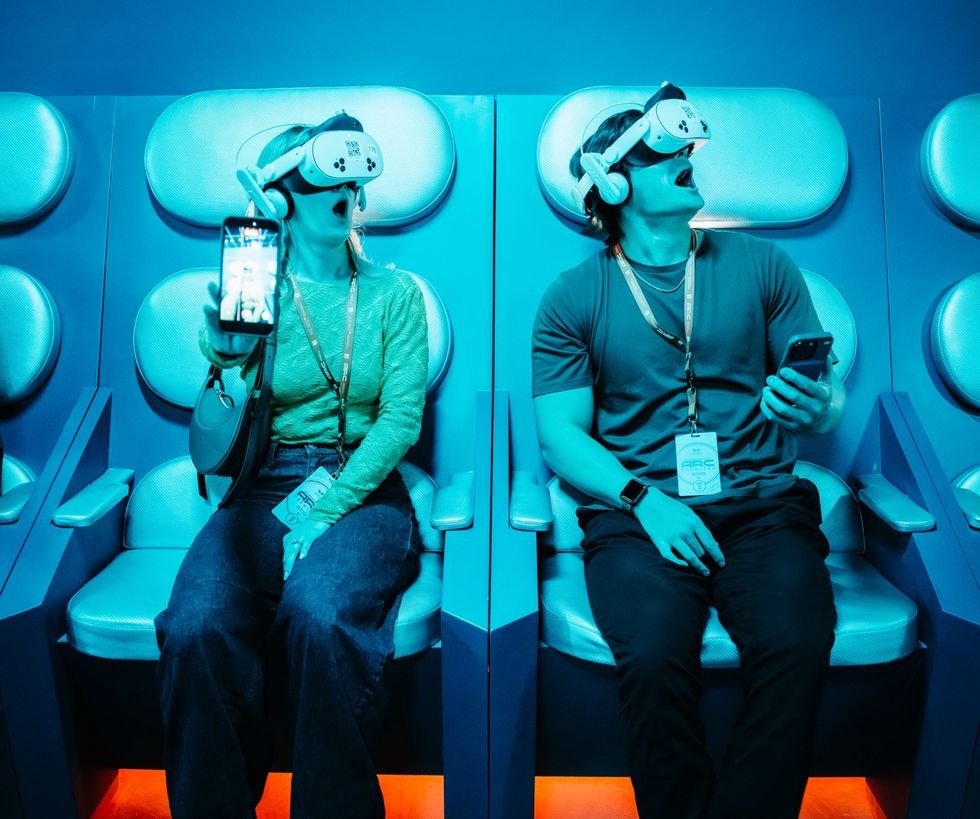
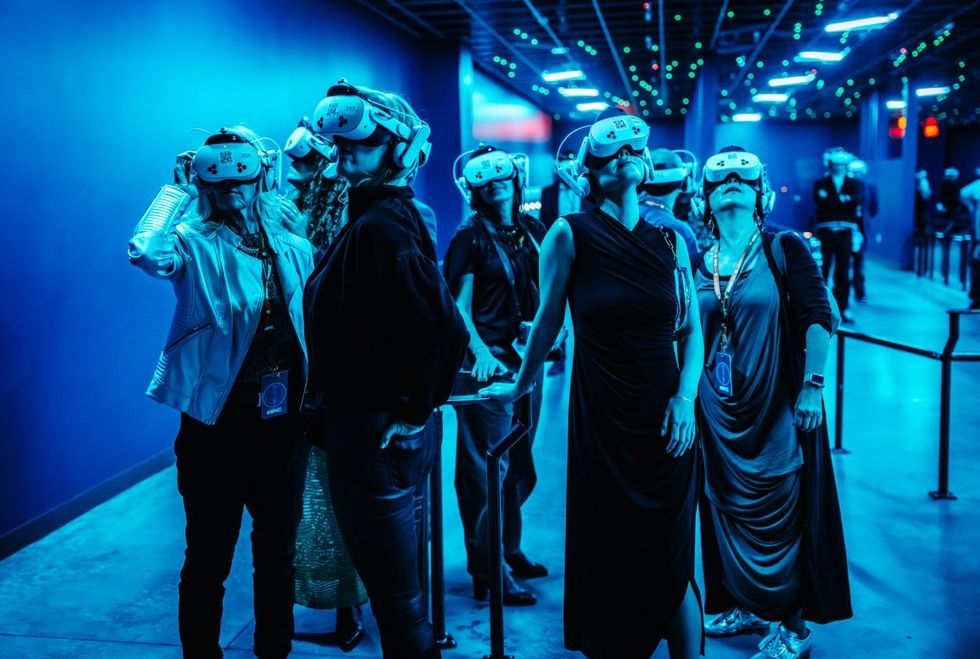
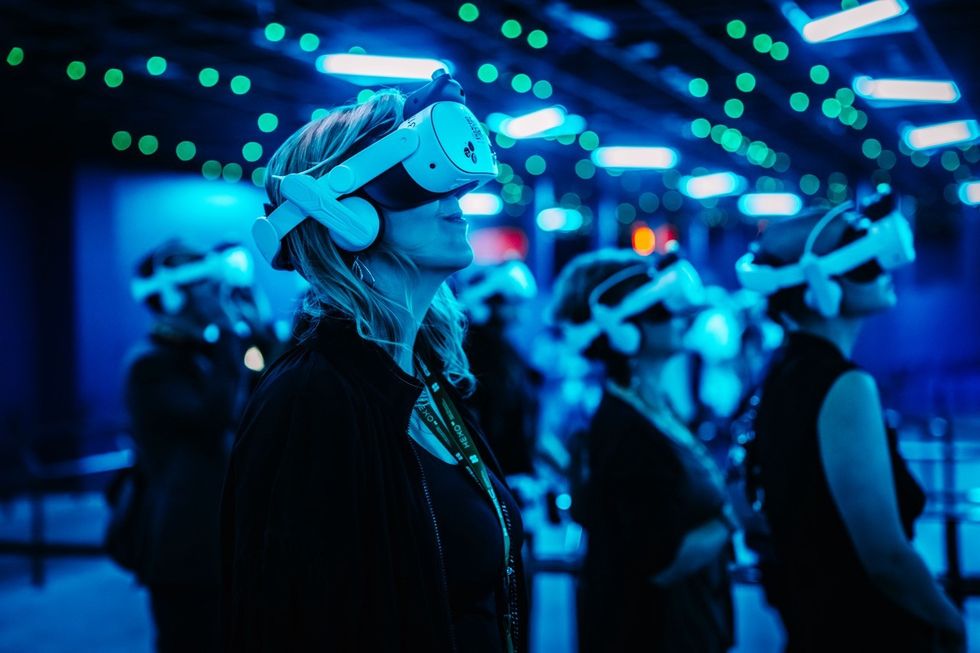
This project represents a new benchmark in location-based VR. It unites cinematic storytelling, cutting-edge spatial computing, and large-scale deployment into a single, cohesive whole. It not only expands the technical boundaries of what VR can achieve, it redefines how audiences can come together to experience, imagine, and explore.
In doing so, Interstellar Arc demonstrates how innovation in immersive technology can transcend entertainment, becoming a cultural exploration of possibility, presence, and humanity’s shared future in the stars.