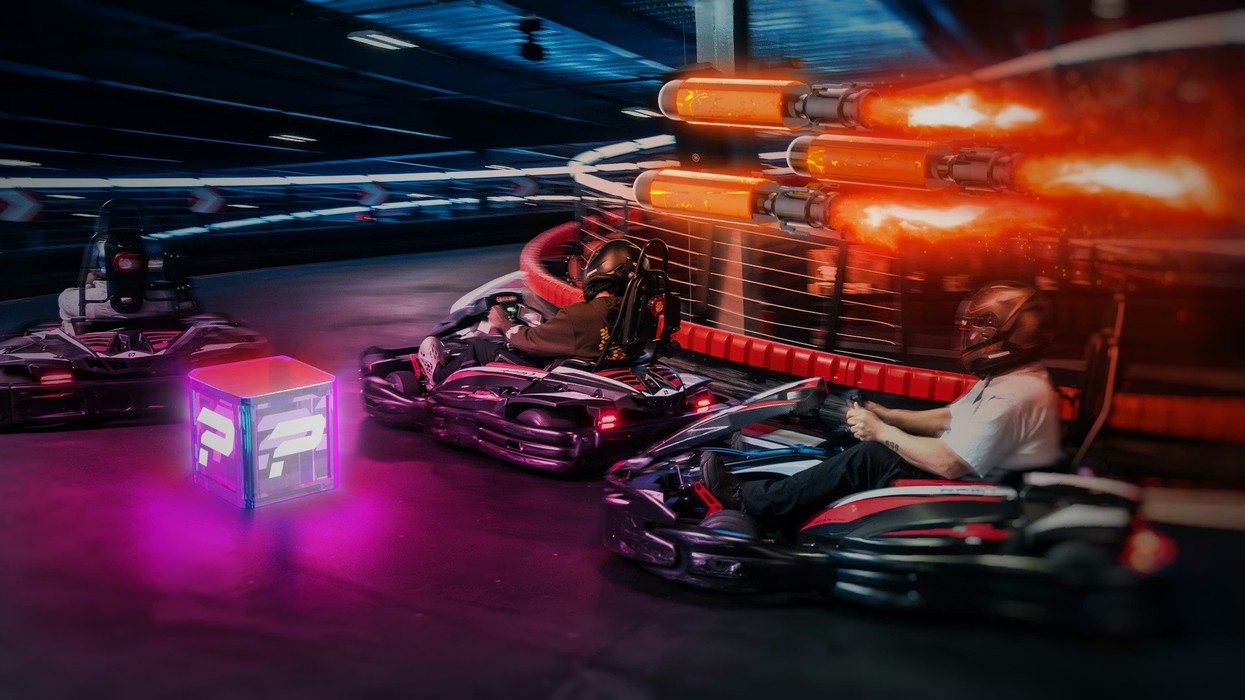

You grip the wheel. The roar of the motor fades into anticipation. A glance at the LED dashboard built into your steering wheel shows your arsenal: missile armed, shield ready. You swerve, deploy, and rip through the next straight. By lap three, you’re not just racing—you’re waging war.
That is Kart Klash—where RPM Raceway fuses real go-karting and arcade warfare into a fully immersive combat track experience.
What It Is
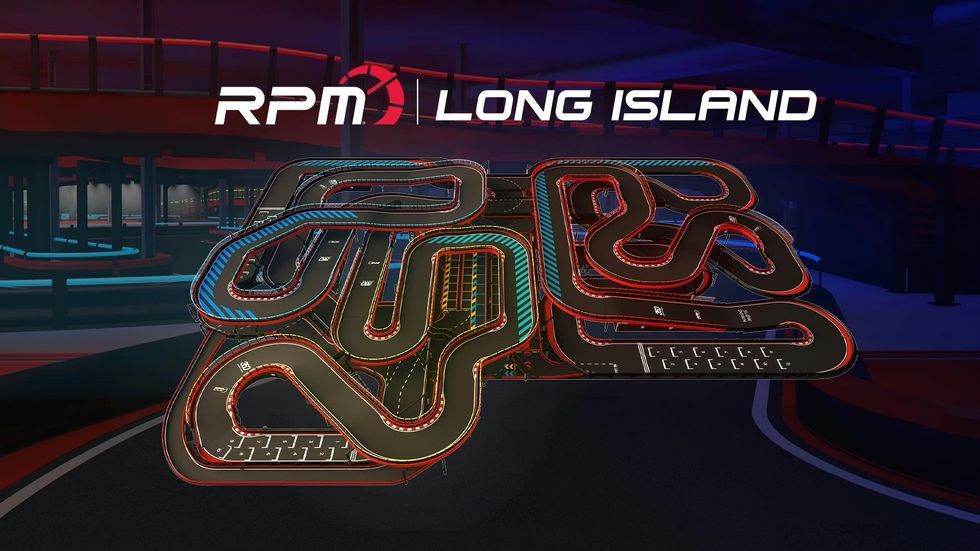
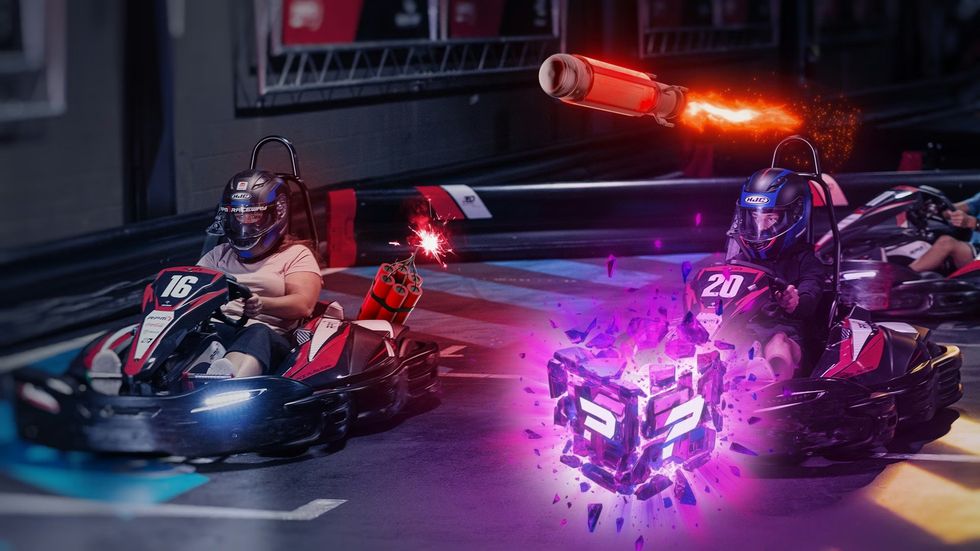
Kart Klash redefines go-karting as a live-action video game. At RPM Raceway, drivers race atop multi-level tracks with spirals, underpasses, drops, ramps, and tight turns. These aren’t flat circuits—they are layered battlegrounds built for tactical maneuvers and surprise attacks.
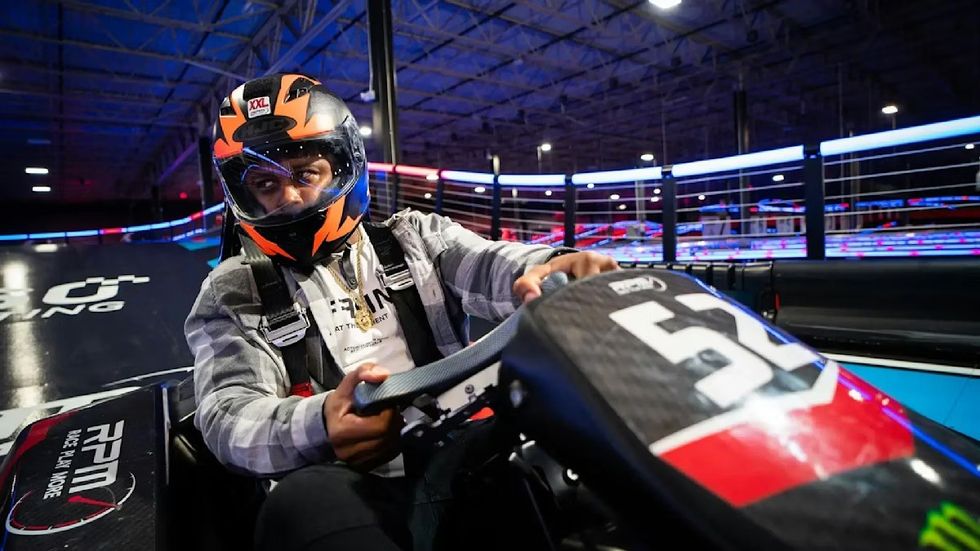
Each kart is a high-performance electric machine reaching speeds over 30 mph, delivering torque and agility for both speed and combat. As racers navigate the track, they pass over trigger zones that activate power-ups: missiles, EMPs, shields, and turbo boosts.
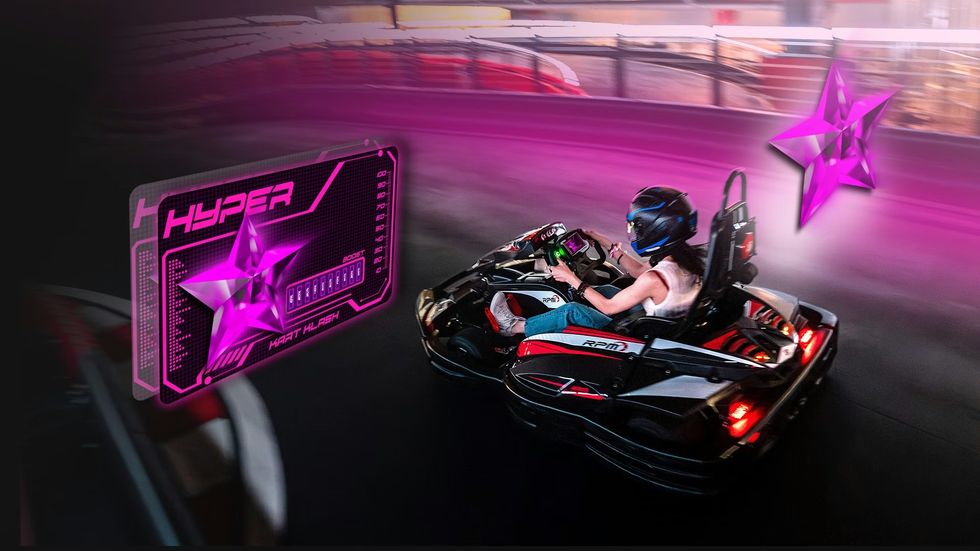
Feedback is immediate. Players track their weapons and points on the steering-wheel dashboards, flashing when hits land or shields absorb an attack. Launch a missile, and the system registers it with split-second accuracy—your opponent’s kart responds in real time, while leaderboards and trackside displays update instantly.
Why It’s Innovative
1. A true fusion of sport and game mechanics
Kart Klash doesn’t add effects to karting—it rebuilds it. The track, karts, software, and scoring system are unified. A driver may be fastest, but without tactical timing of weapons and defenses, victory slips away.
2. Embodiment, not veneer
Players occupy real karts on real tracks yet feel like avatars inside a game. With the dashboard built into the steering wheel, the digital layer becomes physical—immersion is literally in the driver’s hands.
3. Social and spectator-driven
The attraction is as fun to watch as it is to play. Hits trigger identity callouts, rivalries play out on leaderboards, and the drama is visible from every angle. It’s not just a race—it’s theater.
4. Endless replay value
Every race is different. Weapon pickups, shield timing, and track position constantly reset the tactical equation. Unlike traditional karting, where only lap time matters, Kart Klash rewards both skill and strategy.
5. Sophisticated technology at scale
Delivering this experience requires precision telemetry, low-latency weapon logic, synced scoring, and strict safety systems. Kart Klash achieves this seamlessly, proving it’s not a novelty but a scalable, high-throughput attraction.
How It Feels
What players remember isn’t just the win or loss. It’s the gasp when a missile lands, the laughter when a friend spins out, the rush when a last-second strike flips the leaderboard. By design, Kart Klash creates these emotional spikes, ensuring every race feels like a story worth retelling.
The social fabric is central. Friends, families, and coworkers enter as racers but leave as rivals or allies, replaying the drama long after the helmets come off. Kart Klash transforms racing into a shared narrative—competitive, unpredictable, unforgettable.
Fit with the Immersive Attraction and Game On Categories
The Blooloop Innovation Awards honour attractions and experiences that expand what immersion means. Kart Klash delivers more than entertainment—it delivers presence.
- Transformation of format: a familiar activity, go-karting, becomes an entirely new attraction through the addition of combat mechanics and real-time scoring.
- Seamless physical-digital integration: immersion is embedded in the steering wheel, the track, and the karts themselves.
- Narrative arc: each race plays like a short drama, with tension, conflict, and resolution built into the design.
- Shared immersion: groups don’t just ride or watch; they step directly into a competitive, story-driven adventure.
- Unlike attractions that rely on goggles or projections, Kart Klash achieves immersion through embodiment and consequence. Players are not told a story—they live it, through their own choices and rivalries on the track.
Conclusion
Kart Klash is not an upgrade to karting—it is a reinvention. With its multi-level tracks, high-performance karts, steering-wheel dashboards, and real-time digital combat, it creates a new kind of immersive attraction. Racing is no longer about the finish line; it’s about the clash along the way.
More than an experience, Kart Klash is a benchmark for how sport, social play, and game design can converge. In this arena, you don’t just drive—you battle.
Partners
- Sodi Karts
More information about partners
Kart Klash wasn’t built through a handoff — it was engineered through constant co-design. RPM Raceway defined the race format not as pure speed, but as live tactical combat: weapons, counters, momentum shifts, and emotional spikes calibrated like a video game. That meant writing an entirely new rulebook for real-world racing — determining how long a shield should last, how a hit should register, how delay ruins drama, and how tension resets after every exchange. Sodikart took that vision and helped translate it into hardware reality, ensuring the kart itself—chassis, drivetrain, and safety envelopes—could absorb digital commands and physical reactions without compromising control.
But neither party worked in isolation. The telemetry layer — the invisible language between track sensors, kart inputs, and vehicle response — was built shoulder-to-shoulder, tested in milliseconds until weapon impact, vibration feedback, and score logic all landed at the exact emotional moment RPM intended. Even the driver interface followed the same rhythm of collaboration: RPM storyboarded what players should see and feel, while Sodikart engineered the dashboard display and steering integration so the feedback wasn’t just visual, but instinctive. And the track design itself was co-mapped between narrative flow and ride physics — every boost zone, pickup point, and surprise moment positioned to match both combat rhythm and driving line.
The result isn’t a supplier installation or an operator upgrade. It’s a co-authored machine — a combat racing platform where software logic and mechanical engineering were shaped simultaneously. Kart Klash exists because RPM and Sodikart chose to dissolve the usual wall between designer and manufacturer. They built the experience as one team, from both ends, until racing learned how to think back.