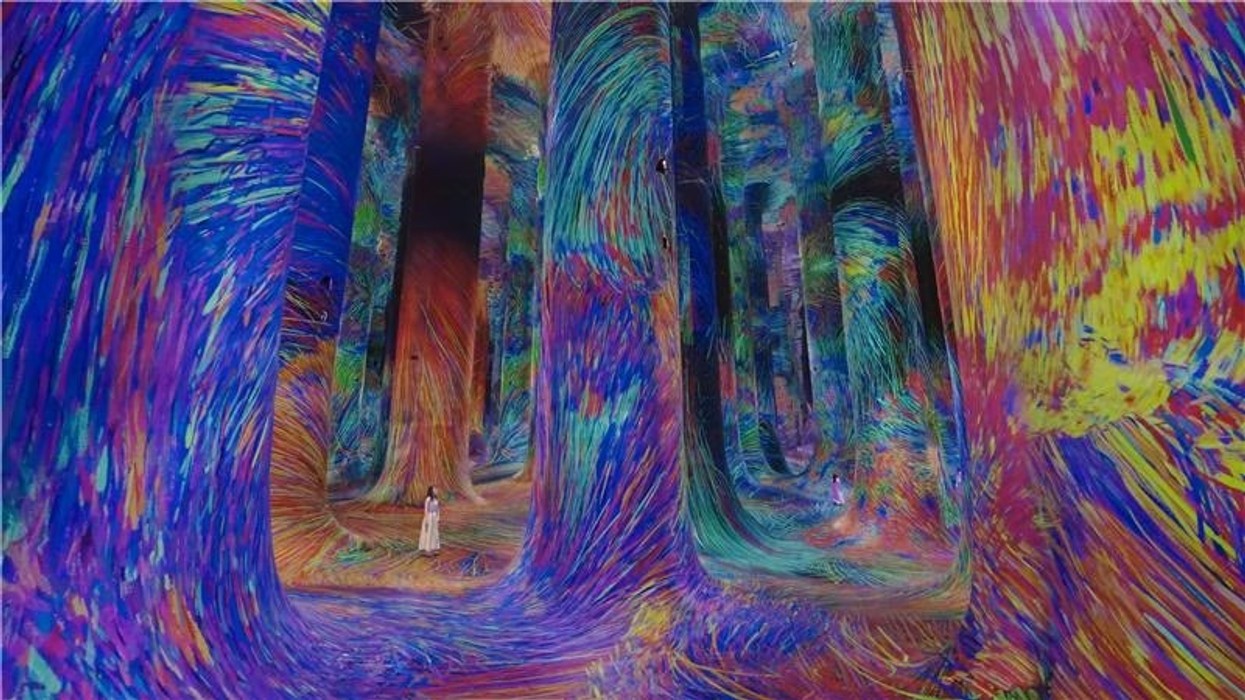
The teamLab Phenomena Abu Dhabi project represents a groundbreaking fusion of art, technology, architecture, and digital construction. Conceived through the partnership between the Department of Culture and Tourism – Abu Dhabi (DCT) and Miral, and executed by ALEC and its subsidiaries, this venue pioneers a new genre of immersive cultural experiences that redefine the interaction between people, the built environment, and nature.
At the heart of its innovation is the concept of “environmental phenomena.” Unlike traditional static exhibitions, the artworks are living systems that continuously evolve in response to natural forces and human interaction.
Through real-time rendering engines, AI-driven interactivity, and sensor networks, the installations blur the boundaries between art, nature, and self. Every visit offers a unique, participatory journey, as the environment dynamically responds to visitor presence and movement.
From a technological standpoint, the project is powered by one of the world’s most advanced audiovisual and environmental integration systems. Across 17,000 sqm, the venue incorporates 512 high-performance projectors, a record-breaking array of 1,000 class-4 lasers, and more than 3,200 field sensors, all operating on a 40 Gb dual-ring network. This low-latency infrastructure enables real-time synchronization of light, sound, airflow, and water, turning the space into a responsive ecosystem rather than a passive gallery.
The construction and delivery approach itself was highly innovative. ALEC Technologies implemented its proprietary S.T.R.I.V.E. methodology—Staging, Testing, Remote Assembly, Integration, Verification, and Error-Proof Installation. By pre-fabricating and testing 142 AV racks off-site in a controlled environment, the team reduced assembly time from twelve weeks to three, minimized on-site risks, and ensured flawless plug-and-play installation. This industrialized workflow proved essential given the compressed programme and the technical sensitivity of the installations.
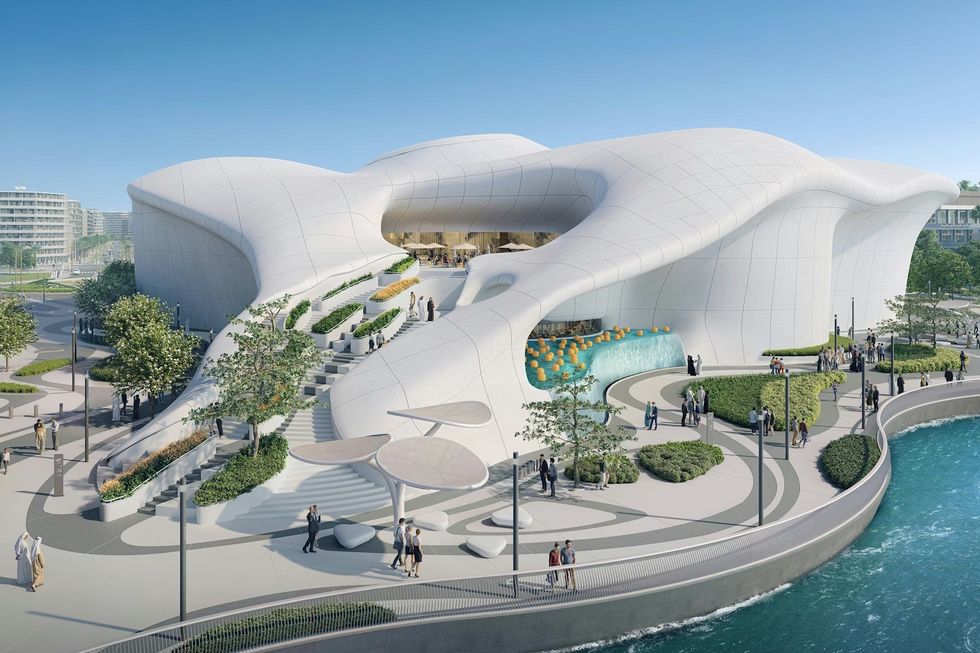
Digital construction and precision coordination played a central role. BIM was adopted throughout the lifecycle, aligned with Miral’s ISO 19650-compliant protocols and ALEC’s digital strategy. A dual-layer digital coordination model was developed: a structural and MEP BIM layer, and an AV geometry layer that included meticulously mapped projection cones and laser envelopes with millimetre tolerances. This “cone-to-reality” workflow used Rhino, Cinema 4D, Revit, Navisworks, and Revizto to translate artistic intent into exact engineering coordinates. Three successive laser scans validated on-site installation, cutting projector commissioning time by 35% and achieving perfect alignment across complex organic surfaces.
The project also pioneered advanced digital workflows that enhanced efficiency, collaboration, and transparency. Egnyte and OneDrive replaced physical file servers, enabling secure, remote access to documents. Live PTZ camera feeds and drone-based progress tracking improved project monitoring. Digital tracking of façade panels using QR codes and Power BI dashboards streamlined logistics and installation. eForms replaced paper-based workflows, accelerating approvals and supporting sustainability. iPads became central tools on-site, giving teams real-time access to models, dashboards, and coordination platforms, thereby eliminating delays and outdated information.
4D planning, AR/VR integration, and scan-to-BIM further elevated project delivery. Construction sequencing linked to BIM allowed proactive clash detection and improved planning accuracy. VR walkthroughs enabled immersive design reviews and faster decision-making, while AR overlays improved on-site verification. Scan-to-BIM ensured geometric precision for intricate projection surfaces, reducing rework and safeguarding the immersive experience.
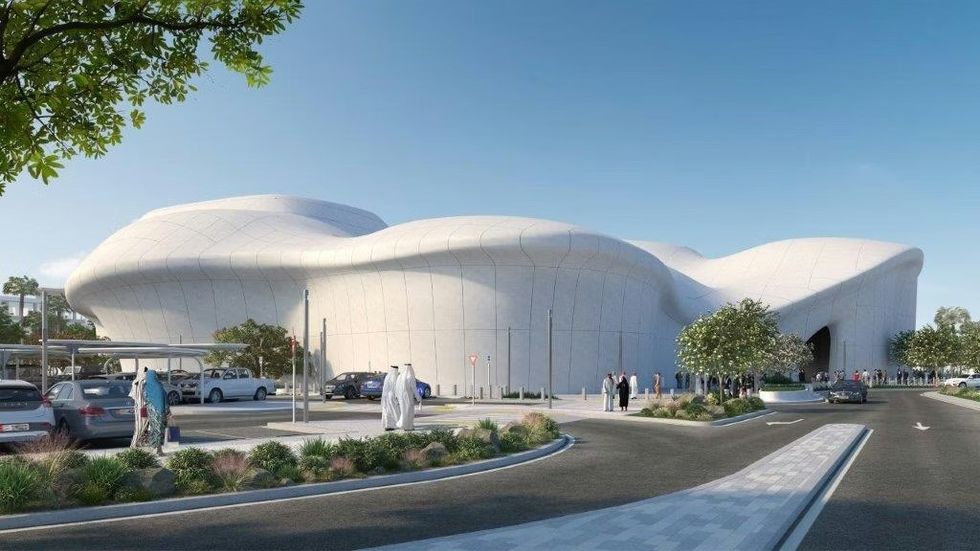
The innovative façade modelling process deserves special mention. The building’s double-curved, organic panels required parametric modelling using Rhino and Grasshopper, integrated with Revit through Rhino.Inside.Revit. This ensured fabrication accuracy and seamless coordination across disciplines, overcoming one of the most challenging architectural aspects of the project.
From a cultural and artistic perspective, the artworks themselves push the boundaries of perception and cognition. Installations like High Order Sculpture, Flutter of Butterflies, Waves, and Graffiti Nature redefine spatial engagement. They use light, water, air, and visitor interaction to create cognitive sculptures—artworks that exist not as fixed objects but as phenomena within the viewer’s perception. These installations transcend conventional gallery experiences, encouraging visitors to explore, interact, and become part of the artwork itself.
Finally, the integration of MEP and smart systems by ALEMCO ensured that technical infrastructure supported rather than disrupted the artistic vision. HVAC, power, and control systems were meticulously coordinated to remain invisible while maintaining environmental stability and performance.