
Theme parks and attractions are highly sensory experiences, with great effort and resources put into the aesthetics of guests’ surroundings. Asking a guest about their experience, in most cases, will return feedback on the tangible elements – exceptionally themed facades, the Instagram-worthy snacks and, of course, the immersive realms of the rides and shows.
The things they see, smell, touch, consume, and purchase are the surface-level engagements and experiences that tend to support high-satisfaction reviews (should you be so lucky).
Yet beneath all that sensory polish works an invisible, uncredited force. It is not a piece of merchandise, a themed dessert, or a central fountain photo opportunity. When done right, no one even thinks about it, because the resulting experience is entirely frictionless.
We are talking about the hidden architecture of happiness: programming and planning.
The thinking behind the magic
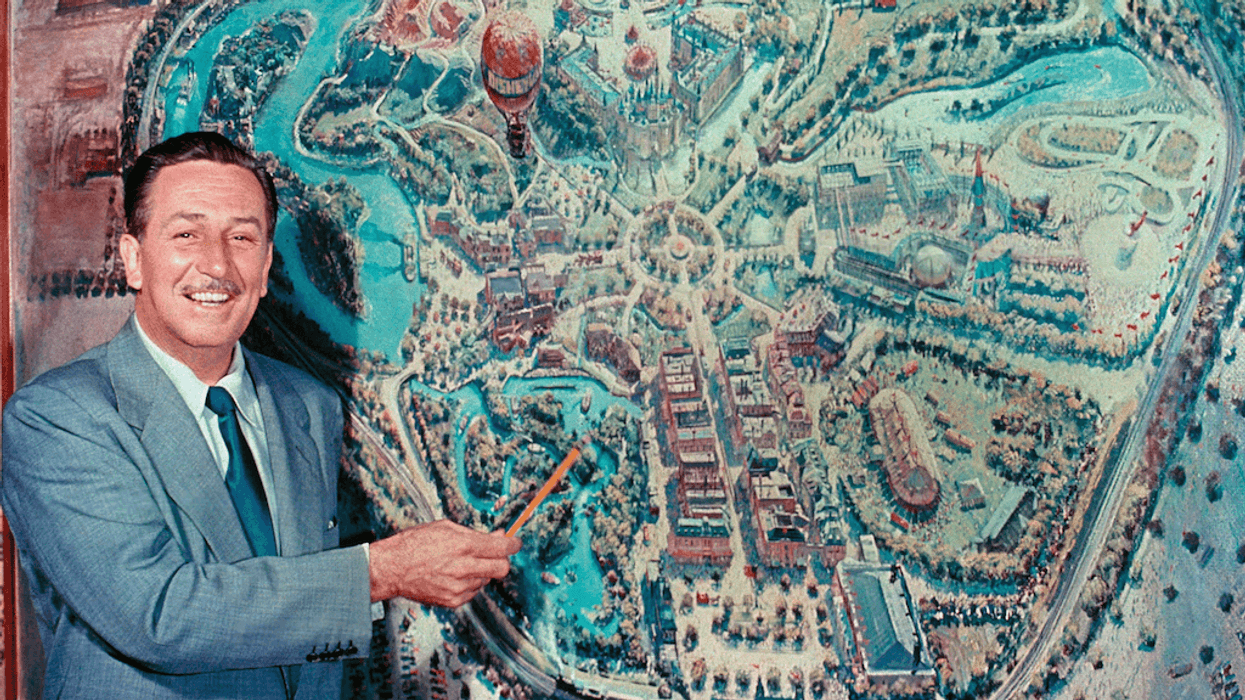
The industry’s understanding of this hidden architecture traces its roots back to the 1950’s with the design, development, and expansion of Disneyland.
Prior to this, amusement parks were mostly (and loveably) chaotic, linear midways that grew organically over time, often with disjointed narratives, resulting in crowding and bottlenecking.
Disneyland’s planners made a concerted effort to program guest distribution, forced-perspective sightlines, and visual anchors that pulled guests through the park. It was like they were programming and space planning a cinematic flow.
Disneyland’s revolutionizing of the theme park was supported by programming, what Harrison “Buzz” Price and others referred to as “roller coaster math”.
They may not have gotten it perfect from day one, but as they learned and grew, they proved that Disneyland’s creative storytelling benefitted from an analytical backbone.
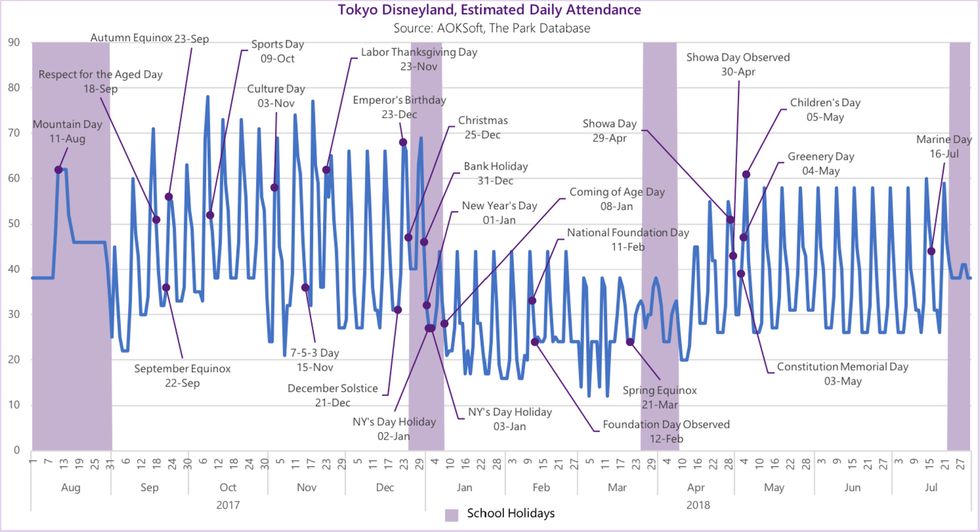 Analyzing attendance is a key part of attraction and theme park programmingImage courtesy of AOKSoft, The Park Database
The present-day practice of programming is sophisticated. It draws from both science and art, a meticulous and diligent process that considers everything… including the kitchen sink.
Using key project criteria—such as attendance, seasonality, target demographics, and budget—programming establishes spatial and capacity parameters for all aspects of the destination. The process determines the overall number of rides, the type of signature attractions, and the capacity of the queue areas that serve those rides.
It also establishes parameters for the supporting cast: food and beverage, retail, guest services, and washrooms. Yes, all the way down to the fixture count. Although mathematical, programming is equally theoretical. It’s a process reliant on assumptions and forecasting.
As with any predictive model, the accuracy of the output depends entirely on the quality of your inputs. Given the large capital investment involved in developing attractions and theme park destinations, a rigorous programming process is, for most, completely warranted.
But programming a park or attraction is not just a quantitative exercise – the experience being created is very much qualitative.
So, how does programming act as a storytelling tool, shape the guest journey, and affect overall immersion?
Defining the things guests do: immersion is a behavior, not just a backdrop
Immersion is not just achieved through visual design, but through what people do when in the park or attraction.
The stars of the show are typically the rides and attractions, and programming them requires consideration of the creative approach – the story to be told often guides what hardware is most appropriate to utilize.
Most obviously, programming rides, food service, and retail is an important tool to align the types of experiences to the narrative or story of a place. Programmers use a mix of rides, attractions, coasters, shows, and play environments to support the narrative arc.
 Diagon Alley at Universal Studios Florida demonstrates how carefully curated retail, dining and interactive experiences can become an integral part of an immersive environment, rather than simply supporting the attractions Image courtesy of Universal
A fantastic example of narrative-driven programming is Diagon Alley at Universal Studios Florida. Its effort to emulate a hidden 19th-century wizarding commercial district dictated the program and attraction mix, dominated by retail, dining, and micro-interactivity over ride capacity.
Shopping, dining, and window-browsing are not just auxiliary programs; they become the active, in-world behaviors that generate true immersion reflective of the beloved IP.
Distributing the things guests do: pacing the storytelling
One of the key pillars of programming is distribution. It’s about balancing the fun and functional aspects of the park and strategically dispersing the things guests do so the journey feels frictionless.
The amazing flow of the experience in your favorite park or attraction doesn’t tend to happen by accident. Distributing the things guests do in the park in a meaningful and intentional way supports the serendipitous “right place at the right time” feeling of immersive realms and worlds.
Having to leave a place of immersion to grab a bite to eat or use the washroom is a break in the suspension of disbelief we strive to maintain.
Program distribution is also key in fueling guests’ sense of discovery and exploration.
One of the greatest joys of an immersive entertainment destination is the feeling of discovery, the sensation that you have stumbled upon a secret that may not be obvious on the park map. But in reality, these spontaneous discoveries are carefully crafted.
Designers use programming to pull guests through a site and encourage exploration. This is achieved through the deliberate placement of primary experience anchors (the major attractions that pull the bulk of the crowd) and the careful scattering of secondary and tertiary elements (mid-tier rides, boutique retail, or interactive street-level effects).
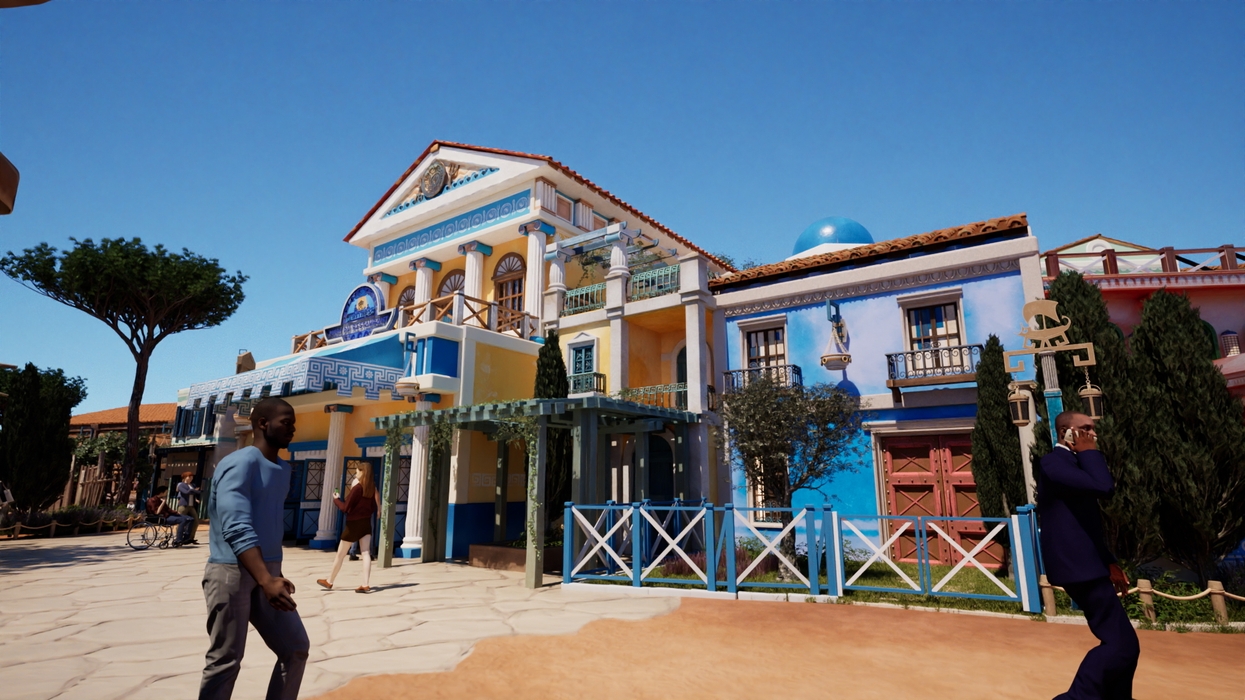
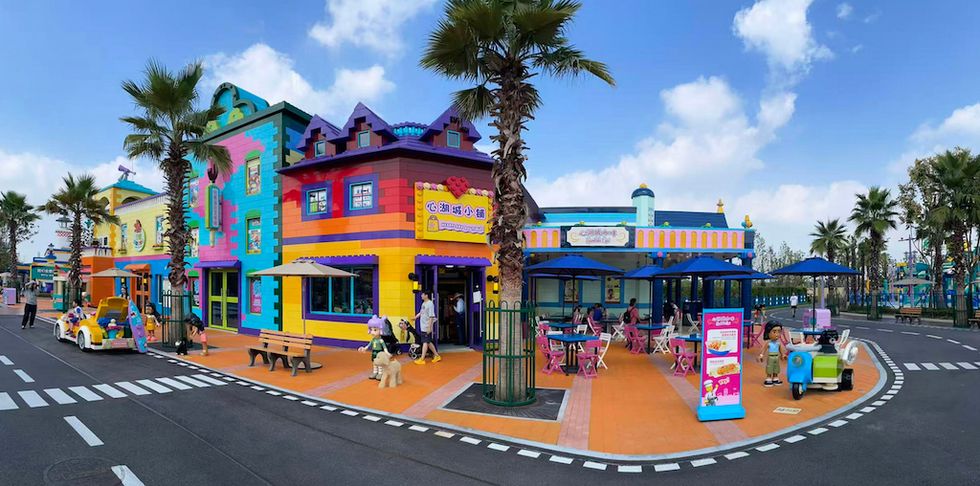 “Relief valves” in park planning: A vibrant streetscape in Legoland Shanghai, where guests can meander freely, sit for a bit, and take photos between attractions, retail, and dining experiencesImage courtesy of FORREC
Distribution is a delicate balance. A well-programmed project interweaves high-energy anchors like thrill rides with "relief valves": a meandering circulation path, a quiet kinetic garden space, or a scenic tow boat ride.
By programming these contrasting beats into the park's geographical layout, designers passively guide guests through a balanced emotional journey. The immersion is sustained because the guest’s stamina is actively managed with careful consideration of the program distribution.
Too much risks overstimulation. Too little risks an underwhelming experience.
Sizing the things guests do: capacity and crowd control
The magic of a theme park or attraction is supported by rigorous spatial capacity math. Determining the things guests do is the critical first step, and not far behind is rightsizing.
Guest density is not only a key assumption for overall guest satisfaction, but also in maintaining the illusion of worlds and immersive experiences.
If the park or attraction is busting at the seams, with crowded walkways, stuffed queues, and hour-long lines for food, the immersive magic can quickly turn to soured frustration.
This is why the programming process dives into entertainment capacity, making sure there are enough rides, with enough seats and throughput, to sufficiently entertain the guests.
Rides come in all types, shapes, and sizes. Crunching the numbers to ensure you’ve got enough entertainment value to go around is incredibly important. After all, the entertainment is what people are showing up for.
Program capacity and density metrics are also applied to all the other supporting functions of the park, from retail space to dining capacity. Strong data and diligent forecasting create confident design targets for sizing the park's elements.
Rightsizing certainly supports the magic and the immersion of the guests, but it also supports the magic of the bottom line.
Programming requires careful consideration to ensure that targeted capacities are being met so the park’s business model is viable, all without sacrificing the sense of place that draws people there to begin with.
Ultimately, programming is an act of prudence and discipline. It is the vital process that spatially rightsizes parks and attractions, protecting capital investment by ensuring nothing is overbuilt or under-resourced.
But more importantly, it is the invisible mechanism that generates a truly frictionless guest experience.
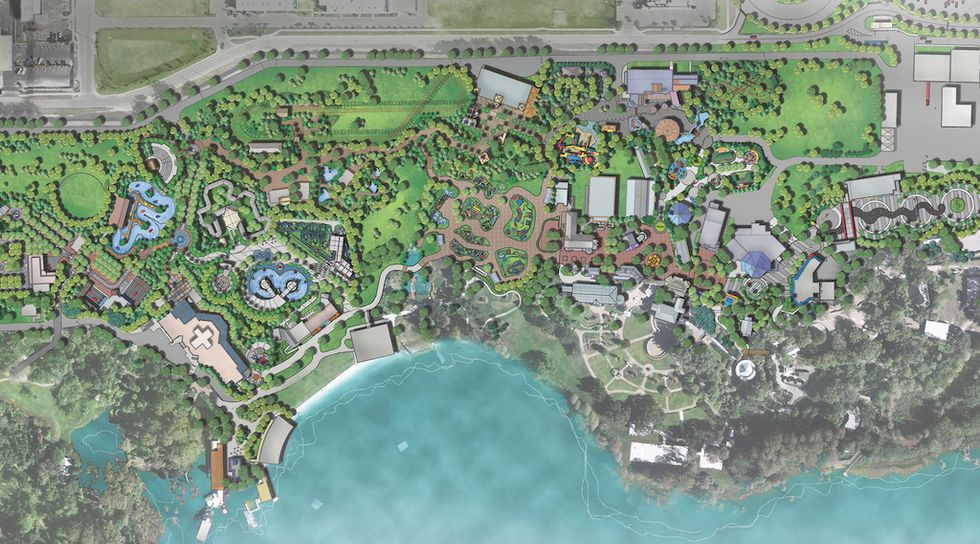 The masterplan for Legoland Florida, illustrating how spatial programming helps organise attractions, amenities and guest circulation to create a balanced visitor experienceImage courtesy of FORREC
When you get it right, no one notices. The guests simply assume they had a perfect day. But miscalculate it, and it becomes a noticeable pain point: a traffic jam, an overwhelmed restaurant, a broken illusion.
Good programming is uncredited; bad programming is impossible to ignore. Because in the end, the most beautiful thematic layer in the world cannot save a poorly programmed experience.
Next time you go to a park or attraction, think about the “Roller Coaster Math” that helped bring it to life. Happy guest experiences don’t often happen by accident; they result from a hidden but critical part of the design process.