Keely McClarin, vice president of global PMO at Holovis, spoke to Annie Cantele, project manager at THG Creative, about what meaningful innovation really looks like in 2026.
Meet the experts
UK-based Holovis is a leading global innovator in developing the next generation of fully immersive and interactive ride attractions and virtual reality solutions for theme parks, entertainment centres, FECs, museums, and science centres.
The company’s work enhances the sensory experience by engaging audiences with 360° visuals, specialised audio, SFX, and lighting, all seamlessly integrated with their proprietary motion platforms.
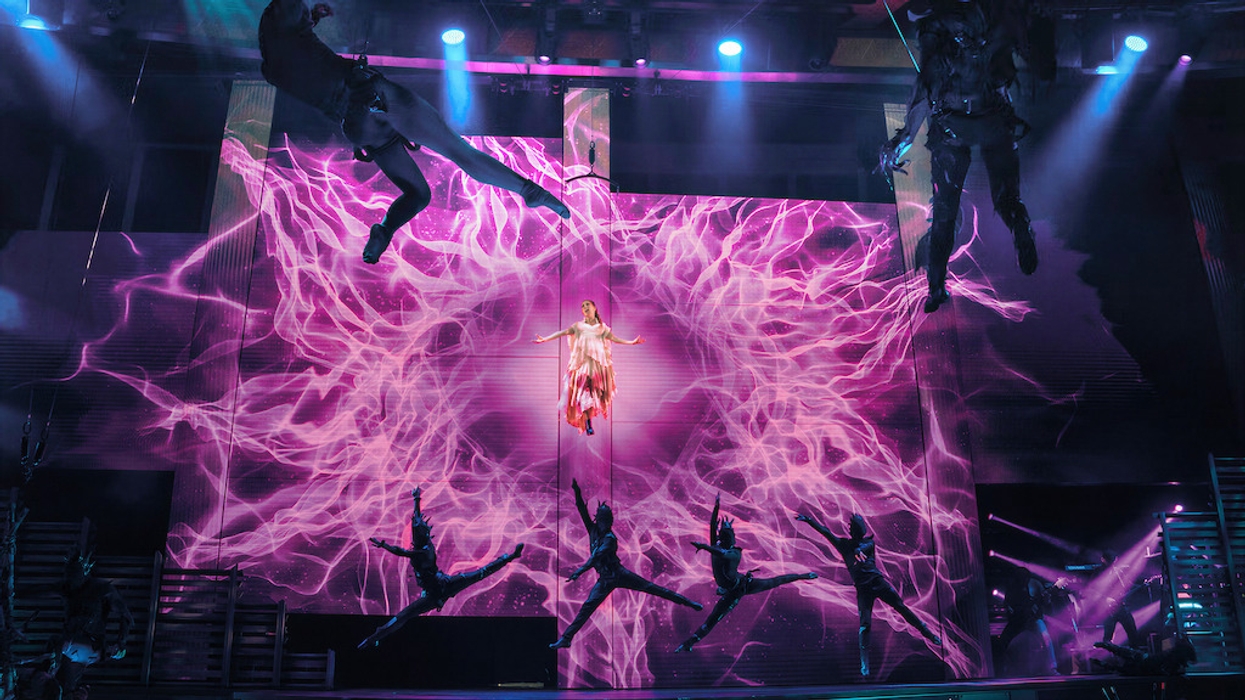
Recently, played a key role in bringing Squid Game: The Experience to life by integrating cutting-edge technology to create engaging interactivity and gamified rewards.
THG Creative, based in the US, is an agency that specialises in creative design and experiential entertainment. Its capabilities encompass blue-sky ideation, concept and story development, 3D visualisation, master planning, interactive design, and in-field production.
Its portfolio includes the DreamWorks Water Park, Las Vegas' High Roller observation wheel, New York's One World Observatory, and the highly acclaimed Jurassic World: The Ride.
The two companies have previously collaborated on projects, and this partnership demonstrates a seamless blend of technical engineering and creative storytelling.
DreamWorks Water Park
Holovis provides a turnkey solution covering creative and engineering design, manufacturing, installation, and commissioning, while THG brings together experienced designers, illustrators, architects, engineers, and producers to create innovative, out-of-the-box solutions.
Designing for repeat visitation and AI integration
As attractions aim to create experiences that engage the public, new technologies are quickly changing the landscape. Yet knowing how to apply these digital tools is crucial.
Cantele began the conversation by examining the defining trends THG Creative is seeing in how clients want experiences designed in 2025.
“Of course, AI is the hot topic. It's on everybody's minds; it's everywhere at this point. So, we're seeing more and more clients looking for ways to integrate AI into their experiences to improve or impact the guest experience.
"That's a big question for many clients because the technology is so new and growing at such a rapid pace. We're always looking for ways to get that integrated in a way that makes sense for the clients.”
Top of the Rock, Rockefeller Center
She added that repeat visitation is also an important consideration:
“We don't want our guests just to come visit an experience once, then never come back. How do we create experiences that always drive our guests to come back again and again?”
She also noted that, regardless of the latest trends the team is considering, the ultimate goal remains the same: to deliver the most impressive experience within a tighter budget.
“That's always a client ask, whether it's explicit or not. We're always trying to get that big wow factor in a limited budget.”
Multi-generational audiences
Both THG Creative and Holovis operate across diverse sectors, including theme parks, water parks, museums, retailtainment, and zoos & aquariums.
Developing an attraction that appeals to such a broad demographic requires a specific philosophical approach, said McClarin, asking how the THG Creative team designs experiences for families, couples, and multi-generational audiences.
In response, Cantele explained THG's methodology for finding the emotional core of an attraction:
“THG has a guest-centric design philosophy. That's who we're delivering for at the end of the day, our guests, and we want to give them the best possible experience."
Squid Game: The Experience
“We do a ton of research at the front end of a project, whether that's through charrettes, focus groups, or other opportunities for us to connect with our user base as we head into that design process, to help shape the final experience.”
It's also about understanding the limits of the audiences that the team is designing for, she adds: “We want maximum enjoyment, but we don't want to push too far over the line where the experience is too much for the guests.”
THG Creative talks about its experiences having heart: “That's the easiest way to reach a wide audience,” says Cantele. “Giving them an experience they can relate to, empathise with, and buy into is really important.”
Competing with at-home digital entertainment
One of the biggest challenges in modern experience design is competing with the sophisticated media that guests already carry in their pockets.
As McClarin asked how guest expectations have changed when it comes to technology and being immersed in an experience, Cantele highlighted the modern designer's struggle against digital media and the sheer convenience of at-home entertainment:
"We have the world at our fingertips now. This has been a design challenge for quite a long time. So, we question how we give that wow experience and give them a reason to leave their house and be immersed in an experience when they can just as easily be at home, get a full suite of media on their phone or TV.”
The Priddy Family Foundation Freedom Theater, National WWII Museum
She references the proliferation of AI-generated Instagram reels:
“For example, there's one that shows this beautiful glass top train in Switzerland, this beautiful decked out Victorian style train that people think is an experience that they can have. And it's not real. I often see comments like, ‘How do I do this?’ and ‘How much does this cost?’
“The bar is set so much higher now for those of us who are designing experiences to say, okay, this is what people want. Now we have to get there. And how do we create that in a way that is real and immersive for our guests?"
Blending physical and digital environments
When it comes to creating that wow factor and meeting those expectations, which are now so heightened, Cantele also emphasised the blending of physical and digital environments:
"I think it goes back to the heart and the story. If we're finding that the more touchpoints we give our guests to really invest in the story we're trying to immerse them in, it is a great vehicle for getting their buy-in into the experience.
“Using advanced technology helps a lot. I think there's a drive toward blurring the lines between that media and the physical, which is what guests are reaching for at this point."
Nevertheless, deploying such advanced technology presents challenges.
360 Golf from Holovis
When McClarin asked about the biggest technical and operational constraints in implementing advanced technology, considering an experience where THG Creative and Holovis might collaborate, Cantele highlighted the inevitability of technological obsolescence:
“We have these conversations early in all of our projects. It's great that we can deliver an experience in the short term that will meet guest goals, but how do we make sure that that experience can continue to operate at its peak show quality for an extended period of time?”
That can mean different things for different clients, she adds:
“For some clients, they're like, yep, we expect the show to sunset in five years. Other clients don't have an end date. They want to make sure the show can run as long as possible.”
Technology is evolving at an exponential rate:
“So, staying ahead of that curve and knowing when to draw the line—such as having a fixed amount of scheduled time to implement a project and wanting to incorporate this technology—presents a huge challenge for our industry.
"It's difficult to predict what that technology will look like in two years when we finish the project, and whether it will be obsolete.”
Planning for longevity and obsolescence
To mitigate these risks, early collaboration is essential. Holovis, for instance, addresses this through its bespoke RideView design and visualisation software.
Using 3D CAVE systems and head-tracking technology, Holovis transports designers and stakeholders into any environment at true 1:1 scale in real time, drastically improving communication, reducing the need for physical prototypes, and accelerating decision-making.
Squid Game: The Experience
Looking at how early in the design process technology needs to be considered in the design and build to be successful, both agreed that an early start is vital:
"It's important that we integrate as early as possible so that it is seamless. It should be the vehicle for telling that story and not an add-on later on. When we start having those conversations early, we start thinking within the confines of that technology's design.
“How do we implement it in a way that makes sense and is not just pushing in a direction that feels cool but isn't subject to telling the story to our guests in the most efficient way?"
Beyond All Boundaries
The lifespan of an attraction depends heavily on the operators who run it. A prime example of THG's success in this area is the Beyond All Boundaries immersive theatre at the National World War II Museum in New Orleans.
Speaking about how THG Creative plans for maintenance, upgrades, and obsolescence for projects that have to deliver for a long period of time, Cantele used Beyond All Boundaries to illustrate the importance of client collaboration:
"Listening to the client team is key. By involving that team early, you gain insights that are crucial to the attraction's long-term maintenance.
“With Beyond All Boundaries, in particular, we benefited from a client team that included individuals who had been with the original show since its inception 15 years earlier. We could sit down with them and say this was how the system was initially set up, what worked, and what didn't."
“They were very open about saying what worked really well and what they modified based on their operations.” The THG team could then use that as a starting point, adapt the new system to fit their daily activities, and ultimately ensure it maintains peak show quality for the next 10 to 15 years.
McClarin then asked about the onboarding and training process for delivering new technologies to a client who may not be familiar with how to use them. Cantele said that THG Creative’s philosophy centres on empathy and transparency:
"It's about inviting them to the table and saying, 'This is something brand new, and we're giving it a try, because we think that it'll have a long-term benefit for you. These are the benefits that we're seeing, and we want your input, and we want you to be a part of this process as we implement.’
“That gets better buy-in than just plopping something in somebody's lap and saying, ‘Well, this is the design, and now you have to go maintain it.’”
Balancing innovation with budgets
Despite the limitless possibilities of blue-sky ideation, financial realities often dictate the final product. Cantele discussed the friction between ambition and budgeting:
"It's a really big challenge at this moment to balance the ask for cutting-edge technology with those client budget expectations.
“Projects are being budgeted in the state of mind of technology that's been implemented because that's their basis of comparison. But we're not seeing it scale to some of these newer, more expensive technologies.”
There are also many peripheral costs associated with them, which are not always captured in project estimates.
Managing those expectations with the client involves clarifying what they want and what it costs, says Cantele. “We can either work towards that within the project budget or suggest alternative technologies that might accomplish some of your goals while keeping within the budget."
Top of the Rock
“Those are not always the most comfortable conversations, but sometimes it's the reality."
To bridge the gap between expectation and reality, mock-ups are an essential tool.
"I'm a big proponent of mock-ups; it's a really important tool at the beginning to make sure that we are setting the expectation of what the outcome is going to be.
“There are creative ways to do low-budget mock-ups to achieve that output of showing them this is what you're going to get without delivering the entire system or doing first articles, where it helps everybody understand what they're going to get at the end."
Creative technology and the future of storytelling
Shifting the focus to the ultimate goal of experiential design: making the technology invisible, McClarin asked where Cantele sees creative technology heading in the future. In response, Cantele shared a powerful vision for the future of storytelling:
"I see it becoming foundational. 10–15 years ago, it was supportive; we're telling a story and adding technology. I think it's the vehicle for storytelling at this point.
"It's no longer acceptable to integrate it as an afterthought. It has to be from the beginning of the initial conversations, ensuring that technology integration is seamless and blurs the line for our guests, so they don't actually know the technology is there.
“To me, that's a successful project. They don't actually know the tech is there. It's just part of the experience. They accept that that's what they're experiencing and it's part of that storytelling effort. It creates better world-building and cleaner transitions between scenes with fewer visible devices.
"It's richer storytelling by integrating that tech early on."
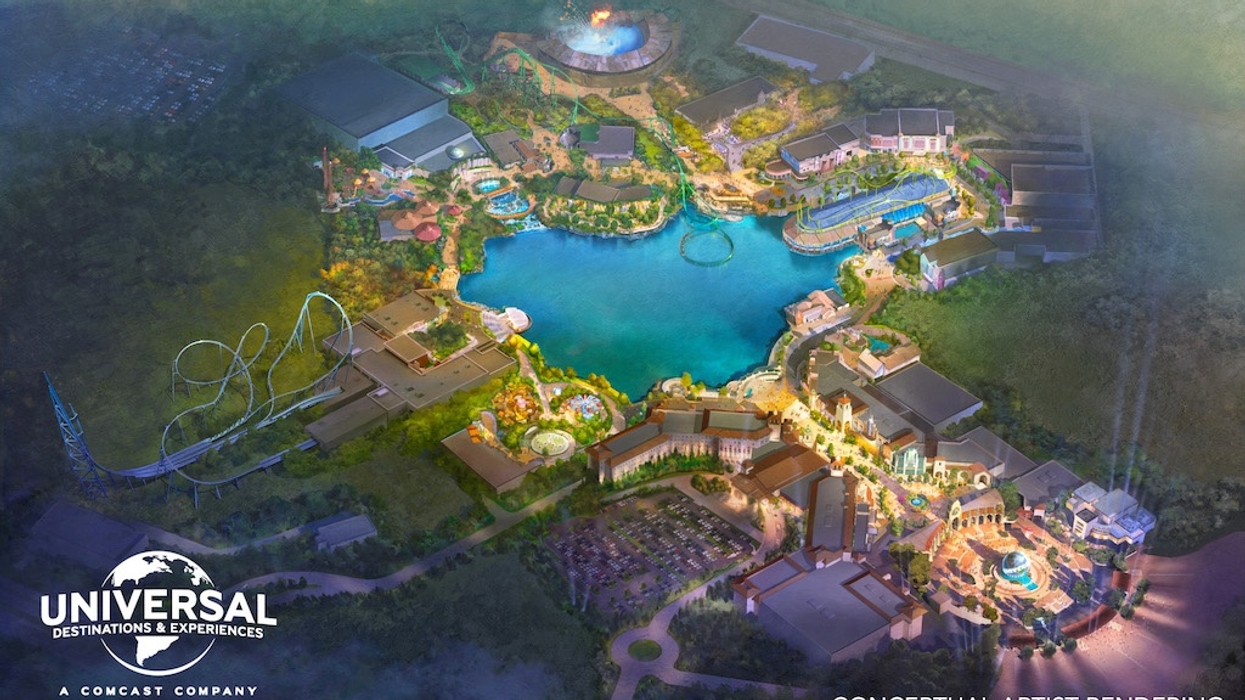
Harry Potter and the Battle for the Ministry at Universal Epic Universe
When asked for an example of this achieved perfectly, Cantele says of Harry Potter and the Battle for the Ministry attraction at Universal Epic Universe:
“It does a beautiful job of that integration. That was the first attraction in a long time that, when I got to ride, I actually said ‘wow’ out loud. Being in this industry for as long as I have, it takes a lot for me to vote that way. Through that whole attraction, I'm fairly certain my jaw was on the floor.
“You're being conveyed from scene to scene, and it just is so well integrated. It's so seamless. It's beautiful to look at, both the show set and the media. I think it's just a really well executed attraction."
As technology continues to advance, both agree that the most engaging visitor attractions will be those that place storytelling and guest connection at the centre of innovation.
By integrating technology from the outset, balancing ambition with practicality, and designing with empathy for diverse audiences, creators can deliver immersive experiences that feel both magical and meaningful.
In this future, the best technology is invisible, powering unforgettable moments that keep guests coming back.