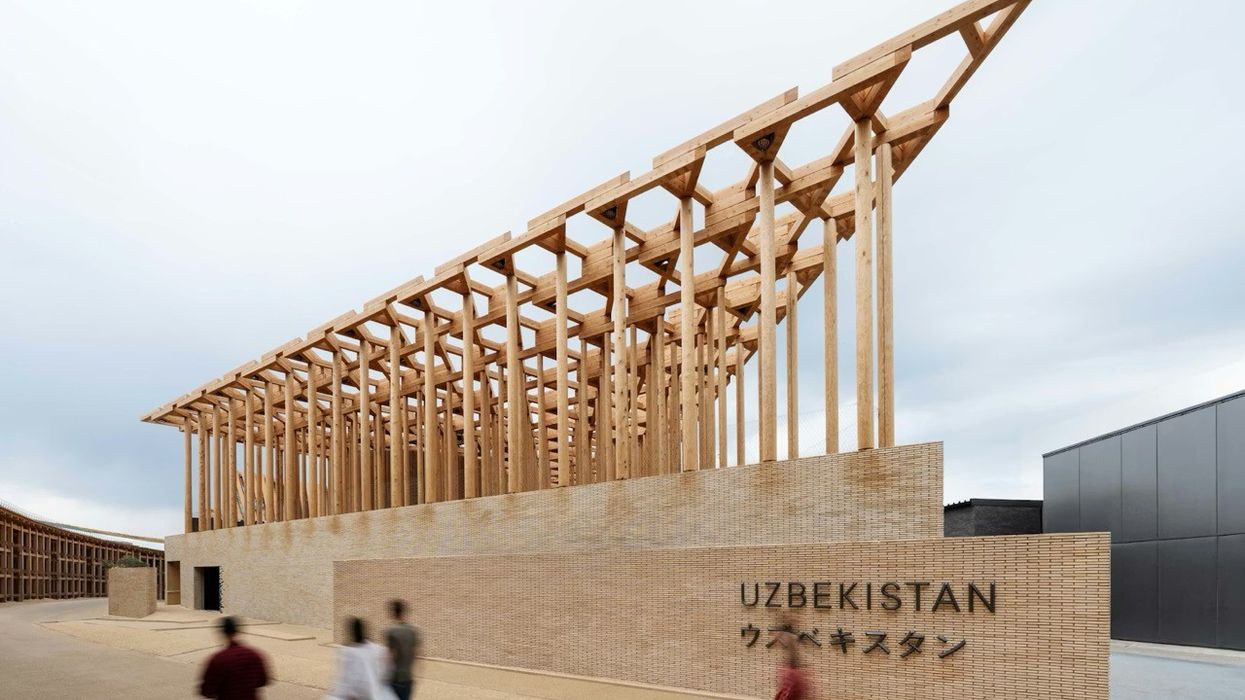

The Uzbekistan Pavilion at Expo 2025 Osaka embodies a pioneering approach to sustainable architecture, cultural storytelling, and experiential design. Presented under the title “Garden of Knowledge – A Laboratory for a Future Society,” it represents a new era for the Central Asian nation, symbolising growth and future perspectives.
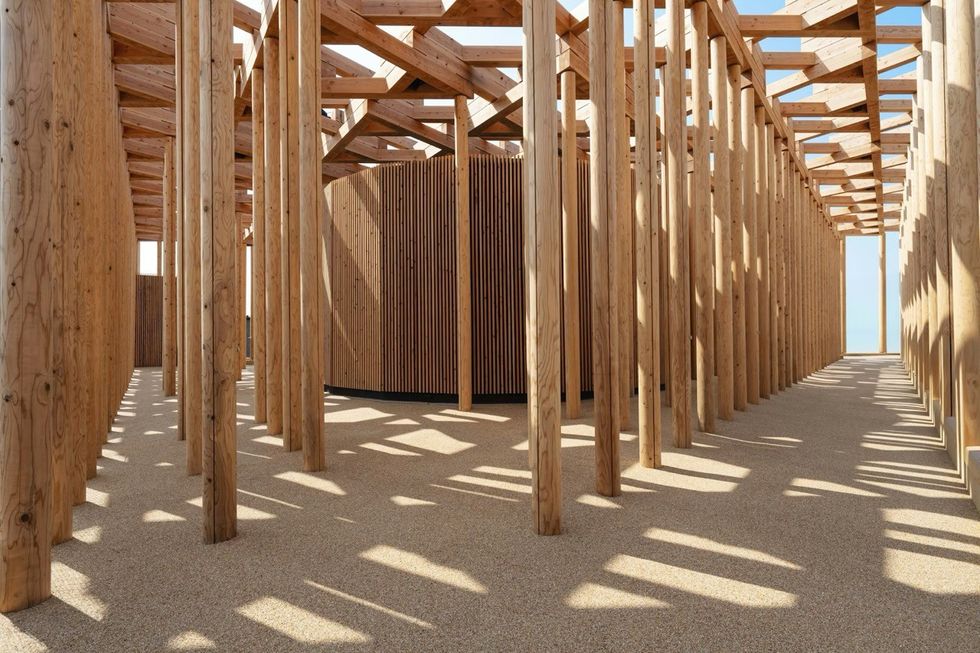
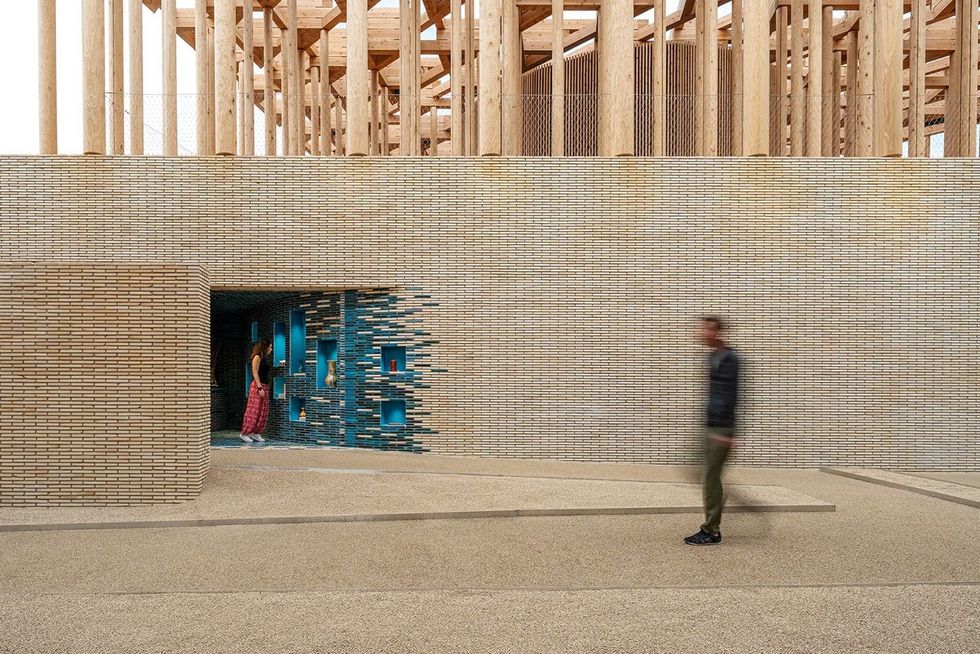
The pavilion reinterprets Uzbekistan’s traditional craftsmanship in a contemporary and sustainable form. Its two-storey structure, with a total area of 1,272 square metres, presents an archetypal snapshot of the Uzbek landscape. The base, made from brick and clay, represents the earth, the roots, and the cultural heritage of the country. Above it rises an open-air terrace – an eight-metre-tall wooden sculpture – representing the forest, a place of protection and an open space for the exchange of knowledge. The forest of columns references traditional temple and palace architecture, where colonnades shape spaces and create a sense of openness.

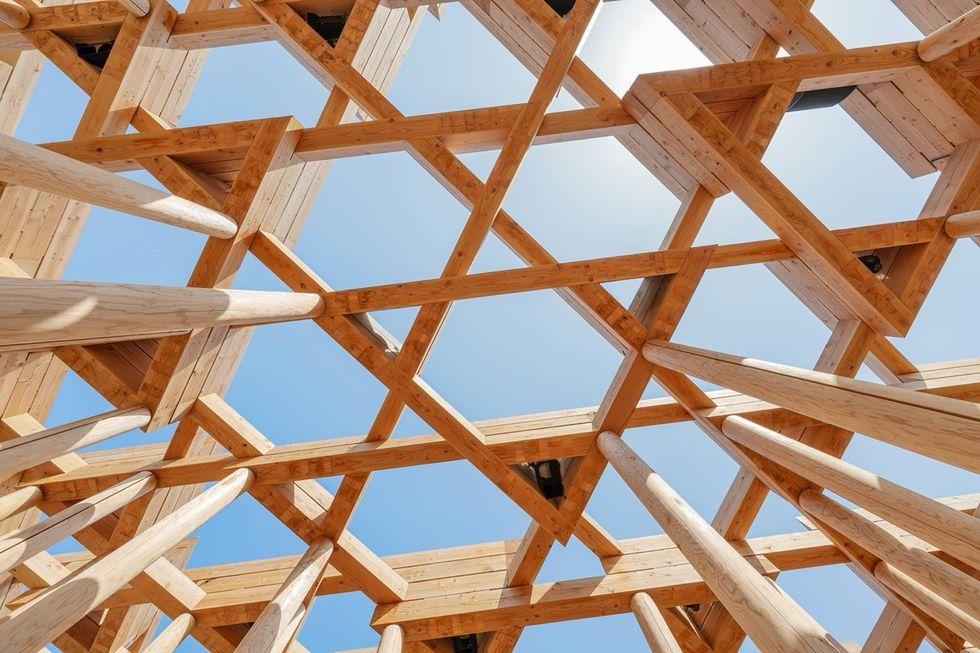
The architectural concept follows sustainable principles through the use of natural, reusable materials and modular construction. Materials such as wood, clay, brick, gravel, and earth are rooted in Uzbekistan’s building traditions and reinterpreted in a modern context. After the Expo, these materials will be fully returned to either biological or technical cycles. The wooden sculpture can be dismantled into modular units and reused, and visitors can trace the exact origin of the wood via smartphone. All timber used – sugi, a native cypress – comes from regional sources near Osaka, illustrating transparency, circularity, and collaboration between Uzbek and Japanese craftsmanship.
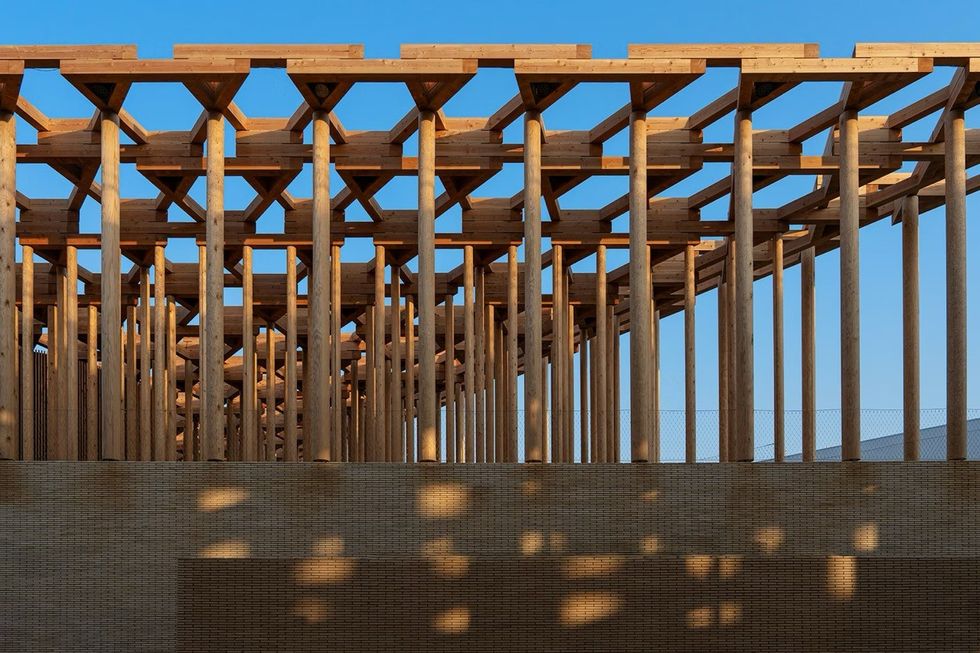
The Uzbekistan Pavilion presents itself as both a laboratory for a future society and a social learning space. The exhibition focuses on SDGs 4, 7, and 9, demonstrating how sustainability, innovation, and education drive societal progress. The narrative mirrors the process of growth – a seed that takes root in the soil, grows, blossoms, and finally bears fruit.
On the ground floor, “The Soil” makes Uzbekistan’s transformation tangible. In the sustainability section, models and interactive media highlight the transition to a green economy, with renewable energy initiatives, energy-efficient construction, and sustainable mobility. The innovation section presents advancements in infrastructure, industry, and urban development, including the New Tashkent project and the revitalisation of the Aral Sea with support from the Japanese government. The education section illustrates how traditional crafts are merged with modern learning methods. Digital tools, training programmes for young artists, and restoration projects for cultural landmarks such as the Bibi-Khanym Mosque demonstrate how technology supports cultural preservation.
At the heart of the pavilion is a rising platform surrounded by a 360-degree multimedia projection. The three-minute journey from the ground floor to the terrace begins with the sprouting of “seeds of knowledge,” depicted as glowing roots and symbols of Uzbek craftsmanship. Kaleidoscopic animations of the Registan madrasahs transition into real architecture. Voices and music, blending traditional instruments with modern soundscapes, accompany the ascent. The projection opens to reveal a vast natural landscape of Uzbekistan, interwoven with renewable energy projects, high-speed trains, and urban innovations. At the centre blossoms a pomegranate tree, symbolising a vibrant and renewing Uzbekistan. The show ends as visitors themselves become the seeds of the future, stepping directly from the platform onto the pavilion’s terrace.
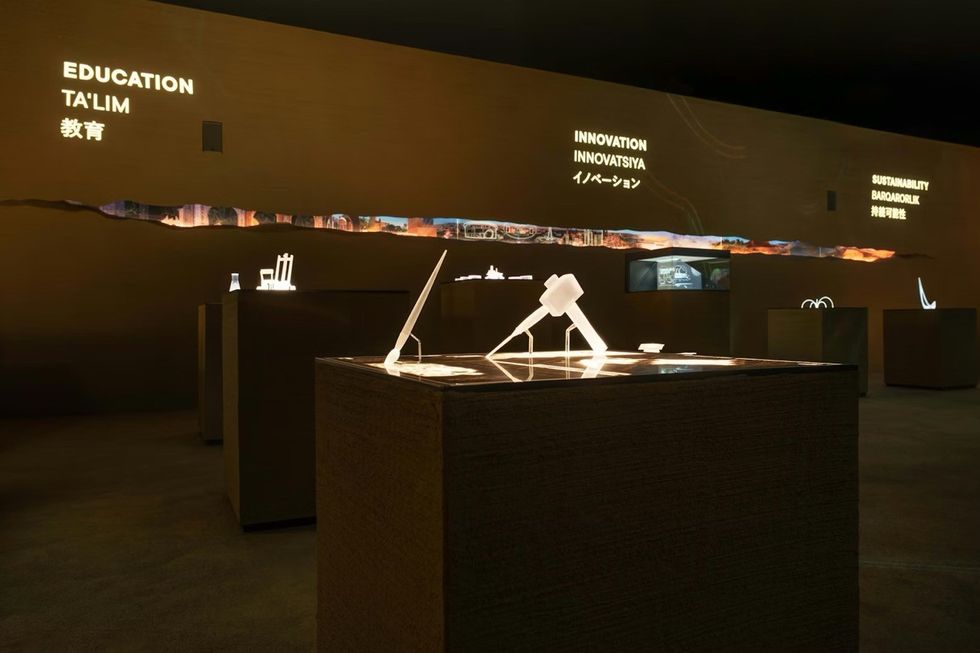
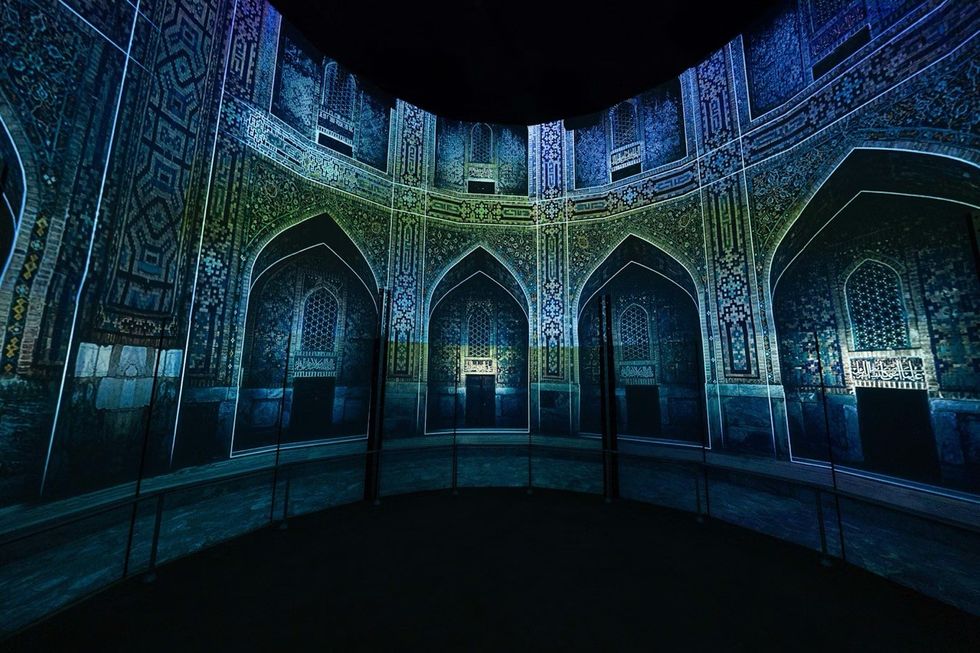
The visual identity of the exhibition combines modern clarity with traditional ornamentation. Inspired by Ganchcarving – the delicate stucco ornamentation of Uzbek architecture – lettering, icons, and wayfinding elements are integrated into the walls. The earthy tones and geometric patterns represent fertile ground, symbolising growth and transformation.
Every aspect of the pavilion – from its use of renewable, regionally sourced materials to its circular design strategies and educational narrative – embodies a holistic vision of sustainability. It demonstrates how cultural authenticity and environmental responsibility can merge into a forward-looking architecture that educates, connects, and inspires.
By uniting craftsmanship and technology, sustainability and innovation, the Uzbekistan Pavilion transforms the Expo experience into a journey of discovery. It celebrates Uzbekistan’s heritage while presenting a tangible vision of a sustainable, knowledge-driven future – in perfect harmony with the Expo 2025 theme: Designing Future Society for Our Lives.
Partners
- Media Planning with: medienprojekt p2
- Light Planning with: Klee
- Media Concept & Media Production: Tamschick Media+Space
- Realisation: NÜSSLI