Delivering a themed entertainment project requires specialists in creative development, design, engineering, production, and project management to work together, often on tight deadlines and within complex budgets.
For students entering the industry, technical or creative expertise is only part of the picture. They also need to understand how projects progress, how disciplines connect and where their skills fit into the wider process.
The AOA Scholars Program, launched in 2026 as part of the University of Central Florida's (UCF) graduate programme in Themed Experience, aims to bridge that gap.
Developed with AOA, an immersive experience design, production and project management company, it gives students structured exposure to the professional practices behind themed entertainment projects.
Each semester focuses on a different discipline, allowing students to learn from AOA's teams and explore how their work connects with other specialisms. The first cohort comprises four students studying producing, with project management planned for the following semester.
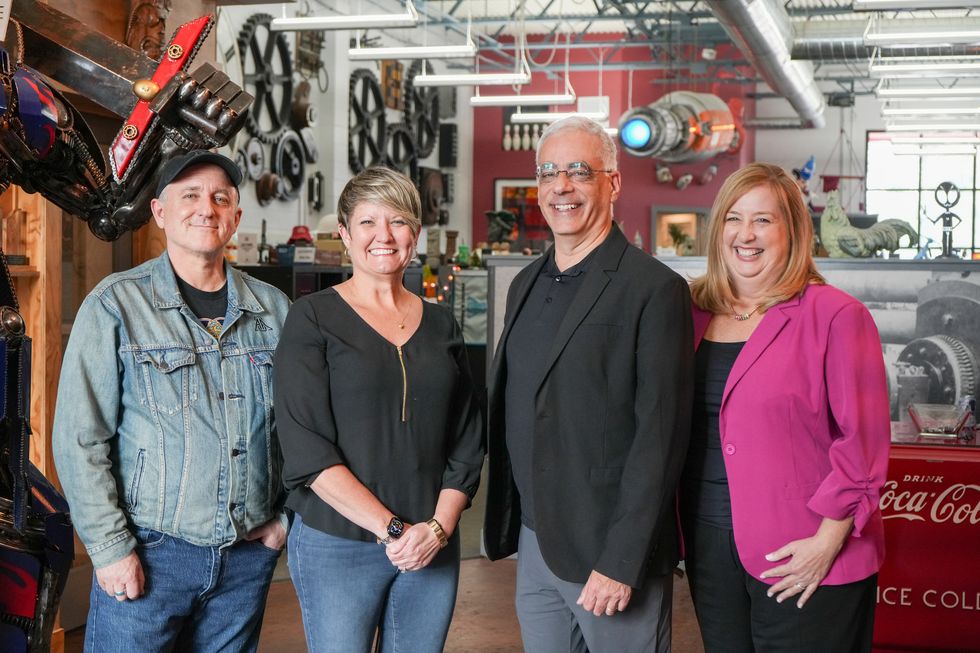
From left to right: AOA chief creative officer Tom Acomb, AOA senior VP of strategic relations Denise Hatcher, UCF director of Themed Experience Graduate Programs Peter Weishar, and visiting instructor and producing concentration lead Adora English.
Image courtesy of AOA
Peter Weishar, director of Themed Experience at UCF, sees the partnership as an opportunity to connect academic learning with current industry practice. Denise Hatcher, AOA’s senior vice president of strategic relations, says it also gives employers a practical way to invest in future talent.
Both believe that closer collaboration between universities and employers can help students make more informed career decisions and give businesses a stronger foundation for developing future professionals.
Addressing the talent pipeline
The partnership began when AOA co-founder and chief creative officer Tom Acomb approached UCF with the idea for a new initiative. The resulting Scholars Program connects the university's academic expertise with AOA's experience across the project lifecycle, says Weishar.
AOA's involvement gives students access to a company with experience across multiple stages of project delivery. As Weishar explains:
“They're one of the few outside of WDI that can handle the entire process from original ideation to delivery, and we really love that because there's so much to learn from them, so much they understand,” says Weishar. “It was a great idea for our students to start learning from AOA.”
The partnership also reflects the development of themed experience as a specialist area of higher education. For Weishar, industry partnerships help universities keep their teaching connected to professional practice and emerging approaches.
Orlando's concentration of attractions and specialist businesses provides a strong setting for that exchange.
AOA's motivation is also practical: “We're only as good as our team,” says Hatcher. “To succeed, we need the best talent, and that means investing in training and developing people.”
AOA's internship programme has long supported early-career development. Founders Acomb and CEO Mike Ostendorf were keen to explore how partnerships with universities could extend that work.
Hatcher's involvement with UCF began through the Themed Experience advisory council. She later helped develop the curriculum and became an adjunct professor, contributing to the establishment of a producing track within the master's programme.
UCF's specialist focus on themed experience made it a natural partner, says Hatcher. She believes the programme is particularly relevant as project schedules leave employers less time to develop junior staff.
“We don’t have the time to develop people on the job the way we used to,” she says. “As much as we do mentor, project timelines are faster and development schedules are compressed. Junior team members are contributing to real projects almost from day one.
"When they arrive with hands-on experience, they can hit the ground running, and they walk in with the confidence that they belong in the room.”
Understanding the project lifecycle
The Scholars Program focuses on the relationships between disciplines, rather than treating each specialism in isolation. Each semester concentrates on a particular area of practice.
The first cohort is studying producing, with project management planned for the following semester. The programme may introduce further disciplines as it develops, depending on students' needs and AOA's expertise.
Hatcher sees producing as a valuable starting point because it is often learned through experience, despite its central role in coordinating creative work and relationships between teams.
During the producing semester, students are introduced to AOA's studios, where a senior producer provides continuity and explains how the different disciplines fit together.
A recent session used the new Dolly's Life of Many Colors Museum in Nashville as a case study, exploring architecture, interiors and show set design. Students heard directly from the AOA studio directors involved in the project, gaining insight into how the different contributions came together.
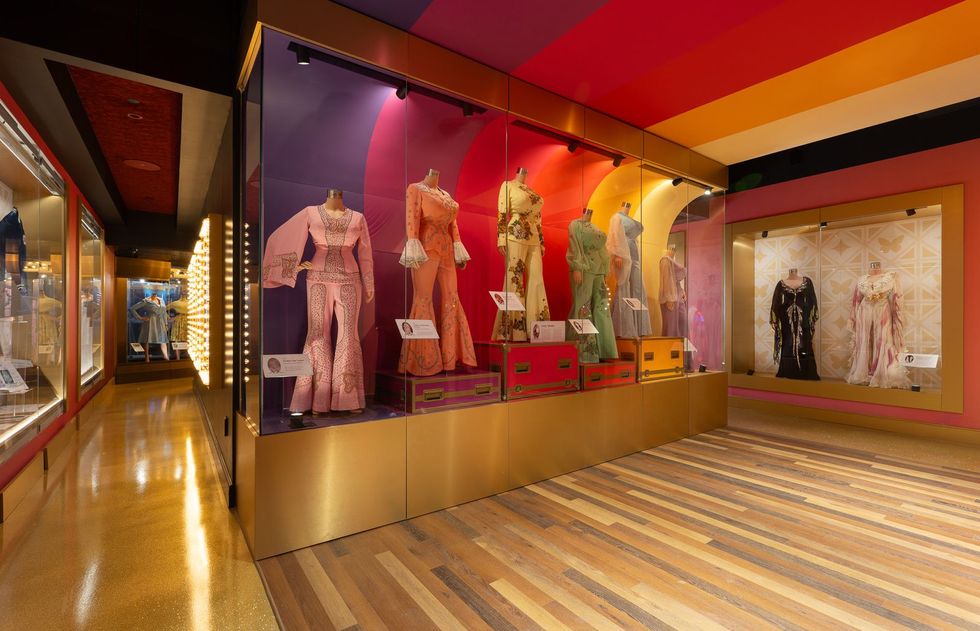
Dolly's Life of Many Colors Museum
Image courtesy of AOA
Hatcher says students were highly engaged and asked questions about the different teams' work. For Jude Alnaimat, a first-cohort scholar with a background in architecture, the sessions offered a rare view inside the creative process.
“What has stood out to me is getting to learn directly from the people behind these experiences, hearing how a project was brought to life and being able to ask questions,” Jude said.
“I’ve enjoyed seeing how each discipline, from designers and producers to technical teams, brings its own perspective, and how those individual contributions come together to shape the bigger picture.”
The sessions also let AOA leaders see where their interests and skills might lie, and this two-way exchange is a key feature. Students gain insight into different roles, while AOA can identify interests and skills that may align with future opportunities.
Exposure to other disciplines can also broaden students' career ambitions. For example, an aspiring concept designer might discover an interest in graphic design, while a student with technical skills might find that project management offers another way to apply them.
Hatcher says the sessions are helping students explore possibilities they might not encounter in a conventional college course: “The exposure helps them see a career path,” she says.
“Instead of locking into one thing early, they get to see the whole picture. In our industry, it’s hard to know where you fit. There are so many careers and disciplines, and it isn’t always clear how they work together.”
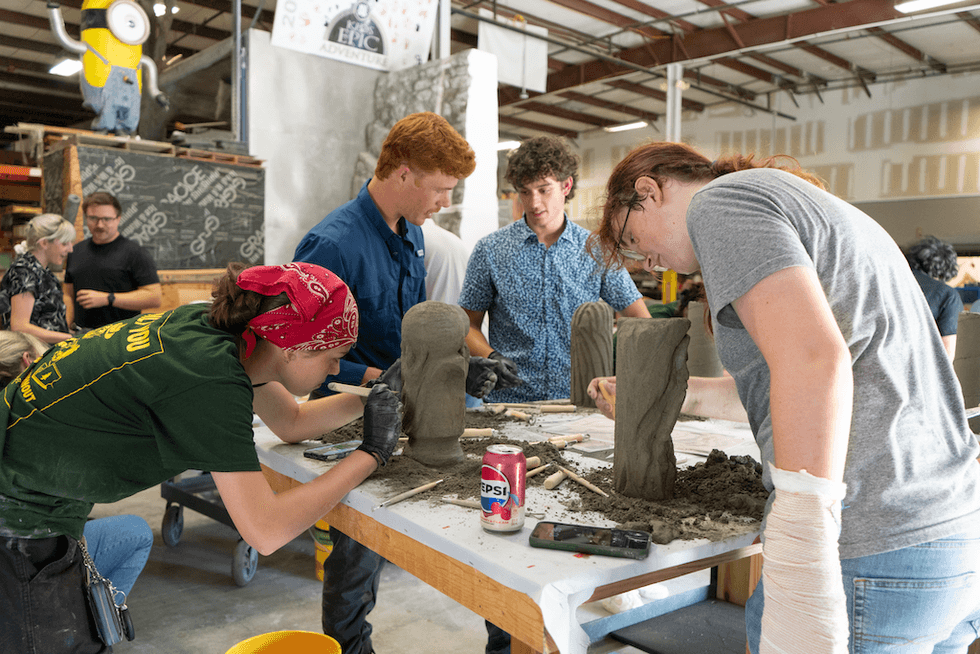
Students getting hands-on in the AOA workshop
Image courtesy of AOA
The planned project management semester will explore different management roles in themed entertainment, including design, project and construction management. Hatcher says the curriculum will look beyond individual job descriptions to examine the skills these roles share.
Weishar wants students to understand how disciplines beyond their own contribute to a project, including engineering, business and hospitality.
“It's important for them to understand what the end user is doing…we're not giving out an engineering degree, but to see the engineer and how they work with the designers is crucial,” he says.
UCF also offers practical workshops through other industry partnerships, covering areas such as rock work, hardscape and concrete sculpting. The Scholars Program adds another perspective, focusing on how a professional company coordinates the broader project process.
Learning from a working studio
AOA's established internship programme provides a foundation for its work with students, although the Scholars Program offers a different route into the company's professional environment.
Rather than relying solely on informal on-the-job training, AOA has developed a structured internship programme with a 10-week curriculum covering the company's different disciplines, says Hatcher.
Interns follow projects from early creative development through design, project management and construction. Site visits with construction management teams show how design decisions are translated into buildable environments.
The internship programme also introduces students to suppliers and subcontractors, highlighting the relationships that underpin project delivery.
Group projects bring interns from different disciplines together to coordinate creative, media, production and management contributions. Hatcher says the exercises demonstrate the practical challenges of cross-disciplinary working.
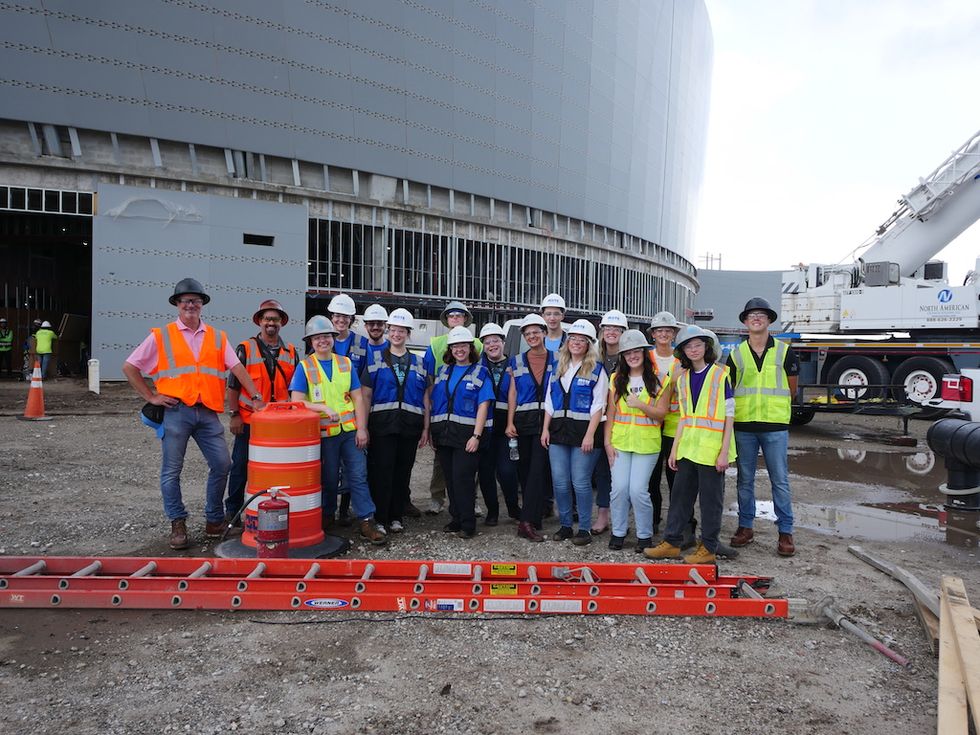
On site with the AOA team
Image courtesy of AOA
AOA's internship programme has been running for more than 10 years, and Hatcher estimates that around 18% of the company's current workforce came through it: “Some of the first classes we had are still with us, and they're just continuing to grow. It's the best return on investment that you can do as an employer.”
The Scholars Program builds on this experience by offering UCF students a more focused pathway into AOA's professional environment while they are still studying.
Participants are also invited to company events and will attend IAAPA Expo with AOA, touring the exhibition floor and meeting suppliers. The visits offer a further introduction to the wider attractions industry.
Weishar believes that seeing professionals at work gives students a more realistic understanding of collaboration.
“We teach collaboration classes, but you don't really understand what it's like until you're in the field, until there's a project due, until there's a lot of money on the line, and there's a limited amount of time,” he says.
“AOA has a terrific atmosphere, a terrific way that they work with their people and their respect for their workers, so it's a great place for them to see the way it should be done.”
Hatcher also wants students to recognise the qualities of a supportive workplace as they consider future employers.
A promising start
The first Scholars Program cohort comprises four students. The partners deliberately kept the pilot small to give participants sufficient attention and refine the format before expanding it.
UCF selects students based on academic performance, portfolios where relevant, professionalism and stage of study. Weishar says particular consideration is given to those nearing graduation and the transition into employment.
The early response has been encouraging. At the time of the interview, Weishar reported that 15 students were on the waiting list for the following semester.
“We just did a small pilot,” he says. “The idea was to make sure we got it right, and they got the amount of attention they needed.”
Hatcher says the partners are refining the programme based on feedback from students and AOA teams.
The partnership between UCF and AOA has already led to one recruitment success.
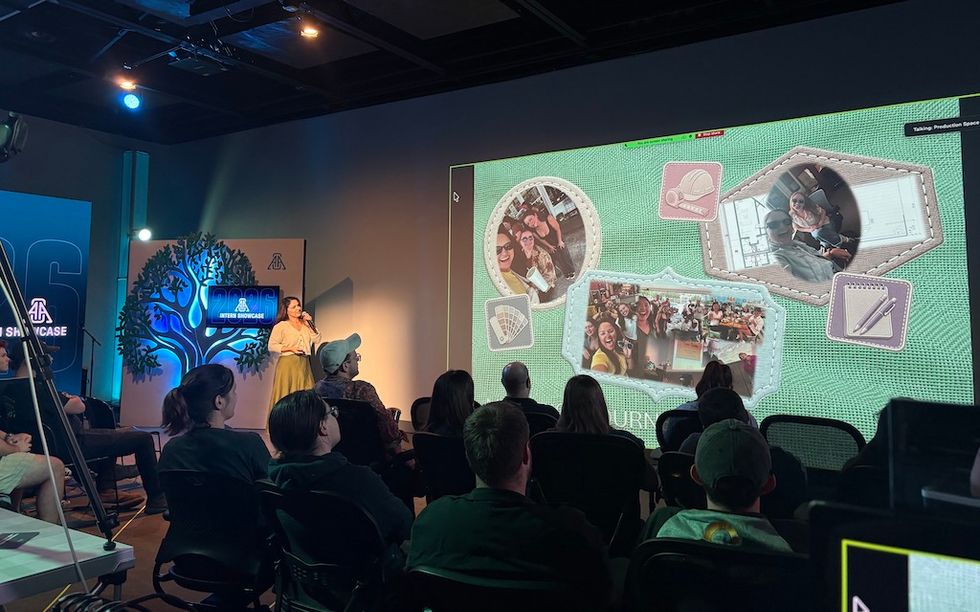
AOA celebrates success with its Intern Showcase
Image courtesy of AOA
Laura Lambert enrolled at UCF last autumn after 10 years in marketing and graphic design. She wanted a career change and a chance to see the full range of roles the industry offers.
“The programme gave me opportunities to meet and learn from successful professionals who know this business inside and out,” says Lambert.
Hatcher taught Lambert at UCF and was impressed by her work and classroom conduct. She went on to create an internship for her, which later led to a full-time role.
“I didn’t know Laura before that class,” says Hatcher. “But I watched how she contributed in the classroom and the quality of her work, and I thought, ‘I need her on my team.’”
The interest was mutual. “When I began looking for professional internships, I was immediately drawn to AOA because of the sheer breadth and depth of what they accomplish with such a small team,” Lambert says.
The partners plan to build on the pilot by adding more disciplines in future semesters. The waiting list suggests demand for the opportunity to learn directly from industry professionals, although the programme's longer-term impact will become clearer as it develops.
A model for wider industry involvement
Both Weishar and Hatcher hope the partnership will encourage other businesses to play a greater role in education and workforce development.
After more than 20 years advocating for themed experience education, Weishar believes specialist academic training will become an increasingly common route into the industry.
“I see the future of themed experience being very similar to the film industry,” he says. “I see, in maybe 10, 15 years down the line, almost everybody entering the industry will have taken some classes in themed experience, themed entertainment.”
Hatcher also sees workforce development as an employer responsibility. AOA supports many other academic programmes, including those associated with the University of Florida, SCAD, Rollins College, Stanford, CalArts, Cal State Fullerton, Burbank, USC, ArtCenter College of Design, and even an elementary program at Burbank Unified Schools.
She encourages companies to consider contributing through advisory councils, sponsorships, guest teaching and structured internships.
“We want other employers in themed entertainment to get on board and help build the talent pipeline,” she says.
The potential reach extends beyond theme parks to museums, aquariums, and cultural attractions that invest in immersive storytelling and experience-led environments.
“We’re at a remarkable moment for the experience economy, and guest expectations keep rising,” says Hatcher. “As the opportunities to create and enhance these experiences grow, we need more people who can do the work, and do it well.”
The AOA Scholars Program offers one way to connect specialist education with the professional practices students need to deliver themed entertainment projects.
As Hatcher puts it: “We want to inspire talent to join our world and create extraordinary experiences, so that when we retire, we’re proud of the industry we leave behind.”
AOA’s 2027 Summer Internship Applications are now open. Roles span design, production, and project management, and are offered in multiple locations. To apply, please visit the AOA Careers page.