HIVE is a UK-based technology company founded by a team of live entertainment and production specialists with backgrounds in immersive theatre and large-scale entertainment. They saw first-hand the drawbacks of traditional servers: bulky racks, high power draw, high cost and specialist operators.
Our founding objective was to design a media player that could be embedded directly into display technology, simplifying video playback and removing the cost, bulk and complexity of traditional server stacks, while giving creative teams the tools to deliver bigger, bolder visual experiences.

BEEBLADE
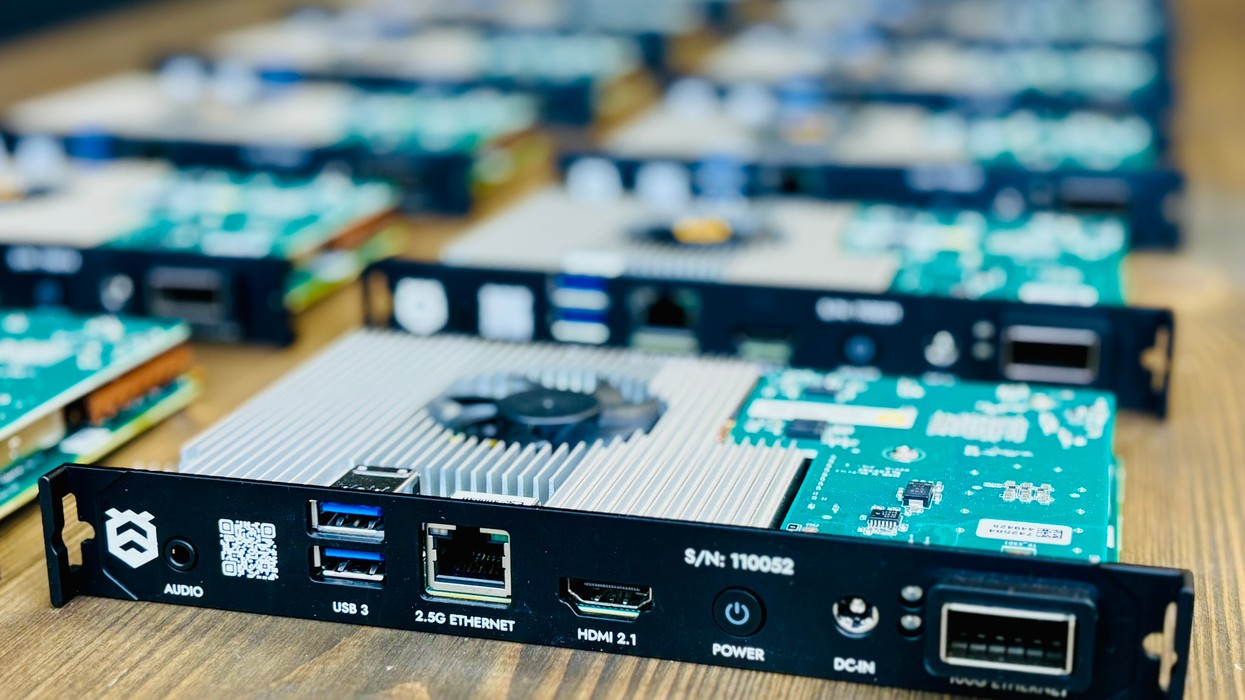
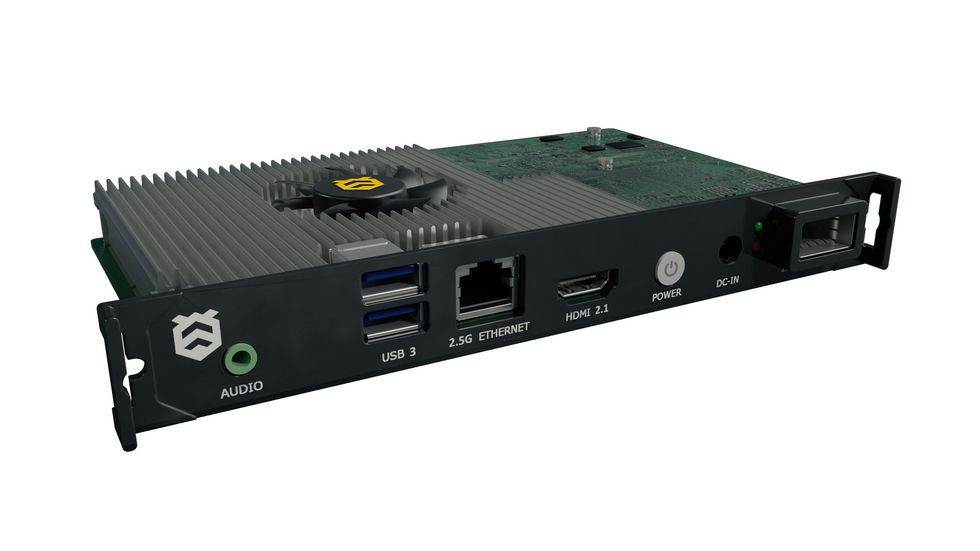
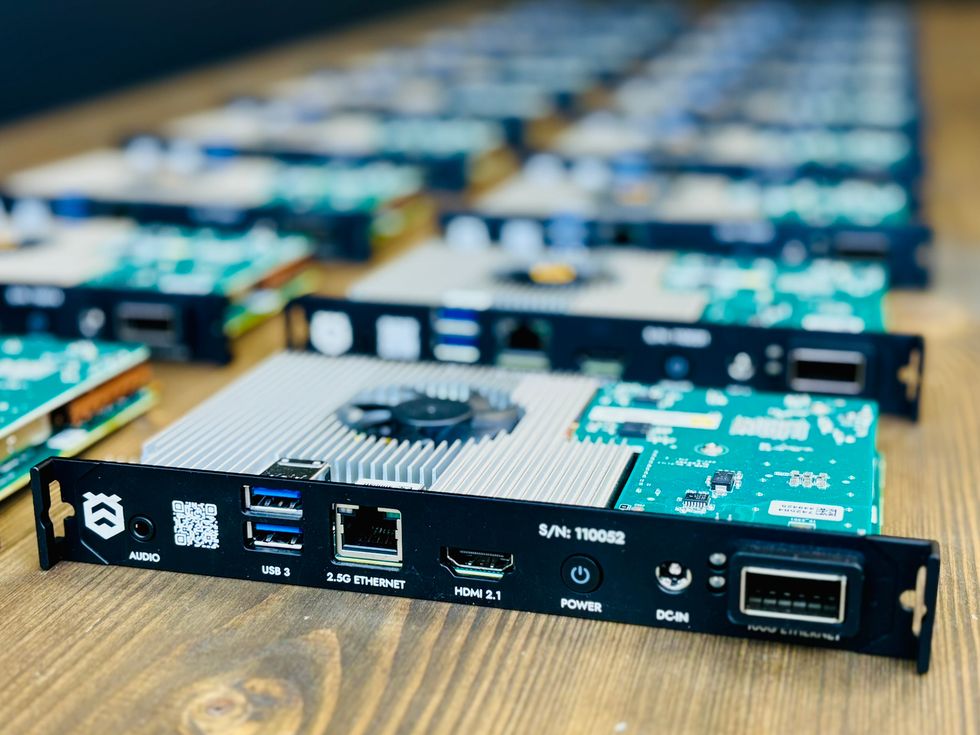
At the heart of our system is Beeblade – the world’s first media server built on Intel’s Smart Display Module (SDM) architecture. Beeblade is a palm-sized media engine that can slot directly into projectors, displays or LED panels, or be housed in one of HIVE’s modular enclosures.
Despite its compact form, Beeblade delivers playback from HD to native 8K60, provides HDMI Genlock through our proprietary Beesync tool and supports SMPTE 2110. It hits the sweet spot between entry-level players and high-end servers – combining power with small size, efficiency and affordability.
WHY BEEBLADE NEXUS IS DIFFERENT
Beeblade Nexus is HIVE’s most advanced media engine to date. It brings a series of industry “firsts” to the attractions market and redefines what a media server can be:
- World’s first SDM-based 8K60 media server – embedding playback directly inside projectors and displays
- Native SMPTE 2110 support – enabling broadcast-grade IP video workflows, alongside NDI and USB capture, in a device this compact
- Beesync – the first HDMI Genlock tool utilises lightweight machine learning to predict and correct HDMI timing drift in real time, ensuring synchronised video output across any number of outputs
- Ultra-low footprint and energy use – consuming just 36–55W per unit (vs. 500–800W for traditional servers) and weighing 500g
- Decentralised architecture – a “one screen, one player” model that reduces single points of failure and makes systems more scalable and resilient
HOW BEEBLADE NEXUS BENEFITS CLIENTS
These innovations translate directly into measurable client benefits. Compared to traditional native 8K60 rack-based servers, the differences are striking.
Traditional systems are large and complex, requiring heavy racks, long cabling runs and air-conditioned control rooms. They are costly, typically $60,000 or more per unit plus infrastructure and specialist staff. Each server consumes 500–800W of power, not including cooling, and centralised architectures create single points of failure.
By contrast, Beeblade Nexus delivers the same native 8K60 performance in a fraction of the footprint and cost. Each unit is 10 times more affordable (~$6,500), 40 times lighter (500g vs 20–26kg) and consumes 5–10 times less power (36–55W, no cooling). Deployment is up to 70% faster, with no racks or flight cases, and the decentralised design makes systems more resilient, avoiding total shutdowns.
For attractions and immersive environments, these benefits mean lower total cost of ownership, faster project turnaround, reduced carbon footprint and more reliable day-to-day operation.
MADE FOR ATTRACTIONS
HIVE’s HD and 4K Beeblade engines are already powering major visitor attractions and immersive exhibitions, including the Tutankhamun Immersive Exhibition, Our Story with David Attenborough at the Natural History Museum, the Paddington Bear Experience in London and the Bob Marley Hope Road experience in Las Vegas.
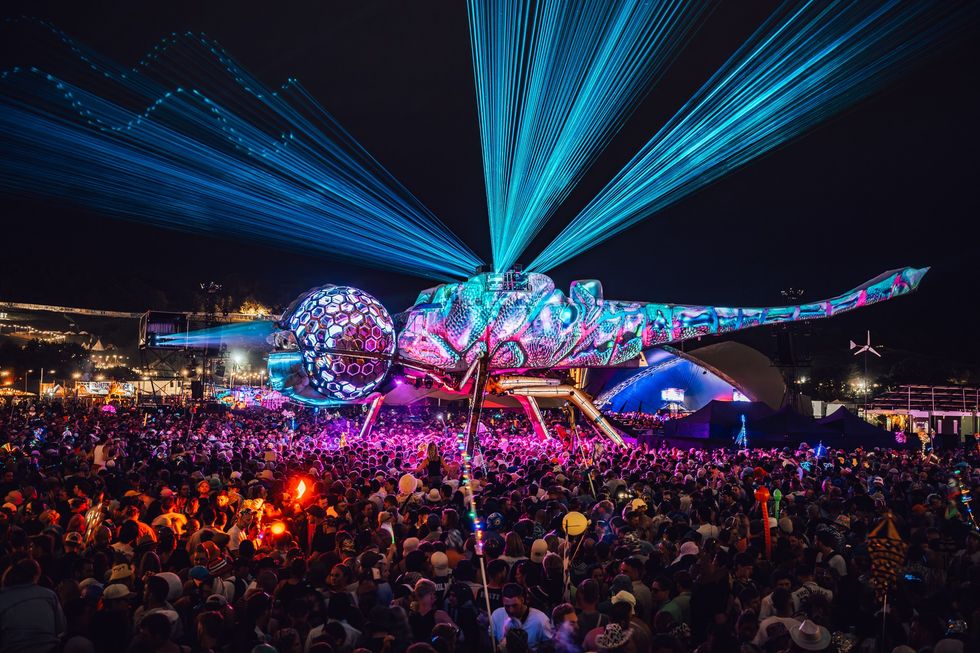
With the launch of Beeblade Nexus, the technology has also proven itself in some of the toughest live environments. At Glastonbury Festival, six Nexus units powered the Arcadia Dragonfly – a 30-metre-long decommissioned military helicopter transformed into a DJ stage. They powered eight 4K projectors, more than 200 LED panels forming the Dragonfly’s spherical “eyes” and integrated LED lighting effects – all with flawless playback.
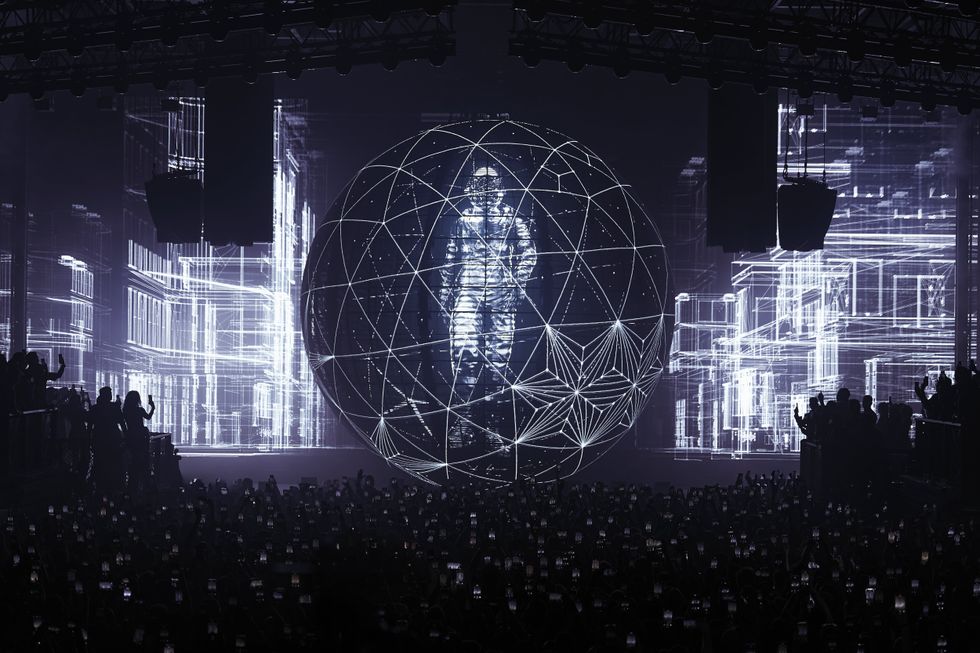
Another example is Eric Prydz’s HOLOSPHERE 2.0 in Ibiza. This transparent spherical LED stage, one of the most complex ever staged, was rebuilt every week across a 14-week residency. Normally such a setup would require racks of servers and a large crew, but the show ran on just four Nexus players, delivering frame-accurate playback in one of the most demanding environments.
These projects demonstrate that Nexus can withstand both creative and operational pressures at scale. Looking forward, we see enormous opportunity for museums, theme parks and immersive experiences, where power, size and cost are critical. Nexus meets those needs, delivering high-performance playback in a package that is smaller, greener and more affordable.
Partners
Mark Calvert – CEO, HIVE
Dave Green – CTO, HIVE
Trey Harrisson – Chief Software Architect, HIVE