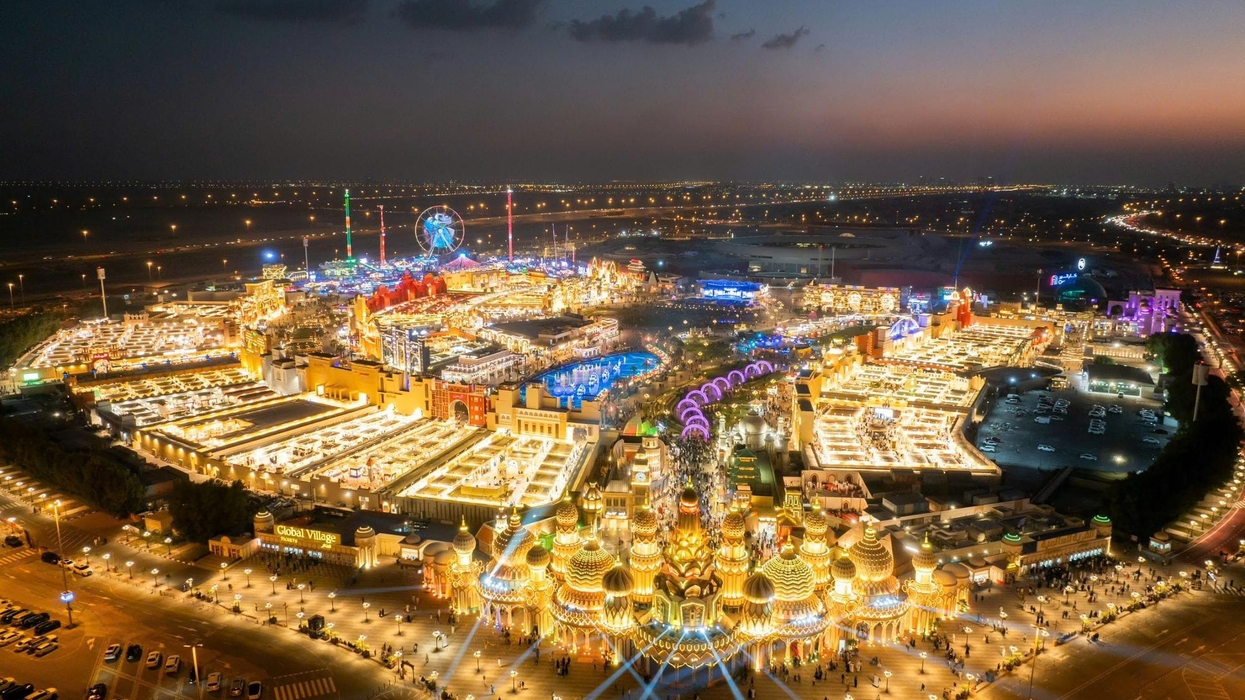
While theme and amusement parks have traditionally offered attractions for different age groups, operators are increasingly adding family rides that let different generations experience them together. Instead of watching while their young child rides, parents and grandparents can share the experience.
For operators, these attractions offer an opportunity to create shared experiences for families visiting together, allowing children and adults to experience the same attraction rather than being separated by height or age requirements.
This has contributed to growing interest in family coasters and other attractions designed to appeal to a broad age range.
ART Engineering, Lagoon Amusement Park and Potts Park offer examples of how ride engineering, operator-manufacturer collaboration and accessibility are influencing the development of family attractions.
Opening coaster experiences to a wider demographic
For family attractions, minimum height requirements are an important consideration for operators and manufacturers.
Minimum height requirements are determined by factors including ride design, restraint systems, and applicable safety requirements, and they can determine which family members can ride together. Many coasters require riders to be at least 100 cm, 110 cm or 120 cm tall, excluding young children eager to graduate from flat rides.
ART Engineering, which has been developing innovative roller coasters, dark rides, carousels, and water rides since its founding in Kirchzarten, Germany, in 2003, has made the 90 cm (32 inches) height requirement a cornerstone of its family portfolio.
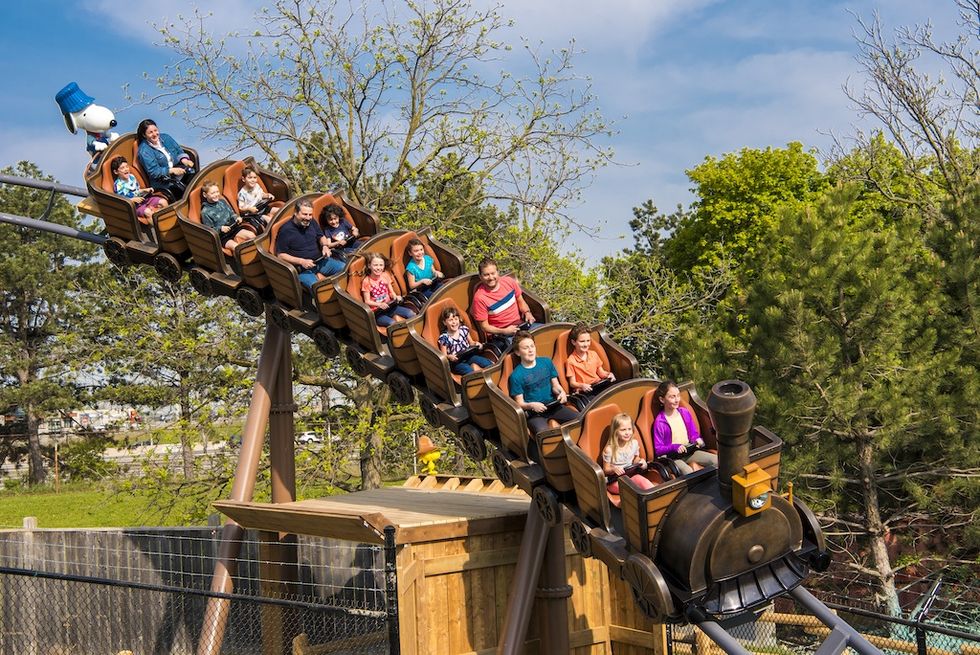
Canada's Wonderland's Snoopy's Racing Railway ride, a Family Launch Coaster from ART Engineering
By engineering a system that lets children measuring just 90 cm ride safely when accompanied by an adult, the company has opened its coaster experiences to an entirely new demographic.
Georg Behringer, managing director of ART Engineering, says operators are increasingly looking to create attractions that multiple generations can experience:
Georg Behringer, managing director of ART Engineering
"Many of our clients focus on families as their target customers, aiming to provide a shared experience for family members of all ages. Our family roller coasters are designed according to that focus. The seats and restraint systems are suitable for small children and also offer comfortable accommodation for large adults.
“Combined with a dynamic—though not overly aggressive—ride experience, this ensures a fantastic time for all ages"
Designing a vehicle and restraint system that can securely accommodate both a child and an adult presents a significant engineering challenge. The physical differences mean that a lap bar fitting snugly against an adult's thighs could create a hazardous gap over a child's lap.
To overcome this, ART Engineering has developed seating and restraint systems designed to accommodate a wide range of rider sizes, including systems that close from above or secure the lap individually, adapting dynamically to different body shapes and sizes without sacrificing passenger comfort.
"We put a great deal of effort into developing the seat,” says Behringer. “The goal was to ensure that both small passengers and large adults could sit safely and comfortably. To achieve this, we conducted extensive tests with a wide range of people.
“The result is that a baseball player can now ride our roller coasters together with their three-year-old child."
Braus & Saus at Potts Park
For Potts Park, a family-oriented amusement park in Minden, Germany, introducing a roller coaster that could cater to very young children while still offering an exciting ride experience was a key goal. The result was Braus & Saus, a custom-designed Family Shuttle Launch Coaster from ART Engineering.
Park owner Henrik Pott explains that the decision of manufacturing partner came down to trust and a willingness to iterate on the design:
"A key reason to choose ART is the relationship of trust involved in the collaboration. For our roller coaster, ART kept iterating the layout until we had the best solution. We recall going through eight different versions. The Wild Stone Age themed area found its fitting finale with the Braus & Saus attraction.
"The ride’s alignment with the heartline is superb, making the entire experience a real pleasure."
Repeated design iterations allowed the teams to refine the layout and the forces riders experience. The track is designed around riders' centre of gravity (the "heartline"). This alignment ensures that transitions, banks, and curves are smooth, eliminating lateral jolts and jerks that could otherwise scare or discomfort a young child.
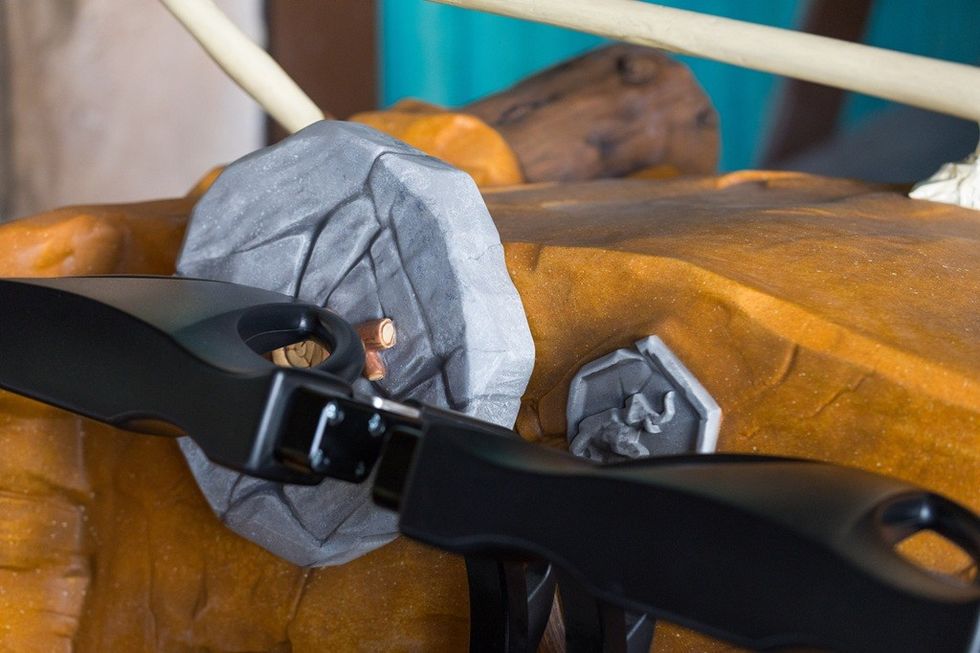
Detail of the Braus and Saus ride at Potts Park
In a park where families with young children are the primary demographic, offering a high-speed, dynamic-launch coaster for families is a significant competitive advantage.
"Most of our attractions are accessible to children from three years of age when accompanied by an adult. Beyond that, many guests are impressed that Braus & Saus is also open to riders from three years of age,” says Pott.
Pott says the combination of the ride experience and theming has also contributed to its appeal:
"Visitors are absolutely delighted with Braus & Saus. Feedback has been universally positive, with many guests immediately getting back in line for another ride. People particularly highlight the "farting" mammoths and the ride's smooth operation."
The success of Braus & Saus shows that a family coaster is not just about the physical track, but about the storytelling and the joy it brings. "Ultimately, the overall storytelling and its execution determine an attraction's success. It is difficult to point out just one element.
“What we value most about working with ART is our shared commitment to creating the best possible product and their availability to make necessary optimisations even after the ride has launched."
Primordial at Lagoon
Meanwhile, at Lagoon Amusement Park in Farmington, Utah, the same focus on family audiences was applied on a much larger scale with Primordial, an award-winning interactive coaster and dark ride hybrid.
In 2023, Lagoon opened this themed, interactive family coaster, representing one of the most ambitious engineering undertakings in the park's history. It features a custom-built mountain, interactive shooting elements, slow-moving dark ride sections with rotating gondolas, and sudden drops.
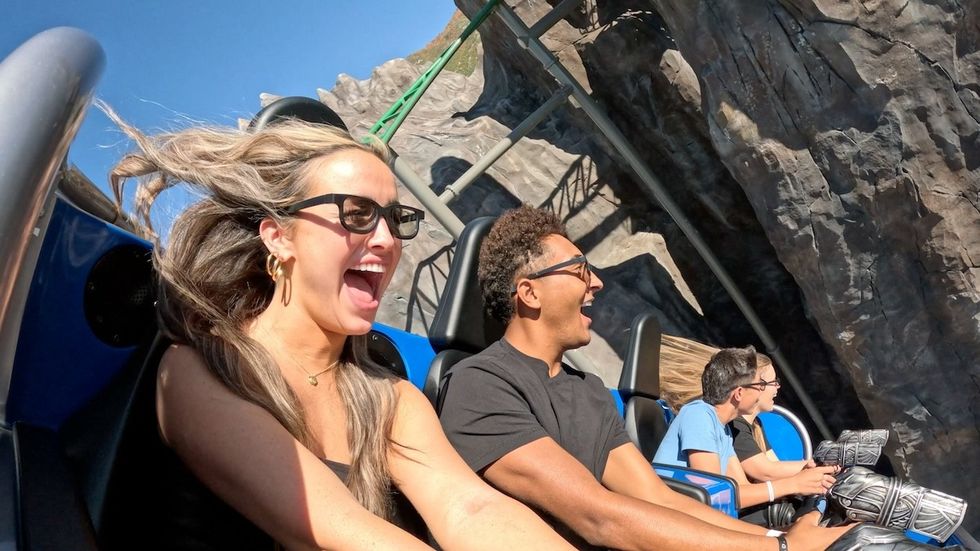
Guests enjoying Primordial at Lagoon
Dustin Allen, Lagoon's director of engineering, says that Primordial filled a spot in the park’s attraction lineup that was missing, adding: “The guest reception has been fantastic, with queue lines today continuing to prove the ride’s popularity three years after opening.
“In fact, Lagoon had to alter the park opening to accommodate the number of guests going directly to Primordial at “rope drop”, as well as changing ride operation closing policies to support the popularity of the ride."
Allen details the collaborative spirit that made ART Engineering a good fit for the ambitious project:
"The design, manufacture, installation, and commissioning of Primordial required very intricate communication and coordination. Relationships with the several companies involved in the project were crucial to the success of the ride.
“Lagoon has partnered with ART Engineering for several projects throughout the years (including the Cannibal and Bombora rides), and that relationship of trust and cooperation was solid.”
Primordial represented an evolution of the interactive coaster concept.
Although ART Engineering had previously developed similar dark ride/coaster hybrid technology for Canada's Wonderland with the Wonder Mountain's Guardian attraction, the concept for Primordial was developed further through new train designs, interactive targeting, and additional physical coaster elements.
“ART Engineering had proven to be more than capable of tackling these challenges and did so with distinction.”
Allen says the attraction has also had an impact on Lagoon's attendance:
“Park attendance has grown each year since the announcement of that ride. Many comments have been received about the upgrades to the amusement park in recent years, with Primordial being a prime example of Lagoon going above and beyond the expectations of the guests in providing world-class rides and attractions.”
Additionally, Primordial received multiple national and international recognitions, including an IAAPA Brass Ring Award, USA Today Reader’s Choice Award, and placing in blooloop’s Innovation Awards.
The recognition has also helped attract visitors from outside the local region, he adds:
"Primordial changed both the landscape (figuratively and literally, we built a mountain for this ride!) and the perception of what Lagoon – a regional park in Utah – is able to provide as an experience for our guests."
From kiddie coasters to new adventures
One of ART Engineering's greatest strengths is its diversified family ride portfolio. Its range includes traditional lift coasters alongside launch, shuttle, and interactive concepts, allowing operators to choose different ride formats based on available space and the desired experience.
At the entry level is the Kiddie Coaster, designed specifically for the youngest riders. This model, a gentle introduction to coaster kinetics, can be found at leading theme parks such as Europa-Park in Germany and Legoland Windsor in the UK.
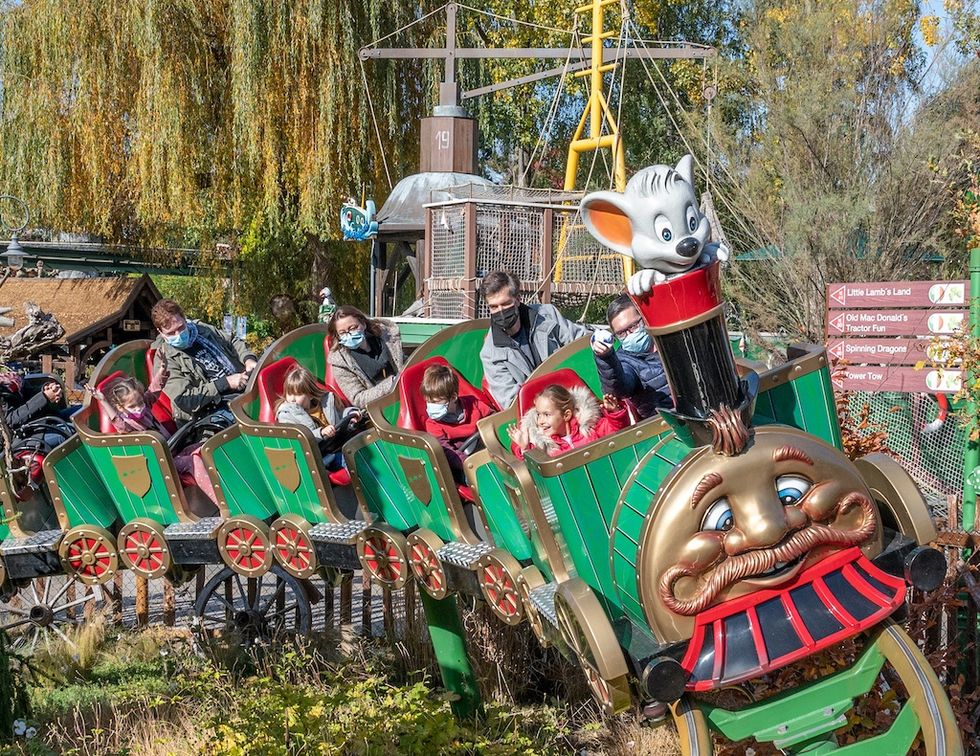
The Ba-a-a Express coaster at Europa-Park, an ART Engineering Kiddie Coaster
The classic Family Coaster is the company's signature model. Featuring either a traditional chain lift or a friction wheel lift, this coaster incorporates thrilling, family-friendly track elements while utilising a low FRP (fibre-reinforced plastic) shell so children over 90 cm have a clear, unobstructed view from every seat.
This classic model has been installed at parks like Nigloland in France.
The portfolio has also expanded into launch and shuttle formats, including the Family Launch Coaster, Family Spike Launch Coaster and Family Shuttle Launch Coaster. These designs introduce acceleration and changes in direction while retaining the lower height requirements associated with family attractions.
Family Coaster from 90cm height restriction:
- Kiddie Coaster
- Family Coaster
- Family Launch Coaster
- Family Shuttle Launch Coaster
- Family Spike Launch Coaster incl. switch track
- Family Duelling Launch Coaster (coming in 2027)
- Family Thrill Coaster
Controlled rotating coaster (4 seats in a row):
- Adventure Coaster
- Adventure Interactive Coaster
Coaster with inversions:
- Mega Coaster
At the start of 2026, ART Engineering relaunched its Adventure Coaster product category. Building on the lessons of interactive ride engineering, the Adventure Coaster represents a step forward in personalised storytelling. It debuted as the Galacticoaster at Legoland Florida and Legoland California.
Galacticoaster also illustrates the shift towards more interactive coaster experiences, with riders able to configure their digital spacecraft before boarding.
 A family enjoys the new Galacticoaster, which launched earlier this yearImage courtesy of Merlin Entertainments
"The feedback has been consistently positive,” says Behringer.
“The Legoland Galacticoaster combines a fantastic ride experience with show effects. Riders are immersed in the story right from the queueing area. This approach creates a personalised experience for the rider, going beyond mere theming."
The Adventure Coaster uses four-seat vehicles and a central boarding platform, a layout designed to keep groups together during the experience.
Across the thrill spectrum
While family-friendly attractions are a major focus for ART Engineering, the company’s engineering capabilities also extend to extreme thrills, for example, the iconic Cannibal mega coaster at Lagoon.
"Cannibal is the result of close collaboration with Lagoon,” says Behringer. “The goal was to create a unique roller coaster offering intense thrills and inversions.”
Opened in 2015, Cannibal features an enclosed vertical tower lift, a 110-degree nose-dive drop, and the high-speed Lagoon Roll inversion.
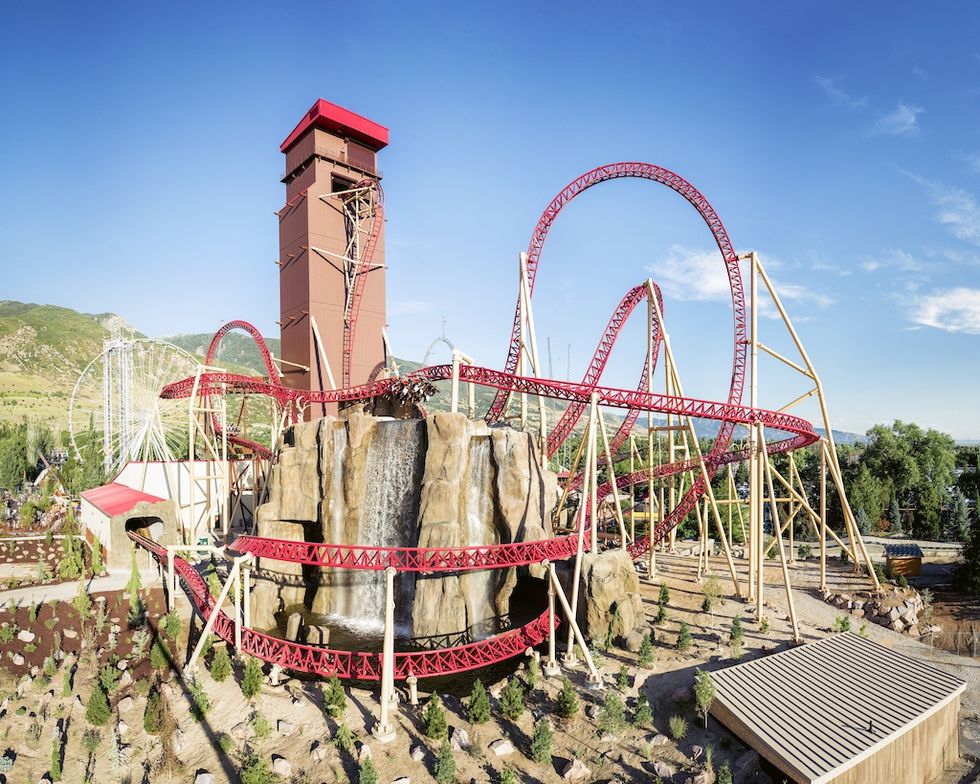
Cannibal, the ART Engineering Mega Coaster at Lagoon
Allen adds: "Cannibal really put Lagoon on the map. Bombora [a custom family coaster] was the first collaborative coaster with ART Engineering and set the stage for the ambitious Cannibal, Lagoon’s second collaborative coaster. Cannibal became the tallest and fastest ride in the park when it opened.
“With the unique tower lift system, it also became an iconic landmark for the park. It is loved by guests for its smooth track, unique elements, and consistently moving queue line (the ride regularly hits the theoretical capacity of 1200 PPH).
“Possibly Cannibal’s greatest attribute is the operational uptime and consistency. Through the first ten seasons of operation, the ride was able to open each day that the park opened. There were days that the ride was operational only for a short time, but there was never a full day where guests were left without the opportunity to ride the marquee attraction."
Cannibal's operational record also highlights the importance of reliability and long-term performance alongside ride design and engineering.
Long-term reliability with ART Engineering
For operators making a multi-million-dollar investment in a new coaster, long-term reliability is as important as the initial ride experience. When an attraction is out of service, guest satisfaction falls, queue times at other rides lengthen, and the park's overall reputation suffers.
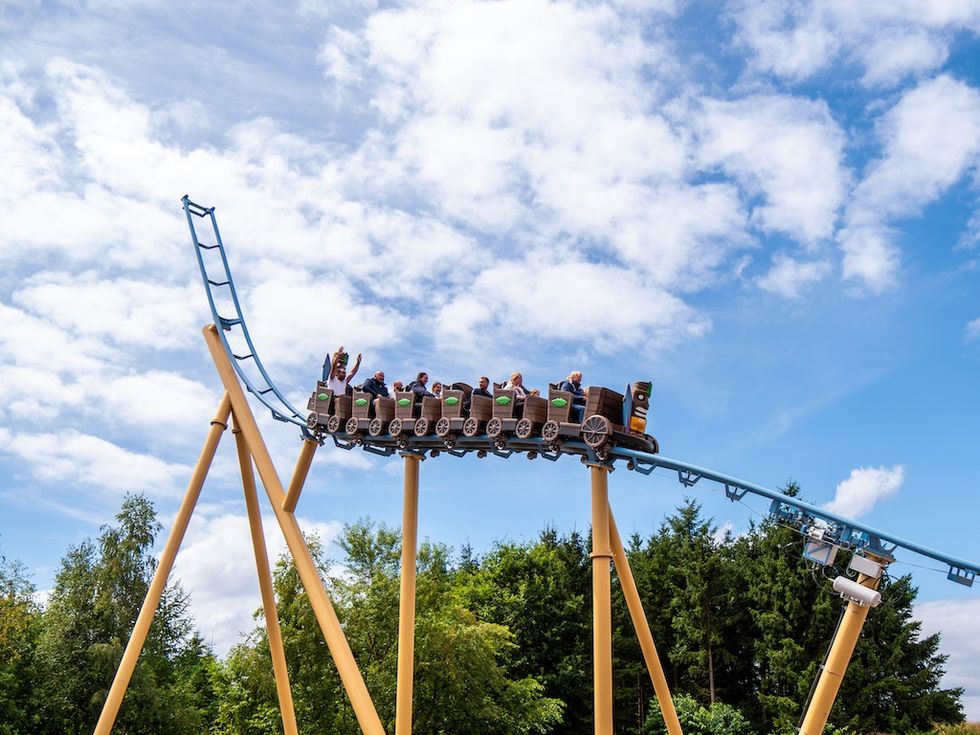
Mauis Peak, an ART Engineering Family Spike Launch Coaster at Tier- und Freizeitpark Thüle
Behringer says ART considers long-term operation during design and development, supported by post-launch service.
"The customer invests in a product intended for long-term use. ART Engineering's goal is to deliver quality. To achieve this, the product's lifespan requirements are considered throughout the development process. Careful component selection, comprehensive quality management, and our ongoing service are prerequisites for a successful product lifespan."
An extensive parts & service programme underpins this dedication to quality.
Looking ahead, Behringer expects family coaster designs to continue developing.
“I think family roller coasters will continue to evolve—with new ride elements, more extensive theming, and greater customisation,” says Behringer. “New manufacturing processes are being implemented, and AI may increasingly play a role in certain processes."
The evolution of the family coaster
The examples of Potts Park and Lagoon illustrate how the family coaster category is expanding beyond traditional children's attractions, with operators and manufacturers exploring lower height requirements, more sophisticated ride systems, and greater interactivity.
For operators considering a next-generation family coaster, Henrik Pott's advice is to start with the intended audience and the fit between the attraction and the park:
"Pay attention to your target audience and ensure the ride is a good fit for them. If the ride has already been installed elsewhere, try it out for yourself."
As the distinction between family and thrill attractions becomes less defined, the family coaster category is likely to continue evolving. For operators, the challenge is not simply to lower the minimum height requirement, but to create an experience that works for different ages, confidence levels, and expectations within the same attraction.
Attendees at IAAPA Expo Europe 2026, taking place in London from 22 - 24 September, can meet the ART Engineering team at booth #S803, where they can learn more about the company's roller coaster projects.