During a session on family experiences at the Festival of Innovation 2026, industry leaders discussed changing guest expectations, the balance between creative ideas and operations, and design principles that help modern attractions connect with visitors and last over time.
The conversation featured two prominent voices from Huitt-Zollars Inc., a fully integrated architecture and engineering firm that is celebrating its 50th anniversary this year: Andy Fastman, senior vice president, and Greg Senner, vice president of creative development.
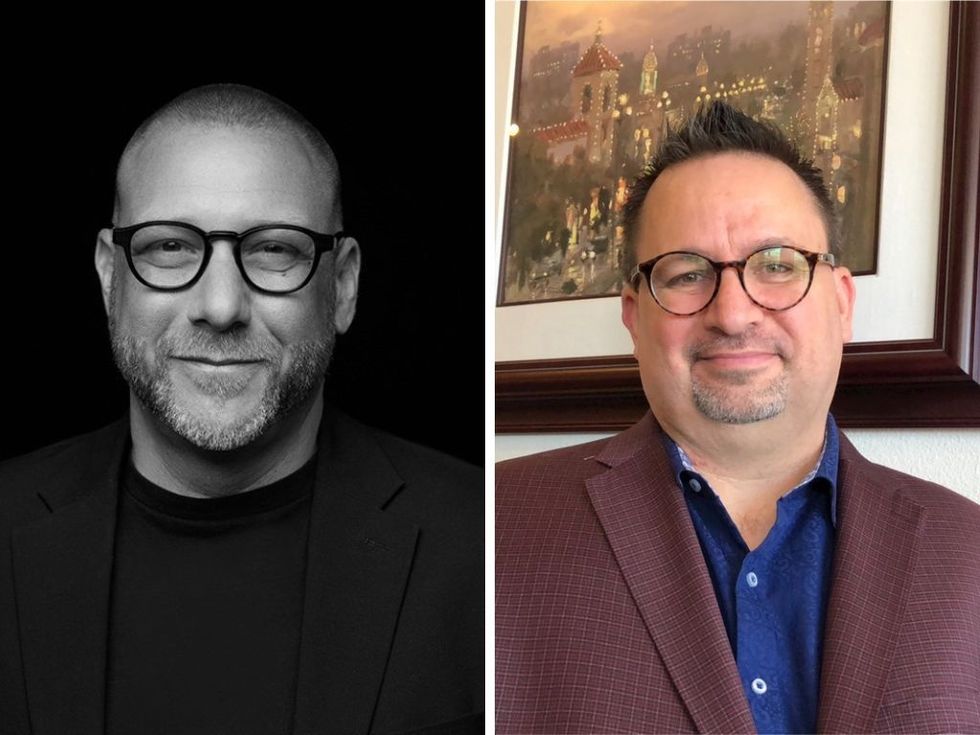 The panellists from Huitt-Zollars - Andy Fastman, left, and Greg Senner, right
Guest expectations have risen sharply, while attention spans continue to shrink. “Getting kids to look up from the phone is almost impossible,” Fastman said.
The firm is pushing the boundaries of experiential design far beyond traditional theme parks. Fastman explained how they are applying their extensive background in immersive environments across diverse sectors to explore concepts such as immersive learning and concierge-hospitality-based healthcare.
See also: Bold ideas, bright futures: highlights from the blooloop Festival of Innovation 2026
Fighting for attention
As guest expectations grow, capturing the attention of the modern family is a tough design challenge. Fastman mentioned that attention spans have changed a lot and that screen time is a common obstacle as multi-generational experiences evolve.
Rather than fighting this trend, Fastman views it as an opportunity for integration. Whether it is an app-based interactive element or an augmented reality overlay, the focus has shifted towards profound immersion:
"Escapism, even in a family entertainment centre, has become far more important, almost more than the activity itself," he said. "It's about how far from reality can you get, and how long can you keep someone there, and how long do they want to be there?"
Senner expanded on this, pointing to the gaming industry's heavy influence: since the mass market readily consumes high-quality media, people's expectations for refined storytelling have risen sharply. "Video game storytelling is through the roof, so that engagement and immersion into a space is at an all-time high."
The secret to meeting these expectations, according to Senner, is moving away from passive observation to active participation. "The really great things are, we're going to tell a great story, but only to a point where we have worldbuilt and set the stage for you to come in and participate, be a part of the story."
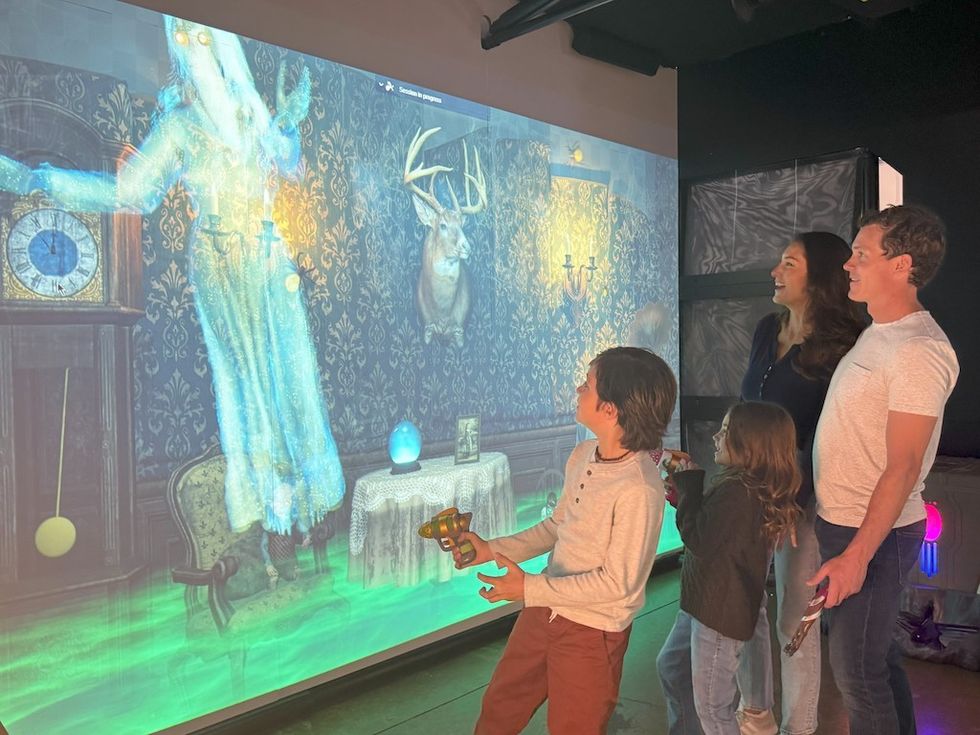 FuzionGamz is an example of an experience that includes the whole family, with all ages getting involved in the action Image credit FuzionGamz
By providing consumer agency in these spaces, "the guests become the characters, they interact with the space instead of just viewing it".
To illustrate this, Fastman and Senner recounted a recent benchmarking trip to a newly opened experience. Although the IP seemed to cater to adults, they were surprised to find seven- and eight-year-olds "giggling and having a blast," completely captivated by the environment.
Senner noted that even a member of their group who was entirely unfamiliar with the specific IP still felt profoundly engaged in the story. This was largely due to an RFID-enabled interactive prop given to guests alongside an audio headset, driving personal agency.
He added that this technology elegantly solved operational throughput challenges while creating an "open world" community atmosphere.
"Even though you have 50 people in the experience at one time, you have smaller groups of 12 or 13 that would go and do specific things in a wider space... it created a community amongst those people while being able to direct in multiple places, so it wasn't bottlenecking the experience."
The addition of live-action actors further personalised the event's humanity.
As a designer, Fastman admitted to always "looking for the edges"—trying to spot where the line of sight fails or where a stray zip tie breaks the illusion—but noted that consumers today are incredibly observant, demanding that creators continually "up that ante" without venturing into confusing or overly surreal territory.
The importance of localisation
Designing for families globally requires an understanding of cultural nuances; an attraction cannot simply be duplicated from one region to another without localisation.
"Sometimes jokes don't play in other cultures," Senner explained. "Things that are funny in North America would completely not make sense in other cultures. Sometimes it's as simple as that word doesn't exist here, so the translation ruins the joke."
Beyond language, symbols and emotions have different meanings around the world. For example, a certain colour might mean bad luck in one place, while a number might represent wealth in another. Fastman pointed out that spiritual ideas also need to be approached carefully in different cultures.
For instance, in many Asian markets, supernatural concepts are often framed as mystical rather than "haunted". There are also distinct cultural differences regarding the portrayal of physical relationships, violence, and even the depiction of blood.
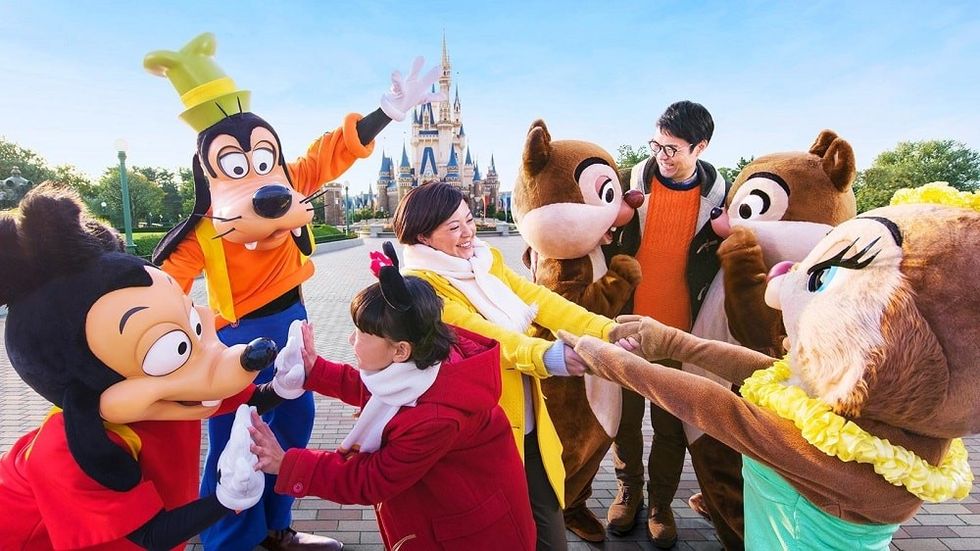 Tokyo Disney Resort is an example of how the company tailors its family experiences to different markets around the world Image courtesy of Disney
"How do you get something that is not only culturally acceptable in a region but also age-appropriate top to bottom?" Fastman posited.
These cultural differences strongly influence the physical architecture of an attraction, particularly in queue design. He added that Western cultures are generally more inclined to queue in a single file.
Conversely, in cultures where waiting is relaxed and queues are uncommon, the architectural strategy must naturally guide the visitors.
"In cultures where people are not so apt to queue, we tend to tighten up the queue lines, give it less space to force the direction of the flow. This affects throughput, this affects our accounts, and theoretical capacities... Sometimes it's not the story that changes, but it's how do we pull off the story or make it function within this space."
Themed food, drink, and retail
One common problem in creating family attractions is not understanding how to make money from them. Senner pointed out a big mistake developers make: thinking that just building a highly themed, costly ride will guarantee high profits.
"I would argue that largely the ticket price pays to operate the attraction, and it's not where you generally make your profit in your higher margins."
The true financial engines of an attraction are food, beverage, merchandise, and value-added experiences. He used the evolution of the Wizarding World's Diagon Alley as a prime example.
During the opening of the initial Harry Potter area, guests faced long wait times for butterbeer and wands. Recognising this bottleneck, the second iteration of the attraction was specifically designed to streamline these purchases, which paradoxically led to an increase in guest satisfaction alongside a massive jump in revenue.
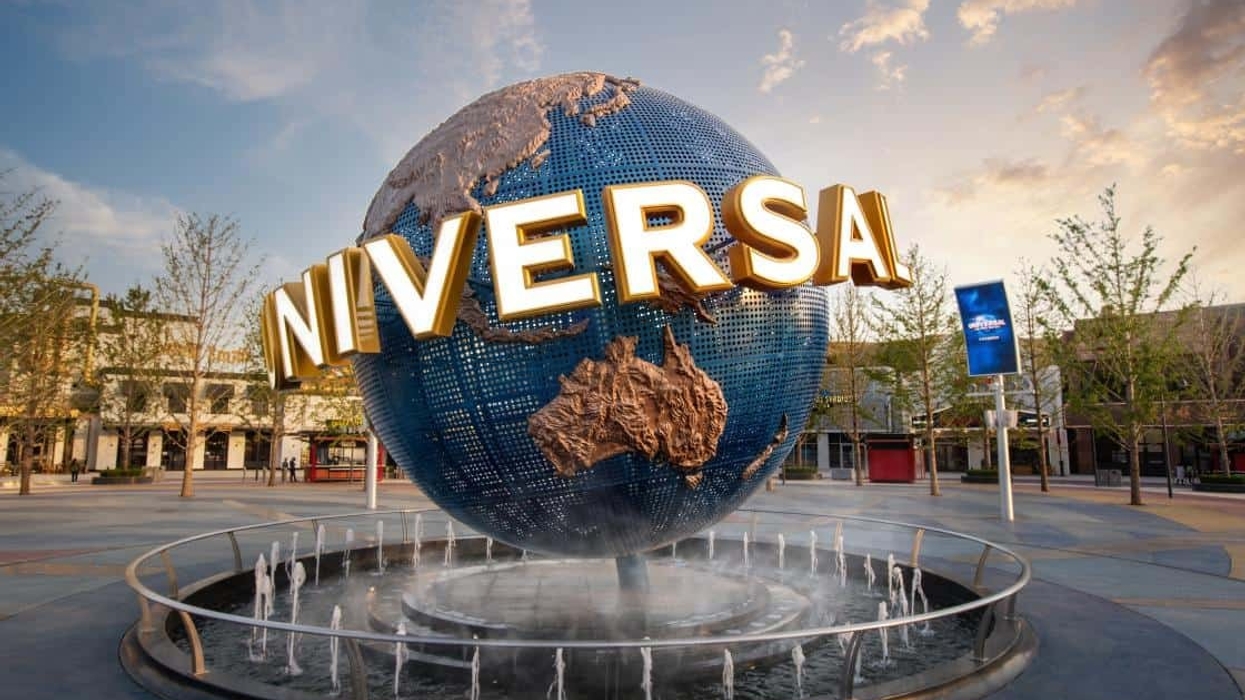
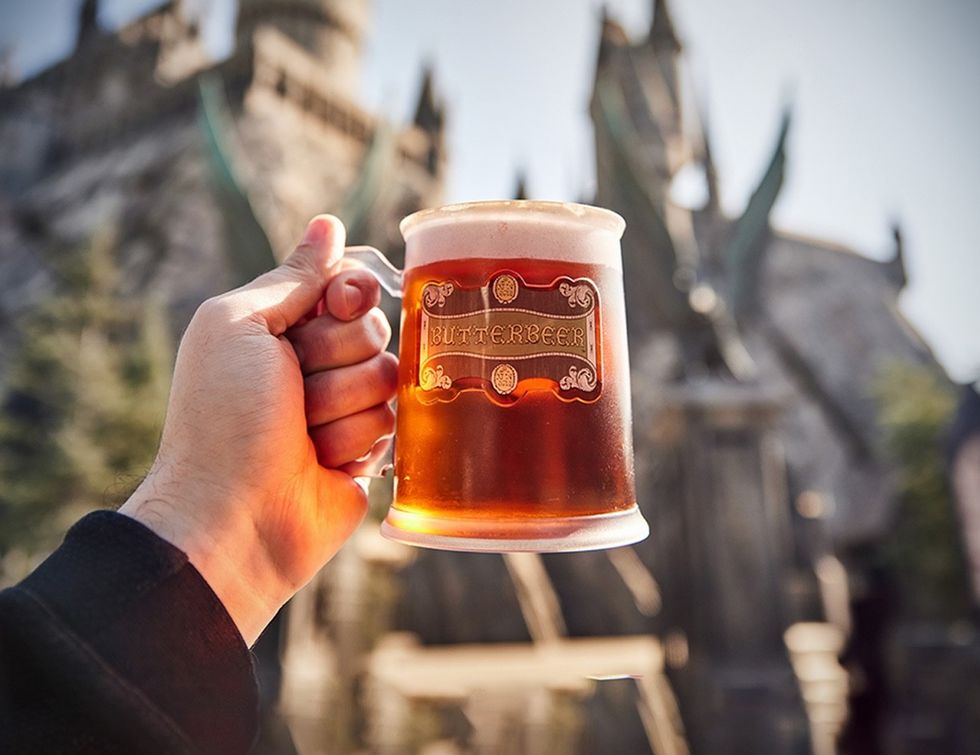 Don't underestimate the draw of themed food and drink, advised Senner and Fastman during the family experiences panel, sharing the example of Universal's Butterbeer Image courtesy of Universal
Providing a basic "hot dog cart" simply to check a box is a missed opportunity; instead, developers must maximise the experiential potential of dining and retail.
Fastman echoed this, noting that stopping short of full immersion leaves money on the table.
"The food is common food, but the hamburger happens to be square, not round, because that fits part of the narrative, or a perfect cube of lasagna, because again, it fits in something thematic."
This integration extends directly into merchandise through the "hero's artefact". Senner highlighted the explosion of highly themed popcorn buckets in movie theatres as a perfect example of revenue operations blending with experiential memory-making.
But when implemented correctly inside an attraction, these items become active tools. "When I go into the experience, this takeaway that I have... can be an Easter egg that, if you do this, unlocks another little morsel of entertainment," Senner said.
Fastman agreed that when executed well, the guest never feels "nickeled and dimed". Instead, monetisation becomes a voluntary, joyful act of participation that secures the attraction's long-term financial success.
Encouraging repeat visitation for family experiences
A new interactive idea might seem exciting the first time, but without enough variety, its interest quickly fades. Fastman warned that a fixed interactive feature that lights up in the same place every time will eventually be forgotten by the fifth visit.
Building in variability, randomisation, or future-proofed technology is critical to encouraging repeat visitation.
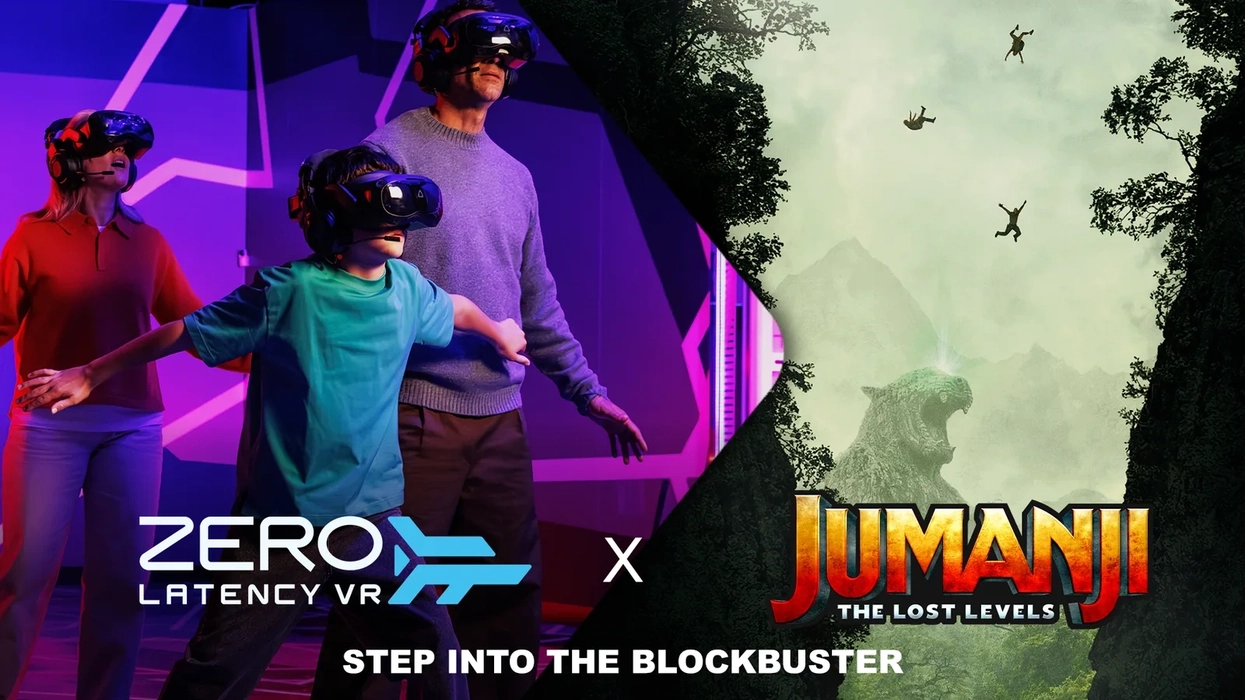
Senner compared this to the early generation of escape rooms, where once a guest solved the puzzle, the experience lost all its value. To combat this boredom, developers are leaning into programmatic media that can evolve, as well as gamified concepts and "competitive socialising".
Tracking scores via apps creates social rivalry that encourages friends to return to beat their high scores, a trend successfully utilised in modern axe throwing, pickleball, and enhanced bowling.
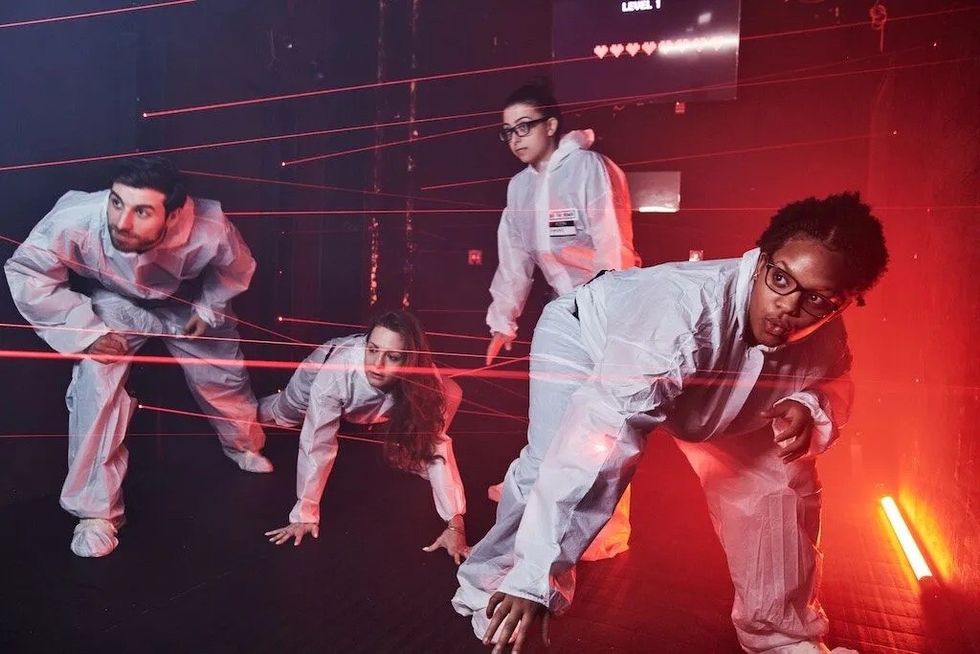 Beat the Bomb shows how tracking scores and turning the experience into a competition can keep friends and familiies coming back for more Image courtesy of Beat the Bomb
Integrating redemption rewards is another powerful tool. Whether it's an arcade dispensing tickets for plush toys or an attraction offering a prize after multiple visits, it drives loyalty.
"Sometimes it's, hey, you do this five times and you get a free t-shirt, and the interesting thing about it is, I sold you five $40 tickets and gave you a $5 t-shirt for it," Senner said, noting that the guest feels pride because they earned the item.
If an attraction can't be made repeatable, it should be located in areas with many new tourists, such as Orlando or Las Vegas, to continue attracting first-time visitors.
Yet, true longevity is often less about cutting-edge tech and more about deeply rooted emotional connections.
Fastman gave the example of Disney's It's a Small World, which provides a unique, comforting visual experience that continues to draw multi-generational families year after year.
Senner said that this nostalgic feeling is usually linked to physical sensations rather than to clear branding.
"Nostalgia is not just a brand that you identify with, it's not just an IP, it's an emotion," he said. He recalled how the distinct smell of garlic, basil, and toasted bread instantly triggers memories of his mother's lasagne.
Similarly, hearing a song not heard on the radio for thirty years can instantly bring back every lyric. By layering these powerful sensory triggers into attractions, designers create indelible, lifelong memories for families.
The Huitt-Zollars approach
To actually deliver these highly complex, fast-paced projects, Huitt-Zollars has strategically built up its creative development discipline to bridge the gaps between ideation and physical construction.
Senner, whose 30-year theme park career spans everything from operating a Universal horror makeup booth in 1997 to mixing live sound and lighting and running a scenery fabrication company, noted that storytelling alone is not enough.
A brilliant creative design is useless if it is not operationally viable.
"I'm able to come in when I look at something, and I say, 'I see your design, but you've got a closed loop with no way to maintain the inside of that loop, so let's fix that problem'," Senner explained.
From the facility side, Fastman said he was very happy with this connected approach. When architectural firms get technical advice from outside vendors too late, engineers end up making risky assumptions about power, water, and building support.
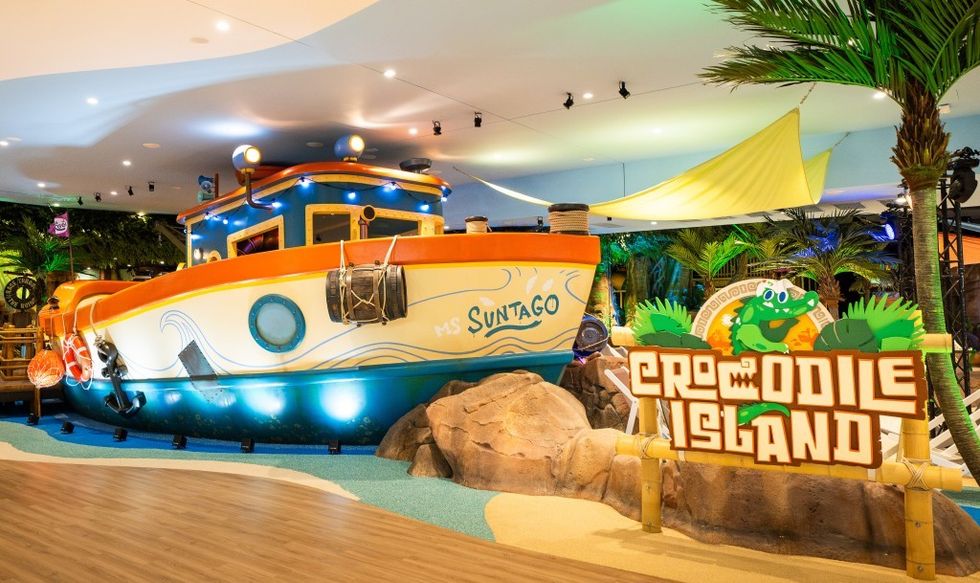 Crocodile Island at Suntago Water Park took second place in blooloop Innovation Awards 2025 in the family category, sponsored by Huitt-Zollars Image credit Marcin Kontraktewicz
Housing both storytelling and engineering under one banner streamlines the timeline. If a creative team needs a wall for a 9,000-pound animatronic with high data and power needs, engineers can implement it instantly.
This synergy is vital as developers demand increasingly aggressive schedules.
Huitt-Zollars early involvement in drafting technical designs and addressing questions cuts scope gaps and schedule risks, leading to a 76% return client rate.
"We're not a vendor, we're a partner," Senner added, stating their goal is to eliminate risk and ensure success across the board.
Fastman agreed, noting that the term "turnkey" is used too casually in the industry. True turnkey service means being involved from before the first sketch and remaining engaged through post-occupancy facility management, continually analysing and innovating operations.
This methodology is helping the firm push experiential design into unexpected sectors, like healthcare, where they have created sensory-sensitive, colourful, playful spaces, making hospitals more fun and helping children heal with laughter and joy.
Award-winning family experiences
Looking to the future of family attractions, both executives agree that although technology is advancing at an exhilarating pace, it must always serve the narrative.
"Don't do a VR experience because you have VR, do a VR experience because it's the best tool to tell the story," Senner advised.
The most exciting innovations in the industry occur when technology is used invisibly to pull families deeper into the world.
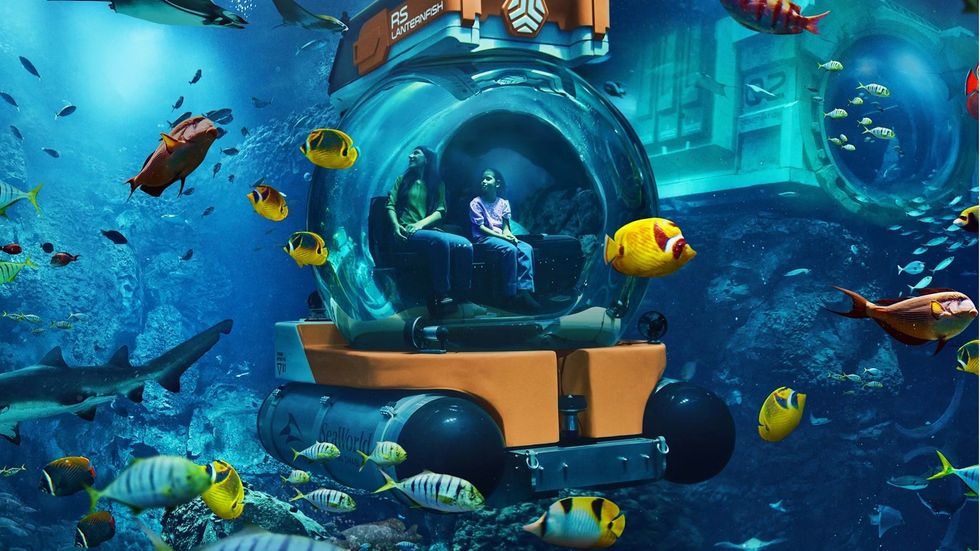 SeaWorld Yas Island, Abu Dhabi's SeaSub took first place at the blooloop Innovation Awards 2025 in the family category, sponsored by Huitt-Zollars Image courtesy of SeaWorld Yas Island
The session concluded by turning its attention to the operators who are putting these ideals into practice in the real world, as the winners of the blooloop Innovation Awards in the family category were announced.
Showcasing the global footprint of modern experiential design, the awards went to Legoland Shanghai Resort's Creative World in third place and to Crocodile Island at Suntago Water World by CSB - Creative Studio Berlin GmbH in second.
Taking first place was the SeaSub at SeaWorld Yas Island in Abu Dhabi.
As the boundaries between architecture, digital media, and operational reality become less clear, Huitt-Zollars's insights show that the future of family attractions will go to those who tell authentic stories and design with careful, smooth integration.
Entries are now open for the blooloop Innovation Awards 2026, presented with AREA15. The winners will be announced at our online event, The Festival of Innovation, in January 2027.
To find out more and enter the blooloop Innovation Awards 2026, please click here.