Rosalind Johnson is the co-founder of A Different View, a strategic business consulting firm and full-service market research agency serving the attractions industry
As we head into a period of phased reopening of attractions in the UK, the industry is wondering whether guests are ready to visit again after COVID-19, and if not, what will encourage them?
A Different View, in association with Panelbase, conducted an e-survey with over 1,000 previous visitors of attractions between 6 - 7 June 2020. The report, which can be downloaded here, looks at two main areas. Firstly, the appetite to return to physical experiences (by type of attraction). And secondly, what information visitors need to be enticed to visit attractions again after COVID-19.
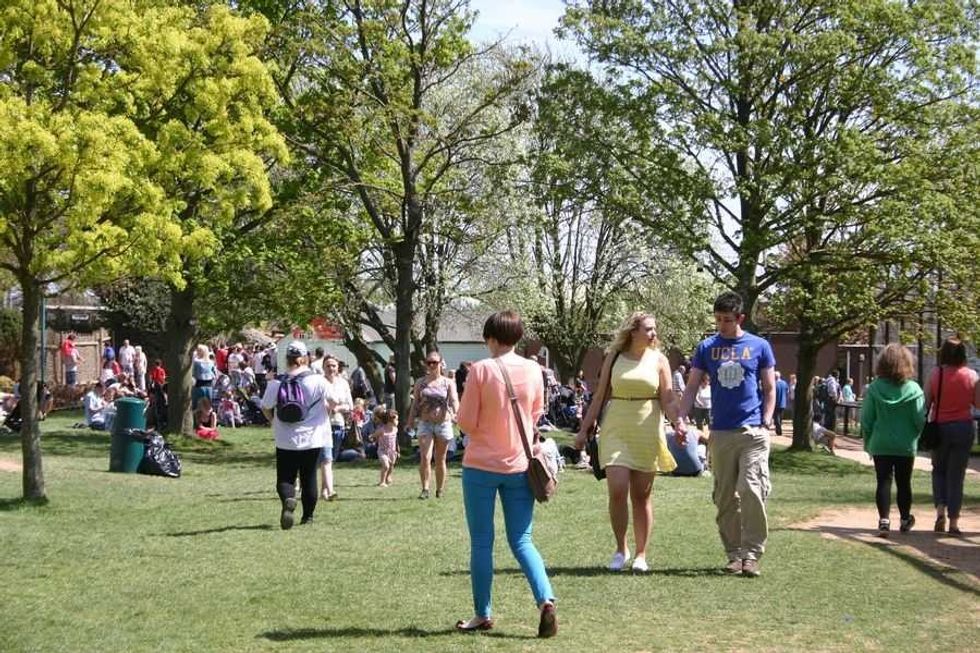
A day out at Twycross Zoo before the pandemic
As with previous sentiment surveys we’ve seen and undertaken in April and May, it is not surprising to find that the natural environment, gardens and outdoor heritage are the first places people want to visit ‘as soon as I can’. But there are worrying signs for theatres, live music venues and festivals. This is because the research shows that between 25% to 28% responders felt they’d wait for a vaccine before heading back.
A post-COVID-19 return to attractions
The report also highlights significant variances in age, gender and life stage. These will be particularly important to marketers over the summer. For instance, those aged 55+ are least likely to visit any type of attraction immediately after COVID-19 and more likely to wait and see how things work out or wait until a vaccine is available.
In terms of life stage, families (with children under 16) will be more cautious than independent adults to get out and visit attractions straight away.
Independent adults are far more likely than families to head back to theme parks and zoos.
There are some interesting specific stats for marketers to grab hold of within the report. For instance, independent adults are far more likely than families to head back to theme parks and zoos.
We also looked at associated experiences, leisure, shopping and entertainment to give a broader understanding of what people are looking to do. Not surprisingly, cafes, pubs and restaurants with outdoor seating get a big thumbs up. Conversely, cinemas and pubs without a beer garden are going to find it hard to bring many people back.
Information is key
The survey asked visitors to say what information they want on an attraction’s website to give them the confidence to visit again after COVID-19.
Safety, in terms of social distancing and hygiene, is by far the driver here rather than price discounts. Specifically, visitors want to know what the new experience will look like for them. For instance, the measures being taken for safety, how numbers are limited and how an attraction will operate their toilets.

Cafes, pubs and restaurants with outdoor seating get a big thumbs up
In other words, leave nothing to chance. Explain everything, both on your website and in your marketing. This will give guests confidence that this is an experience that they will want to have.
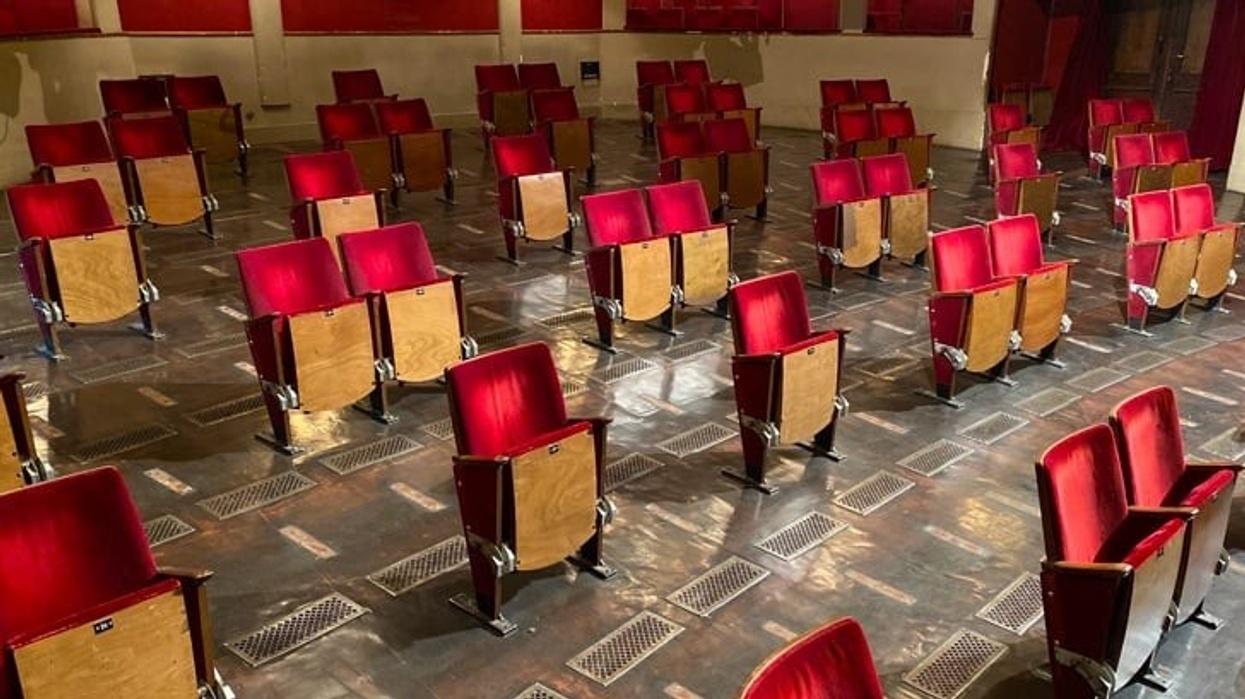
The photo at the top of this blog from Berlina Ensemble was included in our research. We asked visitors whether they’d be prepared to visit a venue if social distancing looked like this. 37% said they’d need to know much more about the experience they are going to have before going back.
Strong messaging
This feels like a significant point at the moment. Operators will have to work hard to describe their new experience and safety measures to encourage people to visit attractions after COVID-19.
Trusted brands will have a head start for sure. But everyone needs to be explicit in their messaging. Attractions must continue to monitor and reflect consumer sentiment as it bends and shifts through the coming months.

Rosalind Johnson is the co-founder of A Different View, a strategic business consulting firm and full-service market research agency serving the attractions industry
The City of London Corporation has approved the planning application for the Barbican Renewal Programme, ensuring the future of Europe’s largest multi-arts centre and protecting the iconic Brutalist structure.
City Corporation Planning and Design officers collaborated with the Barbican Renewal Team and Allies and Morrison's design team on a conservation-led approach. The scheme, praised by heritage bodies, focuses on access, sustainability, and versatile arts spaces that bring people together, all without expanding the footprint.
The Conservatory will undergo renewal to address maintenance and accessibility issues and introduce a climate-controlled habitat, ensuring plant health. A new lift and stairs will provide access to raised balconies, offering spectacular views.
Image credit Kin Creatives
The approved scheme prioritises access and inclusion, delivering the biggest accessibility upgrades in Barbican’s history. As well as the new Conservatory lift for step-free access to the fly tower, a second lift in the foyer will improve access to the Concert Hall, Theatre, and surrounding areas.
The Barbican’s unique Brutalist foyers and lakeside terrace will be enhanced using a sustainable retrofit method. This approach will preserve the heritage of the Grade II-listed building while greatly lowering its long-term environmental footprint.
Better access and flexibility
Work across all areas will provide greater programming flexibility in the Barbican’s public spaces, with the goal of expanding creative opportunities and attracting new audiences.
Opened in 1982 by Queen Elizabeth II, who called it “one of the wonders of the modern world”, this London landmark now attracts over a million visitors annually. As it nears its 50th anniversary, the renewal will enhance its legacy by adding a new multi-faith room, more bathrooms, and better wayfinding and step-free access.
The project presents a unique chance to secure the Barbican’s architectural, artistic, and civic future for the next 50 years. It is spearheaded by Allies & Morrison, in collaboration with Asif Khan Studio, Buro Happold engineers, and Harris Bugg Studio landscape designers.
Image credit Kin Creatives
The City Corporation has allocated £191 million of the total £231 million required for Phase 1 of the Barbican Renewal. Additional funding from philanthropic and partnership sources will be sought.
The Barbican Renewal Programme is part of Destination City, the City Corporation’s growth strategy for the Square Mile.
Chris Hayward, policy chairman of the City of London Corporation, says: “This decision marks a major step forward for the Barbican Centre and its place on the world stage.
"By backing it with significant investment, we’re driving jobs, boosting the City’s economy, and strengthening its reputation as a magnet for visitors, talent, and audiences from across the globe. Just as importantly, we’re transforming the Centre so it’s open, accessible and ready for the future.”
Tom Sleigh, chair of theCity of London Corporation’s Planning and Transportation Committee, adds: "The Barbican holds a special place in my heart, I’ve seen first-hand what it means to London and the world. Credit to our brilliant planning officers for enabling a careful, future-facing renewal that keeps it world-class and welcoming to all."
Image credit Kin Creatives
Chief operating officer of the Barbican Centre, Philippa Simpson, says: “We’re thrilled that Phase 1 of Barbican Renewal has been approved.
"Securing planning permission and listed building consent allows us to restore, celebrate and revitalise the Barbican Centre, so we can continue to deliver a dynamic, world-class arts programme and provide the best possible welcome to new and existing visitors.
“This programme invests in the whole life of the Centre: it will improve access, release spaces for public use, and support ambitious artistic work at every scale. This decision secures this visionary place of art and encounter for future generations and will help us expand our reach nationally and internationally.”
The renewal plans, backed by over 90% public support last year, were shaped by extensive consultation and co-design.
Major works start in 2027, and between June 2028 and 2029, the Barbican Centre will pause most activities during the busiest work period to ensure safety and efficiency.
The Barbican Renewal Programme is among several transformative initiatives led by the City Corporation. This includes the transformation of Smithfield Market into a cultural and creative hub, and the establishment of the new London Museum at West Smithfield.
Keep ReadingShow less
Most popular
Don’t miss out
Get the latest attractions industry news direct to your inbox, every day.
✅ Thank you! We’ve sent a confirmation email to complete your subscription.
The Black Country Living Museum (BCLM) in Dudley, England, has announced three Peaky Blinders nights scheduled throughout 2026, with the first on 14 March.
Visitors to BCLM can walk in the footsteps of Birmingham's most infamous gang, as it was used as a filming location for several scenes in the hit TV drama. Now, with the release of the film The Immortal Fan, the museum is running a series of special evening events.
The museum offers visitors filming location maps, and Blue Plaques can be found around the site.
Charlie’s Yard is the most iconic backdrop, appearing in all six series of the show. First introduced in episode one, it quickly became a central setting. In truth, it is the Museum's boat dock and anchor forge, rich with regional industrial history.
Additionally, the canal towpath has witnessed several tense moments, acting as a drop-off point for characters visiting the Yard. The Canal Street bridge also became a key meeting spot for Freddie and Ada in season one.
The museum's forges and metalworking shops have experienced their own dramas, including shootouts.
The Peaky Blinders nights will include live entertainment, including music, games, and interactive performances, while they explore the immersive atmosphere and enjoy proper Black Country food and drink.
Describing the 16+ event, BCLM says:
"Stay alert for stories unfolding all around, but watch your step as you never know who might be lurking around the corner. Keep your wits about you and don’t forget, if you spot something unusual – you didn’t see anything, alright?
"Dress to impress in your finest threads and frocks as you wind your way through our historic streets. Enjoy incredible live music, witness wild entertainment and tuck in to fantastic food."
Last month, BCLM also announced that it is expanding its dog-friendly days through the rest of this year. Amid a growing trend for pet-friendly experiences in visitor attractions, the trial initiative was launched in November 2025.
Combined, the above parks welcomed around 4.5 million visitors for the full year ended 31 December 2025, generating approximately $260m in net revenue.
The sale will enable Six Flags "to concentrate our capital, leadership and operational focus on the properties that we believe generate the strongest returns and offer the greatest long-term upside", said John Reilly, Six Flags' president and CEO.
"Since joining the company, I have been clear that Six Flags’ earnings power has been under-realized," he added.
"This transaction will simplify our portfolio, strengthen our balance sheet and position us to execute with greater clarity and discipline.
"By focusing our resources on the parks that we believe have the highest growth potential, we expect to drive operating leverage, expand margins and accelerate our cash flow generation."
Six Flags to streamline portfolio
EPR will partner with Enchanted Parks to operate the six US properties, and with La Ronde Operations, Inc. to manage Six Flags La Ronde in Canada.
The company will retain the right to use the Six Flags brand through the end of this year.
The transaction is expected to close by the the end of the first quarter or beginning of the second quarter of this year, subject to certain closing conditions and third-party approvals.
"Decisions like this are never taken lightly," Reilly said.
"We’re confident the parks will be in good hands with EPR and its partners, who have strong experience operating parks of this quality and scale.
"At the same time, this move allows Six Flags to concentrate on the parks that we believe offer the greatest opportunities for growth and long-term success."
Six Flags will now oversee its remaining collection of 34 parks in 23 locations across North America.
Embed, a leading worldwide supplier of point-of-sale and revenue management systems, is marking International Women’s Day and Women’s History Month with the release of Rise & Renewal: Women’s Stories of Strength.
This is a tribute to the remarkable women who are embracing their power: rising, adapting, and reshaping what’s achievable across technology, business, and beyond.
Rise & Renewal celebrates women's courage, perseverance, and leadership in turning challenges into opportunities, inspiring future generations. From innovators and entrepreneurs to creators and change-makers, these stories highlight resilience and strength.
Empowering women at every level
“At Embed, we believe in the value and power of cultural and gender diversity in our talent pool; we’re proud to be the change that other companies, both large and small, aspire to achieve," says Renee Welsh, CEO of Embed. "We believe that when women rise, industries transform and strengthen.”
“Rise & Renewal is about celebrating the women who have shaped our journey, challenged the status quo, and continue to build the future of the business of fun with courage, creativity, and conviction.”
As a leading global technology company driving the world’s most popular family entertainment centres, Embed is deeply committed to empowering women at every level of the organisation and industry.
Embed’s gender parity now stands at 66% female at the chief executive level (up from 50%), an unprecedented achievement in technology and a testament to Embed’s dedication to gender equality across all organisational levels.
Through the women@embed platform, Embed continues to champion diversity, equity, and opportunity and to celebrate women's journeys.
“Every March during Women’s History Month and on International Women’s Day, we celebrate women in tech and the business of fun. And this year is no different," says Sara Paz, CMO of Embed.
"Every woman’s journey is a story of strength, navigating life’s challenges, rising to the challenge, stepping into their power, and the renewal, transformation, and growth resulting thereof. It’s the hero’s journey.
"The Rise & Renewal series is a reminder that our strength is not just in what we build and accomplish, but in how we lift and bring others with us as we grow, which can happen directly or indirectly through the gift of our example. When it comes to celebrating, we’re equal opportunity; we celebrate everyone! ”
SSA Group has been working on a transformative approach to operations. By weaving its signature 452 Hospitality ethos, rooted in a legacy of welcome and human connection, into Scout, a new AI-driven operating system, the company demonstrates how AI can enhance rather than replace the human side of hospitality.
For nearly 60 years, SSA Group has been a staple in the cultural attractions sector, collaborating with zoos, aquariums, and museums to provide comprehensive guest services. As a family-owned business, the company has continually adapted, but its core mission remains centred on a simple, powerful concept: hospitality.
We speak with CEO Sean McNicholas and vice president of people and culture, Jason Stover, to unpack Scout's mission and learn how it can open the door to both greater efficiency and more memorable moments.
SSA reimagines the industry
Starting by looking at the bigger picture, McNicholas says: “What I love about SSA and our family business is our curiosity for continuing to reimagine the industry.
"Those are pillars of our plan. We approach 60 years as a family business in 2030, and what’s exciting to us is continuing to innovate, not just our business, but the guest experience for our clients and partners.”
Sean McNicholas and Jason Stover
This culture of curiosity is what prompted McNicholas and Stover to investigate the potential of artificial intelligence long before it became the industry buzzword it is today.
"Five or six years ago, Jason came to me as one of the early adopters of AI. We started talking about it, and the more we looked at tools like AI, we asked a very simple question: what one, two, or three areas could AI positively impact our business?"
For SSA, the goal was not to replace staff or remove the human element from the museum or zoo experience through automation. Instead, the emphasis was on liberation.
"The thing that became clear was how tools like AI could help us become more efficient with data, back-end systems, and administrative work," adds McNicholas.
"If we can be more efficient there, we can spend more time meeting guests where they need us, which is on the front line.”
The outcome of this exploration is Scout, an AI-assisted tool and ‘unified intelligence layer’ designed specifically for cultural attractions.
Scout is positioned not as a replacement for human workers, but as a co-pilot. It is an operating system that gathers data from across the industry to provide real-time insights. Unlike general-purpose AI tools, Scout has been built for the sector's operational realities.
"AI is trending now, but it’s not new," says Stover.
"I’ve been with SSA for almost 30 years, and my journey with AI in this company has existed since day one. When I first became a manager, we were already experimenting with predictive analytics, trying to forecast attendance and staffing.
"That was AI at the time."
However, the leap to generative AI offered a new opportunity to support SSA's secret sauce: its people.
Stover employs a cinematic analogy to describe Scout’s role within the workforce:
"I compare it to Tony Stark," he says. "He’s brilliant, but he doesn’t become Iron Man until he has Jarvis. That’s what Scout is. It’s a co-pilot that takes away routine, monotonous work so our people can focus on what matters."
Real-time, useful insights
Designed to support guest-journey walkthroughs, the platform collects real-time observations and converts them into actionable insights tailored to each attraction.
The tool was created in accordance with SSA’s core belief that technology should never replace connection; it should enhance it. The idea is that data and design can collaborate to create memorable guest experiences.
This supports SSA’s wider focus on innovation, which aims to turn curiosity into meaningful change that advances partners' missions. By automating data analysis, Scout helps operators make more informed decisions about designs, platforms, and revenue strategies.
"Guest expectations are evolving faster than ever," says Stover. "Scout was built to meet this moment as a tech-forward AI tool that allows us to keep experiences deeply personal.”
The heart of the system: 452 Hospitality
Although the technology is impressive, the engine driving Scout remains entirely human. At the centre of Scout’s design is 452 Hospitality, the cultural ethos that defines SSA Group’s purpose and character.
Named after 452 Leyden Street, the Denver home where SSA’s founders first lived and practised hospitality, 452 has since become both a numeric and philosophical code for what the company stands for: a spirit of welcome, belonging, and genuine human connection.
At 452 Leyden Street, anyone could come in for a meal, a chat, or a place to rest. And that sense of genuine warmth now lives on in every SSA service encounter.
Today, 452 Hospitality reflects SSA’s ongoing dedication to creating authentic, memorable moments that uplift guests, partners, and colleagues alike.
That same spirit guides Scout’s purpose: rather than replacing people, the AI system aims to enable staff to embody 452 Hospitality more fully, freeing them from administrative burdens so they can provide the personal engagement that makes guests feel welcome and valued.
In practice, this involves a particular method for engaging with guests and monitoring operations. Scout develops a digital framework for this using the SOQ model: Observation, Opinion, and Question.
"Scout is being trained by the entire zoo, aquarium, and cultural attraction industry," Stover says. "Every conversation, every audit, every partner insight gets ingested and shapes how Scout operates.”
Within the Scout ecosystem, there are various ‘agents’ dedicated to different tasks, such as labour optimisation and inventory management. However, the ‘452 agent’ is unique.
"It has vision and voice capabilities. As you walk through operations, it analyses images and observations in real time and evaluates them against our hospitality standards. It acts as a co-pilot for auditors and operators, making observations, offering insights, and matching them with best practices and solutions.
“You might miss something as a human, but Scout won’t.”
Scout in action
The deployment of Scout is already producing tangible outcomes, progressing from theoretical ideas to solving complex on-site issues. This highlights SSA’s focus on turning insights into action by combining data, technology, and human connection.
McNicholas emphasises that the team is "continually evolving Scout by testing it across multiple attractions," noting that "every new site adds more data and sharper insights.”
Stover offers an example of Scout’s operational intelligence in action from a working session with the Detroit Zoo. The team was exploring a complex “what-if” scenario: opening a new entrance near a new exhibit while navigating compliance considerations, budget constraints, and a nearby rail track.
“Using Scout as a sandbox alongside their team, we pressure-tested the constraints, surfaced relevant regulatory considerations, explored alternative approaches like repurposed shipping containers, and generated rough-order cost ranges. It was less about committing to a final plan and more about accelerating discovery.”
“What’s exciting is that every audit surfaces a new real-world question, and we ask: Should this become a new sub-agent? That’s how Scout keeps evolving.”
Another success story comes from the Dallas Zoo, where Scout was instrumental in helping the zoo team explore their own AI journey while SSA conducted an inter-department relationship audit.
Scout is tailored to each user’s psychology
What makes Scout different from typical business AI tools is its incorporation of behavioural psychology. Acknowledging that strong operations don't happen by accident, SSA has combined leadership development with its technological roadmap.
Stover, whose background is in people and culture, insisted that if they were to create co-pilots, they had to understand the humans who would use them. So, instead of providing generic recommendations, Scout adapts its guidance to each leader's thinking and communication style.
"One of the first things we decided was that if we were going to build AI co-pilots, they needed to integrate Behavioural Essentials," Stover says. "We already use behavioural assessments that give leaders a 21-point profile, with strengths, tendencies, and blind spots. We’ve now incorporated that into Scout.”
This means that when a manager logs into Scout, the system is tailored to their specific personality profile.
"It understands how I communicate, where I might need softer language, or where I might need more structure," Stover says.
He adds that McNicholas served as the ‘guinea pig’ for this feature:
"We merged his traits and blind spots into Scout as he was working through our future roadmap. Scout isn’t just an AI tool; it understands your psychological makeup and helps cover your blind spots as you operate in your role.”
The future of the workforce
A common concern about AI is the risk of job displacement. However, SSA’s leadership firmly states that their investment in technology aims to safeguard, not eliminate, their workforce.
"As CEO, culture is my responsibility, and culture starts with values," McNicholas says. "Hospitality, human-to-human interaction, has always been our foundation. I don’t want a world of all robots and automation. I love people too much.
“That’s why Scout exists. It helps us live what we love to do: creating special moments for people.”
Stover shares this view, considering AI as a safeguard against the decline of interpersonal skills observed in other industries:
"We have to be proactive in shaping the future. Many companies will use AI purely to impact the bottom line. That’s their choice. But SSA has always been people-focused. We’re adopting AI safely and intentionally to better our people. As interpersonal skills decline elsewhere, we’re protecting them by freeing people up to reconnect.”
The efficiency gains are clear. Stover notes that tasks like scheduling, which previously took hours to analyse against weather and sales history, now happen in seconds. "That frees managers up to spend time with their team. That’s the point.
“We’re hospitality people. We want to be in front of guests, not behind a screen.”
A vision for 2030
Looking ahead, SSA has set bold goals for the next five years. As the company approaches its 60th anniversary in 2030, the vision is for a fully enabled workforce where each employee has a digital partner.
"By 2030, every person in our company will have a co-pilot that helps them be more efficient," predicts McNicholas. "We’ll also bring a unified revenue strategy to attractions, something the industry lacks.”
He also believes the metrics of success are shifting. It is no longer enough to simply count heads at the gate:
"The future metrics won’t just be attendance. They’ll be revenue, guest experience, and fulfilment," he says.
"There’s more competition than ever, and we have to be the place where guests leave thinking, 'That felt right.' To do that, our people need tools like Scout so they can spend more time creating those moments.
“That’s how we reimagine the industry.”
The future of hospitality
Summing up the benefits, COO Travis Kight says:
"AI is the future of hospitality, but not in the way most imagine. We see AI as a co-pilot, not a replacement, designed to protect the human connection that defines our industry.
“Tools like Scout allow us to turn data into real-time insights, freeing our teams from repetitive tasks so they can focus on creating unforgettable guest experiences.
"As Sean mentioned, by 2030, our vision is for every team member to have a digital partner that amplifies their strengths, covers blind spots, and helps us deliver hospitality at a level the industry has never seen.
“AI isn’t about automation. It’s about empowerment.”
As SSA Group looks towards the attractions of tomorrow, its message is clear: the path to the future is built on data, but the goal remains human connection.
By anchoring Scout in 452 Hospitality's philosophy of creating meaningful, human-centred moments, SSA isn’t just adopting AI for efficiency. It’s enhancing its ability to deliver heartfelt experiences that define its brand and shape the future of the guest experience.
"That’s the foundation of Scout," Stover says. "If a tool doesn’t protect hospitality or make us better people-facing operators, it doesn’t get built.”