
I’ve never believed that creativity and commerce need to exist in separate camps. In my experience, keeping them apart doesn’t shield creative ideas; it just makes it harder for them to reach their full potential.
When I've led creative teams over the years, one commitment has shaped my approach: helping creatives understand the commercial and logistical boundaries of each project. It’s never about stifling imagination, but about unlocking a bigger agency, giving the team the tools to bring visionary ideas all the way into reality.
I use this approach everywhere, from guiding students to consulting with organisations, because I believe it’s experience economy best practice.
But why does it matter? For many creatives in the location-based immersive sector, commercial factors such as budgets, capacity, guest throughput, ROI can feel like a distraction from the initial creative spark.
Sometimes, it’s treated as the ‘suits’ topic for others to handle. Yet I’ve found that understanding these foundations doesn’t take away from creativity. It actually empowers us to make better choices, advocate effectively, and bring more meaningful work to life for audiences.
The elephant in the gallery
There’s no shortage of reports outlining the market size and rising value of the immersive sector. But the real story sits underneath those numbers: a shift in how people want to spend their time, and the opportunity that gives creators, venues, and organisations.
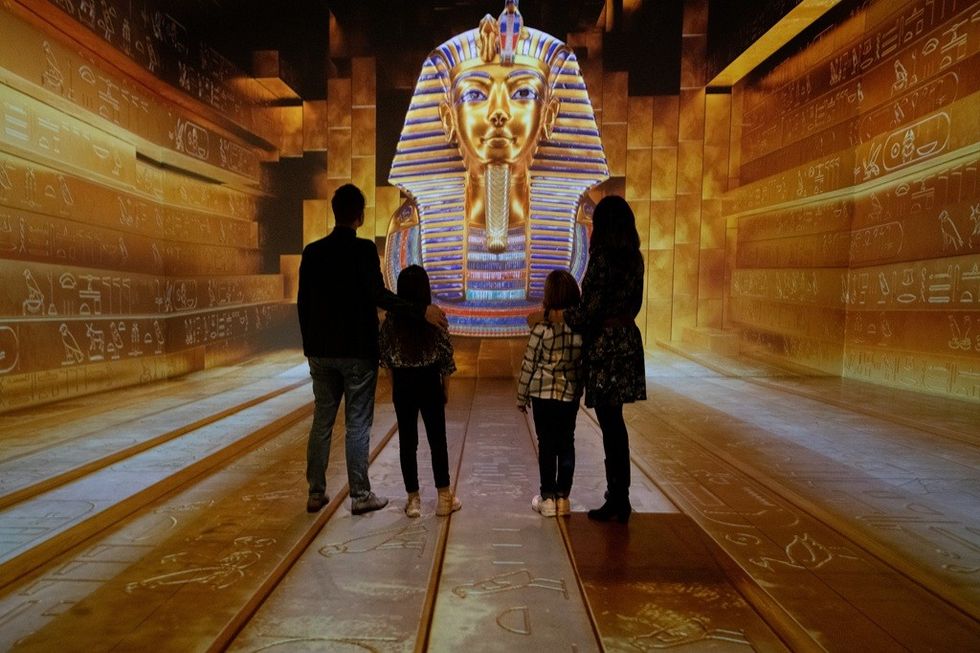 Tutankhamun: The Immersive Exhibition
Most creatives, understandably, don’t pay much attention to LBE market forecasts. Our heads are full of guest journeys, emotional arcs, and design sketches, not stock prices or compound annual growth rates. But the market’s appetite for immersive experiences should excite us all.
The creative industries aren’t working in a silo; our work is meeting a very real and growing demand.
The disconnect between creatives and commerce isn't malicious; it's often just cultural. The creative industries have long maintained an unspoken division of labour: artists focus on the creative vision, business people handle the commercial side. This feels natural, even protective.
Better conversations, greater agency
Early in my career, I experienced how easy it is for creative teams to become passengers in business decisions rather than drivers. Commercial divergence can become a source of anxiety, leaving artists and designers feeling out of the loop.
By deliberately fostering commercial literacy in my teams and urging those I consult with to do the same, I’ve watched collaborative processes become more transparent, empowering, and productive.
Whether it’s talk of capacity limits, throughputs, or operational costs, these parameters are invitations to more meaningful conversation.

When creatives understand how a venue operates and how budgets and resource flows enable (or shape) storytelling, it fosters sustainable projects and advocates for what’s truly needed for the audience’s benefit.
This is the insight I consistently impart: this knowledge doesn’t ask you to compromise your creative principles, it equips you to engage with colleagues and collaborators more deeply.
The bridge between worlds
Understanding commercial fundamentals doesn't mean becoming an accountant. It means developing a bit of bilingual fluency, becoming comfortable speaking the language of storytelling and the language of sustainability, as each is required.
Consider dwell time, a metric that might initially sound purely mercenary. Venues need to understand how long visitors spend in an experience to calculate capacity, staff requirements, and ticket pricing. But as creatives, we recognise dwell time as something much more meaningful: it's the temporal canvas for our work. It's the time we have to create transformation.
When I previously explored time in immersive experiences, I discussed how the perception of time can be manipulated through design, and how a brilliantly crafted 15 minutes might feel timeless to a visitor.
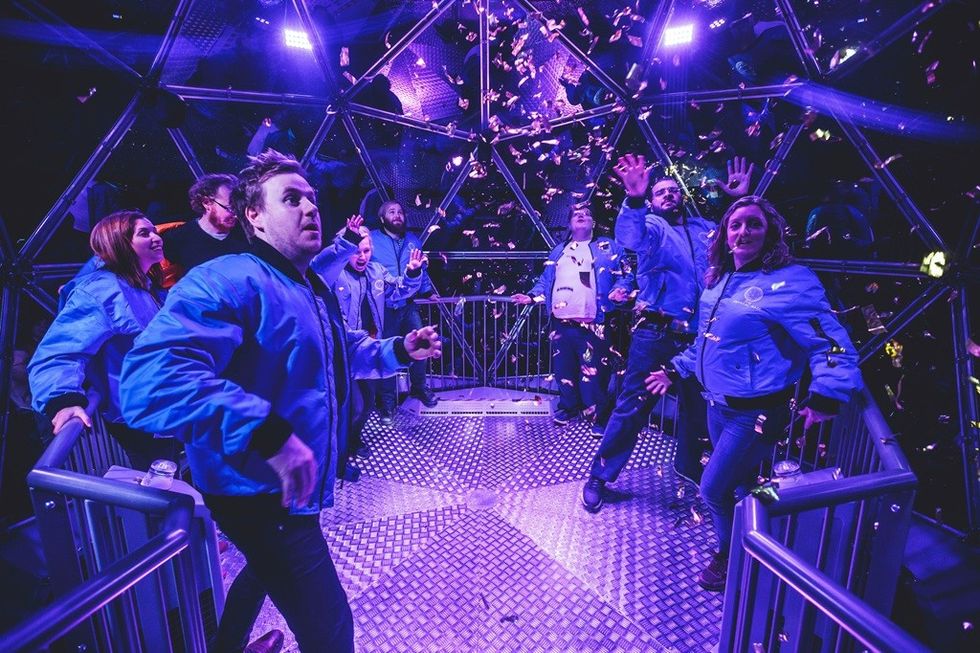 Crystal Maze: The Live Experience
Understanding the operational need for specific dwell times isn't a constraint on creativity. It's actually clarifying. It gives us a concrete parameter within which to be more intentional about pacing, rhythm, emotional beats, and narrative structure. It helps us design more precisely.
The most memorable immersive experiences invite visitors into a finely tuned balance, where time feels well spent, engagement runs deep, and the operational execution quietly supports the magic. When creatives approach these elements as interconnected rather than competing, the result is work that genuinely resonates.
It’s not about sacrificing one for the other, but weaving them together so that every visitor feels the harmony.
Where the budget reveals opportunities
This is where commercial knowledge becomes genuinely empowering. Production budgets for immersive experiences typically break down into familiar categories: technical infrastructure, content creation, venue expenses, and marketing.
Many creatives see budgets as fixed constraints handed down from above. I see them as a catalyst for smart problem-solving. My practice is about helping teams reframe budgets as creative tools; guides for making sharper, more informed decisions.
Where will resources make the biggest impact? Does the most expensive technology always deliver the most transformative experience, or could that investment be better placed elsewhere?
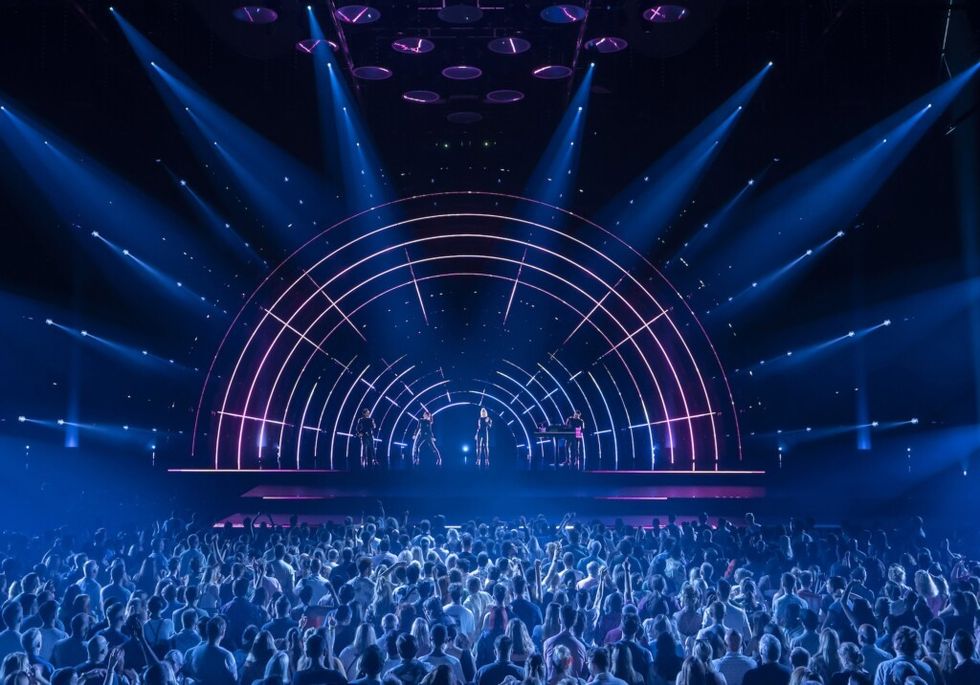 ABBA Voyage Johan Persson
Take projection mapping, a staple of many an experience. It’s powerful, yes, but only when you truly understand what it costs: the hardware, content production, technical crew, and ongoing maintenance. That awareness opens up a richer creative conversation.
Is projection mapping the best way to tell this part of the story? Or could a blend of physical scenography and lighter projection achieve the same emotional hit at a lower cost? Could those savings fund deeper investment in sound design, proven to have an outsized effect on emotional engagement?
These aren't compromises or capitulations. They're informed creative decisions. When you understand budget implications, you're empowered to ask better questions, consider more options, and advocate more effectively for where resources will have the most impact.
Keeping the visitor experience as our North Star
Here's where commercial awareness becomes genuinely empowering in a different way: it keeps us focused on what matters most. Whenever I teach or consult, the visitor’s journey is always my North Star.
Consider onboarding: If a confusing entry sequence frustrates guests, it’s both a creative and a commercial issue, one to solve together. Those crucial first moments when visitors enter an immersive environment.
From a business perspective, efficient onboarding maximises capacity and reduces operational strain. From a creative perspective, it's the threshold moment that primes emotional engagement and sets expectations. From a visitor's perspective, it's the first impression.
 Meow Wolf's The Real Unreal
These aren't competing priorities; they're three perspectives on exactly the same thing: the visitor's experience.
When we understand this, we're not compromising. We're aligning. We're making sure that every decision we make from the moment someone buys a ticket to the moment they leave is serving the experience we're trying to create.
Practical career advice
If I were speaking directly to someone starting in the experience economy today, my counsel would be simple: embrace commercial understanding as part of your creative toolkit. Think of it as a second language that makes your creative ideas more powerful and more likely to land.
Early in your career, seek out opportunities to learn about logistical planning and operational management and see them not as chores, but as tools to enable authentic, impactful work.
Conclusion: empowerment through understanding
Today’s creative practitioners rarely fit into a single category (nor do we want to!), and accordingly, great immersive work happens where disciplines and perspectives meet. The most impactful creators thrive in those intersecting spaces, the grey areas.
In my experience, when creatives understand the commercial context of their projects, they gain more agency.
You stop feeling confused about budget or logistics decisions because you see how your choices shape real outcomes for audiences. You become empowered to genuinely champion what your vision needs and connect it to experiences that truly make an impact.
Across teaching, team leadership, and consultancy, I’ve found this blended approach to be the greatest source of empowerment for creatives.
When you understand the business of immersive experiences, you’re claiming agency to bring your best ideas fully to life, for your team, your audience, and your own creative future.