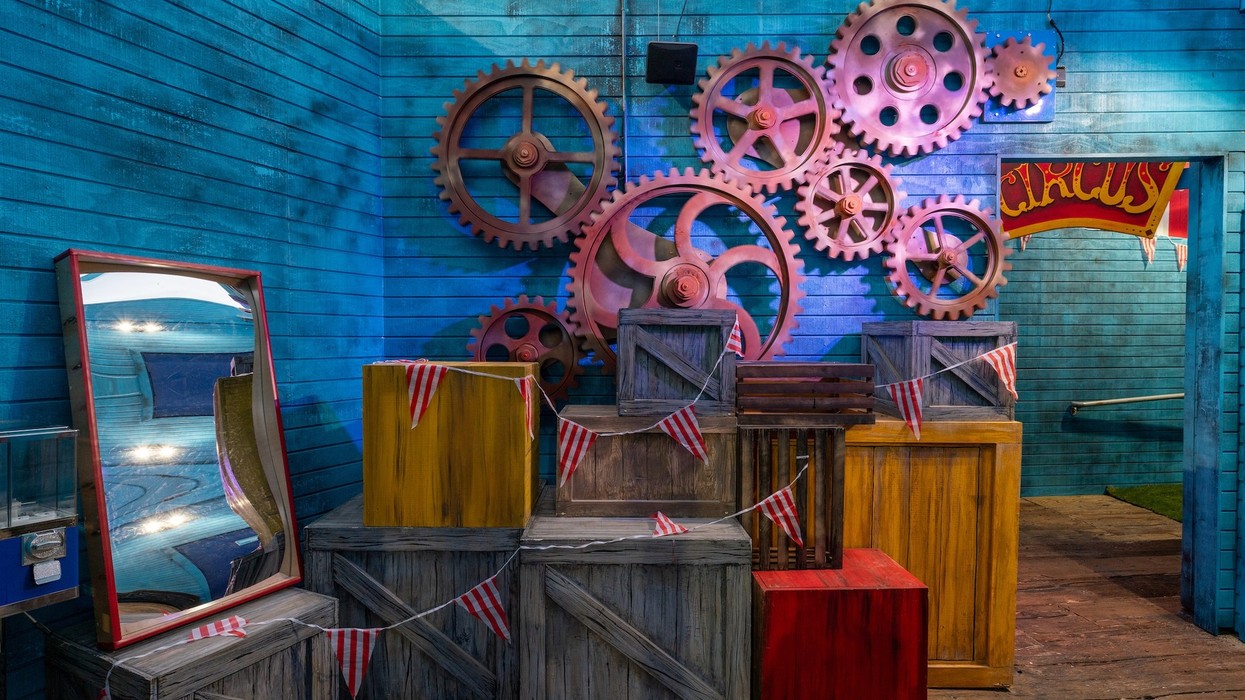
EPIC Entertainment Group’s Pacific Funhouse is a story-first reinvention of a boardwalk classic, designed and built for Pacific Park at the Santa Monica Pier. We began with a clear narrative: a long-abandoned pier funhouse has been unearthed and lovingly “polished” for today’s guests.
Rooted in the pier’s own lore, and the spirit of the original Toonerville Funhouse—the design became the engine that shaped every choice, from façade cues and room order, to lighting, sound, and tactile finishes.
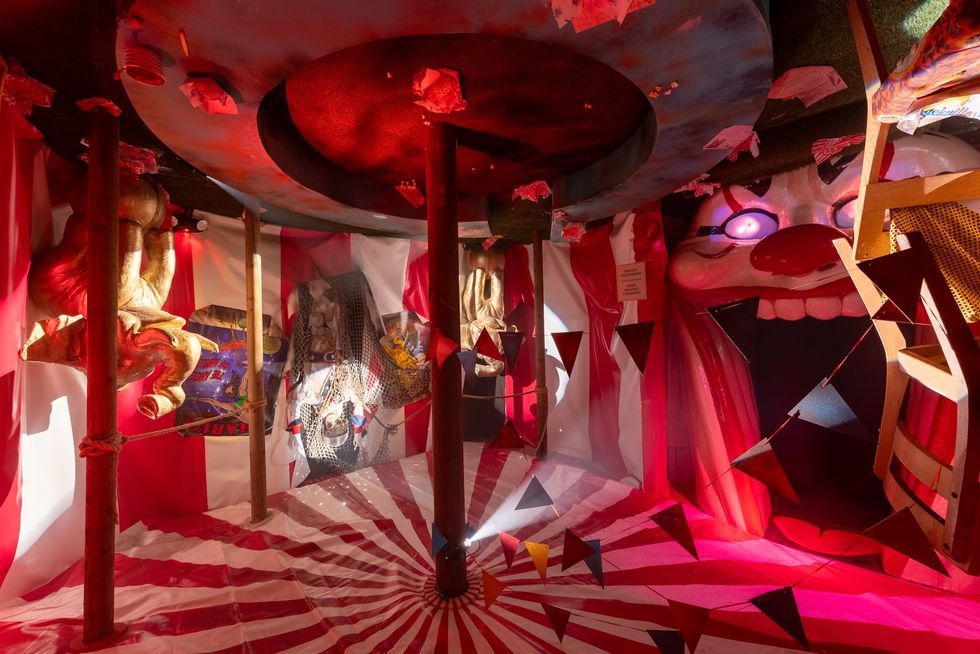
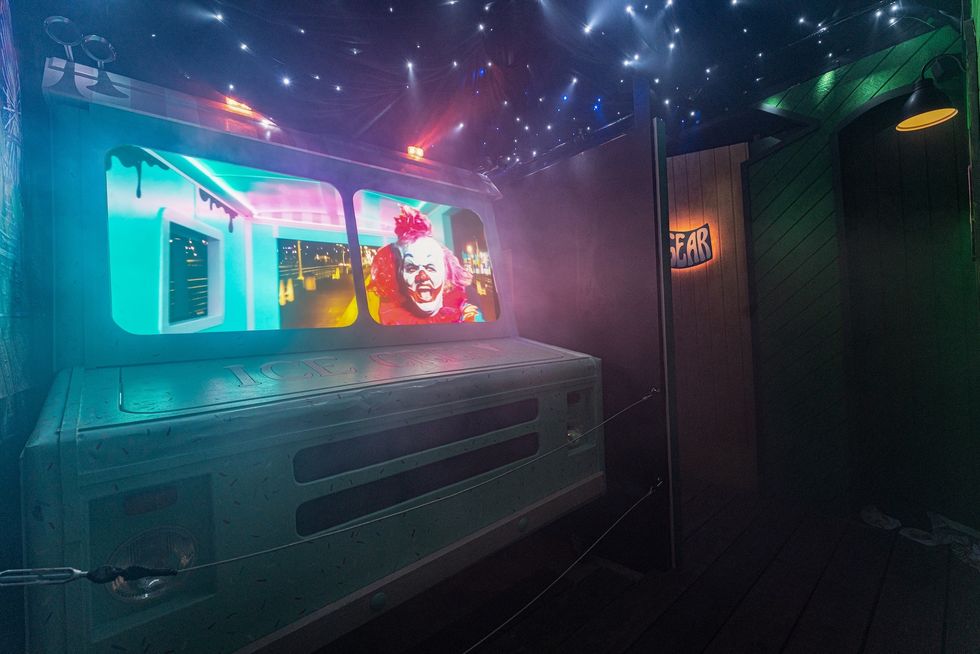
The experience unfolds as chapters, not stops. A topsy-turvy circus tent, a mirror maze, a puppet theatre, an ice cream truck, and a giant gumball machine each carry distinct feelings of anticipation, disorientation, mischief, and delight.

They read as one cohesive story because the transitions are composed like edits in a film. Characters—a fortune teller and a mischievous clown—act as soft narrators: they don’t halt the flow with exposition; they punctuate it, giving guests intuitive wayfinding and emotional continuity without breaking pace.
Design and fabrication were integrated so the story could survive daily use on the historic pier.
We prototyped with scale models and full-size mockups to test circulation, sightlines, and lighting transitions before we built. In-house fabrication ensured narrative fidelity and durability: custom marionette rigs, a hydraulic truck platform for the ice cream scene, oversized gumballs, and blacklight maze elements were engineered for high throughput and reset reliability.
Material choices balanced weight and strength—lightweight where the pier demanded it, robust where thousands of footsteps would land. We layered lighting, scent, sound, and tactile flooring so sensory inputs align with the emotions of each chapter.
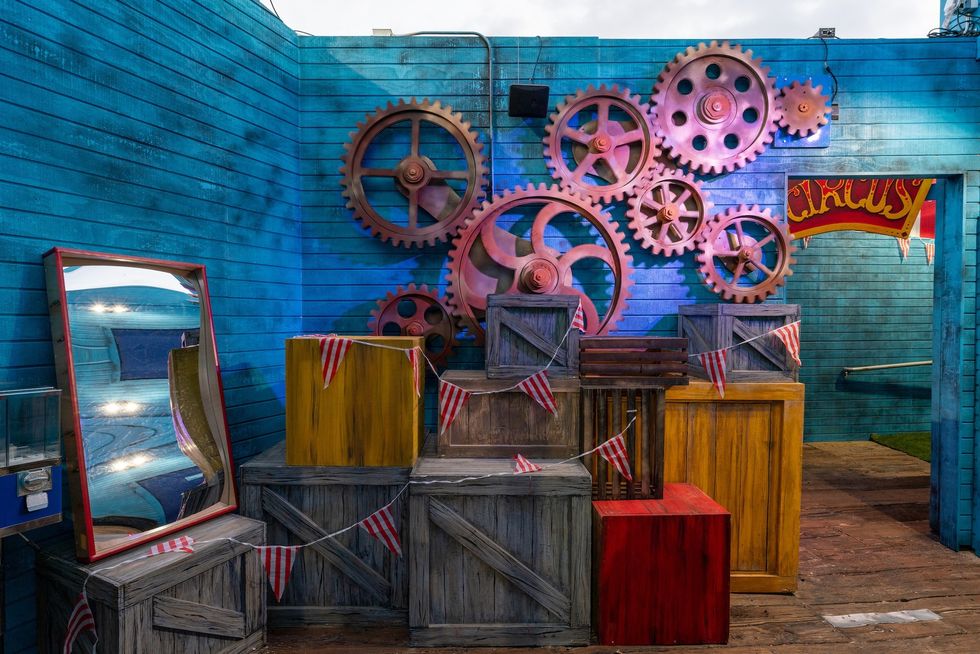
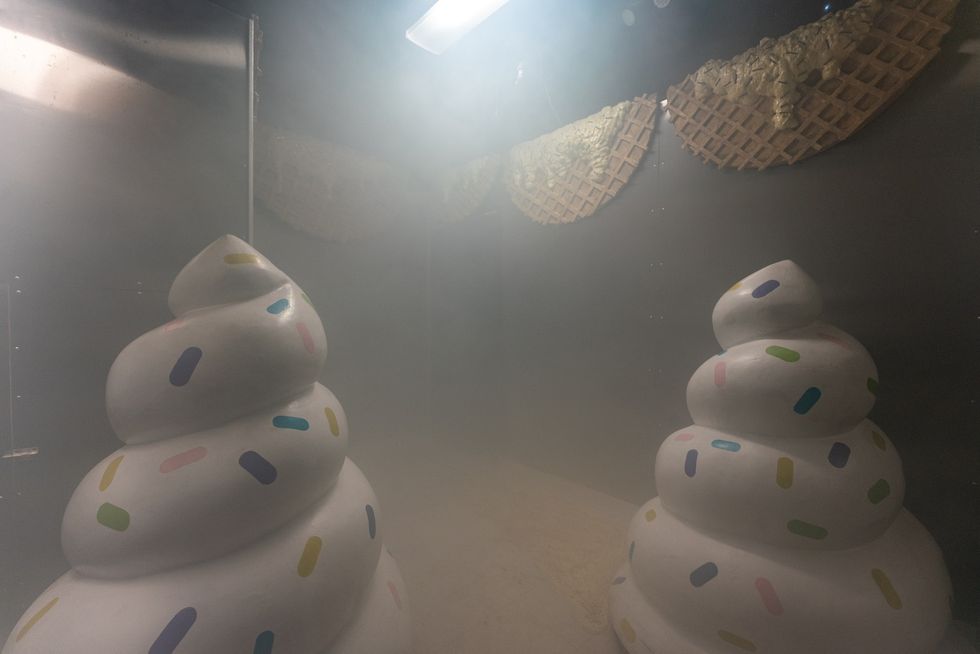
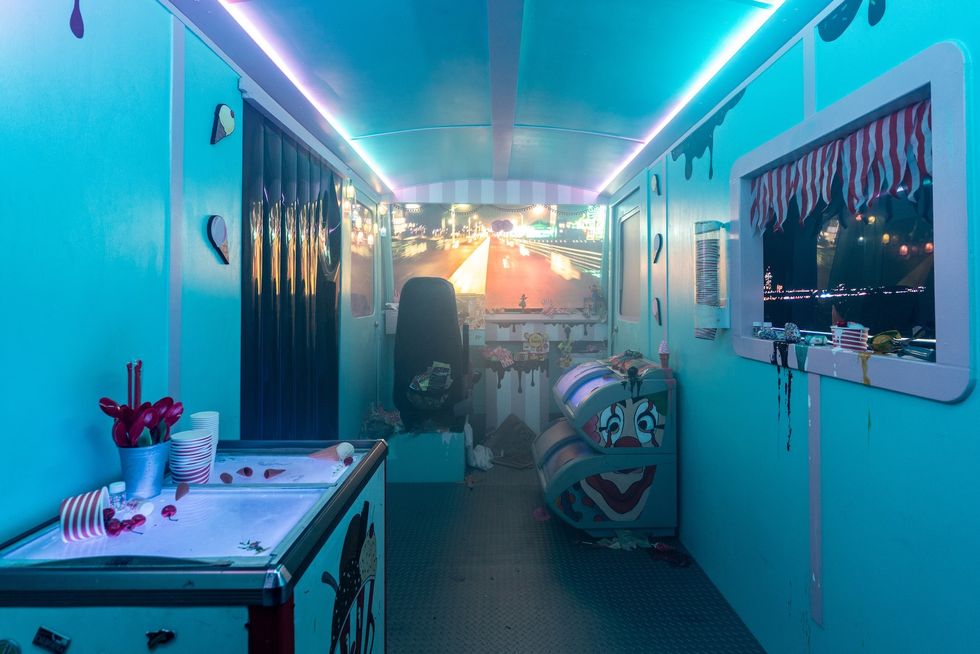
The innovation showcases how story architecture, scenic design, and technical choices reinforce each other to create a compact attraction that feels BIG.
In a limited footprint, we designed “spine + chapters”: a clear, forward-moving spine that eliminates dead ends, and rooms that vary scale and rhythm (narrow → grand, bright → saturated, reflective → matte) to keep curiosity high and queues moving.
Each scenic decision builds world-logic and works operationally—props are actor-safe and guest-proof, finishes are serviceable, and sequences reset quickly so narrative energy never stalls.
Seasonal adaptability is built into the design language. Because the premise is a “rediscovered funhouse,” seasonal overlays feel natural.
We can change the score to creepier tracks, introduce performer-driven scares, remap light and colour, and tweak scenic dressing—shifting from family-forward whimsy—to Halloween atmosphere without violating story logic. This flexibility keeps the attraction fresh for locals and extends the storytelling palette for the park across the calendar.
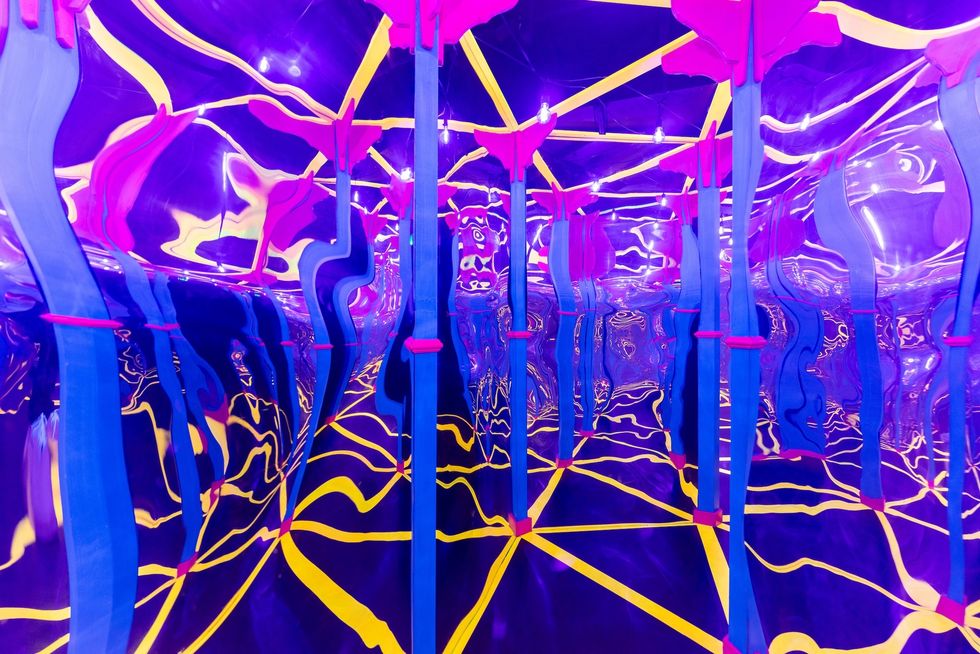
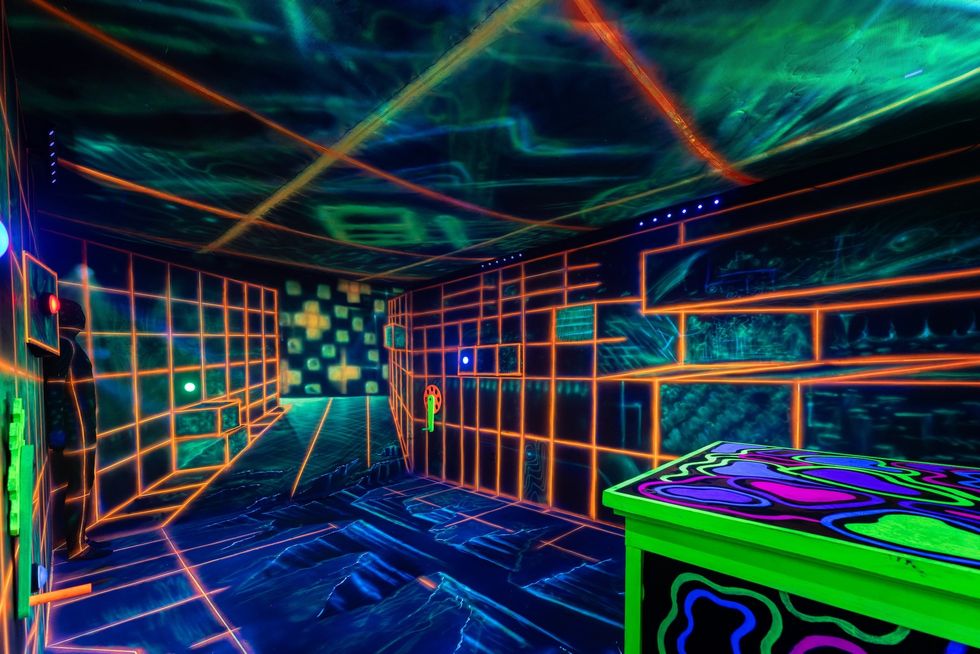
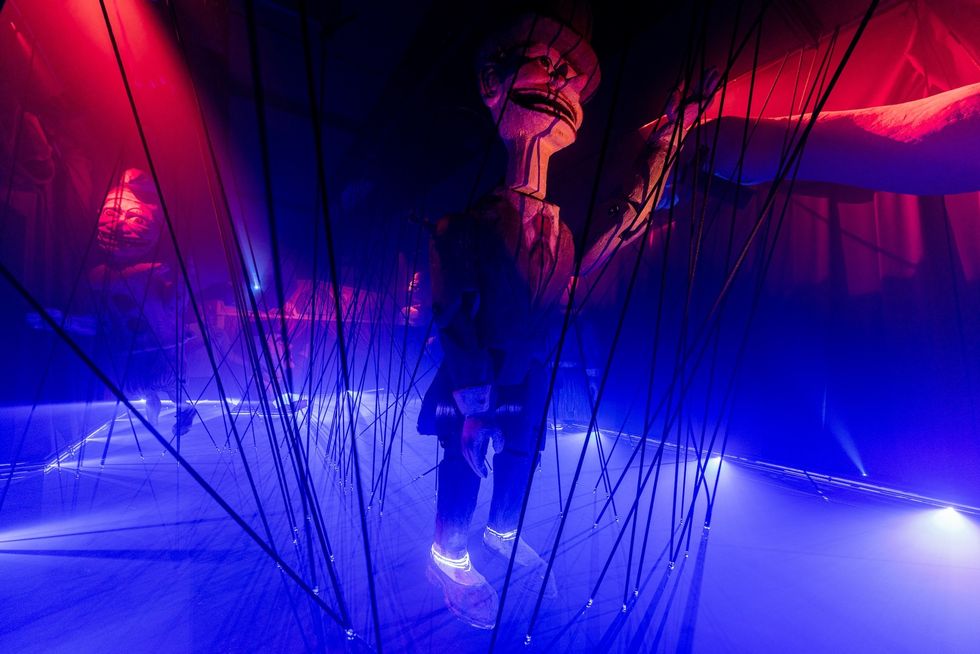
Pacific Funhouse also fits the storytelling category because we resisted generic carnival tropes in favour of site-specific cues that honour the pier’s history. Nostalgia lives in the tone and textures. Guests engage in the story physically—tilting floors, reflective distortions, playful scale—so memory becomes something you did, not just something you saw.
That philosophy informed our “design for shareability” as well: compositions stage naturally into photo beats without creating traffic traps, turning guest delight into organic word-of-mouth.
Crucially, we separated “explain” from “experience.” The funhouse does not rely on signage walls or lore dumps. The world explains itself through affordances—doors that beckon, curtains that tease a glow, a clown’s gaze that suggests “this way.”
In playtesting, we refined these cues until guests could navigate with confidence and surprise in equal measure. That invisible guidance is part of the design storytelling...you always feel slightly off-balance, but never lost.
Why is this innovative?
In a category crowded with prop-heavy décor or single-effect rooms, Pacific Funhouse demonstrates how story structure can be the primary design tool—a framework that determines scale, rhythm, colour, sound, and fabrication details so everything serves the guest journey.
It delivers a premium, cohesive narrative in a compact footprint; it is engineered to endure the demands of a seaside boardwalk; and it evolves seasonally without breaking its own rules. Most importantly, it revives a local legend and treats the past as the launchpad, not the destination.
Pacific Funhouse embodies the spirit of proving great narrative is not an overlay on design—it is the design. EPIC conceived, designed, and built an attraction where every choice advances the story, every room plays a defined role, and every guest leaves with a memory shaped by narrative, not only novelty.
Partners
- 22 Entertainment
- Pacific Park at Santa Monica Pier