GSM Studios, a multidisciplinary design and production firm specialising in creating compelling, content-led visitor experiences, has delivered the design for the immersive exhibition, Saks Afridi: SpaceMosque, on show at the Aga Khan Museum in Toronto until 7 March 2027.
The exhibition by New York–based multidisciplinary Pakistani artist Saks Afridi explores a parafictional narrative of a forgotten worldwide event through hybrid sculptures, sound, video and fictional news reports.
It invites visitors to question power, belief, memory and technology, asking: If all your prayers were answered, would it change the world or just yours?
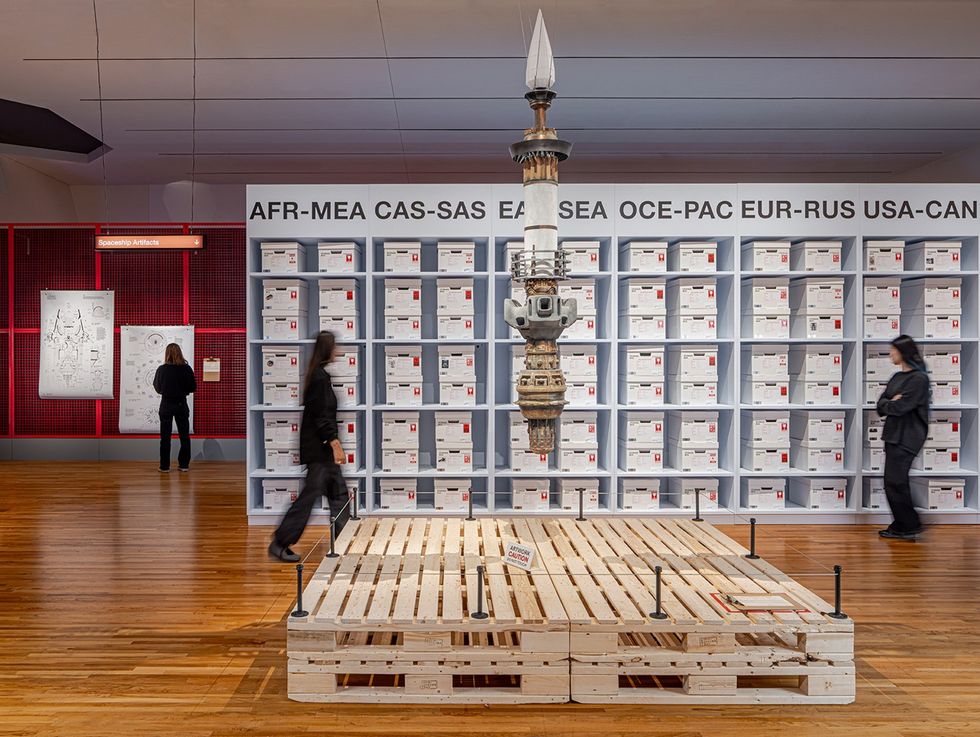 The first rooms of Saks Afridi: SpaceMosque are orderly and minimalistic, with storage units and hundreds of documentsCredit Aga Khan Museum Photo Toni Hafkenscheid
Immersive, speculative archival space
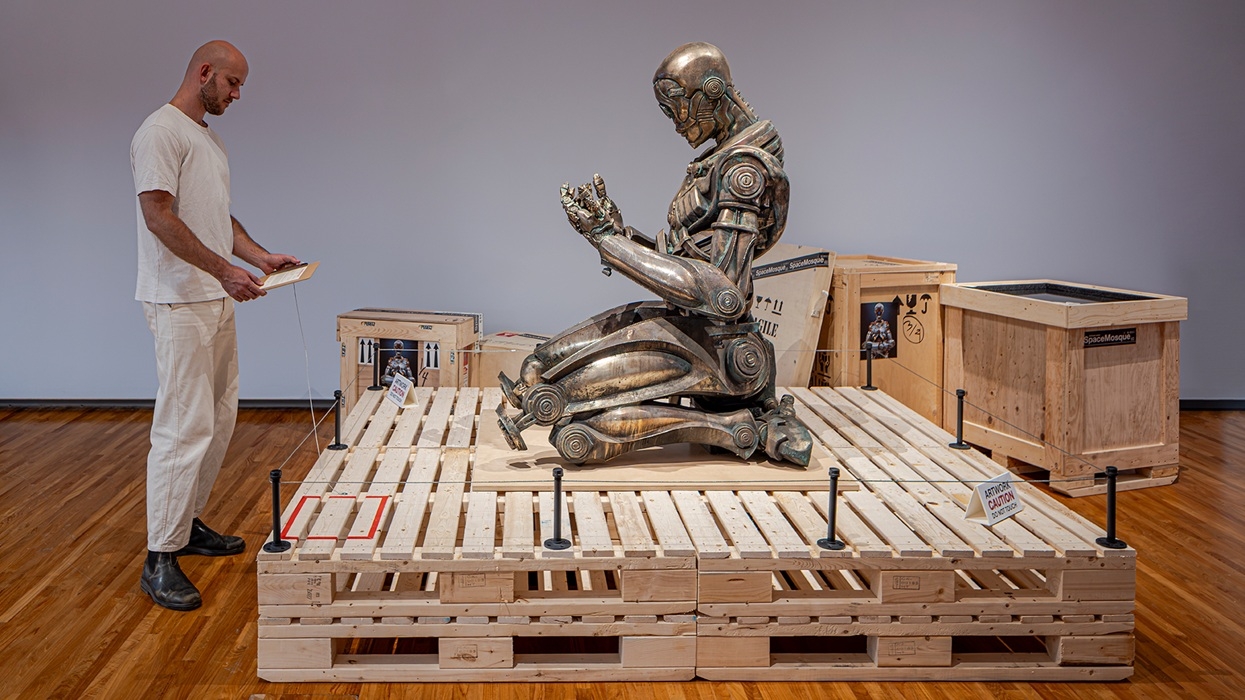
The narrative presents an extraordinary event in which a sentient spiritual object, SpaceMosque, allegedly appeared and granted one prayer per person every 24 hours.
SpaceMosque quickly became a source of power that governments, corporations, and religious authorities sought to control. It then suddenly vanished, taking with it much of the evidence and memory of the event.
Marianne Fenton, curator at the Aga Khan Museum, says: "Saks Afridi: SpaceMosque invites us to consider what we wish for, who benefits from our wishes and what happens when private desires acquire public consequences.
"By placing visitors inside an alternative history (a forgotten past), Saks creates space to examine how power can be used, concentrated and ultimately relinquished. We want to draw viewers into this imagined future that blurs speculation and evidence, where the sacred, the speculative and the contemporary coexist."
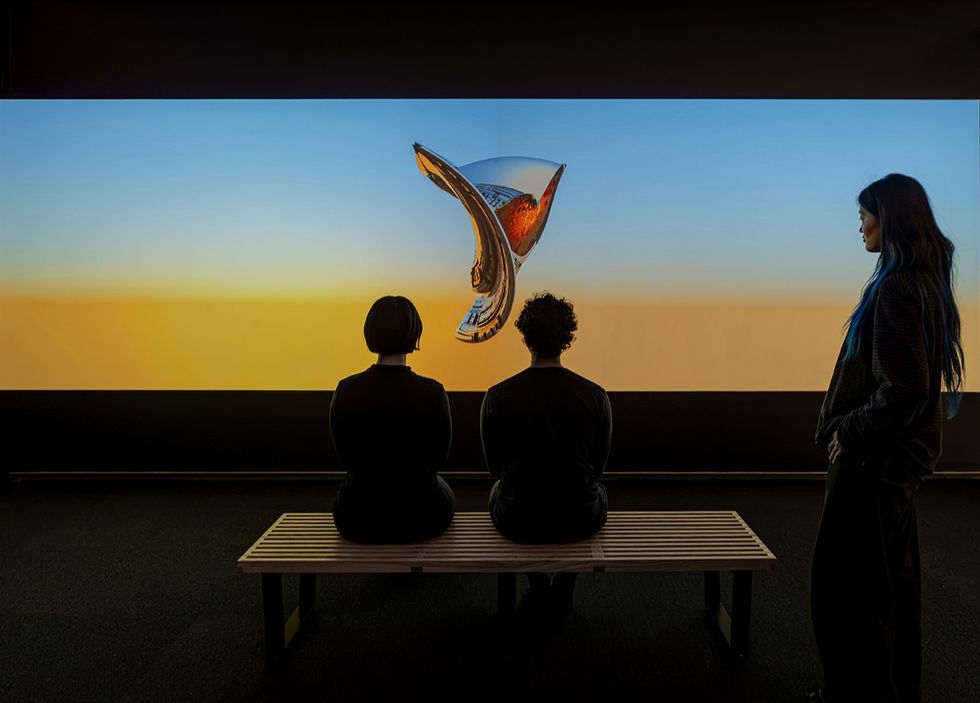 The arrival of the objectCredit Aga Khan Museum Photo Toni Hafkenscheid
Visitors are invited to piece together the story through archival fragments and testimonies, alongside hybrid sculptures, visuals, video, and parafictional documents that function as both artworks and artefacts.
The 750-square-metre exhibition, designed by GSM Studios, references the aesthetic of a museum archives office and presents Afridi's artworks as part of a newly discovered collection of forgotten memories.
"It is as though the archivists have stepped away for a coffee break, leaving objects under examination and evidence spread across their worktables," says Fenton.
"Visitors can check the archive and decide for themselves what happened – and what its fragmented history may reveal about our own world."
Guillaume Goursaud, creative director at GSM Studios, says: "Saks Afridi’s work describes an event that may never have happened. So, we designed a physical space that might never have existed either.
"We want to invite the public to discover Saks Afridi’s work much like we did during the creative process – as fragments to be decoded, akin to the work of a researcher, leaving room for multiple interpretations."
Design and co-creation
The exhibition design enhances immersion using a wide range of artworks and set elements, including a huge graffiti wall contextualised as a newly found artefact, repurposed items, and archival paraphernalia.
Afridi says: "GSM asked: What if this wasn’t a typical museum exhibition where we had pedestals and spotlights? What if it was all treated like an archive?
"From the way the shelves and desks look, to the little labels, to all the typefaces and how we’ve displayed everything. There are boxes and crates around the exhibition on purpose to create this aesthetic of an archives office, which all came from the minds of the designers at GSM Studios."
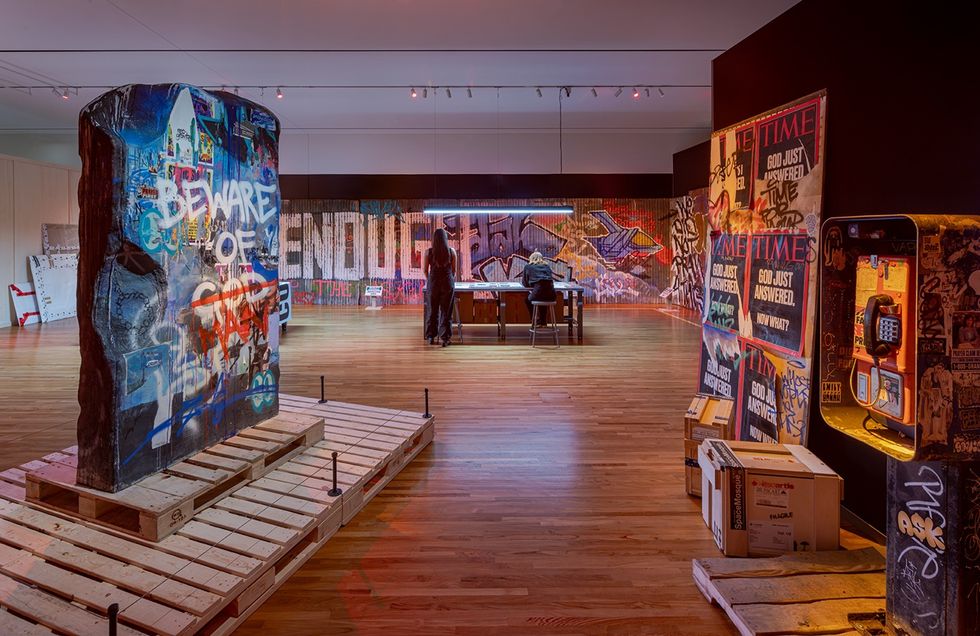 As visitors wander through the rooms, the exhibition becomes increasingly chaotic andcluttered, filling the space with a sense of urgencyCredit Aga Khan Museum Photo Toni Hafkenscheid
"The role of set designers is often reduced to executing a curatorial program," says Goursaud.
"What is innovative in our collaboration with the Aga Khan Museum is that we acted as co-creators to stage Saks Afridi’s universe through an engaging creative experience.
"This is not an exhibition that displays artwork; the exhibition itself is a work of art by Saks Afridi. For GSM, telling stories in this way carries strong experiential potential, rich with meaning."
“What made this exhibition so special for me as a curator was the opportunity to collaborate so deeply – not only with Saks, but with the entire team at GSM Studios,” adds Fenton.
"Everyone brought a fresh, creative perspective to the table. It was easily one of the most collaborative and inspiring processes I have ever worked on."
Next week, GSM Studios' executive creative director, Erika Kiessner, will lead a panel session on game design and interactive experiences at IAAPA Expo in Orlando.