

Step inside the story: Disney, Epic Games & Cosm on the future of immersive storytelling
As IAAPA Expo Europe 2026 drew to a close, a panel at Framestore’s London headquarters brought together leaders from visual effects, theme parks, gaming and shared reality to consider a central question for location-based entertainment: how can new experiences deepen audiences’ connections with the stories they already love?
The discussion, moderated by blooloop managing director Ella Baskerville, explored the enduring appeal of established intellectual property (IP), the role of nostalgia in immersive entertainment, and how technology can create new ways for audiences to engage with familiar fictional worlds.
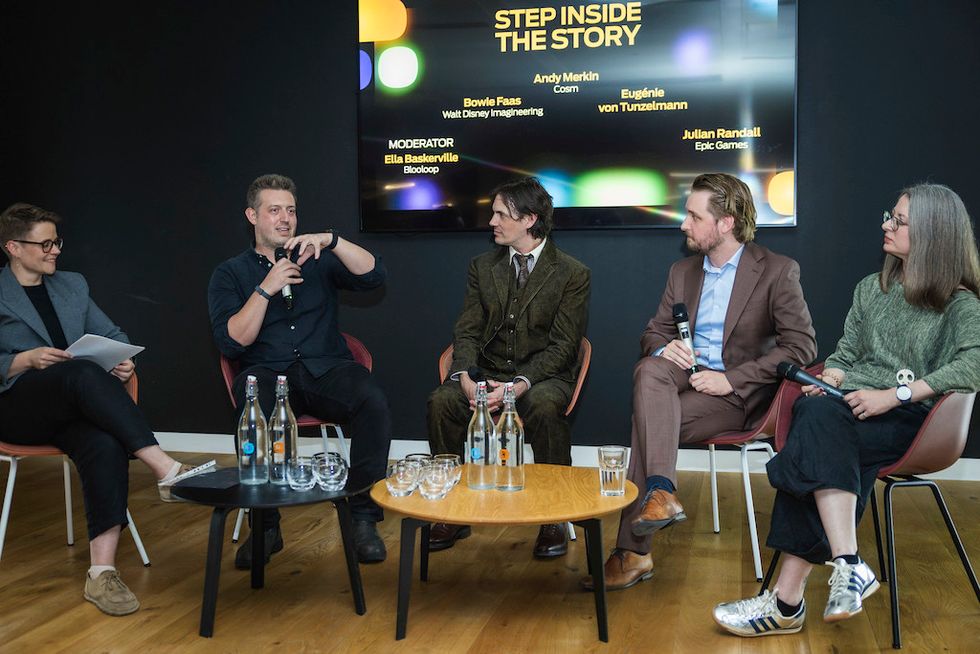
L to R: Ella Baskerville moderating, with Julian Randall, Andy Merkin, Bowie Faas and Eugénie von Tunzelmann
Image courtesy of FramestorePanellists included Julian Randall, business development and strategy lead at Epic Games; Andy Merkin, vice president of entertainment productions at Cosm; Bowie Faas, principal creative producer at Walt Disney Imagineering; and Eugénie von Tunzelmann, an independent visual effects supervisor and engineer whose career spans Framestore and Universal Creative.
The conversation offered a perspective on an industry increasingly blending physical attractions, digital environments and shared experiences.
As developers look ahead to IAAPA Orlando, the challenge is not simply to introduce new technologies, but to understand how they can bring stories and characters to life in ways that resonate with audiences.
Familiar worlds, new experiences
Established IP offers an immediate point of connection with audiences. Familiar characters, settings and storylines can bring emotional significance to an experience before a guest even arrives.
But translating that recognition into a compelling physical or digital environment requires more than choosing a popular property.
At Walt Disney Imagineering, the decision begins with how a story fits within the wider destination.
"We have such a rich portfolio of stories. It is not a given that we look at, for example, the top three of our stories and introduce those to our parks. We look at what makes sense for the park, whether from a storytelling perspective or from an attraction offering perspective, and based on that, we make our design choices," Faas explained.
That approach applies across different scales, from major developments such as World of Frozen at Disney Adventure World and the upcoming Lion King land to integrations into existing attractions.
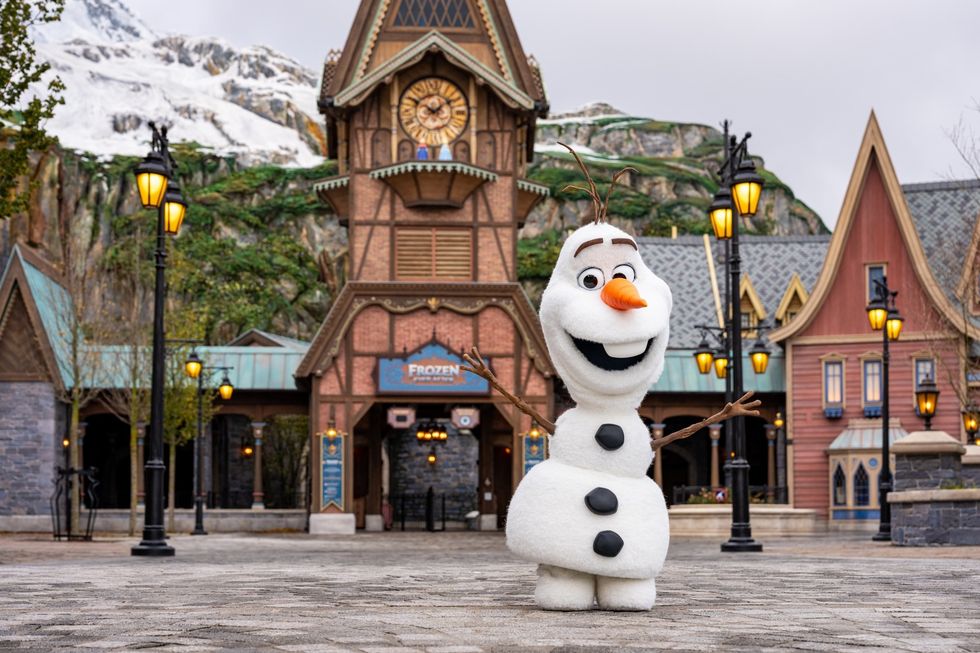
World of Frozen opened at Disneyland Paris' reimagined second park in March 2026
For Epic Games, familiar IP can find new audiences through interactive digital environments. Fortnite has become a platform where players can experience established characters and fictional worlds in different ways.
"Fortnite is kind of our digital theme park space in some ways," Randall said.
"As part of our partnership with Disney, earlier last year we brought in AI-driven characters. We brought Darth Vader into the Fortnite world, where people could go in and have a very real interaction where Darth Vader is on their team."
The format offers something different from watching a character on screen: players can participate in an environment alongside them.
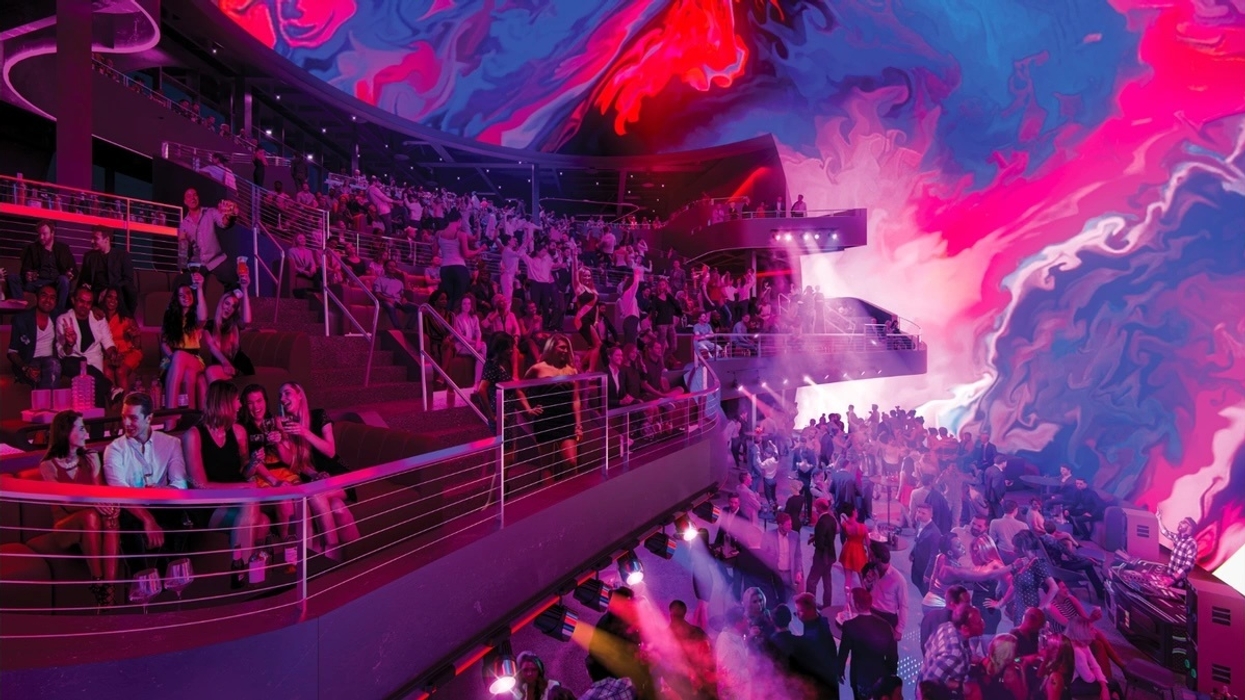
Cosm's experience with its Shared Reality venues demonstrates another reason familiar IP matters. When the company first opened its venue in Salt Lake City, audiences struggled to understand the new format.
"We developed original art pieces and proved out several different methodologies, from CGI to live-action. What we found as the venue opened was that people were sitting down and saying, 'What did I buy a ticket to?'”
The company subsequently turned to established properties, including The Matrix, Willy Wonka and the Chocolate Factory, Harry Potter, Stephen King's IT and Shrek.
For Merkin, the appeal lies in the emotional significance of moments audiences already recognise. Rather than introducing an entirely new world, Cosm can build on memories tied to familiar films and characters.
That does not mean every property translates equally well.
"When working with IP, there is a wealth of stories, beloved characters, and places that are incredibly inspirational when you are creating an experience,” says Von Tunzelmann. “It can also feel like shackles, because you have to work within limits.”
She points to Harry Potter as an example of a fictional world that lends itself naturally to physical exploration:
“Harry Potter lent itself wonderfully to the theme park world because it was such a richly realised world in the books and films that you immediately wanted to step into.”
For developers, the opportunity lies in understanding what makes a property meaningful and identifying which aspects translate most effectively into a different medium.
The enduring appeal of nostalgia
Nostalgia offers another way to connect established IP with new forms of entertainment. Familiar stories and music can evoke strong emotions, while immersive formats let audiences revisit those memories in a different setting.
At Cosm, Shared Reality amplifies key moments from familiar films without substantially changing the original material.
"We all remember those key moments, and we identify them very early in our process," Merkin said. "Flying through Quidditch on a broomstick, the first reveal of Hogwarts castle, the first time we see Pennywise—all of those are moments that bring emotion.
“What we often say is that the dome just amplifies it. You are fully immersed in that world, and the great moments really sing. We don't materially affect the film or re-edit it; it is a celebration of the memories that you have."
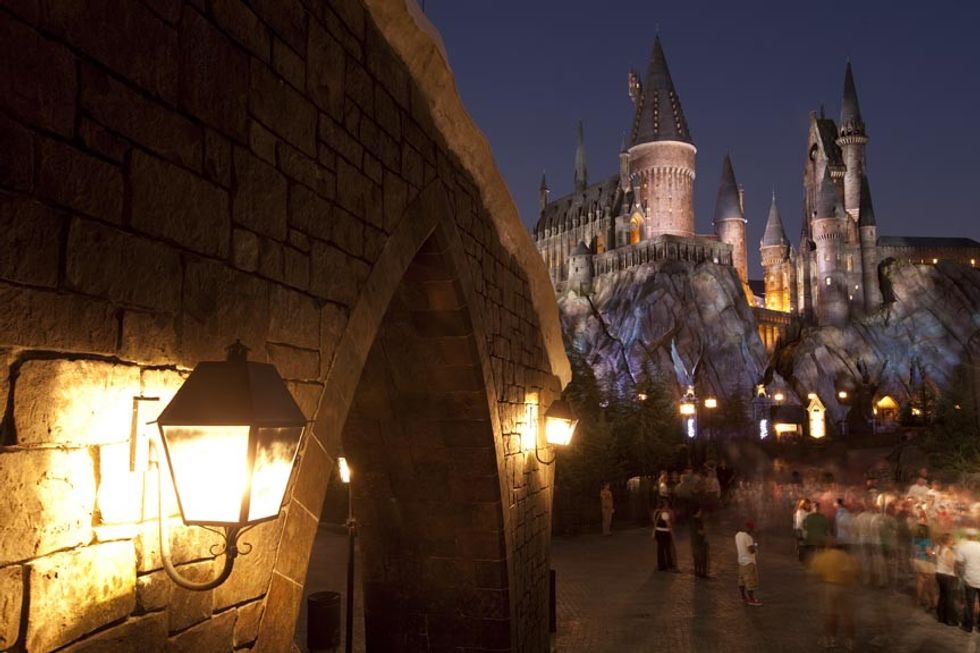
The Wizarding World of Harry Potter at Universal Orlando Resort
The emphasis is on enhancing the audience's relationship with the original work rather than replacing it with something new.
Disney similarly sees opportunities to revisit familiar experiences using contemporary technology. Faas cited Space Mountain as an example of how an established attraction can evolve while retaining what audiences value about it.
“We heard our fans who loved the original version, and we are bringing that original version back. That doesn't mean we're going to bring it back exactly like it was originally, but we're going to use the latest technology to do that."
Nostalgia can also introduce older cultural properties to younger audiences. Randall described Fortnite's Daft Punk experience, which let players revisit the group's music in an interactive digital environment.
"In Fortnite, we built a Daft Punk experience where players could go back to their original old-school concert, relive their music, and fly through the song as a character,” said Randall.
"Many younger gamers weren't exposed to Daft Punk when they were active, but old-school fans came to Fortnite specifically for that moment."
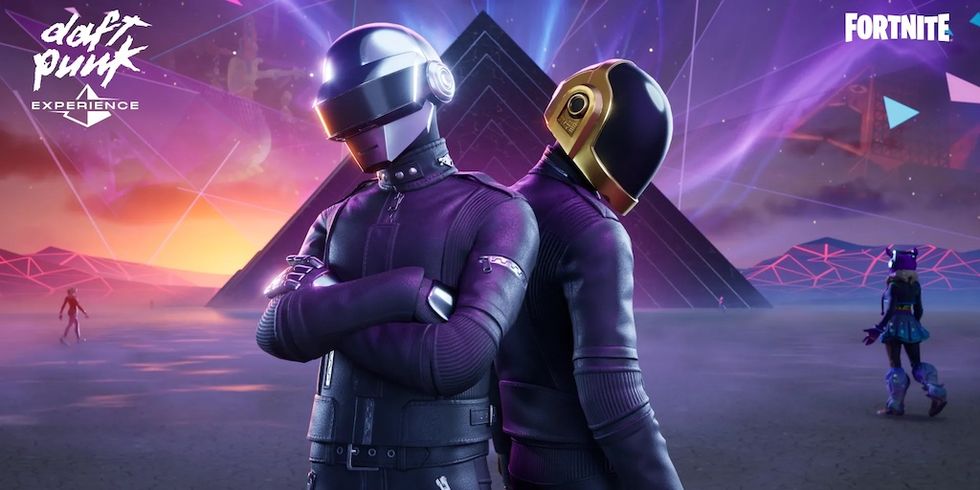
The Fortnite Daft Punk Experience added 31 songs, club-inspired rooms, iconic helmet costumes, and more
Graphic courtesy of Epic Games and Biz 3 Publicity
The experience brought together audiences with different relationships to the same music, creating a shared point of connection across generations.
Cosm's adaptation of Willy Wonka and the Chocolate Factory offers a similar illustration of the emotional power of a familiar cultural touchstone.
"People wanted the original 1971 film. They wanted to go back to that moment, the first time you walk into the chocolate factory and see the chocolate river, and Augustus falling in, the songs, everything about that.”
Merkin believes that technology's role is to make those moments more powerful while respecting the original material. Working within Warner Bros. brand guidelines, Cosm sought to make the film itself the hero.
These examples suggest that immersive entertainment doesn't always need to invent a new world to feel distinctive. It can also provide a new context in which audiences experience familiar stories, revisit meaningful moments and share their emotional responses with others.
Participation and shared emotion
The relationship between audiences and stories also raises questions about interactivity.
While technology can give guests new ways to influence an experience, the panel cautioned against assuming that more interaction necessarily creates a better attraction.
Von Tunzelmann argued that some of the most effective experiences depend on allowing a story to unfold without adding unnecessary layers of interaction.
"We tend to hear the word interactivity and immediately think about real-time technology and gamification. Some attractions use that brilliantly, and it's fun, and you're competing with your family, and it's hilarious.
"But there are also times when you’ve constructed this beautifully designed dark ride, and then someone asks, 'Can we put shooty guns on it?' And you think, 'No! It is a poignant story!'”
Social interaction can be just as important as technological interactivity. Reflecting on a Willy Wonka screening at Cosm, she described how the audience's response became part of the experience.
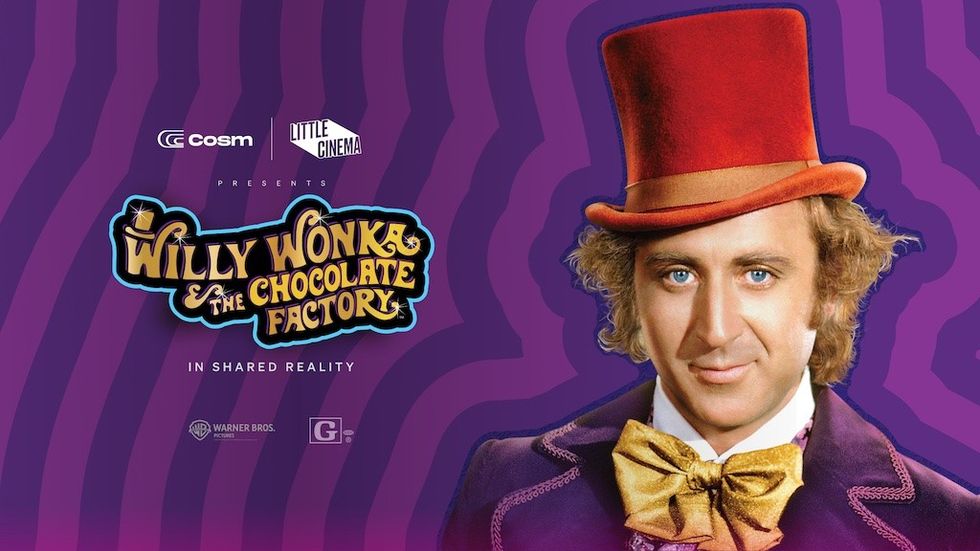
Cosm uses Shared Reality to enhance the Willy Wonka cinematic experience
“I was lucky enough to come over to Cosm and see a screening of Willy Wonka. It was so joyful, people were singing along with each other; it feels like a celebration of the film.”
The shared experience adds another dimension to the familiar story. Guests are not simply revisiting a film; they are responding to it together.
Randall highlighted immersive theatre as another way to give audiences agency. He cited Punchdrunk's The Drowned Man, where visitors could explore the environment and develop their own experiences of the production.
"We are moving toward dynamic, high-agency environments for people to interact with these stories. The Drowned Man is still one of the best productions I have ever seen. You’re wearing a mask, you're roaming around for three hours of your own story, but it creates these moments of interactivity where you create such beautiful moments in the story."
Disney Imagineering also builds opportunities for different levels of engagement into its environments. Faas pointed to Phantom Manor at Disneyland Paris, where guests can enjoy the attraction as a haunted house or explore the deeper story of Melanie Ravenswood.
"You can get physically lost wandering through our lands, but you could also get lost in things like the story.”
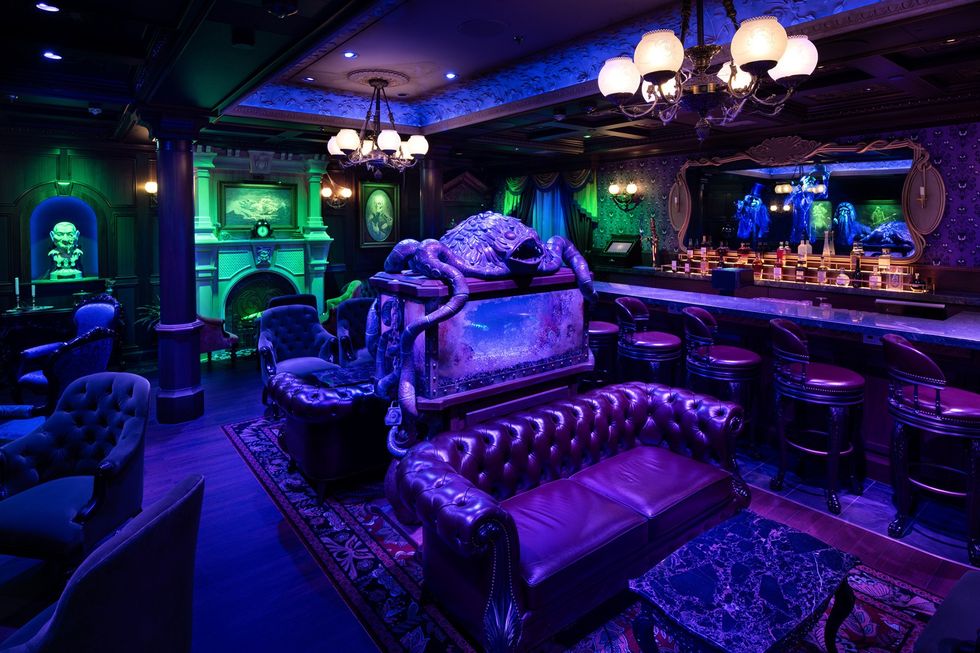
Experiences like the Haunted Mansion Parlor on the Disney Treasure cruise ship extend the universe further
These approaches show that audience agency can take many forms, from actively influencing a digital environment to discovering hidden narrative details or sharing a collective emotional response. The appropriate approach depends on the story and the experience developers want to create.
Choosing the right tools
While the panel explored new possibilities in immersive media, its speakers repeatedly returned to the importance of choosing technology according to the needs of the experience.
Von Tunzelmann said the starting point should be the intended emotional response, rather than a particular format.
"The most obvious answer is when it suits the story. But what does that really mean? Where you need to start with any design process is: what's the emotion that you want the audience to have? What do you want people to experience?”
Faas also cautioned against treating immersion as a universal objective.
"I don't think that everything has to be immersive. It provides a wonderful experience, and we love to bring that to our guests. But it's not always needed."
At Disney Adventure World, for example, more immersive environments sit alongside open spaces designed for relaxation and movement. The wider guest journey matters as much as any individual attraction.
Technology can help teams develop and test these experiences before construction begins. Real-time game engines such as Unreal are increasingly used across attraction development, from visualisation and ride design to show programming.
Faas said this allows creative and production teams to get closer to the finished experience before it exists physically.
"The cool thing is that you can get really close to the experience that you are building. In my role as a producer, that's quite an interesting thing because it also allows you to look at what the guests are going to see and what they're not able to see."
At Cosm, digital previsualisation also helps teams test environments, lighting and camera positions before content reaches the venue.
Framestore's approach to artificial intelligence reflects a similar emphasis on control.
In his opening keynote, creative director for AI Theo Jones outlined how the company combines generative models with conventional computer graphics to guide elements such as camera movement, character performance and crowd layouts.
For projects involving established IP, these methods raise important questions about consistency and creative oversight. Framestore's proprietary AI platform, Futon, uses secure infrastructure to manage client assets, while its brand-management tools use custom models trained on curated datasets to help maintain recognisable character traits.
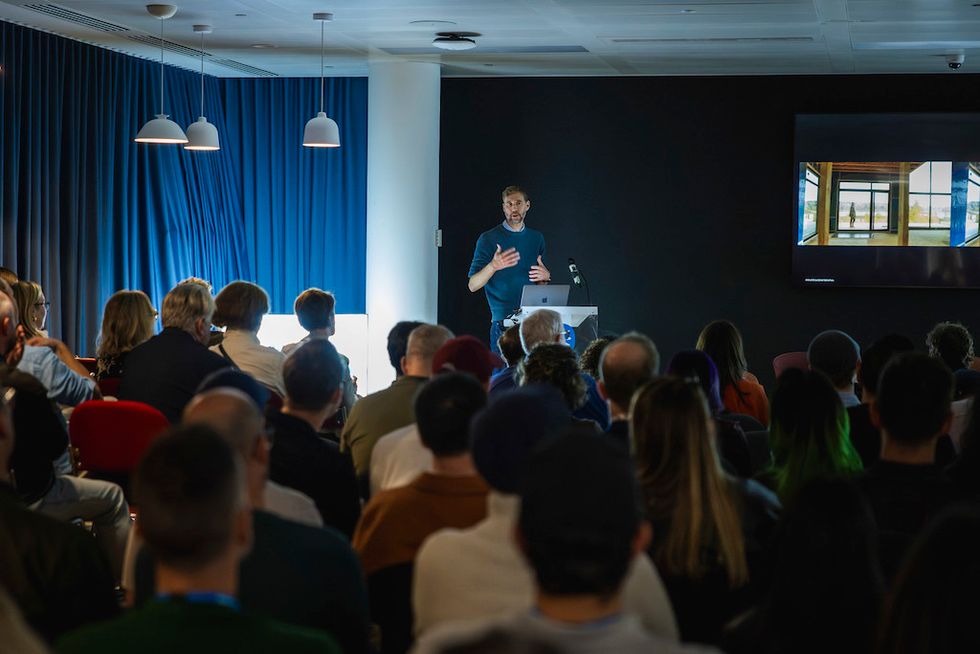
Framestore's Theo James delivered an opening keynote at the event
Image courtesy of Framestore
The wider principle is that emerging tools should support the creative process rather than dictate its direction.
The same applies to physical and digital production. Randall pointed to Disney attractions that combine media with tangible environments, including Rise of the Resistance, where digital imagery extends the physical world around guests.
“It’s important that both the physical and the digital are in combination with each other. The Crush experience at Disney is a great example: you have the talking turtle from Finding Nemo interacting with a live audience, but it's within his environment.
“Rise of the Resistance is probably another great example where, as soon as you get out of the first part of the queue line, you're literally in a hangar where you can see starships flying outside. But you're also surrounded by this real tactile, physical element, which brings you into it.”
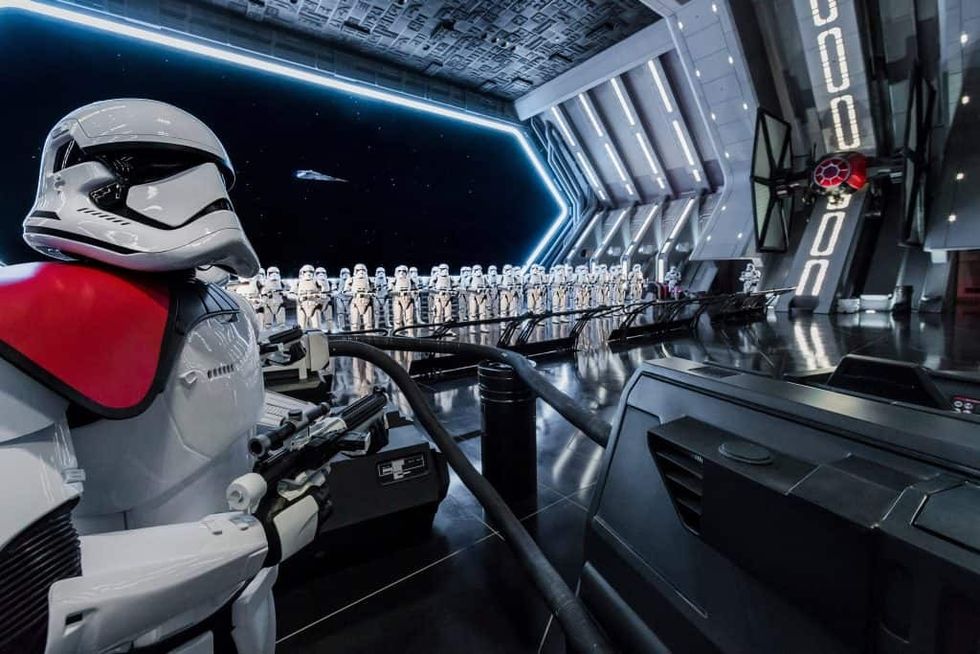 Rise of the Resistance takes riders on a journey with several 'wow' moments
Von Tunzelmann similarly argued for retaining physical construction and live performance where they serve the experience.
"As a visual effects supervisor, I am very good at doing myself out of work by saying, 'Build it for real! Why are you doing this with pixels?'
"If you can have things be real and tangible, that is almost certainly better. If you want starships flying around in space, media is obviously the right tool, but there needs to be wisdom in how these tools are deployed.
“While recent advancements in robotics and animatronics are incredibly impressive, particularly regarding facial expressions and emotional performance, we should never lose sight of the fact that live actors can do that exceptionally well.”
Faas added that success comes from bringing the available elements together in service of the story.
"None of the individual ingredients we use are, on their own, a guarantee for success. Physical sets, show environments, media, robotics, and live performers are most successful when they are blended seamlessly to serve the story.”
Storytelling beyond the technology
As the industry looks towards IAAPA Expo in Orlando, the discussion offers a useful reminder that the future of immersive entertainment isn't solely about creating new worlds or adopting increasingly sophisticated technology.
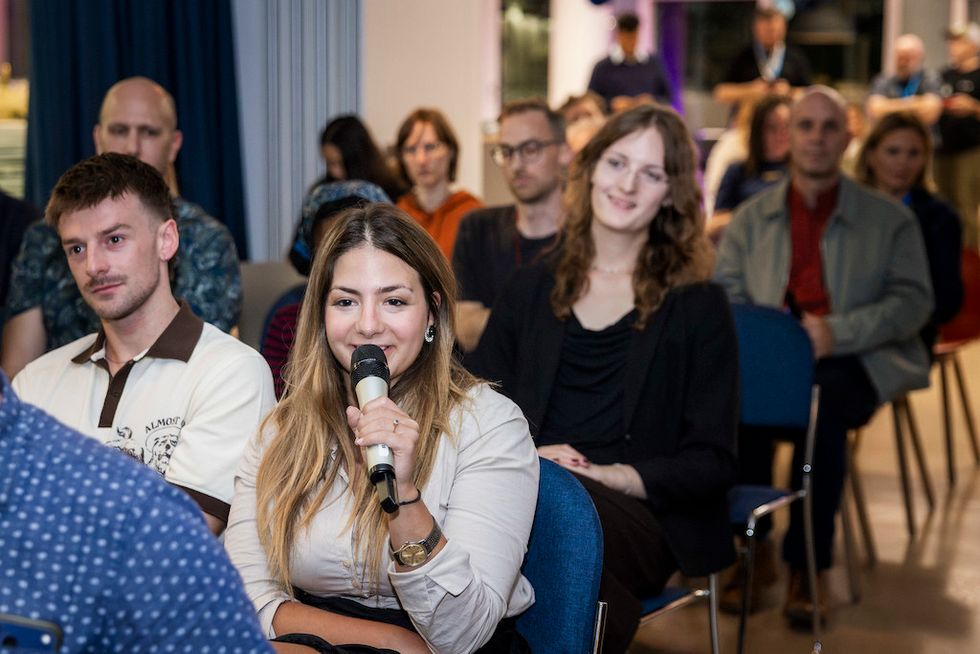
Framestore's event during the IAAPA Expo Europe week sparked many conversations
Image courtesy of Framestore
Established IP remains a powerful foundation for emotional connection, while shared reality, interactive digital environments, and physical attractions give audiences new ways to experience familiar stories.
The opportunity for developers is to understand what audiences already value, identify how a different format can deepen that connection and choose the right combination of creative and technical tools to deliver it.
Ultimately, technology may change, but the appeal of a beloved character, a memorable story, or a moment shared with others remains central to the experience.