Extra TERRORestrial Alien Encounter, or when Disney tried to make Magic Kingdom scary
Since we are still in full spooky season mode, I thought I’d look back at a time when Disney tried to bring a true horror-themed attraction to life inside Florida’s Magic Kingdom in the 1990s.
Ultimately, Disney’s attempt to bring a major-league fright attraction to Tomorrowland may have been a little ahead of its time, and the popularity of Halloween-related thrills in today’s theme park world might teach us a bit more about how Alien Encounter ultimately failed.
Looking back, Disney theme parks were really not supposed to scare people.
Sure, there were attractions like the Haunted Mansion and Pirates of the Caribbean that featured ghosts, skeletons, pirates and supernatural spirits, but Disney’s versions of these subjects were generally wrapped up in a storyline involving fantasy, humor, with a catchy song along the way.
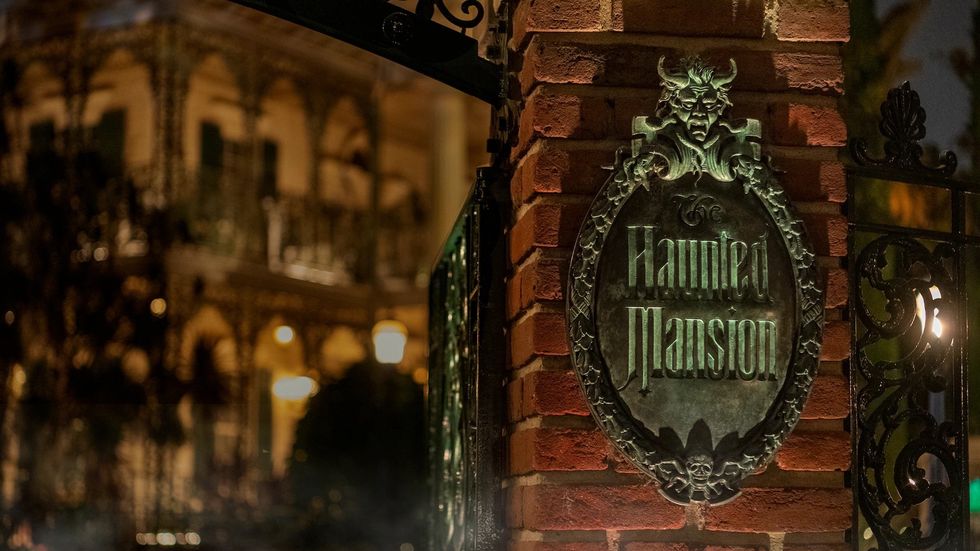
Disney's Haunted Mansion is more light-hearted than horrifying
Image courtesy of Disney
They left you with the general feeling that by the end of the ride, everything was going to be just fine.
Then came the Extra TERRORestrial Alien Encounter.
When this new, highly promoted attraction opened in June 1995, Disney asked guests to experience something very different from before. Guests entered a very dark, sinister-feeling environment, and when asked to sit down, they were strapped into their seats by a large automated restraint system.
Then the lights would suddenly go out, and for the next 8 minutes or so the screaming would start as guests were terrorized by a mostly unseen creature in near total darkness.
A truly scary experience
As you might expect, small children were definitely frightened, if not slightly traumatized by the experience; many adults left feeling kind of mind-blown as well, wondering just exactly how people the creature may have gotten to in the dark as it slowly passed by them, hot breath on the back of their neck before it leapt away.
Just as you let out a sigh of relief, you felt the warm and wet spray splash across your face (and probably into your open mouth) as the creature attacked someone else in the darkness.
While the attraction thrilled guests for a little over 8 years, it left many families wondering why Disney felt the need to put an attraction as intense and potentially controversial as that right in the middle of Walt Disney World’s kid-friendly Magic Kingdom park.
Alien Encounter was added as the highlight of the park’s New Tomorrowland makeover project, which brought extensive scenic remodeling to the rest of the land but only two new attractions.
The Timekeeper replaced CircleVision on the opposite side of the midway in late 1994, and the official opening of Extra TERRORestrial Alien Encounter about 6 months later created a light-and-dark feel to Tomorrowland.
Most other attractions remained the same or got lightly renamed, such as the PeopleMover becoming the Tomorrowland Transit Authority and Star Jets getting a scenic makeover to become the Astro Orbiter.
While Alien Encounter closed for good in the fall of 2003, it was quickly replaced by a very similar attraction concept that sought to offer a similar experience, with less fright and featuring one of Disney’s newest and most popular characters, the cuddly-looking havoc Stitch from Lilo & Stitch.
Renamed Stitch’s Great Escape, this more kid-friendly version of the attraction ran from late 2004 to late 2018 before being quietly retired.
People love being scared
Strangely enough, nearly 23 years after the terror of Alien Encounter closed for good, many now look back at the experience for another reason.
Today’s theme park industry has finally discovered that in general, people do love being scared. In the decades that followed, Halloween-themed events became a staple of the theme park business model, especially for seasonal parks looking to extend operations long after summer ended.
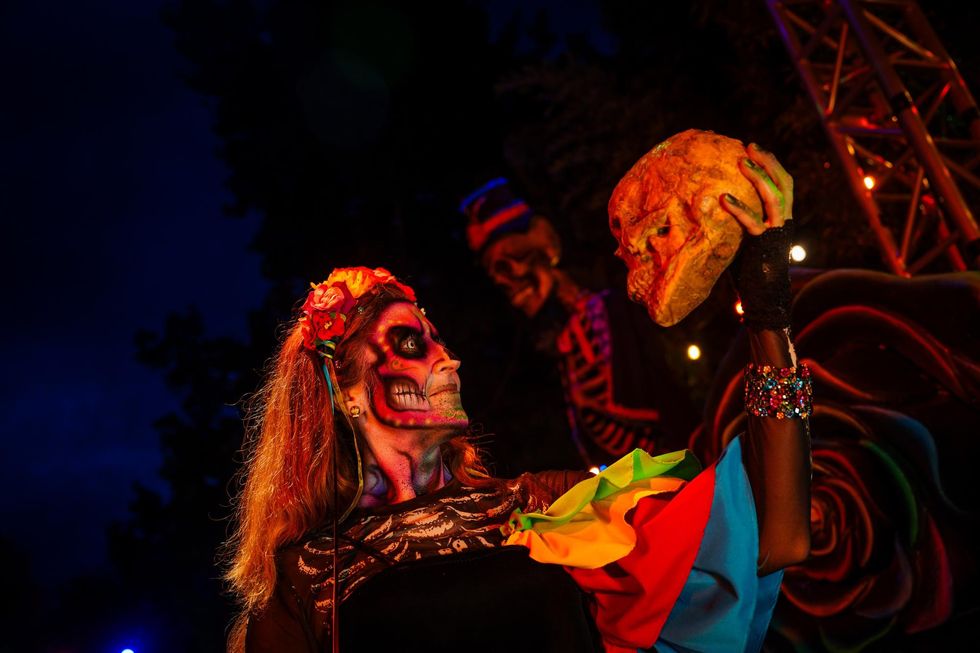
Coast to coast, Six Flags theme parks are offering a total of 448 Halloween-themed experiences for 2026
Image courtesy of Six Flags
By the early to mid-90s, Universal had just begun experimenting with hosting Halloween Horror Nights events at its Orlando and Hollywood theme parks. Six Flags also noticed the trend and tried to capitalise on it in a few markets, inspired by the long-term success of Knott’s Scary Farm’s “Halloween Haunt”, an annual tradition in California since 1973.
Today, virtually every park offers some kind of Halloween experience, with Disney offering a more family-friendly, separately ticketed night event at US parks and promoting spooky family fun at most of its international parks.
The popularity of Halloween-inspired horror-themed events continues to spread to various parks and operators all around the world, adapting the concept to best fit their local markets, traditions and phobias.
So the question today is: was Extra TERRORestrial Alien Encounter simply a failed Disney attraction concept, or was Disney trying to create something unique by tapping into a concept the rest of the industry would take years to figure out?
Or perhaps Disney had exactly the right idea and concept, but in the end Alien Encounter was an attraction that wasn't just ahead of its time… it was also located entirely in the wrong park.
So would it surprise you to know the concept didn't start out as something intended for Disney’s Magic Kingdom?
The Alien Encounter story
One of the most fascinating parts of the attraction's story is that it was first announced as a major new attraction for Disneyland as part of a proposed transformation of the California park’s Tomorrowland.
Alien Encounter was first announced as part of the “Disney Decade” by then CEO Michael Eisner. In a form not seen before, Eisner rolled out a decade’s worth of new attractions and expansions planned for Disneyland around 1990, and, as you may have guessed, about 70% of those concepts never arrived.
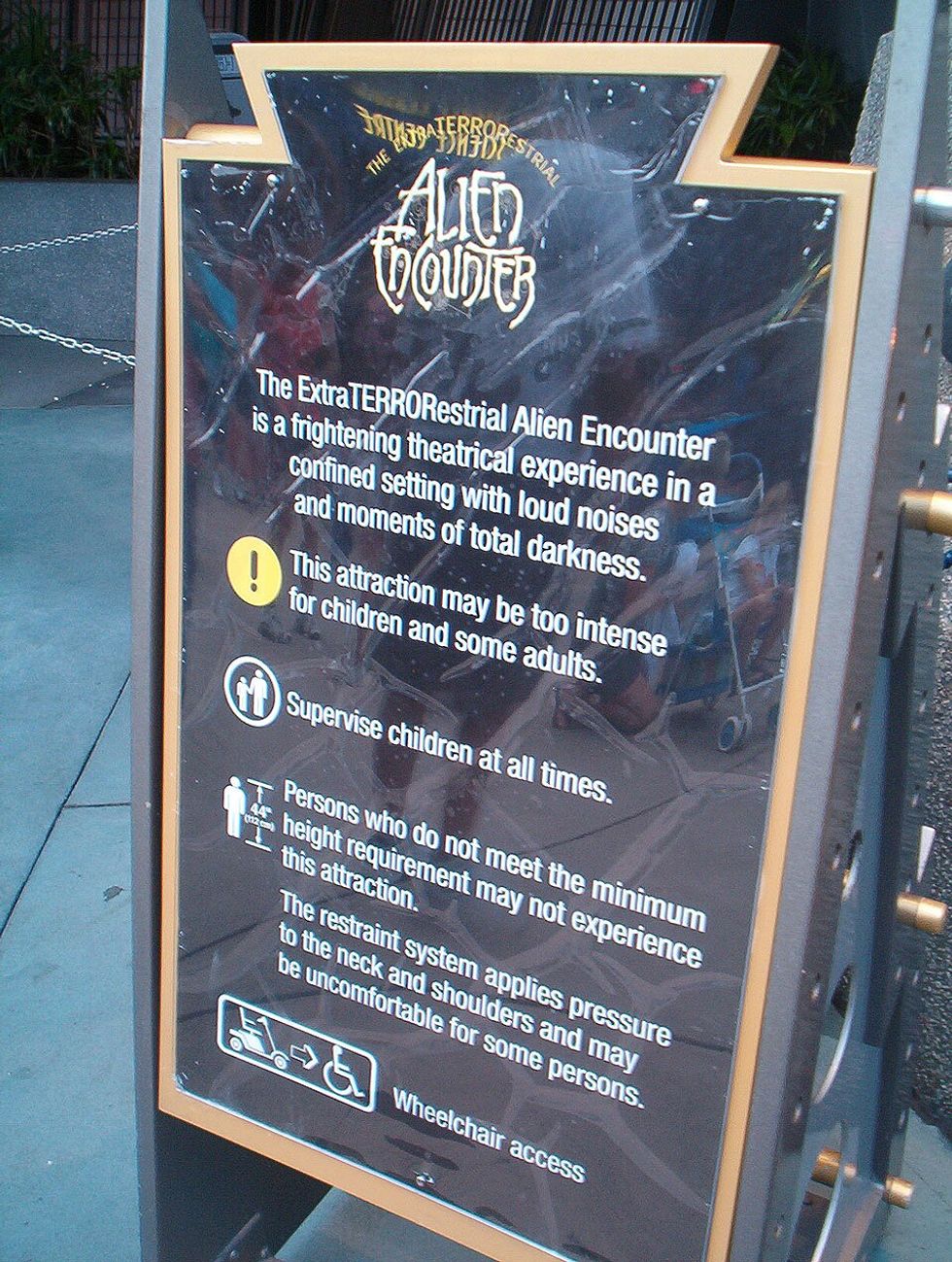
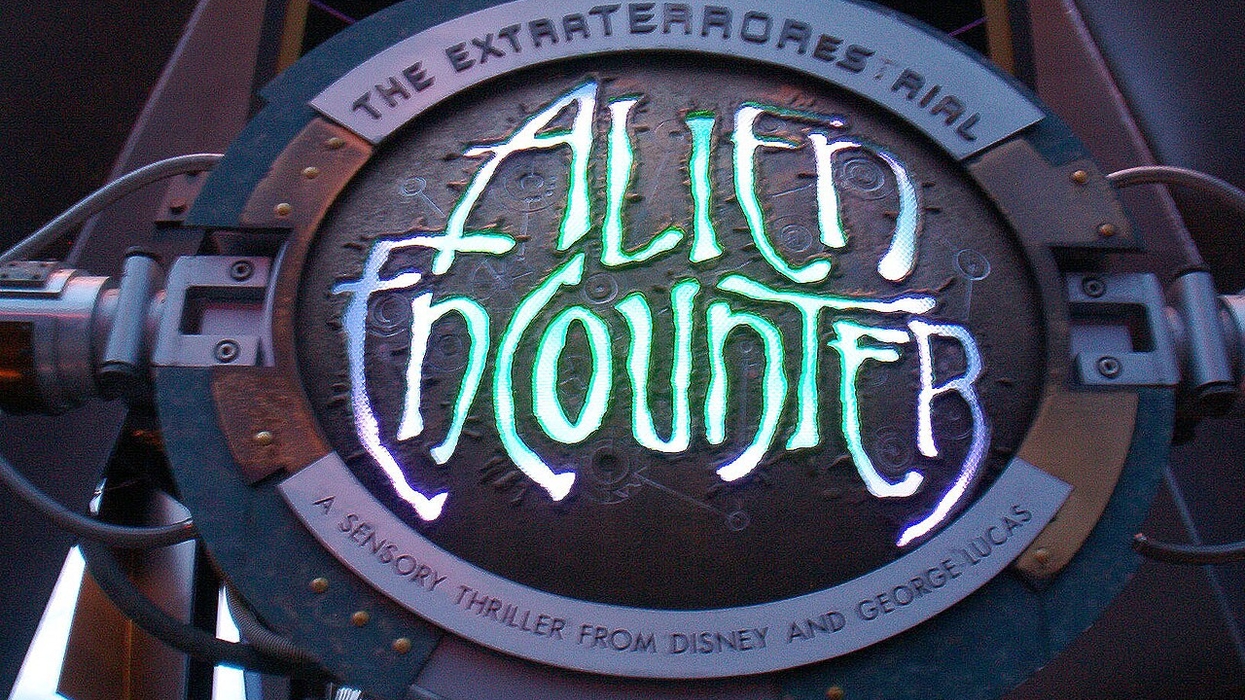
The signage for Alien Encounter warned it may be "too intense"
Image credit Steven Miller, CC BY 2.0 via Wikimedia Commons
While Alien Encounter did ultimately arrive, it was very different from what was originally envisioned. Eisner had already begun bringing in outside IPs to the Disney parks with the introduction of Star Tours in the mid-80s and the successful launch of the Disney-MGM Studios park in Florida in 1989.
This brought dozens of non-Disney-owned IPs to the park experience, including The Muppets, Dick Tracy, Indiana Jones, The Wizard of Oz, Casablanca, Singing in the Rain, and Alien.
Coming from a Hollywood background, with a career at all three networks and Paramount Pictures, Eisner felt Disney attractions should feel more current and cinematic to appeal to teenagers and adults, rather than focusing only on animation and programming for small children.
The introduction of more contemporary concepts like Captain EO, Star Tours, and Indiana Jones proved that non-Disney-owned IPs could be brought in and thrive within a Disney theme park environment, even if the subject matter was a little darker.
And guests did respond well to these at the Disney-MGM Studios theme park, as the Alien segment of The Great Movie Ride always ranked extremely high.
This was all the proof Eisner needed that 20th Century Fox’s Alien could exist and thrive as a Disney theme park attraction. The difference was that while The Great Movie Ride used Alien as one small piece of an overall celebration of Hollywood, the proposed new Alien Encounter concept would take things to a whole new level.
Instead, the original California park concept proposed directly connecting the theme of the attraction to the 1979 Fox film IP, creating an experience where guests would find themselves trapped on the Nostromo with the extraterrestrial creature.
This would be the highlight of the proposed New Tomorrowland for Disneyland, reinvented to be more modern and edgy while bringing the dated Tomorrowland experience up to date with current technology and pop-culture trends.
A changing concept
The problem was that the new futuristic land envisioned for the park would be very costly to create. The vision called for ramps and elevated platforms across Tomorrowland, bright neon lighting everywhere, and an overall concept that Tomorrowland had become an alien spaceport.
It was deemed too much for the corporate spreadsheet to bear. Eisner and the Disney corporate office bean counters were also reeling from huge cost overruns on the EuroDisney theme park resort in Paris, which opened in 1992 and wasn't performing as well as they had expected.
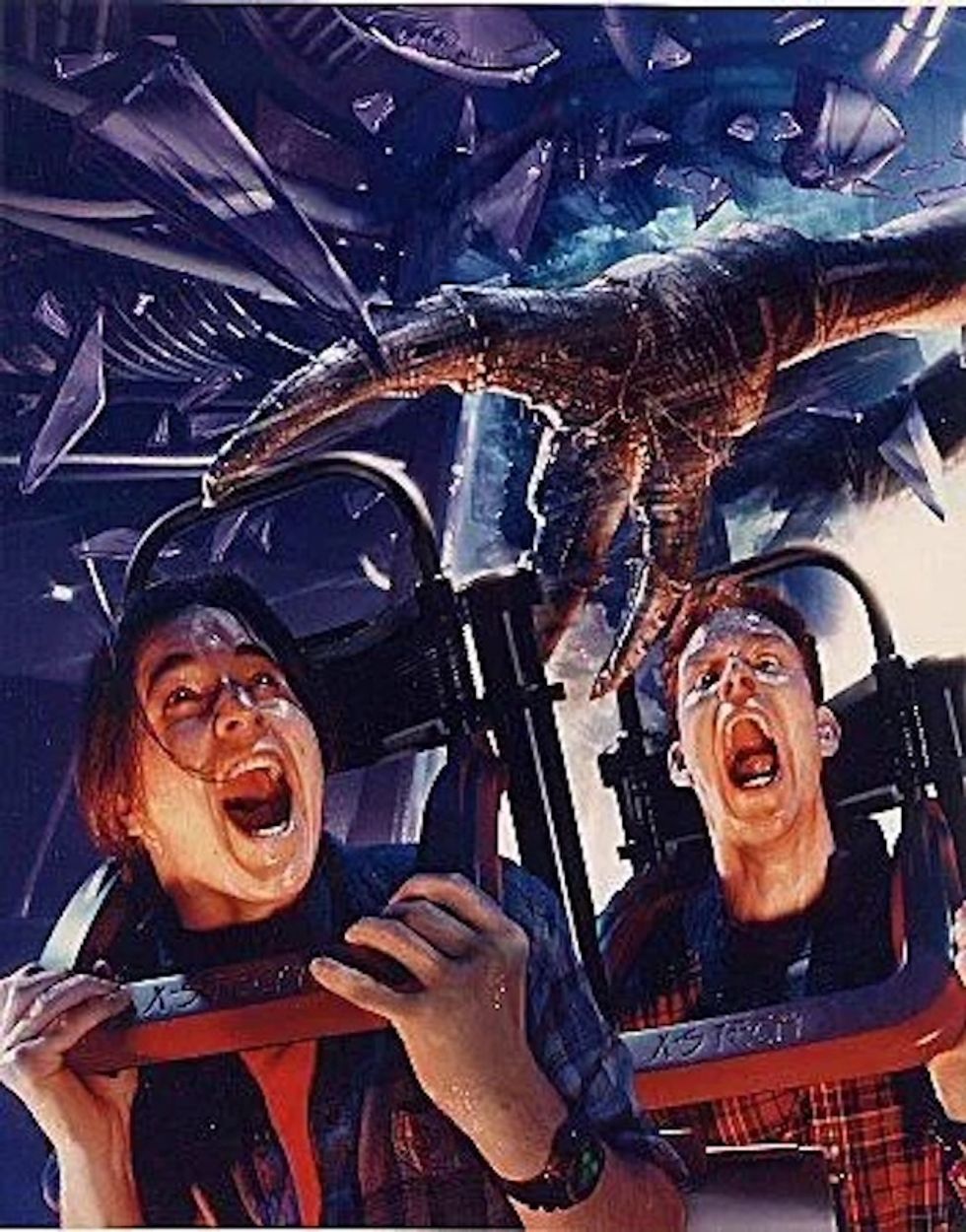
A poster for Disney's Extra TERRORestrial Alien Encounter
As a result, Disney put New Tomorrowland on the back burner to find something less costly, while pushing forward a more budget-friendly version to open in Florida by the end of 1994.
Oh… and the Alien Encounter concept went right along with it for a number of reasons. Alien Encounter was not an expensive ride. Just like the California version, it was designed to take over an existing attraction space, the former Mission to Mars building, so it fit the new low-cost agenda.
However, bringing Fox’s Alien creature to the Magic Kingdom was a bit of a problem because Disney had already introduced the character at Disney-MGM Studios.
So, the concept was sent back for retooling to create a similar concept without using the Fox-branded IP. Instead, Disney Imagineers created their own creature and themed storyline involving the X-S Tech corporation, owned by a friendly alien species that simply wanted to do business and sell products to the human race.
This new concept actually fit better with some Imagineers who felt the horror-fueled nightmare of the Alien creature from the R-rated film had no business inside a Disney theme park in the first place.
After all, Ridley Scott’s Alien wasn’t a Disney property, and while it could fit inside Disney-MGM Studios, many felt it simply shouldn't exist in the Magic Kingdom. So, tapping into the technology Expo concepts used across Epcot’s Future World, the new attraction became more of a technology demonstration from X-S Tech.
An innovative ride
The concept was simple, with a classic theme park storytelling device. Guests would arrive at the X-S Tech pavilion, be wowed by a presentation from the company and be invited in to see a real-life demonstration of their newest concept… interplanetary teleportation.
This is where the classic storytelling device comes into play… because “something goes wrong”, and instead of the X-S Chairman being teleported to Earth to see you, what actually arrives in the chamber is big, nasty, very angry, and hungry!
The whole setup is extremely clever: the creature breaks out of the chamber just as the lights go out, leaving you with only your wild imagination to fill in the gaps about what you think you are hearing (and feeling) happening all around you in the darkness.
The Imagineers may have created their own creature, but they wanted to keep the elemental concept of fear very much alive.
This is where Alien Encounter became particularly suited for the purpose.
It wasn't a roller coaster; it wasn’t a dark ride… in fact, there was no ride system at all to move you from scene to scene. Instead, all guests were seated in a circular theater, completely restrained, and now virtually alone in the dark and ready to have their senses manipulated.
Through a system of embedded speakers, you could hear the creature's sounds and the actions unfolding as if they were coming from right next to you, or even just behind you.
Blasts of air, vibration generators, and motors built into the restraint would make you feel something moving around you, the creature’s hot breath on the back of your neck, or the graze of a claw brushing the top of your head.
A scream here, a splash of warm fluid there… the creature was everywhere, yet everything happening around you remained completely unseen in the dark.
Unlike the famous Alien from the film series, Disney opted to show only a hint of the monster as it arrived, and from then on, the creators manipulated your senses into imagining the monster and what it might be doing. Left to their own devices, each guest interpreted the experience in their own way, creating unique memories of the attraction.
This is perhaps one of the main reasons I think so many theme park fans today have fond memories of Alien Encounter, and many would like to see it return in some way.
Just maybe not inside the Magic Kingdom.
A family-friendly park
Over the years, the Magic Kingdom has remained a family-focused theme park. An easygoing park experience full of characters you remember from your childhood and always a safe place to bring small children. Even the ghosts inside the Haunted Mansion sing and dance.
But Alien Encounter was a different beast, designed to make guests feel not only uncomfortable but completely vulnerable. In the end, Alien Encounter did exactly what it was designed to do: scare people.
The problem is, some Magic Kingdom guests didn’t know what they were getting into and didn’t care to be scared. That last part is important, because someone who buys a ticket to see a horror film in the theater knows up front what kind of film they are paying to watch and is essentially opting into a “fear”- based experience.
The same goes for anyone who visits Universal’s Halloween Horror Nights or any other haunted house attraction.

Attendees at Universal's Halloween Horror Nights events know what to expect
Image courtesy of Universal
Meanwhile, your average family with small kids coming to see Mickey Mouse and Winnie the Pooh in the Magic Kingdom generally wasn't seeking a horror-based survival experience.
That's the fascinating contradiction: Disney built an experimental attraction that did exactly what it was designed to do, and in many ways, it worked a little too well.
The problem was that some guests just simply hated everything about it. Alien Encounter didn’t fail because the technology wasn’t good enough or the monster wasn’t frightening; it failed because some guests couldn’t comprehend why the attraction existed in the first place.
The importance of setting clear guest expectations
To paraphrase Dr Ian Malcom from Jurassic Park, Disney’s Imagineers “were so preoccupied with whether or not they could, they didn’t stop to think if they should.”
Since then, the theme park industry has learned that a better approach is to set clear guest expectations.
Guests to Universal’s Halloween Horror Nights know full well what kind of experience lies ahead as soon as they buy their ticket. The tone and advertising align to make everyone aware of the horror-based experience to come. So, when guests enter the park, they do so with their eyes wide open and ready for what is to come.
That is the irony of Alien Encounter. People do like to be scared from time to time, which is exactly why roller coasters are so popular in theme parks. Fear is just one tool in the entertainment toolbox, and people will pay for experiences that make them scream.
People will pay to feel like someone is chasing them, or to feel like they are in danger when they really aren't. But that's the key difference… people do like to know exactly what they are buying.
In the end, I think Disney learned from Alien Encounter that the experience's location can matter as much as how it is created. So while Disney tried to introduce the concept of “horror” into the Magic Kingdom, the guests were simply not ready for it. At least not then.
Looking ahead, another dark cloud looms on the horizon, with early construction starting on an entirely dark new land coming to the Magic Kingdom: Villains Land.
A place where evil rules supreme, and you might encounter every single Villain from Disney’s vast vault of characters, all in one place.
Has the time finally come for a bit of darkness to come out and play in the Magic Kingdom after all? We shall see…
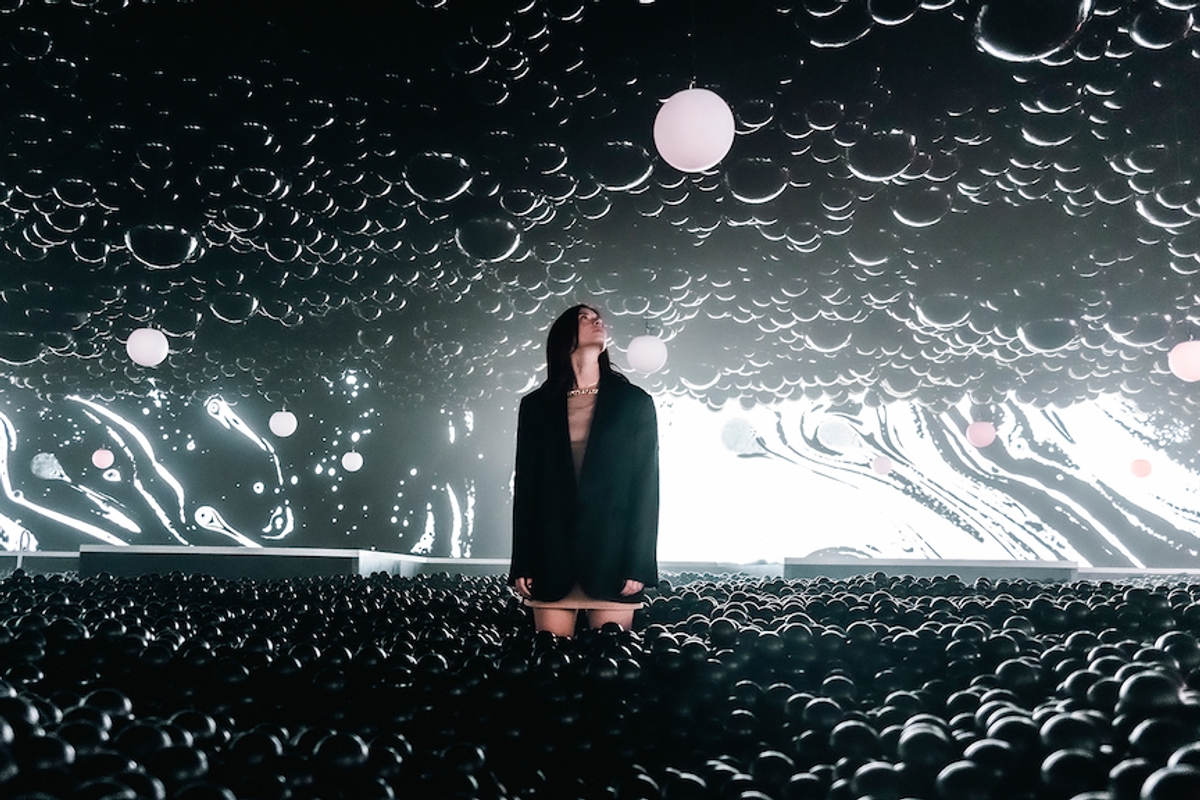
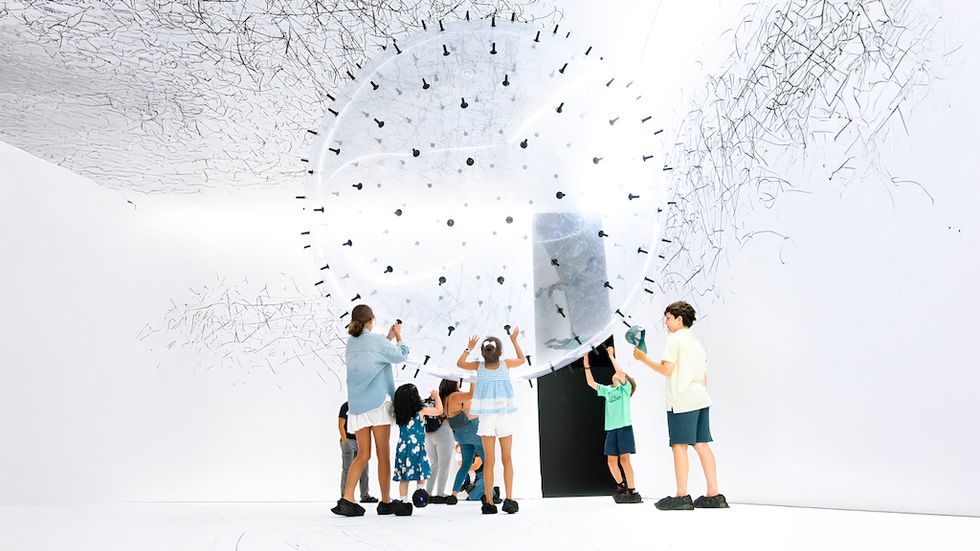 Balloon Museum's EUPHOЯIA - Art is in the Air is designed to appeal to all ages