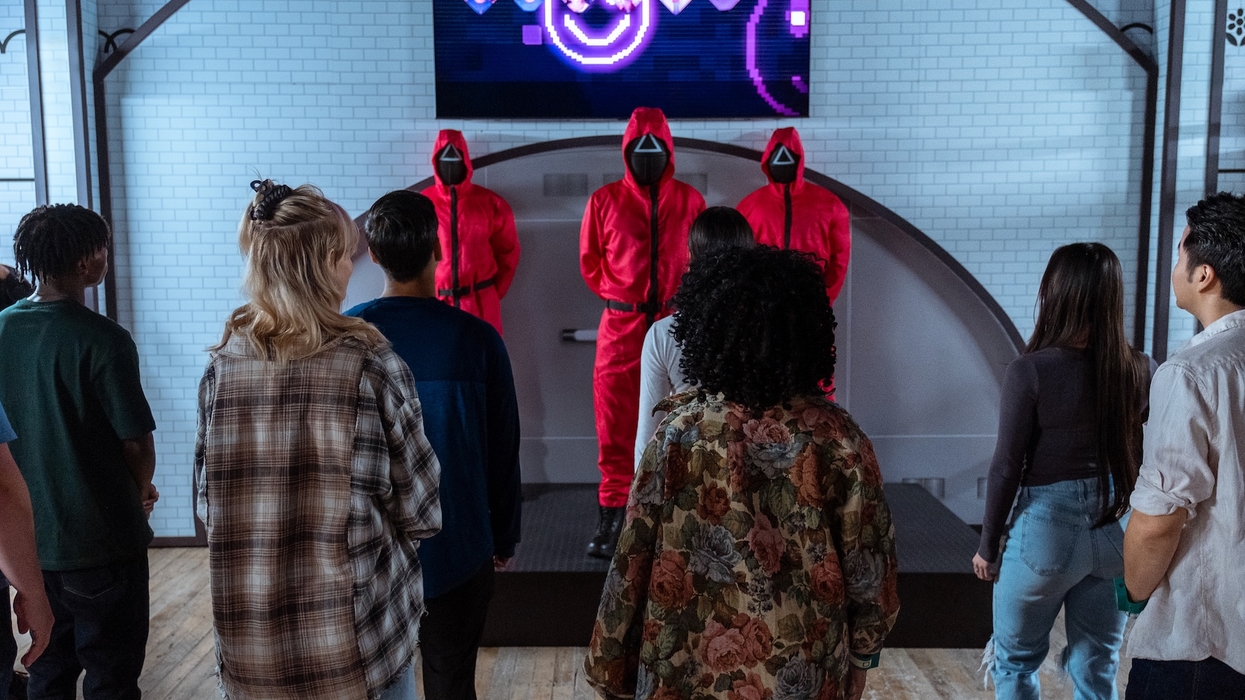
Squid Game: Survive the Trials at Netflix House Dallas uses integrated technology to turn a globally recognised story into a live competition in which visitors become active players.
Located at Netflix House Dallas – a first-of-its-kind permanent entertainment destination – the approximately 60-minute experience challenges guests to compete across five games inspired by Netflix’s global hit series. Players test their reflexes, strategy and nerve as they battle to climb the leaderboard and emerge as the winner.

Holovis logo
Holovis
Squid Game: Survive the Trials
Holovis
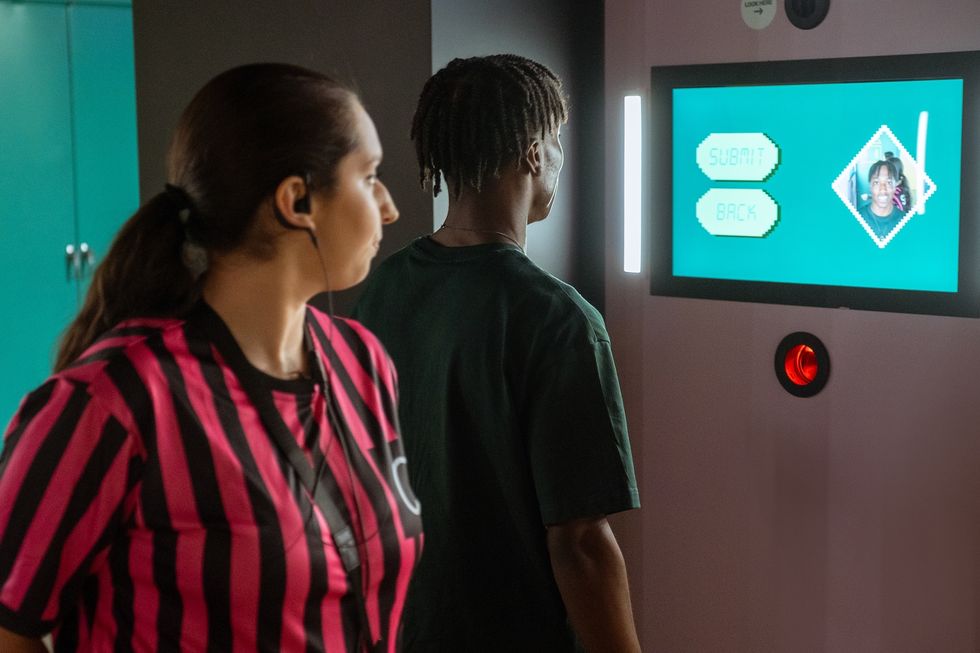
Their actions and performance become part of the competition, with each player wearing a wristband that tracks their progress and real-time ranking throughout.
The innovation lies in the integration: physical gameplay, real-time game systems and multiple technical layers operate as one experience. Technology connects participation to progression, while storytelling gives those interactions meaning. Guests engage with the games without needing to understand the systems behind them.
Working alongside Netflix and a wider team of creative and technical partners, Holovis supported technical design, development, testing and delivery. Its contribution draws on real-time game development, show control, software engineering, industrial control systems, networking, AV and lighting. Bringing these disciplines together enables a globally recognised Netflix story to function as a live, immersive experience.
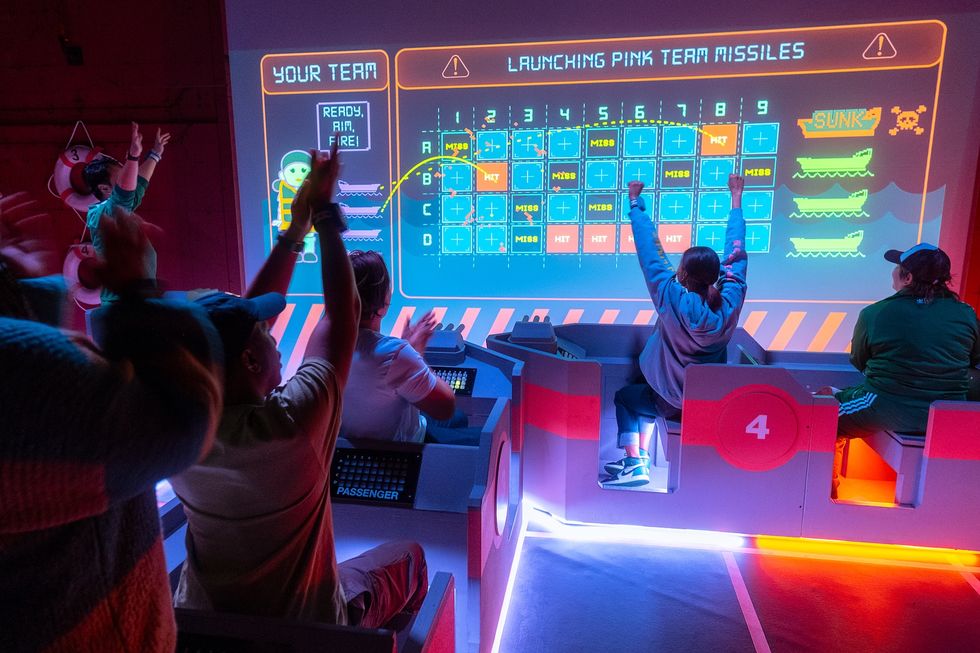
The Netflix House version builds on earlier Los Angeles and New York experiences, fine-tuning existing games and introducing new ones to maximise guest throughput. The experience combines accelerometers, Bluetooth, touchscreens, motion detection, physical controls and reactive lighting to translate moments from the series into functioning games. These examples describe the technology’s development across the earlier experiences, rather than a specification for every Dallas game.
Crucially, the technology is designed to disappear into the experience. For both the guest, and the host.
Squid Game: Survive the Trials
Holovis
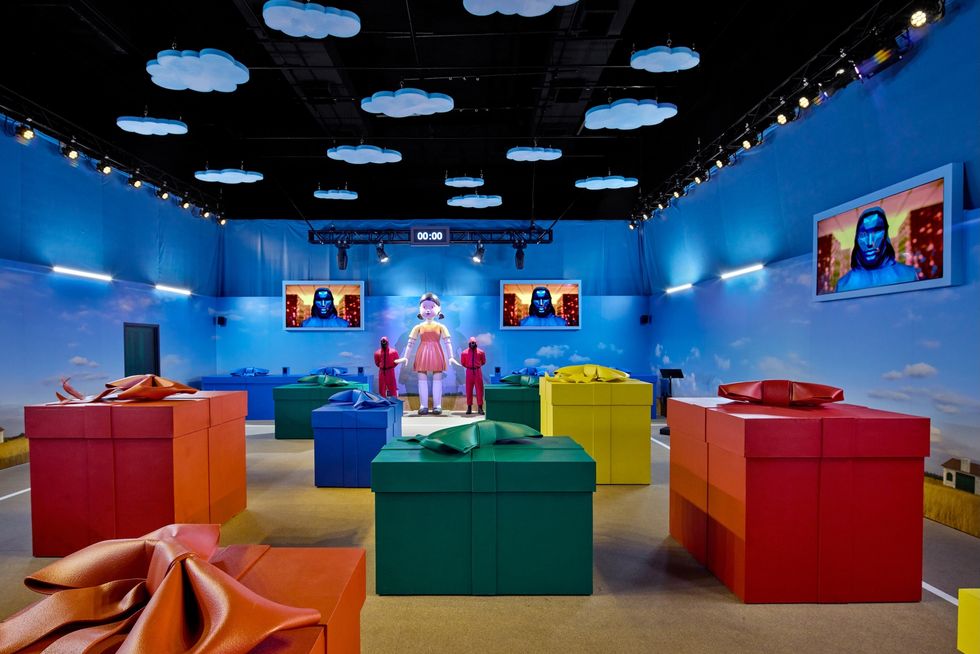
An example from the wider development of the live experience is “Red Light, Green Light.” Bluetooth beacons with built-in accelerometers detect player movement within specific timing windows, translating a familiar screen mechanic into physical gameplay where moving or remaining still can determine success or failure. This shows how sensing technology can make a guest’s body a game input.
Squid Game: Survive the Trials
Holovis
Operational design is equally important. In New York, Holovis developed a managed technical architecture supporting up to 144 simultaneous players (across six concurrent groups of fans), with six to seven live hosts controlling the experience through wireless handheld tablets backed by an enterprise-grade wireless network, whilst preparing for the next group. Hosts could focus on performance and guest interaction – acting and guiding 24 guests at any one time. Dallas continues this development, applying lessons from earlier installations to a permanent entertainment destination.
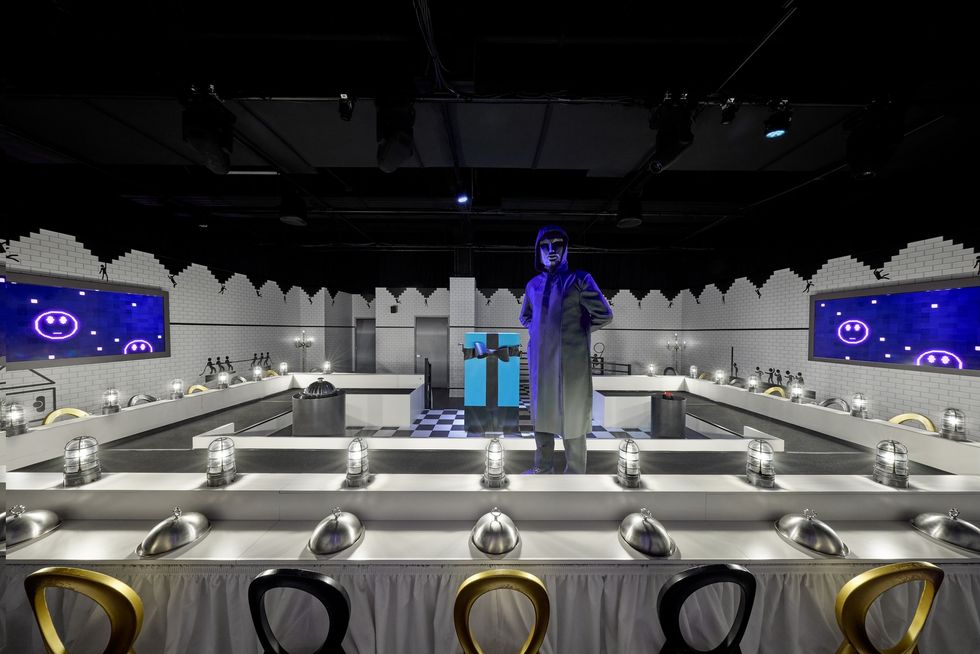
Squid Game: Survive the Trials
Holovis
In Dallas, Squid Game: Survive the Trials brings mission-critical theme park AV design principles and equipment into location-based entertainment. Layers of industrial control hardware and engineering are designed to withstand repeated, high-duty-cycle guest interaction. This practical engineering supports the experience’s continuous operation alongside its interactive ambition.
 Squid Game: Survive the TrialsHolovis
What distinguishes this application is the combination of physical competition, individual progress tracking and integrated attraction engineering. Its value comes from coordinating technologies around recognisable game mechanics, while supporting live facilitation and repeated use. The result gives guests agency within the story: movement, decisions and performance affect their experience.
They do not simply enter the world of Squid Game. They compete within it.