Losonnante, a company transforming the way visitors connect with sound in public and cultural spaces, helps bring exhibition designs to life through sound, one of the most evocative carriers of emotion.
Sound can energise, move, soothe, or even recall memories for the listener. This power is increasingly used to enhance exhibition design and exhibition sound design, with careful consideration of both content and technology.
Frequently used technologies include directional speakers, sound showers, audio guides and smartphone apps. A lesser-known option is the bone conduction audio terminal, an innovative solution developed by Losonnante.
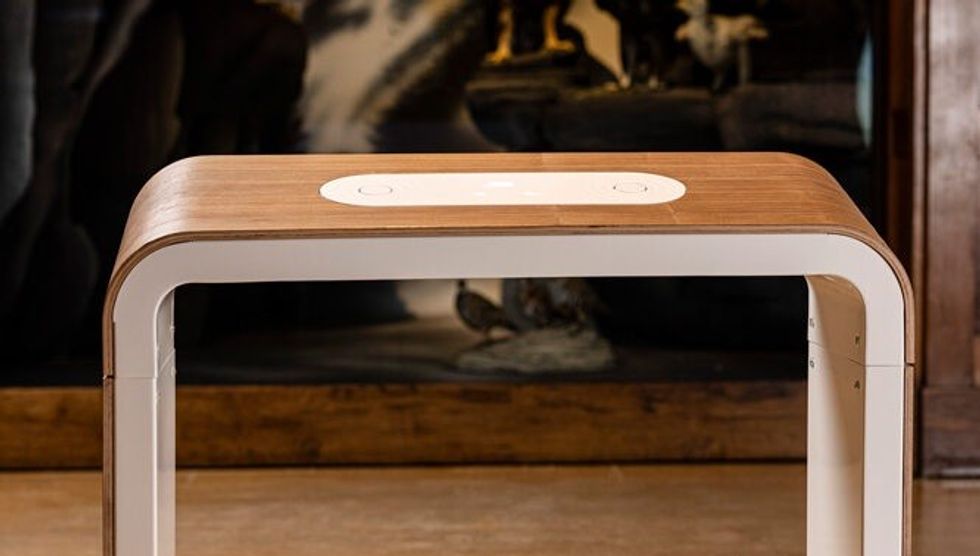
This delivers inclusive sound experiences that immerse visitors in the exhibition experience, and is suitable for a wide range of venues, from museums to gardens to retail spaces.
Fabien Rolland, Losonnante’s founder and CEO, says: "Our system fully immerses visitors in sound, using an innovative approach to exhibition sound design that creates inclusive sound experiences which are engaging, sensory and enveloping.
"It opens up new possibilities for scenography audio solutions, encouraging visitors to pause and connect more deeply with art or landscape."
Sound in exhibition scenography
Scenography shapes the staging and atmosphere of an exhibition, and is distinct from museography, which defines the content and narrative.
Sound is a core element of scenography and plays an important part in crafting memorable public space audio design. A well-executed scenographic design brings together visuals and immersive audio, graphic and tactile elements, and lighting, and may also include scents and other special effects to enrich the experience.
The technologies used by scenographers to deliver sound in public spaces often include:
- Sound showers and directional speakers. Mounted on walls or overhead, these deliver precise, localised sound. However, they are less suited to outdoor applications and may reflect sound off some surfaces. Sound showers are suboptimal in noisy settings, while directional speakers can emit uncomfortable high-pitched sounds.
- Audio guides and smartphone apps. These popular technologies are easy to use and have improved with semi-open headphones, binaural headsets, and interactive smartphone apps with maps and multimedia. Yet, they still require headphones or earphones, which can feel isolating and reduce the sense of shared experience.
An alternative technology is the Losonnante audio terminal. This provides immersive listening experiences where visitors are both aware of their surroundings and fully absorbed in the soundscape.
With Losonnante bone conduction, listening is active, not passive. Guests sit comfortably on custom furniture and cover their ears with their hands to block out ambient noise and focus attention on the experience.
This intentional disconnection from their surroundings adds depth to the experience, in contrast to the imposed barrier that traditional audio guides can create.
For example, at the Museum of Immersive Cities in Rouen, France, guests are transported to the Viking world through immersive scenographic design that includes 360° projections, reconstructions, authentic artefacts, and Losonnante immersive sound and accessible audio solutions.
Last month, Losonnante shared how its immersive sound experiences use bone-conduction technology to enhance the visitor experience.