Titanic Belfast has established itself as a world-class visitor attraction, welcoming over 9 million visitors from 145 countries since 2012. While its foundations are built on the story of RMS Titanic and Belfast’s maritime and industrial heritage, in recent years it has evolved into a cultural hub, bringing world-class art and exhibitions to Northern Ireland within its contemporary Andrews Gallery.
The Lucian Freud Etchings: A Creative Collaboration exhibition has been the most ambitious example yet. Working in partnership with the Victoria & Albert Museum and creative collaborators, Titanic Belfast reimagined how Freud’s etchings could be presented, transforming them from static works into a fully immersive cultural experience.
From the beginning, the goal was clear, this exhibition would not simply show Freud’s work, it would draw visitors into his world. Freud’s etchings are rich with detail but can feel technical and distant to the casual viewer. Our challenge was to get under the skin of Freud and unlock the complexities of his work, making the exhibition accessible and compelling for both art enthusiasts and art novices.
This was achieved by combining fine art with immersive storytelling, multisensory technology and authentic recreation. Designed to complement the artwork rather than overwhelm or distract from them.
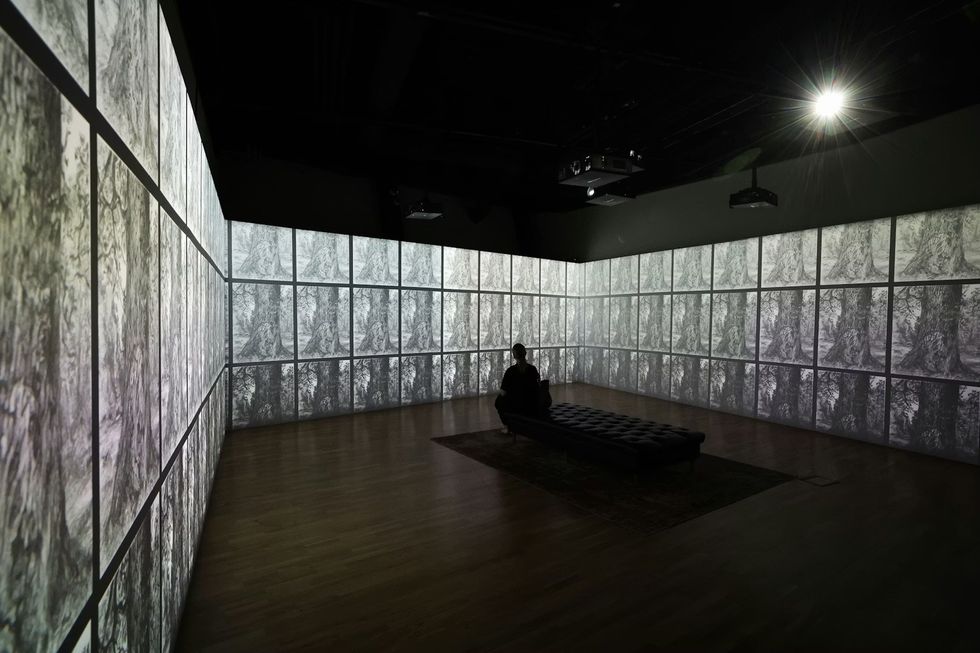
At the core of the immersive technology was a 270-degree projection that animated Freud’s etching process. Seamlessly integrated into the exhibition’s flow, it concluded the experience by detailing the full etching process, making an otherwise hidden process visible and dramatic.
Located in a dedicated area within the gallery, the aim was to immerse visitors in a sensory way while preserving the contemplative, intimate atmosphere befitting Freud’s practice. This was achieved by repurposing old projectors from other parts of the visitor attraction, supporting the organisation’s sustainable objectives.
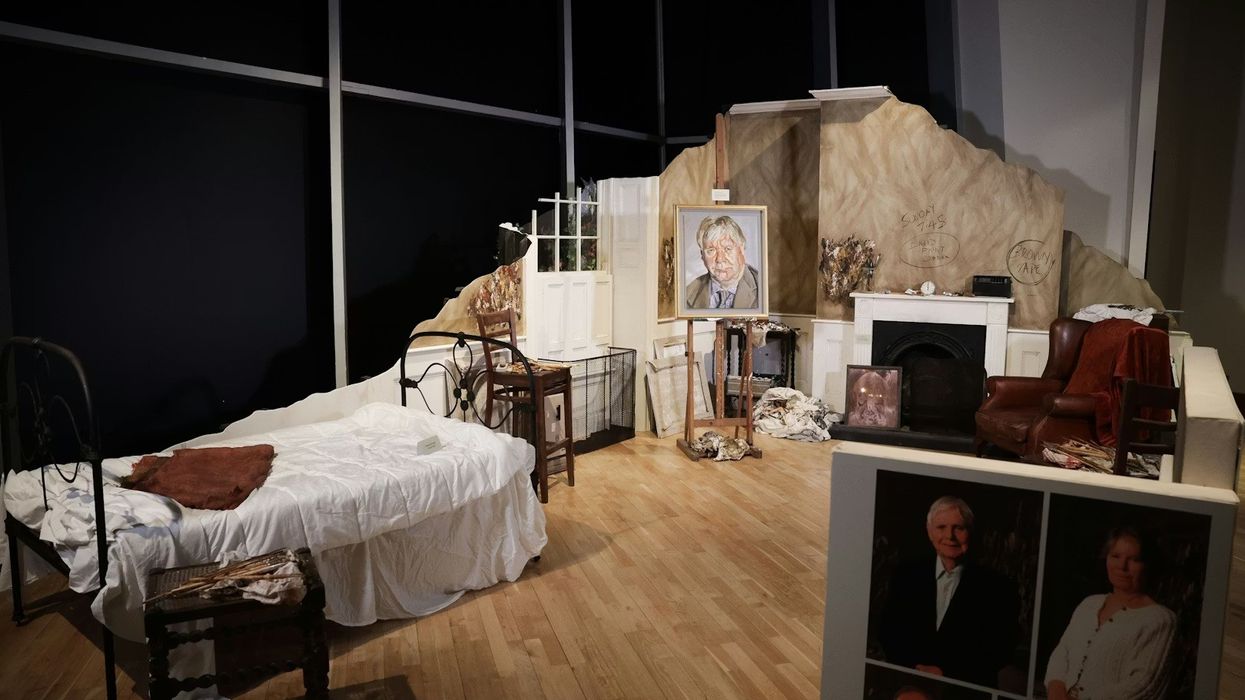
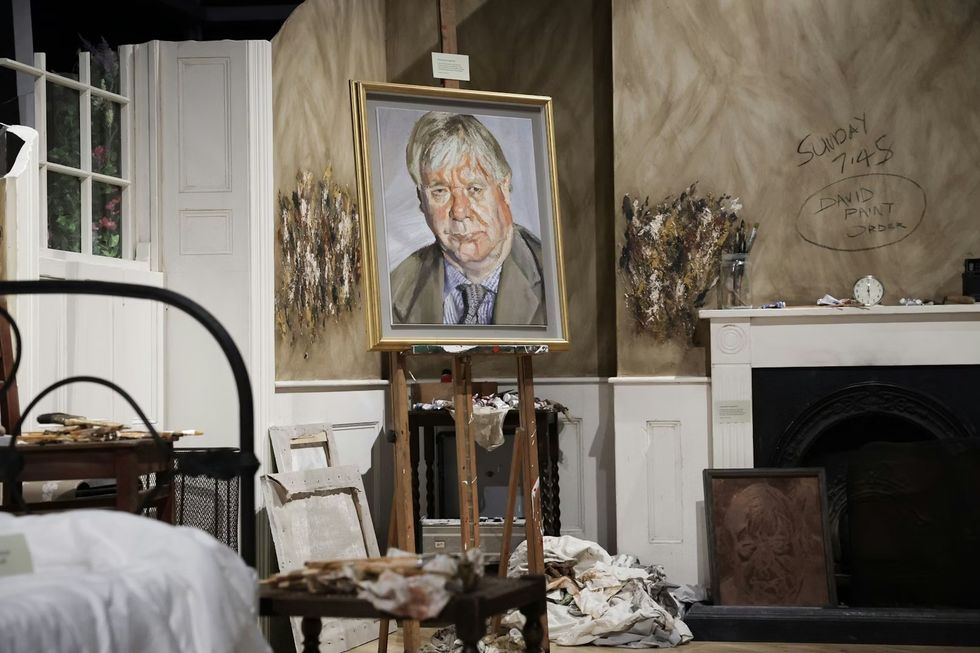
Beyond technology, a key feature was the recreation of Freud’s Kensington studio in partnership with Wee Buns Films. This installation was not stylised or theatrical, it was authentic, detailed and raw. From his scribbled notes and oil paint layered on the walls to the ritual rags and brushes piled and worn-in chair that sitters spent hundreds of hours in, every element evoked the lived-in reality of Freud’s environment.
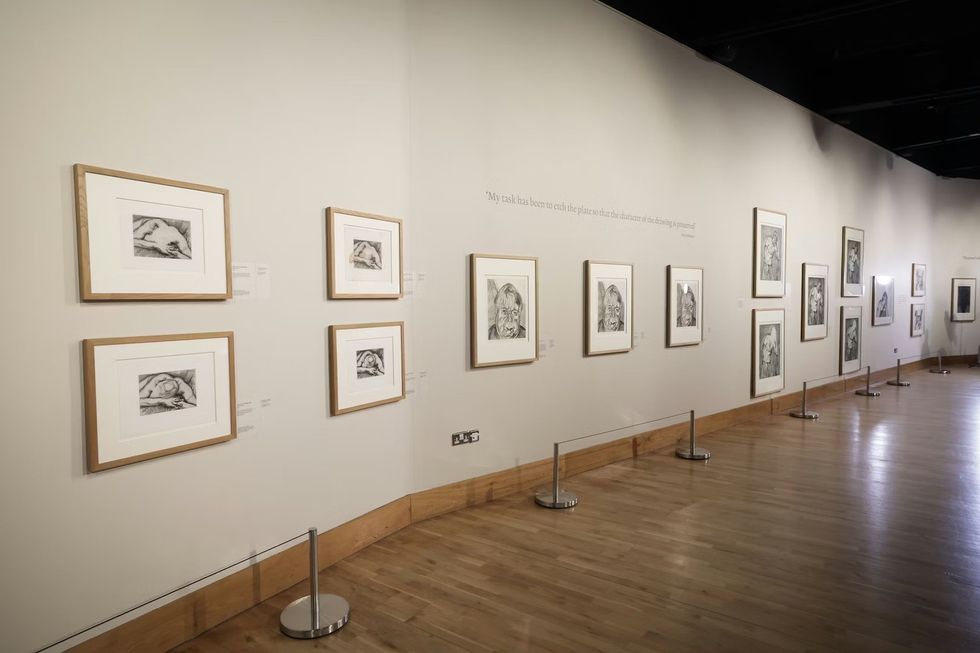
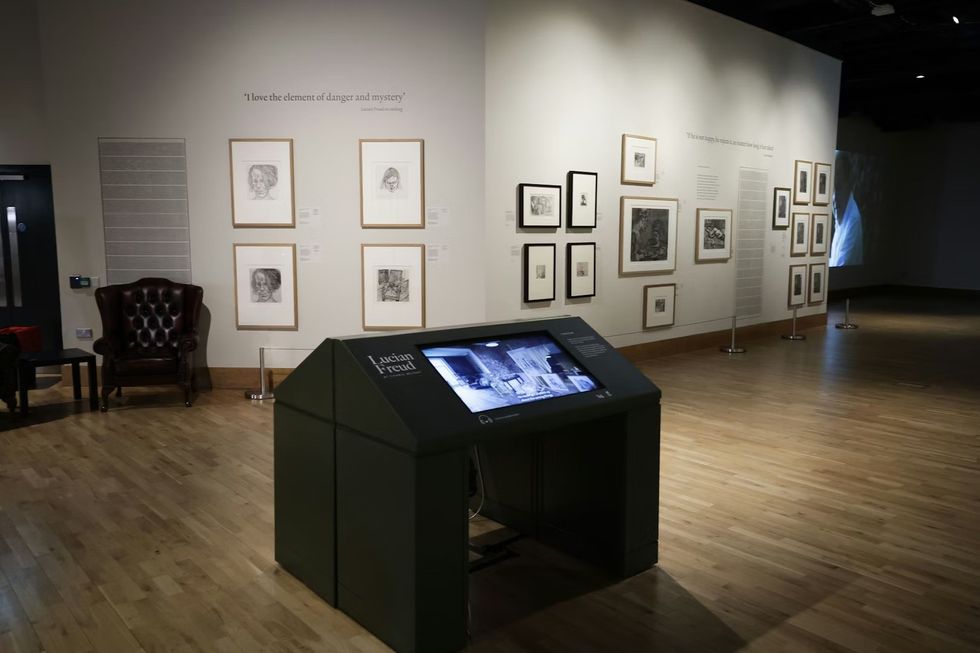
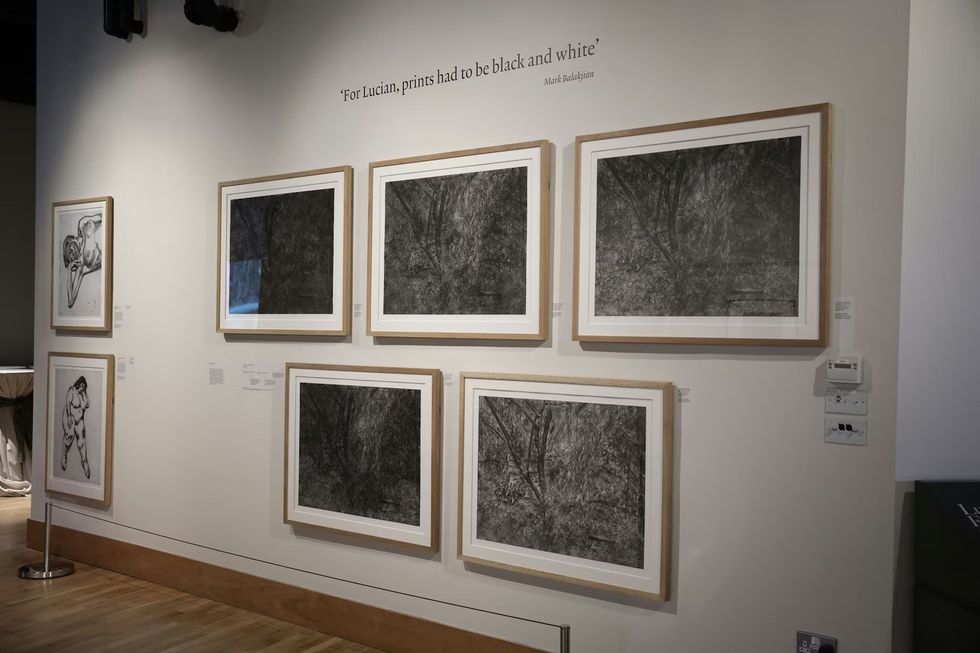
The spacious layout and intimate lighting ensured focus stayed on the artwork themselves giving visitors the freedom to move across the sections without feeling overwhelmed from section to section.
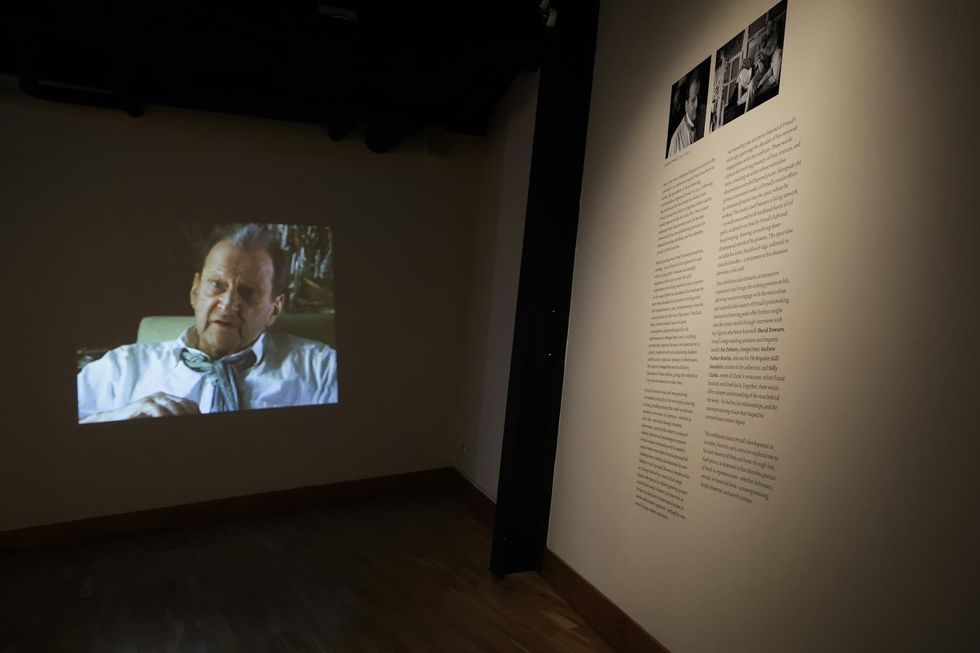
Sound design played a subtle but crucial role in the immersion. Freud’s ambient voice played out periodically at the start of the exhibition but didn’t intrude on people’s viewing of the artwork. In the centre of the gallery, the listening pods allowed visitors to get a further insight into Freud’s world with key figures who knew him well including friends, sitters and the curator of the collection, creating a multi-layered experience. Visitors not only saw Freud’s art and studio but also heard the human stories behind it. These never seen before oral histories, captured by filmmaker Laura Warner, added emotional resonance and invited guests to connect with Freud as both an artist and a person.
Guests reported feeling it was “not just a viewing, it’s an emotional, sensory journey inside a creative genius”. The result was a multi-sensory immersion that broke boundaries between disciplines and reimagined how culture can be expressed.
27,000 people visited the exhibition from 1st May – 30th September, with 61% of visitors coming to see it specifically. While 46% of visitors were from Northern Ireland, supporting our objective to bring world class art to local communities.
Most Freud exhibitions focus on static presentation of artworks, at Titanic Belfast we pushed beyond this, fusing fine art with set design, oral history and projection technology to create a cultural encounter that was engaging, educational and immersed local and international visitors in fine art in an entirely new way. The innovation lay not with using technology for technology’s sake but integrating it so seamlessly that visitors felt naturally immersed rather than consciously aware of digital intervention.
This was not just an exhibition; it was a cultural immersion. Visitors stepped into Freud’s world and heard the voices that shaped his career. Technology and theming worked hand in hand to create a seamless, unforgettable experience that was both innovative and deeply human.
Partners
- Victoria & Albert Museum: Provided the artwork Provided temporary loan of the travelling exhibition
- Gill Saunders, Honorary Senior Research Fellow (V&A): Curator of the Etchings Exhibition
- Titanic Belfast Team: Curation and development of the overall exhibition, including the bring together of all partners
- Laura Warner (The Archive House) and her team: Creation, archival research direction and production of all video content, including interviews with Gill Saunders (V&A exhibition curator), David Dawson (Freud’s Assistant), Patrick Doherty OBE (Sitter and Freud of Freud) Sally Clarke MBE (Sitter and friend of Freud), Andrew Parker Bowles OBE (Sitter and friend of Freud)
- Jan Lower (Elbow Productions): Design and production of immersive projection content
- Sean Madden (Fine Art Conservation): Conservation and protection of all artwork
- Potato Bred: Hanging of exhibition
- John Leslie (Wee Buns Films): Design and creation of Freud’s studio within the exhibition