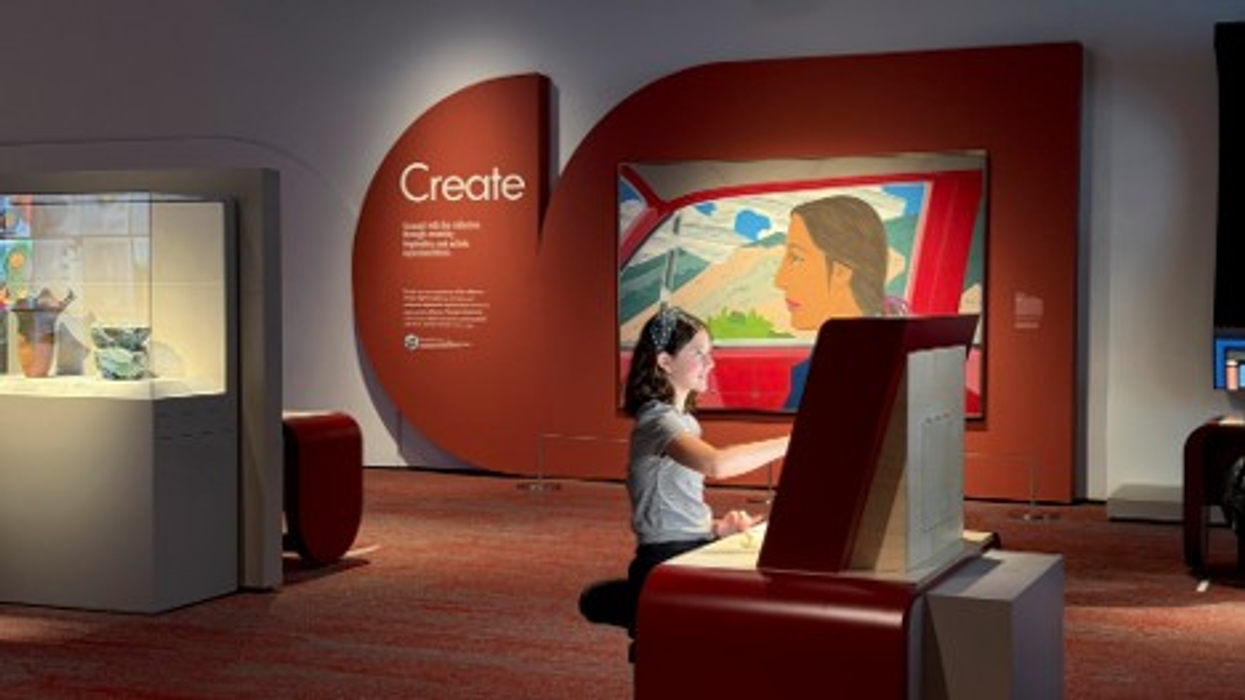
For more than a decade, the Cleveland Museum of Art’s ArtLens gallery has explored how innovation can create new entry points into art and the museum’s collection, making the museum more approachable and reducing the intimidation people may feel about visiting an art museum or knowing how to engage with art.
Evaluation of previous iterations demonstrated something more significant: visitors who experienced ArtLens before entering the museum’s core galleries had more meaningful encounters with the collection and satisfied a greater number of the museum’s interpretive objectives.
The Cleveland Museum of Art logo
The Cleveland Museum of Art
ArtLens Reimagined
The Cleveland Museum of Art
That evidence became an important foundation for ArtLens Reimagined, a new 10,000-square-foot experiential gallery designed not simply to engage visitors with technology, but to help them build relationships with art that extend throughout the museum. Rather than starting with technology or specific interactives, CMA began with workshops bringing together curatorial, conservation, education, design, and technology staff with interactive designers and inclusive design specialists. Together, they defined the goals: build on the core principles of ArtLens while creating more immersive and inclusive ways to explore the collection and tell the broader life stories of artworks.
ArtLens Reimagined
The Cleveland Museum of Art
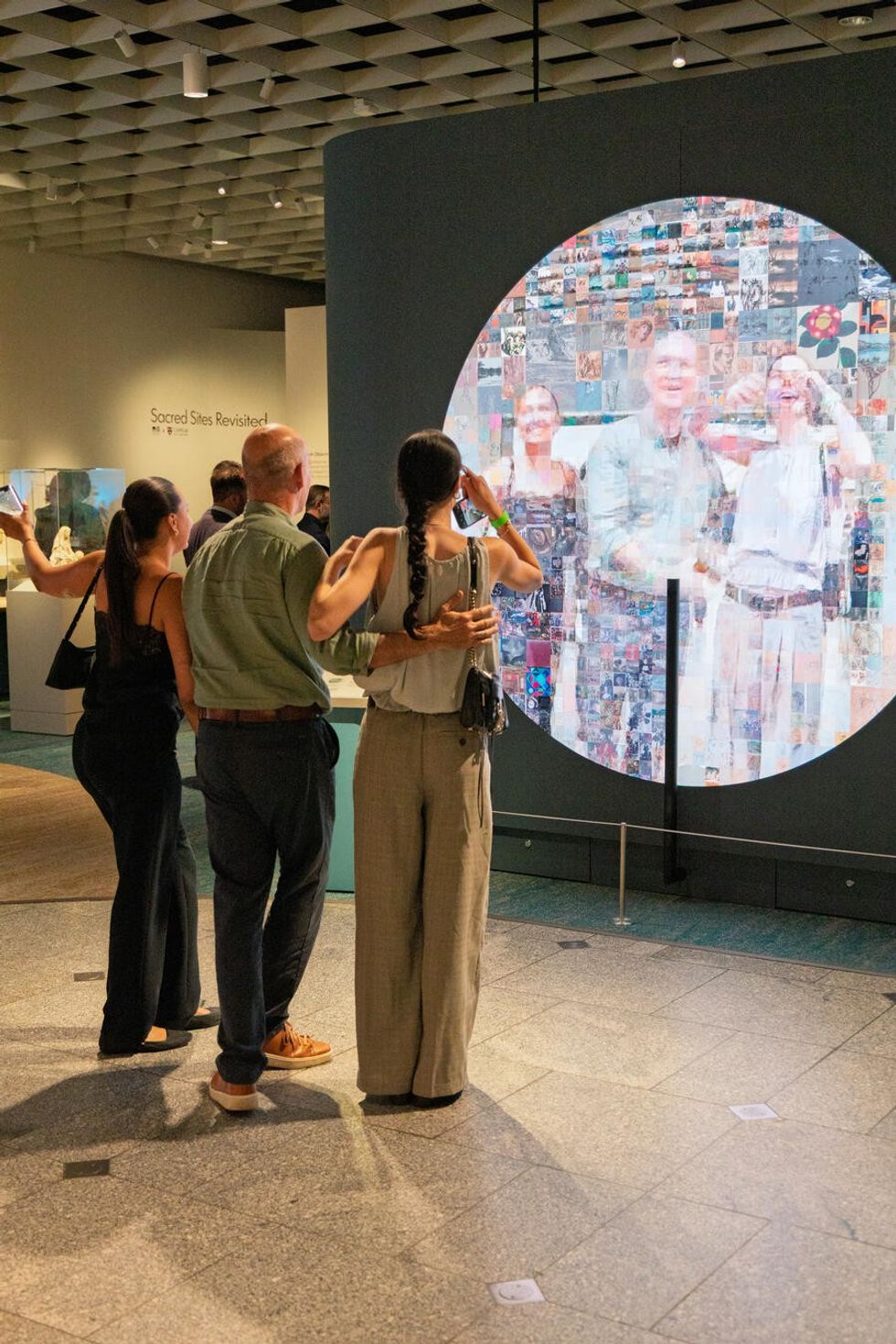
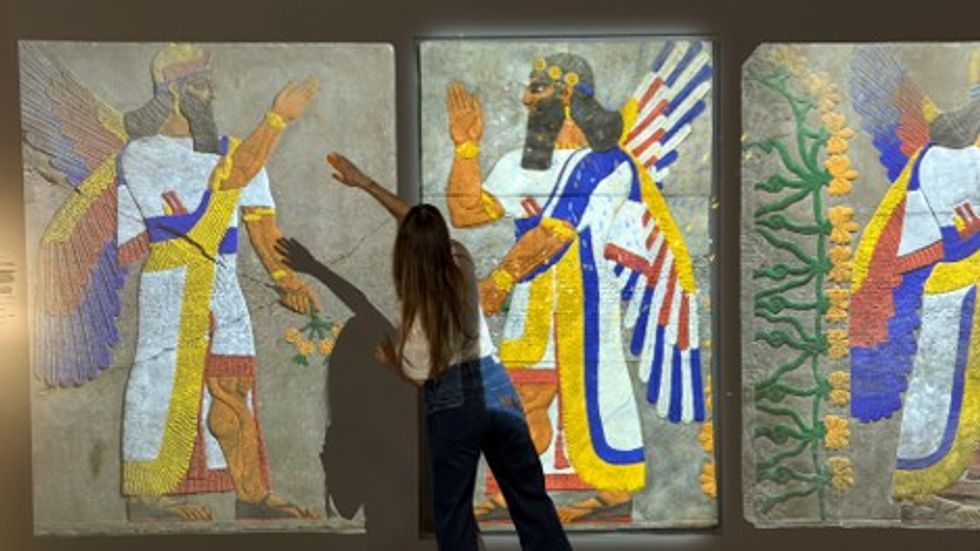
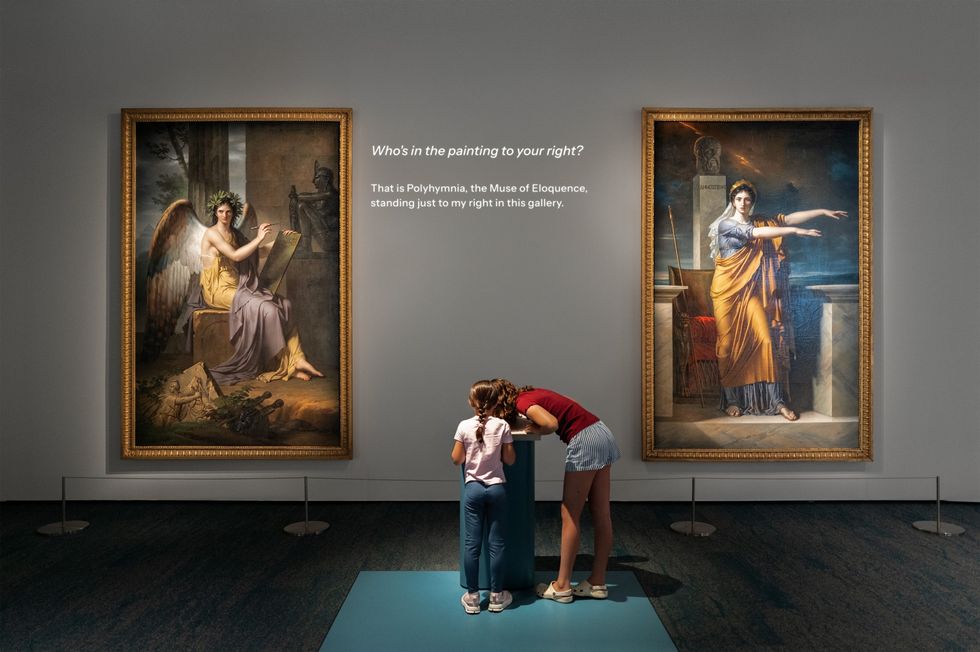
Rather than organizing ArtLens around technologies, the gallery is organized around five modes of engagement: Relate, Investigate, Create, Explore, and Observe. Twenty-one experiences invite visitors to encounter the collection through conversation, observation, movement, gesture, touch, sound, experimentation, and play. Each provides a different way into art, from personal connection and close looking to creativity, conservation, and discovery.
ArtLens Reimagined
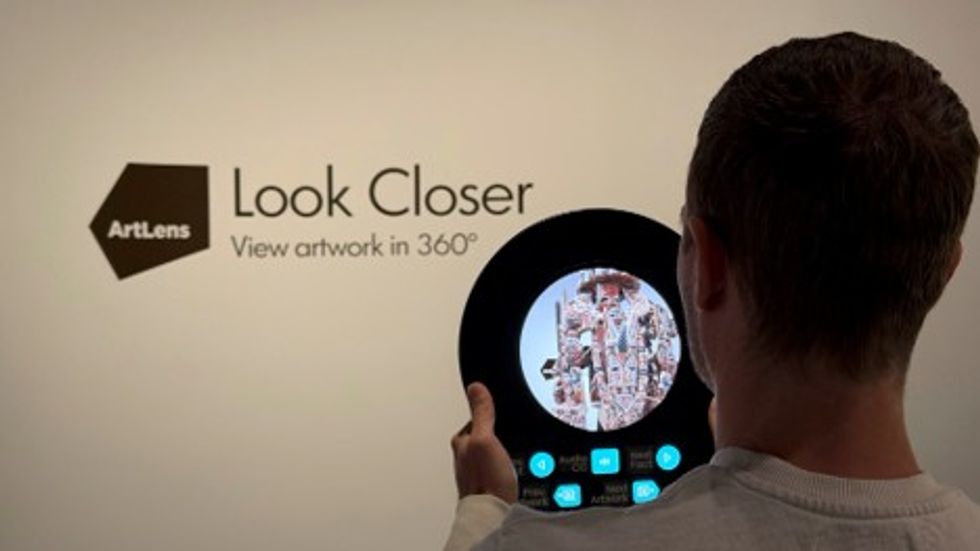
A defining innovation of ArtLens Reimagined is its integrated ecosystem of physical, digital, mobile, and multisensory experiences. Technology is intentionally embedded within each experience, allowing visitors to focus on artworks, creativity, and discovery rather than the technology itself. ArtLens encourages active participation while helping visitors build confidence, curiosity, and emotional connections that continue into the museum’s galleries.
Inclusive design was embedded throughout the project from the beginning, creating multiple ways to perceive, understand, navigate, and participate. CMA’s approach recognizes that inclusive design does not simply provide alternative access; it increases the number and diversity of ways everyone can engage. ArtLens seeks to remove barriers related to age, background, education, art experience, and ability, making art both relatable to all and able to be experienced by all.
ArtLens Reimagined
The Cleveland Museum of Art
ArtLens Reimagined also leverages advancements in artificial intelligence to make art meaningful in new ways. CMA has used AI since 2012 as a mission-aligned tool to enhance access, understanding, and engagement while honoring the creativity, scholarship, and lived experiences that define the museum. AI is not a replacement for human expertise, but one of many technologies used in service of art, audiences, and learning.
Throughout ArtLens, AI supports a range of experiences. In Relate, Art in Arm’s Reach uses AI-powered vision technology to track the distance between visitors’ hands and reveal artworks at their true scale, while Strike a Pose and Hand Model use real-time tracking to connect visitors’ movements with artworks. In Create, Art Morph uses generative AI trained exclusively on selected public-domain CMA artworks to transform everyday materials into new compositions.
In Investigate, Talk to the Art combines AI tools to transcribe questions, interpret meaning, and generate responses that allow visitors to converse with an artwork. What Does Art Sound Like? uses AI-generated descriptions as a starting point for content development, followed by extensive curatorial review and revision before becoming part of a multisensory experience.
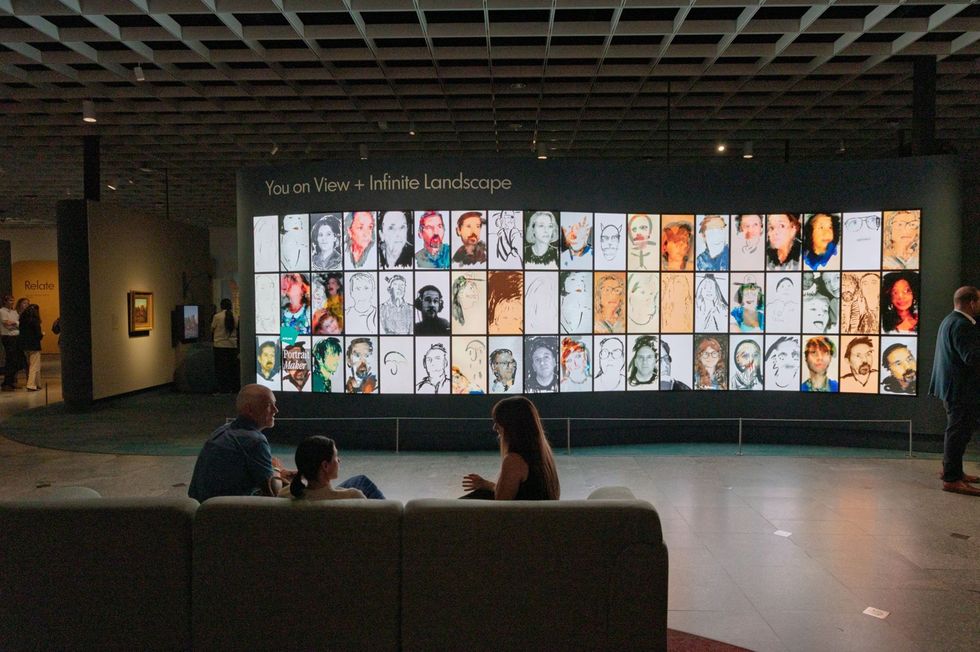
In Explore, Community Mural uses AI-assisted tools to isolate elements from open-access artworks so visitors can focus on creating collaborative digital collages. Infinite Landscape uses AI to imagine what might exist beyond the frames of landscape paintings, connecting multiple artworks into a continuous immersive environment.
ArtLens Reimagined
The Cleveland Museum of Art
What makes ArtLens Reimagined distinctive is not any single technology, but how technologies, disciplines, and inclusive design practices work together to support meaningful engagement with art. AI models run locally within the museum and use CMA artworks and content, allowing CMA to maintain control over data, reliability, computing, and responsible AI practices.
By placing human connection and relationships with art at the center of every technological decision, ArtLens Reimagined demonstrates how experiential technology can encourage participation, discovery, creativity, and learning while creating meaningful new ways for visitors to engage with art.
Partners
From the Cleveland Museum of Art:
Digital Innovation: Jane Alexander (chief digital information officer/ArtLens project lead), Haley Kedziora (ArtLens Gallery lead project manager), Seta Nagbe (accessibility lead project manager), Tessa Shlonsky (ArtLens app lead project manager), Nathan Ian Anderson (3D imaging), Dale Utt (3D models and animation), Jeff Judge (ArtLens Gallery AV integration), Nate Skula (audio visual technician), Tara Bobinac (associate developer), Gary Kirchenbauer (photography), David Brichford (photography and technical imaging), James Kohner (Digital Imaging Department coordinator)
Technology Services: Allison Kennedy (ArtLens support services), Tim Bachleda (user support technician), Don Manning (user support technician), Kate Andrews (ArtLens Gallery technician), Sara Olson (ArtLens Gallery technician), Spencer Everhart (ArtLens Gallery technician), Olivia Pickens (digital/technology intern), Likitha Kalla (technical coordinator), Ethan Holda (backend systems integration), Scott Schultheis (IT infrastructure manager), Justin Ratta (IT infrastructure intern), Andrea Bour (collections information data analyst), Michael McKay (patron information data analyst), Brendan Walsh (lead cybersecurity analyst), Glen Cowan (business systems and cybersecurity)
Digital Content: Vicki Sun (ArtLens Gallery content coordinator), Nina Diamond (contractor), Abby Foster (contractor), Delaney Marrs (contractor)
ArtLens Exhibition Design: Jim Engelmann (exhibition design lead), Peter Kratkoski (graphic designer), Alyssa Arend (exhibition designer)
Exhibitions and Publications: Tiara L. Paris (chief exhibition, design, and publications officer), Steven Metzner (exhibition project manager), Einav Rabinovitch-Fox (managing editor), Tom Barnard (director of publications)
Production: Allison Hennie (head of gallery production and special projects), Bob Bochik (cabinet maker), Jedidiah Knight (mount maker), Mark Gamiere (lighting technician), Harry Sanchez (production technician), Joe Ayala (production technician), Kurt Hallsman (production technician), John Nagy (museum painter)
Curatorial Concepting and Content Leads: Andria Derstine (deputy director and chief curator), Seth Pevnick (curator of Greek and Roman art), Cory Korkow (curator of European paintings and sculpture), Nadia Rivera Fellah (curator of contemporary art), Sonya Rhie Mace (curator of Indian and Southeast Asian art)
Conservation: Sarah Scaturro (chief conservator), Beth Edelstein (senior conservator of objects/head of conservation lab), Colleen Snyder (conservator of objects), Dean Yoder (senior conservator of paintings/head of paintings conservation), Laura Gaylord Resch (associate preventive conservator)
Collections Management: Alyssa Morasco (director of collections management), Sharon Robinson (collections manager), Dawn Turner (registrar for loans)
Public and Academic Engagement: Jacquelyn Sawyer (chief learning officer), Stephanie Foster (senior manager, interpretation), Paula Jackson (senior manager, youth and family engagement), Jeremiah Myers (director, school and teaching programs)
Philanthropy/Membership: Denise Grcevich (senior director of strategic philanthropy), Kim Parry (philanthropic advisor), Brook Hale (philanthropic advisor for corporate relations), Erin Hornan (director of institutional giving), Mark Nylander (senior advisor for corporate relations), Sydney Slacas (stewardship specialist), Chelsea Jackson (director of membership), Natasha Morris (manager of membership and annual giving)
Communications / Research and Evaluation: Todd Mesek (chief marketing officer), Jacqueline Bon (director of communications), Anika Calcei (digital communications manager), Belle Mercurio (communications manager), Hannah Ridenour LaFrance (assistant director, audience research)
Facilities: Paul Krenisky (director of facilities)
Visitor Services: Stefanie Lima Taub (director of visitor and volunteer services)
Protection Services: Jaime Juarez (director of protection services and safety), Emmett Ford (associate director of protection services)
External Partners:
Design I/O (lead interactive design)
Prime Access Consulting (accessibility and inclusive design consulting)
Dome Collective (App UX/UI Concept and Design and branding)
Line Break (App Development)
Zenith Systems (AV integration)
Sitara Nathan Lachenmeyer (CMS development)
Harvard FAS CAMLab (Sacred Sites Revisited content partner)
Nina Diamond (Content development and consulting)
Stura (App wayfinding feature support)
Factum Arte (Artwork facsimile production)