Storytelling
When we set out to design Niagara Takes Flight, our goal was to go beyond building an attraction—we wanted to craft a cultural experience that felt authentic, emotional, and deeply rooted in the meaning of Niagara Falls. To achieve this, we needed to reimagine how stories could be told in a way that connected people across backgrounds, age groups, and languages.
Digital Media as an Art Form
From the beginning, we chose to use digital media not as a backdrop, but as an art form in its own right. We treated the media as fluid, shifting forms that responded to environment and content, rather than focusing on the medium itself. This freed us to shape an experience that felt immersive, artistic, and intuitive—where the technology disappeared into the storytelling.
Storytelling Beyond Words
We knew the stories of Niagara could not be told through facts alone. They needed to be felt. That meant keeping the narrative concise, universal, and often wordless. We leaned on art, rituals, symbology, sound, and movement to express ideas that transcended language barriers. The result was a space where guests could sense the story in their bodies, not just read it on a wall.
With close input from the client, we focused on milestone moments and dates that defined Niagara’s history, while also surfacing lesser-known stories that often remain in the shadows. These moments, woven together, created a timeline that was both familiar and surprising—reminding guests that Niagara’s identity is layered, complex, and evolving.
Immersive Storytelling Techniques
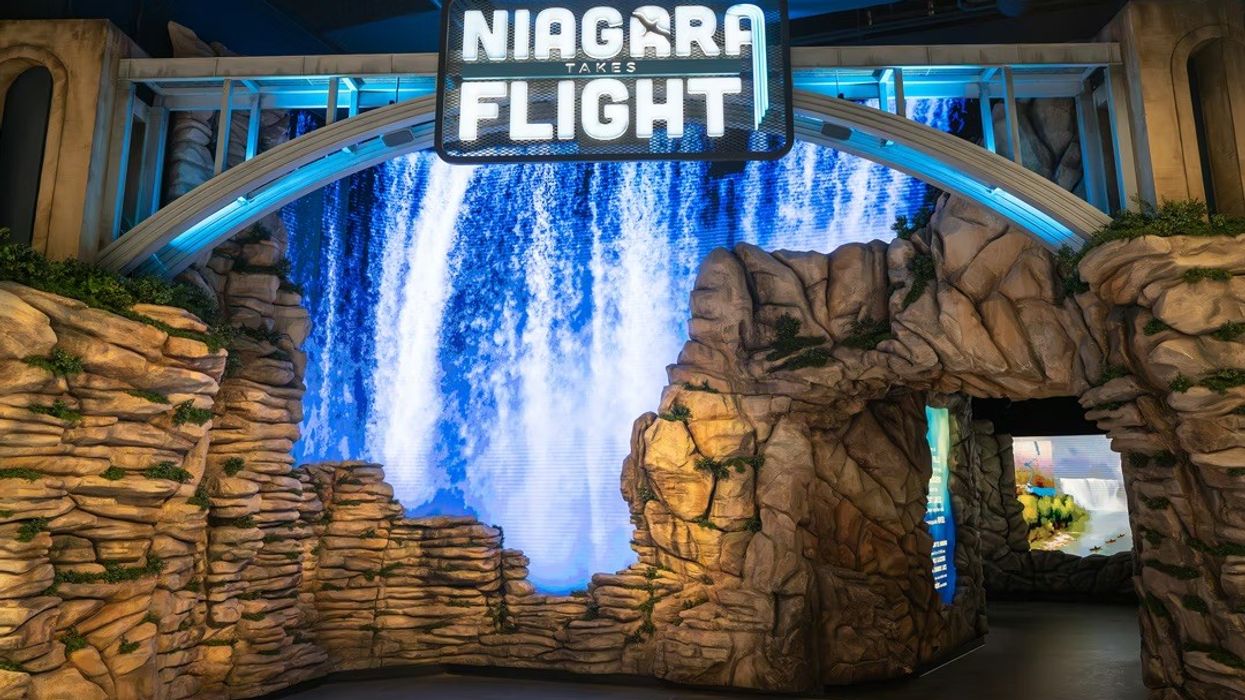
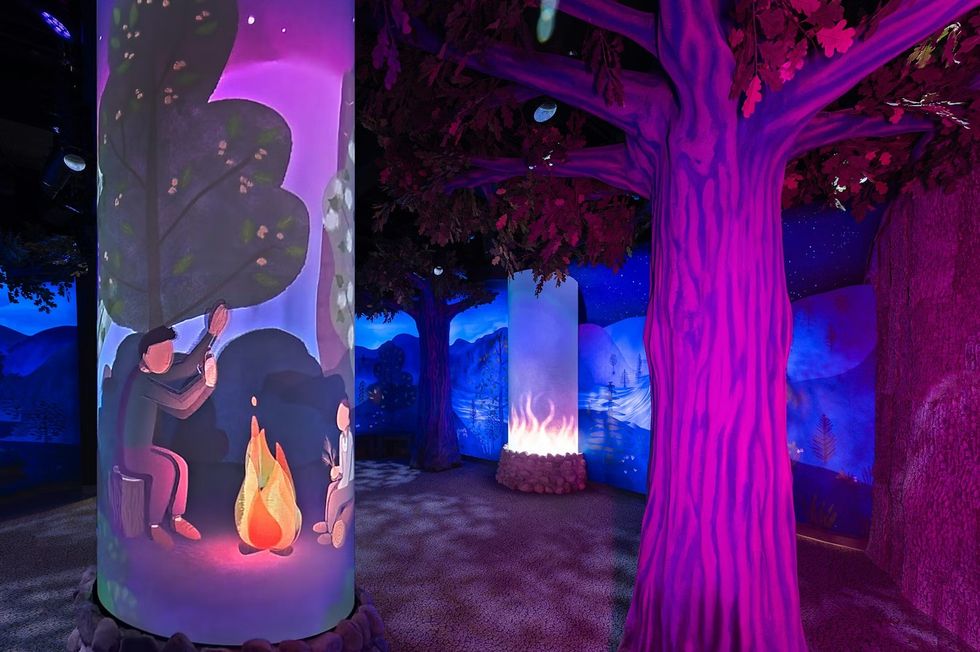
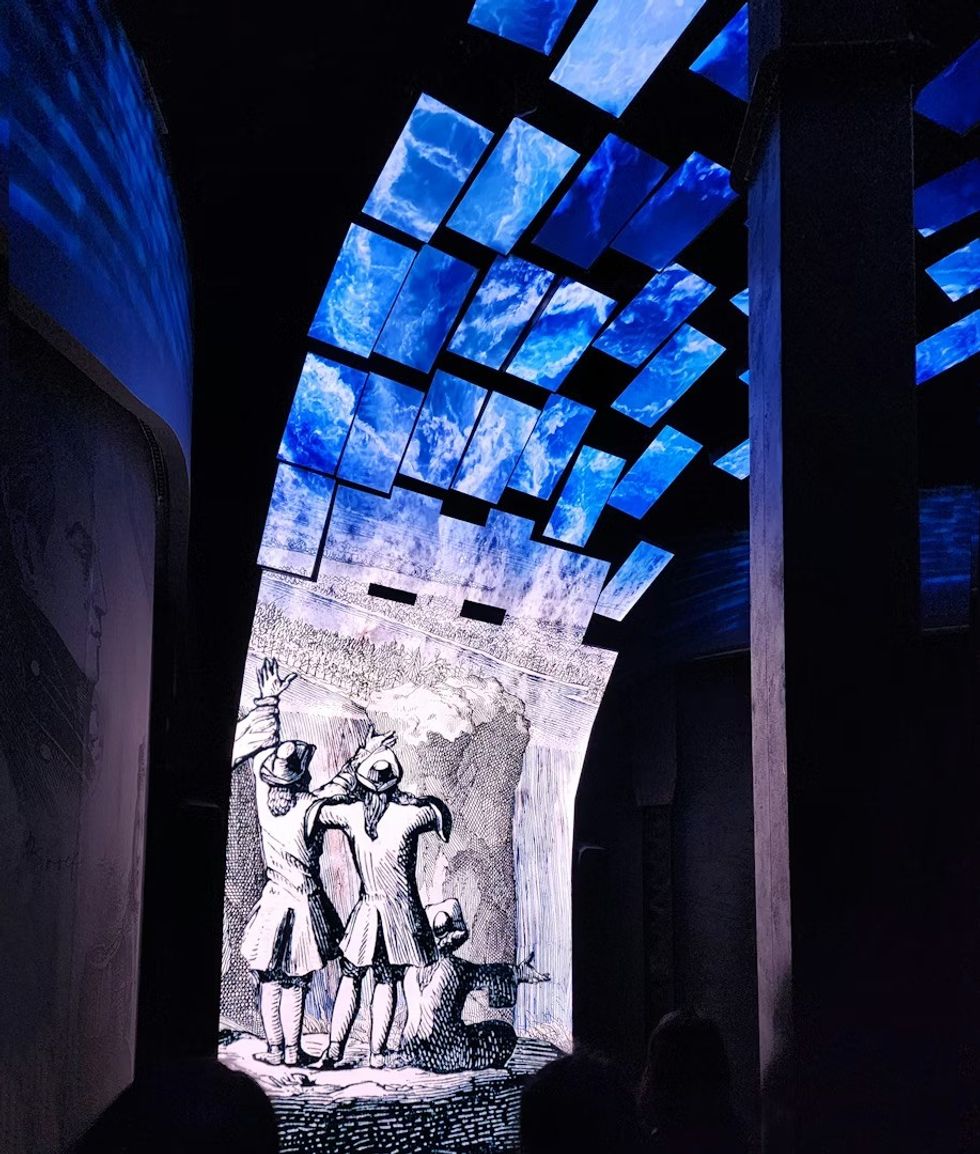
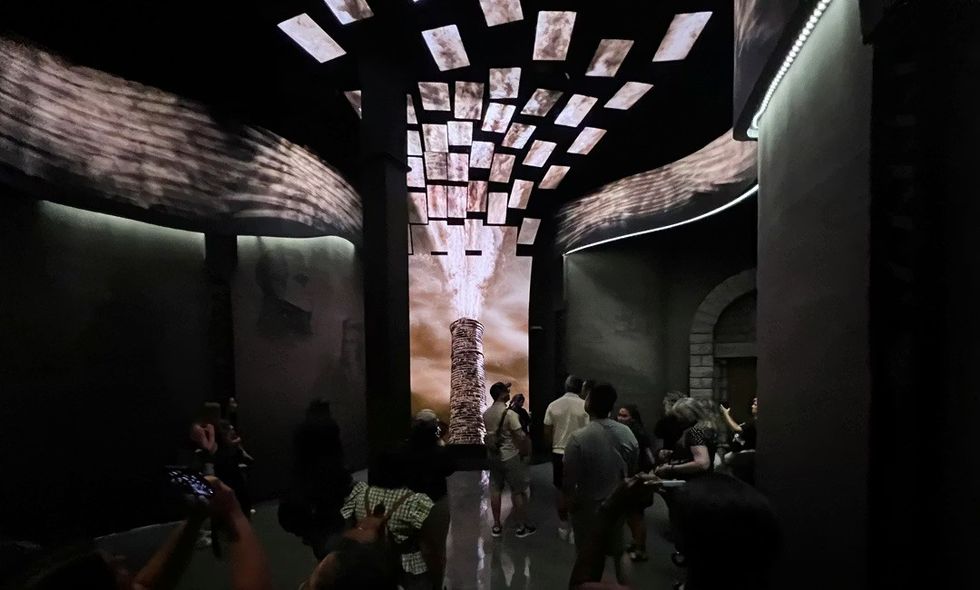
Our team sought to tell these stories in unconventional ways. Guests gather around a symbolic campfire to honour the ancestors, evoking the intimacy of oral traditions. An abstract waterfall feature allows history to wash over visitors, making them part of the ongoing story and connecting them viscerally to the power of water. As guests descend through an immersive elevator, they journey through geological layers, witness the industrial era, and encounter physical historical artifacts, while sequences from the park are subtly echoed—linking the attraction seamlessly to its broader environment.
We thought of the storytelling process like a dam: narrowing focus to build pressure, then expanding into flow. This metaphor came alive as guests moved toward a curved screen where art and story cascade across 13,000 years of history, guiding them to literally walk in the path of water.
Collaboration with Indigenous Voices
A critical part of the process was the formation of an Indigenous Working Group, who guided us in deciding not only what stories to tell, but how they should be told. This collaboration ensured that the experience was respectful, accurate, and rooted in the voices of those whose ancestors have lived with and honoured the Falls for generations.
One highlight of this partnership was the inclusion of Mohawk artist Sara General’s work. Her artistry allowed guests to step inside a Haudenosaunee worldview—an immersive window into Indigenous perspectives that deepened the sense of place and reverence for this sacred site.
Throughout production, we allowed the process itself to inform the physical space. Dances, songs, water flow, and oral stories all taught us how to choreograph the guest journey. The architecture, movement patterns, and soundscape evolved directly from these cultural expressions, creating a space that felt organic rather than imposed.
Designing for Emotion, Not Information
Perhaps most importantly, we resisted the urge to create a traditional museum-style experience filled with text panels and factual explanations. Instead, we leaned into digital representations, sensory design, and metaphor to spark emotional resonance. We discovered that when guests connect emotionally, they begin to imagine the stories for themselves—filling in details with personal meaning rather than being told what to think.
The result is an attraction that doesn’t just inform visitors about Niagara Falls—it lets them feel its presence, its history, and its spirit. By blending digital media as art, Indigenous guidance, symbolic storytelling, and sensory immersion, we created a cultural experience that honours the past while engaging the imagination of every guest.
Sustainability
Niagara Takes Flight is an immersive attraction within Niagara Parks’ 56-kilometre protected landscape, where conservation has guided operations since 1885. Opened in August 2025, the attraction continues this legacy of stewardship and cultural respect by transforming sustainability into the story itself. Every detail—from materials to media—was guided by environmental responsibility, operational efficiency, and community connection, creating an experience as sustainable as it is spectacular.
Sustainability at the Core
Sustainability was embedded at every stage, from concept to completion. The project adopted a triple-bottom-line approach aligned with the UN Sustainable Development Goals, emphasizing environmental responsibility, long-term efficiency, and cultural integration.
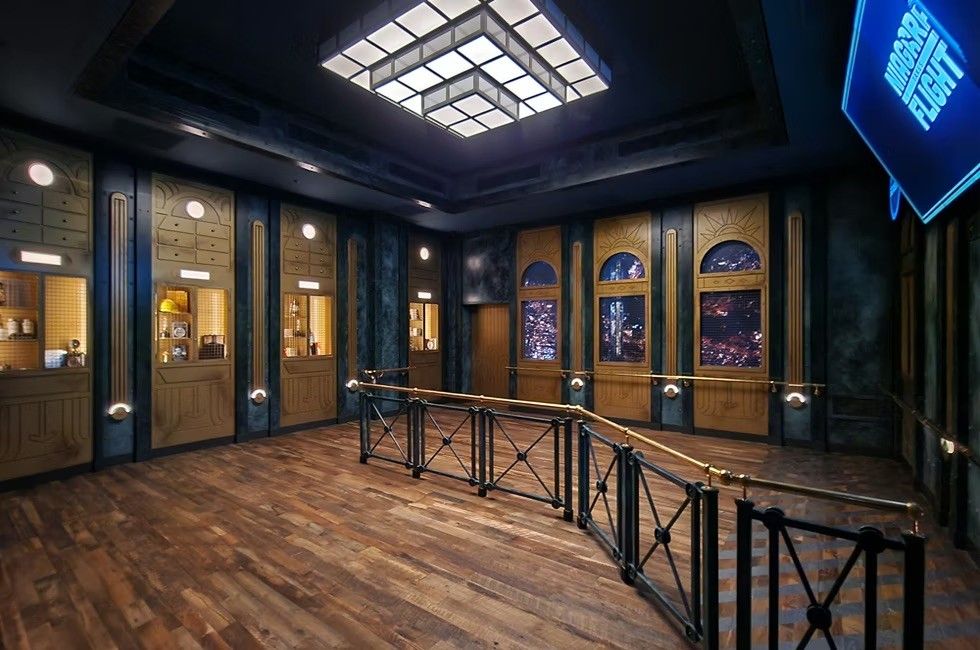
Materials were selected for health, durability, and local impact. Canadian-sourced furniture, reclaimed copper handrails and salvaged beams reduced the footprint while connecting guests to the natural and built environment. Adaptive reuse was central: historic Niagara Power Station artifacts—including lighting pendants were integrated into the pre-show design, linking visitors to the region’s hydroelectric legacy. Scenic and digital innovations, recycled rubber finishes, and precise Revit coordination minimized waste during fabrication and installation.
Energy and media systems were optimized for efficiency and education. LED lighting, smart sensors, and low-consumption AV reduced emissions, while interpretive media highlighted Niagara Falls’ hydroelectric contributions. Drone cinematography replaced helicopter filming, cutting carbon emissions and ecosystem disturbance while capturing breathtaking four-season aerials of the Falls, Whirlpool, and Niagara River corridor.
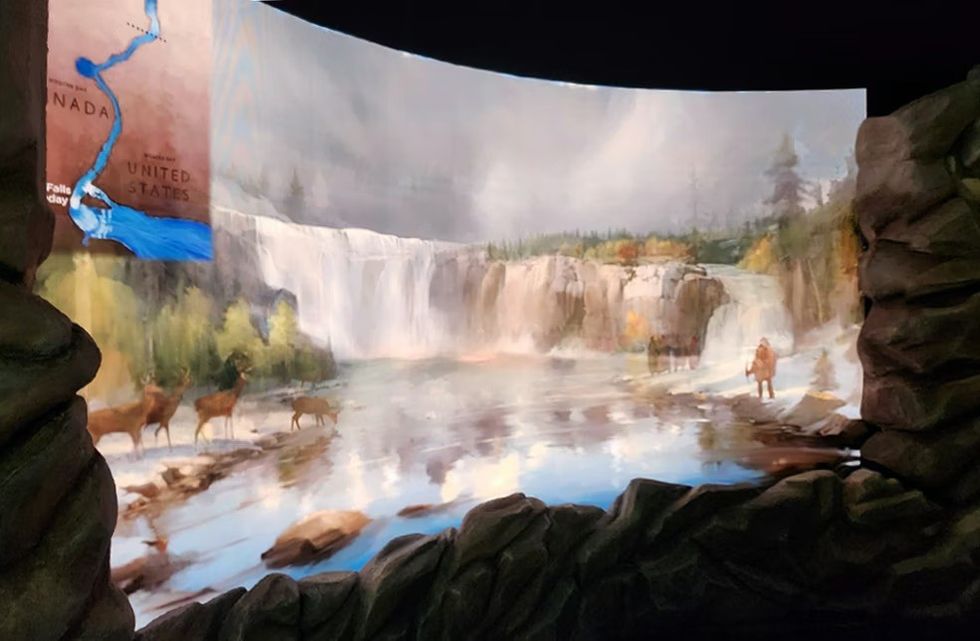
The guest journey unfolds across multiple storytelling spaces:
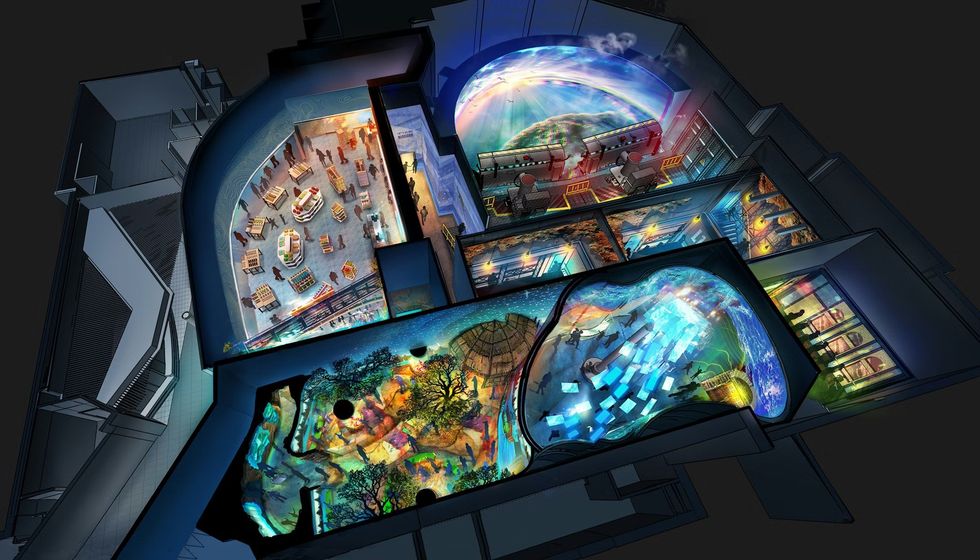
- Eons of Erosion traces 13,000 years of geological transformation.
- The Ancestors Room honors Indigenous creation stories, guided by Elders.
- The Waterfall Room, narrated by filmmaker James Cameron, explores hydroelectric innovation and conservation.
- Transporter Through Time simulates an industrial elevator that takes us below the falls, echoing the sequence often used by other attractions in Niagara Parks
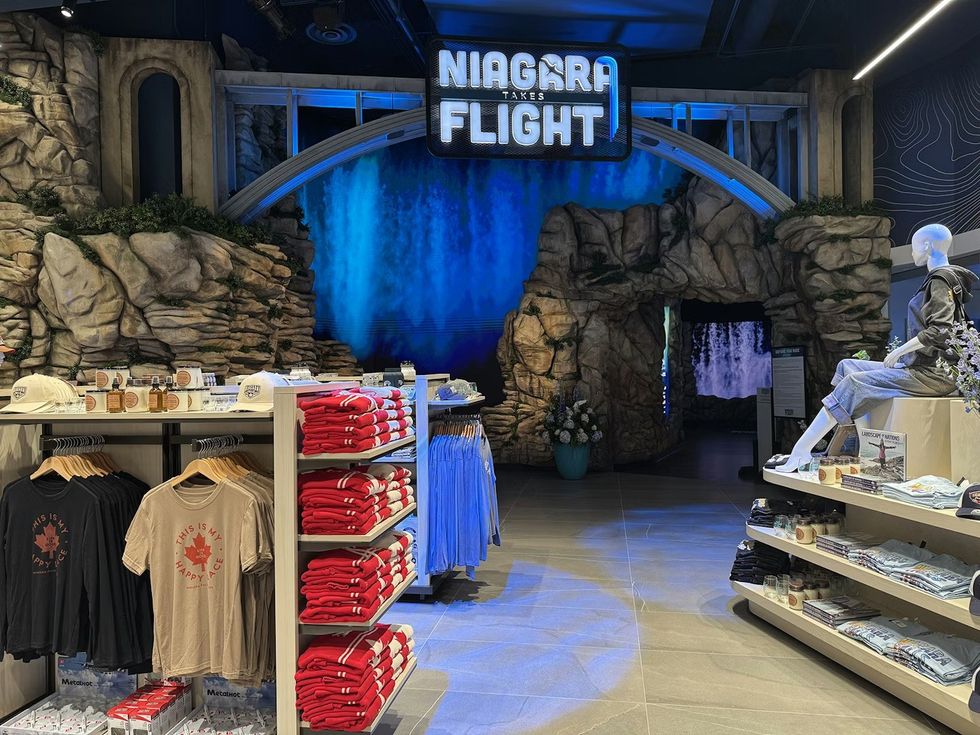
Guests then soar in gondola-style seating before a 17-metre-wide, 180-degree dome. Multi-sensory effects—wind, mist, and scent—heighten immersion. The refined planning of the Gift Shop allows guests to flow through the works of local artisans, highlighting indigenous creators of the areas.
Cultural and Community Integration
Sustainability extended to social and cultural dimensions. The Indigenous Working Group shaped the Ancestors Room, a preshow space where woven textiles, sculptural forms, sound, and digital media carry forward the creation story. Canadian artists, performers, actors, producers, contractors, and craftspeople contributed to production and fabrication, strengthening the regional economy and rooting the attraction in its community.
Public messaging emphasizes respect for the land and harmony with nature, reinforcing Niagara Parks’ long-standing stewardship mission. The attraction functions as both an educational resource and an ecological and cultural learning tool for guests of all ages.
Operational and Design Innovation
Innovation shaped both guest-facing and operational elements. The flying theatre format was chosen for energy efficiency and space optimization. Multi-functional spaces maximize use of space, while sustainable procurement guided vendor selection, including Brogent Technologies’ efficient flying theatre system. Revit coordination reduced construction waste, and digital media extensions provide scalable, low-impact ways to expand engagement beyond the physical site.
Partners
- The Niagara Parks Commission
- Merit Contractors Niagara
- +VG Architects
- Transporter CGI / Main Show: Brogent Technologies
- Media: Front Range Films, Rio Mitchell, Roxanne Audry-Read, Nova Film, Studio TB, WDB, Artlord Studio, Roland Eksteins, Tau Films, Six Degrees, ED Films, Nightlight
- Project Management & Programming: AOA
- Show Set Construction: Great Lakes Scenic Studios
- Lighting: Mulvey & Banani
- AV: Branch Audiovisual
- Music & Sound Design: Yessian
- Market Analysis: All Parks Solutions