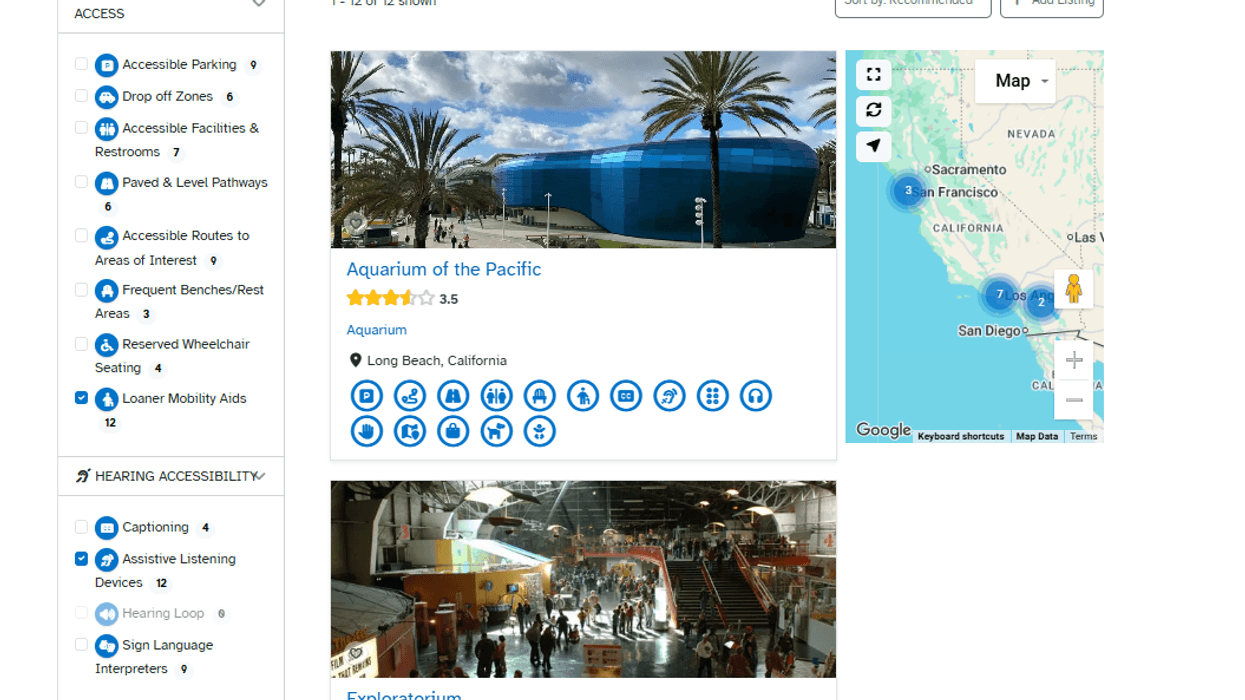
Every visitor experience starts before the entrance, with the choice about whether to go. For a visitor with a disability, the decision can depend on questions the venue’s website never clearly answers. Is the route step-free? Will the show have captions or an audio description? If the noise becomes too much, is there somewhere quiet to go?
Only Everywhere
Only Everywhere
U.S. travelers with disabilities spend an estimated $50 billion a year on travel (Open Doors Organization), and they rarely travel alone. When the answers can't be found in advance, the whole group decides to go elsewhere, or worse, they have a negative experience, and tell others about it.

Only Everywhere logo
Only Everywhere
Only Everywhere
Only Everywhere
A venue can invest in ramps, hearing loops, sensory rooms, or other accessibility features and still lose the visit simply because no one knew they were there. The information that does exist is scattered and inconsistent. Across the California attractions researched by Only Everywhere, just 7% publish information addressing all four major access needs, a finding recently cited by the Los Angeles Times.
Only Everywhere
Only Everywhere
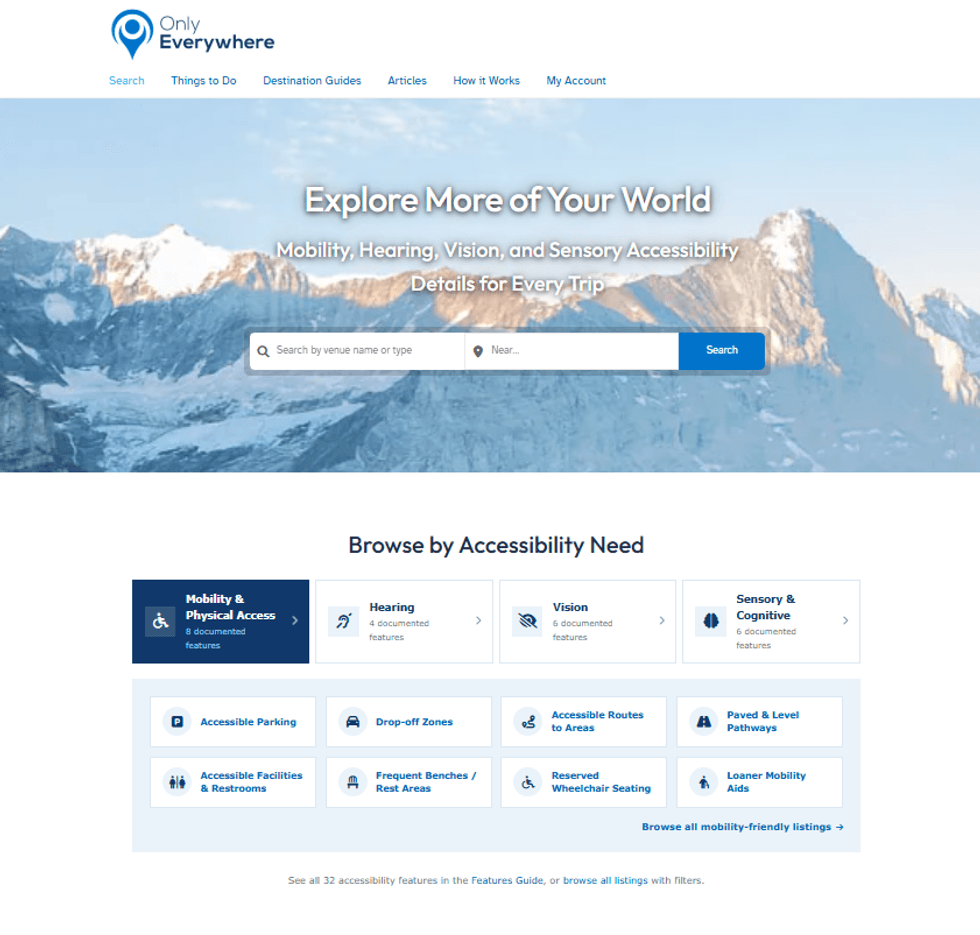
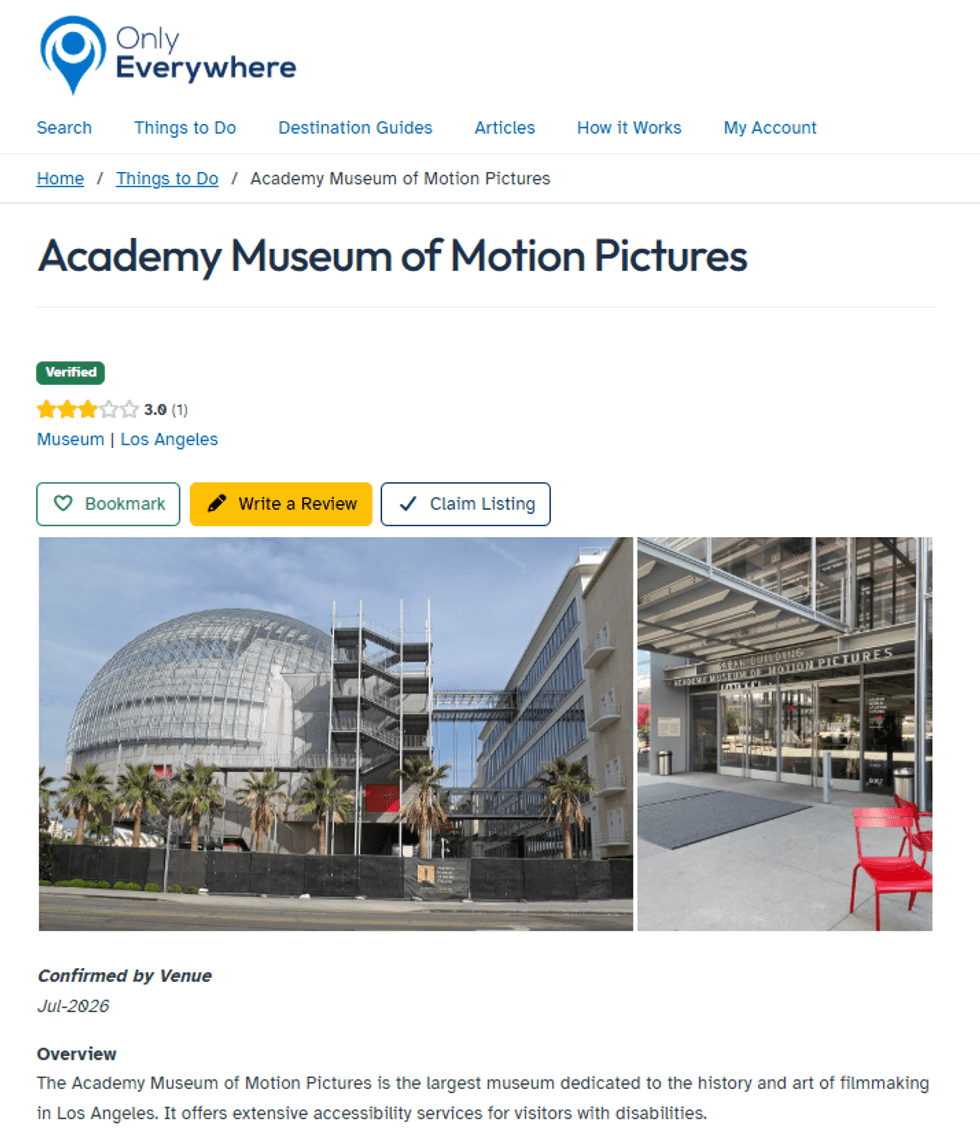
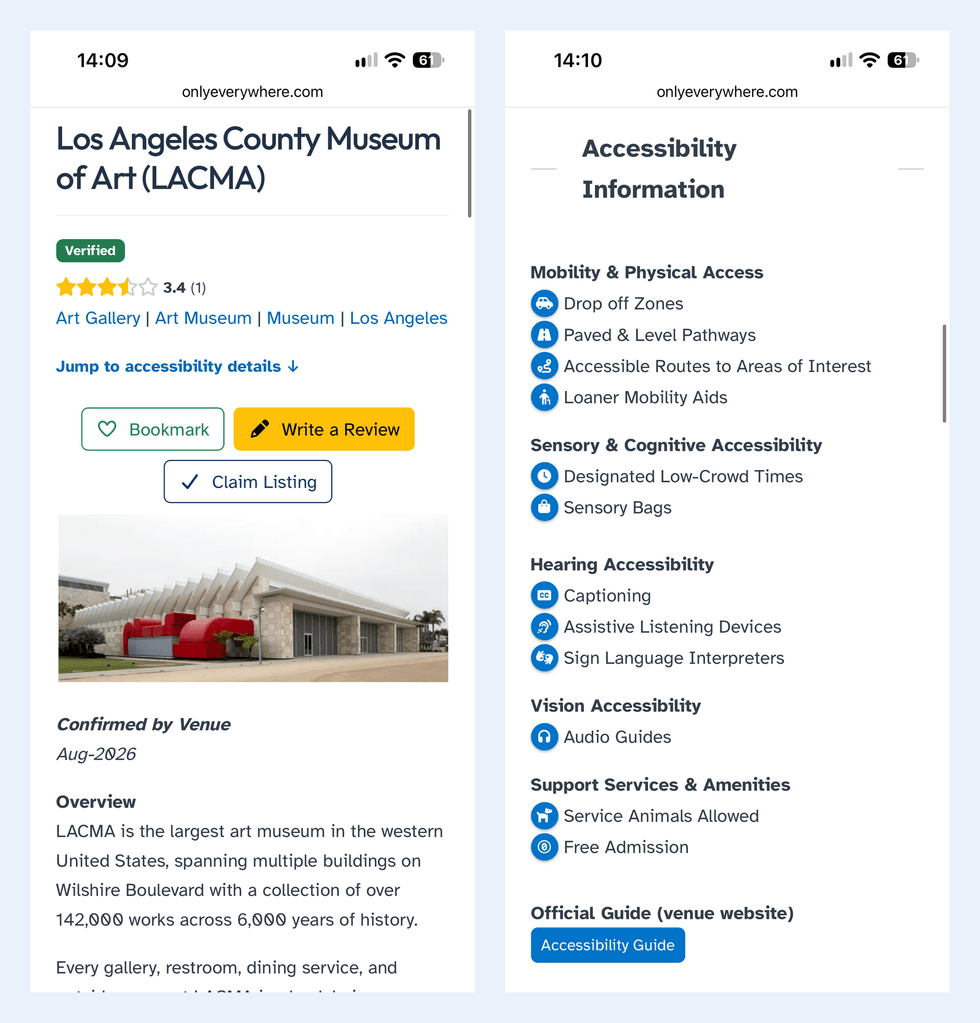
Only Everywhere turns that information into a consistent, searchable, and filterable system. The free directory is live today, covering over 500 California attractions, including museums, theaters, theme parks, gardens, sports venues, and cultural destinations. Listings are built from each attraction’s website and other public sources. When a venue confirms the details directly, the listing is marked as “verified.”
Only Everywhere
Only Everywhere
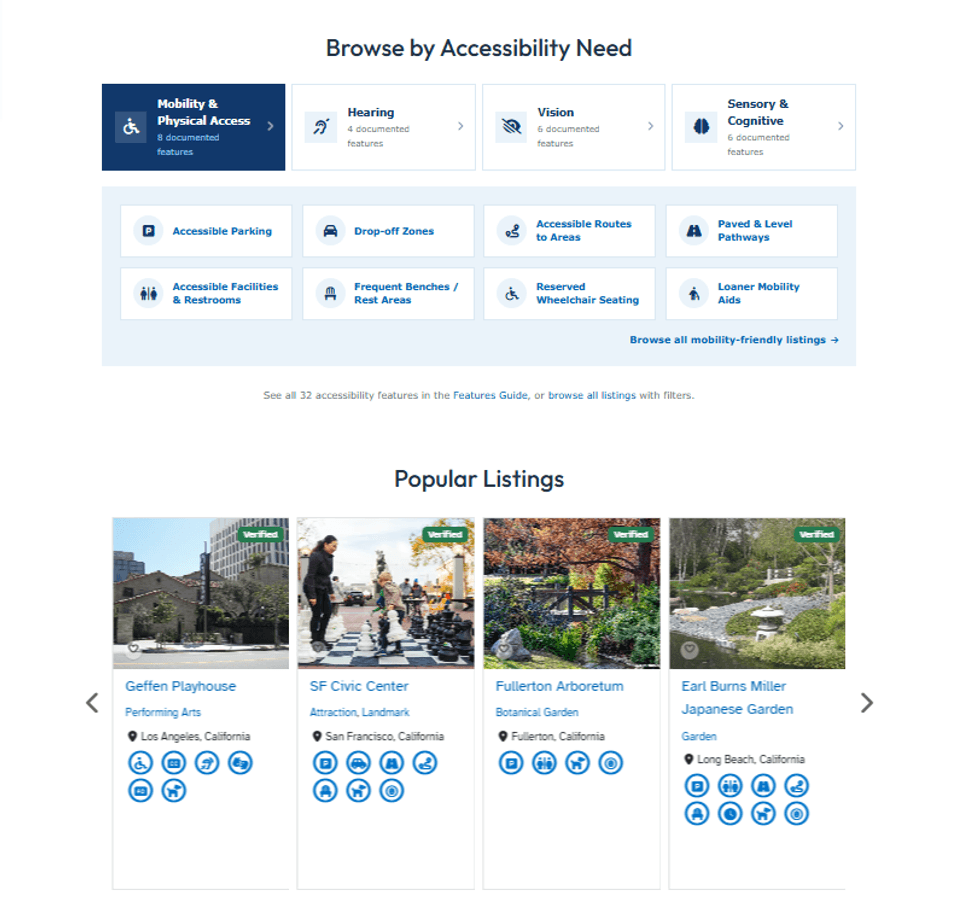
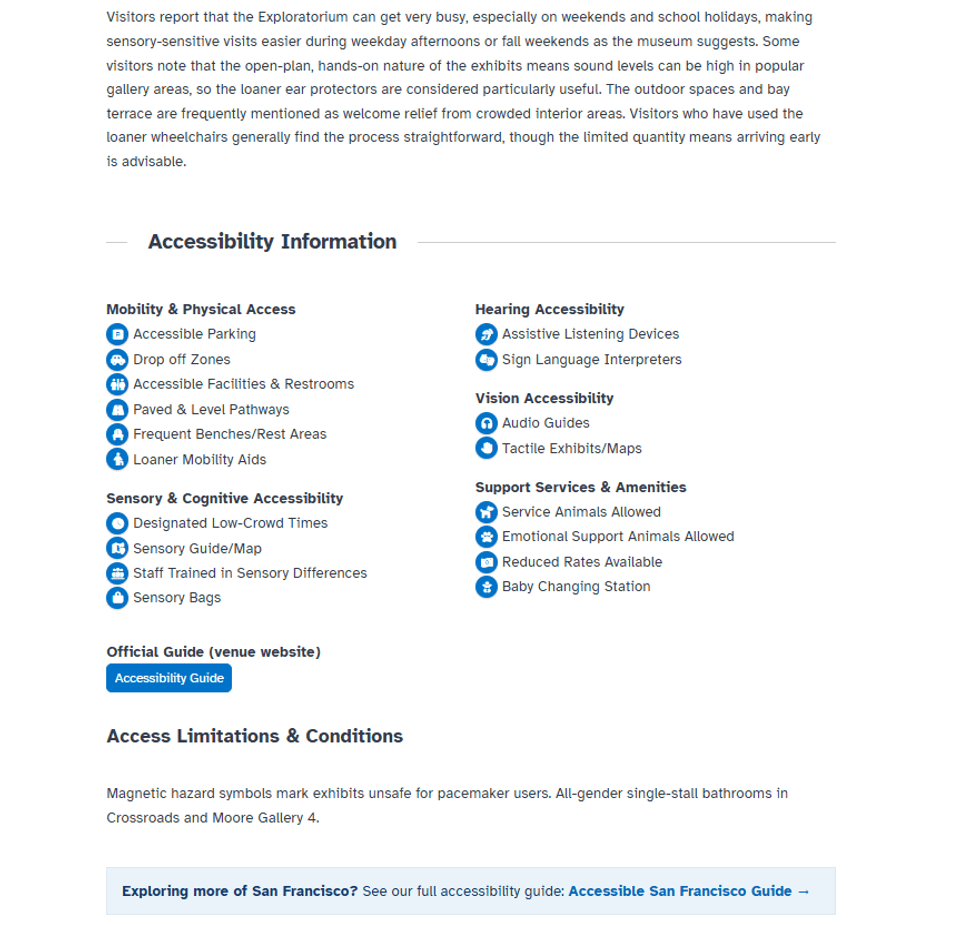
Every attraction is documented against the same 32 accessibility features, organized around UN Tourism's recommendations and ISO 21902, the international standard for accessible tourism. These features include step-free entrances and wheelchair seating for mobility; assistive listening and captioning for hearing; audio description and Braille or tactile resources for vision; and sensory bags, quiet spaces, and sensory-friendly programming for sensory needs, plus other support services and amenities. Visitors filter by the features that matter to them, instead of digging through each venue's website for accessibility pages or FAQs.
Only Everywhere
Only Everywhere
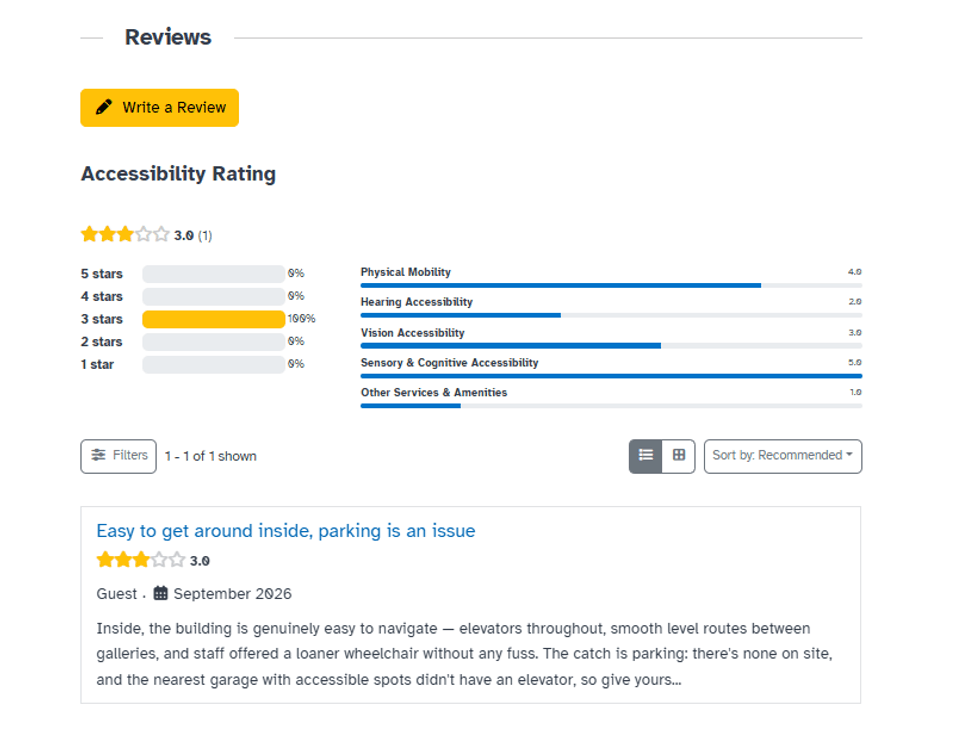
The same principle extends to reviews. Alongside an overall rating, visitors rate mobility, hearing, vision, and sensory access separately, because the same venue can work for one visitor and not another. People with disabilities can review the specific access they use, and others see those ratings instead of a single blended score.
Only Everywhere
Only Everywhere
Only Everywhere is designed for independent planning. Many accessibility services are built around bookings or packaged tours. Only Everywhere is free to browse with no sign-up required, so visitors can decide for themselves, instead of handing over the planning to someone else. No other U.S. directory combines structured data across every disability type with reviews rated by need. That structure also matters for AI, which is increasingly how people begin their planning. AI assistants can only recommend what they can find and understand. Only Everywhere organizes information into consistent fields and descriptive content that search engines and AI systems can read, cite, and recommend.
Only Everywhere
Only Everywhere
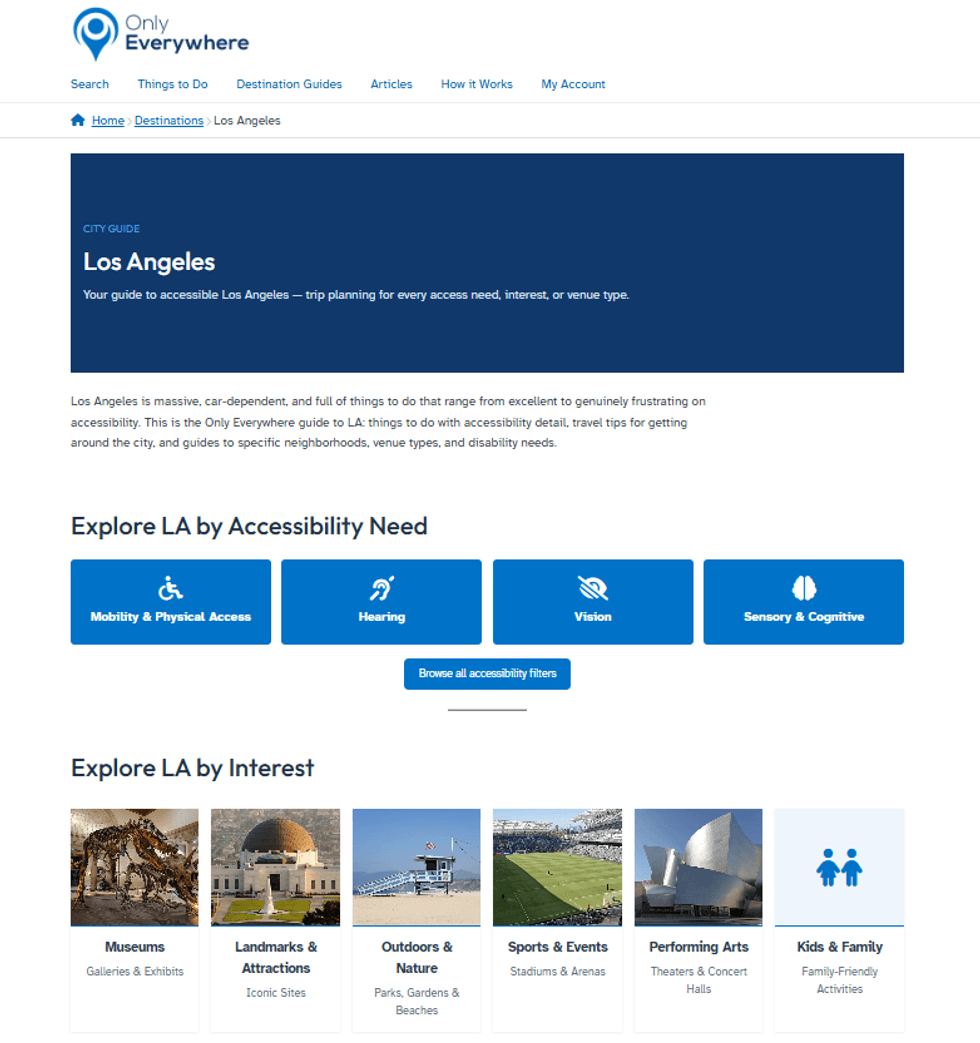
This is how Only Everywhere ensures the widest group of people can enjoy an attraction. It treats mobility, hearing, vision, and sensory needs as equal, documents each one in the same detail, and lets visitors start with their own needs. That serves the hard-of-hearing theatergoer, the blind museum visitor, the parent of an autistic child, and eventually most of us, with age. And, when Los Angeles hosts the 2028 Olympic and Paralympic Games, the attractions that are discoverable to visitors with access needs are the ones they will choose.
Accessibility begins with having accurate information, and Only Everywhere gives visitors the details and confidence they need to make the visit.