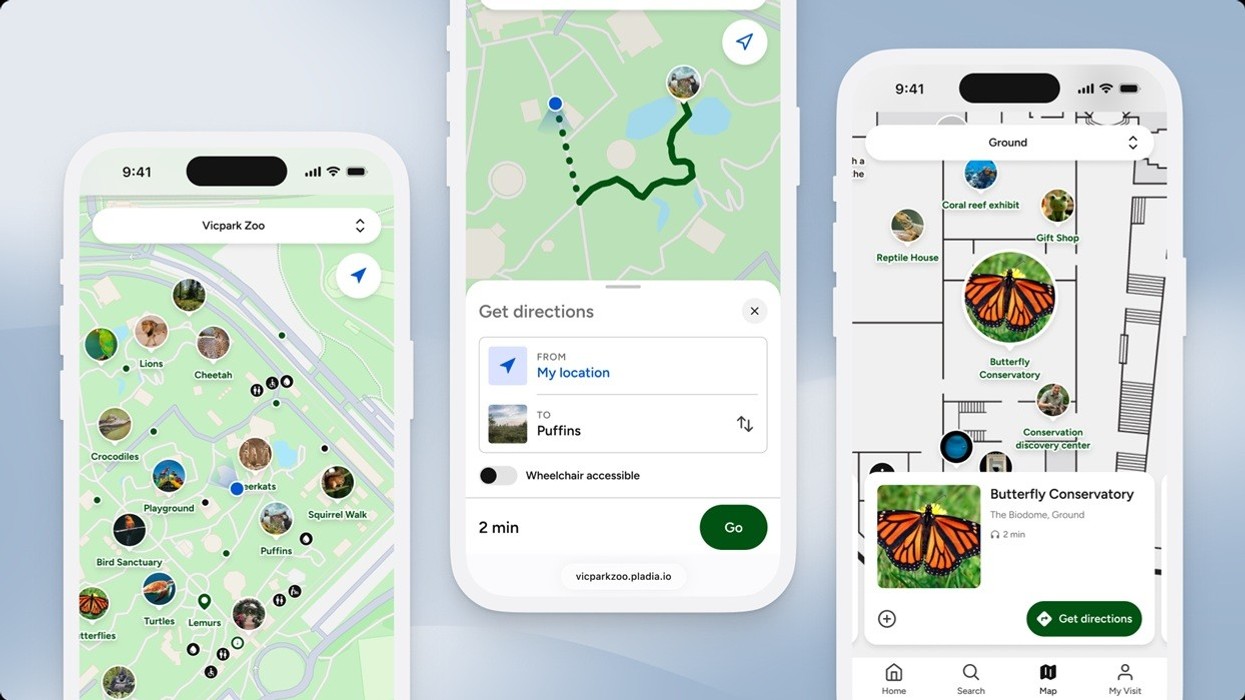
Pladia, a platform that builds, manages and improves visitor experiences by experiential design company Art Processors, has revealed a new approach to wayfinding that unifies indoor and outdoor navigation.
This new capability is delivered through the browser-based digital experience, Pladia Empower, which is specifically designed for cultural institutions, zoos, campuses, and precincts.
Empower can be accessed using a simple link. Guests can then navigate the visitor attraction and explore rich, location-based content, without needing to download an app.
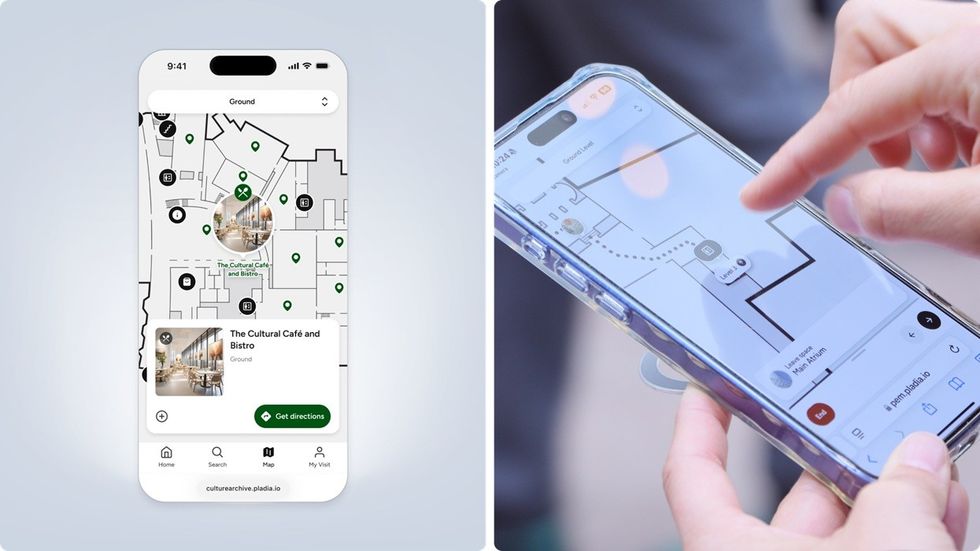
The interactive map represents the entire site, including buildings, spaces, and paths, as well as the content inside them. As guests move across the site, the map surfaces relevant information related to their location, such as exhibitions, artworks, events, or facilities.
Seamless wayfinding
Many wayfinding solutions offer uneven experiences between indoor and outdoor navigation.
While GPS works well outdoors, indoor environments may lack features such as multi-level navigation or meaningful content. Likewise, indoor positioning systems can deliver detailed, structured navigation experiences, yet simplify outdoor navigation.
Pathways, Pladia’s patent-pending navigation model, generates routes based on the site's structure rather than using live indoor positioning systems. Organisations can define how spaces connect, such as rooms, corridors, vertical connections, landmarks, and outdoor paths, using the Pladia Console.
Routes follow the most efficient path through the location, with support for different needs and wheelchair-accessible paths. Directions are given using real parts of the site to guide visitors intuitively through spaces, past key exhibits, and between levels.
In larger, more open outdoor settings, guests can see their live position and orient themselves using the surrounding context. The map displays street-level detail and geographic features such as green spaces and bodies of water.
Rather than approaching indoor and outdoor navigation as separate issues, organisations can manage their entire site within a unified system. Floor plans and outdoor maps sit side by side, connected by the same structure.
This makes it easier to guide visitors across the entire venue. For example, a route could start in a gallery, seamlessly continue through a sculpture garden, and end in another building.
Organisations also have more opportunities to surface content in context. Navigation is no longer simply about getting from A to B; it's also a way to introduce visitors to their surroundings and support decisions in the moment.
With this approach, indoor or outdoor navigation are no longer optimised in isolation. The focus shifts to the visit as a whole.
Recently, Pladia unveiled its new Tours feature for Pladia Empower, developed in close partnership with visitor-experience leaders at cultural institutions. This offers a guest-focused solution that makes storytelling for a venue and its collections easy, inclusive, and future-proof.