
AccessPro is a universal 3-point system designed to minimise restriction miscommunication for guests with accessibility needs within the themed entertainment industry.
It focuses on ensuring clarity and repeating restrictions in an understandable, customisable manner, while also monitoring staff accuracy when delivering attraction restrictions.

This system was created following in-depth human factors research looking into accessibility issues within the themed entertainment industry. Both primary and secondary research were conducted where the biggest issues present, with the greatest potential to produce a high impact solution, was improving how restrictions are communicated to guests with accessibility needs from both informative signs and access passes, to guest and operation interactions.
Comprised of 3 products, AccessPro acts as fail safes for each pain point highlighted within the original research, these being: a lack of understandable restrictions for any cognitive level and guest / operator tacit knowledge of different disabilities and the limitations they can cause.
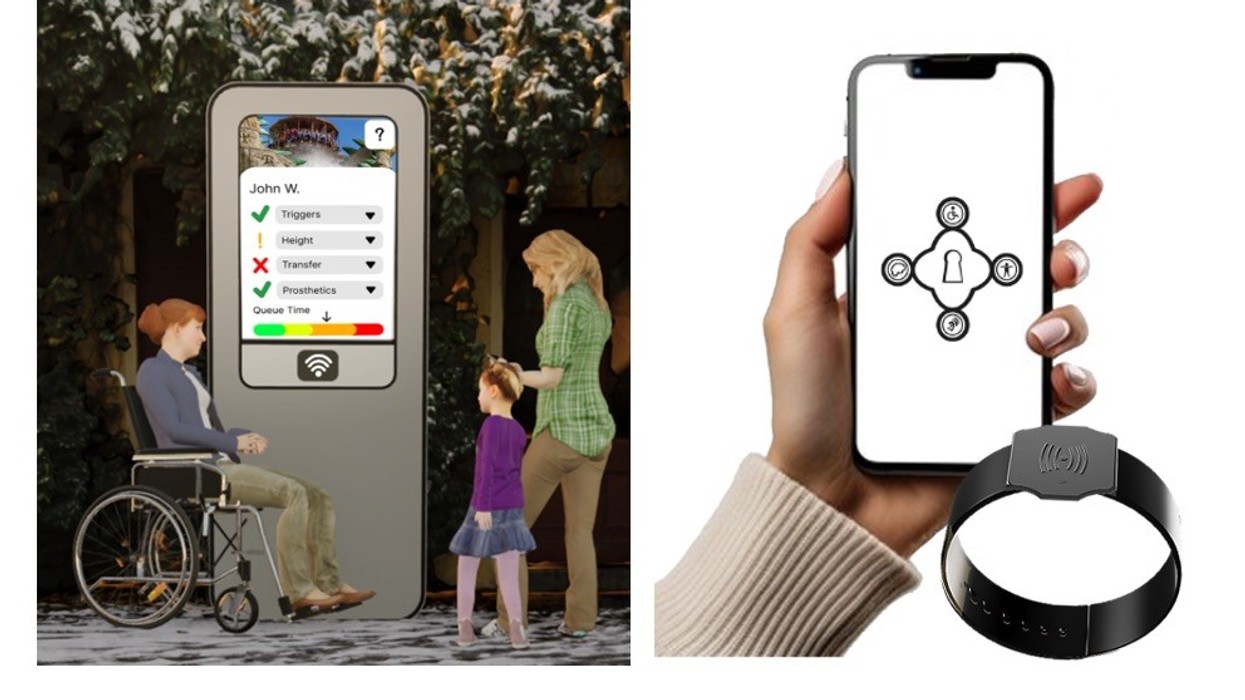
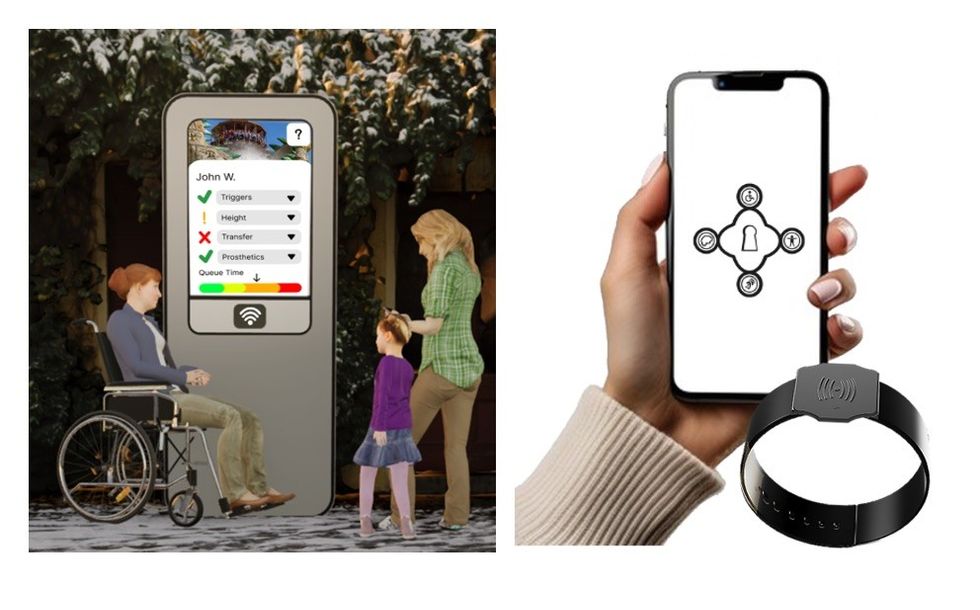
The first part of the system is the AccessPro mobile application, which allows for any assistive pass from around the globe, to be stored in one place with any parks restrictions at the users’ fingertips, allowing for an easy, hassle-free access which is fully encrypted.
The most important part of the application is its "restriction style" settings, the heart of the system.
This setting allows guests to decide how restrictions are displayed, visualised and simulated to them on the app and AccessPro digital boards; this can be in a more text-based format or a visual format because everyone has their own way of understanding information, and that’s ok!
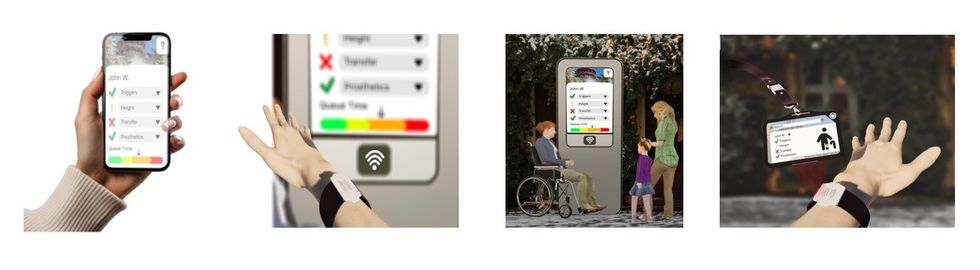
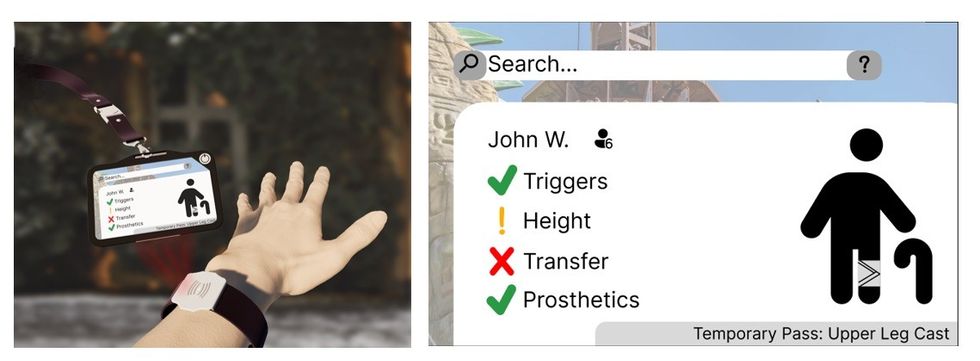
As for the AccessPro screens, these screens are located at the front of attractions or around the theme park, designed to be ergonomic for any users, using privacy glass to protect discrete data. When scanned by either the corresponding access pass on the mobile app, or a RFID wristband for those who prefer a more physical option, the screen shall show the restrictions relevant to the guest only for this attraction in their chosen visualisation style.
For example: a guest with epilepsy or neurodivergent triggers taps their access pass onto the AccessPro screen, here they are shown a simulation which highlights at which exact point in the ride system a trigger may be, for them to decipher from themselves if they can ride prior to entering the queue.
Another example of this is guests with missing limbs, once tapped it will be explained to them exactly why they may have limited access, and if access is possible, it will be explained on here before entering the queue the procedure followed to allow them to ride. When the AccessPro screens are not in use these can show advertisement or less specific ride restrictions, queue times of any other relevant data.

The final step to improving accuracy and the theme park experience for guests with accessibility needs is validation, to ensure accuracy and avoid accidental discrimination. Therefore, when guests reach the operator at the attraction their access pass will be scanned by the operator using a wearable analytic device.
Once scanned, this will show and break down the guests’ restrictions to the operator and suggest communication examples for explaining access concerns. Most importantly, this device requires operators to select if access has been granted or not.
If for whatever reason access has been denied but there was no restriction boundaries on the guests access pass, a flag will be sent to operations management for them to monitor competency of their operators.