
New analysis has revealed how much money Disney could save from its latest round of job cuts, which will reportedly see up to 200 staff slashed from its Experiences division.
The result is eye-opening but not in the way you might expect.
There has already been a long list of layoffs at Disney this year, beginning in April when around 1,000 positions were cut across everything from studios and television to technology and marketing.
Three months later, a further several hundred roles were slashed, mostly at Pixar and National Geographic, followed by a couple hundred in tech and HR in September.
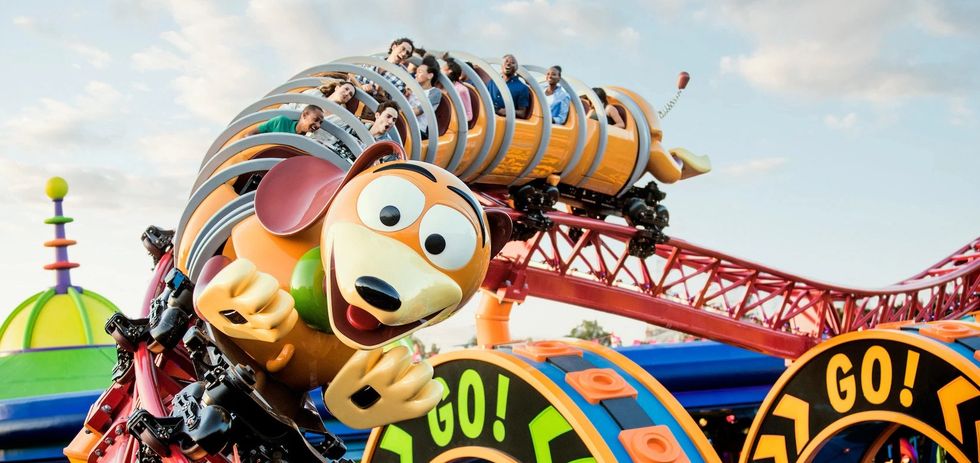 Disney's Hollywood Studios opened in 1989 at Walt Disney World in Florida Image courtesy of Disney
No sooner had the latest layoffs been announced than their potential impact on Disney's portfolio of 12 theme parks came into the spotlight. That's because the parks are the crown jewels of the Experiences division along with Disney's cruise ships, its in-park merchandise operation and a few remaining high street stores.
The global licensing and publishing arm of Disney Consumer Products escaped the cuts as it was moved from Experiences to the studio division at the start of this month.
Disney's ambitious development pipeline
The layoffs were revealed in an article by the Los Angeles Times, which said they had been confirmed by a person familiar with the matter who was not authorised to comment publicly.
Deadline added that it had been told the cuts are "mostly project-based, as the division constantly must reprioritize and schedule based on the workflows of multiple projects across its mandate."
This sounded ominous given how many projects are in the Experiences division's pipeline.
Disney lifted the curtain on its current development drive in 2023 when it announced that it was nearly doubling its capital expenditure on Experiences to approximately $60bn over the next decade.
It soon announced major new attractions at all of its resorts along with the construction of multiple new cruise ships. Indeed, Disney gave the green light to so many new developments that in March last year its then-chief executive Bob Iger said: "We have more projects underway around the world than at any time in our history."
 Concept art for Disney's Abu Dhabi theme park on Yas Island Image courtesy of Disney
Disney didn't stop there as just two months later it announced plans to develop a new theme park in Abu Dhabi. Although local leisure operator Miral is due to build and operate the complex, it will be designed by Disney's Imagineers, who are named after their imaginative use of engineering.
Miral is covering the cost of the Imagineers working on the project, but they are employed by Disney and, in Iger's own words, they already had more work on their hands than ever before.
Theme parks are labour-intensive businesses and, as testimony to this, the Experiences division has a total of 185,000 employees. Cutting the workforce by 200 would be a reduction of just 0.1%, so, at first glance, it seems hard to understand how this could affect the future of the parks.
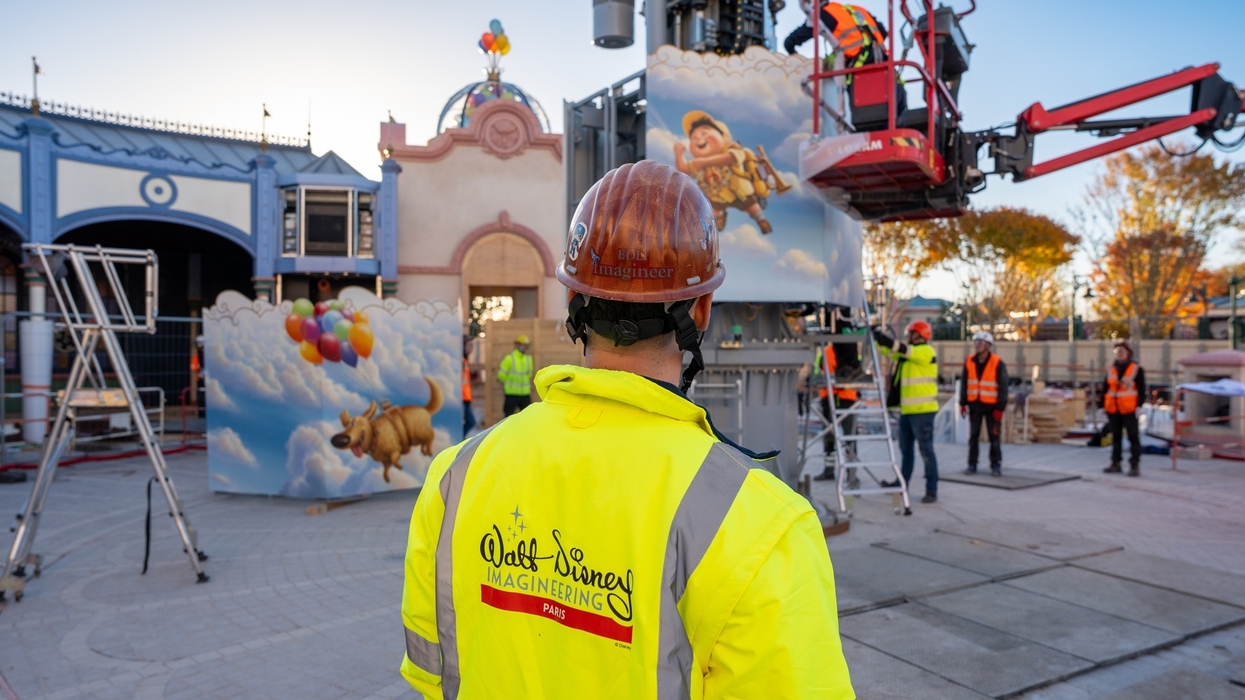
However, of course, it depends on who is being let go. The Imagineers have more impact than others on upcoming attractions, and 159 of them are being laid off, according to a notice filed by Disney in the wake of the two articles.
Disney's Experiences division drives profits
Disney did not comment in the articles, but soon after they were published, Imagineers started posting on LinkedIn confirming the news.
"After eleven years at Walt Disney Imagineering, the last two on staff as Story Lead, I have been bitten by the layoff bug as of the end of the year," wrote Michael Crawford. "After an incredible chapter with Walt Disney Imagineering, my time with the company has come to an unexpected close as part of a layoff," added graphic designer Xavier Treto.
It fuelled online speculation about the future of projects in Disney's pipeline, compounded by the recent revelation that attendance at Disney's North American parks remained flat last year, according to data from the Themed Entertainment Association (TEA).
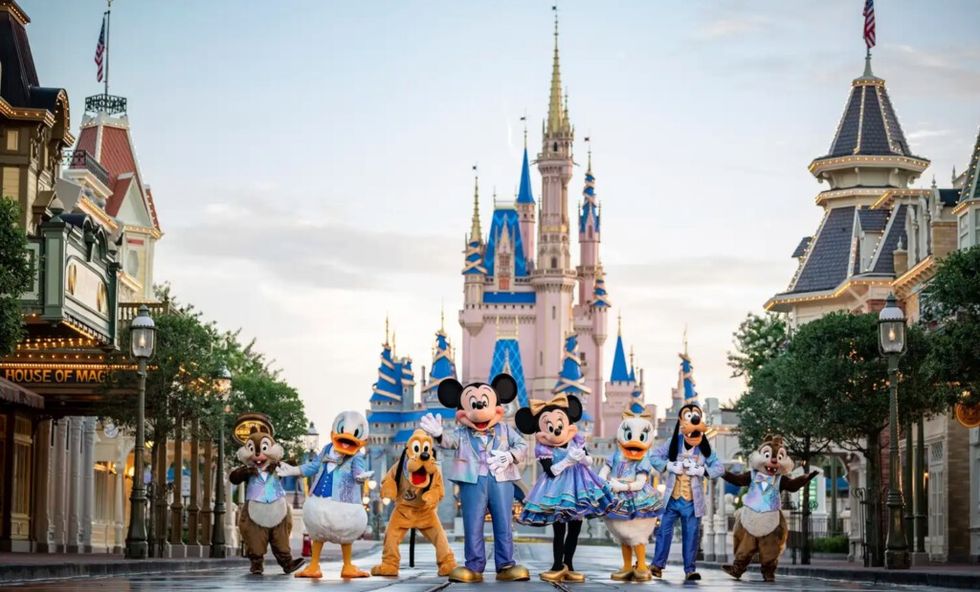 Attendance at Disney's North American parks such as Magic Kingdom in Florida, remained flat in 2025 Image courtesy of Disney
However, that didn't stop the Experiences division from giving a magic touch to Disney's bottom line.
Experiences are the engine behind Disney's blockbuster profits, and in the year to 27 September 2025 they generated just over a third of the company's $94.4 billion revenue and a staggering 57% of its $17.6 billion operating income.
In August, Disney forecast a "high single-digit" percentage increase in the Experiences division's 2026 operating income, which raises the question of why it needs to make further cost cuts.
Getting a sense of how much money the layoffs will save requires knowing the Imagineers' total wage bill and the number of them on Disney's books. However, the costs and headcount of Disney's design division are part of its overall expenses and aren't itemised separately in its filings with the New York Stock Exchange.
This has kept the Imagineers' average salary a closely-guarded secret. Until now.
Disneyland Paris provides a rare insight
Disneyland Paris is an exception to this rule, and there is good reason for this. It dates back to the opening of Disneyland in California in 1955, which soon became such a success that motels and restaurants began springing up next to the park, breaking the immersive atmosphere.
To prevent a repeat of this in France, Disney requested a vast plot of land which would enable it to maintain standards throughout the entire resort, from the parks to the surrounding hotels and even the roads and nature reserves.
It came with a catch.
Disneyland Paris comprises seven on-site hotels, two convention centres, a 27-hole golf course and two theme parks - the recently-renamed Disney Adventure World and the neighbouring Disneyland Park, which was the first to swing open its ornate iron gates in 1992.
 The new Disney Adventure World at Disneyland Paris features a Frozen-themed area bringing Arendelle, Elsa, Anna and Nordic-inspired scenery to life Image courtesy of Disney
The entire complex is around a fifth the size of Paris, but Disney hasn't got free rein over all of the land. The sprawling site was originally home to five villages and huge beet fields which were earmarked for development until the 1973 oil crisis put them on ice.
Mindful of the fact that it was selling so much land near to its capital to a foreign corporation, the French government only agreed to hand it over to Disney on condition that it entered into a public-private partnership.
In order to ensure that the land was developed in accordance with the government's vision, Disney committed to partnering with the public urban management authority, EPAFrance.
The French government only sells the land to Disney in stages once previous plots have been developed and approved by EPAFrance, which enables the government to guarantee that they will benefit the local area. In order to retain its rights to the land, Disney has to develop it by specific deadlines, which also ensures that the resort is regularly upgraded.
EPAFrance represents the public while Disney is the private party in the partnership. Reflecting this structure, when the resort opened, its parent company Euro Disney was listed on the Euronext stock exchange with only 49% of the shares in Disney's hands and the remainder owned by the public.
This gave it considerable disclosure obligations, and the same applies to the suite of other entities that Disney set up to support it. These obligations include filing publicly available accounts which lift the lid on precisely how much has been spent on staff and how many people are employed.
Inside the operations of Disneyland Paris
Until 2023, two companies were involved with the design of Disneyland Paris.
S.E.T.E.M.O. Imagineering provided studies and supervised the construction of the theme park attractions, while Euro Disneyland Imagineering (EDLI) was responsible for the management and administration of the overall design of the parks as well as their construction.
The structure was simplified in 2023 when EDLI was deregistered, and S.E.T.E.M.O. changed its name to EDLI to become the master design company of Disneyland Paris.
The division is run by David Wilson, who initially joined Disney in 1991 after serving six years in the US Navy as a nuclear engineering officer.
 A cast member in front of the castle at Disneyland ParisImage courtesy of Disney
There are 393 people in his team according to EDLI's accounts for the year ending 30 September 2025, when development was in full swing on the biggest-ever expansion to the resort. It is a stark illustration of the hole it could leave if 200 Imagineers were laid off, but that's not all.
The accounts reveal that the staff costs came to a total of £36.9m (€42.3m), putting the annual average per person at £93,893.
This would give a total saving of £14.9m ($20m) from the 159 layoffs, and although this may seem a lot to you or me, it only represents around 0.09% of the Experiences division's $23.3 billion annual costs, which seems too small to be material.
Calculating the cost of Disney's job cuts
Of course, this calculation is based on the pay of Imagineers in Paris, whereas Disney's notice says the layoffs will be at its Glendale, California campus.
However, the team in Paris essentially works for the same division of Disney as their counterparts in California, so you would expect there to be a degree of wage parity.
Cost of living and cultural standards are of course different in France and the United States, though it is important to note that the employees at Disneyland Paris are amongst the most well-remunerated of any Disney resort, thanks partly to the tough labour laws in the country.
In fact, as blooloop has reported, the staff in Paris are the only Disney employees worldwide who share in the profits of the theme parks they work for.
So, if anything, you might expect the average pay to be lower in California than in Paris, and the lower it is, the less material the savings from the layoffs would be.
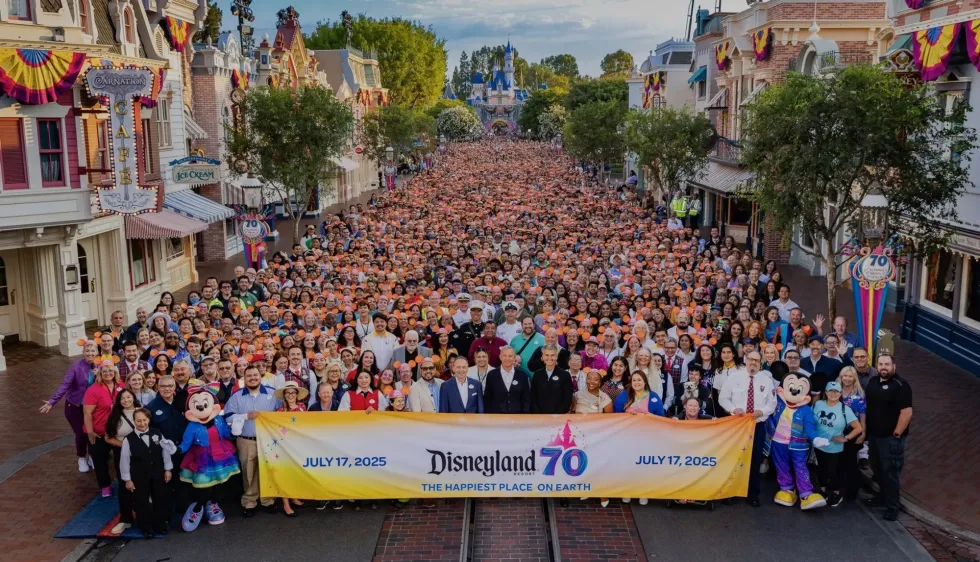 Disneyland cast members gathered for the resort's 70th anniversary in 2025Image courtesy of Disney
Even if the opposite were true and the average cost of every employee in California is actually double that of Paris, it would only come to 0.18% of the Experiences division's costs, which is still minuscule.
In summary, although the layoffs concern a relatively large number of people, it appears they generate an extremely small saving. Accordingly, it seems hard to understand the benefit of the cuts, especially at a time when Disney presumably needs all hands on deck because it has more projects in the pipeline than ever before.
Under these circumstances, redeployment would surely seem to make more sense than redundancy.
Of course, the cuts would make perfect sense if they relate to a project which Disney has not firmly committed to and is no longer in a position to proceed with, but none of the announced attractions seems to fit the bill.
The alternative is that the Imagineers who have been laid off may have been working on unannounced projects which are no longer going ahead, and if so, we may never get confirmation of what they were.
Time will tell.