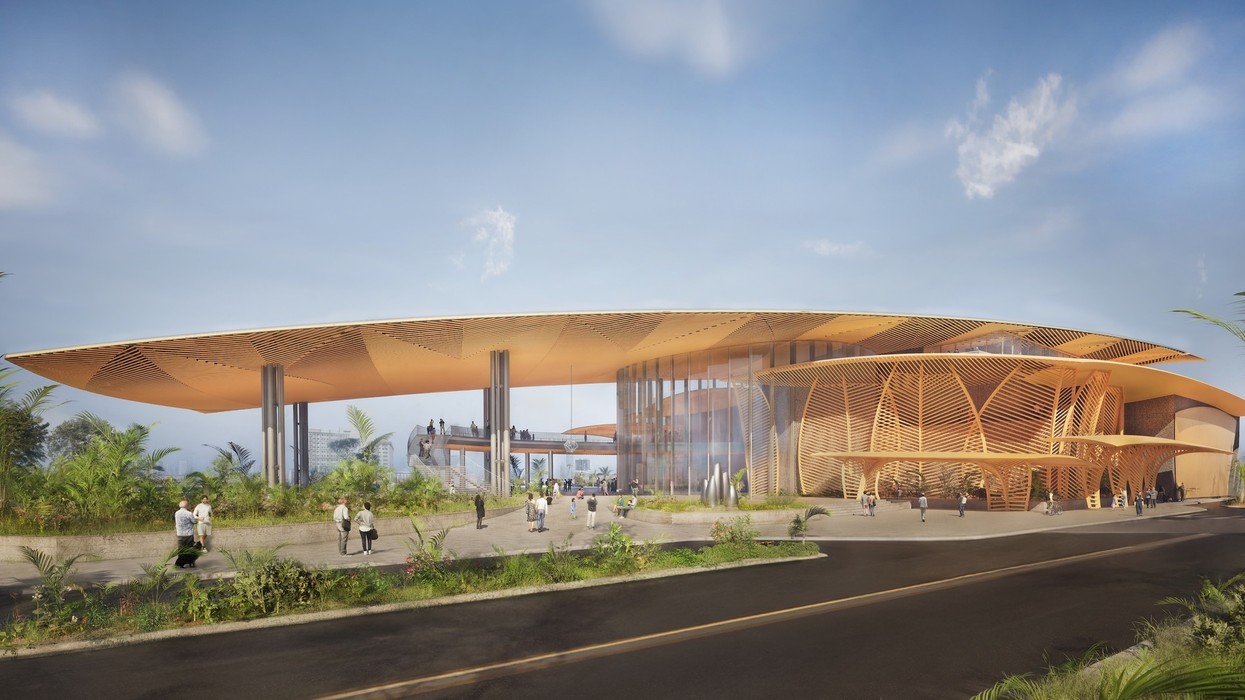

The Ayala Foundation has revealed the architectural vision and early design details for the new Kontempo – Center for Contemporary Art in the Philippines.
Located along the Pasig River and within Circuit Makati, a retail, entertainment, and residential estate, Kontempo will be a non-collecting, programme-driven centre for contemporary art and public engagement.
Covering around 100,000 square feet, the new museum will comprise three main gallery spaces alongside a variety of public and programme areas.
The building design allows nature to move through and around it, offering a series of open-air spaces and shaded plazas that connect it to the river and city.
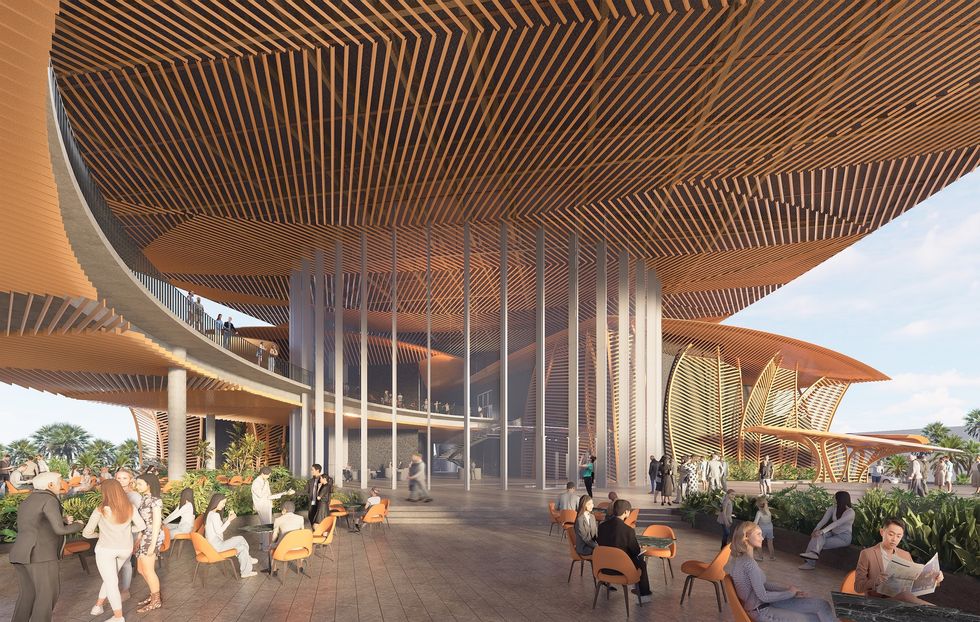
Kontempo’s lead design architect is WHY Architecture's Kulapat Yantrasast, in collaboration with Manila-based Lor Calma & Partners.
"The design of Kontempo is an act of devotion to the vitality of Circuit Makati, the spirit of Manila, and the quiet poetry of the Pasig River," said Yantrasast.
"It is a place where nature and art meet, and where international culture converges with local creativity to produce something new."
Kontempo's sustainable design
He added: "Flexible galleries support a range of contemporary practice, with classrooms alongside them to connect creation and learning.
"Kontempo is conceived as a model for the 21st-century art institution, rooted in the Philippines and open to the world."
Planned for completion in late 2028, Kontempo is designed with sustainability embedded at every stage.
Ed Calma, principal architect and founder of Lor Calma & Partners, said the project team has "sought to translate our museum expertise into a building that responds to Philippine climate, construction practice, and material conditions".
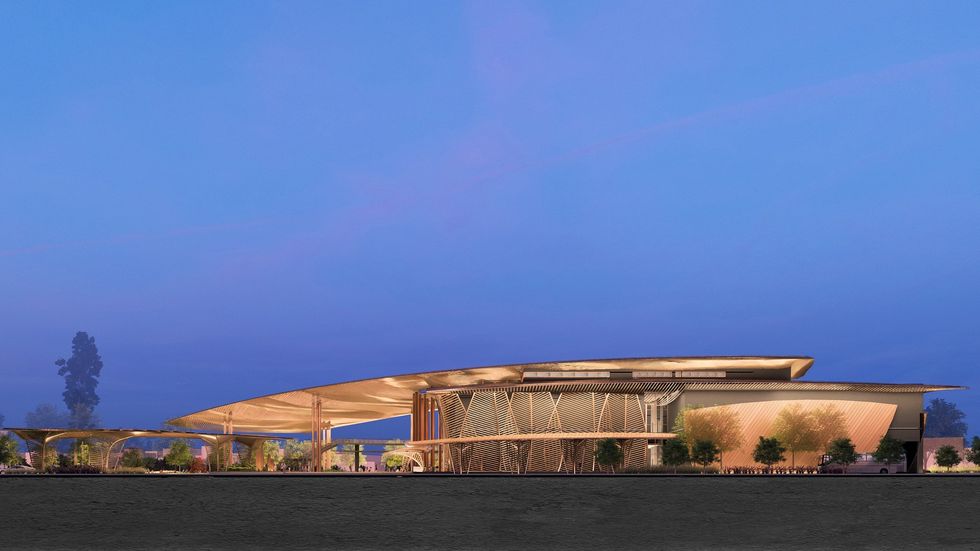
"The project will achieve LEED, EDGE and WELL certifications, ensuring high standards of sustainability, environmental performance, and occupant wellbeing," Calma said.
Fernando Zobel de Ayala, chairman of the Ayala Foundation, added: "Kontempo is designed to be a public institution for the long term – one that supports artists, audiences, and communities across generations. The building and architecture play a key role in this vision.
"From the beginning, we wanted a space that would be welcoming, accessible, and connected to its surroundings, while also engaging with the international art community."
Images courtesy of the Ayala Foundation, WHY Architecture and Lor Calma & Partners