
Luci, an award-winning experience design studio for museums and brands, conducted research for a new exhibit at a local rec centre by trying sports activities such as batting cages, soccer kicks, and basketball free throws.
But instead of excitement, the team found something more revealing: fear, embarrassment, and self-doubt: "Some of our team flat-out refused to participate," says the company. "Who wants to find out—publicly—that they’re “no good” at something? Who wants to fail in front of their peers, classmates, or kids?"
Yet that project, which would become Game On! Science, Sports & Play at the California Science Center (CSC), found its emotional core that day:
"Our team’s hesitation gave us a powerful insight: shame—or the anticipation of it— is a massive barrier to engagement. So we asked ourselves: “How can we remove the competition from games that are inherently competitive?”

"Homerun good. Strikeout bad. We’re conditioned to see success and failure in binary terms. But what if we celebrated the effort, not just the outcome?
"What if taking a swing, any swing, was the win? And what if we could design an experience equally meaningful for seasoned athletes and total beginners?"
Leading with empathy
That shift in perspective shaped the essence of Game On!, and the exhibit is a microcosm of how the Luci team works, aiming to build interactive experiences rooted in emotional intelligence, accessibility, and joy.
"Joy is essential. Learning and delight are neurologically linked: we remember more when we’re happy. Accessibility is a given: you won’t use it if you can’t use it. But emotional intelligence...what exactly is that anyway?"
Emotional intelligence is the ability to recognise and respond to the vast array of emotions that swirl within ourselves and in others. That last part is key: it's empathy.
"The ability to empathise with our visitors, to put ourselves fully in their shoes and understand how they might feel, lies at the heart of how we at Luci create joyful and accessible experiences that are also impactful and memorable," adds the firm.
Too often, museum interactives miss this emotional layer of the visitor experience, focusing solely on what the designers hope visitors will think and do. Binary outcomes, complex interfaces, and zero-sum framing can undermine even the best educational intentions.
These mechanisms reward prior knowledge and natural skill, while unintentionally discouraging participation from anyone who feels like an outsider.
"This is where emotional intelligence can transform design. When we lead with empathy, we create experiences that feel safe, inviting, and human," says Luci.
For Game On! Science, Sports & Play, the team's emotionally intelligent playbook included strategies such as focusing on journeys rather than destinations, thinking beyond simply winning or losing. They aimed to create experiences that favoured gentle resets over definitive 'Game Over' screens, designing loops, alternative paths, and opportunities to try again.
By gradually increasing challenges, visitors could build confidence through repetition and momentum. The ideal moment is when someone feels capable, curious, and not overwhelmed. They also supported multiple ways into their experiences, recognising that some visitors prefer solo exploration while others enjoy collaborative play.
Some are ready to dive in immediately; others prefer to observe or engage with low-stakes options. Designing for a full spectrum of comfort levels ensures that more people feel the experience was made for them.
Furthermore, they understood that language matters. Words like 'Test your skill!' can induce anxiety or feelings of exclusion. Instead, the team used inviting and encouraging phrases such as 'Give it a try', 'See what happens', and 'Explore at your own pace'.
These shifts transformed performance into play and reduced fear, making the experience enjoyable for all.
Putting emotional intelligence at the heart of design
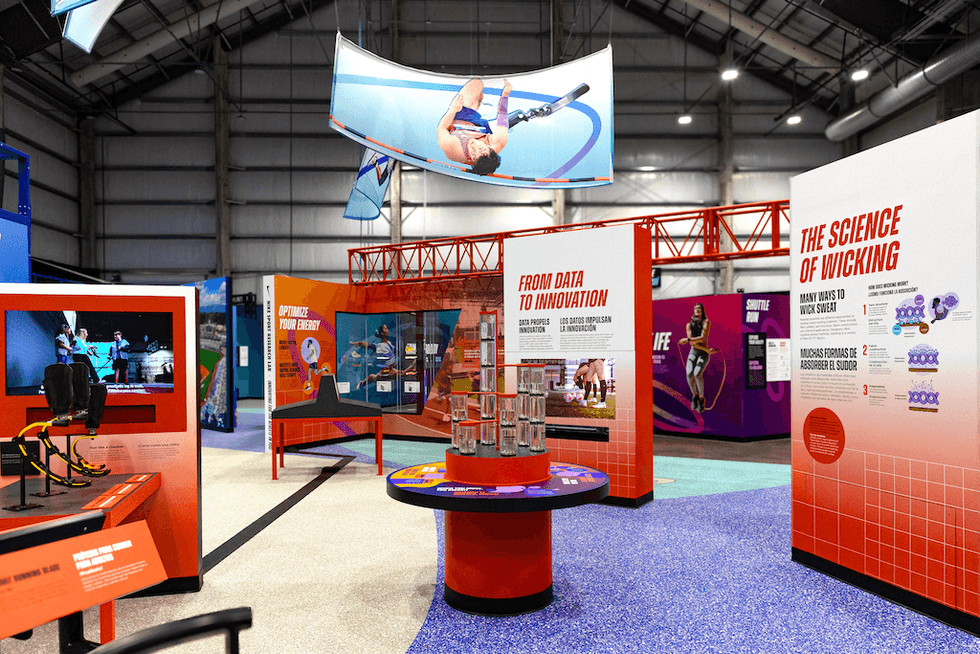
Working closely with the team at Cortina Productions, Luci applied these strategies to Game On!
"The result is a suite of layered interactives that respond dynamically to a visitor’s distinct capabilities," says Luci.
"The added bonus? It all but guarantees repeat visits. Never held a bat before? We can teach you. Slugger? We can still get more power out of you. Like a digital personal trainer adjusting in real time, the feedback shifts based on how you’re performing today."
Plus, it's always free. "That’s a game changer," adds the firm.

"We’ve all seen the eye-rolls around 'participation trophies', but the deeper story is backed by science: rewarding effort builds resilience. When visitors feel safe to try, fail, and try again, they’re more likely to become persistent, confident learners.
"And when we put emotional intelligence at the heart of interactive design, we create more equitable, inclusive, and joyful experiences, where everyone feels brave enough to learn.
"So let’s design for that. Let’s design for courage. Let’s create spaces where visitors can’t help but say ‘yes’. "
Last year, amidst a rebrand, Luci reaffirmed its commitment to helping museums and brands convert limited attention into lasting impact in an era where time is scarce and attention is fragmented.
The studio’s approach focuses on creating imprint experiences: designing outcomes that shape visitors' perceptions of the world and their place within it.