The sinking of the Titanic is among the most famous stories of the modern age, but exhibitions about it tend to share the same vision : the grandeur and luxury of the ship, the class divide from another age, the personal passenger stories, the facts and figures about the iceberg.
The moment of the sinking, the two hours and forty minutes between the collision and the final plunge, is often conveyed through graphics, audiovisuals or timelines, as it is considered too difficult to stage.

Exhibition Hub Logo
Exhibition Hub
Titanic: An Immersive Voyage Exhibition Hub
Exhibition Hub
Titanic: An Immersive Voyage, designed by scenographer and art director Marcos Viñals Bassols and produced by Exhibition Hub and Fever, answers this challenge by making the sinking itself the central element.
Titanic: An Immersive Voyage Exhibition Hub
Exhibition Hub
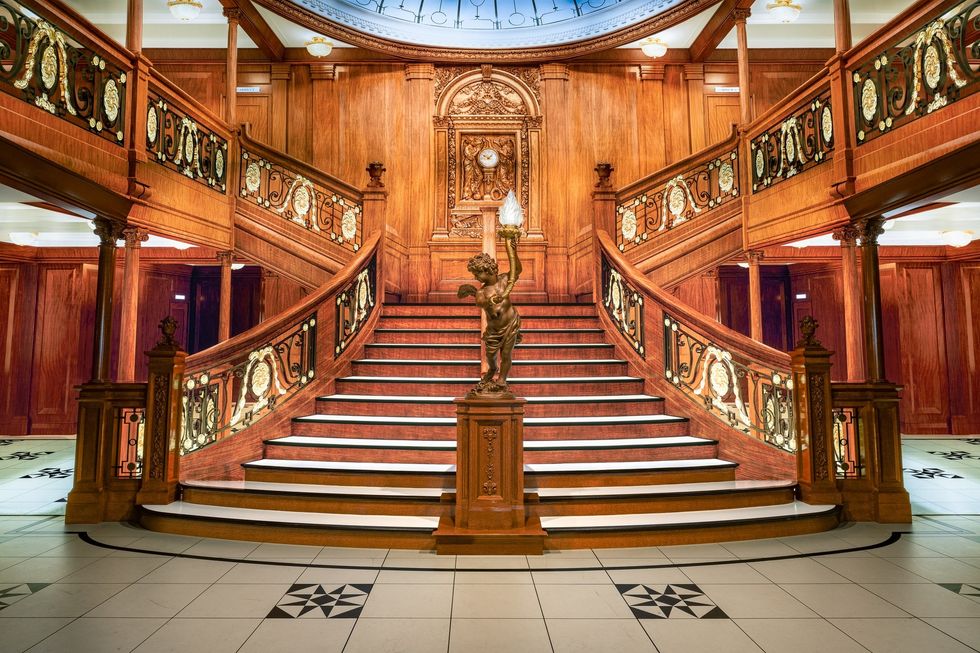
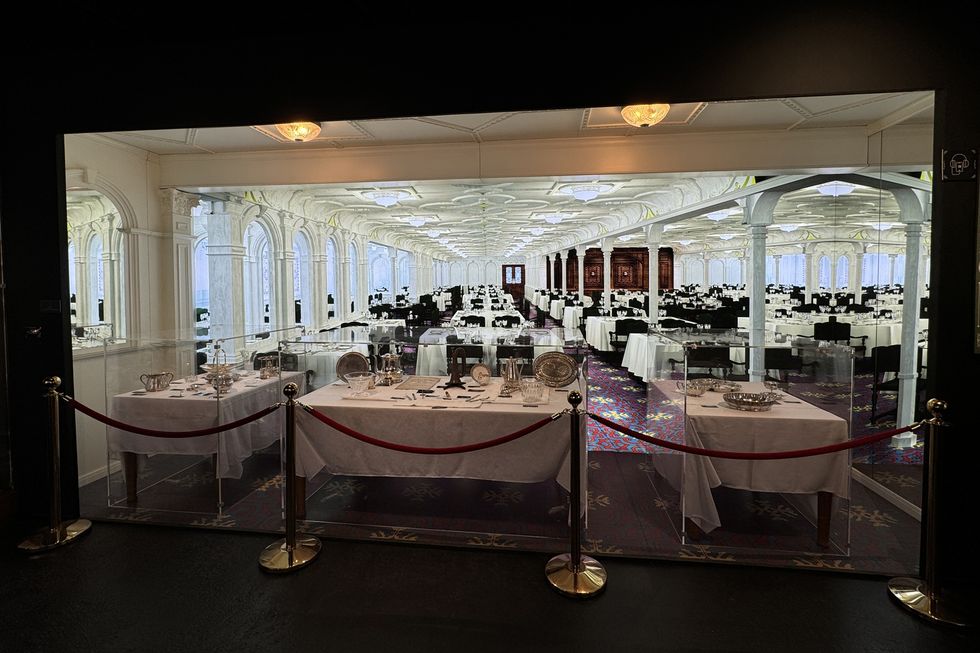
The answer is theatrical and experiential. Across thirteen rooms covering over 1500m2, the exhibition follows a chronological arc, combining full-scale recreations of the ship's spaces, trompe-l'oeil effects that extend the sets into integrated graphics and video, mirrors that multiply the perception of space, subtle changes of scale, large-scale prints, a curated collection of artifacts, an immersive room, and a free-roaming VR experience. Audiovisual content is not a layer applied to a room. It lives inside the sets and serves the story.
Titanic: An Immersive Voyage Exhibition Hub
Exhibition Hub
The central innovation is that the scenography itself performs the sinking. Once the iceberg is struck, the sets progressively tilt and disappear beneath the venue floor, which becomes the surface of the ocean visitors walk on. Scenography is not a container for content or technology, it is the primary narrative instrument. It applies dramaturgy, tension, surprise and progression, to a commercial touring exhibition format.
Titanic: An Immersive Voyage Exhibition Hub
Exhibition Hub
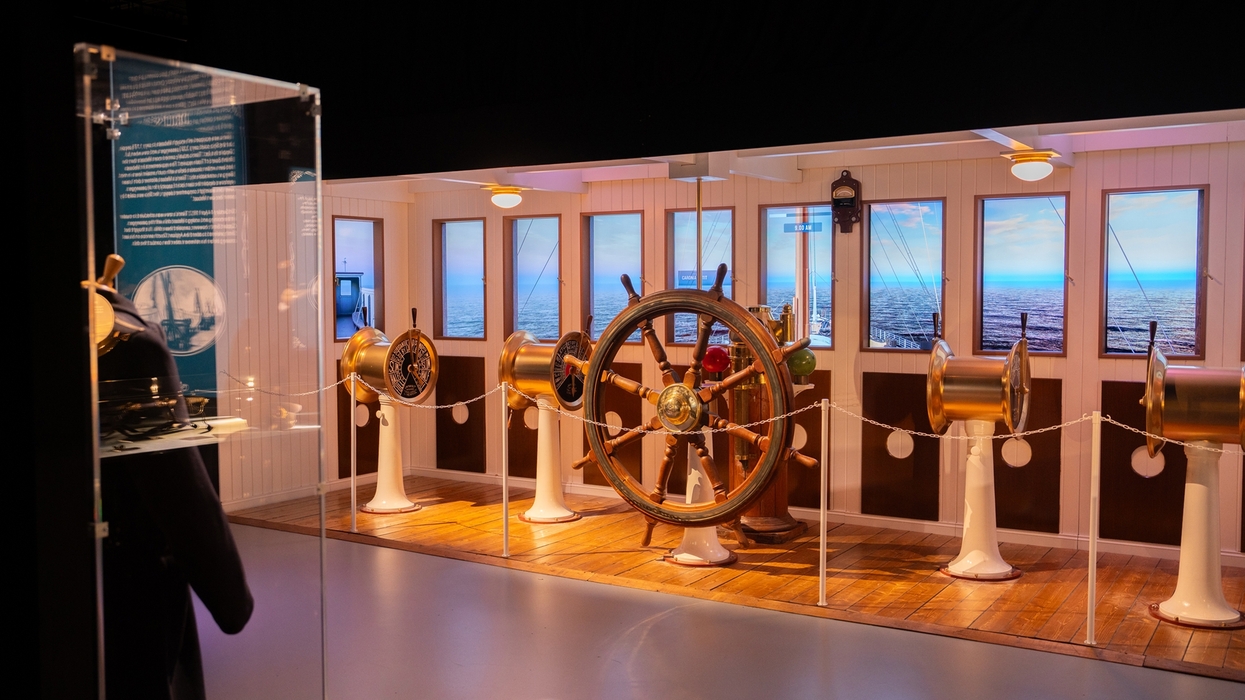
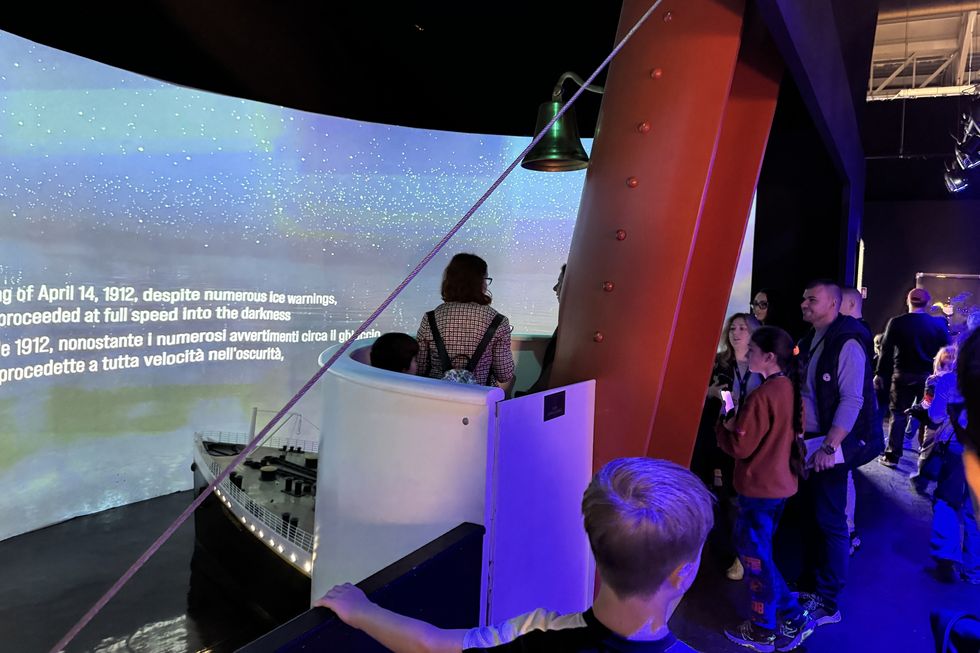
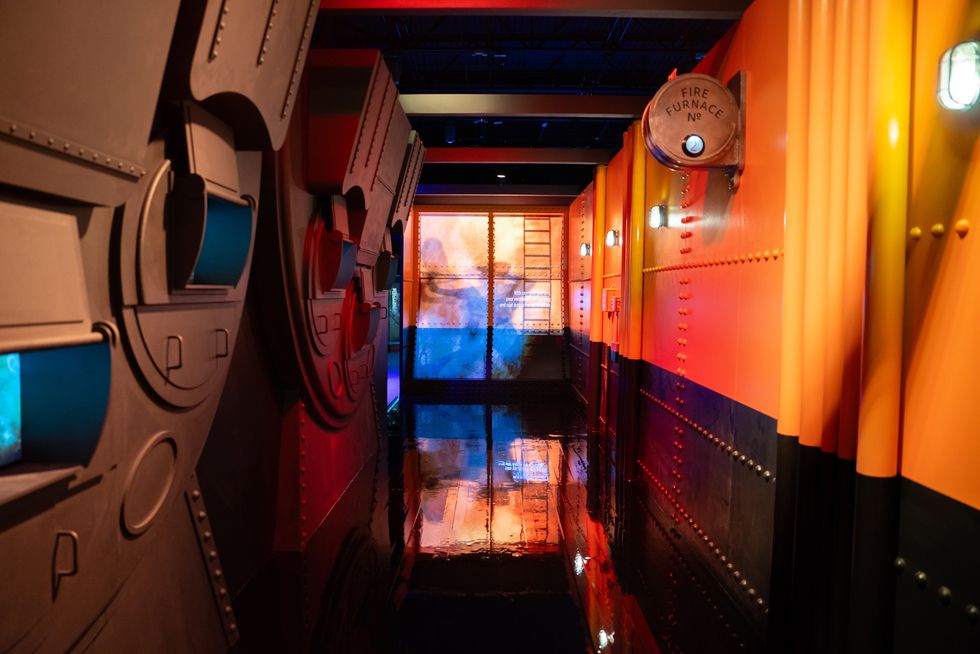
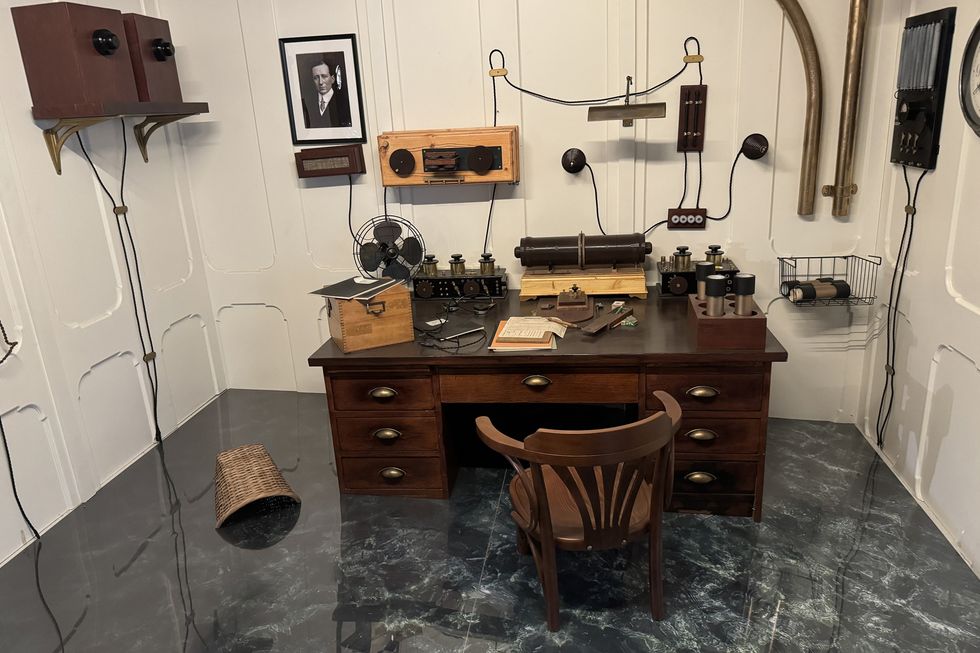
Each scene carries a precise dramaturgic function. Morse-code ice warnings from nearby vessels are staged through the windows of the Bridge. They become the anxious voice of the disaster in the sinking sequence. A theatrical Crow's Nest places visitors inside the small two-person lookout in the seconds between the iceberg sighting and the collision, which is experienced in a Boiler room recreation, where water pours in, trapping the firemen. The Marconi wireless room is recreated as it would have stood at the moment of the sinking, messy, tilted and flooded.
Titanic: An Immersive Voyage Exhibition Hub
Exhibition Hub
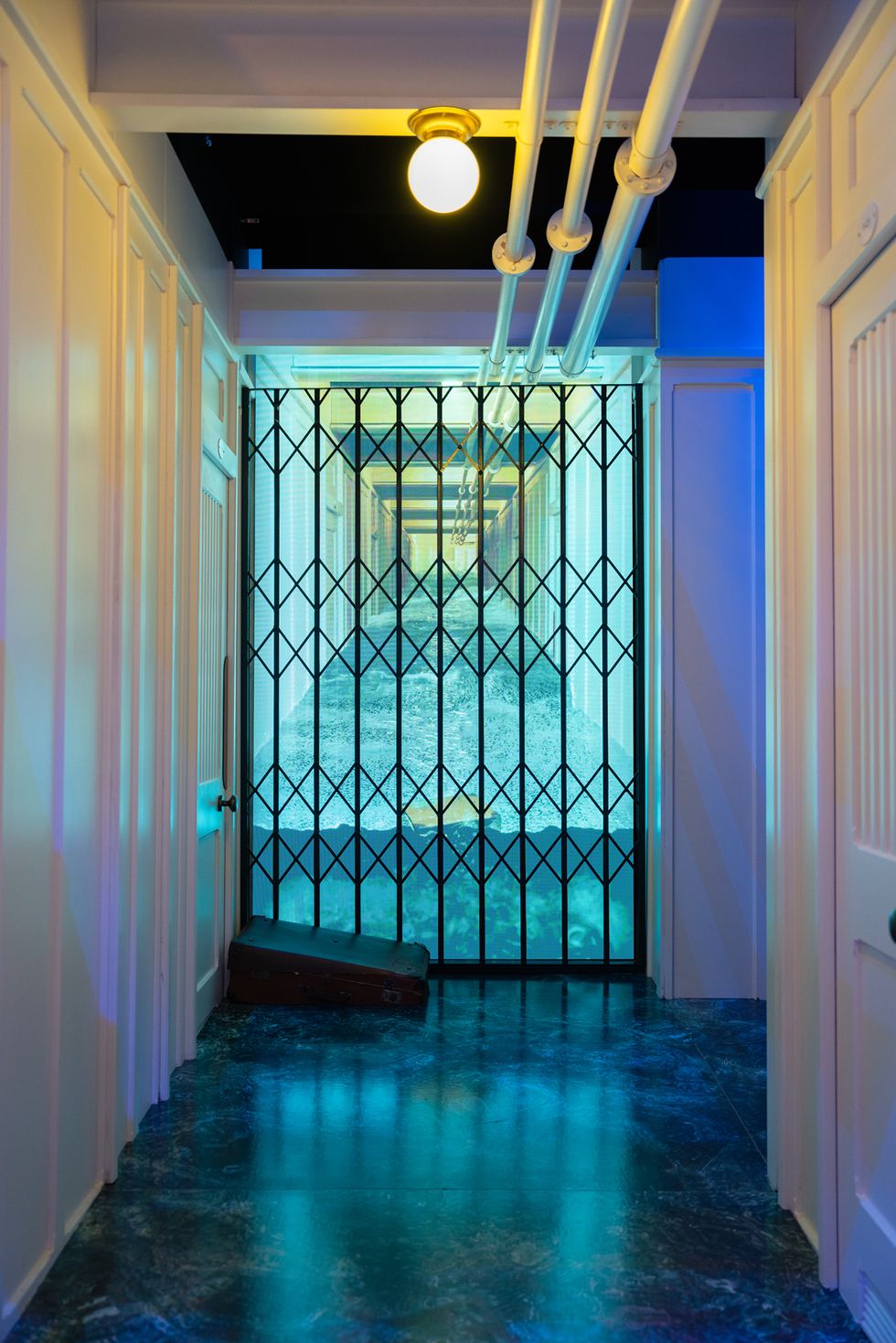
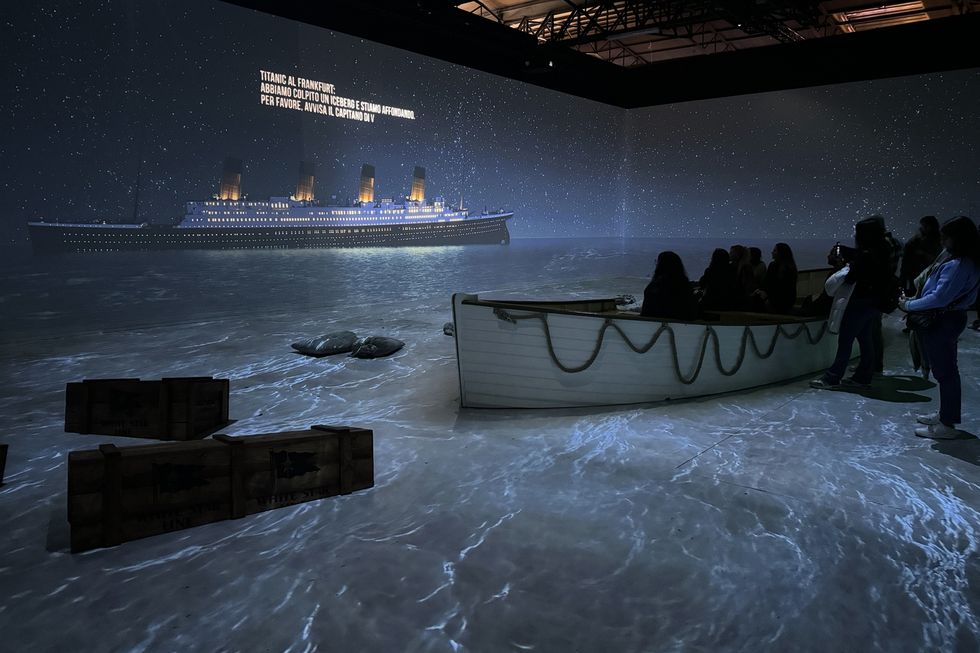
A tilted Third-Class Corridor, seamlessly extended into an integrated LED display, creates vestibular disorientation as the inner ear contradicts the eye. The final plunge of the Titanic is witnessed from a real-size lifeboat if you are lucky, or from the surface of the ocean if not. Finally, visitors can dive down to the seabed and explore the wreck in VR. Each set expresses a context and builds tension.
Titanic: An Immersive Voyage Exhibition Hub
Exhibition Hub
The story is told on several levels simultaneously, so that every visitor can enter at their own depth. It begins with the visual and the experiential: images and emotion, which require no words. Artifacts tell and illustrate; text panels and graphics inform and contextualize; audiovisual sequences are built into the sets themselves. An app reproduces the panels, provides an audio guide, and allows visitors to scan QR codes and share their photos.
Titanic: An Immersive Voyage Exhibition Hub
Exhibition Hub
All content is translated and presented in the language of the country visited. Since 2024, the exhibition has opened in 26 cities across Europe, North America, South America and Asia. Whatever their age, language or familiarity with the story, visitors share the same experience at its centre.
Titanic: An Immersive Voyage engages through space before it educates through information. Staged sets are the storytellers. The visitor is a witness and a survivor, and leaves carrying the weight of the story.
Partners
Produced by Exhibition Hub & Fever
Producer - Hamza El Azhar
Concept, Artistic Direction and Scenography - Marcos Viñals Bassols
Design Manager - Melina Khater
Creation Project Manager - Francesca Bonomi
Companies featured in this post