Summary
- The "route to market" priority: Leaders must prioritise direct digital channels to maintain control over inventory and customer data.
- Cross-sector disciplines: The mechanics of the visitor economy, such as dynamic pricing and yield management, are universally applicable to sports and events.
- Capital strategy: Modern private equity now offers a more viable path for long-term development than increasingly short-termist public markets.
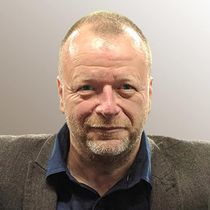
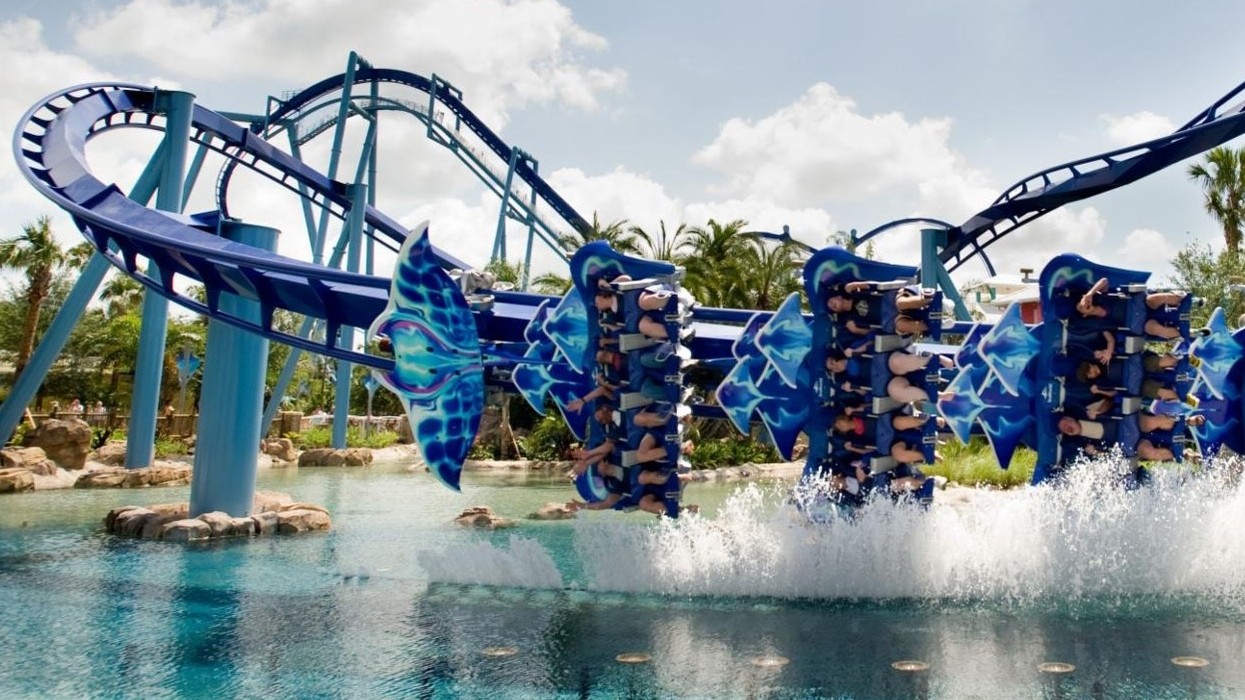
When Sir Nick Varney retired from Merlin Entertainments in 2022, he left behind a significant legacy in the global attractions sector. Over a quarter of a century, he had transformed a management buyout of Vardon Attractions, initially valued at £47 million, into the world's second-largest attraction operator.
Yet, for a man who spent decades in the "hot seat" of a global FTSE 100 giant, retirement has not signalled a departure from professional life.
Since leaving his post in November 2022 and receiving a knighthood in 2023 for services to the visitor economy, Varney has transitioned into a new phase of his career.
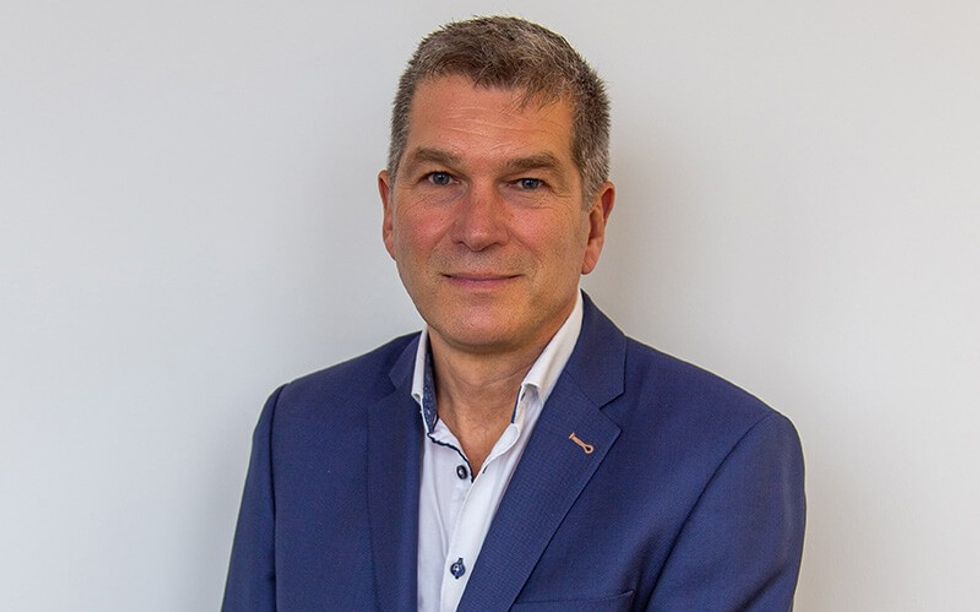
He has curated a portfolio of non-executive roles that leverage 30 years of frontline experience, spanning the boardrooms of the NEC and Marston’s Pubs groups to the terraces of Bath Rugby.
"People said to me, 'You're not going to be able to adjust to not being a chief executive,'" Varney says.
"And I understood why they said that. But the honest answer is, I haven't missed being CEO for one day. I miss the people and the buzz you get from going around the attractions. But it was the right time."
Now, freed from the relentless 24/7 pressure of running a global empire, Varney is applying the "Merlin Magic", a mix of capital discipline, brand immersion, and perfectionism, to new sectors.
He speaks to blooloop about transforming Birmingham’s events landscape, the resurrection of Bath Rugby, and why the digital revolution is both the industry’s greatest opportunity and its most dangerous trap.
Applying the FMCG lens to global attractions
To understand Varney’s current philosophy, it is necessary to look at his origins. He did not begin in turnstiles or ticket booths, but in Fast Moving Consumer Goods (FMCG). After studying at the London School of Economics, he marketed chocolate bars like Kit Kat and Quality Street.
It was a head-hunter’s call in 1990 that diverted him to Alton Towers as marketing director.
He recalls a childhood visit to Disney World in 1973 that left a lasting impression, prompting him to take the leap into the attractions industry. By 1999, he had led the buyout that formed Merlin Entertainments.
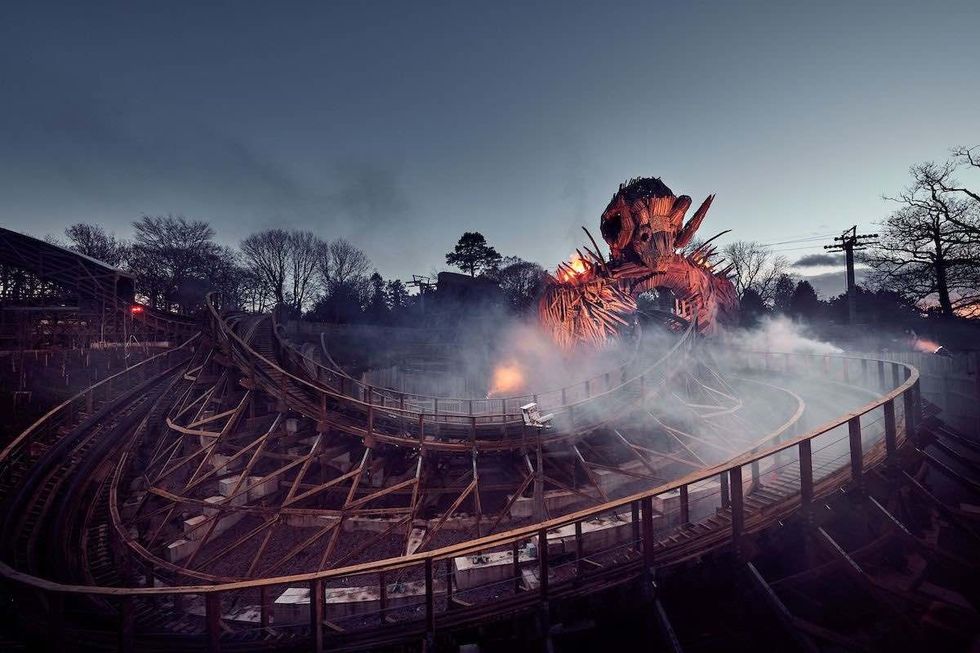 Alton Towers
"I came into the industry out of FMCG," he says. "I was in confectionery and household cleaners before that. But I realised very quickly that there are very few businesses as all-encompassing as running visitor attractions.
"It is as direct-to-consumer and fast-moving as it is possible to get."
That background in brand management has become the lens through which he views his new portfolio.
Whether it is a convention centre, a rugby stadium, or a local pub, Varney says the same fundamental challenge exists:
"You are all about trying to get people to come to your venue over other people's venues, to give them a great time, and to extract as much profitable revenue as you can from them."
Can the NEC become the nation’s "experience capital"?
One of Varney's most significant post-Merlin moves has been taking the chair at the NEC Group.
The campus already attracts seven million visitors a year. However, Varney and the management team, led by CEO Paul Reeve, have a more ambitious vision: to transform the estate into the "nation’s experience capital."
"Historically, the NEC has been a venue for hire," Varney says. "You have a kaleidoscope of movement—Crufts one week, a vintage car show the next, Florence and the Machine the next. There is nowhere else in the UK with that combination of customers.
"But the strategy now is: rather than just being a taker of content, can we be a provider of it?"
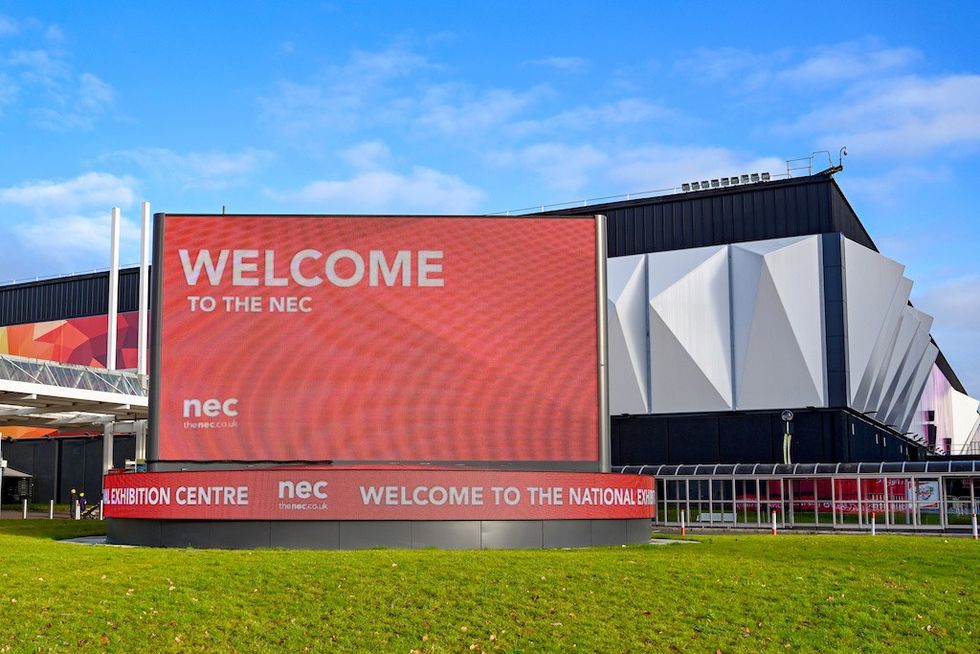 Image credit Cerib - stock.adobe.com
This shift involves utilising the campus’s vast real estate more aggressively. Varney says this is an opportunity for "tentpole" attractions: immersive experiences that can drive footfall, hotel occupancy, and F&B spend in a self-sustaining "flywheel" effect.
"We are looking to bring in short-term content, but also to create semi-permanent or permanent attractions," he says. "We are currently developing three bespoke attractions featuring well-known intellectual properties."
He confirms that one of these projects involves Peppa Pig and is intended for a permanent space at the NEC, potentially replacing the former Bear Grylls Adventure site.
By partnering with major IP holders and promoters such as Live Nation and Gladiators, the NEC aims to become an "always-on" entertainment destination.
Varney says the imminent arrival of HS2 is a "massive game-changer" that will deliver visitors right into the heart of the campus.
How rugby clubs are like theme parks (and how they aren’t)
If the NEC is a strategic play, his role as non-exec chair of Bath Rugby is a passion project.
A lifelong fan, Varney took the role in 2022 when the club was at the bottom of the Premier League and was losing significant money. Working alongside owner Bruce Craig and CEO Tarquin McDonald, Varney helped implement a turnaround strategy.
"We had a vision to be the best and most supported rugby club in Europe," he says. "The strategy was quite ballsy: assemble the best squad, hire the best coaching team, and bring the club to a sustainable financial position."
The results have been dramatic; in the third year of the strategy, Varney says, "We won a treble, including becoming Premiership Champions and this year, we will be in profit."
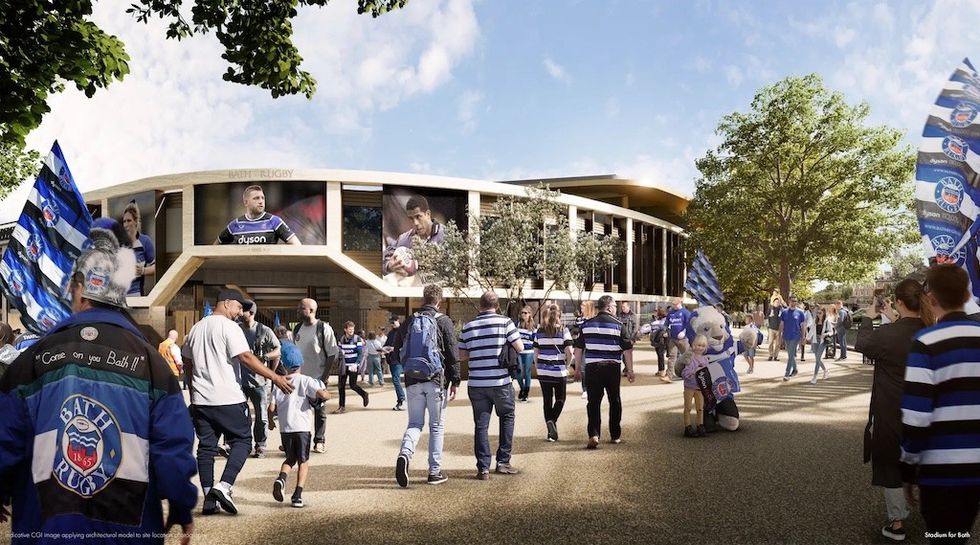
For Varney, a rugby club is a theme park with a ball. "It is the same disciplines," he says. "Sponsorship, dynamic pricing, yield management, bundling. It is about the match day experience."
He describes recent enhancements designed to ramp up the atmosphere, including a "tunnel of noise" for players and a fan village.
"We have done a whole lot of brand work based around 'gladiatorial spirit,' picking up on the Roman history of the city," he says.
The parallels extend to ticket sales, managing shoulder seasons with lower pricing for cup matches to attract families while maximising yield for Premiership clashes.
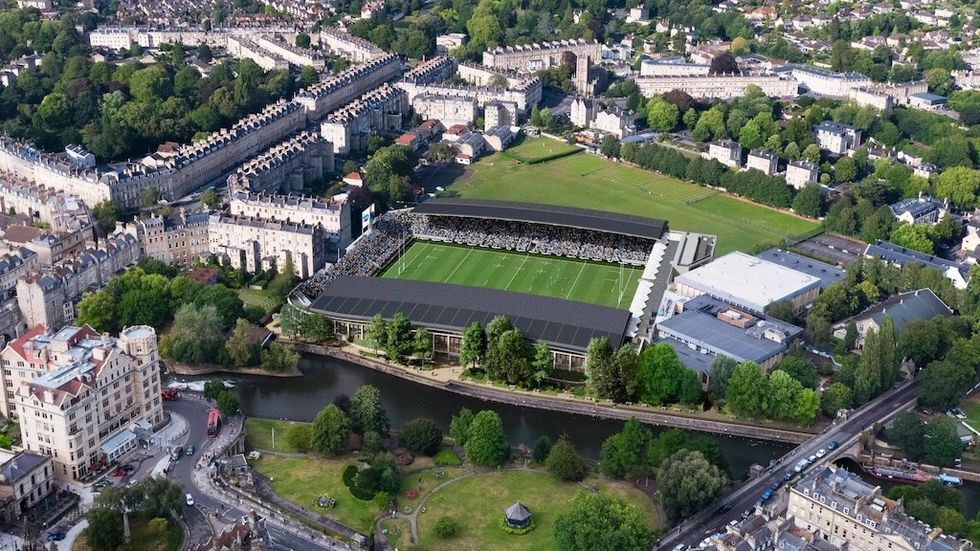
The club is also advancing the redevelopment of its stadium, designed by Kay Elliott, to include a riverside boulevard and conference facilities to help sweat the asset on non-match days. "It sits sympathetically in the skyline," Varney says.
See also: City-centre destinations: Stadium for Bath & the sustainable future of experience-led placemaking
A new era for capital: public markets vs. private equity
Having led Merlin through multiple ownership structures, Varney offers insight into capital investment. He says that in the early days, private equity was often short-termist. This drove Merlin’s decision to go public in 2013.
However, the dynamic has since inverted.
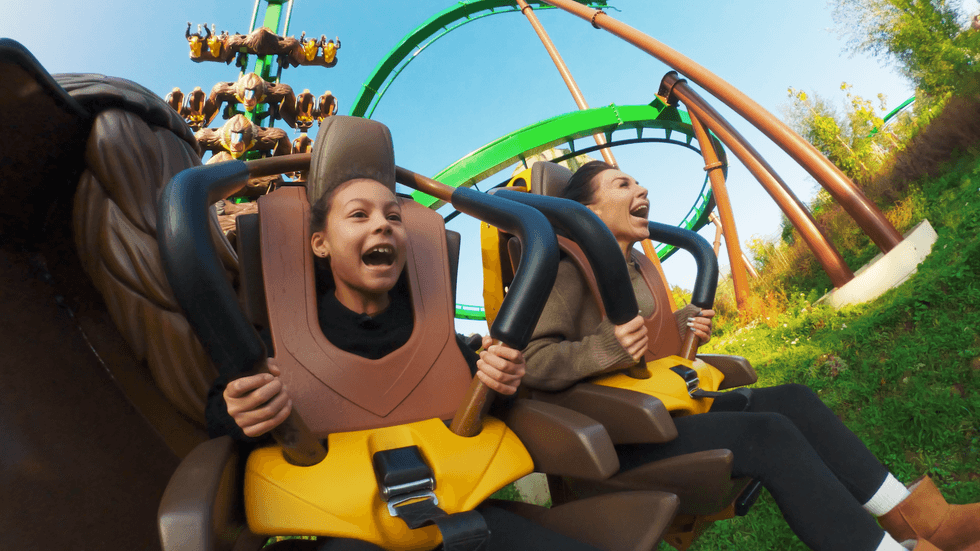
"Public markets became shorter and shorter term," Varney says. "I found myself getting beaten up for a falling return on capital because I was spending $200 million on a theme park that wasn't open yet."
 Chessington World of Adventures
Conversely, he says modern private equity "core funds" now take a 10-year view. "Private equity is now a better place if you want a long-term development strategy," he says.
He warns today’s leaders against "sexy, superficial topline growth" that lacks economic substance, citing the recent Sixes administration as a cautionary tale.
"Big leases and/or big capex with declining like-for-likes are not a good combination."
Controlling the route to market
Varney says the biggest change in the industry since he joined in 1990 is not ride technology, but the route to market.
"In 1990, I used to sit in my office at Alton Towers and watch people disgorge from the monorail," he says. "We only knew who 20% of them were. The rest just turned up. Not knowing used to freak me out."
Today, online ticketing allows operators to predict attendance with precision. But Varney says operators must control their own inventory:
"If you let third parties sell your tickets, you can be bypassed completely," he says. "In the days of AI, if a customer asks a bot for tickets and you are selling through an intermediary, you lose the relationship, the data, and the upsell."
This belief in the primacy of the direct channel drove Varney’s recent personal investment in Semantic, led by Neil Lewin, a digital agency specialising in the attractions sector.
He says he was drawn to its new LOOP platform, which offers "Premier League websites for Vauxhall Conference pricing"—a monthly retainer model that lets smaller and medium-sized attractions access world-class digital assets without prohibitive upfront costs.
"Your website is your most important brand asset outside the physical venue," Varney says. "It has to captivate, convert, and build a relationship.
"If it looks amateurish, you lose the magic before they even arrive."
The policy fix: why the government must cut VAT
Varney remains a critic of the political class, whom he says, "have never run a car boot sale, let alone a business". He expresses frustration at a policy environment he says is "choking off" the industry through business rates and energy taxes.
His prescription for the government is to cut VAT:
"The single biggest thing an incoming government could do is reduce VAT on tourism and hospitality to 10%," he says. "It would allow businesses to invest in lower prices, making the UK competitive again."
Final thoughts: "locking the magic in"
Despite his high-level roles, Varney says his "internal critic" has not softened in retirement. He remains obsessed with the details of the guest experience:
"It winds me up," he says. "Anything that detracts from that—poor customer service, litter, cobwebs (where they are not supposed to be), seeing garbage trucks down the back of house—breaks the immersion."
He recounts attending a concert at the NEC recently and being mesmerised by the crowd. "There is nothing like the buzz you get from being involved in something that gives people happiness," he says.
"You have to find ways of locking the magic in," he says. "I once told my dad I was a perfectionist. He told me I’d die a disappointed man."
Sir Nick Varney might be a perfectionist, but looking at the legacy he has built, and continues to build, it is unlikely he will end up disappointed.