Rebecca Hardy has over 10 years' experience in the culture and heritage sector. She studied Fine Art at university and has written for a broad range of creative organisations including artists, galleries, and retailers. When she's not writing, she spends her time getting lost in the woods and making mud pies with her young son.
Holovis, a leading experience designer, is partnering with the beloved UK holiday brand, Butlin's, in the most recent installation of its cutting-edge 360Golf system.
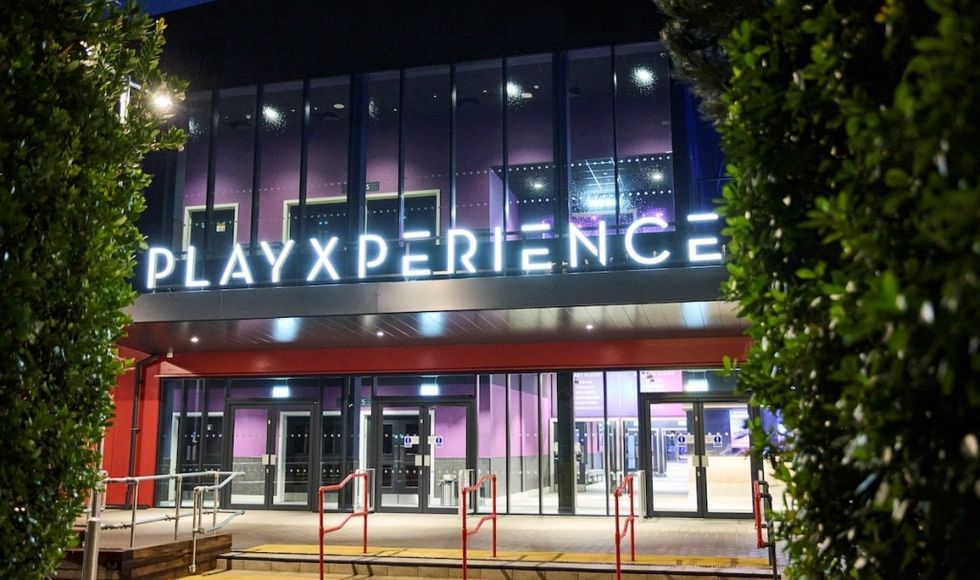
This collaboration delivers the next generation of mini-golf to the brand-new £15m indoor activity facility, PLAYXPERIENCE, at the Bognor Regis Butlin's resort. TechPutt formally opened on 7 October with three themed courses that offer limitless fun for Butlin's guests, from family visitors to Big Weekender attendees.
"The new TechPutt installation in PLAYXPERIENCE at Butlin’s Bognor Regis promises to be a hit with families and groups of friends looking for a fun and tech-enhanced experience," says a spokesperson from the firm. "Whether guests are out to win or just enjoy the game, the system's technology ensures an enjoyable, carefree round of golf."
Three themed courses
PLAYXPERIENCE features 27 holes played using 360Golf, whichincorporates state-of-the-art technology into mini-golf gameplay.
Instead of using pencils and paper, TechPutt uses an elegant, technologically advanced system that counts scores in real-time, enabling participants to focus on fun. The 360Golf system is built into every ball. This means guestscan enjoy a stress-free experiencewhere their strokes and progress are automatically tracked and shown on interactive screens throughout the game.
TechPutt caters toall players, regardless of experience level, with threethemed nine-hole courses that present a range of challenges.
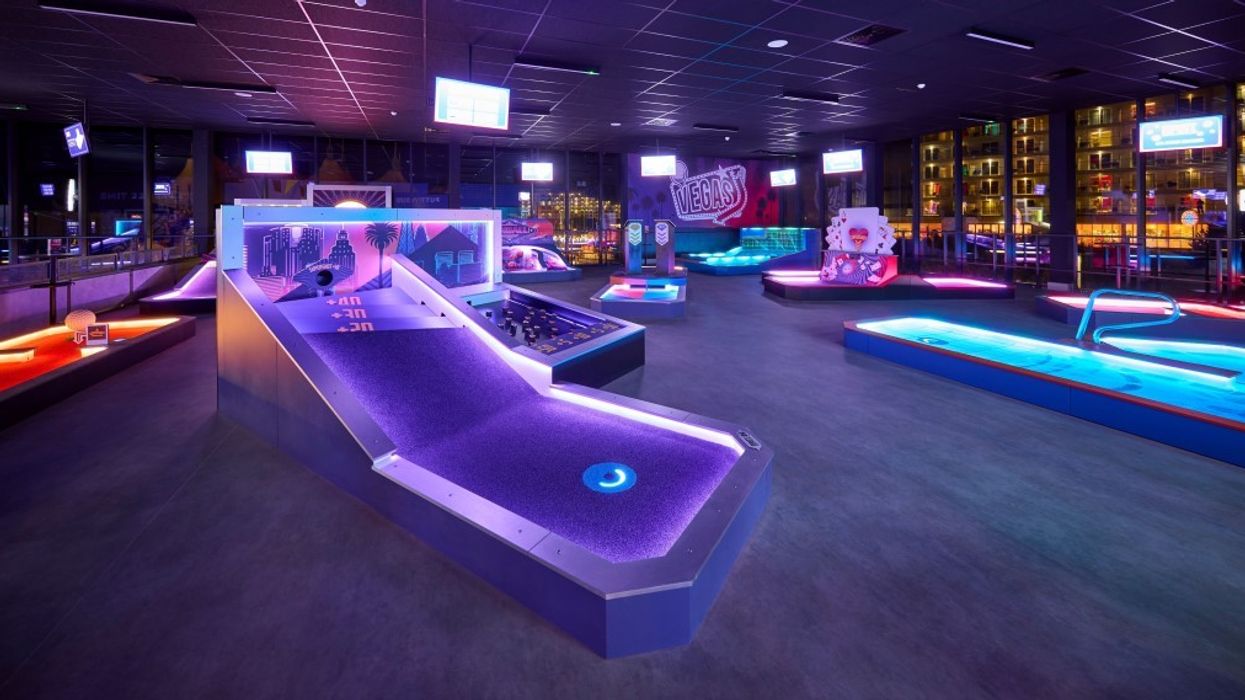
The casino-themed Vegas Course offers the most challenging experience with obstacles like the "Spin & Win" and a Pool Party hole. The Music Course is set to a rock-and-roll beat and is ideal for players of all ages and skill levels. It is also wheelchair accessible, with adapted putters and a specially designed course. The UV-lit Neon Course is a visual treat, with fluorescent obstacles and glowing props that add to the game's wild and wacky atmosphere.
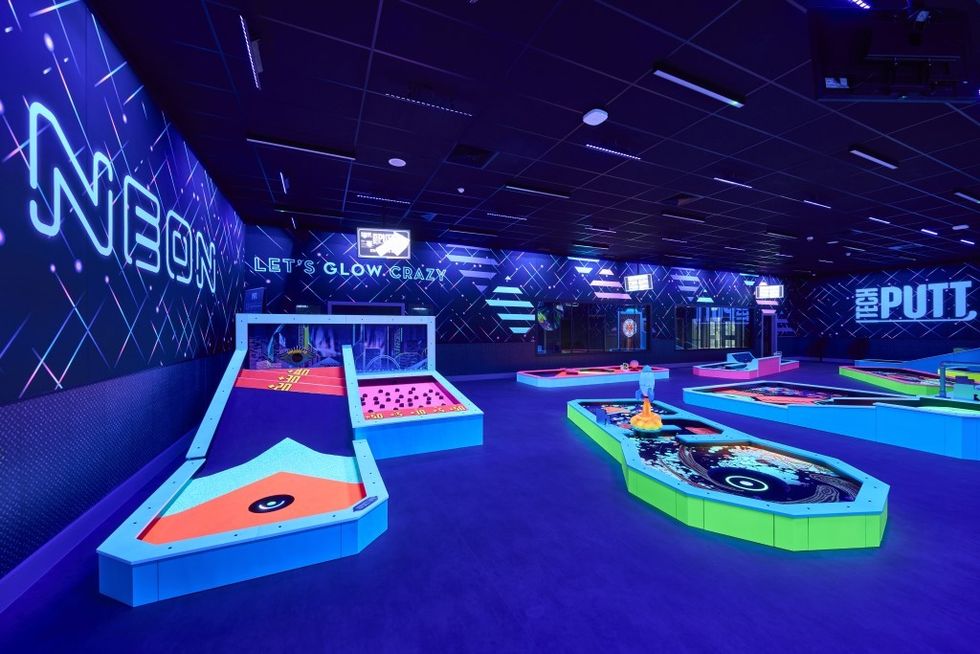
TechPutt is powered by Holovis' 360Golf technology, which incorporates advanced tracking technologies into the golf balls themselves. After registering at a kiosk, each team is given personalised golf balls which the system can track from tee off. Sensors on the course identify who is playing, track the amount of strokes, and calculate scores automatically.
360Golf's unique supershots and bonus points bring a further exciting element to each game. The technology automatically tracks all of these elements, allowing players to focus on having fun rather than keeping score.
Rich insights
Holovis' powerful DeepSmarts data analytics system supports each 360Golf installation, providing operators with crucial insights into player behaviour and operational performance. The technology monitors everything from player volume and game time to high scores, course usage, and even maintenance schedules to ensure peak performance and visitor satisfaction.
With the successful opening of 360Golf at Butlin's Bognor Regis, Holovis has once again demonstrated its ability to combine immersive technology and traditional entertainment. The revolutionary TechPutt system offers a fresh and contemporary approach to mini-golf, making it an essential attraction for Butlin's family and Big Weekender visitors.
Holovis recently showcased its 360Golf product at IAAPA Europe Expo, the biggest trade show for the themed entertainment industry in the EMEA region.
Rebecca Hardy has over 10 years' experience in the culture and heritage sector. She studied Fine Art at university and has written for a broad range of creative organisations including artists, galleries, and retailers. When she's not writing, she spends her time getting lost in the woods and making mud pies with her young son.
Japanese video game company Capcom has announced its new Capcomix attraction, an experience-based amusement facility to open this spring in Osaka, Japan.
Per a press release, Capcom's arcade business currently operates a total of 59 locations, including Plaza Capcom venues, which feature crane games, medal games and themed attractions, as well as Capcom stores for official merchandise.
Capcomix is a new concept for the company and will provide an extensive lineup of attractions themed around Capcom's popular characters.
Located at the Hoop shopping mall in Osaka, Capcomix will appeal to guests of all ages, with experiences including a digital activity area, a VR area, and a shop.
Crazy Banet with Capcom All Stars is a large‑scale digital activity area offering a diverse range of interactive attractions, while the VR-X zone will boast cutting-edge, original VR experiences.
The shop, called Chara Cap, will offer a wide selection of exclusive and themed merchandise.
Capcom said the new concept is part of its efforts "to be a company that captivates people around the world with our best-in-class immersive content".
It said it "will continue to maximize the value of its rich library of game content through multifaceted initiatives, thereby creating new earnings opportunities and enhancing corporate value".
Further details on Capcomix, including the opening date and facility details, will be announced in the future.
Campcom is known for high-grossing video game franchises such as Resident Evil, Street Fighter, Monster Hunter, Mega Man, and Devil May Cry.
Other video game developers to enter the location-based entertainment (LBE) space include Nintendo, Ubisoft, Crystal Dynamics and Square Enix.
Semantic, a company thatdesigns and optimises websites for visitor attractions worldwide, has announced that Sir Nick Varney, the former chief executive officer of Merlin Entertainments, has become a significant investor.
Varney brings over 30 years of experience to Semantic, and his involvement marks a pivotal point in the company's evolution.
Having established itself as a trusted digital partner to leading UK attractions, the company has experienced increasing demand for LOOP, its website platform designed specifically for the attractions, leisure, heritage, and tourism sectors.
The investment supports Semantic’s long-term dedication to the platform and will facilitate ongoing product innovation, stronger strategic focus and growth into related markets.
Delivering 'Premier League' websites
Beyond financial backing, this partnership marks a shared belief that websites now play a key role in generating revenue, handling demand and defining the visitor experience.
LOOP was developed to solve some of the sector's common problems. Typically, websites are costly to build, tricky to update and quickly become disconnected from operational realities. LOOP provides a flexible platform that can grow with attractions and adapt to evolving expectations and technology.
A high-profile influencer in the sector, Varney brings additional operational experience, a proven track record of scaling international attractions businesses, and ongoing mentorship to help ensure LOOP continues to meet the real needs of operators.
"I have known Neil and Semantic for some time and was particularly impressed by his vision in developing the LOOP platform," says Varney.
"In location-based entertainment and indeed broader hospitality, a brand’s website is its most important asset after the physical venue or attraction. It is both the provider of information (and inspiration!) and the key route to market for converting customer interest into ticket sales or attendance.
"As such, in a competitive world, you need your website to be optimised and constantly updated. For all types and sizes of location-based businesses, LOOP offers the ability to have a 'Premier League' website at an affordable monthly price.
"I am very much looking forward to working with Neil to develop the business further to the benefit of current and future clients."
Neil Lewin, managing director of Semantic, says: "Nick’s investment is a testament to the capabilities of the platform, how we’ve developed it and the potential to help attractions, leisure, heritage and hospitality brands around the world.
"With decades of experience already baked into the platform, we are delighted to have Nick’s support to take the platform to the next level.
"We look forward to continually growing and evolving LOOP to keep pace with client needs, guest expectations, evolving technology and AI."
Last year, Semantic ran a campaign offering support for attractions preparing for the summer season, using LOOP to quickly establish or enhance their online presence.
SSA Group has been working on a transformative approach to operations. By weaving its signature 452 Hospitality ethos, rooted in a legacy of welcome and human connection, into Scout, a new AI-driven operating system, the company demonstrates how AI can enhance rather than replace the human side of hospitality.
For nearly 60 years, SSA Group has been a staple in the cultural attractions sector, collaborating with zoos, aquariums, and museums to provide comprehensive guest services. As a family-owned business, the company has continually adapted, but its core mission remains centred on a simple, powerful concept: hospitality.
We speak with CEO Sean McNicholas and vice president of people and culture, Jason Stover, to unpack Scout's mission and learn how it can open the door to both greater efficiency and more memorable moments.
SSA reimagines the industry
Starting by looking at the bigger picture, McNicholas says: “What I love about SSA and our family business is our curiosity for continuing to reimagine the industry.
"Those are pillars of our plan. We approach 60 years as a family business in 2030, and what’s exciting to us is continuing to innovate, not just our business, but the guest experience for our clients and partners.”
Sean McNicholas and Jason Stover
This culture of curiosity is what prompted McNicholas and Stover to investigate the potential of artificial intelligence long before it became the industry buzzword it is today.
"Five or six years ago, Jason came to me as one of the early adopters of AI. We started talking about it, and the more we looked at tools like AI, we asked a very simple question: what one, two, or three areas could AI positively impact our business?"
For SSA, the goal was not to replace staff or remove the human element from the museum or zoo experience through automation. Instead, the emphasis was on liberation.
"The thing that became clear was how tools like AI could help us become more efficient with data, back-end systems, and administrative work," adds McNicholas.
"If we can be more efficient there, we can spend more time meeting guests where they need us, which is on the front line.”
The outcome of this exploration is Scout, an AI-assisted tool and ‘unified intelligence layer’ designed specifically for cultural attractions.
Scout is positioned not as a replacement for human workers, but as a co-pilot. It is an operating system that gathers data from across the industry to provide real-time insights. Unlike general-purpose AI tools, Scout has been built for the sector's operational realities.
"AI is trending now, but it’s not new," says Stover.
"I’ve been with SSA for almost 30 years, and my journey with AI in this company has existed since day one. When I first became a manager, we were already experimenting with predictive analytics, trying to forecast attendance and staffing.
"That was AI at the time."
However, the leap to generative AI offered a new opportunity to support SSA's secret sauce: its people.
Stover employs a cinematic analogy to describe Scout’s role within the workforce:
"I compare it to Tony Stark," he says. "He’s brilliant, but he doesn’t become Iron Man until he has Jarvis. That’s what Scout is. It’s a co-pilot that takes away routine, monotonous work so our people can focus on what matters."
Real-time, useful insights
Designed to support guest-journey walkthroughs, the platform collects real-time observations and converts them into actionable insights tailored to each attraction.
The tool was created in accordance with SSA’s core belief that technology should never replace connection; it should enhance it. The idea is that data and design can collaborate to create memorable guest experiences.
This supports SSA’s wider focus on innovation, which aims to turn curiosity into meaningful change that advances partners' missions. By automating data analysis, Scout helps operators make more informed decisions about designs, platforms, and revenue strategies.
"Guest expectations are evolving faster than ever," says Stover. "Scout was built to meet this moment as a tech-forward AI tool that allows us to keep experiences deeply personal.”
The heart of the system: 452 Hospitality
Although the technology is impressive, the engine driving Scout remains entirely human. At the centre of Scout’s design is 452 Hospitality, the cultural ethos that defines SSA Group’s purpose and character.
Named after 452 Leyden Street, the Denver home where SSA’s founders first lived and practised hospitality, 452 has since become both a numeric and philosophical code for what the company stands for: a spirit of welcome, belonging, and genuine human connection.
At 452 Leyden Street, anyone could come in for a meal, a chat, or a place to rest. And that sense of genuine warmth now lives on in every SSA service encounter.
Today, 452 Hospitality reflects SSA’s ongoing dedication to creating authentic, memorable moments that uplift guests, partners, and colleagues alike.
That same spirit guides Scout’s purpose: rather than replacing people, the AI system aims to enable staff to embody 452 Hospitality more fully, freeing them from administrative burdens so they can provide the personal engagement that makes guests feel welcome and valued.
In practice, this involves a particular method for engaging with guests and monitoring operations. Scout develops a digital framework for this using the SOQ model: Observation, Opinion, and Question.
"Scout is being trained by the entire zoo, aquarium, and cultural attraction industry," Stover says. "Every conversation, every audit, every partner insight gets ingested and shapes how Scout operates.”
Within the Scout ecosystem, there are various ‘agents’ dedicated to different tasks, such as labour optimisation and inventory management. However, the ‘452 agent’ is unique.
"It has vision and voice capabilities. As you walk through operations, it analyses images and observations in real time and evaluates them against our hospitality standards. It acts as a co-pilot for auditors and operators, making observations, offering insights, and matching them with best practices and solutions.
“You might miss something as a human, but Scout won’t.”
Scout in action
The deployment of Scout is already producing tangible outcomes, progressing from theoretical ideas to solving complex on-site issues. This highlights SSA’s focus on turning insights into action by combining data, technology, and human connection.
McNicholas emphasises that the team is "continually evolving Scout by testing it across multiple attractions," noting that "every new site adds more data and sharper insights.”
Stover offers an example of Scout’s operational intelligence in action from a working session with the Detroit Zoo. The team was exploring a complex “what-if” scenario: opening a new entrance near a new exhibit while navigating compliance considerations, budget constraints, and a nearby rail track.
“Using Scout as a sandbox alongside their team, we pressure-tested the constraints, surfaced relevant regulatory considerations, explored alternative approaches like repurposed shipping containers, and generated rough-order cost ranges. It was less about committing to a final plan and more about accelerating discovery.”
“What’s exciting is that every audit surfaces a new real-world question, and we ask: Should this become a new sub-agent? That’s how Scout keeps evolving.”
Another success story comes from the Dallas Zoo, where Scout was instrumental in helping the zoo team explore their own AI journey while SSA conducted an inter-department relationship audit.
Scout is tailored to each user’s psychology
What makes Scout different from typical business AI tools is its incorporation of behavioural psychology. Acknowledging that strong operations don't happen by accident, SSA has combined leadership development with its technological roadmap.
Stover, whose background is in people and culture, insisted that if they were to create co-pilots, they had to understand the humans who would use them. So, instead of providing generic recommendations, Scout adapts its guidance to each leader's thinking and communication style.
"One of the first things we decided was that if we were going to build AI co-pilots, they needed to integrate Behavioural Essentials," Stover says. "We already use behavioural assessments that give leaders a 21-point profile, with strengths, tendencies, and blind spots. We’ve now incorporated that into Scout.”
This means that when a manager logs into Scout, the system is tailored to their specific personality profile.
"It understands how I communicate, where I might need softer language, or where I might need more structure," Stover says.
He adds that McNicholas served as the ‘guinea pig’ for this feature:
"We merged his traits and blind spots into Scout as he was working through our future roadmap. Scout isn’t just an AI tool; it understands your psychological makeup and helps cover your blind spots as you operate in your role.”
The future of the workforce
A common concern about AI is the risk of job displacement. However, SSA’s leadership firmly states that their investment in technology aims to safeguard, not eliminate, their workforce.
"As CEO, culture is my responsibility, and culture starts with values," McNicholas says. "Hospitality, human-to-human interaction, has always been our foundation. I don’t want a world of all robots and automation. I love people too much.
“That’s why Scout exists. It helps us live what we love to do: creating special moments for people.”
Stover shares this view, considering AI as a safeguard against the decline of interpersonal skills observed in other industries:
"We have to be proactive in shaping the future. Many companies will use AI purely to impact the bottom line. That’s their choice. But SSA has always been people-focused. We’re adopting AI safely and intentionally to better our people. As interpersonal skills decline elsewhere, we’re protecting them by freeing people up to reconnect.”
The efficiency gains are clear. Stover notes that tasks like scheduling, which previously took hours to analyse against weather and sales history, now happen in seconds. "That frees managers up to spend time with their team. That’s the point.
“We’re hospitality people. We want to be in front of guests, not behind a screen.”
A vision for 2030
Looking ahead, SSA has set bold goals for the next five years. As the company approaches its 60th anniversary in 2030, the vision is for a fully enabled workforce where each employee has a digital partner.
"By 2030, every person in our company will have a co-pilot that helps them be more efficient," predicts McNicholas. "We’ll also bring a unified revenue strategy to attractions, something the industry lacks.”
He also believes the metrics of success are shifting. It is no longer enough to simply count heads at the gate:
"The future metrics won’t just be attendance. They’ll be revenue, guest experience, and fulfilment," he says.
"There’s more competition than ever, and we have to be the place where guests leave thinking, 'That felt right.' To do that, our people need tools like Scout so they can spend more time creating those moments.
“That’s how we reimagine the industry.”
The future of hospitality
Summing up the benefits, COO Travis Kight says:
"AI is the future of hospitality, but not in the way most imagine. We see AI as a co-pilot, not a replacement, designed to protect the human connection that defines our industry.
“Tools like Scout allow us to turn data into real-time insights, freeing our teams from repetitive tasks so they can focus on creating unforgettable guest experiences.
"As Sean mentioned, by 2030, our vision is for every team member to have a digital partner that amplifies their strengths, covers blind spots, and helps us deliver hospitality at a level the industry has never seen.
“AI isn’t about automation. It’s about empowerment.”
As SSA Group looks towards the attractions of tomorrow, its message is clear: the path to the future is built on data, but the goal remains human connection.
By anchoring Scout in 452 Hospitality's philosophy of creating meaningful, human-centred moments, SSA isn’t just adopting AI for efficiency. It’s enhancing its ability to deliver heartfelt experiences that define its brand and shape the future of the guest experience.
"That’s the foundation of Scout," Stover says. "If a tool doesn’t protect hospitality or make us better people-facing operators, it doesn’t get built.”
Gateway Ticketing Systems, a leading provider of admission control systems, has announced that Eric Fluet took on the role of vice president of marketing on 23 February, and that Chad Wallace became its new director of sales on 2 March.
Fluet has over 30 years of experience in the amusement and attractions sector, including senior marketing positions at Six Flags and Madame Tussauds.
Throughout his career, he has driven initiatives to increase attendance, develop brand strategy, and boost revenue performance across destination-focused entertainment organisations.
In 2017, Fluet established Get It Done Marketing, a strategic consulting company focused on the larger amusement sector, including amusement parks, water parks, family entertainment centres, hotels, campgrounds, and industry suppliers.
He collaborated with over 50 organisations to craft both short- and long-term marketing plans, enhance team effectiveness, and execute disciplined, data-driven marketing initiatives to achieve measurable growth.
Fluet is recognised for blending strategic planning with practical implementation. His experience at both corporate and property levels provides him with a clear understanding of the operational and competitive challenges faced by destination attractions.
As VP of marketing, Fluet will oversee Gateway’s global marketing efforts, including brand development, communications, and demand generation, as the company expands its presence in the attractions technology industry.
Meanwhile, Wallace brings more than 30 years of sales experience in the attractions sector, including positions at Nutmeg and, most recently, at Digonex.
He has collaborated with attractions in North America and globally to develop ticketing, pricing, and guest engagement strategies, emphasising practical, revenue-oriented approaches that boost attendance, improve yield, and elevate the visitor experience.
As director of sales, Wallace will lead Gateway's sales initiatives, focusing on enhancing customer relationships, increasing market presence, and delivering measurable value to attractions worldwide.
“Eric and Chad bring complementary strengths that will help us better serve attractions around the world and continue delivering long-term value to our clients,” says Michael Andre, president and CEO of Gateway Ticketing Systems.
“Eric understands the pressures our customers face because he’s lived them, and Chad has a rare ability to connect strategy to real operational results. Beyond their experience, they share our commitment to partnership and long-term success.
"I’m genuinely excited to welcome them to the Gateway leadership team and confident they will make an immediate impact for our customers around the world.”
For years, most conversations about AI in the experience economy focused on efficiency. Why go through a lengthy research process on Google or TripAdvisor when I can get quick, personalized recommendations from a chatbot that understands me and my interests?
But recent filings from Marriott and Hilton highlighted that AI is on the precipice of a major change. AI is moving beyond just helping people discover what to do next to helping them complete the transaction itself.
And if that shift speeds up, it will be a seismic change for both marketing and distribution.
If AI is no longer simply a planning tool but a potential intermediary, it could create a new layer between brands and their customers.
For museums, theme parks, zoos and aquariums, immersive exhibitions and IP-driven experiences, the question is clear: What happens if AI becomes the primary interface for discovering and booking physical experiences?
If that comes to fruition, it will determine not only what gets shown to experience-goers, but what gets booked and what gets overlooked.
AI is shifting from discovery to transaction
In the current AI landscape, users go to an AI tool and can ask a broad question (“I’m going on a trip to Chicago in April. What should I do?”). That’s agentic discovery, and it’s how people are currently using AI.
But soon, people may say, “I’m going to Chicago for a trip in April. Book the highest-rated experience that I’d like.” The transaction may happen right there within the chat interface, and a user may never land on an attraction’s website at all.
A change like that could restructure the entire purpose of a website. As Syracuse professor and AI expert Shelly Palmer wrote last year, “agentic AI will transform your websites from destinations into API endpoints, and user journeys into autonomous workflows.”
Put simply, AI agents are on the cusp of pulling data directly from websites’ backends and executing transactions without needing user guidance.
TILT at 360 CHICAGO
Today, websites are places users go to glean more information, but soon, their primary function may be to serve as structured data sources for AI systems.
For experience brands built on immersion and emotional storytelling, being reduced to just a couple of summary lines in an AI chatbot would have huge implications.
Whose customer is it anyway: if AI controls the transaction, it may control the relationship
Right now, hotels are asking: “What if AI becomes the next Expedia?”
Experience brands may need to ask an even broader question: “What if AI doesn’t just become the next Ticketmaster, but is even above Ticketmaster? A place where discovery and purchase happen in one step.”
That would raise important questions:
Who owns the customer relationship?
Does first-party data still flow into your CRM? If not, how does retargeting work properly?
What will commission or fee structures look like? Will they resemble OTA-style fees?
What happens to brand loyalty? How do brands hold onto it if transactions happen elsewhere?
If many (or most!) customers are transacting in an AI interface, they may never forge any connection with a brand.
On top of that, for ticketed attractions, in particular, organizations need to be mindful of scarcity, resale markets and fraud. As agentic commerce evolves, the industry will need to identify what constitutes “legitimate” automation to ensure fairness is maintained.
If you thought bots scalping for the hottest tickets were a challenge before, it may be about to get even trickier.
Visibility in an AI commerce world will be earned through signal strength
AI systems will prioritize signal strength, not brand legacy or captivating storytelling.
But these signals will not just be built on strong API backends on websites. Systems will learn from review volume, online ratings, search behavior, social sentiment, and discussion.
Conversations on Instagram, TikTok, YouTube, Reddit and beyond will continue to shape what gets surfaced.
But that will intensify a familiar dynamic: visibility begets visibility.
Blockbusters and highly discussed experiences will generate more digital signals, which, in turn, will increase the likelihood of being surfaced. In a world where AI is not just driving discovery but transactions, visibility is even more important.
Smaller institutions or productions with less chatter risk becoming even harder to find than they are now, regardless of the quality of the on-site experience and storytelling.
We are already seeing K-shaped outcomes across live entertainment and attractions. Agentic commerce could further amplify that trend.
This shift is structural, and the standards are being set now
The shift will not happen overnight, but the foundations are being laid right now.
The governance of agentic booking, payments, authentication, and fraud prevention is currently being shaped by major technology and payment players such as Google, OpenAI, Visa, and Mastercard.
Once the model solidifies, its economics and data flows will become difficult to renegotiate.
As the hotel leaders are showing, organizations that engage early have a greater opportunity to shape this process before we get to that inflection point.
While not all attractions or organizations will have an open line of communication to these platforms, now would be the time for these smaller institutions to align together to ensure their interests are represented.
The institutions that shape AI’s role will shape their own future
In a world that’s becoming increasingly algorithmic and synthetic, live experiences will become even more important. AI will not replace the emotional impact of a live show or a world-class exhibit.
But AI may influence which experiences get surfaced first or never presented at all.
Being ahead of this curve by asking these questions early, optimizing web design and aligning with like-minded organizations can help ensure your institution is shaping the role of agentic commerce rather than reacting to it.