
Greg Senner, a colleague and fellow industry professional, recently published an article on blooloop titled The most dangerous place for a designer is inside their own expertise.
His observations about challenging conventional thinking, questioning established practices, and looking beyond individual disciplines raise an important question for the entertainment, themed entertainment, and hospitality industries.
If collaboration and interdisciplinary thinking offer such obvious benefits, why do so many projects continue to organize themselves in ways that work against them?
Architecture, interiors, creative development, and engineering routinely operate within separate scopes, contracts, budgets, and reporting structures. Owners appoint specialists to deliver individual components, and project teams attempt to reconcile their contributions through a sequence of meetings, reviews, and handoffs.
The process often rewards individual discipline performance rather than the success of the collective guest experience.
The result can produce technically accomplished buildings, beautiful interiors, compelling creative concepts, and sophisticated engineering, yet still fall short of delivering a cohesive destination.
Perhaps a philosophical question offers a useful way to examine this challenge: the Ship of Theseus.
The Theseus paradox
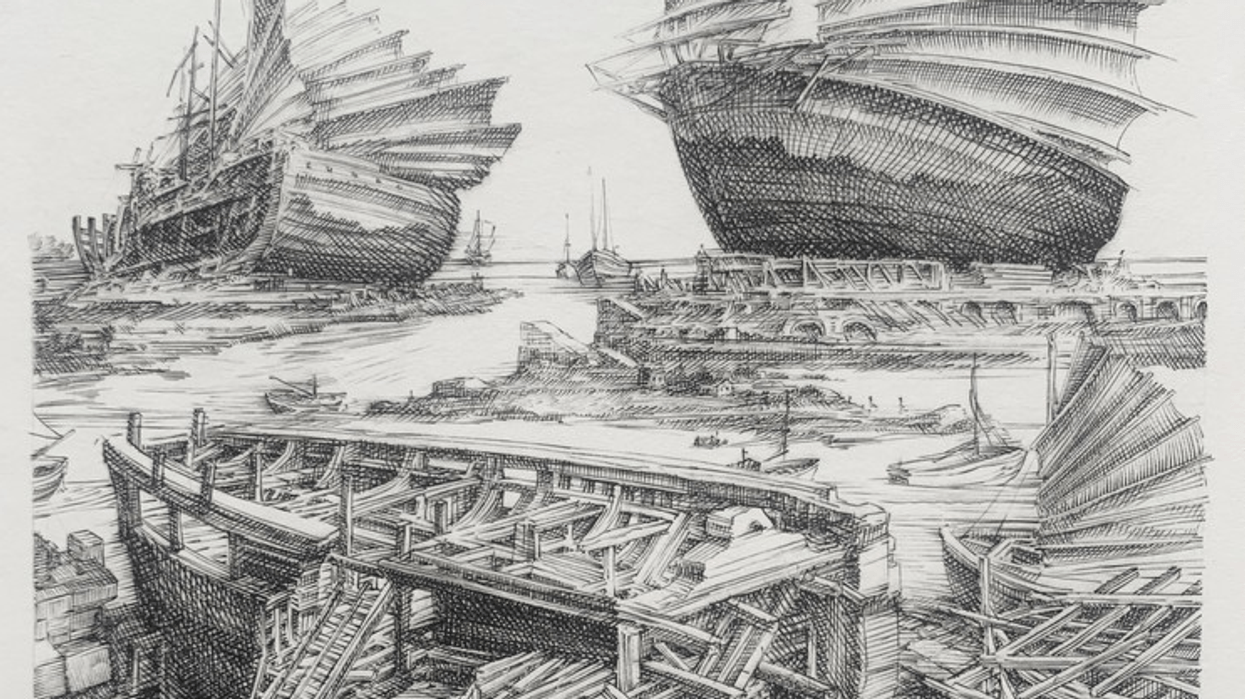
The ancient paradox asks whether a ship retains its identity as its parts are gradually replaced. If the owner replaces the original planks, sails, ropes, and fittings over time, does the vessel remain the same ship? And if someone reassembles all the discarded components into another vessel, which ship represents the original?
The question extends beyond the physical components. What actually gives the ship its identity? Its materials, construction, history, purpose, or the collective experience associated with it?
The same question applies to an entertainment destination, resort, attraction, or hospitality environment.
Consider a successful themed resort that evolves over several decades. Technology advances, attractions change, restaurants adopt new concepts, interiors are renovated, and operational models adapt to new guest expectations. Individual components disappear, and new ones take their place.
Yet the destination retains its identity because the underlying promise, emotional connection, and experience remain recognizable.
Alternatively, a destination might preserve its original architecture and physical features while gradually losing its identity through inconsistent programming, disconnected renovations, compromised operations, and a diminishing understanding of its audience.
The physical components may remain, but the experience has fundamentally changed.
A destination's identity does not reside in any single component. It resides in the relationships between those components and the experience they collectively create.
That distinction should fundamentally influence how projects approach design and development.
The problem with how the industry organizes design
Most professionals recognize the importance of collaboration. The harder challenge is changing the structures that prevent meaningful collaboration.
Traditional project delivery frequently separates architecture, interiors, creative, and engineering into distinct workstreams. Each discipline receives a brief, establishes its scope, and develops solutions against its own deliverables. The project then relies on coordination to bring everything together.
But coordination and integration represent two very different things.
Coordination attempts to reconcile decisions after individual disciplines make them. Integration allows those disciplines to influence decisions before the team makes them.
The distinction matters.
 Successful destination development requires different design disciplines to work towards a shared vision
When architecture establishes the building before creative development begins, the story must adapt to an existing physical framework.
When interior design follows architectural development without meaningful creative input, the environment risks becoming decorative rather than immersive.
When engineering enters too late, technical requirements can force compromises that diminish the original ambition.
When operators enter near completion, operational realities can undermine decisions that appeared successful on paper.
Why does this continue?
Part of the answer lies in procurement structures, contractual boundaries, professional traditions, and the way project teams measure success. Separate appointments encourage separate responsibilities. Discipline-specific budgets encourage discipline-specific thinking. Sequential design programs create handoffs rather than shared ownership.
The industry frequently asks its professionals to collaborate while establishing a project structure that rewards them for protecting individual scopes.
That contradiction deserves more scrutiny.
Exceptional destinations require more than talented individual specialists. They require an integrated approach in which architecture, interiors, creative, and engineering share responsibility for the experience from the earliest stages of development.
The Ship of Theseus illustrates why. Replacing individual components without understanding their relationship to the whole can fundamentally change the vessel's identity. Likewise, developing individual design disciplines without a common understanding of the guest experience can produce a destination that lacks a coherent identity.
Authenticity: the foundation of immersion
Immersion frequently gets associated with sophisticated technology, elaborate environments, spectacular effects, and extensive theming. While these elements can enhance an experience, they do not automatically create immersion.
Immersion begins with authenticity.
Guests recognize when an environment feels genuine, when details support the story, and when every interaction reinforces the character of a place.
Authenticity does not necessarily require historical accuracy or literal representation. A fantasy environment can feel completely authentic when its internal logic remains consistent, and every element supports its imagined world.
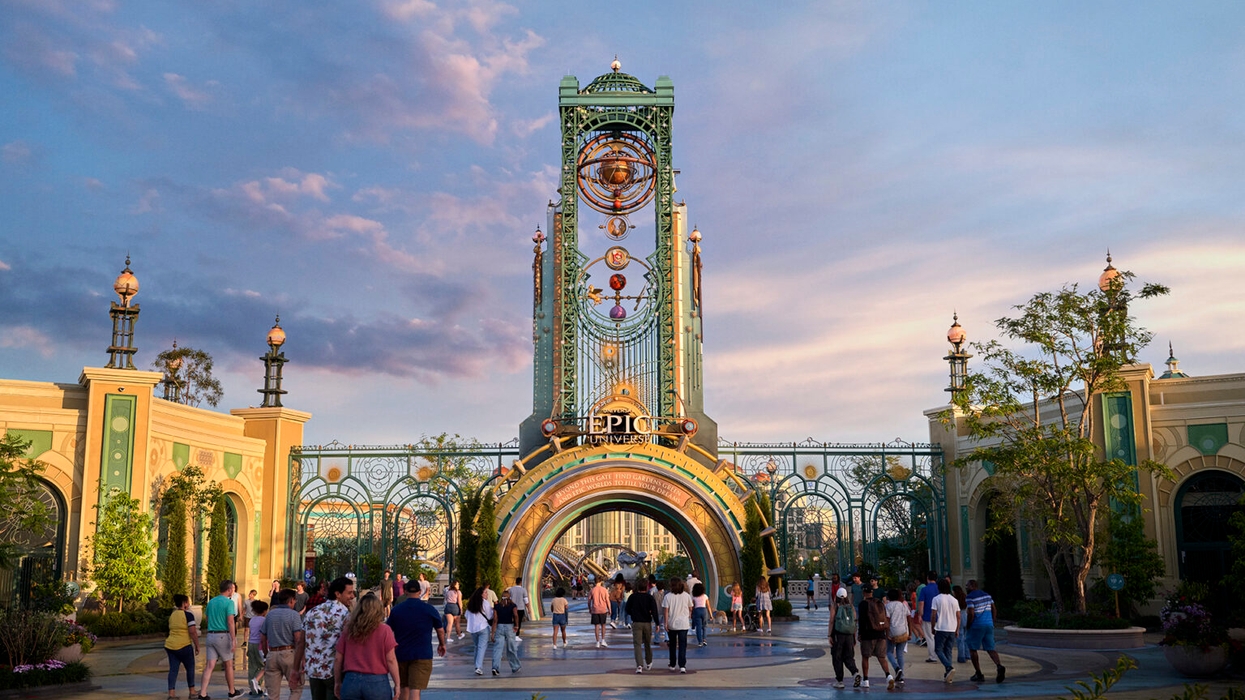
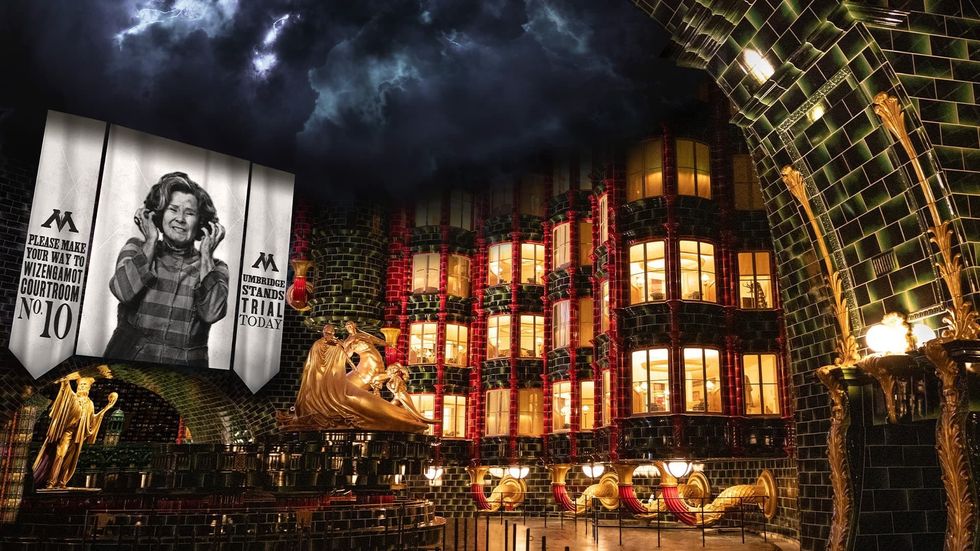 A cohesive environment brings architecture, interiors and storytelling together to create a convincing guest experience Image courtesy of Universal
Consider a themed restaurant. Its architecture, interior finishes, lighting, acoustics, menu, uniforms, service choreography, and even back-of-house operations should reinforce a common identity. If the design promises one experience but service delivery contradicts it, the illusion quickly disappears.
The same principle applies to attractions, hotels, resorts, museums, and entertainment venues.
A compelling environment requires more than applying a creative concept to an architectural shell. The story should influence the architecture, while the architecture should support the story. Engineering should enable the creative vision, and operational decisions should preserve the intended experience throughout the guest journey.
This integration creates authenticity as an inherent quality rather than a decorative layer.
The Ship of Theseus offers another important distinction here: authenticity does not require preserving every original component. It requires preserving the underlying character and purpose of the whole.
A destination can embrace new technology, introduce new attractions, and renovate its interiors without sacrificing its identity. However, every change should reinforce the experience's central promise rather than simply introduce something new.
The guest experience extends beyond the attraction
A destination's identity develops through the entire guest journey, not simply its primary attraction, hotel lobby, or restaurant.
Discovery, booking, arrival, orientation, anticipation, participation, dining, shopping, social interaction, and departure all contribute to the overall impression.
A spectacular attraction can lose its impact through confusing circulation, uncomfortable queues, inadequate shade, poor acoustics, or insufficient amenities.
A luxury hotel can feature extraordinary architecture and interiors but undermine its promise through inefficient check-in, inconsistent service, poor wayfinding, or inadequate operational support.
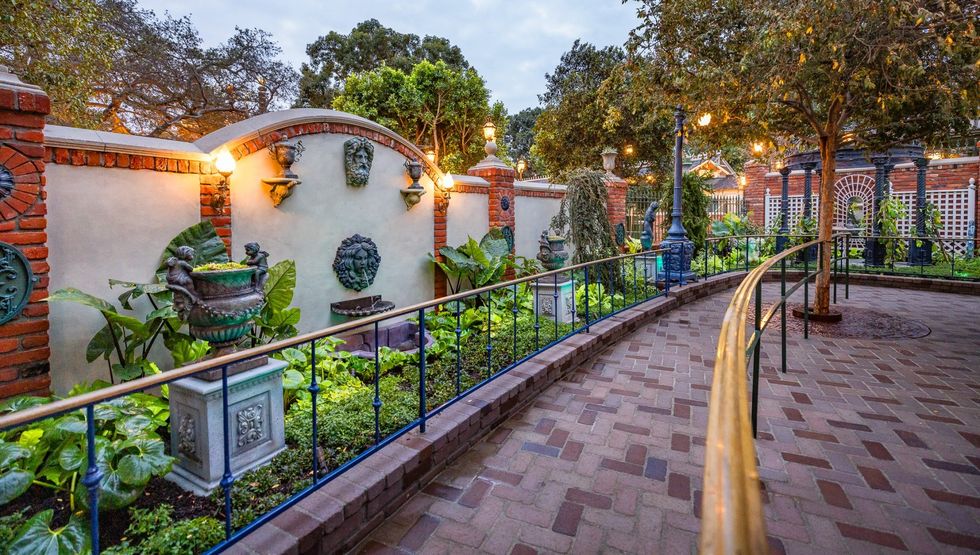 Queues, circulation spaces and transitional environments all contribute to the wider guest journey Image courtesy of Disney
Some of the greatest opportunities for immersion actually occur between the primary experiences.
Queues can build anticipation. Corridors can advance storytelling. Restaurants can extend the narrative. Retail environments can allow guests to take a piece of the experience home.
These transitional moments should receive the same integrated design attention as the headline attractions.
A coherent destination maintains its identity across every touchpoint. A disconnected one asks guests to repeatedly adjust their expectations as they move between experiences.
The distinction influences satisfaction, emotional engagement, dwell time, and the likelihood of return visitation.
Operational excellence: engage the owner/operator from the beginning
One of the most significant opportunities to improve project outcomes is bringing the owner/operator into the design process much earlier.
Too often, operations enter the conversation after the design team establishes the vision and develops the principal solutions. Operators then inherit a facility they must somehow make work.
This approach creates avoidable compromises.
The owner/operator understands the realities of delivering the experience every day: staffing, guest throughput, maintenance, safety, service standards, inventory, food and beverage, cleaning, technology, lifecycle costs, and revenue management.
That knowledge should influence design from the outset.
A food and beverage director can influence kitchen positioning, service routes, storage, and seating configurations. Facilities personnel can identify maintenance access requirements before construction. Guest services can improve arrival, orientation, and accessibility.
Operations leaders can identify circulation conflicts and staffing inefficiencies before they become expensive problems.
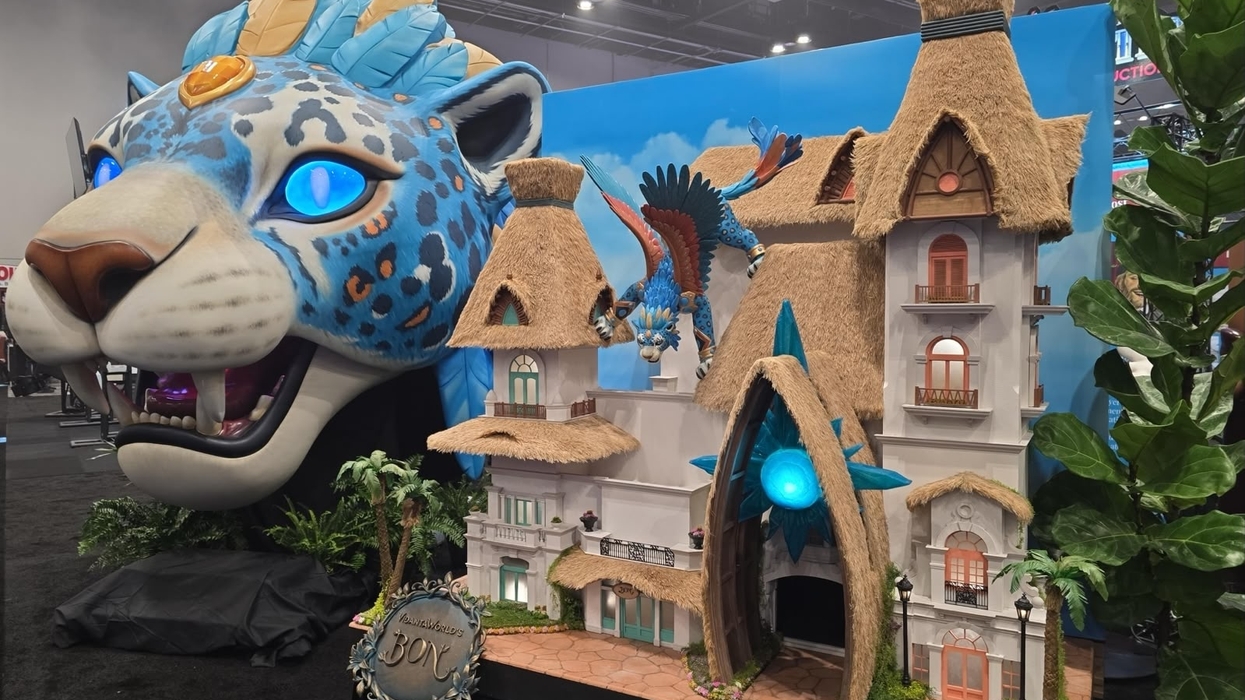
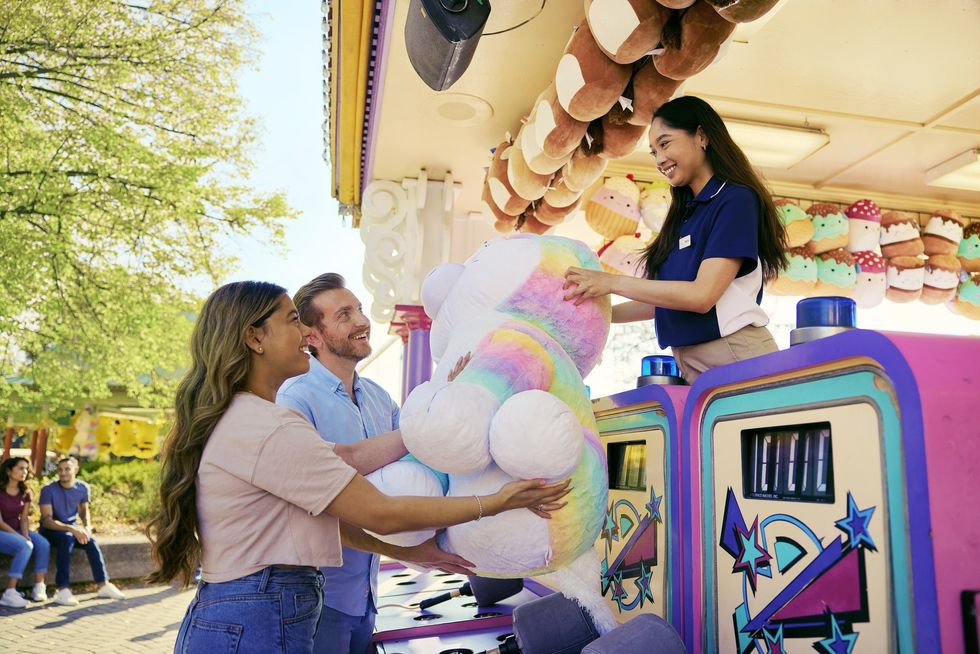 Involving operators early in the design process can help ensure that creative ambitions translate into workable experiences Image courtesy of Six Flags
Consider the design of a queue. Architecture determines its spatial organization. Creative development can turn waiting into storytelling and anticipation. Engineering addresses capacity, climate control, lighting, technology, and life safety. Operations determines throughput, staffing, guest satisfaction, and revenue impact.
Together, these perspectives can transform a necessary operational component into an integral part of the experience.
This makes the owner/operator a creative partner rather than simply the recipient of a completed design.
Operational excellence should never constrain creativity. Operational intelligence should strengthen creativity by ensuring that the team can deliver the intended experience consistently, efficiently, and profitably.
The Ship of Theseus also provides an important lesson about longevity. A destination cannot retain its identity simply by preserving its original design intent. The owner/operator must continually maintain, adapt, and renew the experience as guest expectations, technology, and market conditions evolve.
The real test of an exceptional design does not occur during opening celebrations. It occurs every operating day that follows.
Monetization: design commercial success into the experience
Creative ambition and commercial performance should reinforce one another. Yet project teams sometimes treat revenue generation as an objective that follows design rather than one that informs design.
That mindset needs to change.
Monetization opportunities emerge throughout the guest journey. Food and beverage, retail, premium experiences, memberships, sponsorship, private events, exclusive access, and repeat visitation all contribute to a destination's commercial potential.
These opportunities should influence the design process from the beginning.
The most successful destinations integrate commercial opportunities without interrupting immersion.
A restaurant should feel like a natural extension of the destination. Retail should offer products that reinforce the story. Premium experiences should deliver meaningful additional value. Photograph opportunities should capture memorable moments rather than feel like obligatory sales points.
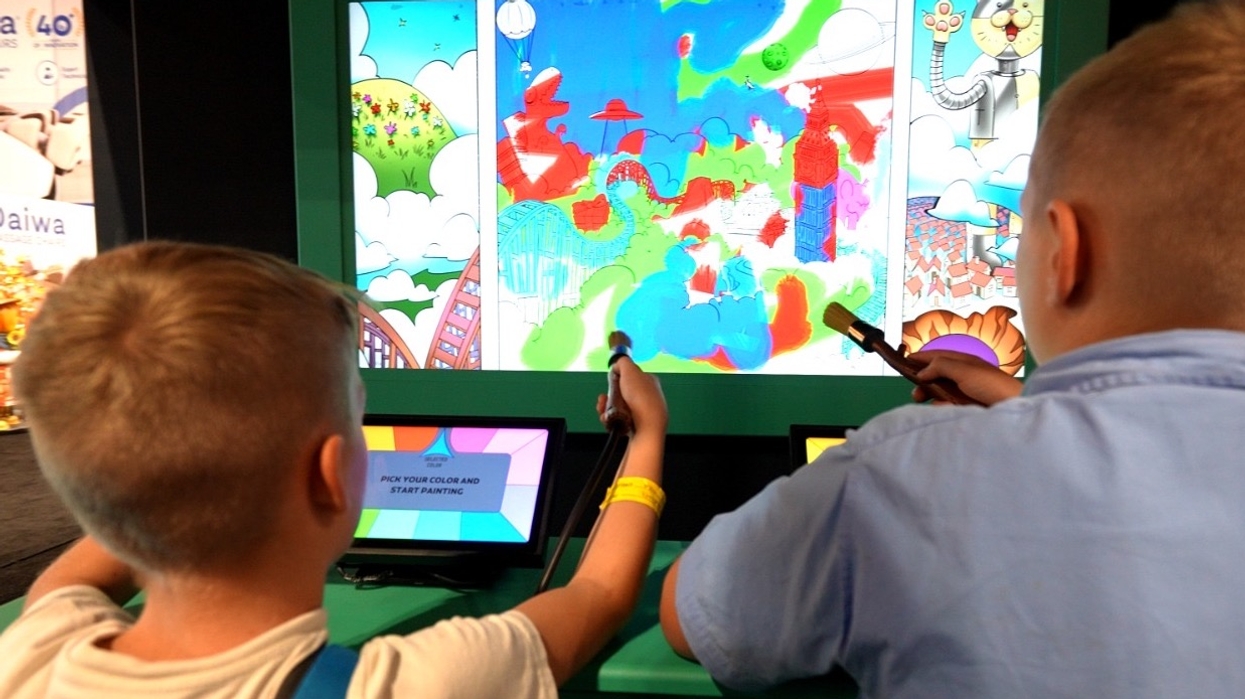
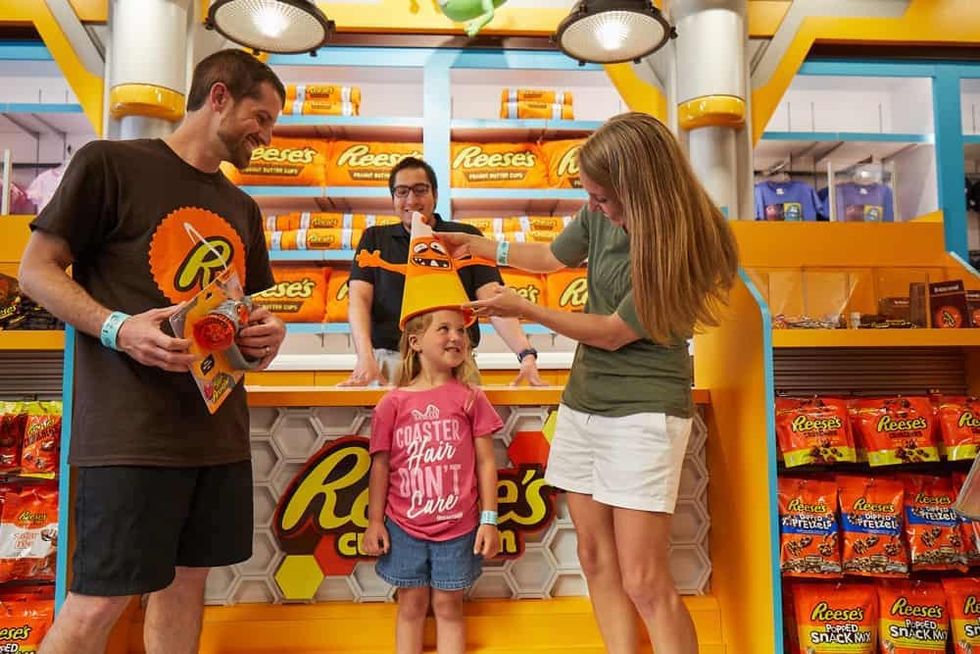 Food and beverage, retail and premium experiences can generate revenue while reinforcing a destination's identity Image courtesy of Hersheypark
When guests connect emotionally with an experience, they often demonstrate greater willingness to spend, explore, participate, and return.
This creates a direct relationship between authenticity, immersion, and commercial performance.
The objective should not simply involve maximizing revenue per guest. It should involve maximizing the value of the overall experience while delivering sustainable financial performance for the owner/operator.
The distinction also changes how capital investment decisions should occur. A design choice should not simply satisfy an aesthetic ambition. Its contribution to guest engagement, operational performance, revenue potential, and long-term asset value deserves equal consideration.
Demographics and guest makeup: design for the audience, not the assumption
Greg's example of the IP-based family entertainment center offers an especially valuable illustration of why established assumptions deserve scrutiny.
His team initially approached the project with conventional expectations about families and younger children.
However, market and demographic information revealed a different opportunity. A significant potential audience included young professionals, with competitive socializing and networking influencing their interests.
That discovery changed the design direction, increasing the emphasis on competitive socializing and food and beverage while retaining the family component.
The lesson reaches well beyond family entertainment centers.
How often do projects target an assumed audience rather than the audience the market actually supports?
Every project should begin with a clear understanding of its anticipated guest demographics and behavioral patterns. Families, couples, young professionals, multigenerational groups, tourists, local residents, and corporate audiences bring different expectations, spending patterns, and motivations.
 Understanding who visits a destination, and what motivates them, should inform its design and programming
Guest composition also changes throughout the day, week, and year.
A destination might attract families during the day, young adults in the evenings, corporate groups on weekdays, and tourists during peak seasons. A resort might serve couples seeking relaxation alongside families seeking active entertainment.
These variations should influence the design.
Flexible dining configurations, adaptable entertainment spaces, varied seating environments, differentiated service levels, and multipurpose facilities can help destinations respond to changing audiences without sacrificing their identity.
Guest demographics should not simply inform marketing campaigns. They should influence architecture, interiors, creative programming, engineering, staffing, and operations.
Understanding the guest also helps owners make better investment decisions. It can influence capacity planning, revenue projections, amenity distribution, operating hours, and capital allocation.
The best design does not force guests into an established category. It responds intelligently to their actual motivations while anticipating how those motivations may evolve.
Returning to the Ship of Theseus, the destination must retain its defining character while adapting its individual components to serve an evolving audience. Without that balance, either the experience becomes irrelevant, or its identity gradually disappears.
Integration requires a different design culture
Achieving this level of collaboration requires more than scheduling additional coordination meetings. It requires a fundamental shift in project culture.
Owners, operators, architects, interior designers, creative directors, and engineers should participate in early conversations about the guest proposition, business model, operational strategy, and intended emotional outcomes.
Several practices can make this approach tangible:
- Start with the guest experience. Establish the desired emotional, physical, and social outcomes before developing individual design solutions.
- Integrate commercial and creative strategies. Understand how storytelling, audience behavior, and revenue opportunities can reinforce one another.
- Engage operations from day one. Bring operational leaders into planning, programming, and design reviews rather than waiting until construction or commissioning.
- Encourage interdisciplinary problem-solving. Evaluate important decisions through creative, architectural, engineering, operational, and commercial perspectives.
- Test before building. Use guest journey mapping, mock-ups, simulations, and operational scenario planning to identify conflicts early.
- Measure performance after opening. Evaluate guest satisfaction, dwell time, repeat visitation, spending, throughput, maintenance, and employee experience.
Most importantly, every participant should accept shared responsibility for the final guest experience.
The architect should understand the story. The creative director should understand the operational implications. The engineer should understand the emotional intent. The operator should understand the creative ambition. The owner should understand how these elements contribute to long-term asset value.
This approach also changes the way success gets measured. Instead of celebrating individual discipline deliverables, the project team evaluates how successfully the complete destination delivers its promise to guests and its objectives to the owner/operator.
The Ship of Theseus: preserving identity while embracing change
The Ship of Theseus ultimately challenges the relationship between physical components and enduring identity.
In entertainment and hospitality, destinations constantly evolve. Technology advances, interiors are renovated, attractions are replaced, food and beverage concepts change, and operators introduce new programming to meet guest expectations.
Yet a destination can retain its identity through these changes.
Conversely, a project can preserve every physical component and still lose its identity when the guest experience no longer reflects its original purpose.
The enduring value of an entertainment or hospitality destination does not rest solely in its physical structure. It rests in the relationship between its environment, storytelling, service, operations, and the memories it creates.
This builds directly on Greg's observation about the danger of becoming too comfortable within individual expertise.
The next evolution of the industry requires more than challenging individual assumptions. It demands a fundamental reconsideration of how projects structure their teams, allocate responsibility, and approach the entire development process.
Guests do not experience organizational charts, professional disciplines, or contractual boundaries. They experience one destination, one journey, and one collection of memories. That perspective should guide every design, operational, and commercial decision.
The Ship of Theseus provides a useful reminder that individual components can change without sacrificing the identity of the whole. However, preserving that identity requires a clear understanding of what gives the experience its meaning and the discipline to protect it through every stage of development and operation.
The future of entertainment, themed entertainment, and hospitality will not belong exclusively to teams with the most sophisticated technology, the most elaborate architecture, or the most ambitious creative concepts.
It will belong to teams that integrate all these capabilities into authentic, immersive, operationally excellent, and commercially successful experiences.
Stop designing buildings that contain experiences. Start designing integrated experiences that happen to require buildings.