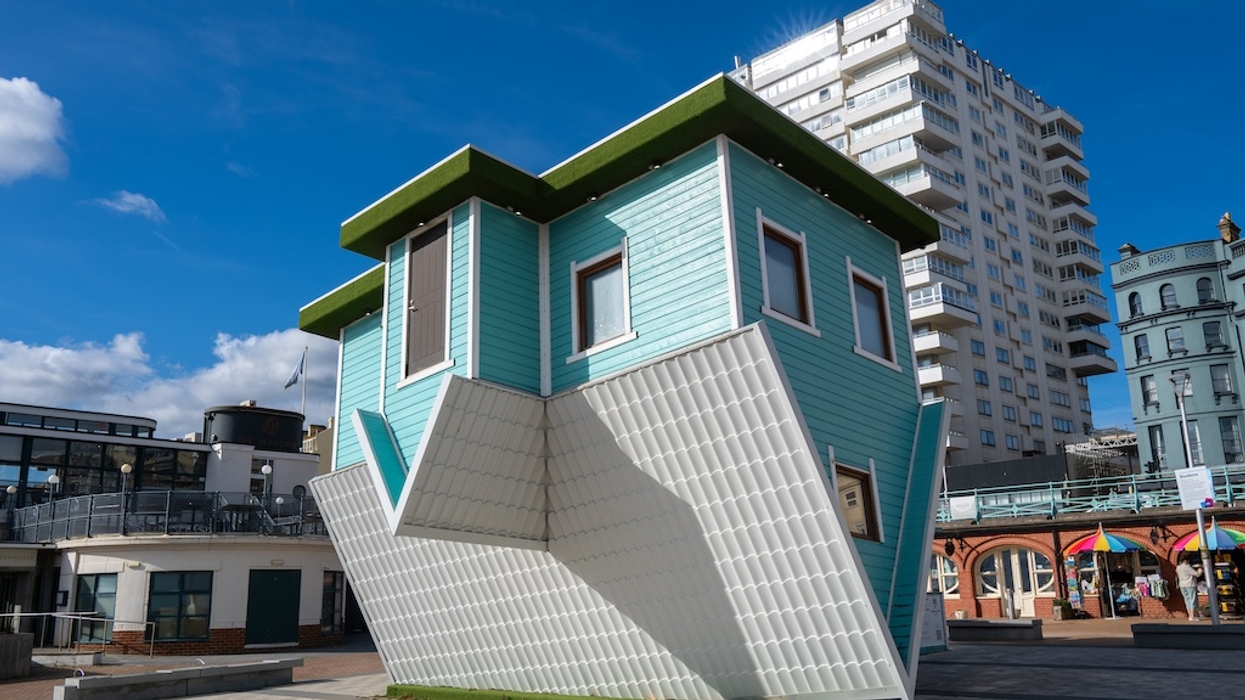

Several years ago, someone told me a story about five monkeys.
It was presented as a scientific experiment, although over time I've learned that the story itself has taken on a life of its own. Whether it actually happened isn't what interests me anymore. The lesson does.
The story goes like this.
Five monkeys are placed in a room with a ladder. Hanging above the ladder is a bunch of bananas. Naturally, one of the monkeys tries to climb it. Each time that happens, every monkey in the room is sprayed with freezing water. Before long, they figure out the connection. The moment one monkey heads for the ladder, the others drag it back down to avoid another soaking.
Then the experiment changes.
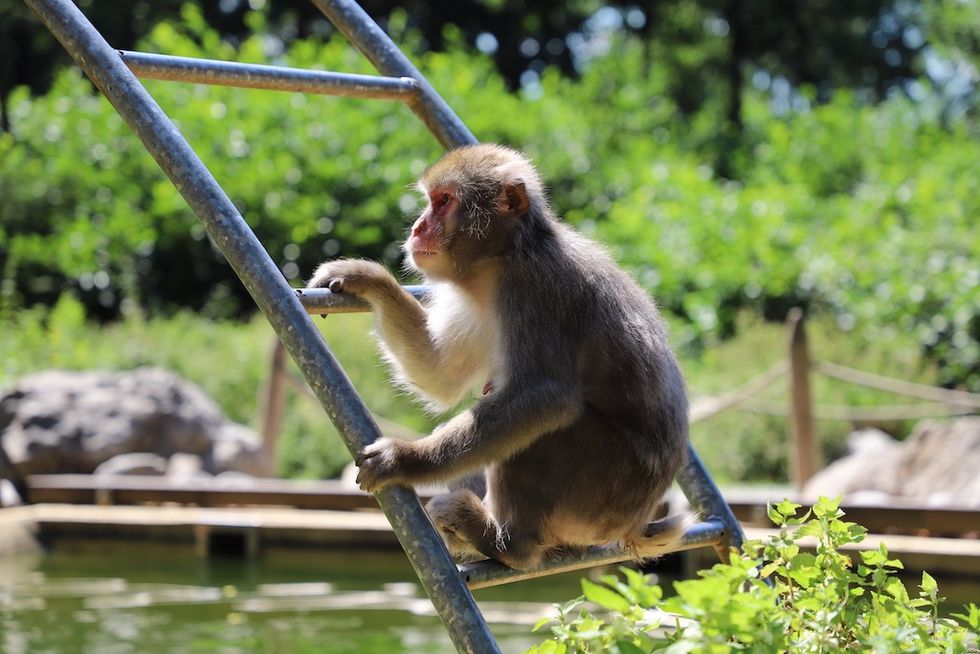 The five-monkey story is a reminder to question why things are done a certain way
One monkey is removed and replaced with a new one. The first thing the newcomer does is head for the bananas. The other four immediately pull it away. Eventually, every original monkey is replaced until none of the animals remaining has ever experienced the freezing water.
Yet they still stop anyone from climbing the ladder.
Not because they know why. Because that's simply how things are done.
I think about that story more often than I probably should.
Not because I believe our industry resists change. In fact, themed entertainment is remarkably good at reinventing itself. New technologies appear almost every year. Guest expectations evolve. Entire business models emerge and disappear.
What fascinates me is something quieter.
How often do we inherit assumptions without realizing we've inherited them?
Same problem, different directions
As designers, architects, producers, writers, and operators, we spend years learning from people who have been doing this longer than we have. That's exactly how it should be. Experience matters. Tradition matters. Some practices in this industry deserve protection because they've been refined over decades.
But every now and then I catch myself saying, "That's just how it's done."
Whenever I hear myself say those words, I get a little uncomfortable. Because sometimes they're true. And sometimes they're just old ladders.
Over the past few years, I've been fortunate to spend time with colleagues from different parts of the world, different disciplines, and different corners of our industry. If there's one thing those conversations have taught me, it's that intelligent people can approach exactly the same problem from completely different directions.
That sounds obvious until you experience it.
A conversation in London about immersive theatre challenged the way I thought about audience participation. A discussion around accessibility made me realise how often designers begin with the "average" guest instead of the full spectrum of guests.
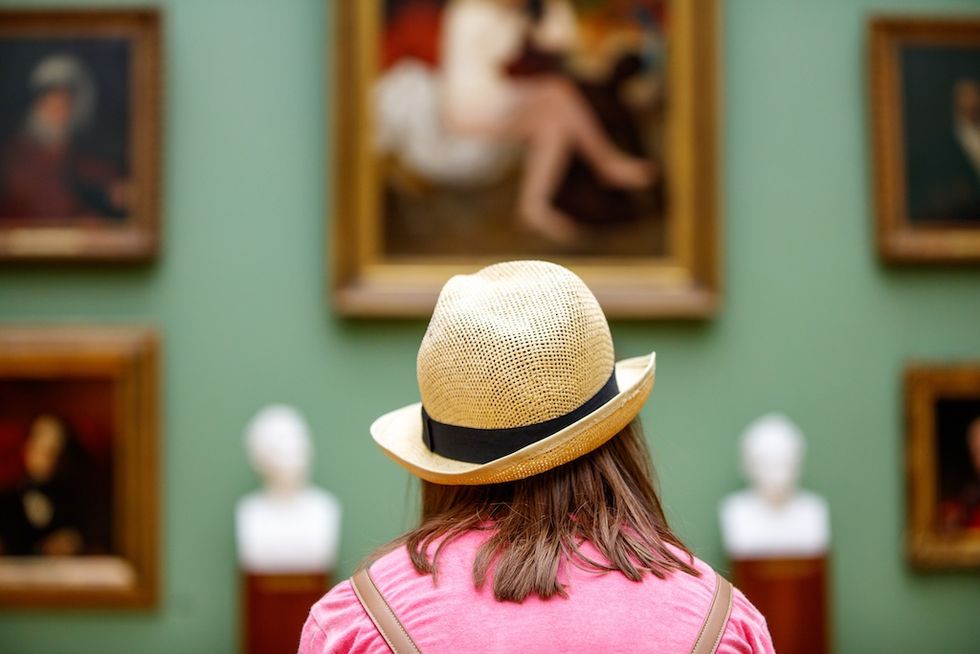 A museum visit can offer designers a different perspective on pacing and storytelling
Walking museums has changed the way I think about pacing. Spending time with architects has made me more aware of how often story is communicated before a single word is ever spoken.
None of those experiences gave me answers. They gave me better questions.
Looking back, I think that's where I've changed the most professionally.
Earlier in my career, benchmarking often meant looking for ideas worth bringing home. I don't think that's enough anymore. Today, I'm far more interested in understanding why something works than what it is.
That's a subtle distinction, but an important one.
Collaboration across disciplines
Take London's West End. It would be easy to return from a trip inspired by an immersive production and immediately start asking how those ideas might fit inside a themed attraction. I've done exactly that.
Now I find myself asking something different.
Why did that audience respond the way they did? What expectations existed before anyone walked through the door? What cultural assumptions allowed that experience to succeed?
Without those answers, we're not really learning. We're collecting souvenirs.
The same thing happens when we travel to Japan and admire the extraordinary level of hospitality. It isn't simply excellent customer service. It's a reflection of cultural values expressed through architecture, operations, communication, and hundreds of small decisions that reinforce one another.
Trying to copy the visible result without understanding the thinking behind it misses the point entirely.
I've started to notice the same pattern much closer to home. Some of the most valuable conversations I've had haven't been with people who do what I do.
 Collaboration across disciplines can bring fresh perspectives to attraction design
They've been with architects. Operations leaders. Museum professionals. Accessibility advocates. Show writers. And one example stands out.
I saw this play out on an IP-based family entertainment centre we were developing. Like most projects of that type, we began with some reasonable assumptions about who the audience would be. We anticipated a significant number of families with younger children, and the early thinking naturally reflected that.
During a design review, we looked more closely at the market data. The number of younger children in the surrounding population wasn't just lower than we had anticipated; it was continuing to decline.
At the same time, the behavioural data was telling us something else. A significant portion of our potential audience was young professionals, and among their interests was a word I don't think any of us expected to see influencing the design of a family entertainment centre: "networking."
That changed the conversation considerably.
We moved away from an experience dominated by children's attractions and towards more competitive socialising, while significantly increasing the role of food and beverage. The family component didn't disappear, but its proportion within the overall experience changed dramatically.
What stayed with me wasn't simply that the data changed the design. It was how nuanced something as seemingly straightforward as demographics and financial feasibility could actually be. We could have looked at the numbers through the lens of what we already knew an FEC was supposed to be and designed accordingly.
Instead, it left me with a couple of questions I find myself asking more often now.
Are we designing the experience this audience actually wants, or the experience our expertise tells us they should want? And if we didn't already know what an FEC was supposed to be, would we design this one the same way?
Genuine curiousity
That's probably the part of this profession I enjoy the most.
Not discovering answers. Discovering blind spots.
Expertise is a wonderful thing. Our industry depends on it. But expertise has a habit of becoming comfortable. We solve familiar problems using familiar tools, and over time those tools begin shaping the way we define the problems themselves.
I don't think expertise is dangerous. I think unquestioned expertise is. There's a difference.
The people I admire most in this industry are rarely the ones who seem convinced they've figured everything out. They're the ones who remain genuinely curious despite decades of experience. They visit museums when they're not designing museums. They attend theatre that has nothing to do with attractions.
They notice airports, libraries, restaurants, hotels, parks, and neighbourhoods because they understand that people don't compartmentalise their experiences nearly as much as we do.
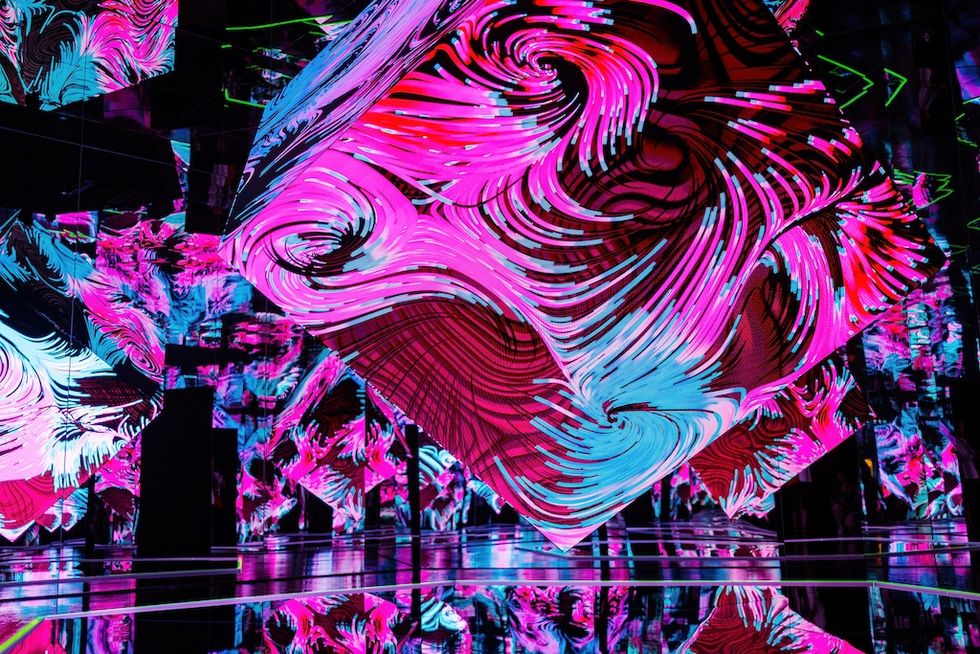 Immersive art can challenge designers to rethink how audiences experience a spaceImage credit kohanova1991 - stock.adobe.com
Ideas don't care where they came from. Why should we?
Perhaps that's the real lesson hidden inside the story of the five monkeys. The danger was never the ladder. The danger was forgetting why it mattered.
As our industry continues to evolve, we'll continue talking about artificial intelligence, immersive technologies, new business models, and the next generation of guest experiences. Those conversations are important.
But I suspect the greatest competitive advantage won't be technology. It will be intellectual humility. The willingness to admit that someone in another discipline, another city, or another country might understand something we don't. The willingness to stay curious long after we've become experts.
Because the most dangerous place for any designer isn't outside their comfort zone.
It's inside an expertise they've stopped questioning.