This is Part 2 of our two-part guide. If you missed Part 1: Culture, CapEx and circular strategy, catch up on how Waterbom Bali, Siam Park, ProSlide, WhiteWater, and Cloward H2O approach executive mindset, lifecycle financial planning, and supply chain circularity.
- Water conservation hierarchy: Efficiency depends on a strict three-tier hierarchy: self-sufficient abstraction, closed-circuit recirculation, and on-site wastewater recycling.
- Next-gen filtration: Regenerative media filters drastically reduce backwash water loss while lowering energy and chemical demand compared to traditional sand filters.
- Rethinking ride height: Low-to-grade water coasters using magnetic or water-jet propulsion slash pumping power by eliminating the need for super-tall launch towers.
- Data-driven ops: Smart automation, digital water chemistry, and cloud monitoring platforms give operators visibility to eliminate hidden leaks and system inefficiencies.
Our experts
Sayan Gulino
Sayan Gulino is CEO of Waterbom Bali, where he has spent more than 15 years helping shape the park’s growth and sustainability strategy. The son of founder Santo Gulino, he has led initiatives focused on environmental responsibility, innovation and operational excellence, including Waterbom’s ambition to achieve net zero emissions by 2033.
Our experts
Christoph Kiessling
Christoph Kiessling is vice president of the Loro Parque Group and director of Siam Park in Tenerife. He joined the family business in 1995 and has played a leading role in developing Siam Park and the group’s attractions. He also serves as President of the Loro Parque Foundation, supporting global biodiversity conservation.
Our experts
Tony Lam
Tony Lam is the sustainability program manager at WhiteWater where he leads the company’s ISO 14001-certified Environmental Management System, integrating sustainability into operations, products, projects, and the processes of each department. He brings nearly 17 years of experience in sustainability, climate action, energy management, and sustainable infrastructure across the public and private sectors.
Our experts
Brad Clawson
Brad Clawson, PE, is associate engineer at Cloward H2O, specialising in aquatic facility design and engineering. He works across waterparks, pools and surf venues, with expertise spanning hydraulic systems, water treatment and sustainable aquatic infrastructure. Clawson supports projects from concept and design through construction, helping deliver efficient, durable and high-performing facilities.
Our experts
Steven Phillips
Steven Phillips is lead composites engineer at ProSlide Technology Inc., with more than 10 years’ experience in composite design, manufacturing and technical support. He specialises in fibre-reinforced plastic structures, materials, testing and lifecycle maintenance, helping develop and bring new technologies to market while supporting performance, durability and reliability.
Water management strategies: closed loops, desalination & hydraulic design
Water is the lifeblood of any water park, but sustainable management requires disciplined engineering that eliminates wasteful losses without compromising rider safety or thrill.
"Water management begins by understanding where water is actually lost—evaporation, filter backwashing, splash-out, drag-out, leaks, showers, food service, and landscape irrigation." — Brad Clawson
"Optimised hydraulic design through proper pipe sizing, efficient layouts, and reduced head loss creates lasting savings in both water and energy," says Brad Clawson, associate engineer at Cloward H2O.
To manage water efficiently, aquatic engineers and operators follow a three-tier hierarchy:
- Tier 1: Abstraction & self-sufficiency: Abstracting seawater for on-site desalination to avoid saturating municipal public water supplies.
- Tier 2: Closed-circuit recirculation: Capturing, filtering, and continuously recirculating water through automated systems to prevent splash-out and system loss.
- Tier 3: Onsite recycling & secondary reuse: Treating filter backwash and restroom/shower greywater via onsite treatment plants for secondary applications like landscape irrigation.
"If you don't measure your water use, you can't improve it. The data tells you where you're losing water, where you're being efficient, and where you need to focus your efforts." — Sayan Gulino
At Waterbom Bali, containing water within closed-circuit systems forms the backbone of operations. "First of all, we need to track and understand how much water is consumed each day," says CEO Sayan Gulino.
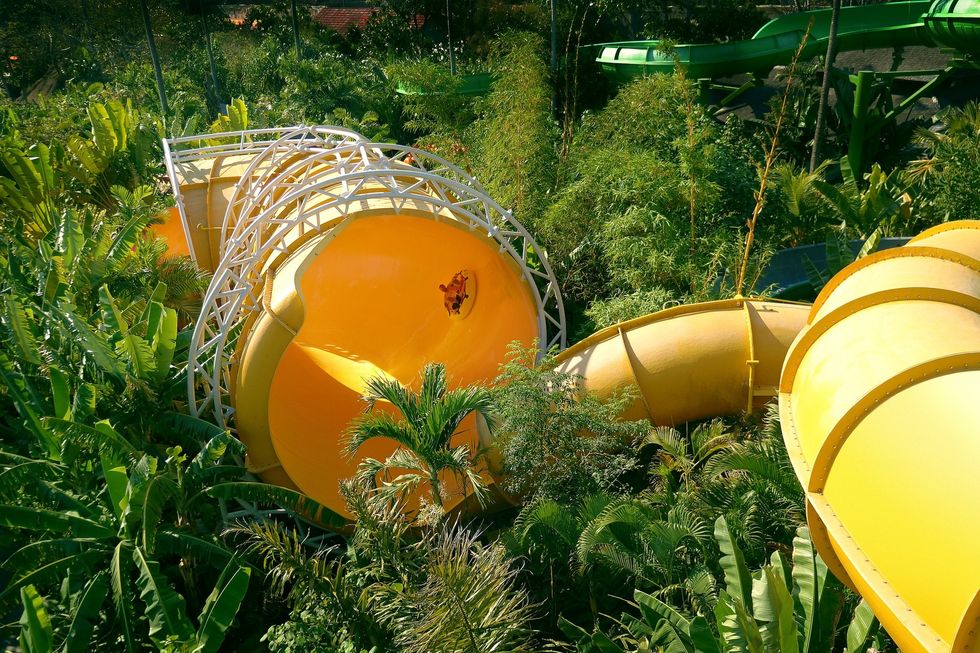
Waterbom Bali has set a goal to hit net zero by 2033
Image courtesy of Waterbom Bali
"We operate an on-site Sewage Treatment Plant (STP) where wastewater from our toilets and showers is treated and safely reused to irrigate our gardens. That gives the water another purpose before it returns to the environment."
Siam Park employs a similar closed-loop model adapted for island geography.
"The water we use in the attractions comes from our own desalination plant, where seawater is transformed into fresh water," says director Christoph Kiessling. "All water is filtered and recirculated through completely automated systems.
"The water that is finally discarded from the filtration process is reused for garden irrigation."
From a manufacturer’s perspective, right-sizing water flow is critical to reducing energy consumption. "Parks and suppliers should focus on using only the amount of water required for a safe and fun ride experience," says Tony Lam, sustainability program manager at WhiteWater.
"While it may be tempting to assume 'less is better', a drier water slide often results in faster speeds! Finding that sweet spot is important. Less unnecessary water movement means lower energy demand, lower operating costs, and better overall system efficiency."
Mechanical upgrades: filtration, VFDs & material durability
When evaluating mechanical retrofits or new installations, less glamorous infrastructure upgrades often deliver the fastest financial payback and greatest utility reductions:
- Regenerative media filters: Replace traditional sand filters to dramatically reduce backwash water loss, improve water clarity, and lower chemical and power demand.
- Variable Frequency Drives (VFDs): Paired with demand-based scheduling to prevent full-speed pump operation during periods of lower bather loads.
- Advanced oxidation (UV & Ozone): Improves water quality, eliminates chloramine formation, and reduces harsh chemical usage.
- Durable gelcoats & coatings: Sourcing premium gelcoats and UV-resistant coatings extends attraction lifespans over decades of operation.
- Insulated indoor composites: Indoor water parks in colder climates benefit from insulated fibreglass components that reduce structural heat loss and save energy.
"A crucial innovation in water management has been offering coral-safe sunscreens through our shops, preventing the accumulation of harmful chemical micro-contaminants in our filtration circuits." — Christoph Kiessling
"Regenerative media filters significantly reduce backwash volumes while improving water quality and lowering chemical demand," says Clawson.
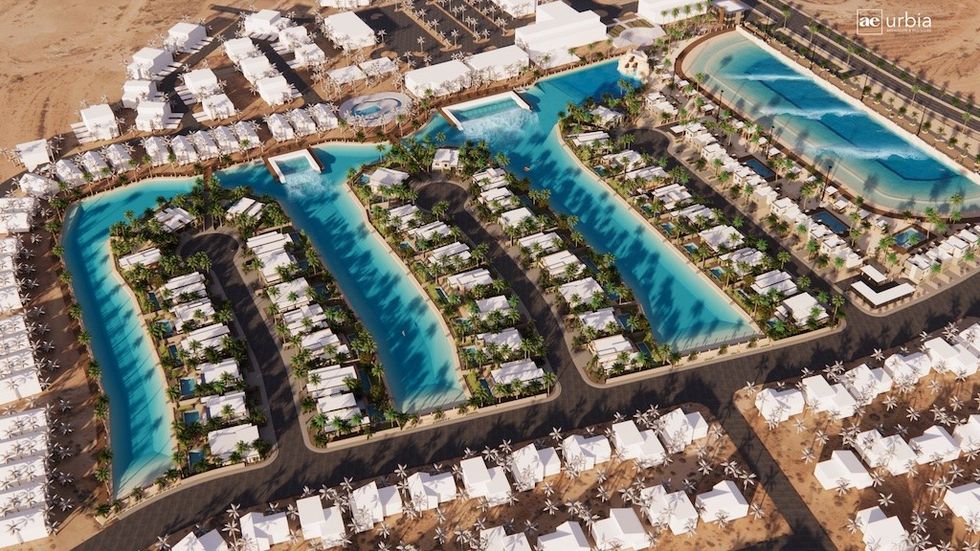
Cloward H2O is bringing sustainable engineering to the Zion Shores surf development
AeUrbia"Variable frequency drives (VFDs) paired with demand-based scheduling prevent unnecessary full-speed operation during periods of lower use. UV and ozone systems improve water quality and reduce chloramine formation."
Material durability also plays a massive, often overlooked role in long-term sustainability. Steven Phillips, lead composites engineer at ProSlide, notes that sourcing high-quality composite materials generates direct environmental and business returns.
"More durable composite materials, improved gelcoats, and UV-resistant coatings help extend attraction lifespans while reducing maintenance requirements over decades of operation," says Phillips.
"Every additional year of reliable service reduces material consumption, replacement manufacturing, transportation, and maintenance impacts."
In addition, material efficiency during initial manufacturing cuts end-of-life impact. "Composite fibreglass is difficult to recycle," says Lam.
"Using less of it upfront is currently our best option to minimise waste when products reach end-of-life. Furthermore, integrating theming directly into fibreglass components reduces the need for additional, non-recyclable materials while simplifying installation."
Attraction engineering: low-to-grade rides & smart digital controls
Emerging engineering innovations are proving that water parks can deliver world-class thrills without relying on massive, energy-intensive launch towers.
"Leveraging technology to deliver thrilling attractions without the need to pump water to super-tall towers represents the future of sustainable water parks." — Steven Phillips
"Using technology strategically, rather than relying on extreme ride heights to create excitement, represents the future of sustainable water parks by significantly reducing pumping power requirements," says Phillips.
ProSlide’s HydroMagnetic and RocketBLAST water coaster technologies showcase this shift in design.
By launching rafts low to the ground—often within 10 feet of grade—and utilising launch conveyors or ProSPLASH start/end landing pool combinations, engineers optimise water volume and eliminate the massive energy required to continuously pump water up to 100-foot towers.
Unlike traditional tower slides that require high-altitude pumping, continuous energy draws, and large splash-down pools, low-to-grade water coasters start near ground level, use magnetic propulsion or water jets to drive the raft, and integrate ProSPLASH landing zones to slash water volume and energy footprints.
At the same time, digital monitoring and cloud automation are giving operators unprecedented real-time control over park operations.
"You cannot optimise what you cannot measure. Digital monitoring, improved controls, hydraulic modelling, and energy management platforms enhance operational clarity." — Tony Lam
"Digital monitoring, improved controls, better performance data, hydraulic modelling, and energy management systems can all help operators understand how their parks are actually performing," says Lam.
"WhiteWater’s Vantage platform is a great example of what we are doing to enhance clarity on park operations so operators can approach optimisation strategically."
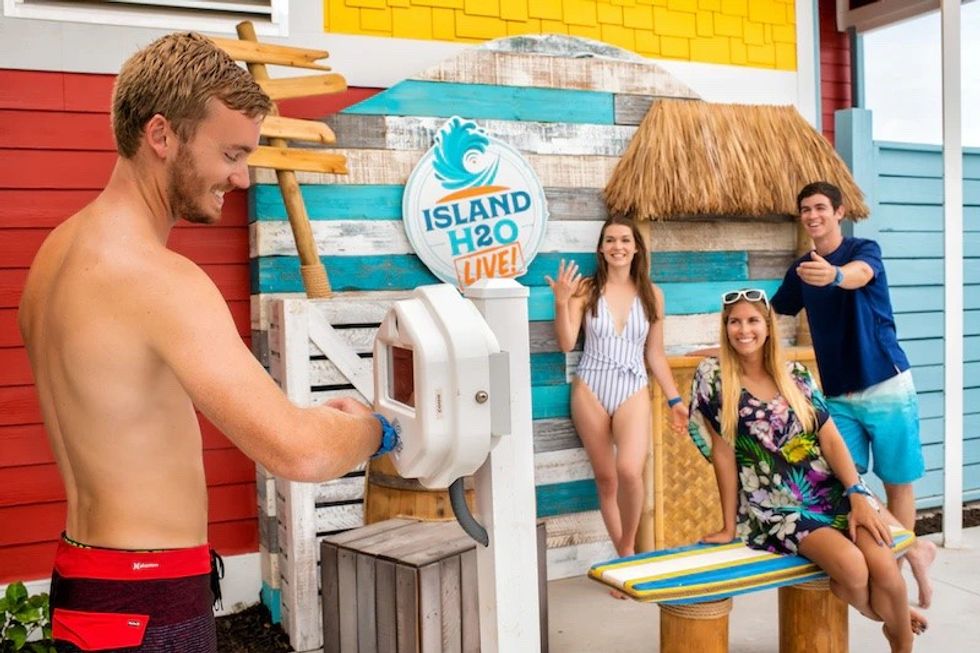
WhiteWater's Vantage system in action at Island H2O water park, Florida
Image courtesy of WhiteWater
Clawson points out that smart controls extend to everyday chemistry and support infrastructure.
"Intelligent controls, predictive maintenance platforms, digital water chemistry monitoring, and high-efficiency motors provide operators with better data and real-time visibility.
"Additionally, support building infrastructure—such as HVAC systems, laundry operations, kitchens, and LED lighting—must be engineered for efficiency alongside the water rides themselves."
The operational takeaway
Achieving true sustainability is neither a single technological silver bullet nor a temporary marketing trend.
As demonstrated by Waterbom Bali, Siam Park, ProSlide, WhiteWater, and Cloward H2O, sustainable leadership in 2026 relies on a holistic combination of conscious executive culture, rigorous Total Cost of Ownership evaluation, right-sized hydraulic engineering, and continuous data monitoring.
By designing efficiency into attraction infrastructure from day one, water parks can protect essential natural resources, reduce long-term operating costs, and secure their social licence to operate for decades to come.