WhiteWater’s Vantage platform, a next-generation visitor engagement and technology unification solution, is now deployed at 12 visitor attractions across the US.
The rollout marks one of the most ambitious guest technology integrations in the attractions business, connecting ticketing, payments, loyalty, food and beverage, retail, access control and mobile engagement into a single ecosystem designed around the guest.
But what happens once a visitor attraction has invested in a new technology? How does it adapt to the needs of frontline employees, evolve alongside the operations, and continue delivering value long after launch?
Blooloop speaks to Charlie Hill, head of product at Vantage, and Lucas Appratto, customer success manager at Vantage, about the people using the platform every day, how the technology can evolve over time, and why an ongoing partnership between an operator and its technology provider is key to long-term success.
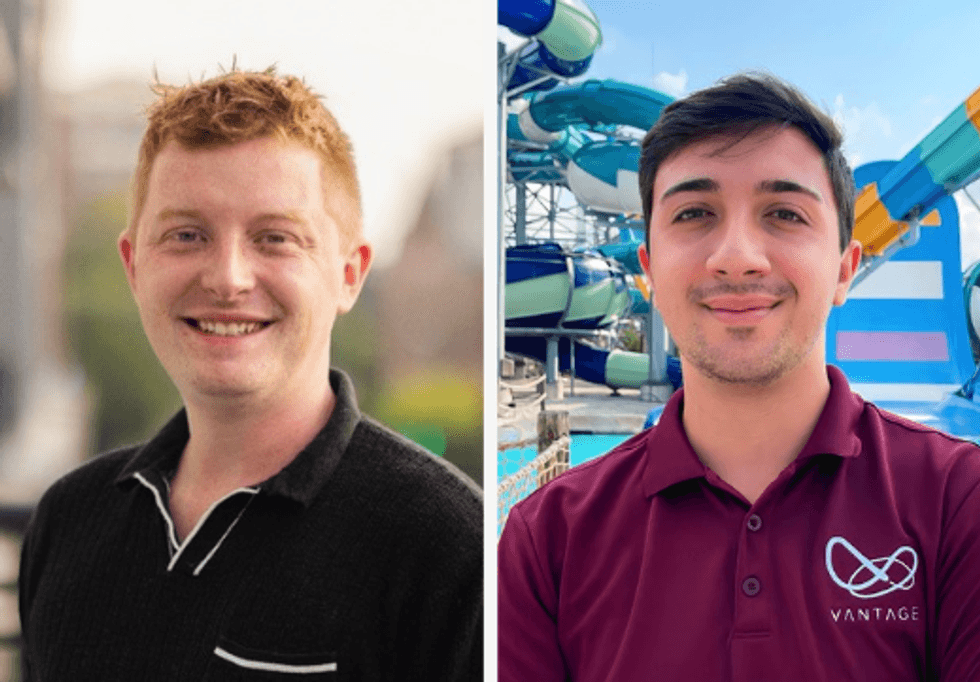 Charlie Hill, head of product at Vantage, and Lucas Appratto, customer success manager at Vantage
For Appratto and Hill, ensuring the platform works for the people using it every day is a crucial part of the process. That means listening closely to frontline employees – the people who interact directly with guests and rely on the systems throughout the day.
In early 2026, EPR acquired seven Six Flags properties, with Enchanted Parks operating the six US sites, which are: Valleyfair (Minneapolis, Minnesota), Worlds of Fun (Kansas City, Missouri), Michigan’s Adventure (Grand Rapids), Schlitterbahn Waterpark Galveston (Texas), Six Flags St. Louis (Missouri), and Six Flags Great Escape (Queensbury, New York).
The Vantage system is powering each park’s operations.
Combined, the above theme parks welcomed around 4.5 million visitors for the full year ended 31 December 2025, generating approximately $260m in net revenue.
Listening to frontline staff
“A lot of it comes down to speed. One extra tap on a screen is never going to show up on a dashboard; leadership wouldn’t look at it. But multiply it by 1,000 guests in front of you on a hot Saturday, and suddenly there’s a long line right in front of you. The staff notice the little things,” Appratto says.
“We actually had a case where tapping cancel on one screen undid the guest’s redemption, and so they didn’t count towards attendance. It was the gate teams who flagged it; a simple, easy mistake to make that affects a bigger process inside of the park.”
He adds: “I’ve been the person at the gate with a line in front of me. When a site tells me something isn’t working, I actually get it, and I feel the anxiety that they feel.”
 WhiteWater's Vantage: Why launching new technology is just the beginning WhiteWater
One example comes from Appratto’s tenure as a frontline employee at Island H2O Water Park in Florida, which integrated the Vantage platform in 2019. At the time, the water park encountered an issue with processing annual passes, which resulted in long queues and a frustrating experience for guests.
Appratto was part of the marketing team, but due to the long lines at the site, he was assisting guest services with processing season passes.
“At the beginning of each season or as a specific sale went live, we would have thousands of people who wanted to get their benefits or cards, and we would have lines out into the parking lot," he says.
Recognising the need for an improved approach, Appratto proposed a digital solution that would streamline pass processing and improve the guest experience.
Improving the guest experience
“It needed to be fixed because the experience for the guests was horrible, so I brought a solution to the team, first at the park, and asked if we could process annual passes digitally,” he says.
“We had Vantage technology at the site, and I called up Aaron [Mendelson, Vantage senior vice president], who is now my boss. I told him about the issue and how it was affecting the visitor experience, and how it might be a good segue into getting people to download the app and start getting engaged with the technology in the park before they even get there.”
Guests use a mobile app, part digital assistant and part wallet, to interact with attractions powered by Vantage.
Technologies in the platform for visitors include fast, tokenised cashless transactions; in-app purchasing to add upgrades, merchandise and experiences straight from a phone; and a gamified loyalty layer that rewards them for exploring and engaging.
“Aaron went away and talked to the ticketing partners, and then they developed the solution to be able to virtually process guest passes, which eliminated the lines for pass processing at the front gate once we rolled it out,” says Appratto.
After launch
“Typically, we go into hypercare mode once we’ve got the technology live at the client site. We watch and make sure that it’s working exactly the way that it’s supposed to,” Hill tells us.
“We can do all the research on the front end that we possibly can, but when we get the product into a user’s hands, it may not work the way that they need it to. We go into a phase called rapid response engineering.
"We address concerns as fast as we possibly can, and stay in the loop until we’ve got it working the way that it needs to.”
Appratto says: “Ultimately, launch day isn't the finish line. It's really just the beginning of the relationship between the operator and us, the technology. Testing tells us if the system works. Opening day tells us if it works with the line at the door and hundreds of people right in front of us.”
 Guests use a mobile app, part digital assistant and part wallet, to interact with attractions powered by VantageWhiteWater
Solid communication, Hill says, is part of a healthy relationship between an attraction and its technology partner once the product is up and running.
“It sounds so trite, but it’s about really solid communication and direct lines of communication to the people who can make decisions. A lot of the time, the people who can authorise a decision are different to the people who are experiencing the pain or benefits of a decision,” he adds.
“What we try to do is make sure that we have an ongoing relationship with the theme park, and make sure that there’s a voice at the table who understands what it’s really like to use the tool, who might be experiencing pain points or benefits, or asking for a feature.”
Communication and collaboration
Hill says: “We make sure that everyone is involved and aligned to the same goal. Not every operator wants to run their sites the same way. Some companies are really operator-minded, and some are obsessed with the guest experience and want to talk about the operations later.”
Collaboration and transparency are key, according to Hill and Appratto.
Hill says: “As long as there is a tremendous amount of collaboration between the theme park operations and our company across different levels, we can build the tools that will optimise for the goals that they want to achieve.”
Appratto adds:
“To me, a healthy relationship is one with no surprises in either direction, where the customer feels comfortable telling us early on when something isn't working, and where we are honest about what we can fix now versus what can be a bigger change down the road. As long as there's transparency, that's what a healthy relationship looks like.”
 In early 2026, EPR acquired seven Six Flags properties, including Worlds of Fun in Kansas City, Missouri EPR
From a wider product development perspective, “the absolute best feedback about how something should work comes from the people who use that software every day”, Hill says.
“You may have spent 30 years in product development, but then you’ve got a 16-year-old running admissions and having a hard time with some particular flow. Everyone’s voice matters very much, and we will take the time to listen to you,” he adds.
“The faster you can take that feedback from those frontline folks and iterate it into a great product, or get it out there and test, test, test, the quicker you get to the best solution in the situation.”
An evolving product
The product should ideally evolve as an attraction and its operations change and grow, Hill says:
“It’s really important that you don’t build and design in a way that you’re rigid to the way that the product worked yesterday, and that you anticipate that priorities, processes and desires are going to change.”
Additionally, building a platform that can serve different attractions means striking a balance between responding to the specific needs of an individual site and creating technology that can evolve across the wider industry. The platform, Hill says, “has to work for everybody”.
“If we build something that’s overfit to one use case, then sometimes that’s not going to scale out well to others. The very first thing we do once we get a requirement is start thinking about the general principles behind what the operator wants to achieve.
"Sometimes an operator will describe what they want in a really specific way, and we have to take that apart and look at the pieces,” he adds.
 Enchanted Parks has selected the Vantage platform as its visitor engagement and technology unification solution WhiteWater
That does not mean asking operators to change the way they run their attractions to fit the technology, as Vantage aims to remain open to different approaches.
“If somebody wants to do something differently, we do not say, ‘No, we’re not going to do that.’ We’re very respectful of the following principle, which is that we want to help operators run their parks the way that they want to run their parks. The principle of being open minded really matters,” Hill says.
He adds:
“What we've learned from working with operators that we wouldn't learn from development in isolation is that not every principle applies equally in all contexts, and the absolute best thing to do is to go sit with the operator, watch what's happening, listen to them, and when they say something, particularly when it it runs against what you already believe, is just say, ‘I trust you and I'm going to put a lot of stock into that.’”
Trends in the attractions business
Hill predicts that integrating every touchpoint of the visitor journey will become increasingly important to the theme park and attractions industry. “It’s going to matter more and more over time,” he says.
At Enchanted Parks, for example, the Vantage ecosystem includes TicketSpice for ticketing and distribution, VersioPay for omni-channel payments, Zucchetti's TC POS for food, beverage and retail, and Lodgical for resort operations.
Each was chosen for its strength in its own domain, with Vantage unifying them into a single guest record.
 EPR has acquired seven Six Flags properties, with Enchanted Parks to operate the six US sites EPR
“We think there will only be more collaboration between vendors in the future. There will only be more specialists wanting to participate in things,” Hill adds.
“We're betting and observing that the companies that are the absolute best at what they do will continue to stand out and innovate in their particular lanes. But they may not become generalists across the space, so they will always need great integration partners who are going to be there to help tie everything together and make it work the way that it's supposed to.”