- Culture precedes technology: Authentic sustainability starts with executive intention, staff alignment, and measurable resource tracking—not superficial greenwashing.
- CapEx vs. Total Cost of Ownership: Evaluating solar arrays, onsite desalination, and durable composites over a 20-year lifecycle proves far more economical than chasing low upfront capital costs.
- Procurement alignment: Suppliers and manufacturers must be vetted against strict environmental policies before signing initial design contracts.
- Operational circularity: True sustainability extends beyond rides to encompass zero-landfill waste diversion, Km0 seasonal dining, plastic-free packaging, and coral-safe sunscreens.
Our experts
Sayan Gulino
Sayan Gulino is CEO of Waterbom Bali, where he has spent more than 15 years helping shape the park’s growth and sustainability strategy. The son of founder Santo Gulino, he has led initiatives focused on environmental responsibility, innovation and operational excellence, including Waterbom’s ambition to achieve net zero emissions by 2033.
Our experts
Christoph Kiessling
Christoph Kiessling is vice president of the Loro Parque Group and director of Siam Park in Tenerife. He joined the family business in 1995 and has played a leading role in developing Siam Park and the group’s attractions. He also serves as President of the Loro Parque Foundation, supporting global biodiversity conservation
Our experts
Tony Lam
Tony Lam is the sustainability program manager at WhiteWater where he leads the company’s ISO 14001-certified Environmental Management System, integrating sustainability into operations, products, projects, and the processes of each department. He brings nearly 17 years of experience in sustainability, climate action, energy management, and sustainable infrastructure across the public and private sectors
Our experts
Steven Phillips
Steven Phillips is lead composites engineer at ProSlide Technology Inc., with more than 10 years’ experience in composite design, manufacturing and technical support. He specialises in fibre-reinforced plastic structures, materials, testing and lifecycle maintenance, helping develop and bring new technologies to market while supporting performance, durability and reliability
Our experts
Brad Clawson
Brad Clawson, PE, is associate engineer at Cloward H2O, specialising in aquatic facility design and engineering. He works across waterparks, pools and surf venues, with expertise spanning hydraulic systems, water treatment and sustainable aquatic infrastructure. Clawson supports projects from concept and design through construction, helping deliver efficient, durable and high-performing facilities.
Defining true sustainability: culture, mindset & total cost of ownership
Creating a sustainable water park in 2026 requires moving far beyond isolated "green" marketing campaigns or superficial PR exercises.
Historically, environmental initiatives focused on basic impact mitigation.
Today, leading operators view sustainability as a core operational discipline that drives asset resilience, reduces risk, and builds long-term business value.
"The word 'sustainability' is so broad, and the definition has evolved," says Sayan Gulino, CEO of Waterbom Bali.
"Generally, it used to be about doing a few environmentally friendly things in a business. Today, it’s about how the entire business operates—from its culture and policies to how it measures resources and whether those decisions genuinely reduce environmental impact."
"Sustainability starts simply with the culture and the intention. Are we conscious enough to actually be a sustainable water park rather than just a 'greenwashing' one?" — Sayan Gulino
Gulino emphasises that genuine resource sensitivity starts with executive culture.
"What does the business intend to do? At Waterbom, we break resource management into three core areas: water, waste, and energy. We measure consumption across all three. If you don't measure your usage, you can't improve it."
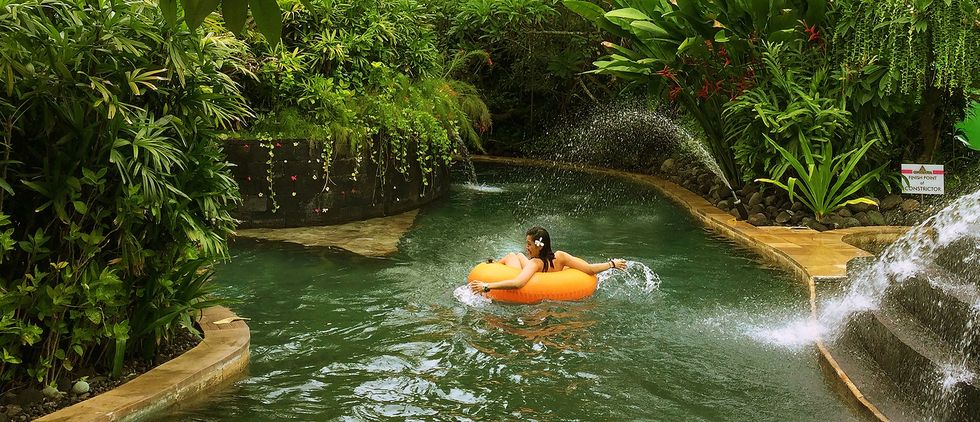
Sustainability is a key value for the team at Waterbom Bali
To evaluate organisational readiness, developers and operators should assess three core dimensions:
- Cultural fit: Shared internal values, clear environmental policies, and complete staff alignment to ensure sustainability is an authentic core principle rather than greenwashing.
- Operational fit: Precise resource auditing, closed-loop fluid circuits, on-site waste processing, and continuous operational tracking.
- Financial fit: Long-term Total Cost of Ownership (TCO) evaluation, durable material specification, and right-sized hydraulic engineering.
From a venue management perspective, resource self-sufficiency and social integration define modern leadership. Christoph Kiessling, director of Siam Park in Tenerife, believes true sustainability occurs when a park generates its own core resources.
"It is not enough to simply not pollute; value must also be contributed to the local community by supporting regional agricultural producers and guaranteeing that park waste is transformed into new resources." — Christoph Kiessling
"In the past, thinking about sustainability was associated with mitigating impacts; in recent years, it moved to focus on circular operation," explains Kiessling. "Currently, a symbiosis has been made with social resilience."
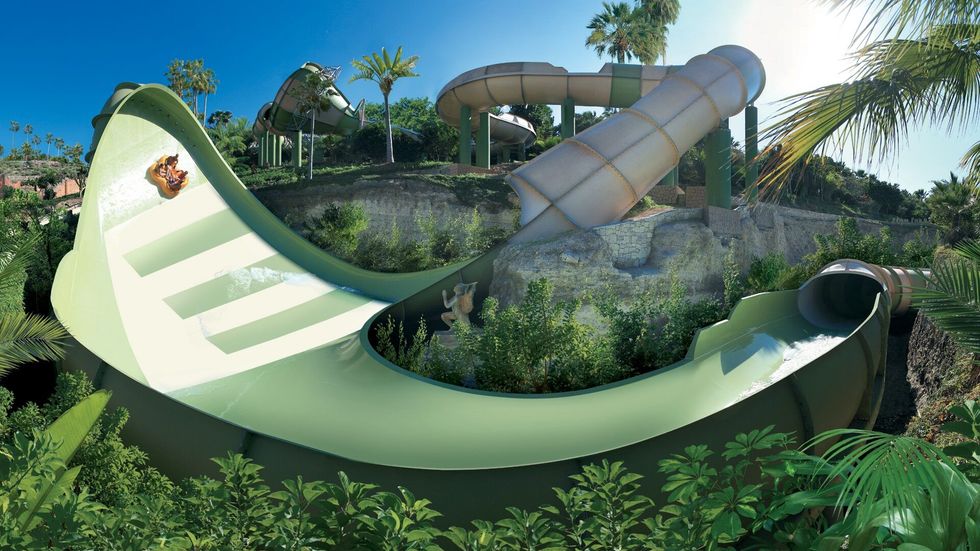 One of the world's most popular water parks, Siam Park is frequently featured in the TripAdvisor Travellers Choice awards
 From a manufacturer’s perspective, building resilient assets is fundamentally sound engineering.
Tony Lam, sustainability program manager at WhiteWater, notes that the conversation across the sector has shifted firmly toward business performance.
"It is no longer just about compliance or corporate responsibility. The conversation has shifted toward business value: improving operational efficiency, reducing risk, strengthening quality, and lowering lifecycle costs." — Tony Lam
"In many cases, a sustainability initiative is simply a good engineering or asset management decision," Lam adds.
Sourcing & procurement: aligning values before signing contracts
Achieving ambitious environmental targets requires early, structured alignment between park owners, designers, and equipment suppliers.
If environmental objectives are squeezed into a project after contracts are finalised, costs skyrocket and options narrow.
"They need to follow our policy, essentially," Gulino says about vendor selection.
"If they can't follow our policy, then we have to find other suppliers that do. We need to vet who we want to work with and understand a third party's track record, so we don’t compromise our mission and values."
Kiessling agrees, advocating for long-term strategic alliances over transactional buyer-seller relationships.
"When financial and environmental targets linked to equipment performance are established right from the design phase, the entire life cycle of an attraction can be evaluated," he notes.
To keep sustainable projects on track, operators should structure collaboration across three distinct project phases:
- Phase 1: feasibility & concept: Vet vendors against internal eco-policies, set shared TCO and performance targets, and right-size hydraulics before finalising scope or signing contracts.
- Phase 2: construction & procurement: Train technical teams on sustainable tech, enforce jobsite waste management, and select eco-labelled, zero-kilometre consumables and textiles.
- Phase 3: operations & feedback: Involve frontline maintenance personnel in early design reviews to ensure real-world reliability and maintain continuous data sharing between operator and supplier.
"Designing with sustainability in mind from the outset during the design phase is far more effective than trying to retrofit solutions later in the project." — Steven Phillips
This early alignment allows engineers to challenge legacy assumptions during the conceptual stage. Steven Phillips, lead composites engineer at ProSlide, emphasises that establishing goals early enables suppliers to recommend technologies that improve efficiency without compromising guest experience.
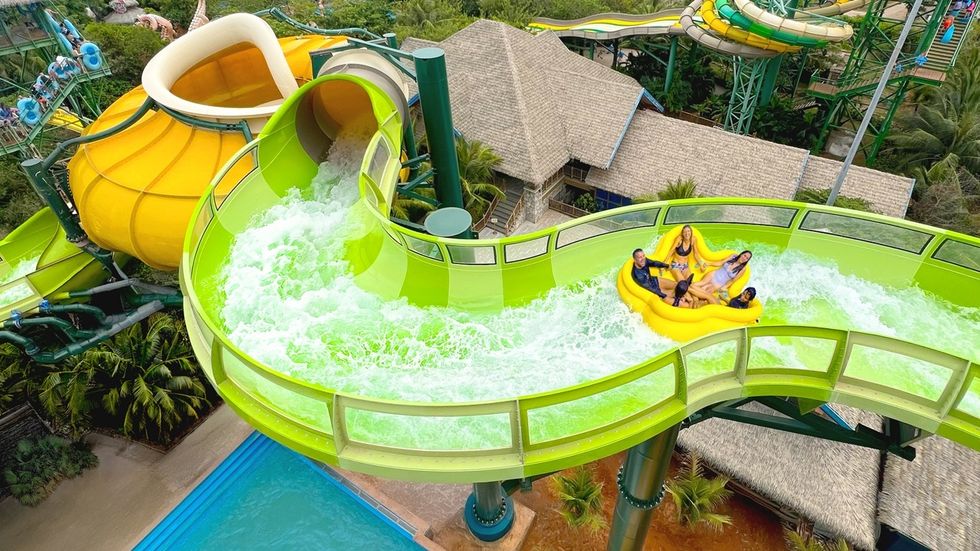
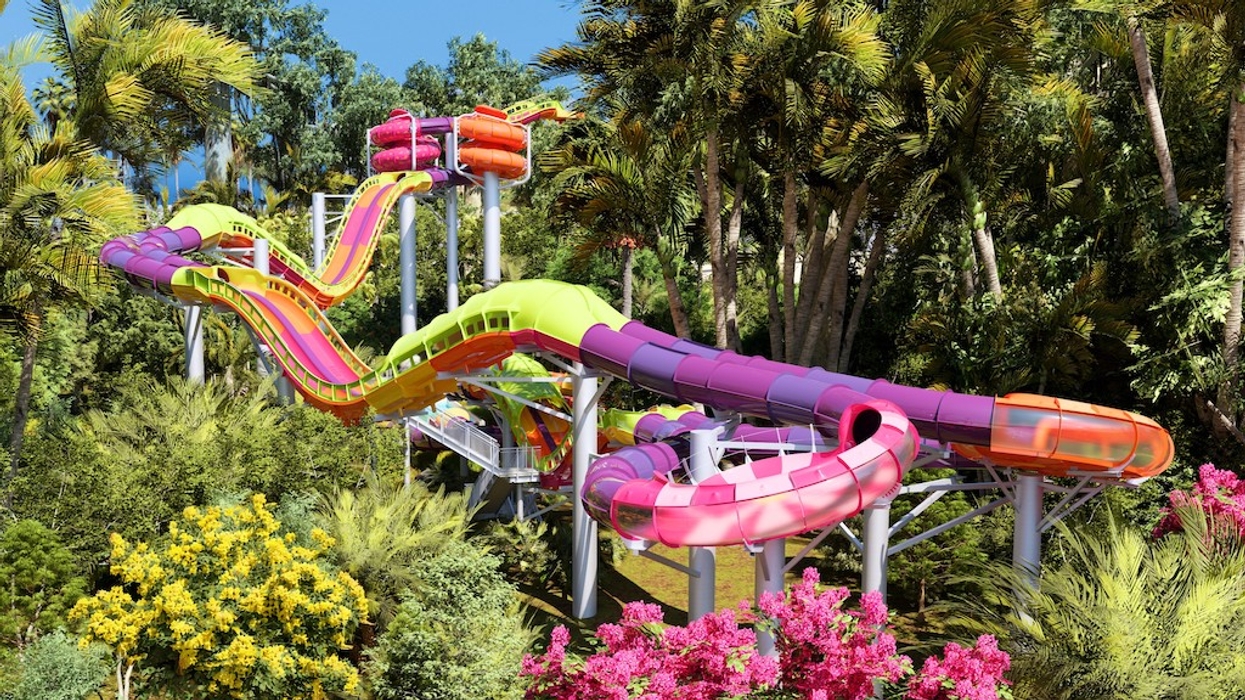
The world-first PowerRAPIDS water ride from ProSlide at Aquatopia Water Park in Vietnam
"One often overlooked barrier resides within hidden assumptions embedded in the design process itself," says Lam.
"Elements of design processes are standardised to manage risk, but they may contain hidden inefficiencies like layered risk thresholds or outdated default values.
"Identifying and testing those assumptions against current technology prevents overengineering that inflates water and energy specifications."
The ROI of circular operations: waste, energy & regional supply chains
While high initial capital expenditure (CapEx) remains a primary hurdle for operators looking to install solar arrays, high-efficiency pumps, or on-site treatment plants, evaluating equipment strictly through first-cost purchasing is a costly mistake.
"Cost is generally the biggest hurdle for most businesses," says Gulino. "More energy-efficient pumps come with a high upfront capital cost, and solar panels require significant investment.
"But if you can demonstrate the long-term return on investment, these solutions eventually become not only the more responsible option, but often the more economical one as well."
Waterbom Bali’s solar panel infrastructure currently generates 11% of the park's total energy footprint.
Furthermore, by establishing an aggressive on-site composting system and rigorous source-separation policies, Waterbom diverts over 99% of its total operational waste from landfills.
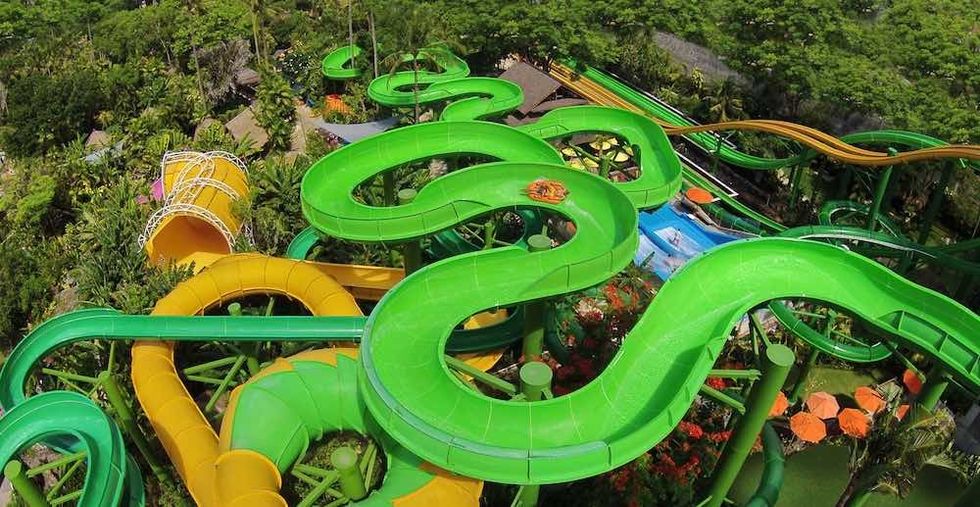
Waterbom Bali is home to several water slides and attractions from WhiteWater
Siam Park pursues a similar circular economy by focusing on operational supply chains, zero-plastic initiatives, and green energy sourcing.
- 100% certified green energy: Offsets indirect operational carbon emissions by purchasing power exclusively from verified renewable energy suppliers.
- Zero-plastic & can logistics: Replaced single-use plastic bottles entirely with 100% recyclable aluminium cans and coordinates reverse logistics with beverage suppliers for container recycling.
- Km0 gastronomy: Prioritises seasonal, regionally sourced food items that are 100% palm oil-free, directly supporting local farmers while cutting freight emissions and preventing palm-oil-driven deforestation.
- Sustainable merchandising: Replaced conventional textiles with sustainable cotton T-shirts and towels featuring zero-kilometre local eco-printing.
- Coral-safe sunscreens: Offers coral-safe, chemical-free sunscreens in retail outlets to protect marine environments and prevent micro-contaminants from fouling park filtration circuits.
"The biggest obstacle is the enormous initial financial investment required for infrastructure like desalination plants or high-efficiency equipment, whose financial benefits take years to materialise," says Kiessling.
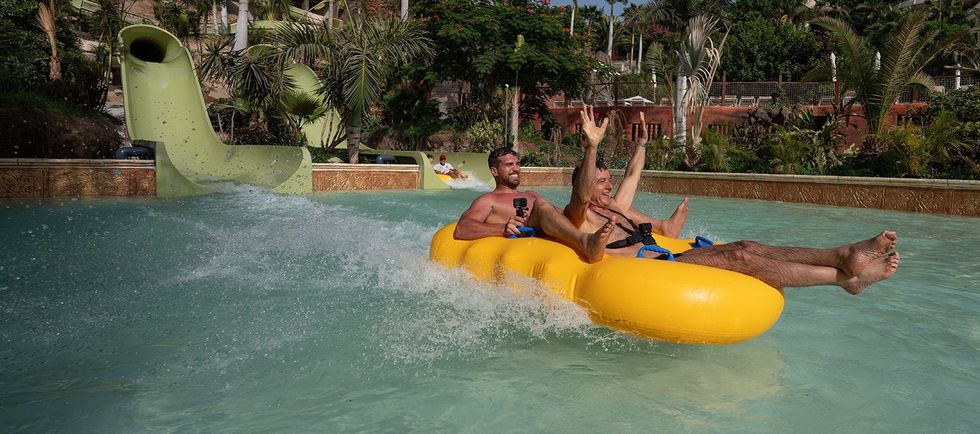
Guests splash down after riding Siam Park's Saifa from ProSlide
"To this, we add slow bureaucracy for permits, and the fact that responsible alternatives—such as fresh local food, organic cleaning products, and compostable packaging—are often more expensive than standard products.
"However, closed-loop systems reinforce self-sufficiency and eliminate operational risk."
Future roadmap: decarbonisation & the social licence to operate
Over the next decade, water park operators will face mounting scrutiny regarding carbon footprints, water scarcity, and community resource allocation. Maintaining a "social licence to operate" will depend entirely on transparent stewardship and measurable data.
"The energy transition is the challenge to decarbonise entertainment," says Kiessling.
"Moving and heating millions of litres of water generates a massive carbon footprint. Infrastructure designs must integrate different forms of renewable energy: solar, high-efficiency geothermal, and thermal storage systems."
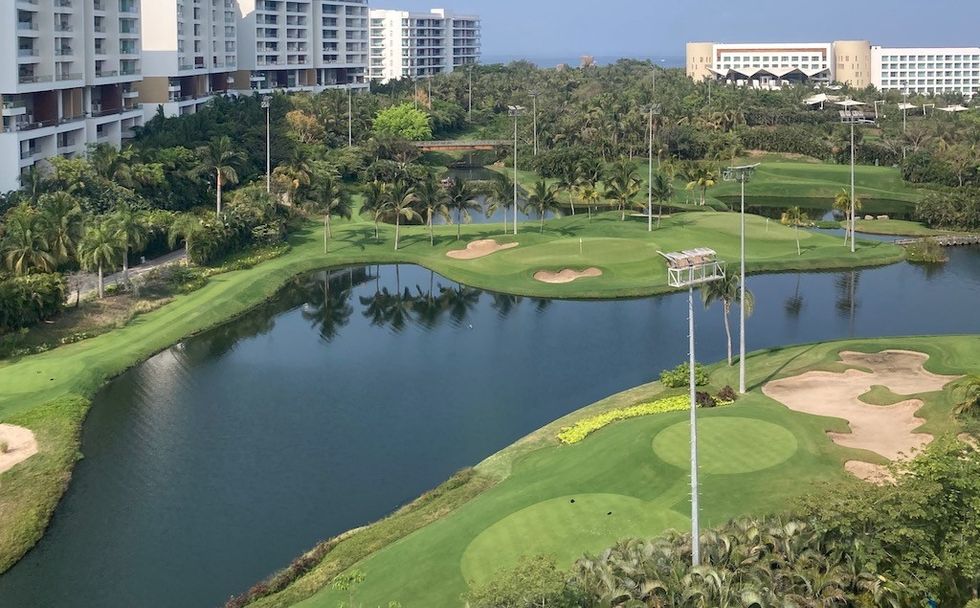
Cloward H2O delivered sustainable solutions for Vidanta Resorts
"The greatest challenge will be maintaining a social licence to operate amid increasing water scarcity. Over the next decade, thoughtful engineering and measurable performance, not just visible 'green' features, will define leadership." — Brad Clawson
Brad Clawson, associate engineer at Cloward H2O, notes that public expectation will dictate future development approvals:
"Water parks will need to demonstrate responsible stewardship through transparent reporting and measurable performance metrics. Parks that can measure and continuously improve water, energy, and chemical use per guest will be best positioned with regulators, investors, and communities."
Three core questions for your executive sustainability audit
Before committing capital to future developments or retrofits, executive teams should evaluate three foundational questions:
- Baseline audit: Do we have precise, real-time data measuring our current water, waste, and energy consumption per guest, or are we operating on assumptions?
- Lifecycle evaluation (TCO): Are we evaluating equipment, ride specs, and building infrastructure based on 20-year Total Cost of Ownership or short-term CapEx savings?
- Vendor & cultural alignment: Have we embedded mandatory environmental benchmarks into our procurement policies before signing contracts with designers and equipment suppliers?
Still to come in part two, our expert panel dives deep into the technical mechanics of sustainable water park design: closed-loop fluid circuits, regenerative media filtration, right-sized hydraulic pumping, VFD automation, and low-to-grade water coaster engineering.