No longer a minor concern for the global attractions industry, sustainability is rapidly shaping how destinations are designed, operated and experienced.
From local museums and zoos to Saudi Arabian tourism destinations, operators are rethinking their role in addressing some of the planet’s most urgent environmental challenges, and also responding to a growing demand for meaningful, purpose-driven experiences.
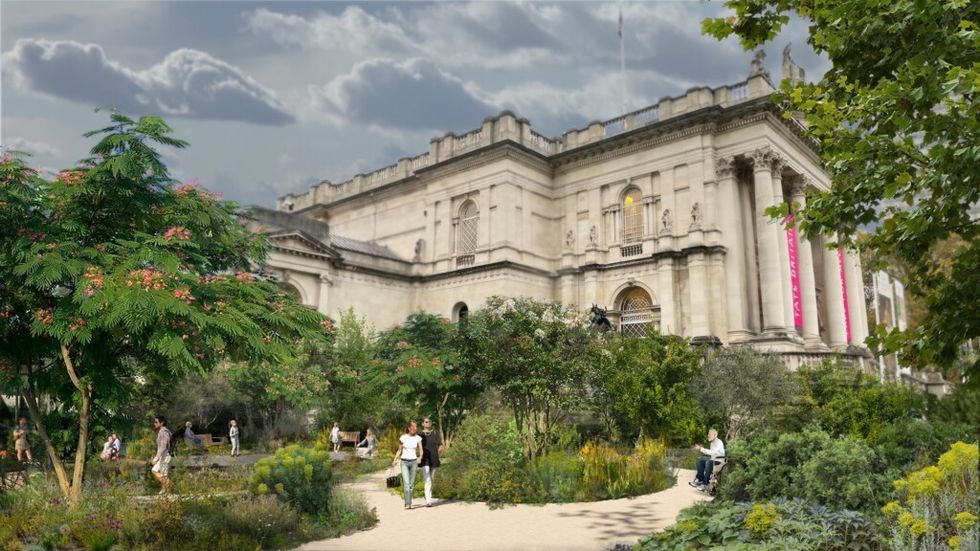
Tate Britain's garden plans
Whether it’s through AI-powered conservation tools, urban green spaces, or collaborative partnerships, attractions are positioning themselves as catalysts for positive change.
Here, blooloop explores the top sustainability trends for 2026, from regenerative design to community engagement.
Conservation projects
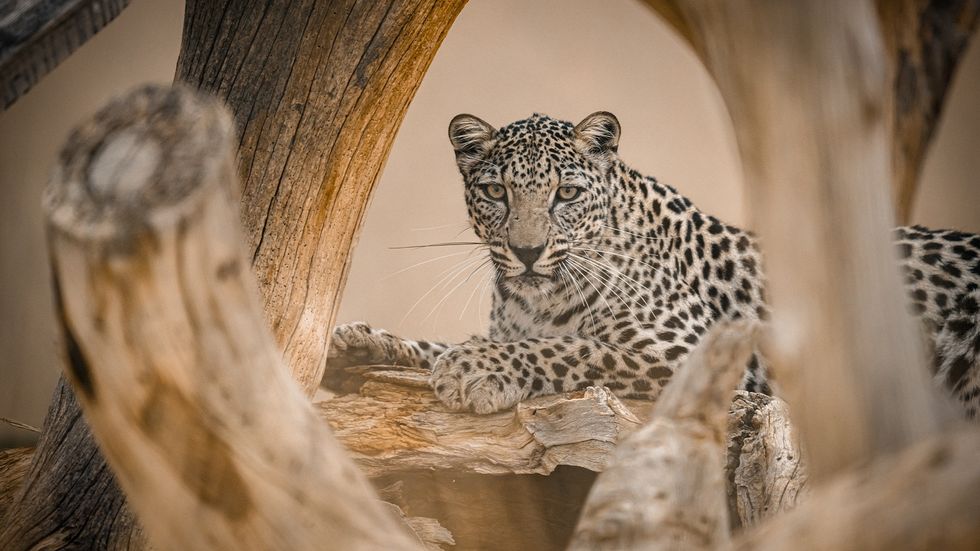
Arabian leopard
Zoos and aquariums are already known for their conservation efforts, taking part in breeding programmes for endangered species, as well as both in-situ and ex-situ initiatives such as wildlife protection, habitat restoration and public education.
Aquariums in particular focus on projects such as coral reef restoration and plastic pollution reduction.
Operators of different types of attractions are increasingly signing up for conservation projects.
For example, theme park, water park and zoo operator Parques Reunidos is working to protect wetlands, while the Smithsonian’s zoo has partnered with AlUla on the conservation and loan of critically endangered Arabian leopards from Saudi Arabia.
Also in Saudi Arabia, regenerative tourism developer Red Sea Global has completed the kingdom's largest-ever red mangrove restoration effort.
This initiative builds on the developer's wider mangrove restoration programme, which includes the successful transplantation of more than 3 million gray mangrove seedlings to date.
In the UK, plans have been submitted for a new conservation and wildlife-led visitor attraction called Wild Rutland.
The project’s CEO, Hugh Vere Nicoll, said:
"Wild Rutland aspires to be an exemplar model of conservation-led ecological-tourism – one that restores heritage landscapes, reconnects people with nature and sets a benchmark for sustainable land management in the UK."
Environmental experiences
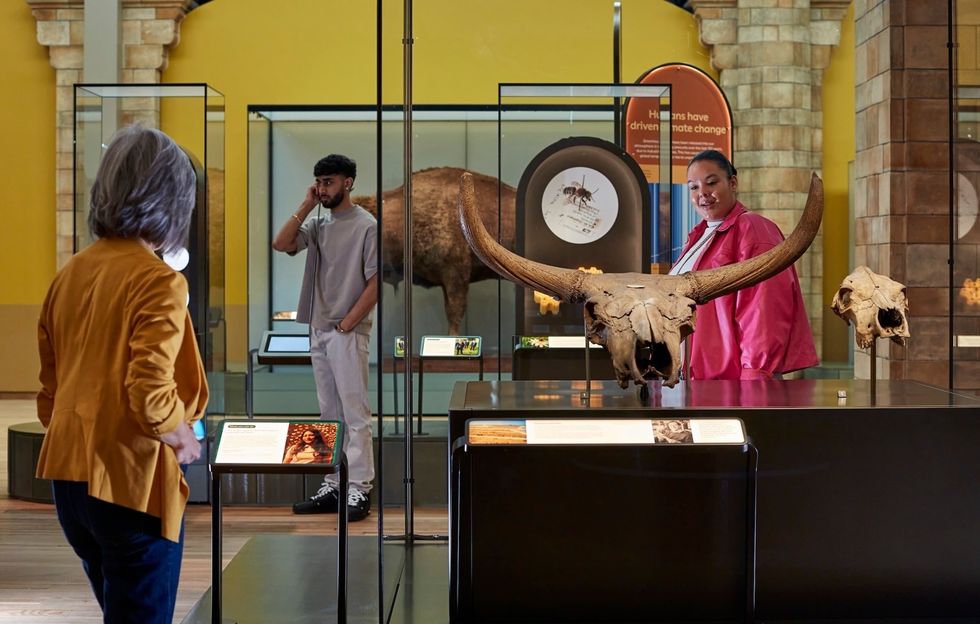
Fixing Our Broken Planet at the Natural History Museum
Environmental-focused experiences and museum exhibitions, another growing trend in the attractions sector, are designed to educate and engage visitors on issues such as climate change and ultimately inspire behavioural changes.
Found in museums, science centres, zoos, and theme parks, these exhibits use interactive displays, immersive elements, and real-world examples to explain topics like wildlife conservation and biodiversity loss.
In recent months, the Natural History Museum has welcomed millions of visitors to its new climate gallery and gardens, showing demand for environmental exhibits and green spaces.
The Natural History Museum’s immersive experience with David Attenborough was also extended due to popular demand.
"Humanity is the most influential species on Earth. We depend entirely on this magnificent planet, yet its future is in our hands,” Attenborough said.
"My hope is that visitors of all ages will experience our extraordinary journey at the Natural History Museum and come away feeling inspired, informed and most of all, empowered about their integral role in our world.”
In Newcastle upon Tyne, the Life Science Centre provided an immersive exhibit to raise awareness of recycling. Here, a narrated story is experienced inside an enormous beverage can made out of 1,500 recycled cans and 25 square metres of mirrors.
Elsewhere, One World, One Chance premiered at the Natural History Museum in Mexico City in November 2024. The immersive experience was created to celebrate the planet's wonders and inspire visitors to take action.
Sustainable technologies
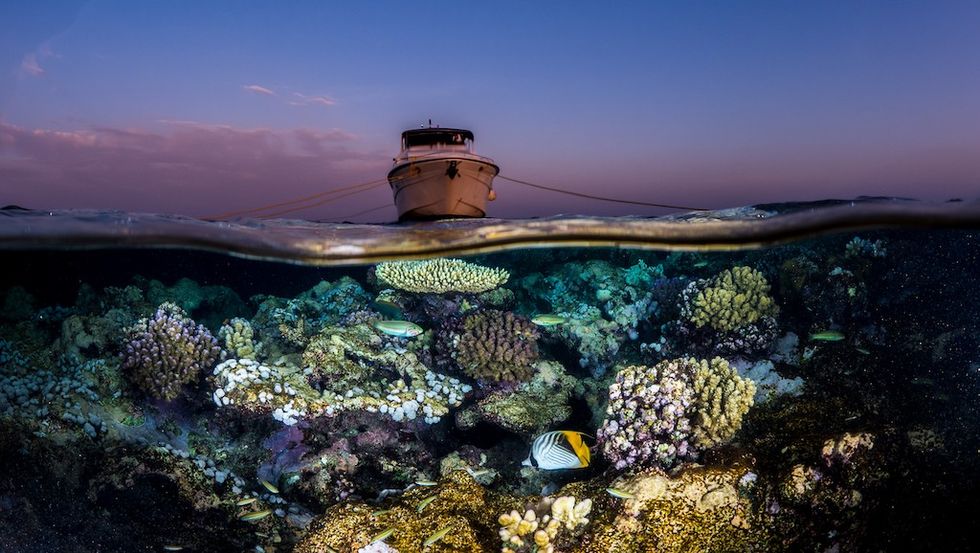
Underwater shot at The Red Sea
Artificial intelligence (AI) is being used across the attractions industry to improve operations and the visitor experience. Operators are also utilising the technology to support their sustainability initiatives and minimise their environmental impact.
When it comes to green goals, attractions can employ AI systems or data-driven insights to optimise energy usage and reduce waste. Smart algorithms can adjust lighting, heating and cooling in real time based on crowd levels, helping to lower energy consumption.
Saudi Arabia's regenerative tourism developer Red Sea Global, for example, has installed innovative sustainable technologies at its Amaala and The Red Sea destinations, from greener aviation fuel to AI-powered coral gardening.
With plans to become the world’s most responsible developer, Red Sea Global is exploring and implementing ideas such as green concrete to limit emissions, clean mobility strategies, and sustainable food production.
An extensive smart destination platform will monitor, simulate and predict the environmental impact of operations at The Red Sea, which will also be the world’s first destination to provide bottled water made from air and sunlight, produced using patented solar technology.
In the UK, at Chester Zoo, the visitor attraction is applying a data-led, technology-enabled approach in partnership with ACM Environmental to become a zero-waste operation by 2030.
The zoo has also developed the world’s first AI-powered auto-detection and real-time alert system for monitoring free-ranging bongos in collaboration with Liverpool John Moores University’s conservation AI team.
Robots and drones
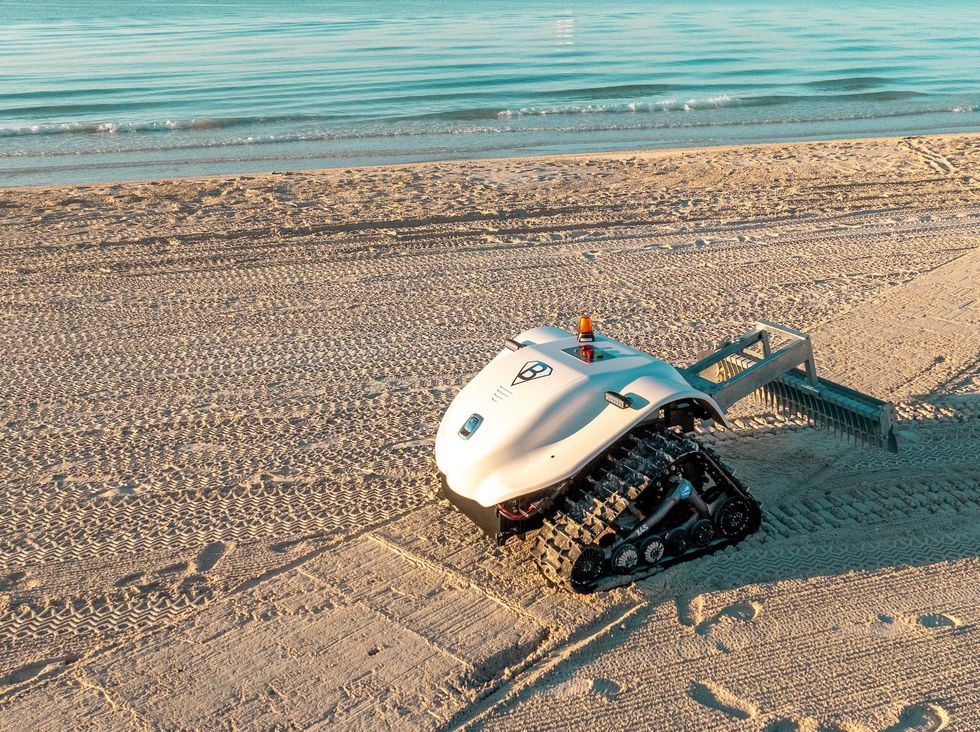
Red Sea Global's beach-cleaning robot
An extension of sustainable technologies, robots and drones are becoming valuable tools for improving sustainability in the attractions sector.
Red Sea Global, for example, has a state-of-the-art robot to clean its beaches, while Blenheim Palace in the UK has been testing a robot dog monitoring the impact of climate change.
As for drones, Ocean Park Hong Kong’s conservation foundation is working with scientists to protect local horseshoe crabs with the help of unmanned aerial vehicles and AI.
Chen Xi, a research assistant professor at the Chinese University of Hong Kong and part of the project team, said:
“What used to be an hour of collecting data by eye and counting the crabs one by one can easily be done in a few minutes with unmanned drones.”
Back in the UK, Marwell Wildlife has developed drones to monitor endangered species in the wild in partnership with the University of Southampton.
This drone technology uses thermal imaging, high-definition cameras, and AI to track animals such as snow leopards in Kazakhstan and Grévy’s zebras in Kenya.
“The potential applications of existing technologies for wildlife conservation are already huge and largely untapped,” said Philip Riordan, conservation director at Marwell Wildlife.
Regenerative design
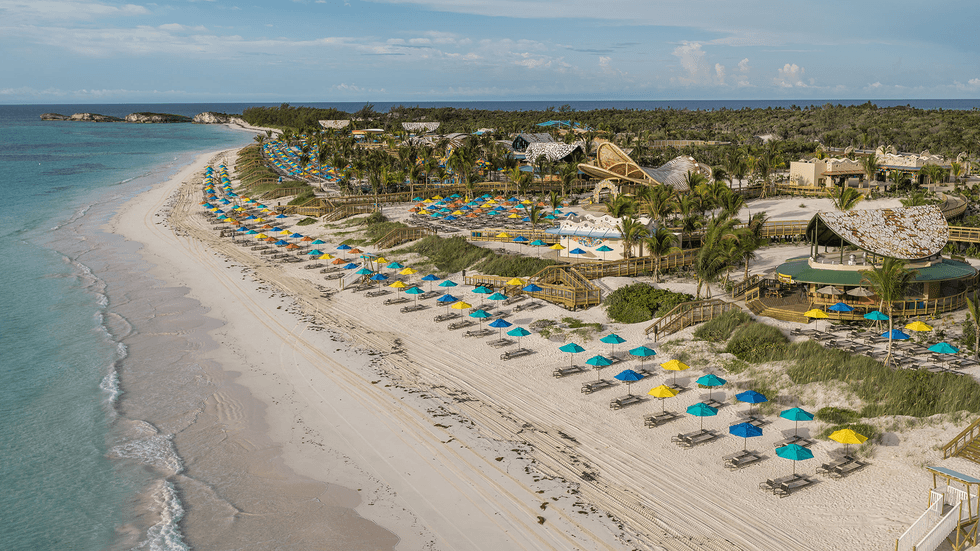
Disney's Lookout Cay at Lighthouse Point
Regenerative design is an emerging approach that goes beyond sustainability by aiming to actively restore and enhance natural environments. In other words, it is designed to leave destinations in better condition than they were found.
Attractions that adopt regenerative principles seek to create positive environmental impacts, such as increasing biodiversity, improving soil health, and replenishing local ecosystems.
This can include designing buildings that generate more energy than they consume, using natural materials, and integrating green spaces for wildlife habitats. Many operators also work with local communities to ensure that developments respect their cultural heritage.
Red Sea Global is a trailblazer in this space, too, and in 2024 published a scientific paper that called on the tourism industry to adopt regenerative tourism.
The paper provided a roadmap for regeneration, including social engagement, responsible consumption of manufactured products, sustainable food systems, the protection and restoration of natural habitats, and the transition to renewable energy sources.
Disney’s Lookout Cay at Lighthouse Point, an island destination for Disney Cruise Line guests, also features innovative, regenerative design choices, including low-density development, an open-trestle pier, and the use of natural materials and organic architecture.
Lookout Cay also serves as a living laboratory for conservation and operates sustainably. Mark Penning, vice president for animals, science and environment at Disney Parks, Experiences and Products, told blooloop:
“One of our key decision points was bringing on board Bahamian scientists. They understood the landscape, the habitats and the animals, as well as people's attitudes and how people think about that nature. We gained remarkable insights from them.”
As for the Eden Project’s global expansion plans, the developer is planning new Eden eco-tourism sites worldwide. All new Eden destinations focus on the individual challenges that affect each location, such as water, food, biodiversity, or soil.
Urban green spaces
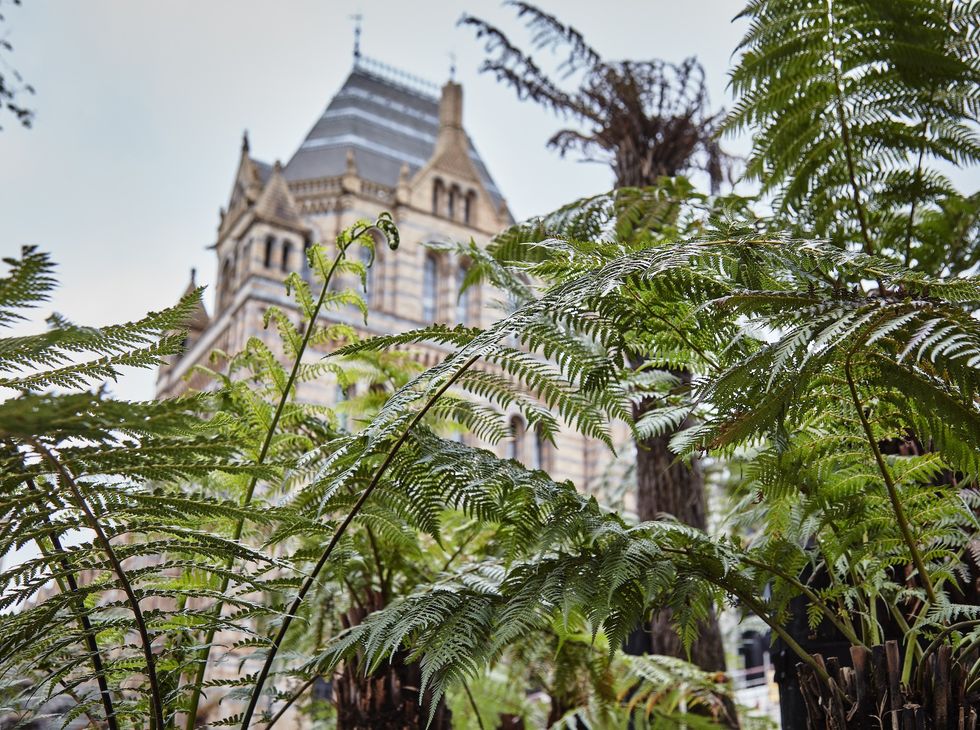
Transformed gardens at Natural History Museum
Urban green spaces are set to become a top priority for attraction operators, with parks and gardens integrated into city-based museums and other venues.
As well as giving visitors the chance to connect with nature, green spaces promote biodiversity and improve air quality.
At the Natural History Museum in London, its new gardens are showing a demand for these types of experiences, welcoming more than 5 million visitors in their first year of opening.
One of two living galleries, the Nature Discovery Garden, serves as a unique research hub where the museum’s 400 scientists are working on urgent ecological challenges.
Following suit, Tate Britain in London has submitted plans to transform its entrance with new green spaces and a "garden classroom" for children.
The new garden will be "a significant green space uniting art and nature and encouraging biodiversity", said Alex Farquharson, director of Tate Britain.
Across the pond, the Tampa Museum of Art is adding two new dog parks as part of its expansion project.
In the world of zoos, Chester Zoo has become the first UK zoo to gain international botanical garden status in recognition of its plant conservation work. And, as part of a wider wellbeing campaign, the zoo has been encouraging guests to spend more time in its gardens and green spaces.
Back in London, Canary Wharf is now home to Eden Dock, an urban oasis with floating gardens and aquatic habitats created in partnership with the Eden Project.
The site was designed to enhance biodiversity and improve the wellbeing of the financial district’s workers and residents.
Community engagement
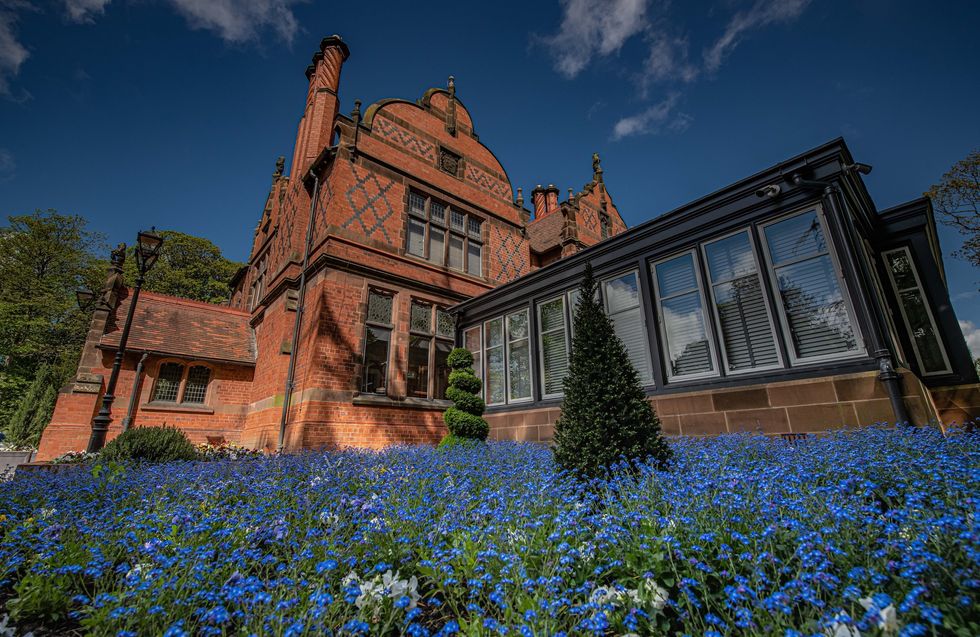
Chester Zoo's gardens
A crucial element of sustainability in the attractions industry, community engagement aims to connect visitors, local residents, and stakeholders to environmental and social initiatives.
More and more, attractions such as museums, theme parks and zoos are involving local communities in projects like habitat restoration and cultural preservation efforts, some of which are already included in the above trends.
Chester Zoo’s initiatives, for example, include an outreach programme for schools and the Networks for Nature partnership project.
Among the Zoological Society of London’s projects are community outreach schemes and conservation collaborations with local communities.
Returning to the Natural History Museum, the institution celebrated the first anniversary of its transformed gardens with a free BioBlitz event for nature enthusiasts.
Jessica Wardlaw, community science programme developer at the Natural History Museum, said the event is "a brilliant way to connect with nature right here in the heart of London, and every observation made on the day will contribute to real scientific research".
Notable recent projects include the Monterey Bay Aquarium’s use of social platforms to campaign and encourage climate action, as well as the Columbus Zoo and Aquarium’s donation drives for gorilla conservation.
Out of the box partnerships
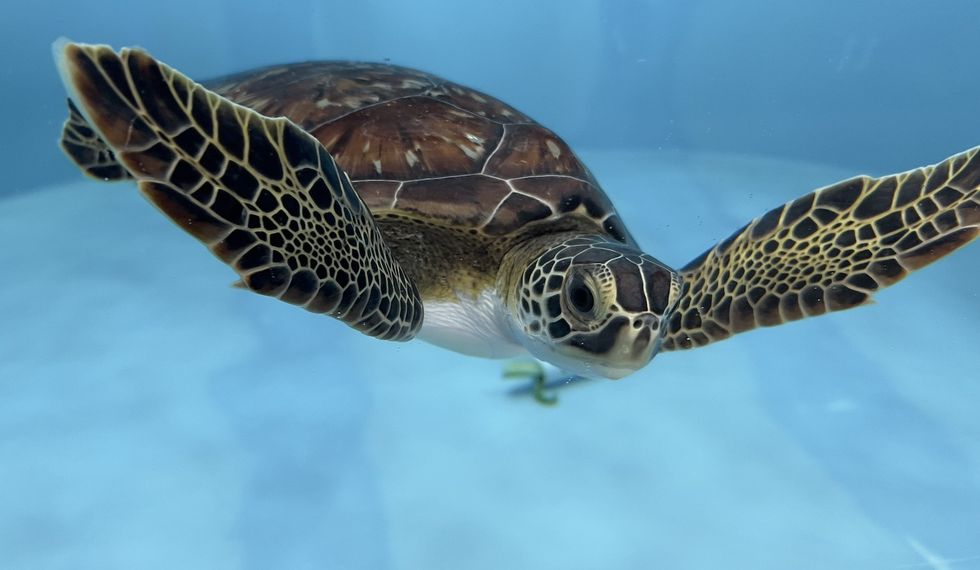 Sea turtle at Florida Aquarium
Out-of-the-box partnerships are pushing the boundaries of sustainability in the attractions business by bringing together unconventional or unexpected brands or organisations for good.
For instance, in partnership with Tampa-based TECO Energy, the Florida Aquarium has launched solar projects, engaged the community across the Tampa Bay region, and contributed to environmental stewardship.
See also: Tampa Electric & The Florida Aquarium: raising the conservation bar together
Another project, The White Cube, uses art and architecture to connect people on an abandoned Unilever plantation in the Democratic Republic of Congo with Western museums and the art community that has profited from the region's commercial and cultural exploitation.
Its goal is to redirect funds to help residents reacquire and revitalise their land.
“It’s about sparking debate, not just on colonial history, but on future possibilities as well. Not just about raising funds for elite art scenes, but empowering people to reclaim and express their cultural identity,” David Gianotten, managing partner and architect at OMA, told blooloop.
When it comes to water parks, the Epic Central project is an example of how public-private partnerships can deliver on the UN Sustainable Development Goals.
Located in Grand Prairie, Texas and home to the Epic Waters water park, it shows how spaces can be financially viable, environmentally responsible, and contribute to community wellbeing.
"The facility delivers so much more to the community it serves. It’s about education, equality, accessibility, job creation, partnerships – all of it,” Nancy Patterson, director of design and business development at OpenAire, told blooloop.
She added: "You’re still building something that generates revenue, supports itself, and also helps sustain the other facilities."
Join in with greenloop

Mangrove trees at Red Sea Global
Following five successful annual virtual conferences, the greenloop format is changing to keep the sustainability conversation going year-round.
We will be presenting monthly webinars, with space for insights from those on the cutting edge of sustainability in our industry. There will also be more opportunities for discussion groups and Q&As.
Please join blooloop for our second greenloop webinar on 22 April. This time, we’ll be joined by the Natural History Museum in London, which will share more about its new "fabric first" permanent gallery, the innovative 100 percent digital "self-build" touring model, and its practical Climate Action Toolkit.
Sign up for our free greenloop webinar here.
To stay up to date with our favourite sustainability stories and changemakers, sign up for our Reasons to be Cheerful newsletter here. And do join our LinkedIn community focused on sustainability in the attractions industry.