Solid Light Inc., a design-build firm creating emotionally engaging visitor experiences for civic, corporate and cultural destinations, has partnered with the American Printing House for the Blind (APH) in Louisville, Kentucky, to create The Dot Experience.
The $22 million project was first envisioned as a home for the American Foundation for the Blind (AFB) Helen Keller Archive, before evolving into an effort to create the most inclusive museum in the world.
It includes a wide range of inclusive features that enable guests of all ages and abilities to experience every exhibit, image, and object.
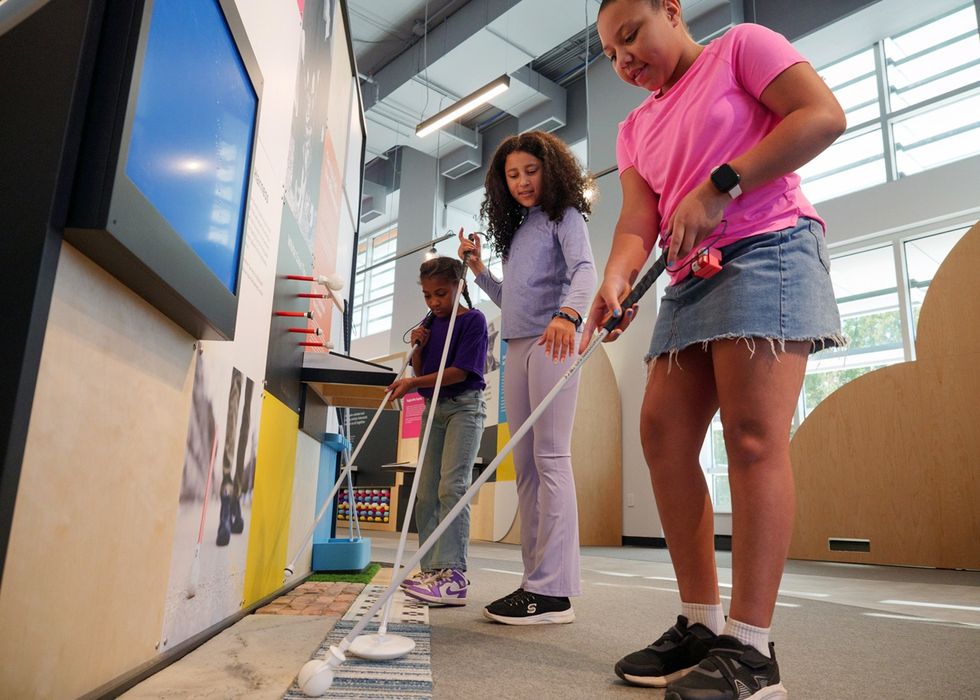 The Dot Experience brings narrative to life through sight, sound, touch, and spatial discoveryImage courtesy of Solid Light Inc.
Ben Jett, chief creative officer of Solid Light, Inc., says: "We love diving into new challenges and untold, essential stories, and stories that matter need to be told in ways that matter. The Dot Experience was no different, and yet a worthy exception.
"This almost 6-year project asked so much more of our commitment to planning and prototyping and furthered our belief in inclusive and equitable design.
"The Dot Experience took our strong foundation of storytelling and holistic project delivery to exciting new levels."
Setting a new standard
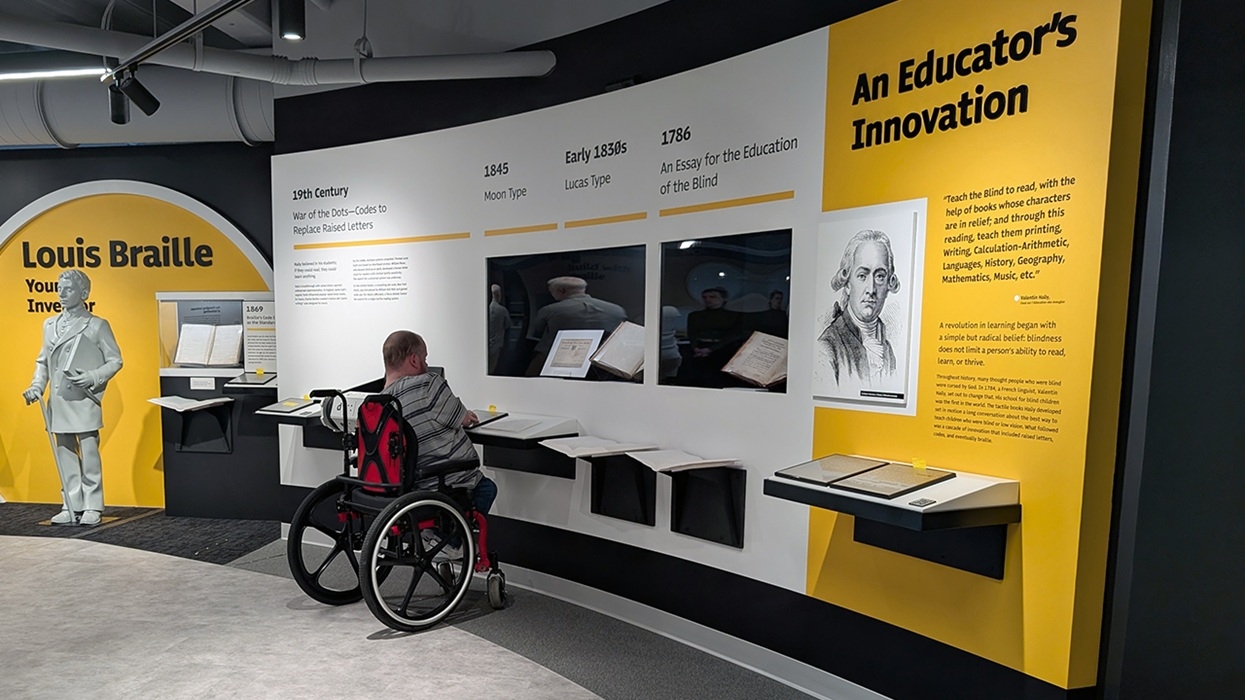
The 28,000-square-foot immersive exhibition uses sight, sound, touch, and spatial discovery to tell a story of human experience, inverting traditional museum etiquette to present a radical 'please do touch' approach.
Centred on accessibility, the attraction combines hands-on activations, media, reachable zones, braille, American Sign Language, visual descriptions and multiple navigation resources. This gives every guest the agency and autonomy to interact with and explore the experience on their own terms.
Jo Haas, chief operating officer, vice president of advancement at the American Printing House for the Blind, says: "Everyone has dreams, potential, and the right to explore the world on their own terms.
"When we approached designing The Dot Experience, we set a new standard for how public spaces should honor human dignity. By stepping into an environment where every sense is engaged and every barrier is dismantled, visitors don't just learn about inclusivity; they experience it.
"We want every person who leaves this building to recognize their own responsibility to challenge bias, tear down structural obstacles, and demand equal access in their own communities."
Touch-first exhibits & multimodal storytelling
The Dot Experience offers every guest an equitable experience as they explore its four galleries and take a tour through APH’s production facility.
The narratives throughout the museum highlight the lived experience of people who are blind or low vision, as well as the history, activism, and technology that continue to create a more inclusive world.
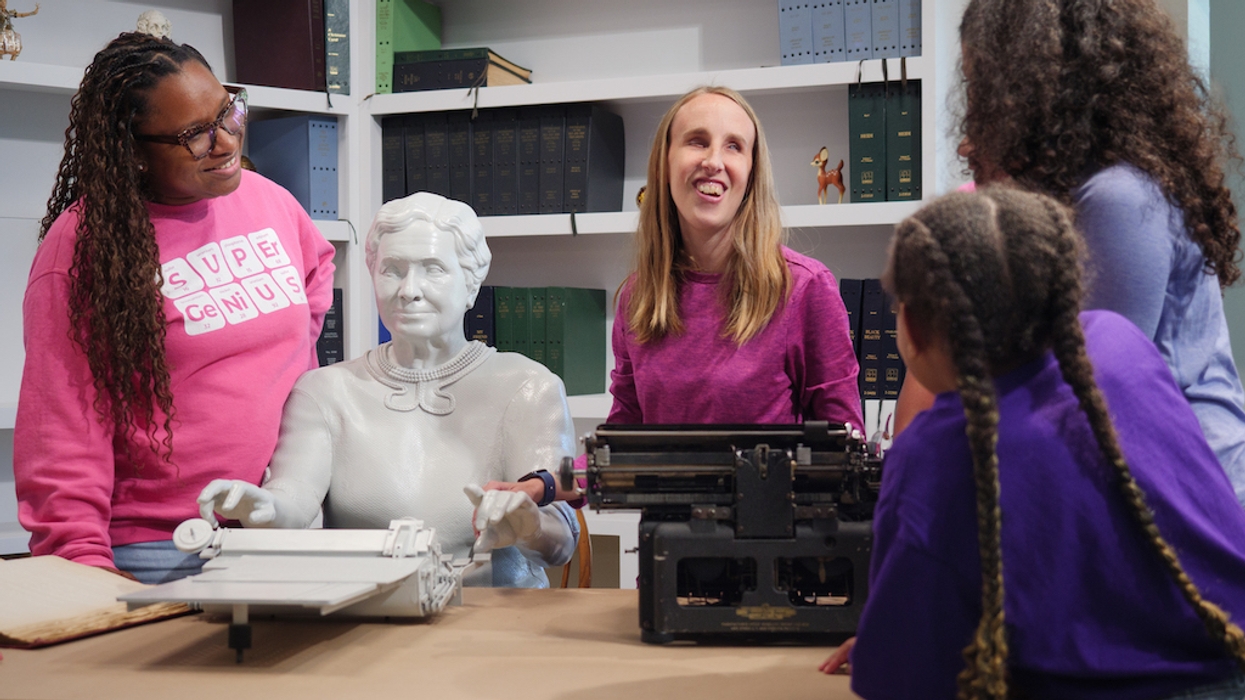
Highlights include the world’s largest collection of personal papers and artefacts belonging to prolific author and disability rights advocate Helen Keller. Visitors can explore her home office, read her letters, and touch her real desk, as well as a tactile, functional replica of the Tuscumbia water pump that sparked her understanding of language.
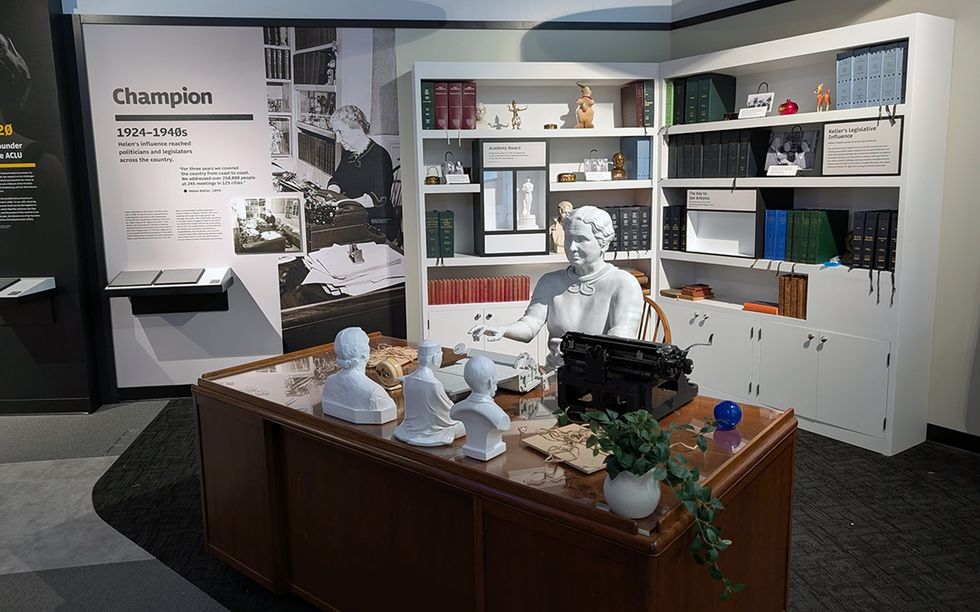 Visitors explore Helen Keller's home-office and touch her real deskImage courtesy of Solid Light Inc.
Other exhibits include a piano played by Stevie Wonder, the six-dot matrix created by Louis Braille in 1824, and cutting-edge assistive technologies like the Monarch, Mantis, and Juno.
Additionally, the APH Factory Tour offers a rare look inside the world’s largest producer of braille.
Throughout the experience, synchronised multimodal storytelling delivers information across visual, auditory, and tactile channels at the same time, so guests with different sensory abilities can share moments of discovery.
Unified navigation further enhances the visit through tactile gallery maps, indoor navigation apps (GoodMaps, ReBokeh, Aira), and seamless floor transitions
Chris Mozier, Solid Light president, says: "Creating a project of this magnitude in our own backyard makes this milestone immensely personal for our team.
"The Dot Experience places Louisville at the center of global conversations around humanity, empathy, and universal inclusion."
Challenging design conventions
The project was guided by the principle: 'nothing about us without us'.
At every stage, APH, Solid Light, Prime Access Consulting (PAC), and community members guided the project, and the inclusive prototyping team was created.
This 20-person group included members with lived experience of blindness, low vision, DeafBlind, mobility variances, cane and guide-dog users, neurodivergence, and new and seasoned braille readers.
Over 18 months, they tested and provided real-time feedback on full-scale fabrication mockups, digital interactives, and graphic and tactile design.
This revealed that standard audio volumes create overlapping sound pollution for screen-reader users, leading to the incorporation of acoustic isolation zones into the design.
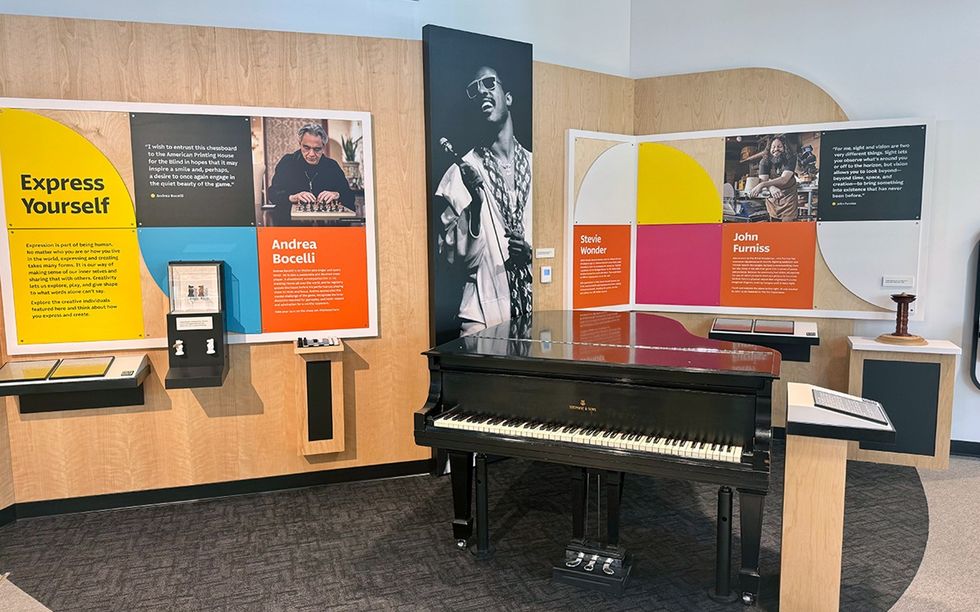 Visitors can sit behind the piano once played by Stevie WonderImage courtesy of Solid Light Inc.
The prototyping team also noted how typical wall plaques cause wrist strain for tactile braille readers, and identified the optimal display angle and mounting height for universal comfort.
Furthermore, the prototypers revealed that excessive detail in 3D replicas acts as 'white noise' to the touch. This finding required designers to simplify features for enhanced tactile exploration.
"Throughout this process, the most important assumption that has been challenged is that accessibility features are only for those who need them," says Jett.
"Truly inclusive design enhances the experience for all visitors, regardless of background or ability. We're unabashedly proud of our APH partners who mindfully set the bar higher to create this equitable visitor experience.
"We believe The Dot Experience is a movement, and hope this groundbreaking project is the first of many to adopt the vision, methods, and values that made The Dot Experience a place where all are truly welcome."
Recently, Solid Light Inc. contributed to the new George Washington: A Revolutionary Life exhibit in Mount Vernon, Virginia.