- Recognise the scale: With 1.2 billion people globally having additional needs, accessibility isn't a niche requirement—it’s one of the world's largest market opportunities.
- Shift from compliance to intent: Accessibility is not a compliance checklist; it must be a shared design ambition
- Design for dignity: Stop using "separate but equal" side entrances; shared boarding is the new industry baseline.
- Protect the budget: Bake accessibility into the RFP and commissioning sign-off so it can’t be VE’ed out later.
- Prioritise predictability: For neurodivergent guests, clear real-time information is more important than high-tech gadgets.
- End the retrofit cycle: Concept-stage integration is significantly cheaper and more effective than "fixing" it later.
- Consult lived experience: Don't guess. Involve disabled guests at the start to ensure your "solutions" work.
If a ‘solution’ for disabled guests can be easily cut at the last minute to save costs, it was never a design priority.
We are finally seeing the end of the ‘separate but equal’ era, where the side entrance was the norm, and moving toward a future where a shared experience is the non-negotiable baseline.
However, this isn't just about ethics; it's about a massive, underserved market. As Gordon Hartman, founder of Morgan’s Wonderland, has said: “1.2 billion people worldwide have some form of special need. That is one of the largest minorities in the world, yet there isn't a true focus to bring about more inclusion.”
The scale of this "Purple Pound" is staggering. In the UK alone, there are around 14 million people with a disability. Across Europe, that number rises to 80 million.
But as industry expert Michael Collins points out, the real impact is even wider: "It’s not just that guest, it’s their family unit and friendship groups that will visit with them—or decide not to visit if their friend or relative can't have a great experience."
Christian Lachel of BRC Imagination Arts notes that one in four people globally identify with some form of disability, and crucially, 70 per cent of those disabilities are invisible.
He stresses that on any given day, a significant portion of an attraction's audience is navigating an experience that may not have been designed with them in mind.
Recognising this, a major shift is underway. From the streets of Disneyland Paris to the fairy-tale forests of Efteling, five experts explain why accessibility is no longer a chore, but a core value—and a vital business strategy.
To understand this shift, five prominent industry insiders recently shared their insights, distinct strategies, and real-world examples of how to successfully build truly inclusive environments.
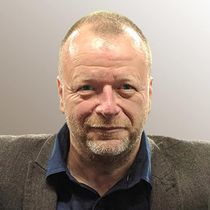
Our experts
Our experts
Our experts
Our experts
Our experts
Strategic planning: embedding accessibility from concept to delivery
While all five experts agree that the early integration of inclusive practices is the ultimate key to success, the strategies employed by major theme park operators such as Disneyland Paris and Efteling offer a particularly detailed, actionable blueprint for the future of all kinds of attractions, looking to improve accessibility.
By placing a heavy emphasis on human dignity and shared experiences, these influential operators are actively rewriting the rules of attraction design for the better, ensuring that the magic of themed entertainment can be enjoyed by everyone.
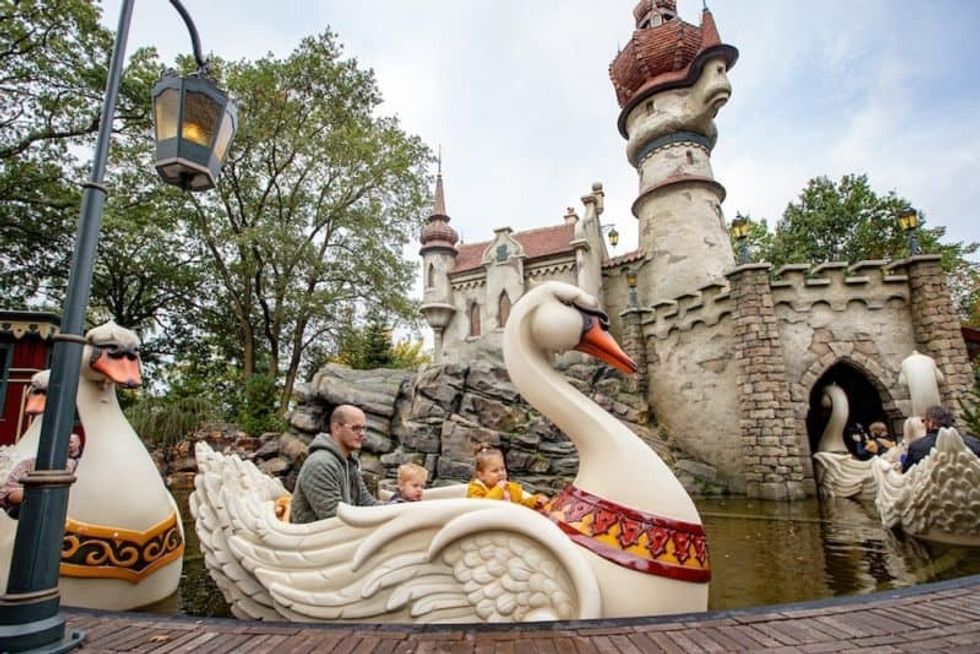
A family enjoys a trip on Efteling's popular Six Swans ride during their day at the theme park
Image courtesy of Efteling
When it comes to designing new guest experiences, the consensus among all five industry experts is clear: accessibility cannot be an afterthought under any circumstances.
For accessibility initiatives to have the greatest possible impact on guests, they must be considered at the very beginning of the creative and architectural design process.
At the Dutch theme park Efteling, accessibility is a core principle in all new projects. Van Es explains that Efteling carefully maps out a dedicated guest journey specifically tailored for visitors with varying disabilities.
"We embed accessibility for new projects from the very start - in the core principles of the concept and the intended guest journey. By doing so, it becomes an integral part of the design rather than something added retrospectively." — Femke van Es, Efteling
This comprehensive journey at Efteling covers every single touchpoint of a visit. It deliberately outlines accessibility at arrival, routing, queueing, boarding, the immersive experience itself, disembarking, and, crucially, safe evacuation procedures.
To ensure these plans are genuinely effective and practical, Efteling consistently involves specialist partners and experts with experience in its decision-making process.
For example, it works closely with the Dutch foundation Stichting De Zonnebloem to better understand the needs of wheelchair users, and partners with Stichting Bartiméus and Komt het Zien to serve guests with visual impairments.
Van Es says the greatest impact is achieved early in the process, particularly in spatial planning decisions and in the initial selection of the ride system and vehicle concept.
Early integration as a core value
Disneyland Paris shares this philosophy, treating early integration as a core value.
Tosati says that at the resort, accessibility is considered a core value rather than a mere operational requirement, influencing everything from the master plan down to the smallest interactive details.
Disneyland Paris considers all types of disabilities—physical, sensory, or cognitive—from the very first concept phase through to the final delivery of their experiences. Tosati emphasises that this is made possible thanks to the expertise of their talented internal teams and industry professionals.
Cast Members receive regular awareness training on accessibility topics, which results in more coherent solutions that are better anticipated and, above all, have a much greater impact on their guests.
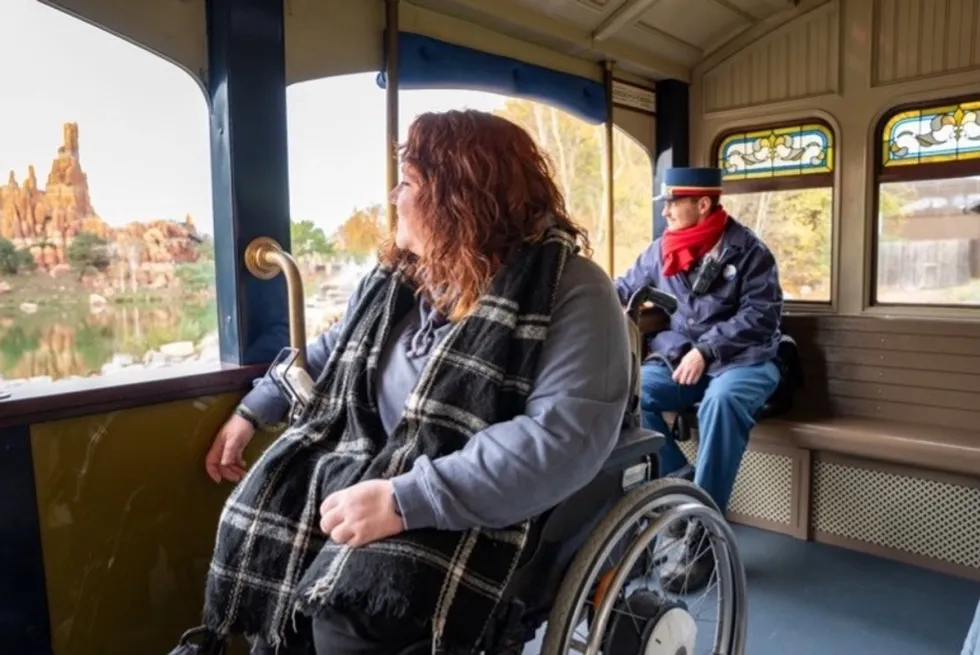
A visitor in a wheelchair enjoys an accessible journey on the Disneyland Railroad at Disneyland Paris
Image courtesy of Disneyland Paris
Lachel adds that bringing inclusion experts to the table during concept development creates a "project North Star" that guides every subsequent decision.
He emphasises moving from accessibility as mere compliance to inclusion as intent. When inclusion becomes a shared design ambition rather than a checklist, the result is an experience where "designed for everyone" is something visitors actually feel.
"Accessibility should be treated like safety engineering. It is defined as outcomes at the concept and schematic design stages, before layouts, queues, and capacities are locked. If you leave it late, you either pay more, or you deliver a 'separate but equal' experience, which is never equal." — Maris Ensing, Mad Systems
Technical suppliers echo this vital sentiment regarding early integration. Maris Ensing says that accessibility must be defined in terms of specific outcomes during the concept and schematic design phases, long before physical layouts, queue lines, and capacities are finalised.
McAllister agrees with this collaborative design philosophy.
He says that for new attraction developments, bringing together creative, engineering, and operations teams from the start enables intentional design that naturally caters to a broad range of mobility levels, sensory needs, and cognitive abilities.
Physical accessibility: revolutionising dignity in attraction environments
Improving physical access within attractions involves making critical, sometimes challenging design decisions.
Operators must carefully manage the inherent trade-offs between physical footprint, operational capacity, and genuine inclusion, which usually involves balancing footprint against capacity, and slopes against sightlines.
Disneyland Paris has made remarkable, industry-leading advancements in this area while simultaneously complying with relevant French legislation.
Integrating adapted ride vehicles
Tosati says that a significant leap forward for the resort has been the seamless integration of adapted ride vehicles. Allowing guests in wheelchairs to board attractions directly completely transforms the experience, making it smoother and significantly more inclusive.
For strict safety reasons, some highly dynamic rides simply cannot accommodate wheelchair boarding.
In these cases, Disney develops equipment to facilitate the transfer of guests with reduced mobility directly from their wheelchairs into attraction vehicles.
Disneyland Paris has also pioneered dedicated waiting areas specifically for guide dogs.
"The creation of dedicated waiting areas for guide and assistance dogs at attractions where they cannot board is also a new service that provides a concrete response to the needs of visually impaired guests. Guests can therefore share the attraction experience with their companions while their dog waits safely in a dedicated space until they return." — Alessandra Tosati, Disneyland Paris
Efteling places a strong emphasis on the vital social aspect of physical accessibility, striving to keep groups together for as long as possible.
By making queue lines physically accessible to wheelchairs, guests with disabilities only need to use a separate entrance at the very end of the queue.
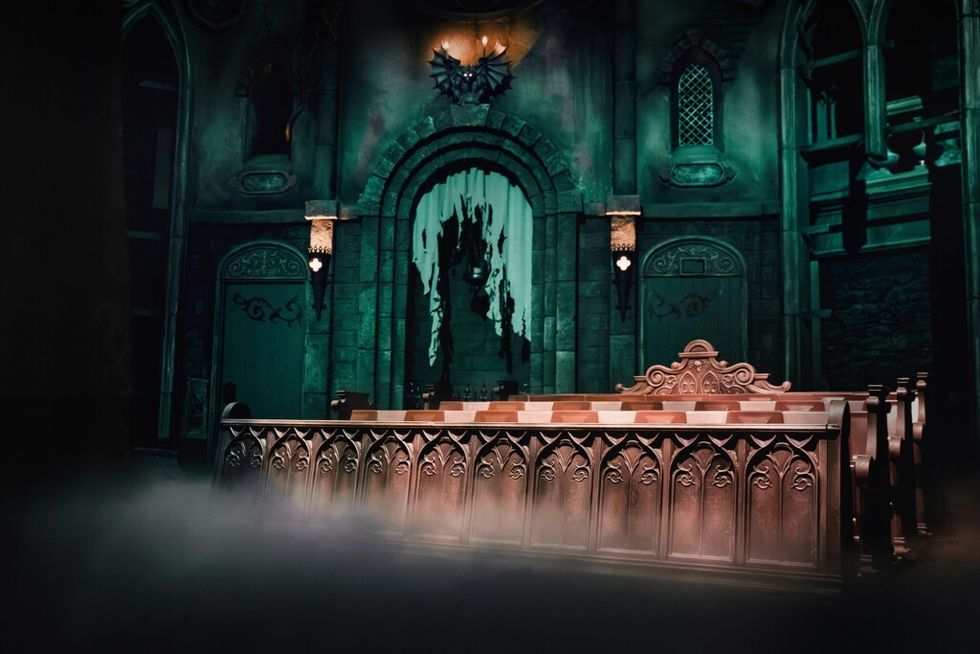
Efteling's new Danse Macabre dark ride has a wheelchair accessible queue, meaning groups can stay together longer and enjoy a shared experience
Image courtesy of Efteling
Van Es adds that this inclusive approach was applied for the first time in the park's newest attraction, Danse Macabre.
Across the rest of the park, dedicated wheelchair entrances at nearly all attractions have significantly improved physical accessibility.
These routes are built without stairs and offer guests the dignified option of waiting outside the regular queue.
Transfer solutions and boarding assistance are essential design principles that require clear communication about supervision and a shared understanding of what a guest with a disability can safely do during operations and evacuations.
Lachel challenges the premise that inclusion requires trade-offs, noting that great design includes everyone from the start. He argues that the most powerful design decision operators can make is to keep groups together, so that every visitor shares the same emotional arc.
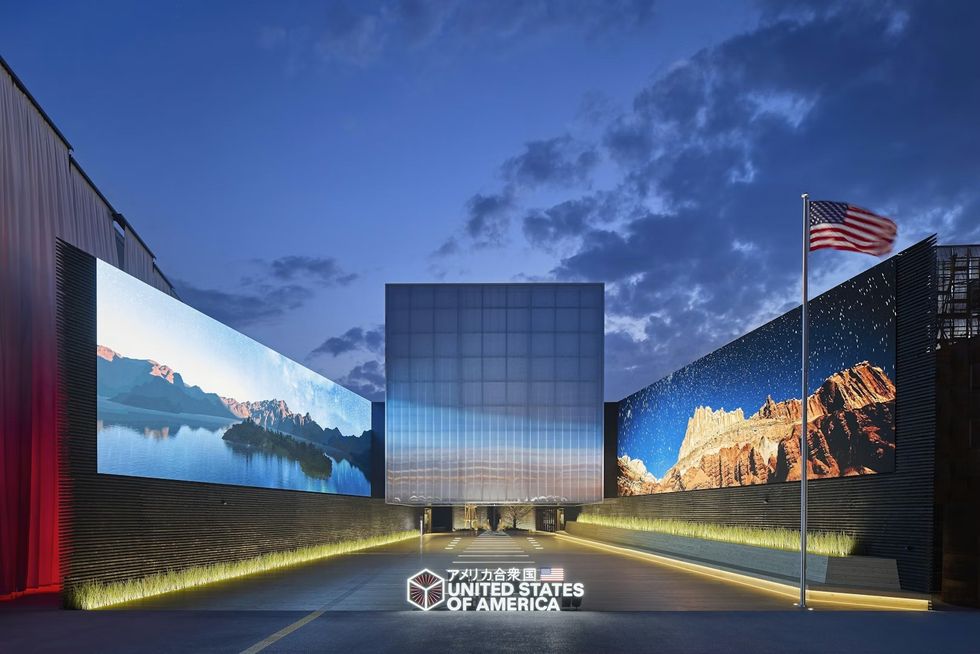
The USA Pavilion at Expo 2025 Osaka, viewed here at night, also featured vibrant large-scale multimedia displays of US landscapes
Image © Hufton and Crow
He points to the USA Pavilion for Expo 2025 Osaka, designed with gentle ramping and tactile surfaces as standard, and the Johnnie Walker Experience, which integrated advanced, nearly invisible lift systems directly into the staircases so guests with mobility needs never leave their group.
"We developed a first-of-its-kind wheelchair-accessible motion platform that allows guests using mobility devices to experience the same dynamic movement as their family and friends. The goal was not just to accommodate but to provide a shared experience." — Sean McAllister, SimEx-Iwerks
From the manufacturing side, McAllister highlights major innovations in dynamic physical access, proving that accessible seating does not have to mean static transfer seating.
He points to a highly successful project with Morgan’s Wonderland, a fully accessible theme park in San Antonio designed specifically for people of all abilities.
McAllister says that their newest cinematic attraction, Vision 360, was specifically designed to deliver easy access and positioning for mobility device users, naturally supporting a broader range of sensory comfort levels.
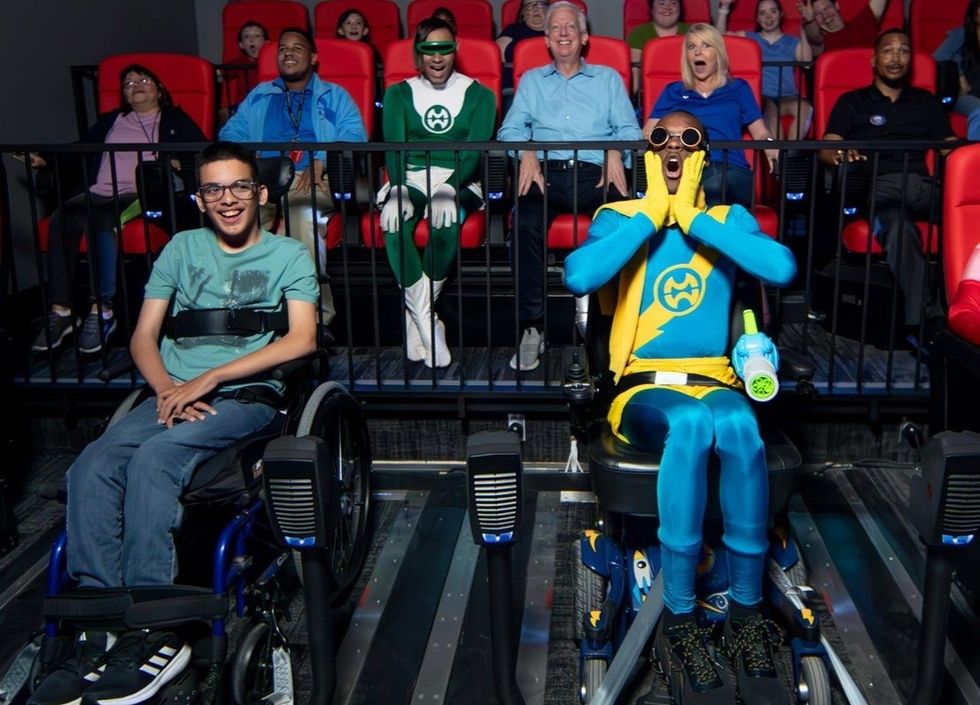
SimEx-Iwerks created an Ultra-Accessible 4D Magic Cinema for Morgan's Wonderland, allowing all visitors to enjoy the experience together
Image courtesy of Morgan's Wonderland
Similarly, Ensing emphasises that the absolute biggest wins in physical accessibility always revolve around structural flow. He advocates for continuous step-free routes, inclusive queueing that does not segregate, predictable transitions, and multiple viewing choices that actively preserve guest dignity.
He says that the accessible path must always be the primary path, supported by robust operations that still function seamlessly on peak days.
Sensory-friendly design: supporting neurodivergent guests
Creating a genuinely inclusive theme park environment requires operators to look far beyond physical mobility alone. They must proactively address the nuanced needs of neurodivergent guests and those with profound sensory sensitivities.
Disneyland Paris prioritises extreme transparency to help neurodivergent guests prepare for their visit with total confidence. For guests with sensory sensitivities, the resort provides as much advance information as possible about environments, stimuli, sensations, or potential special effects.
Tosati highlights a key tool utilised by the resort: the "Blue Booklet", a dedicated guide meticulously detailing the sensory aspects of their attractions, shows, and restaurants.
"This transparency allows them to anticipate their visit and enjoy their experience at Disneyland Paris in a setting better suited to their needs." — Alessandra Tosati, Disneyland Paris
This booklet is available online and from Cast Members at the park entrances.
Certain sensory information about attractions and shows is also available in accessibility maps, which can be consulted on the Disneyland Paris website, requested from Cast Members, or accessed via the MagicALL QR code at the entrance to attractions and shows.
Disneyland Paris has also developed an extensive image bank to help non-verbal guests familiarise themselves with the bustling environment and communicate effectively during their stay.
Providing predictability and low-stimulation spaces
Efteling employs a similarly robust strategy, relying heavily on predictability to significantly reduce stress for guests with sensory sensitivities. It aims to provide clear and accessible information in advance, both on its website and within the physical park.
Utilising internationally known symbols and detailed content advisories helps guests adequately prepare for their visit.
Recognising that the theme park offers countless sensory stimuli, Efteling proactively provides designated low-stimulation spaces where guests can comfortably unwind.
A standout example is the multifunctional serenity room inside the new Efteling Grand Hotel, which allows visitors to take a moment to rest without leaving the park.
Efteling also proudly works with the Hidden Disabilities Sunflower-badge for guests with non-visible disabilities.
"It allows them to be discreetly recognised by our staff, indicating they may require additional time or support from our staff without signalling for assistance. We consider this very important, as non-visible disabilities often lead to misunderstanding among other guests." — Femke van Es, Efteling
Efteling actively engages external expertise, including collaboration with organisations such as the Dutch Association for Autism, to ensure that its operational decisions reflect what works in practice.
Lachel notes that, because the industry loves sensory intensity—such as spatial audio and projection-mapped environments—operators bear a particular responsibility.
He says that operators are now designing for sensory flexibility by creating alternative show modes at scheduled times where AV systems and effects are intentionally toned down, alongside providing dedicated sensory toolkits
Ensing breaks down the architectural approach to neurodivergent design into three core pillars: predictability, control, and recovery.
- Predictability involves clear wayfinding and honest pre-visit sensory information.
- Control means offering options, such as quieter routes, reduced-stimulus modes, adjustable audio where feasible, and interactions that remove or reduce time pressure.
- Recovery necessitates creating decompression spaces that are easy to find and do not feel like a penalty box.
Digital accessibility: balancing innovation with reliability
Technology is a vital bridge in the accessible guest journey, helping visitors navigate complex environments with greater autonomy; however, operators must remain highly aware of its inherent limitations and avoid relying on it as a single solution.
At Efteling, digital integration is a massive, structural component of their accessibility ecosystem.
The official Efteling app is a key component of their approach. Through a structured question flow led by the digital assistant Pennenveer, guests can easily create a personalised facilities card indicating which attractions they can visit safely.
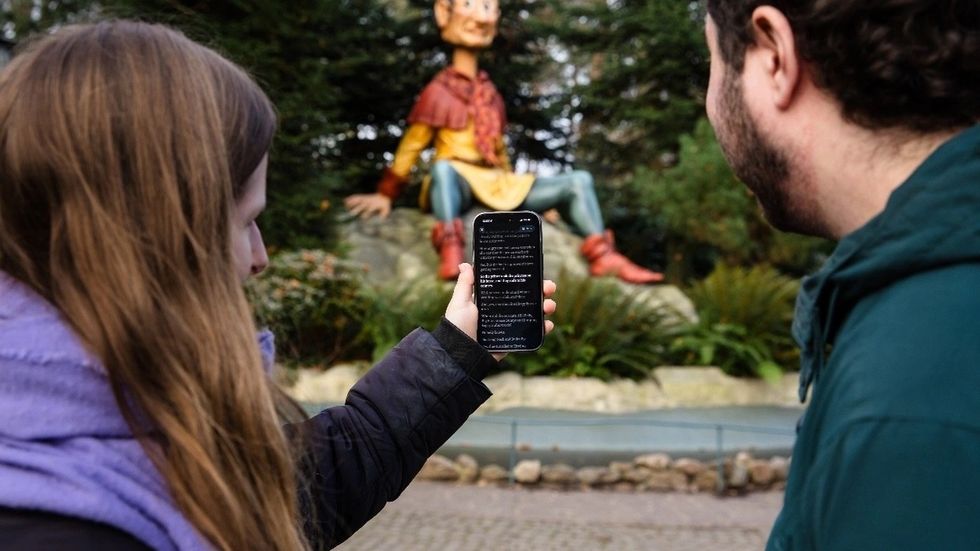
Subtitles and audio descriptions are being added to Efteling's attractions to make the park's stories more accessible
Image courtesy of Efteling
This digital card is linked directly to their personal account and is used seamlessly at designated accessible entrances.
Efteling also leverages its app to enhance accessibility within its storytelling, offering subtitles synchronised with audio, with concrete plans to expand into full audio descriptions soon.
Disneyland Paris is constantly monitoring technological developments to identify relevant innovations, optimise existing services, and deploy new tools across their massive resort. This openness to digital accessibility is essential both before the visit and on-site.
Tosati says the park recently deployed the AudioSpot app to provide robust audio descriptions for attractions, restaurants, and shows.
New ways to tell stories
For guests with hearing impairments, Disneyland Paris also introduced vibrating vests for major theatrical productions, such as TOGETHER: A Pixar Musical Adventure and The Lion King: Rhythms of the Pride Lands.
Additionally, Virtuoz tactile and audio maps have been widely distributed across Disney Parks, Disney Hotels, and Disney Village to aid independent navigation.
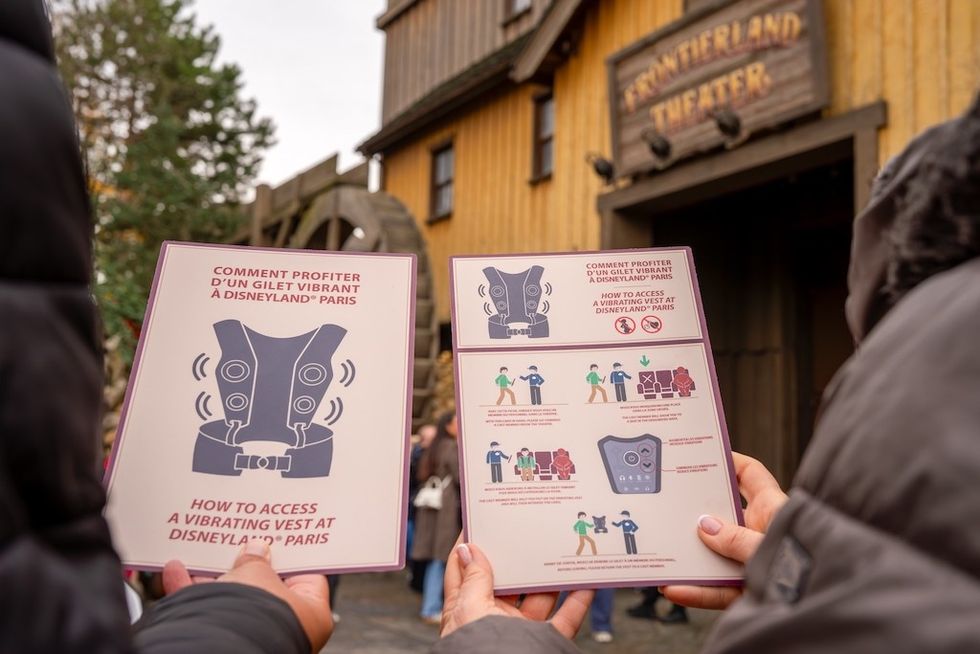
Disneyland Paris also provides clear instructions on how to access vibrating vests for performances
Image courtesy of Disneyland Paris
Lachel says the real transformation is happening in how we tell stories in personalised ways, foreseeing a world where AI and intelligent environmental systems adapt automatically, such as captioning for a deaf visitor or adjusting content density for cognitive needs, without the guest having to do anything.
However, he stresses that technology should never lead the experience; it should disappear into the story, making the magic feel effortless without the accommodation ever being visible
Despite these massive strides, Tosati acknowledges current technological limitations that still need to be addressed.
Specifically, indoor geolocation technologies are still not precise enough to guarantee fully reliable navigation for visually impaired guests.
Some highly specialised innovations require thorough evaluation to ensure they address a genuine, lasting need for guests.
The danger of app-only accessibility
Ensing is vocal about the dangers of over-reliance on digital tools.
"The limitation is reliability. Devices fail, networks degrade, and app-only accessibility excludes people. So, I require redundancy: a strong built-environment baseline, plus operational fallbacks." — Maris Ensing, Mad Systems
He suggests that while captions, transcripts, multilingual delivery, reading-level adaptation, and accessible interfaces built to WCAG standards are basics, technology inevitably requires total redundancy.
Non-visual navigation—such as step-free routing, audio and haptic guidance, and indoor cues—must be built upon a strong, reliable baseline within the physical environment.
Beyond compliance: building an internal culture of inclusion
Ultimately, treating accessibility purely as a rigid legal requirement is wildly insufficient for creating truly magical, welcoming experiences. True inclusion requires a cultural shift within the organisations themselves.
For the leaders at Disneyland Paris, accessibility is not limited to regulatory compliance; it is a deeply ingrained fundamental value.
All Cast Members are made aware of these topics through dedicated training programs designed to deepen their understanding of different types of disabilities and improve the quality of service provided to guests and employees alike.
Project teams also benefit greatly from ongoing support from internal accessibility specialists, who provide key advice and education to help embed sustainability considerations into working practices.
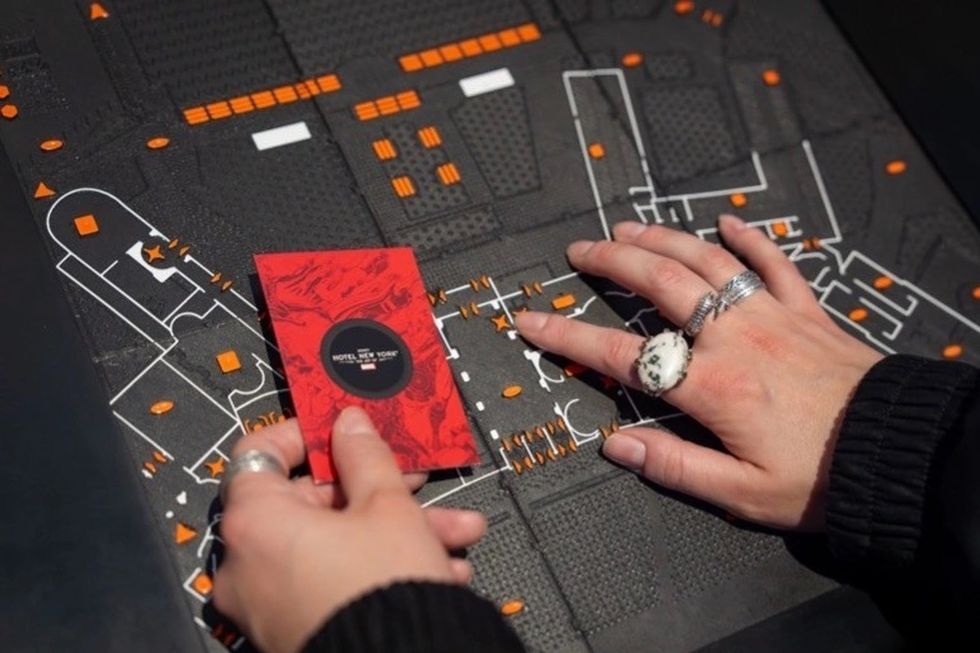
Virtuoz tactile map at Disneyland Paris to improve accessibility
At Efteling, a multidisciplinary Accessibility Group drives the park's internal culture. This group includes executive leadership alongside external experts, ensuring that accessibility is championed from the very top of the organisation.
"The starting point is learning to see through someone else’s eyes. We organise co-creation and testing sessions with experts by experience, particularly when developing new applications or solutions. We incorporate their feedback from the very beginning into both the design and the implementation." — Femke van Es, Efteling
Lachel adds that culture starts with a personal realisation. Working with Paul J Ralph from Euan’s Guide taught him the profound difference between designing for compliance and designing for true inclusion.
However, Lachel also stresses that operators must accept a hard truth: there is no such thing as one hundred per cent accessibility for everyone. Because the needs of different disabilities are so varied, understanding this limitation frees designers to be honest and creative about solving constraints
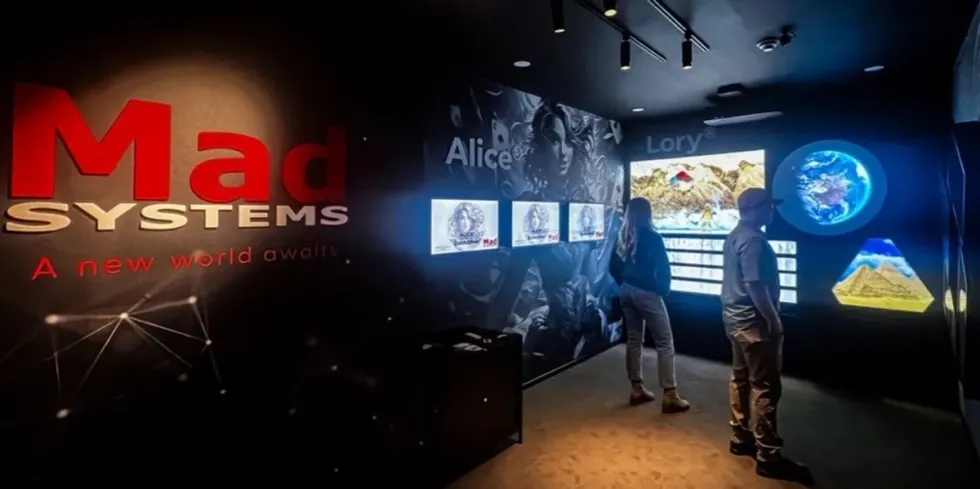
Mad Systems' range of AV++ solutions helps operators to include all visitors
Image courtesy of Mad Systems
Ensing adds that achieving this culture across the broader industry requires strong leadership. It must start with an owner-side accessibility lead who knows what is possible.
Without that, he warns, teams default to minimum compliance and value-engineer away anything that would genuinely improve the experience.
He suggests making accessibility contractual by explicitly including it in the Request For Proposal (RFP), carrying it through every stage gate, and tying it directly to commissioning sign-off. He argues that “if it can be VE’d out, it was never real to begin with."
The future of inclusive theme parks: collaborative innovations
Looking ahead to the future of the attractions industry, Efteling sees incredible opportunities in embedding accessibility into fundamental design to develop repeatable, standardised solutions, rather than relying on one-off retrofits.
A great example of this future ambition is Efteling's highly anticipated seat-on-wheels concept.
This concept features a certified seat-on-wheels that can be safely secured across a wide range of attraction types, enabling guests in wheelchairs to experience dynamic rides alongside their companions whenever possible.
It was first presented at IAAPA Expo Europe 2025 in Barcelona, where Efteling and manufacturer Vekoma boldly invited the entire industry to collaborate on advancing accessible ride design.
The concept was developed in close cooperation with specialised partners and experts. While there are currently no specific plans for operational implementation in a particular attraction, Efteling stresses that it represents a clear opportunity for operators and suppliers to join forces.
"The main challenge lies in aligning ambition with practical realities, including safety requirements, financial feasibility, capacity and operations. The most effective way to address this is to design and test collaboratively from day one - together with the manufacturer and guests with lived experience - rather than attempting to retrofit solutions at the end of the process." — Femke van Es, Efteling
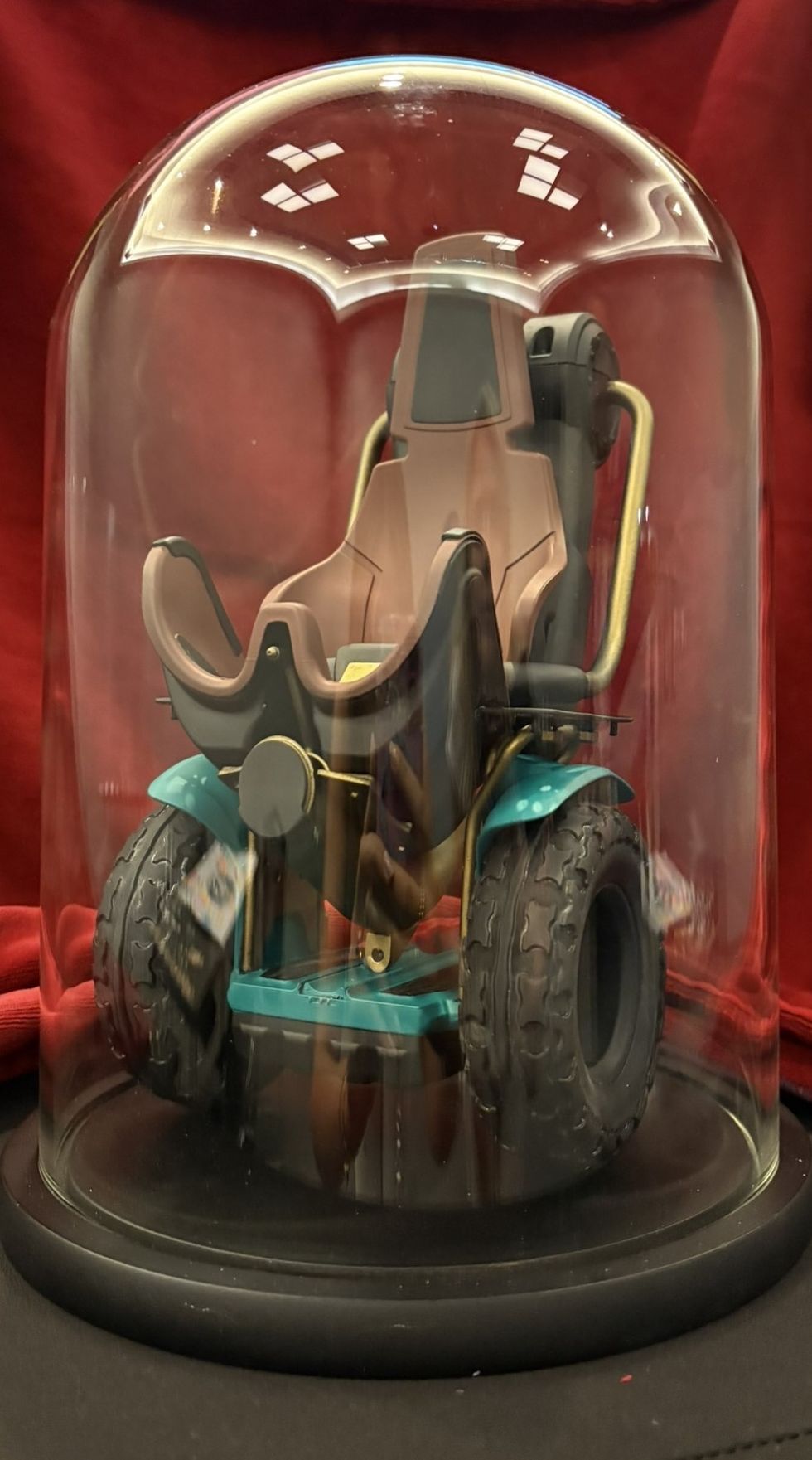
Scale model of Efteling & Vekoma's seat-on-wheels-concept, presented at IAAPA Expo Europe 2025
Image courtesy of Vekoma
Similarly, Tosati sees significant potential for the future of Disneyland Paris, pointing to expected advances in indoor geolocation that could enable more reliable, real-time navigation support for visually impaired guests.
She also highlights the growth of intelligent interfaces, such as voice assistants, adaptive applications, or augmented reality, as tools that could present content in ways that better accommodate a range of sensory and cognitive needs.
Tosati adds that finding the right balance between technological innovation and ease of use is vital to avoid creating new forms of exclusion, and that this requires ongoing co-creation with disability advocacy organisations.
McAllister notes that there has been a noticeable and impressive shift in recent years of ride manufacturers developing new ideas for inclusion that go well beyond the ADA.
Lachel likens this technological progression to the rise of sustainable LEED design in the early 2000s; while it once felt like an expensive uphill battle, it eventually became the embedded baseline.
He believes the biggest remaining gap in our industry isn’t technology, but awareness. He calls on leading industry organisations such as SEGD, TEA, and IAAPA to create dedicated communities for inclusive design, where shared standards can be collaboratively developed.
In conclusion, the path to a truly inclusive attractions industry requires a commitment from all operators, engineers, and creative suppliers.
The future of attractions relies not on retrofitting old systems but on designing from the ground up with empathy, which must include budget protection, direct feedback from disabled guests, robust collaboration, and genuine care.