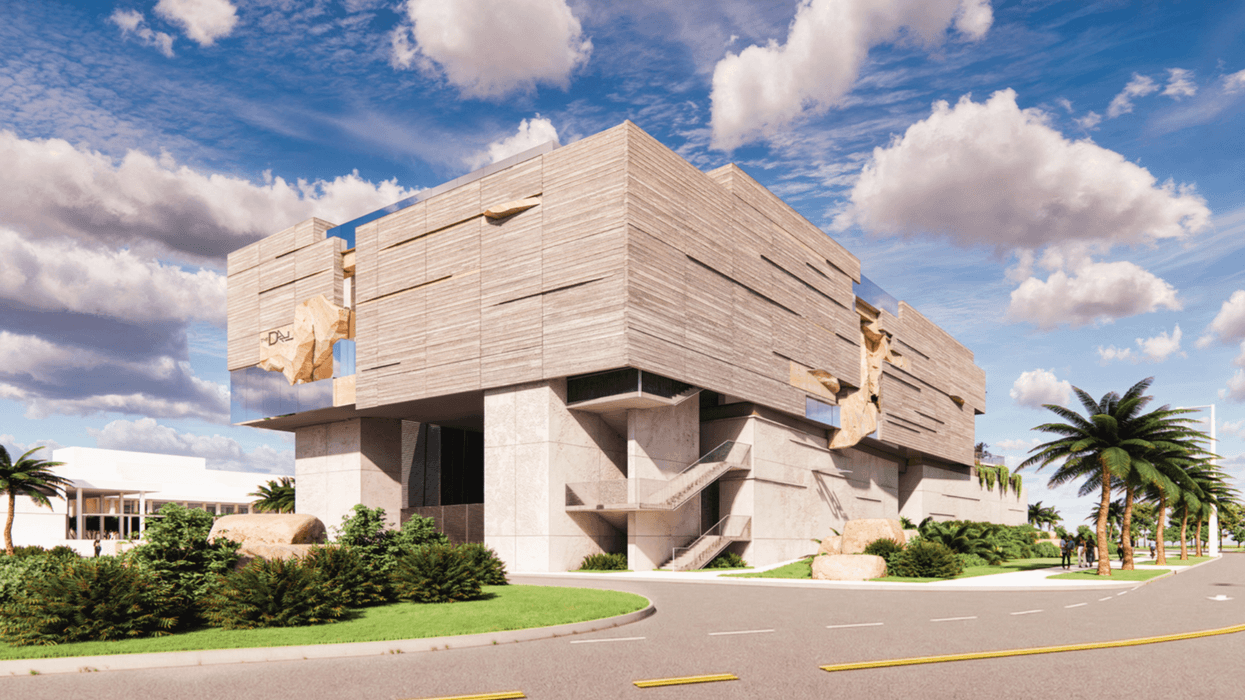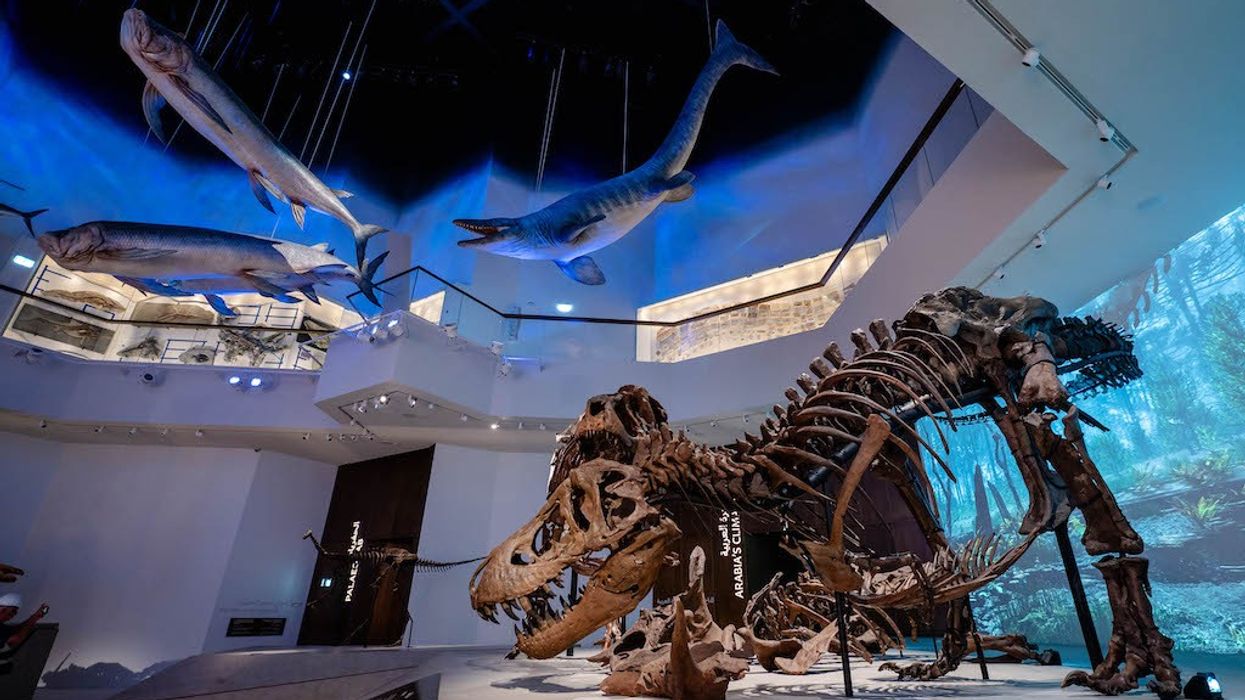
Abu Dhabi’s newly opened Natural History Museum, designed by architecture firm Mecanoo and located in the Saadiyat Island Cultural District, opened to the public in November 2025.
Wētā Workshop, a creative services company combining artistry and innovation, was one of the partners that helped to bring this scientific research and teaching institution to life.
Visitors explore 13.8 billion years of history. Inside, a Deinotherium extends a leg as if striding through the brush of the Miocene; an Articodactylus appears mid-flight, its back a splash of blue, and a Nothosaur eyes something in the middle distance, the ancient sea reptile a vision of teeth, webbed feet, and hunter’s cunning.
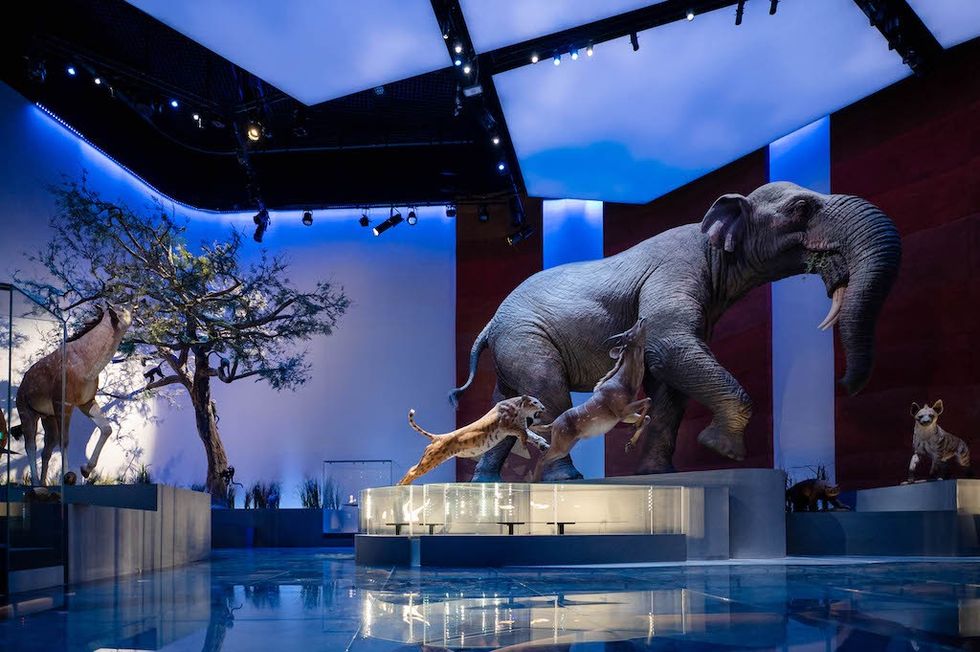 Image credit Natural History Museum Abu Dhabi
These physical models are part of a series of highly realistic replicas created through a collaboration between Wētā Workshop and its manufacturing partner, Acrostar.
Beginning in May of 2023, the New Zealand-based creative services company created over 300 models and dioramas, ranging from a 15-metre Shastasaurus — considered one of the largest marine reptiles to ever grace the Earth — to 8mm bees.
Realistic models
The list continues with enormous representations of ancient creatures, including a Liopleurodon, a Mosasaurus, and a Stegotetrabelodon; pterosaurs and lizards from the Mesozoic era; a flock of birds from the Cretaceous; and a giraffe, horse, antelope, hyena and wolverine from the Cenozoic era.
Elsewhere, semi-translucent models of today’s endangered animals are illuminated in a display of present species fading away. A Tasmanian biome in the Our World gallery depicts life on our planet and, outside, more than 100 sculptures of animals from the Arabian Peninsula trace the region’s history.
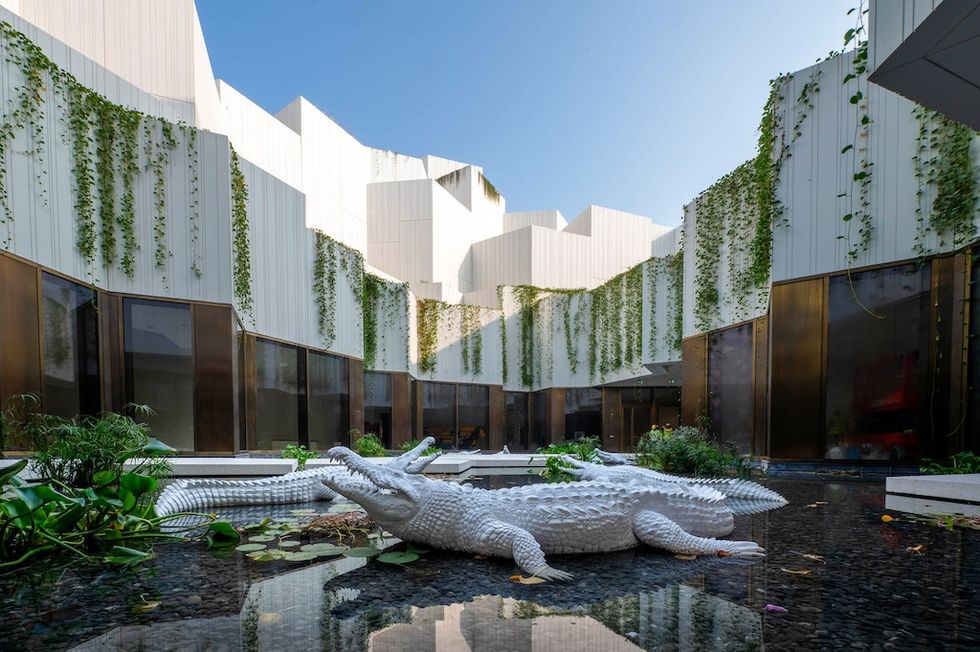 Image credit Natural History Museum Abu Dhabi
Using realistic scales, eyes, and water was essential to the museum’s storytelling.
“Showing hyper-realistic reconstructions of animals, particularly extinct species, allows us to look through a window into the past and helps viewers appreciate the vastness of the world as it once was,” says Rob Gillies, general manager of Manufacture at Wētā Workshop.
To achieve the life-like results, a combination of 3D modelling and hand sculpting was utilised. Additional 3D colour printing and model making for select elements were carried out at Wētā Workshop’s New Zealand-based facilities.
Using bone and fossil evidence as a guide, along with paleoart supplied by Spain-based design firm Icaria Atelier and the Department of Culture and Tourism – Abu Dhabi, the Wētā Workshop team collaborated with subject matter experts to ensure the animals were not only anatomically accurate but also depicted believably.
It is the first time some of these animals have ever been portrayed as fully fleshed reconstructions.
See also: Giants of Mobility: Wētā Workshop’s immersive storytelling at Expo 2020 Dubai
Attention to detail
For Jane Wenley, Art Director at Wētā Workshop, it was a fascinating process. “Sculptors often work with careful consideration of anatomy, but you generally have some real-life reference to inform your decision-making,” she says.
“For the reconstructions, the structure of bones informed not only the muscular forms of the animal, but also provided clues to how they move, and in turn, how they lived. The reconstructions of extinct species are the result of countless communications and lively online workshops.
"We worked directly with palaeontologists and researchers, sharing progress, making edits and discussing details.”
Wētā Workshop also created Tasmanian biome scenography featuring three habitats: a cool-temperate rainforest, a freshwater area, and a eucalyptus forest. Models of Huon Pine, Tasmanian Blue Gum, and Myrtle Beech showcase Australia’s ecosystem, highlighting its delicate leaves and towering trunks, helping audiences understand this diverse destination.
“A lot of care has gone into making models that are as beautiful as they are educational,” adds Wenley. “The general public will be drawn in by how striking the exhibit are, and specialists will, I’m sure, enjoy debating the decisions we’ve made around the reconstructions.”
This museum showcases the Department of Culture and Tourism – Abu Dhabi's dedication to arts and entertainment, shaping the region’s cultural landscape. Wētā Workshop says it was honoured to contribute as part of the wider project team, working closely with Alec Fitout and Miral, who played a vital role in driving the fitout and delivery.
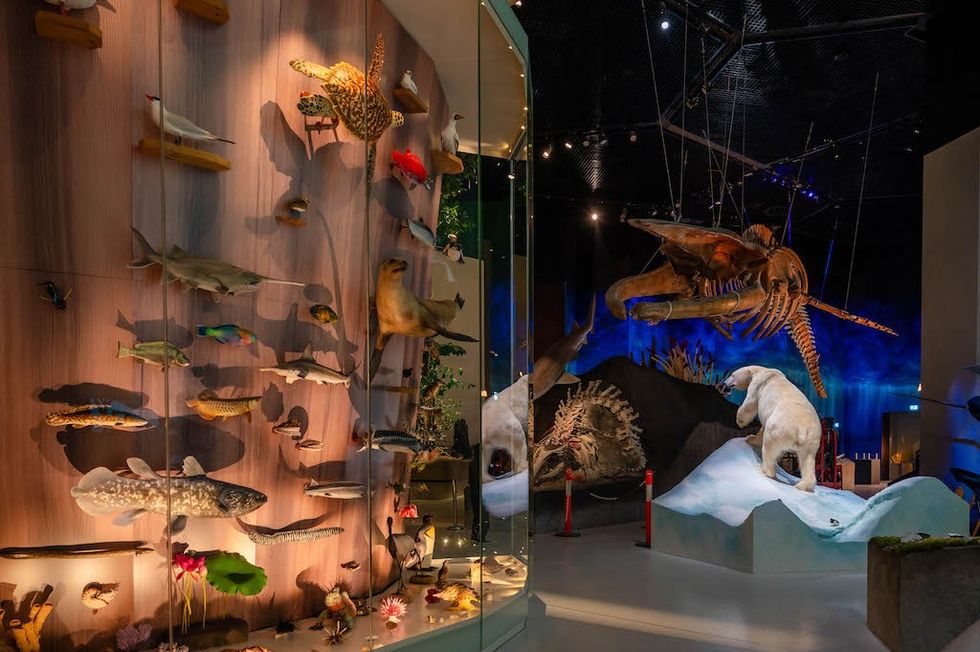 Image credit Natural History Museum Abu Dhabi
“We hold the work we’ve done for Natural History Museum Abu Dhabi particularly close to our hearts,” Gillies says. “It presents a unique opportunity for us to put all of our creative skills and firepower into a project of significant importance to the world around us.”