Modern visitor attractions rely on increasingly sophisticated audiovisual (AV) technology, from projection mapping and interactive installations to media servers powering flagship dark rides. Yet the people who design, install and maintain these systems are in short supply.
The global AV industry faces a shortfall of more than 2.3 million professionals, while women account for just nine per cent of the commercial AV workforce and two per cent of technical roles.
These figures represent more than a recruitment challenge for attractions operators and technology suppliers. A shortage of skilled people can delay projects, undermine operational resilience and limit the industry's capacity to innovate.
Addressing the problem requires more than attracting new talent. It also means creating workplaces where people can develop, advance and build long-term careers.
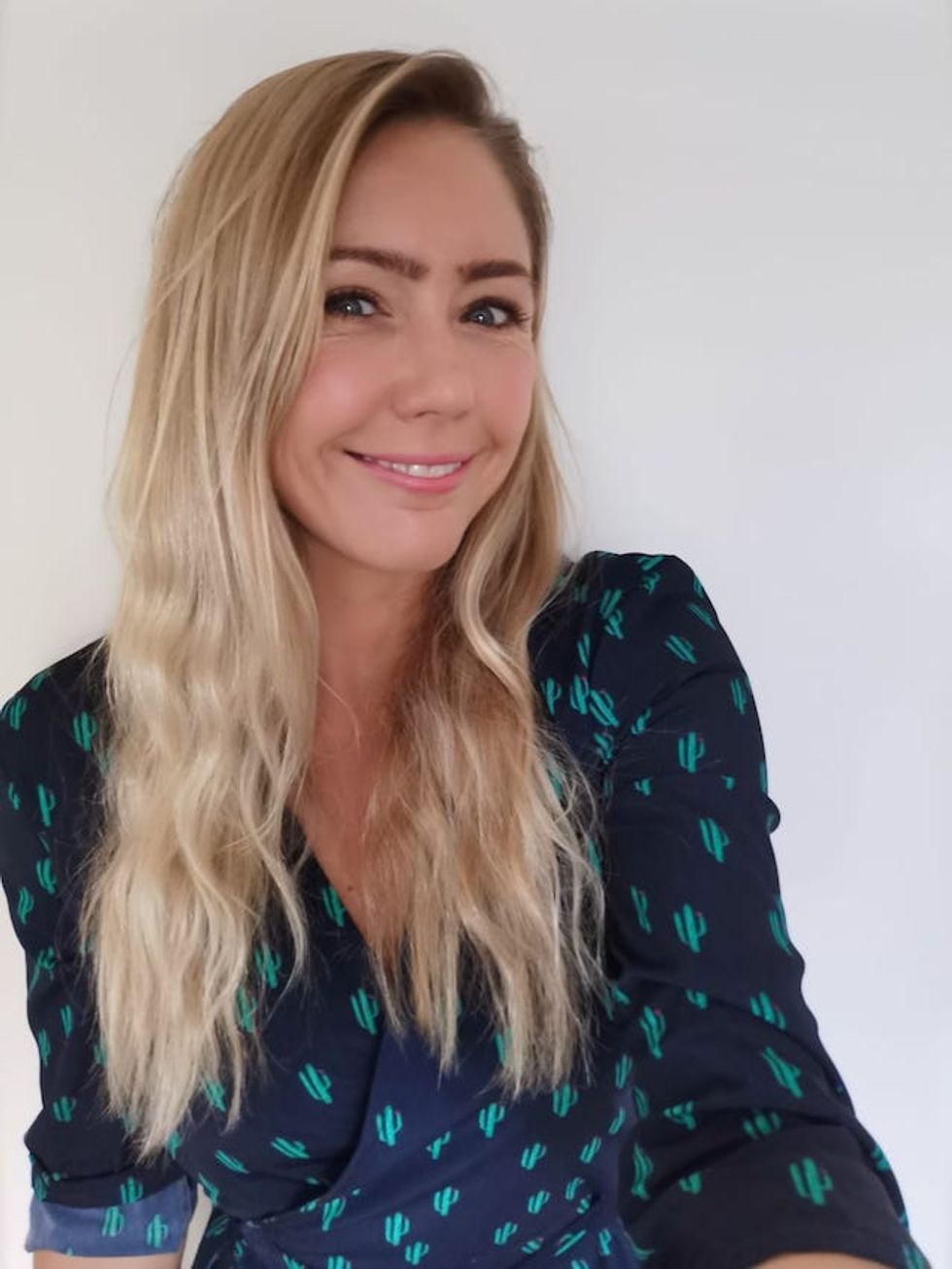
Rise AV managing director, Rachael Hamilton
Rise AV is a non-profit organisation that supports women across the commercial audiovisual sector through professional development, mentoring, leadership training, and industry advocacy.
As managing director Rachael Hamilton explains, the organisation was created to address the underlying reasons people struggle to progress.
“The gap we saw wasn't just a lack of women. It was a lack of support, development, visibility, community and opportunity. And that matters because the AV industry has an enormous skills shortage.
“If we want to attract and retain talented people, we have to create an industry where people can actually see a future for themselves. We didn't want to create an organisation that talked about the problem.
“We wanted to build something that could actually help people navigate it and, ultimately, help change the industry around them.”
Changing the culture
Rise AV builds on the work of Rise Women in Broadcast, founded by Sadie Groom. Over the past decade, that organisation has developed a global network of more than 6,000 members and supported more than 1,500 women in broadcast technology.
Recognising similar challenges in commercial AV, Groom partnered with Hamilton to establish a dedicated initiative for the sector. Since then, Rise AV has developed regional councils across the UK, APAC and North America, supported by a global non-executive advisory board.
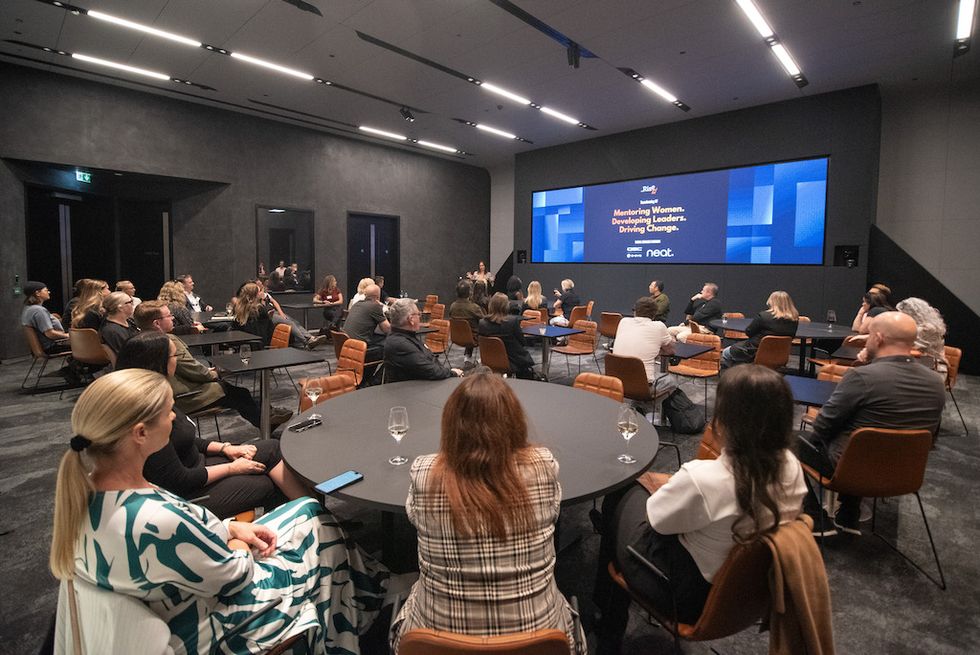
A Rise AV Networking event, connecting people from across the sector
Image courtesy of Rise AV
The work is also personal for Hamilton: “I had grown up in AV and had experienced first-hand what it could be like to build a career as a woman in an industry that was, and in many ways still is, heavily male-dominated.
“I had reached a senior level, but I had also experienced significant burnout as a result of the pressures, expectations and biases that came with being a woman trying to succeed in that environment. That experience really stayed with me.
“I didn't want to tell women to be more resilient, work harder or be more confident. I wanted us to look at the industry itself and ask what we could do differently.”
Rise AV's approach combines individual development with a challenge to employers to examine their workplace cultures.
Recognising the barriers
Many of the obstacles women encounter are not necessarily overt discrimination. They can be everyday behaviours that gradually erode confidence and make it harder to progress.
Women may be interrupted in technical meetings, have their expertise questioned more often than male colleagues, or see their ideas credited to someone else. They may also face different communication expectations, with assertiveness interpreted as aggression rather than leadership.
Informal networking can create additional barriers when women are underrepresented in the spaces where professional relationships form. The 'Girls with Drive' golf camp, launched by Martine Dodwell Bennett from Absen, is an example of an initiative needed to level the playing field.
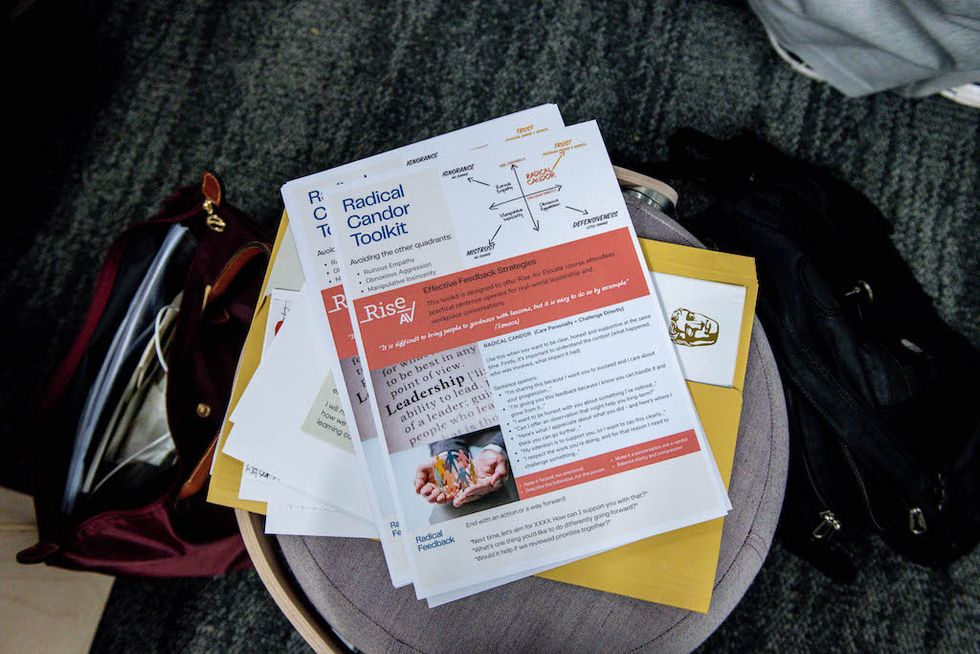
Materials handed out at a Rise AV Elevate event
Image courtesy of Rise AV
Hamilton also believes engaging male leaders is essential to changing established behaviours: “Sometimes it is a series of small things that, over time, tell someone that they don't belong and they aren’t good enough.
"A lot of men in our industry have never had to question whether their voice is being heard because of their gender, whether their expertise will be challenged, or whether being assertive will be interpreted differently because they are a man. They haven't had to think about those things, so they don't always see them happening to the women around them.
“That's why bringing men into the conversation is so important to us. Our mentors include senior male leaders from some of the biggest organisations in the industry, and they hear these experiences first-hand. And something changes when you hear them directly. You start to notice things you might previously have missed.
“Once you see it, you can't unsee it.”
Mentoring and leadership development
Rise AV tracks outcomes across its programmes to understand how professional development affects participants' careers.
According to Rise AV, 98% of mentoring programme participants report increased professional confidence, 90% feel better equipped to build professional relationships, and 90% feel part of a supportive community. A further 84% report improved communication and presentation skills, while 69% believe the programme will accelerate their career progression.
“We track that because it is important to us that we can demonstrate that impact,” says Hamilton.
“But behind those numbers are the stories that really matter. We regularly have mentees come back saying, 'I had the confidence to go for the promotion because of Rise,' or 'I asked for the pay rise because of Rise.'
“We've also had women who were ready to leave AV tell us that they now understand their value, understand their role and, importantly, feel that they belong. That is progress.”
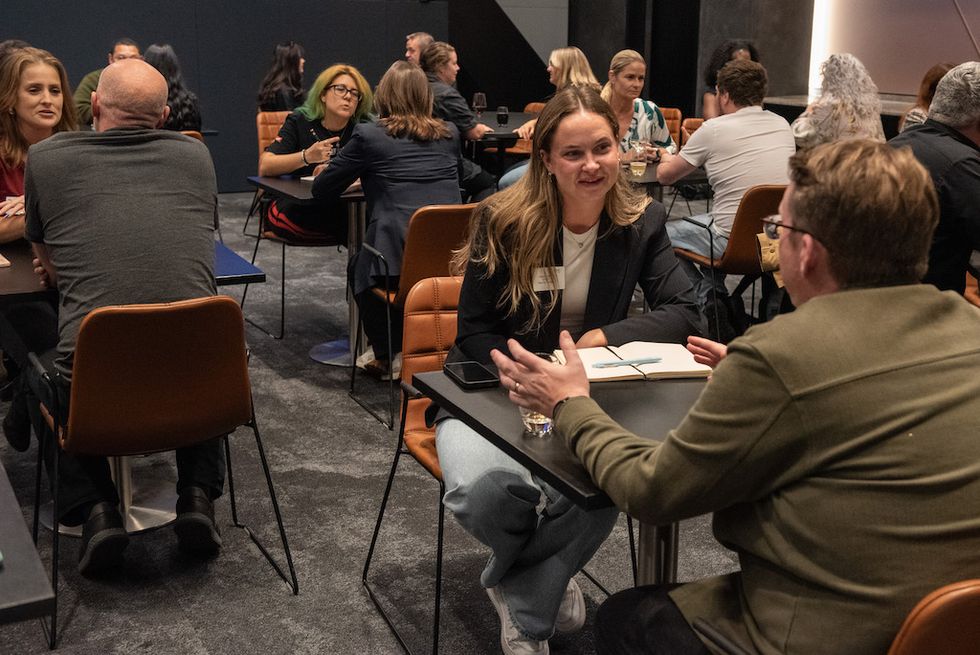
One-to-one conversations at a Rise AV Mentoring event
Image courtesy of Rise AV
The programme is designed around three connected elements: skills development, mentoring and community.
Skills sessions cover public speaking, personal branding, career planning and difficult workplace conversations, complementing technical training with skills that support career progression.
Rise AV's free, six-month mentoring programme pairs participants with experienced industry leaders for at least 12 hours of one-to-one guidance, combining online activity with in-person sessions.
Peer networks provide another layer of support, offering participants opportunities to exchange advice, discuss challenges and celebrate progress.
Hamilton says the three elements work best together: “Mentoring gives people connection. It gives someone a person they can call when they are struggling, questioning themselves or facing something they haven't experienced before.
“Leadership development is about practical skills to manage people, influence decisions, have difficult conversations, understand the commercial side of the business and ultimately take up leadership opportunities. And advocacy is about changing the environment around them.
“Those things have to work together. We need to support the individual, develop the leader and challenge the industry.”
Elevate
Alongside mentoring, Rise AV runs its Elevate leadership programme for mid-career professionals preparing to move into more senior positions.
The six-week hybrid programme brings together cohorts of up to 35 delegates to explore leadership, team motivation, organisational change, stakeholder influence and crisis communications.
The programme uses a 'Jedi' coaching approach in which experienced industry leaders facilitate small-group discussions, helping participants reflect on workplace challenges and develop their own solutions.
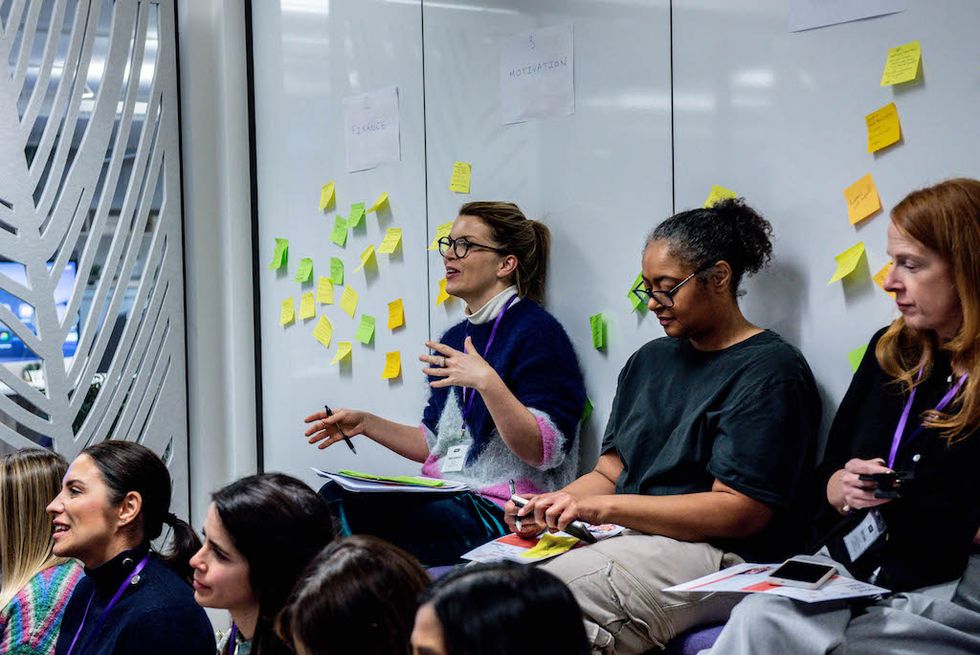
Previous Rise AV Elevate cohort at a workshop session
Image courtesy of Rise AV
Elizabeth Callens of Barco, a 2025 Elevate delegate, says: “The Rise AV Elevate leadership Programme turned 'I hope' into 'I will'... The real gift wasn't the theory; it was the fearless authenticity of brilliant women showing up for themselves and each other. I'm leaving more confident, energized, and deeply connected.”
Developing more women into leadership roles also provides visible examples of what is possible, helping future generations envisage their own career paths.
Opening up AV career pathways
Rise AV's awards recognise women working across commercial AV, integration, residential, production and live events, highlighting contributions in fields ranging from engineering and system design to creative technology and leadership.
Something Hamilton aspires to emulate is the Rise Academy, set up by sister company Rise Broadcast to introduce young people at schools, colleges and universities to careers in the sector.
For attractions, this creates an opportunity to highlight the technical and creative teams behind themed environments, live shows and immersive experiences.
Hamilton says the industry needs to communicate the breadth of these opportunities more effectively.
“We need to make AV much more visible. We need to show young people that incredible careers exist here, from engineering and programming to design, production, project management, creative technology, and leadership.
"And this is why we have recently launched the Rise AV Awards to highlight the incredible work happening every day by women in all of these roles.
“We need to get into schools, colleges and universities and show people what actually happens behind the incredible experiences they see in venues, attractions, events and workplaces. But then we need to fix what happens once they get here.”
Making retention a business priority
Retaining skilled employees is a business priority. High staff turnover can increase recruitment costs, disrupt projects and erode organisational knowledge.
Hamilton encourages employers to examine the entire employee journey, from recruitment and onboarding through to training, promotion and retention.
“If AV is such a great industry, why wouldn't you want your daughter to work in it?”

Social events from Rise AV are a chance to connect with peers from across the industry
Image courtesy of Rise AV
Hamilton identifies learning and development (L&D) budgets as one practical starting point, encouraging employers to use available funding for mentoring, coaching and leadership development.
She also urges leaders to examine how opportunities are distributed: who is selected for high-profile client presentations, who is included in informal networking, whose expertise is trusted, and how employees learn about training and progression routes.
“Recruitment is only the beginning. Employers need to look at the whole employee journey. Ask your manager what L&D budget is available to you.
"Ask what training, mentoring, coaching or development you can access. Don't assume that because nobody has offered it to you, it isn't there. And employers need to make that information much more visible. Give people access to proper development rather than waiting for them to ask for it.
“We cannot keep saying there is a skills shortage while treating development as something that is nice to have. Investing in people has to be part of the answer.”
More than technical knowledge
Another barrier to progression is the assumption that everyone working in AV must have extensive technical knowledge.
While specialist engineering roles require technical expertise, AV also needs people with commercial, creative, operational and consultative skills. Hamilton argues that a lack of technical knowledge should not deter people from entering the sector or pursuing leadership roles.
Reflecting on her own career, she acknowledges that she built her career knowing “sweet FA about the technology!”
The key, she says, is understanding the problem a client wants to solve, the audience for an experience and the outcomes a project needs to deliver. Introductory courses, including those offered by AVIXA, can help build a technical foundation.
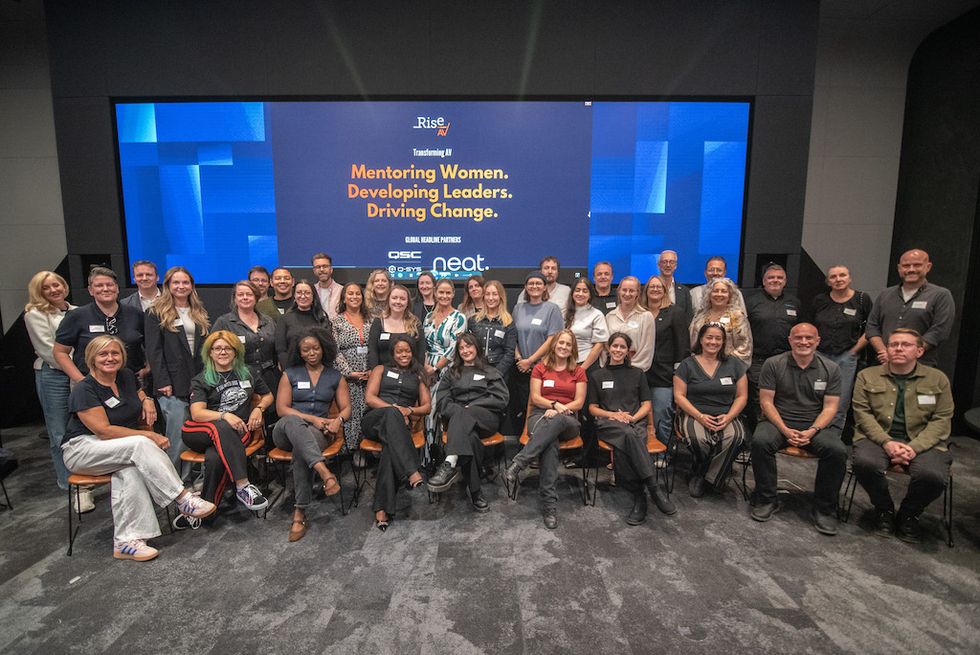
Rise AV mentors and mentees
Image courtesy of Rise AV
Hamilton's advice to women considering a career in AV, or looking to take the next step, is direct:
“Come in. Don't wait until you feel completely ready, because you probably never will. And don't let the technology put you off. You don't need to know the technical answer to ask the right question.
"AV is an extraordinary industry because there are so many different paths through it. You can be technical, creative, commercial, operational, consultative or a mixture of all of those things.
“Say yes to opportunities that scare you a little. Be curious and be willing to learn. And if you don't see many people who look like you, don't take that as evidence that you don't belong. Take it as evidence that we need more people like you in the room.
“Most importantly, don't feel that you have to become somebody else to succeed.”
For an industry facing a substantial skills shortage, retaining experienced people and developing existing talent are as important as attracting new entrants. Rise AV's approach combines support for individuals with a challenge to employers to create workplaces where more people can progress.
As Hamilton puts it: “We shouldn't be handing down the scars. We should be handing down the opportunities.”