For two decades, Beaudry Interactive has combined creative storytelling with technical engineering to help attractions, museums, and live entertainment venues create environments that respond to visitors.
Founded in California in 2006, the studio has developed interactive experiences, software, and show control systems for clients including Carnival Cruise Line, California Science Center, SeaWorld, and Discovery Cube, as well as teams across Disney's creative, entertainment, and innovation divisions.
Its work spans guest-responsive live performances, interactive theme park streetscapes and museum exhibits designed to invite exploration, participation, and discovery.
Reaching the 20-year milestone in an industry defined by constant change offers co-founders David and Valeria Beaudry an opportunity to reflect on how interactive technology has evolved, and why the principles behind successful experiences remain largely unchanged.
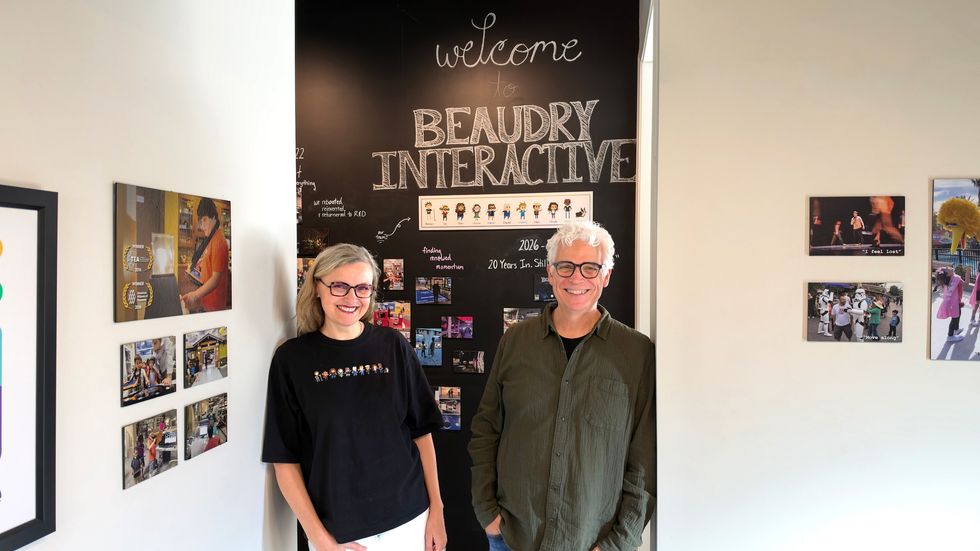
Beaudry Interactive principals, Valeria and David Beaudry
For David, whose background spans science, classical music performance, theatre and interactive installation art, the opportunity arose from a desire to bring creative and technological disciplines together.
During his time at the University of California, Los Angeles (UCLA), he explored how real-time processing, sensing technology, and software could link live performance with responsive environments.
That work eventually attracted the attention of Bruce Vaughn, then vice-president of research and development at Walt Disney Imagineering, who encouraged David to establish his own studio.
“There was a true thirst for it, but there was no connection between what creative teams were doing and what technology teams were doing,” says David. “We found ourselves in that middle ground, building that bridge.”
That position between creative ambition and technical delivery continues to define Beaudry Interactive's work.
Designing for meaningful interaction
Interactivity has become increasingly common at visitor attractions, but Beaudry Interactive believes that adding technology doesn't automatically create a meaningful experience.
Valeria Beaudry, co-owner and principal, says the starting point is understanding why visitors should participate and how their actions will affect the experience. “Great interaction isn’t just about giving people something to do. It’s really about giving them a reason to participate and a reason to care about what happens next.”
“There is interaction as a human experience, and there is interaction as technological capability,” says Valeria. “At its heart, interaction is about the desire to connect, discover something, influence something, and feel something.
"While interaction, as a human experience, does not require technology, technology gives us new, increasingly sophisticated ways to make connections happen. It expands our ability to act, influence, and shape an experience, turning participation into something that can be more personal, responsive, and meaningful.”
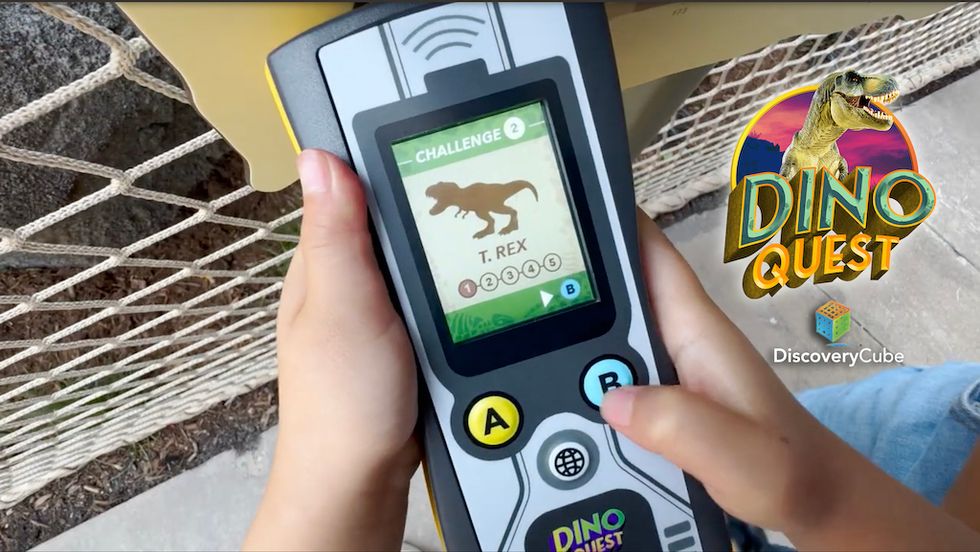
Dino Quest interactive experience developed by Beaudry Interactive with and for Discovery Cube, California
David adds that even though technology has advanced considerably since the company was founded, the underlying motivation hasn't changed.
“The goals of interactivity have remained the same for the last 20 years. It's making those connections, making them real, and giving people the ability to be part of the experience in a meaningful way.”
The studio approaches each project through three interconnected elements: vision, experience design and engineering.
Vision defines why interaction is needed and what it should achieve. Experience design determines how visitors participate and influence their surroundings. Engineering turns that intent into working systems, linking visitor actions to coordinated, real-time responses.
The distinction matters for attraction operators considering interactive installations. A touchscreen or motion-activated display may respond to a visitor, but the response has to contribute to the wider experience rather than serve as an isolated technological feature.
Successful interaction gives visitors a sense of agency, with responses that feel relevant, understandable and connected to their surroundings.
From experimental theatre to attraction-wide experiences
One of Beaudry Interactive's early projects explored how an interactive performance could retain a clear beginning, middle, and end while letting performers and guests influence what happened.
Developed in the early 2010s as a research initiative for a major themed entertainment client, Trunk Show used approximately 800 lighting, audio, video, and special-effects cues across a 15- to 25-minute performance.
Performers controlled show elements through gesture interfaces and sensor-equipped props, while guests could also influence the performance and surrounding environment. The challenge was to allow this flexibility while preserving a coherent narrative.
“Not a single cue was triggered by anyone behind the scenes,” says David.
“Performers controlled the show system directly through gesture interfaces cleverly hidden in their props and costumes. Even their position in the environment had an impact on the direction of any particular show.”
The project raised a question that is still relevant to attractions today: how can visitors influence a story without disrupting its pacing or undermining the illusion?
The answer lies in both the interaction design and the systems that support it, which must handle different inputs without compromising performance. What David likes to call “authored agency.”
In 2014, Beaudry Interactive brought its interactive design approach to museums and science centres with the Inspector Training Course at Discovery Cube Los Angeles.
Created with the Discovery Cube team led by CEO Joe Adams, the installation placed visitors inside a simulated 2,000-square-foot California bungalow. Children explored household fixtures, plumbing and appliances while learning about home safety, water conservation and energy efficiency.
Instead of static information panels, the experience used location-aware tablets and spatial tracking to turn the visit into an interactive scavenger hunt. The system could identify children's location within a few inches and respond with relevant feedback, all while keeping the focus on the physical space.
According to the original project account, interactions that might last around six seconds at a conventional information panel could extend to 20, 40 or even 60 minutes.
The installation encouraged repeat play, has remained operational for more than 12 years and received a Thea Award for Outstanding Achievement in 2016.
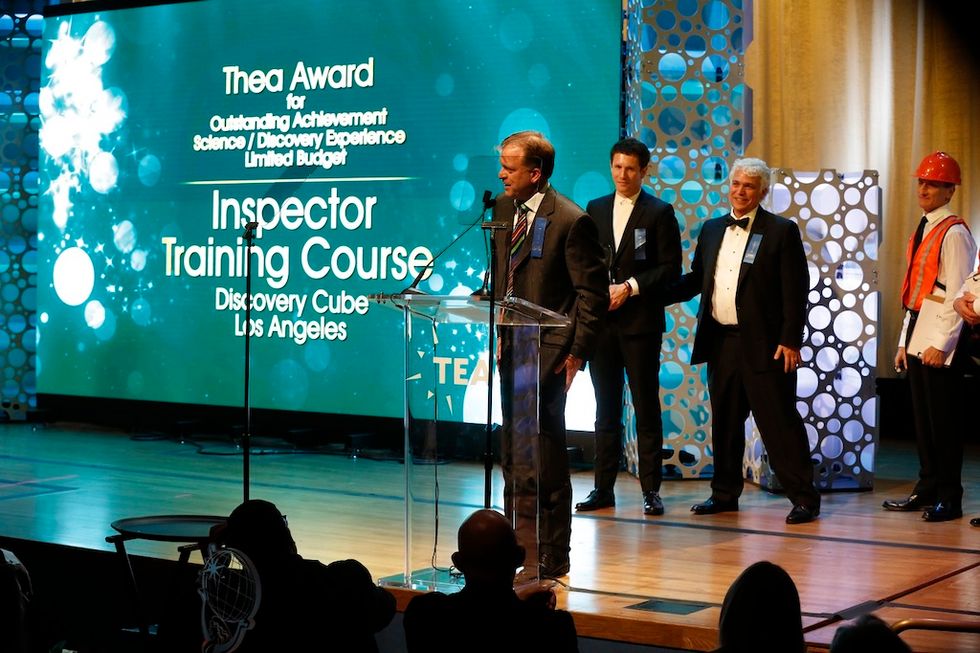
Members of the Inspector Training Course project team receiving a Thea Award for Outstanding Achievement in 2016
Valeria says the project demonstrates the relationship between a clear purpose, experience design and thoughtful technical execution.
“Joe Adams had the vision. Coming from themed entertainment, he recognised the business value of investing in deep interactivity. The experience was designed for prolonged engagement, giving children a reason to participate and care about conservation.”
The project illustrates how interactive design can embed learning in the experience itself, with visitors exploring, making decisions and seeing the consequences of their actions. For museums and science centres, the key is to connect interaction directly to the learning objective rather than simply adding a game mechanic to an exhibit.
Bringing characters to life
At a theme park, the challenge shifts from an individual installation to coordinating interactive elements across a busy environment.
At Sesame Street Land at SeaWorld Orlando, which opened in 2019, Beaudry Interactive worked on a dozen interactive locations, including Oscar the Grouch's trash can, Cookie Monster and Gonger's food truck, doorbells and interactive building windows.
The challenge extended beyond making each feature respond to visitors. The land needed to function as a connected environment, with individual interactions adapting to the wider activity around them.
“We communicated with park-wide show control so that when a parade came through, local interactive windows went quiet,” explains David.
“You cannot have Elmo playing in a window interactive and Elmo on a physical parade float right in front of the window at the same time.”
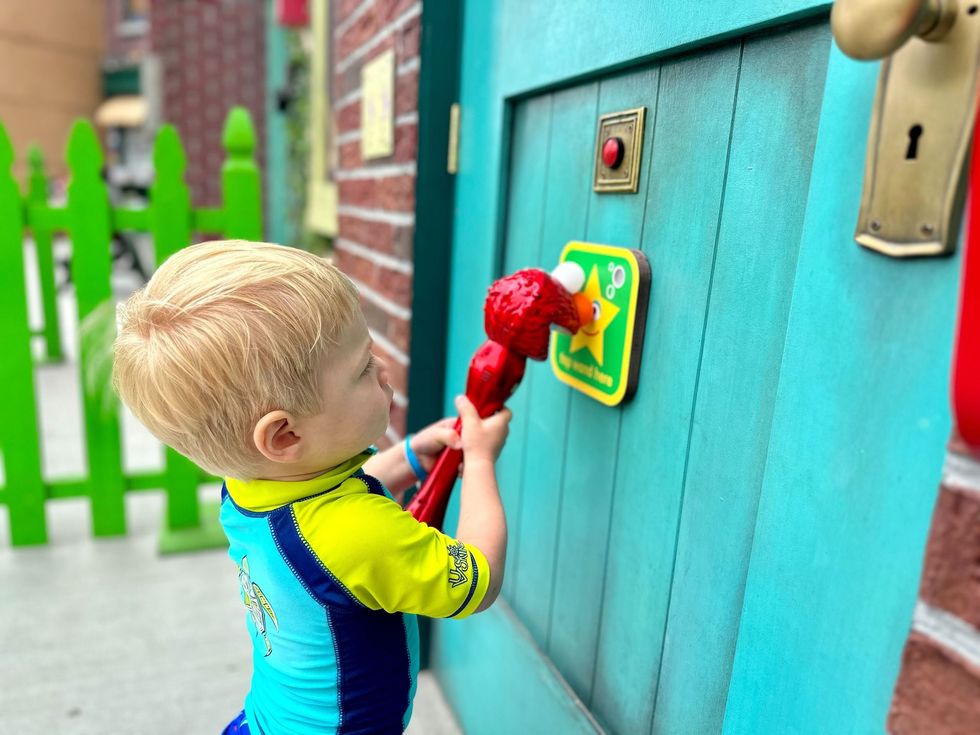
The Beaudry Interactive team created a RFID-enabled handheld bubble wand for Sesame Street in Orlando and Sesame Place in San Diego
Beaudry Interactive has also explored how technology can extend character encounters. For its award-winning Small Talk with Big Bird project, the studio developed a system that allows the beloved Sesame Street character to engage in seemingly spontaneous conversations with park visitors.
Working with Sesame Workshop and Matt Vogel, Big Bird's official performer and voice actor, the team developed hundreds of prerecorded lines of dialogue.
The challenge was making those scripted responses feel natural and spontaneous while the performer navigated a busy theme park, puppeteered Big Bird, and engaged with unpredictable guests.
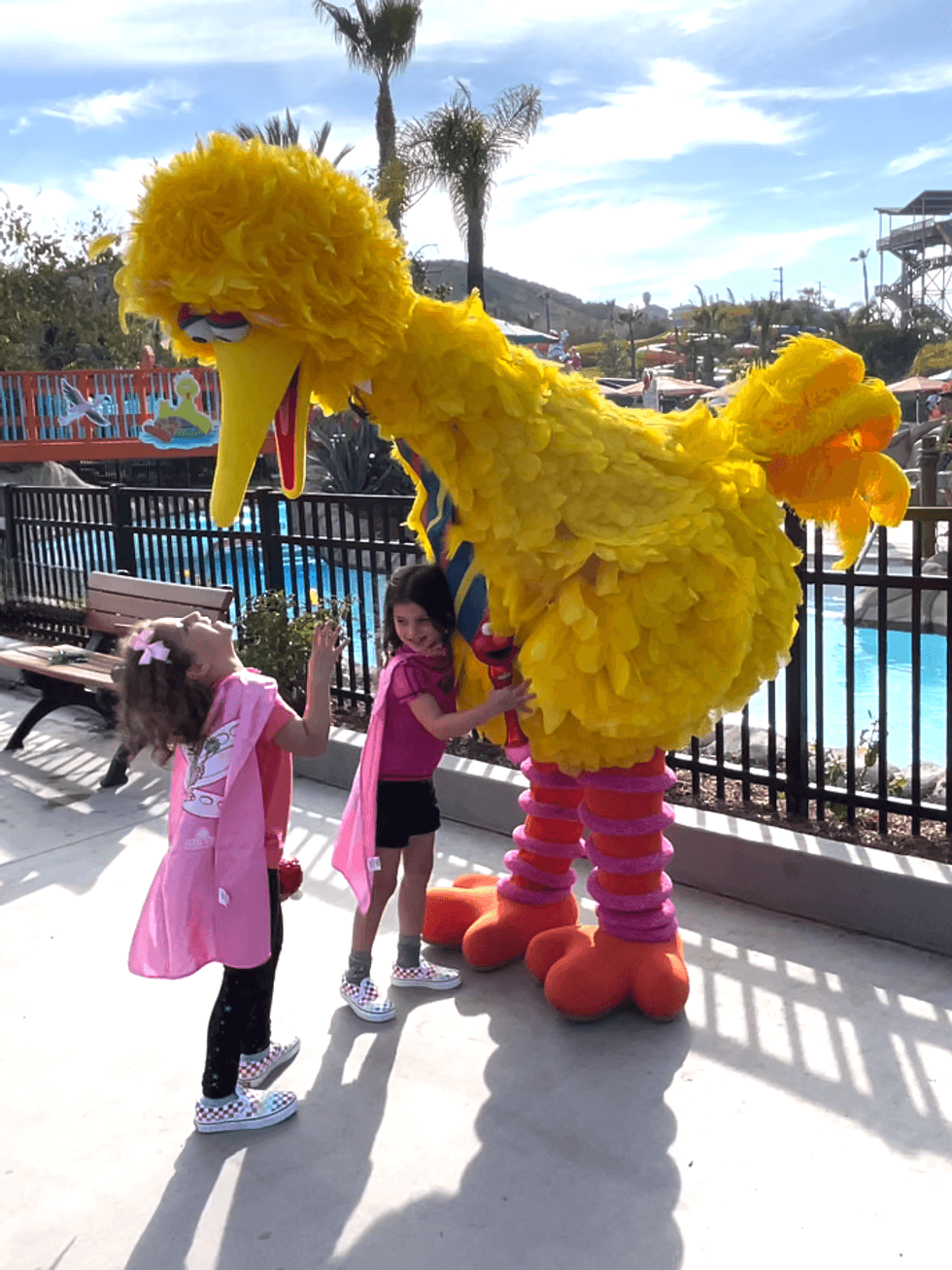
Young fans enjoying a moment with Big Bird, thanks to Beaudry's technology
The solution combines a discreet, gesture-based performer interface with an intelligent, onboard story engine. Instead of selecting individual lines, the performer guides the conversation through scenes and beats, greetings, questions, photographs, and goodbyes, while the system manages the dialogue.
Subtle gestures suit different situations, with a simple LED display inside the costume providing feedback. Crucially, the system triggers dialogue only when the performer puppets Big Bird's beak, virtually eliminating accidental responses.
“We designed a performer interface mapping subtle physical gestures to speech states,” says David. “It allowed a costumed character to hold an authentic, emotional conversation with a child in real time.”
The result is a character who can roam the park untethered and engage in seemingly unscripted encounters, from playful exchanges to gentle, empathetic responses when a child has something difficult to share.
The project received second place in the Experiential Technology category at the 2022 blooloop Innovation Awards.
The technology behind the experience
Delivering these connected experiences requires more than individual interactive elements; it requires systems that work together.
At a basic level, interactive systems architecture has three stages: sensing what people do, interpreting those actions within the context of an experience, and responding meaningfully. Each stage presents opportunities to expand what’s creatively possible.
For two decades, Beaudry Interactive has developed the hardware, software, and expertise to connect these components.
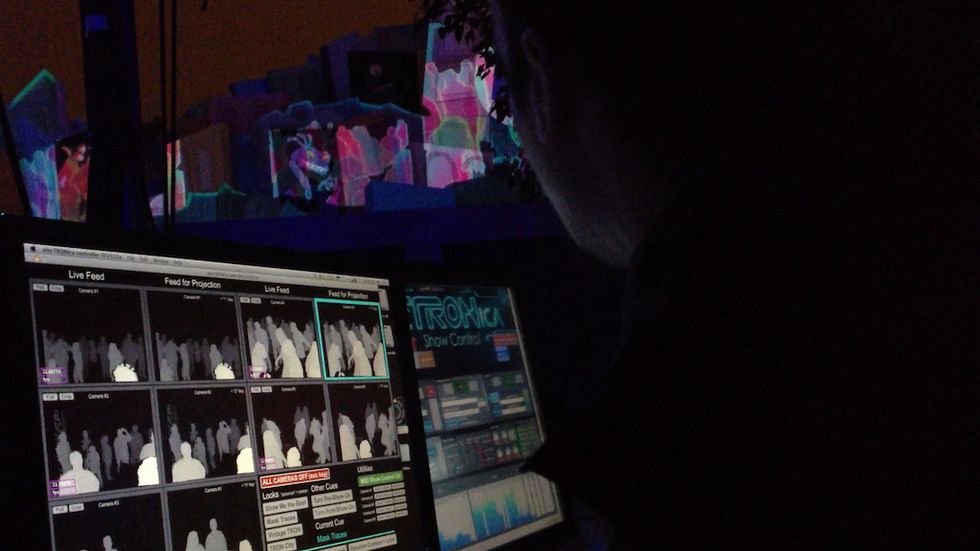
Beaudry Interactive's Diva real-time show control platform in action
Central to this work is Diva, the studio's proprietary real-time show control platform, which interprets guest and performer actions in real time and coordinates responses across interconnected systems.
“At its heart, Diva is our interactive story engine,” says David. “It allows us to take information from sensors, gestures, performers, and guest behaviour, interpret those actions within the context of an experience, and use them to influence everything from sound and lighting to media, physical effects, and the unfolding story.”
Beyond Diva, the studio has developed a broad range of sensing and tracking solutions, from RFID-enabled wearables and markerless motion tracking to custom electronics and purpose-built interactive devices. But the value lies not in any single technology, but in how these tools are combined to serve the experience.
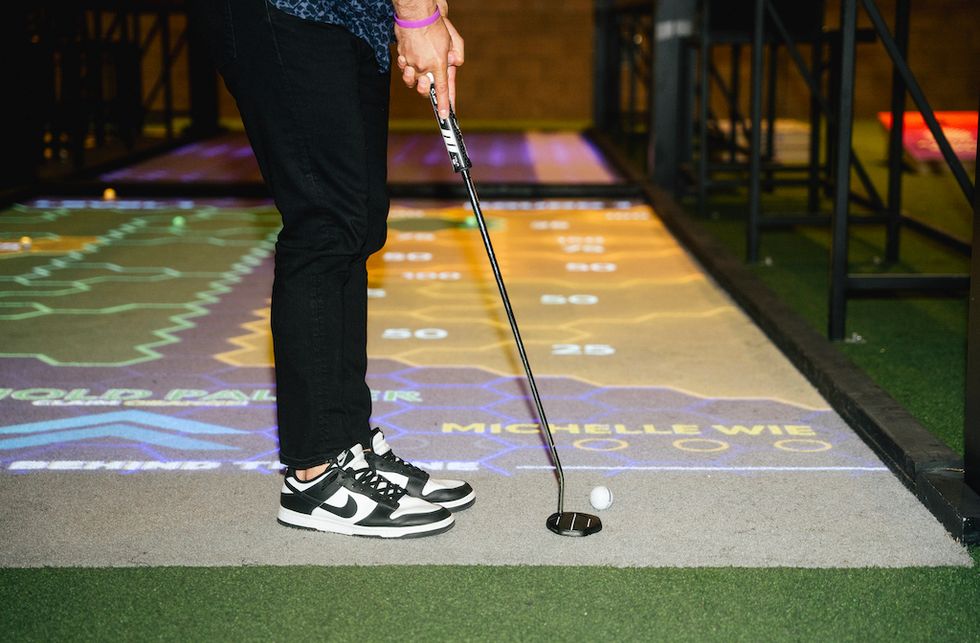
Real-time ball tracking enhances the visitor experience at Atomic Golf's Putting District, Las Vegas
At Atomic Golf's Putting District in Las Vegas, real-time ball tracking transforms an ordinary golf ball into a controller for projection-mapped games.
The same underlying tracking technology was adapted for The Franklin Institute's Wondrous Space gallery, where visitors explore black hole physics through an interactive gravity well.
Sometimes, however, realising a creative vision means inventing technology that doesn't yet exist. Beaudry Interactive developed its proprietary Light Sprites platform to create a “living light field,” turning individual points of light into a responsive environment that appears to move and react to guests.
A derivative of this technology was developed for Dollywood's NightFlight Expedition, where over a thousand individually controlled points of light create the illusion of luminous creatures darting and soaring overhead.
Although the fixtures remain stationary, carefully choreographed light patterns bring the environment to life as guests approach the attraction's grand finale.
The common thread is that the technology takes its cues from the experience, not the other way around. The setting, the audience, and the intended response all shape the design, whether the goal is to spark curiosity, invite exploration, or turn individual participation into a shared moment.
Balancing creative goals with operational reality
Behind the studio's varied portfolio is the partnership between David and Valeria Beaudry.
Their roles bring different perspectives to project development. David focuses on creative possibilities and technical problem-solving, while Valeria brings a strategic production and business perspective, examining feasibility, budgets, risks and operational requirements.
The distinction is simple: David asks how something can be done; Valeria asks why it should be done. Together, these perspectives help clients assess whether an ambitious concept is viable within their budget and operating environment.
“Having Valeria's strategic producer background changed how we approach projects,” says David. “We're able to connect the dots between what clients envision, what they need, and how to make it happen.”
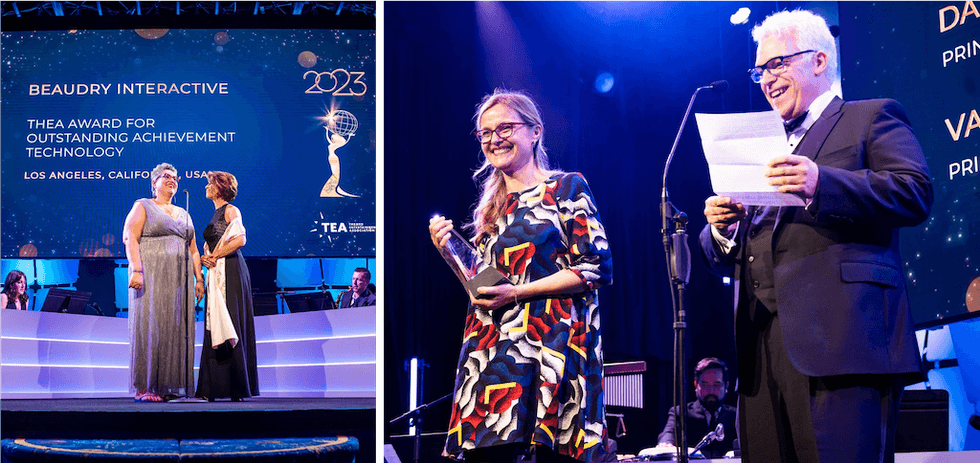
David and Valeria collecting Beaudry Interactive's Thea Award in 2023
Image courtesy of the Themed Entertainment Association
This collaborative approach extends across the studio. Engineers, technologists, producers, experience designers, and visual artists work together from the earliest stages of a project, bringing different perspectives to the creative process.
For Beaudry Interactive, the value isn't simply identifying technical limitations or avoiding costly surprises. It's discovering creative possibilities that might never emerge if design and engineering happen independently.
Technical knowledge can inspire new approaches to storytelling and participation, just as an ambitious creative idea can push the team to develop an entirely new solution.
At the same time, two decades of building physical installations have taught the team to balance experimentation with the realities of everyday operation. Sometimes an inexpensive sensor works better than a complex tracking system, and every installation must withstand the enthusiasm and unpredictability of its visitors.
“We know children are wonderful, but they are also destructive operational stress-testers,” says David. “They will lick, kick, pull, and tear apart anything to figure out how it works.”
That mix of creative curiosity, practical engineering, and operational experience lets Beaudry Interactive help clients explore ambitious ideas with confidence, from the earliest concept through installation and beyond.
What comes next for interactive attractions?
As a faculty member in UCLA's Department of Theater, David also sees how emerging creatives approach interactive technology. His students come from a variety of disciplines, including acting, directing, music history, engineering, and fine arts.
Having grown up surrounded by games, immersive worlds, and digital media, they see technology as part of their creative vocabulary, much like lighting, sound, or scenic design.
What excites David most is their curiosity and willingness to experiment, crossing traditional disciplinary boundaries to discover new ways of creating experiences and engaging audiences.
“They are not satisfied with being passive observers; they do not want to go to an attraction and just look at wallpaper. They want to be inside the experience, manipulating it, shaping it, and personalising it.”
Advances in AI and sensing technologies are pushing the boundaries of interactive experiences.
David is particularly interested in AI as a tool for perception and understanding, rather than simply generating content. “Ten years ago, the maker movement gave us new ways to sense the world. Today, AI is giving us new ways to understand it.”
 Interactives from the Beaudry team at The Franklin Institute's Wondrous Space gallery
For Beaudry Interactive, this opens the door to experiences that are more aware of what's happening around them and better able to respond to the context of an interaction, while keeping the creative vision and storytelling firmly in the hands of their designers.
“The goal isn't to give guests infinite choices. It's to make their choices matter.
“Imagine a future version of Beaudry Interactive's Small Talk with Big Bird experience. Using AI-powered environmental sensing, the system might recognise a child carrying a Big Bird plush or notice Elmo approaching for an impromptu encounter.
"Rather than requiring the performer to search for a particular response, AI could help the story engine recognise what's happening around Big Bird and automatically incorporate relevant dialogue into the encounter, giving the performer more opportunities to create personal connections without adding complexity to the interface.”
But the future isn't solely about personalisation.
David also sees exciting possibilities for technology that supports shared discovery, collaboration, and play, creating experiences that bring people together rather than simply responding to them individually.
Valeria says the bigger challenge is giving people strong reasons to visit physical destinations when entertainment is readily available at home.
“To continue to draw people out into theme parks, museums, and other physical destinations, we must offer an experience that is far more compelling than a home TV screen. It must be effortless, communal, and genuinely engaging.”
As Beaudry Interactive looks toward its next chapter, David and Valeria see an opportunity to build on two decades of experience connecting creative vision with technological possibilities.
Their goal isn't simply to give audiences more ways to interact, but to help clients imagine and deliver experiences where participation is meaningful, technology serves the story, and bold ideas become reality. The studio remains focused on bridging creative ambition and technical delivery.