- Trade shows should be treated as trusted environments for relationship-building rather than simple sales lead collection.
- Active year-round engagement in training, standards development, and public-interest initiatives turns transactional fees into strategic alliances.
- National advocacy campaigns offer industry partners a powerful business perspective and direct access to key policymakers.
- Cross-sector convergence is opening new market boundaries in museums, agricultural spaces, and public cultural centres.
- Maximising return on investment requires moving from passive membership to active, multi-colleague participation across the organisation.
Our experts
Melissa Howerton
Melissa Howerton provides strategic leadership across all AZA departments, fostering collaboration and alignment to turn organisational goals into action. She joined AZA in 2008 and has held a series of leadership roles across its membership, conferences and revenue-generating operations. Previously, she spent more than eight years with the Newspaper Association of America. Howerton holds a BA in communication from George Mason University and is a Certified Association Executive (CAE). Her long-standing passion for ocean conservation stems from growing up near the ocean and an early ambition to become a marine biologist.
Our experts
Sarah Joyce
Sarah Joyce oversees AVIXA's global membership, certification, councils and international trade shows. She also serves as executive director of the AVIXA Foundation and sits on the boards of several regional AVIXA organisations. Joyce joined AVIXA in 2019 after nearly 12 years with Electrosonic. She has more than 25 years’ experience in the professional AV industry, with international experience across Europe, the Middle East, the US and Asia. She also helped establish the Women of InfoComm Network, supporting the growth of AVIXA’s global Women’s Council. Her work focuses on innovation, diversity and the continued growth of the professional AV industry.
Our experts
Nicola Hamilton
Nicola Hamilton leads Ecsite's communications, membership and partnerships strategy, supporting its network of more than 300 members. Hamilton joined Ecsite in 2022 and oversees external marketing and communications, including the Ecsite Conference, programmes and member relations. Her work has included developing a new website and membership communications strategy, as well as using audience insights to shape programmes and activities. A marketing communications specialist with experience across multiple sectors, she also works to raise the profile of the science engagement sector and build relationships with stakeholders in Brussels.
Our experts
Natanya Khashan
Natanya Khashan oversees marketing and communications, digital experience and research strategy at AAM and also serves as the organisation's press contact. She joined AAM in 2019, after leading marketing and communications for a global diversity and inclusion consulting firm. Earlier in her career, she held a range of positions in the arts and culture sector, including working as a museum educator for teen programmes in Boston. Khashan holds a BFA from Massachusetts College of Art and Design and an MA in arts management from American University, where she focused on the intersection of technology and the arts, and on diversity, equity, accessibility, and inclusion in museums.
Our experts
To get the most value from a trade association, an attractions business must look well beyond the membership directory. Once a company has joined an association, the real challenge is turning that investment into a driver of business development, operational learning, and market growth.
In Part 2 of our guide, we examine how to build trust on the exhibition floor, leverage year-round resources, navigate cross-sector convergence, and turn membership into a long-term strategic investment.
Missed Part 1? Read How to choose and budget for the right trade association to learn how our expert panel evaluates organisational fit, balances regional vs. international scope, and calculates initial membership dues
Building trust on the trade show floor
Trade shows are a major reason many companies join membership organisations, but success in today's market requires moving beyond a short-term, transactional mindset.
On the trade show floor, Melissa Howerton (AZA) suggests that while exhibitors generate leads, they must focus on where they build long-term relationships. She advises looking beyond booths to session rooms, hallways, committee meetings, and informal conversations.
Howerton recommends showing up as a peer, not a seller.
By serving on committees, speaking on panels, and sharing knowledge, exhibitors can establish themselves as credible experts who understand the sector's challenges and are invested in its collective success.
This peer-to-peer engagement fosters trust, making buyers far more receptive over the long term.
The goal should not be to 'sell, sell, sell,' but to become known as a credible peer and expert. – Melissa Howerton
Sarah Joyce (AVIXA) believes exhibitors should approach major events primarily as opportunities to learn and build relationships, allowing business leads to follow naturally.
 The show floor at ISE, offering both innovations and networking
She advises that understanding a potential partner's specific challenges, goals, and strategic priorities is far more valuable than delivering a pre-packaged sales pitch. Joyce also encourages exhibitors to maintain a flexible schedule during busy trade shows.
While a clear plan is important, leaving room for spontaneous conversations and unexpected hallway or networking meetings often yields the most valuable long-term business partnerships.
Understanding someone's challenges, goals and priorities is often far more valuable than delivering a sales pitch. – Sarah Joyce
Nicola Hamilton (Ecsite) says that successful exhibitors invest significant time in understanding the unique challenges that visiting organisations are trying to solve.
Instead of focusing solely on selling products or services, they come prepared with thoughtful questions, listen carefully, and look for opportunities to build long-term partnerships rather than short-term transactions.
She explains that associations create trusted, neutral environments where these relationships can keep developing long after the event ends, especially for exhibitors who return year after year.
Natanya Khashan (AAM) advises exhibitors to position themselves as collaborative problem-solvers rather than transactional vendors. Museum professionals want to hear about real, field-tested solutions and lessons learned from working alongside similar institutions.
Khashan notes that associations must actively design exhibition environments to support relationship-building.

The AAM Annual Meeting is co-located with MuseumExpo, offering more connections
AAM has successfully experimented with adding puppy parks, food stations, and digital lounges to its expo halls, resulting in 80% of museum chief executive officers meeting directly with exhibitors to explore creative partnerships.
Ming Yang (CAAPA) notes that the attractions industry has changed dramatically, with project development periods and buyer decision-making cycles much longer.
As a result, exhibitors can no longer treat trade shows as venues for short-term sales. Instead, shows must be treated as starting points for building long-term trust.
To achieve this, companies must demonstrate their professional expertise, service capabilities, and long-term delivery capacity. This trust builds over time through consistent visibility, continued communication, and ongoing support.
This kind of trust is rarely established during a single trade show. It is built gradually through continued communication, ongoing service and consistent visibility. – Ming Yang
Leveraging year-round resources and knowledge platforms
Beyond conferences and exhibitions, associations offer members deep support as they tackle complex challenges. Acting as year-round collaboration platforms, they provide vital knowledge networks, standards development, and national advocacy.
Throughout the year, Howerton notes that professional development remains a central pillar of an association’s value. Through training and leadership development, associations equip members with tools to strengthen their teams and adapt to industry changes.
She highlights AZA's strategic focus on preparing the next generation of leadership.
By volunteering for committee service, joining mentorship programmes, and participating in peer-to-peer learning, members build professional skills and expand networks. These activities strengthen the leadership pipeline across the sector while deepening engagement.
Outside the trade show, Joyce highlights how associations support businesses with pressing modern challenges like workforce development.
Through the AVIXA Foundation, the association builds awareness of audiovisual careers, supports training, and creates pathways into the profession.
She also highlights associations' role in addressing sustainability, noting that AVIXA's Sustainability Advisory Group brings together industry experts to share knowledge on environmental responsibility.
Additionally, Joyce points to market intelligence and end-user demand research as crucial tools that help members navigate economic uncertainty.
 Participants getting hands on at a previous Ecsite conference
Hamilton explains that modern associations serve as year-round platforms for knowledge and collaboration rather than simple event organisers. They provide ongoing programming, peer learning, shared resources, regulatory and policy updates, and professional development.
For Hamilton, creating structured spaces where members can openly share successes and failures is vital to growth.
Because no single organisation has all the answers to today's complex challenges, associations help members learn much faster together than they ever could individually.
Throughout the year, Khashan says that AAM supports its members through research, data, advocacy, and virtual learning. A key highlight is Museums Advocacy Day, where industry partners actively participate alongside museum leaders.
This collaboration lets partners bring a vital business perspective directly to federal policymakers, showing how a strong cultural sector supports jobs, innovation, and local economic activity.
For many partners, this direct political engagement alongside sector leaders is one of the most valuable, unique benefits of their membership.

Attendees try new experiences at CAAPA's China Attractions Expo
Yang emphasises that an industry organisation's real objective must be to build a healthy, regulated, and sustainable industry ecosystem, rather than simply hosting temporary events.
While trade shows are valuable, they occupy only a small portion of the year. Outside these events, associations must do ongoing work, including professional training, safety initiatives, policy interpretation, standards development, and industry research.
This ongoing work provides companies with a stable environment for growth, laying the foundation for long-term value.
Navigating the cross-sector convergence
The boundaries between different attraction types are increasingly disappearing, with theme parks, museums, zoos, science centres, and technology developers collaborating more frequently than ever.
To foster collaboration, Howerton says that AZA staff regularly meet with peer organisations to compare emerging opportunities and support the broader conservation community.
This cross-sector work is reflected in conference programming, where members can earn continuing education credits through organisations like the American Association of Zoo Veterinarians. AZA also maintains regular dialogues with the American Public Gardens Association to exchange best practices.
These partnerships let members apply fresh ideas from adjacent fields to their operations.
Regarding cross-sector opportunities, Joyce notes that attractions are increasingly drawing inspiration from museums, live entertainment, retail, and experience-led sectors.
Technology plays a vital role in enabling these immersive experiences, and AVIXA actively works to bring these different industries together. Through educational programmes, specialised councils, and community initiatives, the association helps members share ideas and discover new approaches to visitor engagement.
Initiatives like the Brad Sousa Impact Fund further encourage collaborative projects between tech developers and digital transformation communities.
To encourage cross-sector collaboration, Ecsite keeps its doors open to any organisation, regardless of sector, that shares its core goal of equipping societies to understand challenges and shape the future.
Hamilton says that collaborating across sectors helps members look far beyond their traditional peer groups. This exposure allows attractions businesses to discover, adapt, and implement innovative communication and engagement approaches proven in other creative fields.
Khashan says that some of the most exciting innovations occur where different sectors intersect.

Attendees arriving at a previous AAM Annual Meeting and MuseumExpo
Museums are learning from attractions about operations and guest experiences, while cultural organisations contribute deep expertise in education, community engagement, and storytelling.
Technology companies are further accelerating new forms of visitor engagement across all institution types. By creating conferences and virtual affinity communities, associations provide natural spaces for these cross-sector partnerships and creative ideas to spark.
To drive growth, Yang explains that CAAPA has actively promoted integrating cultural tourism with other sectors, including agriculture, technology, sport, and museums.
This convergence represents a major market opportunity for content providers and equipment manufacturers, expanding their traditional applications into public cultural centres, urban parks, and commercial spaces.
The association helps suppliers and new project developers connect efficiently through targeted exhibitions and resource-matching forums. This competition also encourages traditional parks to improve their experiences and develop unique core competencies.
Active participation as a strategic investment
To achieve a true return on investment over the next three to five years, a business must transition from viewing membership as a passive subscription to treating it as an active partnership.
For long-term success, Howerton maintains that a membership investment is only as valuable as the active effort an organisation puts into it. She advises businesses to move beyond passive participation and prepare to volunteer, serve on committees, and attend programmes.
Over three to five years, companies should invest where they can both gain value and contribute meaningfully to the field's future.
Joyce's core advice is to carefully research associations and ensure your team will actively use the benefits available. Because membership value depends entirely on engagement, businesses should focus on technology-focused organisations.
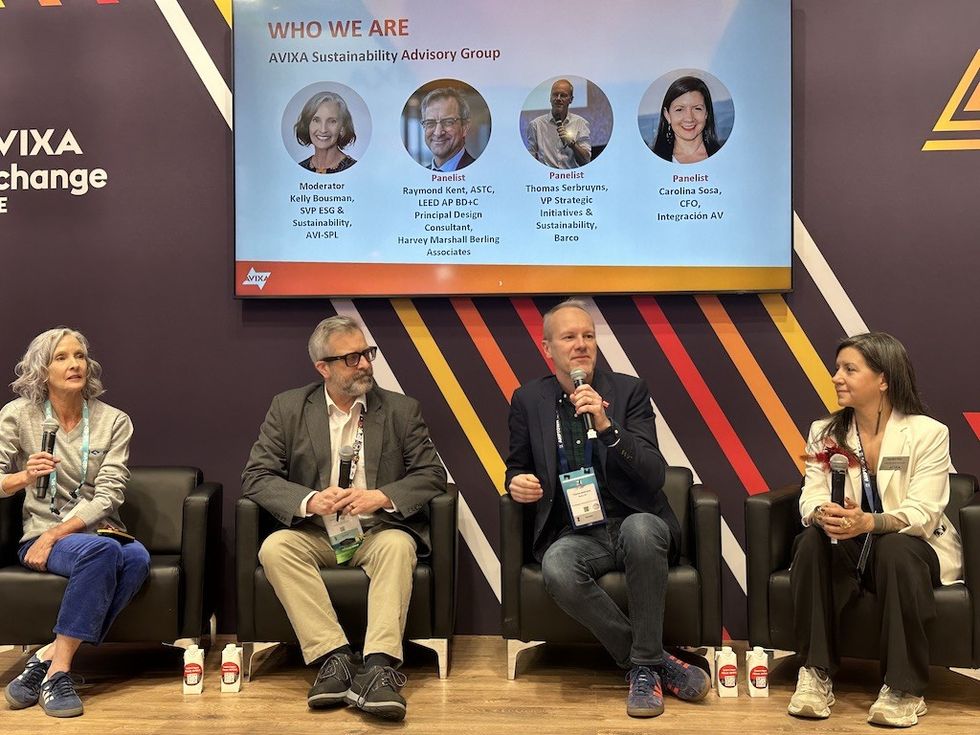
A panel speaks on sustainability at ISE
As digital storytelling, interactive exhibits, and data-driven operations become central to guest experiences, technology communities are vital for ongoing professional development and industry growth.
Hamilton advises businesses to choose an association that aligns with their long-term strategic ambitions and goals, not just immediate operational needs. It is crucial to consider whether the organisation provides active opportunities for involvement and supports different people within your business.
Because membership creates the greatest value when multiple colleagues are engaged, she reminds businesses to treat membership as a strategic investment, not a passive subscription.
The organisations that gain the most value are those that participate actively, build relationships, share knowledge and contribute to the community throughout the year. – Nicola Hamilton
Khashan recommends that businesses look closely at how an association invests in the field's future. She suggests asking whether the organisation produces credible research, advocates effectively, and offers platforms for sharing your team's expertise.
Ultimately, the most valuable memberships function as true strategic partnerships, helping businesses anticipate where the industry is headed, better understand clients, and position themselves as trusted resources.
The right association should help you better understand your clients, anticipate where the industry is headed, and position your organisation as a trusted resource along the way. – Natanya Khashan
Yang advises businesses to base membership decisions on their current stage of development and future goals. Before committing, companies must ask how many resources—including budget, time, and personnel—they can realistically dedicate to active participation.

The venue for CAAPA's China Attractions Expo in Beijing, 2026
He says that membership fees should never be viewed as an operating cost, but rather as a strategic investment in brand development, market expansion, and long-term industry relationships.
The complete trade association guide
- Part 1: How to choose and budget for the right trade association (organisational fit, regional vs. international scope, and budget)
- Part 2: How to maximise the value of your trade association membership (event engagement, year-round resources, and cross-sector growth)