360Golf: from putting game to gaming platform
Holovis' 360Golf brand is transforming the much-loved mini golf format to meet the needs of the competitive socialising market.
At its core, the experience takes the traditional game and adds an automated scoring system, making it easier for visitors to pick up a putter and start playing.
- Platform transformation. 360Golf is transforming traditional mini golf with tech to meet the demands of the competitive socialising market.
- Automation and gamification. The system uses smart equipment and the HoloTrac system to eliminate paper scorecards, while features like SuperShots, Triumphs, and leaderboards encourage repeat visits and track player progress.
- Data-driven operations. The DeepSmarts AI engine supplies operators with analytics to optimise venue operations, increase dwell times, and boost F&B revenue.
- Design flexibility. Installation options range from tech-only retrofits and standard catalogue holes to fully customised installations for diverse venues.
The connected game platform then goes further by combining gamification with exceptional course design, resulting in an attraction visitors want to share and replay time and again.
For operators, the system offers rich insights and straightforward course management, with potential for high throughput and strong ROI.
Additionally, its myriad options suit almost any location, from retrofit projects to fully customised setups for dedicated social entertainment hubs, the decks of cruise ships, and everything in between.
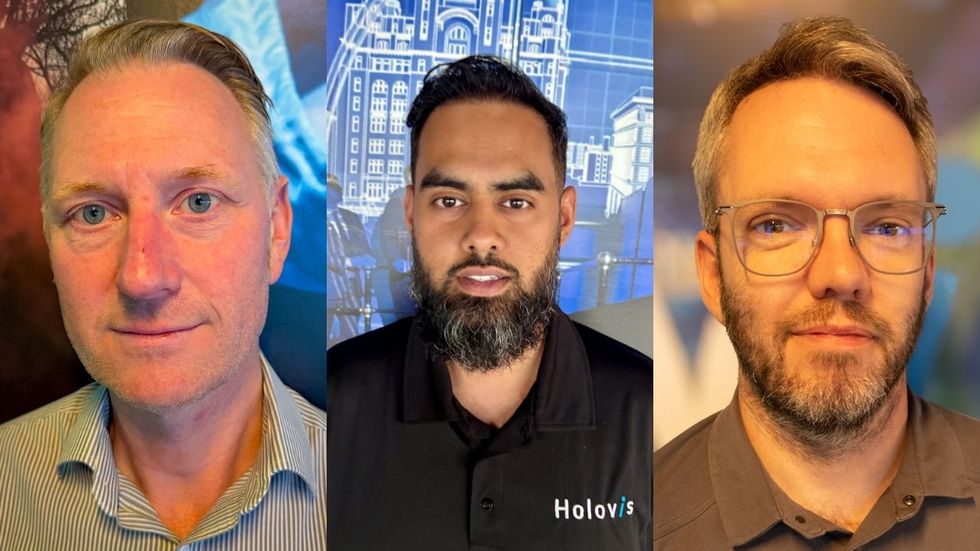
Left to right: Matt Dobbs, business development director, Maaz Ussen, project manager, and Stuart Edgington, global director of business development
Image courtesy of 360Golf
As Holovis prepares to showcase 360Golf at IAAPA Expo, blooloop tees off with Matt Dobbs, business development director, Maaz Ussen, project manager, and Stuart Edgington, global director of business development.
The operator challenge
As the competitive socialising market continues to grow, 360Golf is seeing strong global demand for its platform, with implementations spanning the UK, Europe, the Middle East, North America, and Asia Pacific.
So, how does 360Golf stand out in an increasingly busy space? The paradoxical answer, the team says, is its familiarity.
“Mini golf is already one of the world's most accessible leisure activities,” says Edgington.
“We don't have to reinvent that fundamental appeal. In most parts of the world, there's a base understanding of that. So, we're using that technology to build on top of it.
“It's more competitive, more interactive. There's more measurable commercial value.”
Visitors of all ages can register, collect an assigned smart ball, and start playing straight away, so the platform needs little explanation or staff time.
Edgington adds that operators are actively looking for activities with intergenerational appeal, which places 360Golf in a strong position.
“It can bring in families. It can bring in that competitive socialising young adult, corporate, all of those different demographics or target markets; it appeals to all of them.
“It's a great anchor to bring people in.”
Beyond automated scoring
The social and competitive experience are then elevated by a layer of “sophisticated technology that feels effortless,” says Ussen.
The foundation of the platform is built on automated scoring. Smart balls, tees and cups are accompanied by the HoloTrac scoring system. This removes the need for pencil and paper, and acts as a referee when competition is fierce.
Layered on top of this is a suite of gamified elements that offer new ways to play and more reasons to return.
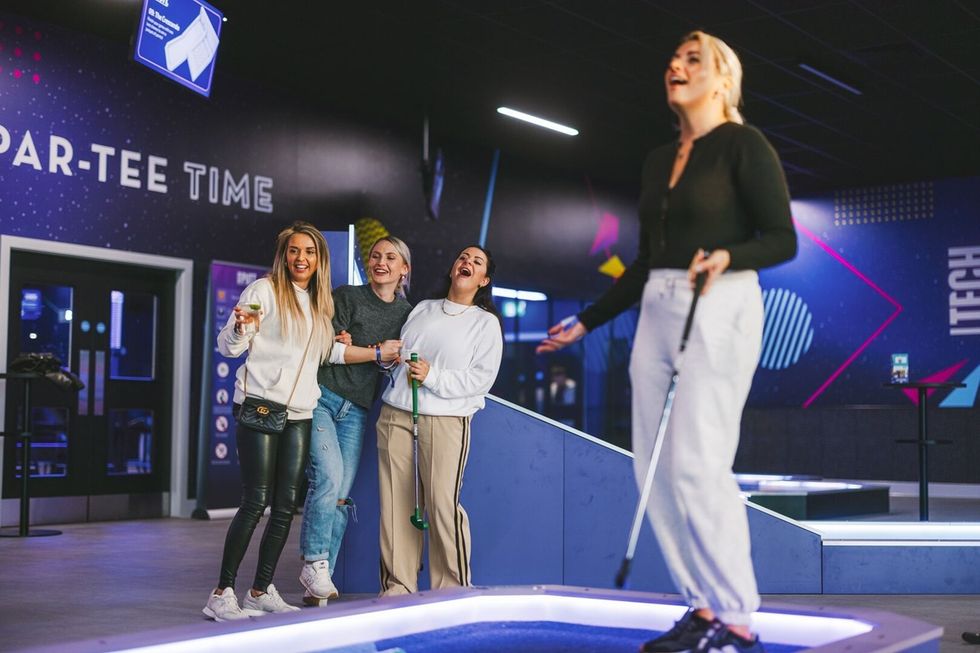
Supershots and bonus points add an extra layer of excitement to every game
Image courtesy of 360Golf
For example, SuperShots offer alternative ways to score points, and Triumphs present awards and unlock new challenges.
These are supported by bonuses, on-course games, player accounts, achievements, leaderboards, and video celebrations that let players improve and track their progress over successive visits.
“There's more reason to compete, more reason to celebrate, and more reason to compare the scores at the end of the game,” says Dobbs. “Which is more reason to go back and revisit time and time again.”
These elements also drive the visitor profile, underpinned by the data and analytics AI engine, DeepSmarts.
Driving secondary spend
DeepSmarts equips Holovis with the information it needs to shape product development and create real value for clients.
“Whether it's keeping a higher uptime, giving insights into the players and how they're interacting, seasonality, or ideas of where they might want to tweak their operations, we can offer that as an extra service on top,” says Edgington.
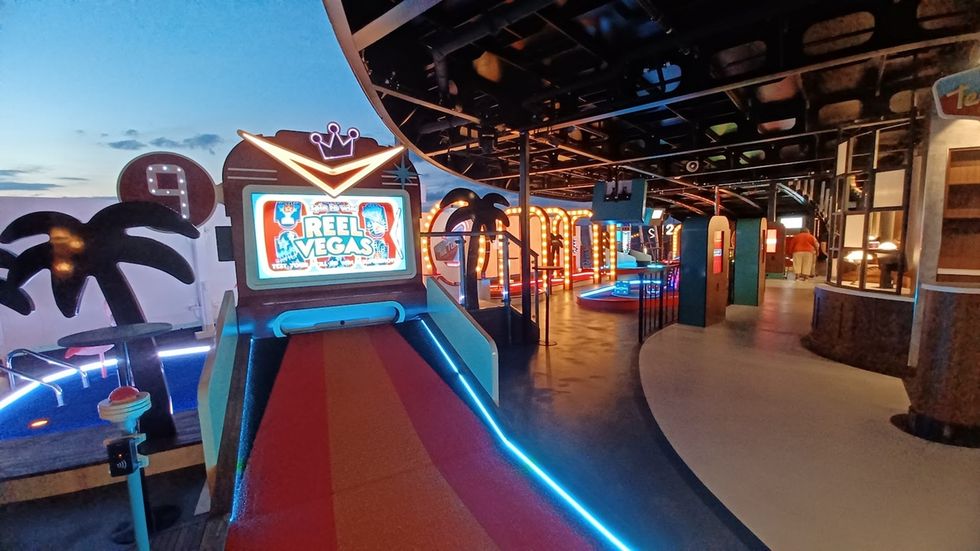
Tee Time for Norwegian Cruise Line features rugged, waterproof equipment designed for use at sea
Image courtesy of 360Golf
This data has led to an attraction meticulously designed to increase dwell time and secondary spend, optimising capacity to up to 80 people per hour per course.
“That super slick, intuitive system is really the biggest advantage,” says Dobbs.
“Guests can go to the kiosk, understand how to play, get their ball, and then play. That leaves the operational team focused on managing guests, making sure they've got food and drinks, and looking after them.
“If you’ve got happy guests, they're spending more money. Ultimately, it’s about driving that F&B revenue piece.”
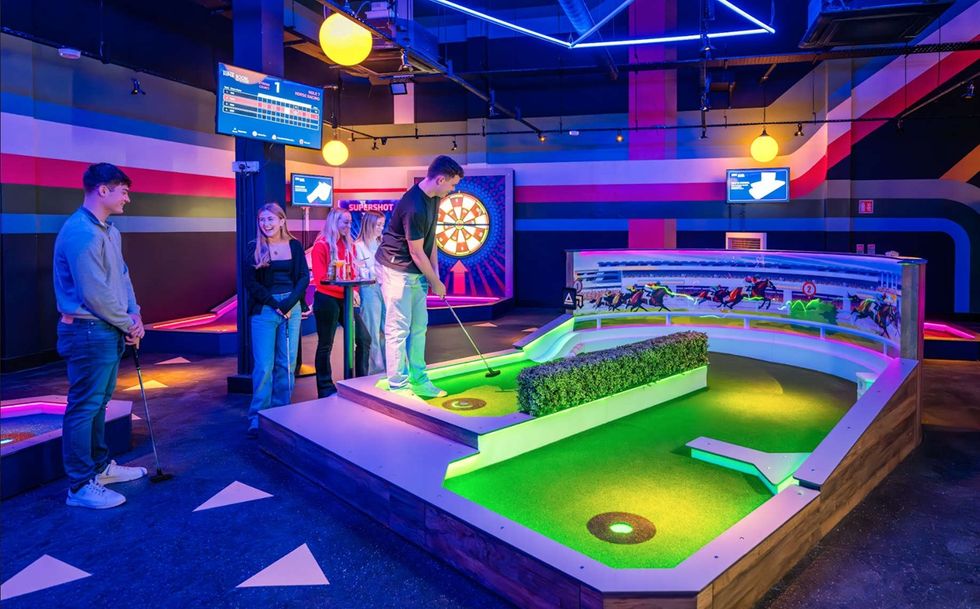
Super Social in Leopardstown, Ireland includes 12 holes from the 360Golf sports themed package
Image courtesy of 360Golf
Armed with these insights, operators can offer promotions, for example, encouraging visitors during typically quieter periods or targeting underserved demographics.
Additionally, the technology enhances the support offer.
360Golf is designed for easy maintenance by the venue, with a robust, repairable approach that increases longevity and sustainability. However, if the unexpected occurs, DeepSmarts can also help engineers resolve issues remotely.
“We can see if there are any problems with your course directly,” says Ussen.
“If a vendor gets in touch and says something weird happened, we can watch it back and identify the issue.”
Delivering mini golf at scale
This technology also provides a basis for multi-site operators, such as Saudi Entertainment Ventures (SEVEN), to maintain consistency across locations.
“Then you can riff on that consistency or have variations,” says Edgington, “whether it's the theming, or the course layout, or the branding.
“Because that core technology is there, then you can have that flexibility across those multiple sites. And we can then network everything together.”
“Particularly with clients like SEVEN or Super Social in Ireland, they're looking for that repeat visitation.”
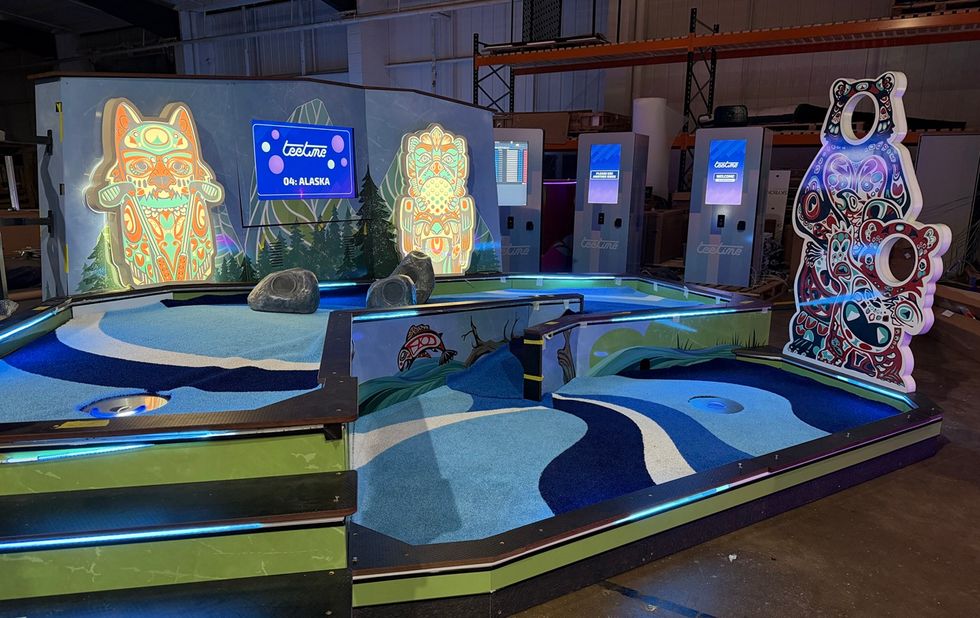
360Golf has delivered four installations for Norwegian Cruise Line under the brand 'Tee Time'
Image courtesy of 360Golf
“So, because of the technology you've got that scoring, you've got that dynamic gameplay that you can go back to again and again and again. This suits the use case or the operational model that these multi-large-scale developments need.”
And for smaller entertainment venues, while the course may be physically smaller or simpler, the technology driving the experience remains consistent.
“You can have a more cost-effective design, but the guests are still getting all that great experience from the 360Golf system. You've still got the replayability, you still got the scoring, all of that core product.
“And that really works for those smaller operators. Particularly for somebody who might be growing it into a chain, 360Golf is a good starting point.”
Built on experience
While this flexibility relies on technology, design options enable it.
These range from tech-only packages that can be retrofitted into existing mini golf attractions, to a selection of tried-and-tested catalogue holes, and fully bespoke course development.
And turnaround can be rapid. Installation schedules for tech-only deployments run about six to eight weeks, while off-the-shelf catalogue holes can be installed and ready to play in eight to 12 weeks.
Custom courses can take upwards of six months to complete; for example, the Top 9 course at Netflix House is a fully custom, IP-led installation featuring unique hole designs and multiple custom interactive elements.
Other courses require customisation to meet physical requirements, such as Tee Time for Norwegian Cruise Line.
This marine-grade course features IP-rated tech, including rugged cups and tees and specialist screens, to deliver the same impact and ease of use at sea.
In these projects, Ussen says physical design and technology are developed hand in hand.
“We have a whole bunch of experience in terms of building holes. We know what works well, what doesn't work well, where we need to make slight tweaks.”
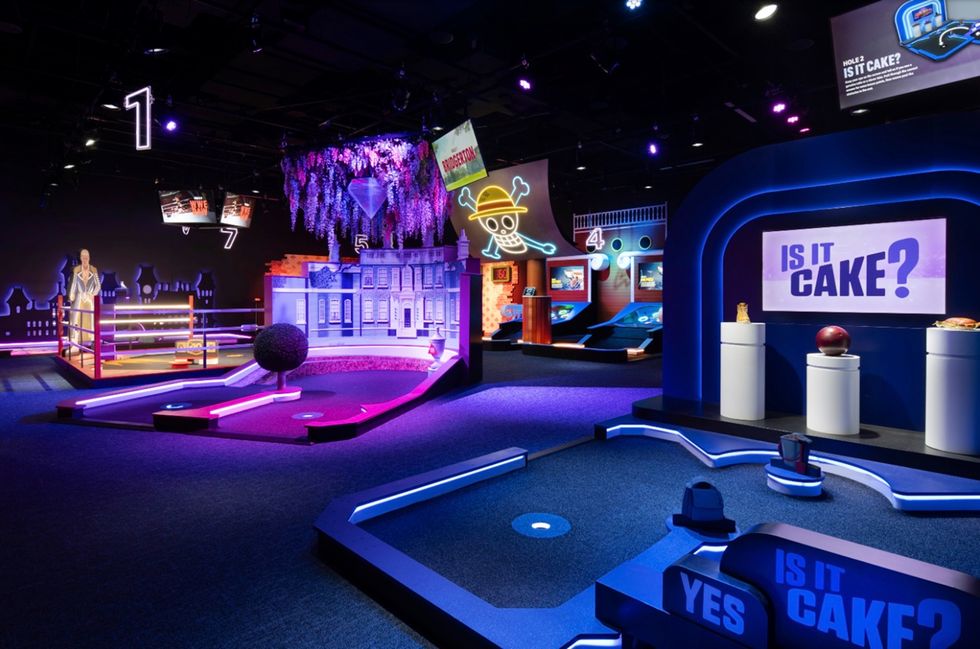
Top 9 at Netflix House includes custom holes, with themes such as One Piece, Squid Game and Floor is Lava
Image courtesy of 360Golf
Visually spectacular courses
Drawing on this expertise, the creative, software, and engineering teams work closely throughout the design phase to deliver on the client’s brief while creating a course that is achievable, fun to play, and aesthetically beautiful.
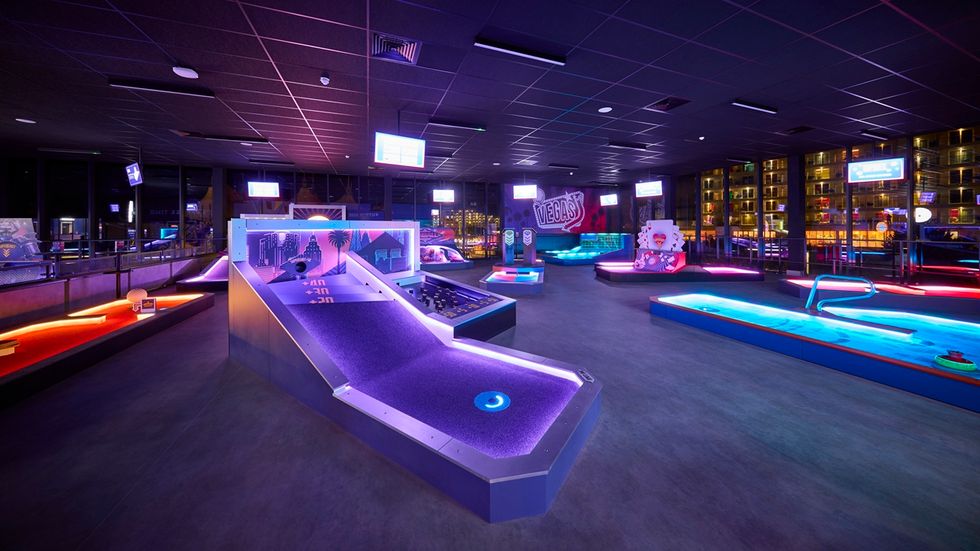
The challenging Vegas Course at Butlin's PLAYXPERIENCE includes obstacles like the 'Spin & Win' and a Pool Party hole
Image courtesy of 360Golf
“Much of our feedback is around that visual spectacular,” says Dobbs.
“You have that mix of the physical scenic pieces themselves, which are obviously impactful, but then you add a layer of lighting. It looks great; it's obviously flashy.”
And with each project comes new learning to take forward. “That's a mutually beneficial thing,” says Edgington. “By doing custom or IP-driven integrations, we're pushing the product along as well.”
This, says Ussen, is what places 360Golf as a leader in the field: “We've been delivering golf for a while. Our success comes from this experience and the longevity of the team.”
Creating in collaboration
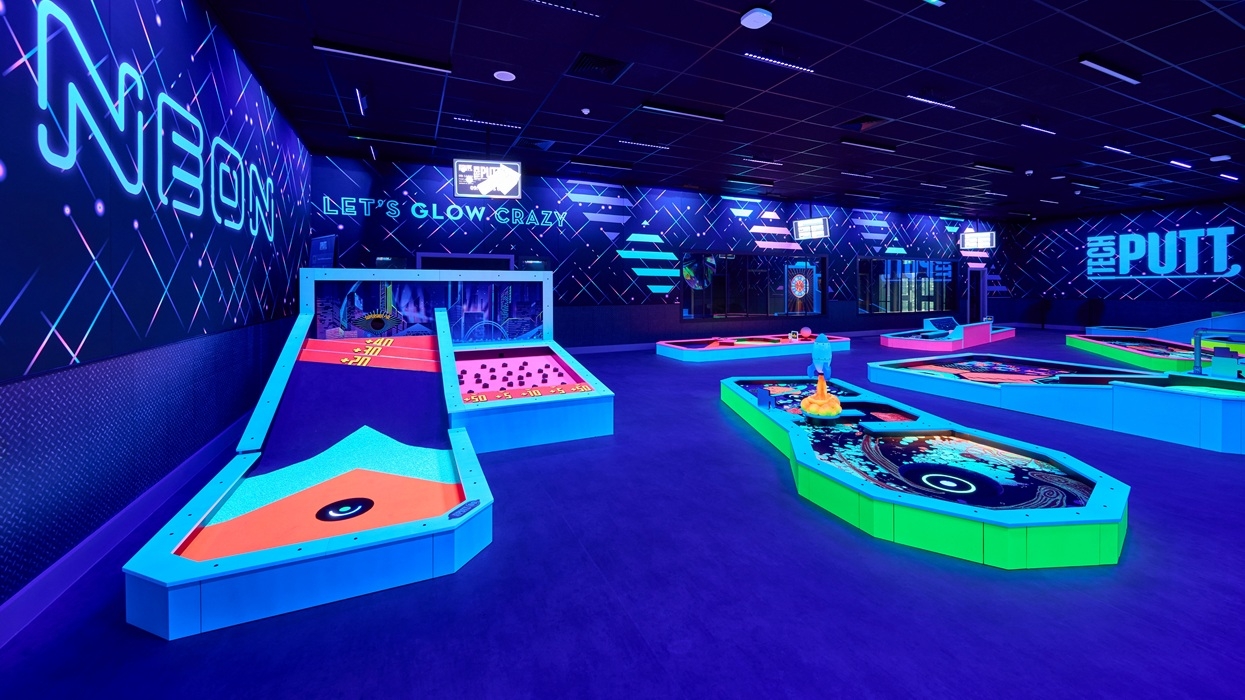
For example, at Bultin’s Bognor Regis resort, the PLAYXPERIENCE indoor activity centre includes three nine-hole 360Golf courses: one with neon glow effects, a challenging Las Vegas-themed course, and a wheelchair-accessible, music-themed course.
This £15m project opened in 2024, and its tech-putt offering has exceeded the client’s expectations.
“On their busy weeks, they're getting 5,000 players through a week,” says Dobbs. “They're grossing around £40,000 revenue per week.”
From this project, the team has added to its expertise in inclusive design, which Ussen says is highly nuanced.
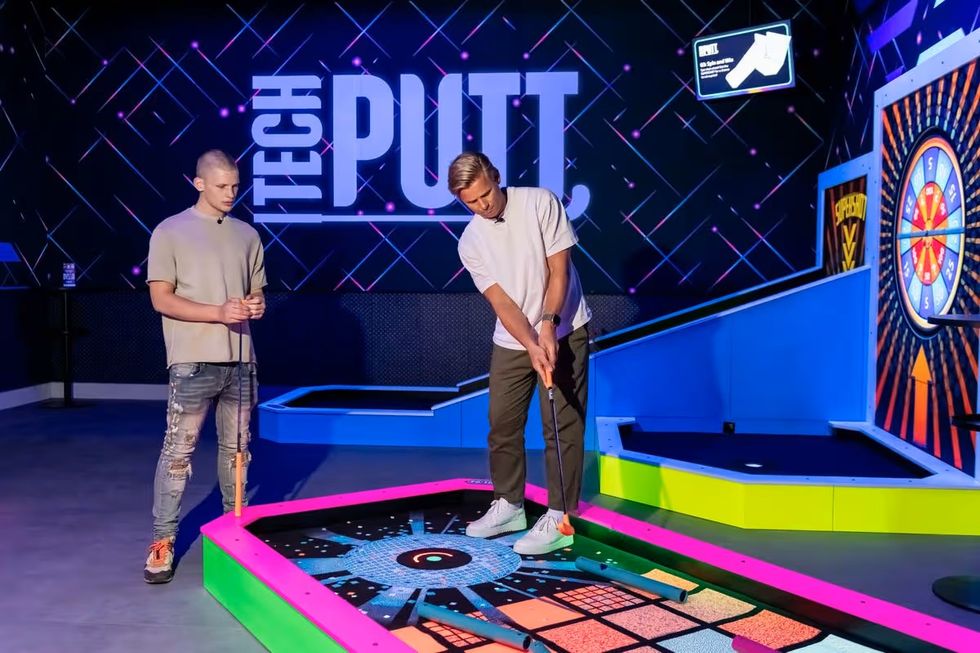
The Techputt attraction at Butlin's PLAYXPERIENCE activity centre in Bognor Regis
Image courtesy of 360Golf
“It could be making sure that a course can be played right- or left-handed, or sometimes clients have tall guests, so it's making sure putters are the right sizes,” he explains.
“At Butlins, we wanted to make sure that you can get your wheelchair really close or even onto the course, so there'll be a drop down in the top cap.
“For some clients, we try to keep the tee quite close to the edge so you can reach over if you can’t get on the course.
“And we always try to make sure that there's enough space between each golf course to reduce overcrowding and safety hazards.”
Evolving the offer
New developments, Ussen adds, include a project for Lucky Duck in Norway. Here, a fully customised, visually spectacular course offers two routes for each hole.
This adds a new dimension of play, makes great use of the available space, and shows how Holovis is investing in additional features and functions to stay at the top of the market.
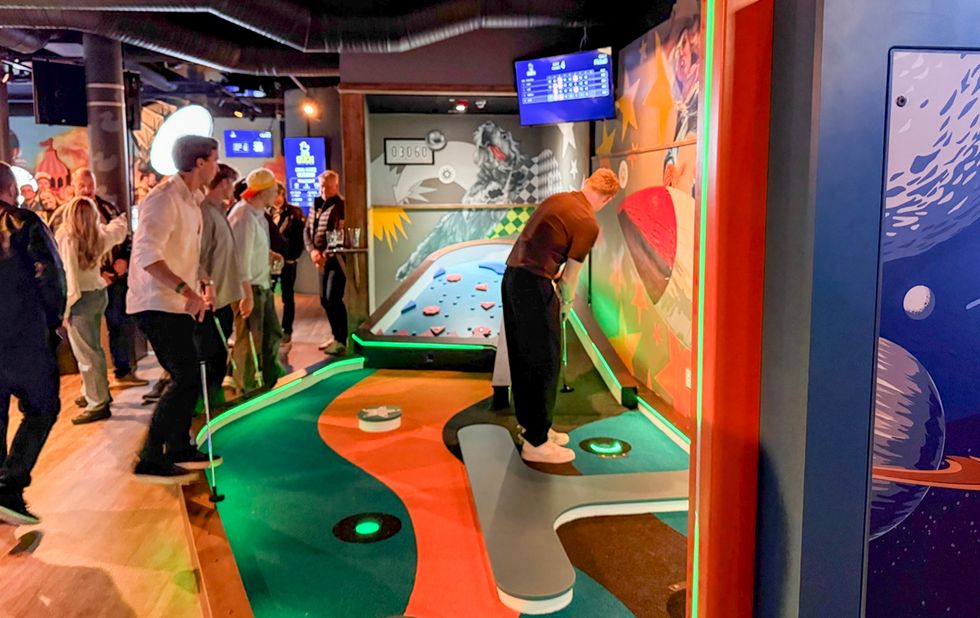
A custom hole with two play options at Lucky Duck in Norway
Image courtesy of 360Golf
“Technology is moving at an incredible pace at the moment,” says Edgington. “We want to develop the product to be simpler and easier to use, and add great features.
“We want to use the data we are collecting to try and understand more what guests are resonating with.
“How do we engage people while they’re waiting to play? Maybe it’s predicting who's going to score the highest, as you would do in a fantasy football team.
“There are lots of gamification ideas that we're working on, and the AI element can make it very dynamic, very engaging and interactive.”
In addition to developing the product, Holovis are eyeing alternative markets.
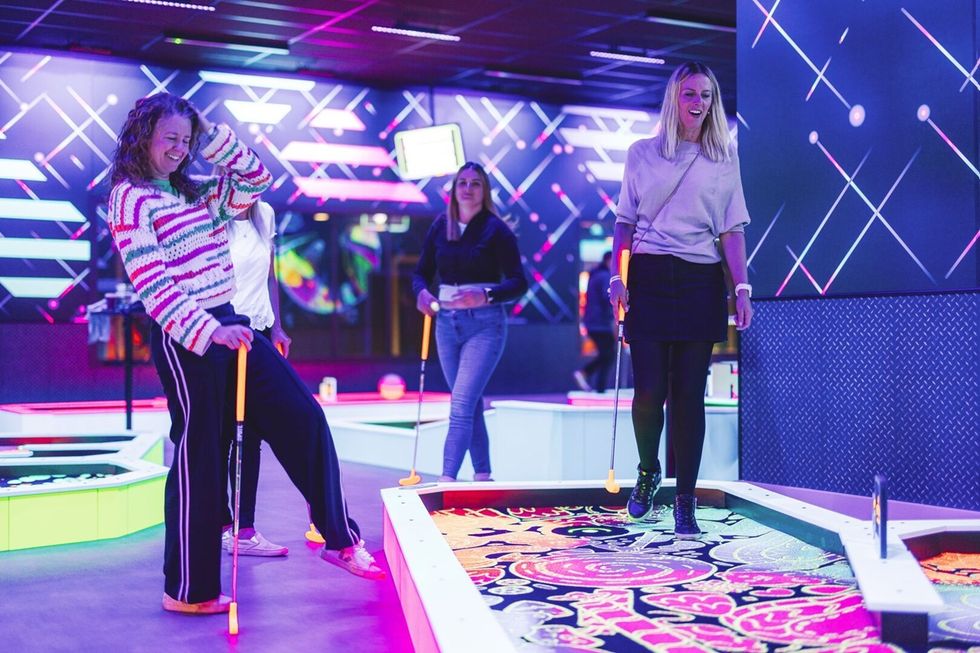
360Golf courses are renowned for their impactful physical and lighting design
Image courtesy of 360Golf
“Competitive socialising eventually will reach peak saturation,” says Edgington. “There's a really exciting market out there for the 360Golf and similar products that we're looking at and investigating.”
The team is currently working on an integration with Roxy Leisure to add stroke-counting technology to its crazy pool tables.
“We want to implement our tech into other sports,” adds Ussen.
“What excites me is that we can take our tech anywhere. It's just about finding the right client with that vision.”
Complete turnkey offer
Where can interested operators start?
“They should talk to us about their venue and their vision for the golf system,” says Dobbs.
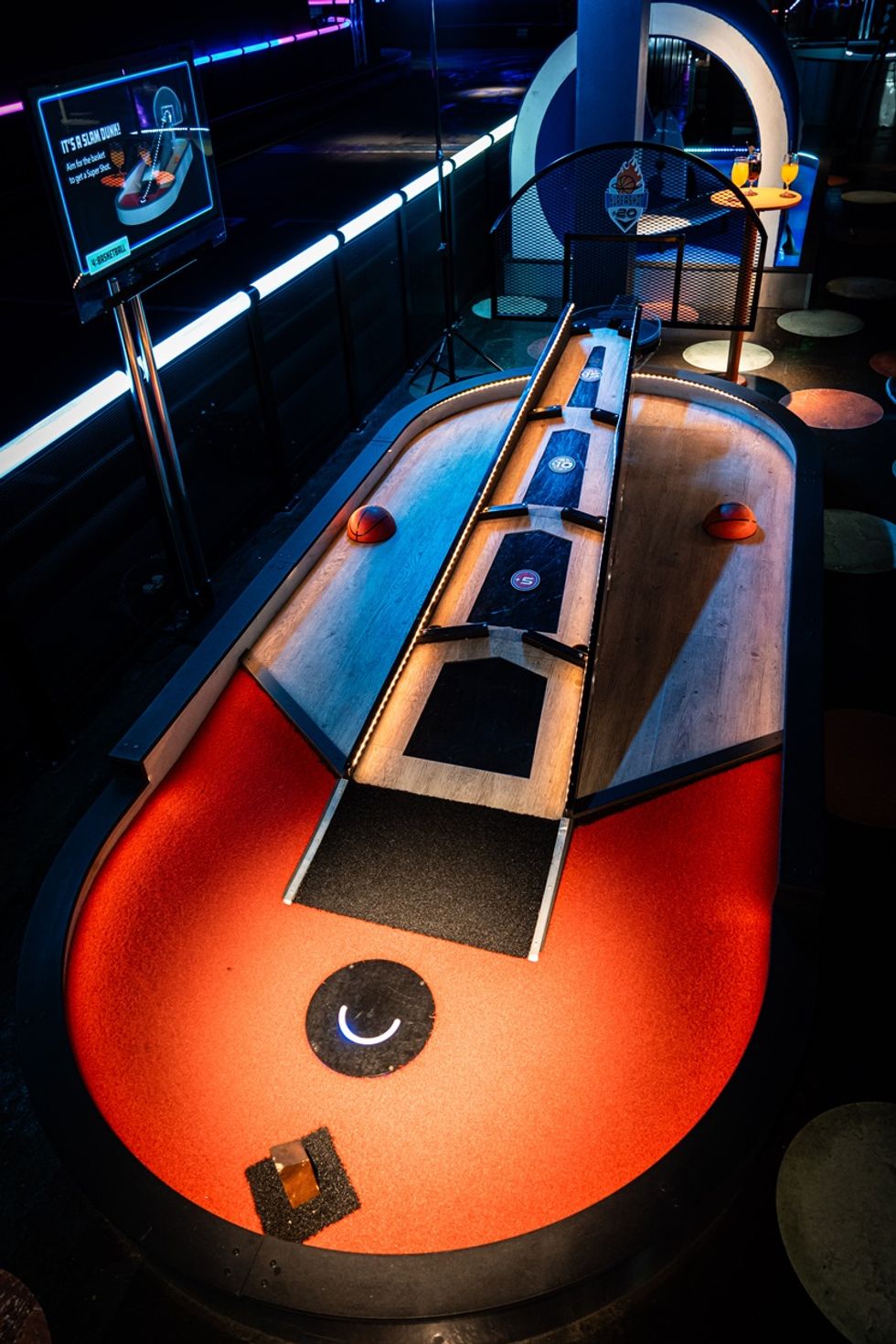
A basketball themed mini golf hole from 360Golf, which offers catalogue holes and bespoke designs
Image courtesy of 360Golf
“What the restrictions are of the venue. Are we talking about a catalogue course, or something custom?
“What's the focus of their audience? That's absolutely key. Are we targeting young adults going out on Friday and Saturday night? Do we need to cater for children and grandparents as well?
“It's doubling down on those kinds of conversations, the commercial modelling and what that brings, and how we can support that effort.
“That's the conversation we need to be having. It’s a complete turnkey offer, not just buying a course.”
360Golf will be exhibiting at the Land Leisure & Tourism Show, which is taking place from 4 to 5 November at NEC Birmingham. Attendees can find the team at booth LLT360 in the Holiday Village.
Venues interested in 360Golf in any format can also learn more at IAAPA Expo, which is taking place in Orlando from 16 to 20 November at the Orange County Convention Center (OCCC).
Attendees can meet the team at the Holovis booth, #S448, and can also book a playable demonstration at the 360Golf Orlando office, just a 10-minute journey from the show.

 Damian Jackson, head of retail at Pleasure Beach ResortImage courtesy of Pleasure Beach Resort