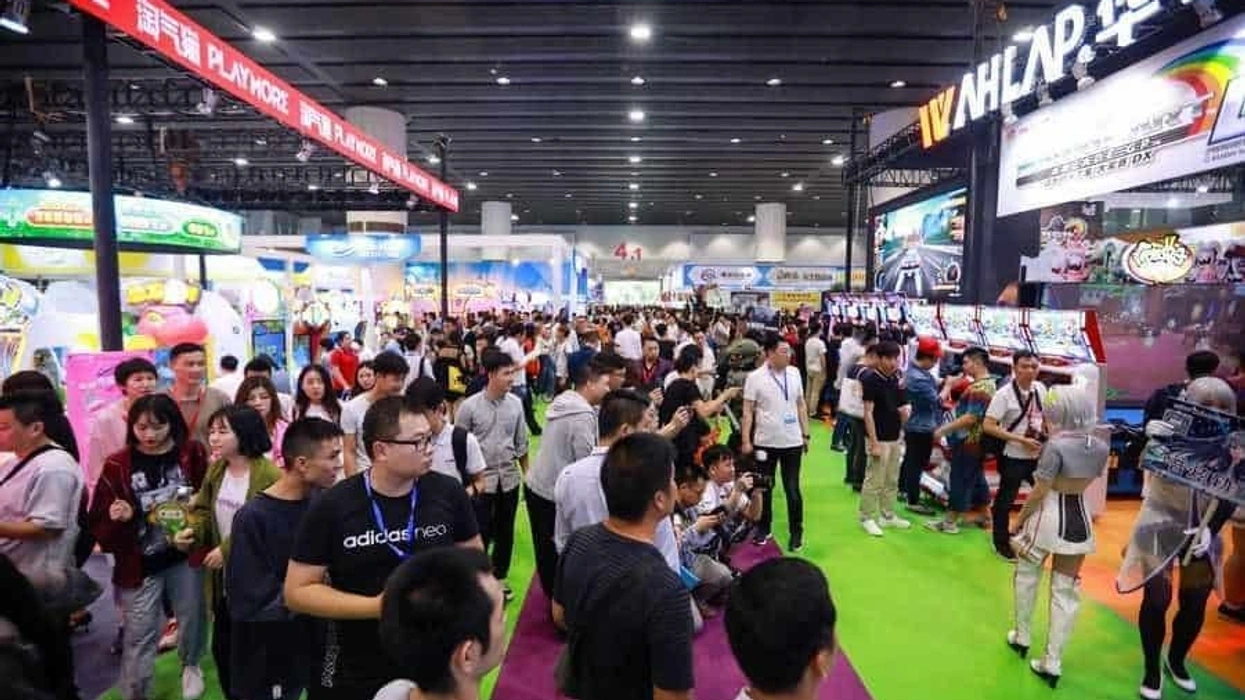

I am bouncing around The Asia Amusement & Attraction Expo 2026 (AAA) like a pinball in a vast pinball machine. Guangzhou is super-hot, and oversized air conditioners greet guests from across China and around the world like welcoming sentries.
I wind my way inside to discover a dozen sprawling exhibition halls filled with the kinds of theme park bling one only expects to see out-of-doors: Spinning whirly gig rides, triple-decker bouncy castles, go-karts, a plus-sized Tyrannosaurus Rex and - I kid you not - two baby dinos in a suitcase.
They look so very lifelike - their wee hearts beating and their small lungs breathing - that I had to stop and ask their nice keeper, "Are those things real?"
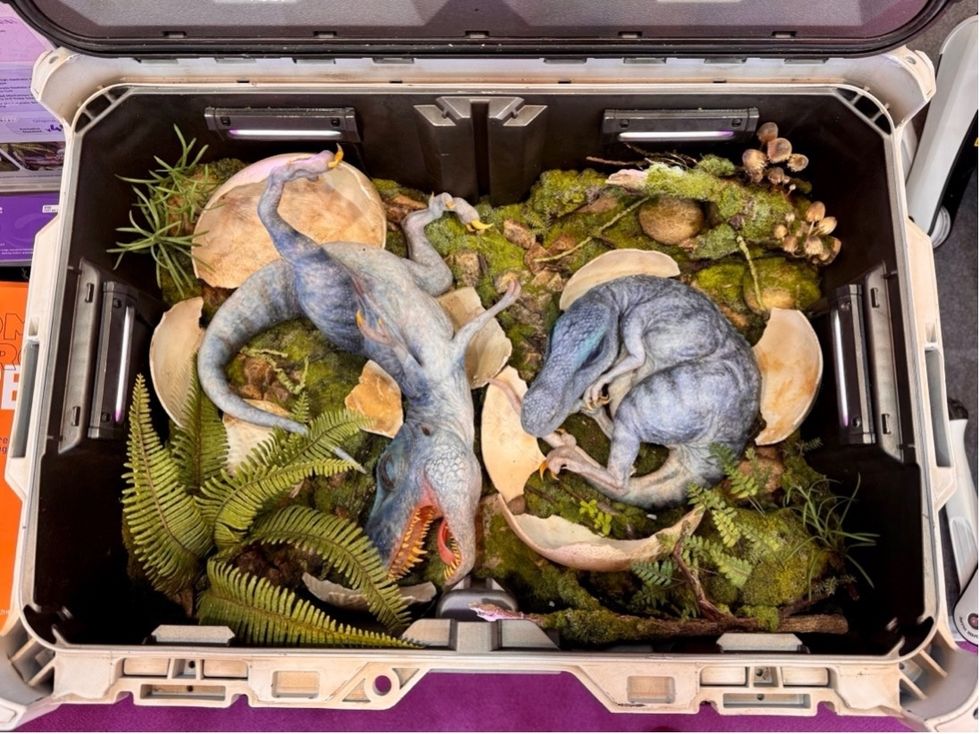 The show floor at AAA 2026 was full of innovations, including this highly realistic pair of baby dinosaursImage credit Josh Selig
Needless to say, I was not in Kansas anymore.
Theme park expos are new to me. I am mostly a creator and producer of animated kids' shows (Wonder Pets! on Nick Jr., Small Potatoes on the BBC/Disney), but, through a series of happy accidents, I've found myself perched at the budding, colorful intersection of theme parks and original content.
Just as chefs view the world through the lens of food, I tend to see everything through the lens of IP. I am forever searching - both within and without - for characters who have, for lack of a better word, souls. I need them, and they need me.
I've long been a believer that children - as well as their parents - rely on well-crafted characters to help them find meaning in a world that's increasingly chaotic and, well, soulless.
The rise of original IP in China
So, during the event's opening ceremony, I was delighted to hear Zeng Xiaofeng, deputy director and CPC member of the Department of Culture and Tourism of Guangdong Province, say: "The cultural tourism industry is now moving into original IP."
Zeng's inspiring speech sent me on something like a 3-day scavenger hunt to get to the root of why China is encouraging original IP while the US and Europe seem caught in a closed loop of ho-hum animated and live-action spin-offs and reboots.
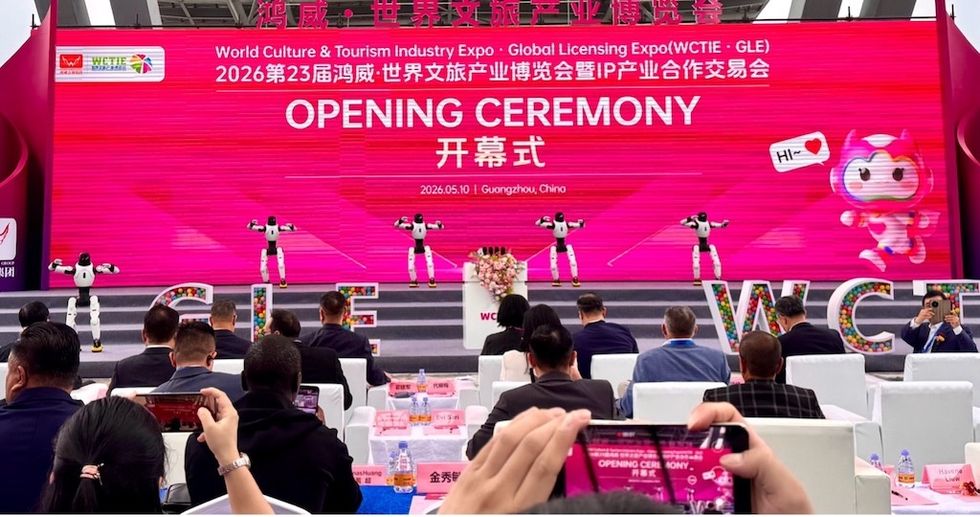 The opening ceremony included dancing robots and an inspiring address from Zeng XiaofengImage credit Josh Selig
What exactly is China doing so right?
I began my search with Evi Sari, vice president of global location-based entertainment at WildBrain CPLG. I was delighted when she agreed to sit down for coffee and chat about the meteoric rise of original IP in China, which, I quickly learned, was not really meteoric at all.
"So, this actually didn't happen by accident," Sari explained. "This is actually the result of political decisions made in China around 2016. They decided to merge culture and tourism together, and this set the tone for more nationalistic content and more of an appetite for local culture.
"Over the past say 8-to-10 years, because of that whole landscape, there's been a breakout success of a lot of Chinese IP, like Wukong, like Wandering Earth, and Nezha, for example. And so, people started focusing on their own IP in China, and they created the commercial access that is now global.
"And, of course, like in markets outside of China, we don't really care where a good story comes from. A good story can come from anywhere. With the breakout success of all of these different formats - animation, gaming, film - there is now an awareness that we can do original IP; we can do IP based on Chinese storytelling."
A deliberate move
Evi's perspective that the shift to original IP in China came from the very top was reinforced by Leo Lee, vice president of Jinma Rides, a leading Chinese provider of roller coasters, giant observation wheels and classic family attractions with installations in over 50 countries.
"Beijing's 15th Five-Year Plan explicitly positions cultural tourism as a pillar of domestic consumption with strong government backing for equipment renewal, immersive technology integration (VR/AR/XR), and smart tourism infrastructure.
"This created a policy umbrella that rewards innovation over pure scale...But the real catalyst was the arrival and success of world-class IP-driven parks right here in China," said Lee, referring to Shanghai Disneyland, Universal Beijing and, most recently, the Legoland Shanghai Resort.
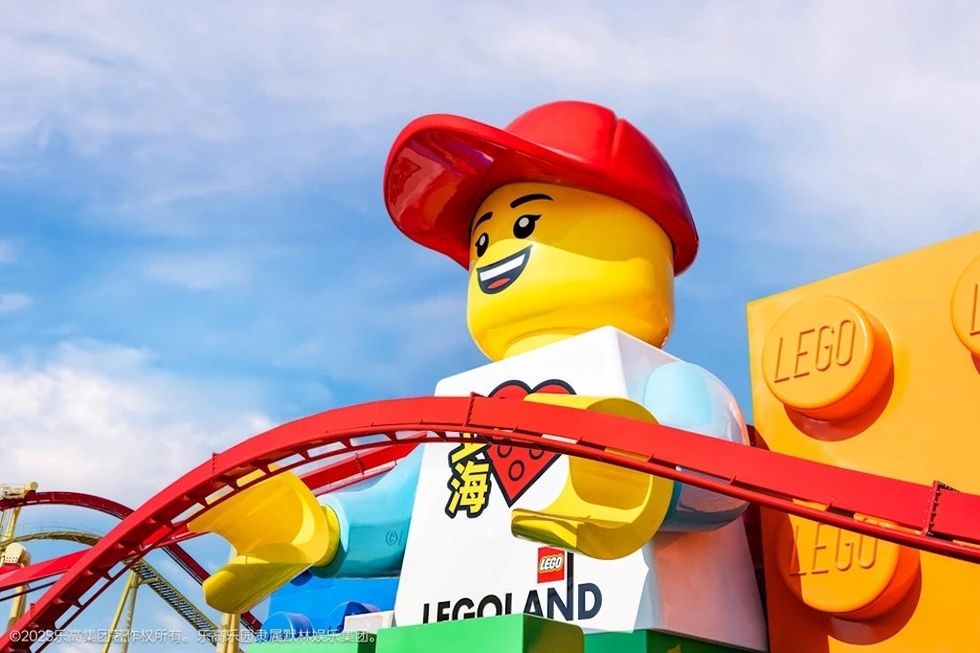 Legoland Shanghai is an example of world-class IP that has proved successful in China
"When guests experienced what it truly means to step into a story - not just ride a coaster with a character name slapped on - their expectations were fundamentally reset. Suddenly, the industry couldn’t ignore the fact that a deeply integrated IP experience commands higher ticket prices, longer stays, and powerful repeat visitation.
"At the same time, domestic parks began facing fiercer competition and realized they couldn’t differentiate themselves with generic thrill rides alone. They needed emotional hooks. They needed what IP genuinely delivers."
So, as it turns out, a 10-year nudge from the Chinese government, combined with the onslaught of competition from global theme parks and their "famous IPs," lit a wildfire under what the Chinese call their "cultural industries."
That fire is still burning brightly, as evidenced by a new generation of IP-based companies, including Pop Mart, whose stores, which are like fandom experiences, keep sprouting up everywhere, including within the walls of theme parks like Universal Beijing.
It's also worth mentioning that Pop Mart's market cap of US$26 billion is roughly double that of the top two US toy companies - Mattel and Hasbro - combined.
Small but beautiful
While musing on the bigness of Pop Mart, I wandered into a speech about smallness. It was delivered with gusto by Zhang Shunxin, the independent director of the Fenghuang Mingcheng Group, and was appropriately titled "Small But Beautiful."
Zhang's idea was to create a series of small themed towns throughout China where families could experience traditional rural life and culture. No rides. No big-headed characters. No tech.
Instead, Zhang's group creates realistic, immersive performances which encourage families to stop scrolling on their phones and enjoy "the ancient charm" of Chinese villages. According to Zhang, his original IP not only introduces China's rich history to new generations, it's also extremely profitable.
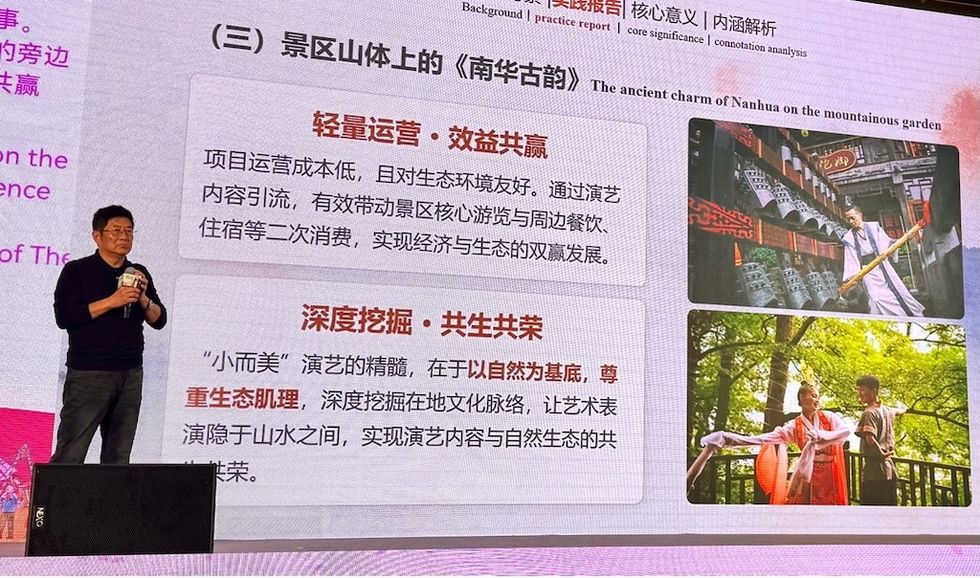 Zhang Shunxin delivered an interesting talk called Small But Beautiful at AAA 2026Image credit Josh Selig
This session got me wondering whether the IP in some Chinese parks might be "too Chinese" for Westerners and, conversely, whether the IP in some Western parks might be "too Western" for Chinese guests?
I raised this possibility with Anna Robb, an Aussie based in Hong Kong, who runs Our Legacy Creations Ltd., a company that provides production and creative services as well as original concepts. Robb has been working cross-culturally in the region for the past 25 years.
"I’m a big fan of the East meets West fusion," she told me. "Sometimes with entertainment products, we are not always on the same page. What people in China may want to engage in may be completely different from those in other parts of Asia or around the world.
"I believe the biggest opportunities lie in Chinese companies that know and understand their own cultural dimensions, working with those who know and understand IP world building, to come together to create IPs that have the potential to dominate the Chinese market."
A new partnership
I wholly agree with Robb, and I was fortunate to have had such an "East meets West fusion" experience on an animated series called Super Wings!
Based in New York, I led the show's development and preproduction while our Chinese and Korean partners handled animation, toys and theme parks. Super Wings became a leading IP in China and around the world.
One of the reasons I believe the show "traveled" so well is that we always prioritized, first and foremost, the emotional bond between our characters and our audience. This type of heart-first expansion has been written about by Chris Buker, a former strategy director at Disney:
"Once an audience emotionally connects to a world, everything changes...This is why location-based entertainment matters so much right now.
"The future of children’s IP likely won’t be defined by standalone shows. It will be defined by how effectively brands expand across physical and digital environments without losing emotional authenticity along the way."
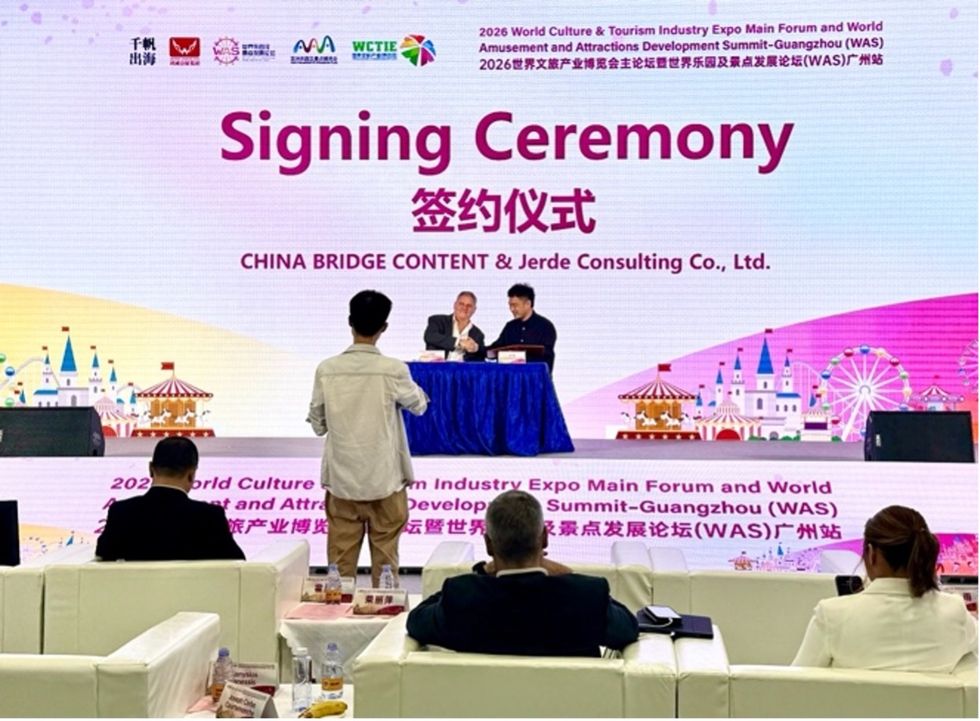 China Bridge Content and Jerde signed an MoU during AAA 2026Image credit Josh Selig
For me, the highlight of AAA was signing a new strategic partnership between China Bridge Content and Jerde, an LA-based architecture firm with a 25-year history in China. Jerde's portfolio includes Universal Beijing, Six Flags, The Bellagio, and Disney Paris.
As Buker posted when he read about our MoU, "One of the most interesting shifts happening globally right now: IP is no longer being developed separately from physical environments. Storytelling, architecture, master planning, commerce, and experiential design are increasingly converging into one system.
"Excited to see partnerships like this forming across China and beyond."
All in all, I'd say that The Asia Amusement & Attraction Expo 2026 was a great big China-sized success.
For those of you who like statistics, here are a few: The AAA had 300,000 square meters of fully occupied exhibition space. There were 4,000 exhibitors and 238,000 professionals from over 70 countries.
The power of original content
But the numbers were not what this event was about.
This was an event about IP, about China coming into its own as a creator of originals. I've long been a believer in the transformative power of creating original content.
Commercial benefits aside, creating original IP forces individuals and companies to ask the big questions: Who am I? What do I have to say? I have complete freedom to make something of my own. What will that thing be?
I've seen these sorts of questions terrify even the bravest of industry executives, but for those willing to overcome the fear, the personal and commercial benefits are significant.
These benefits were beautifully described by Leo Lee, whose reflections align with so many in China's creative industries in 2026:
"For us, creating our own 'vivid Jinma IP' is a statement of creative independence. We’re no longer just the engineering force behind someone else’s vision - we’re building original story worlds, characters, and emotional journeys that belong entirely to Jinma.
"When I look at these new designs, I don’t just see ride vehicles and track; I see a long-term brand asset that park guests will fall in love with and that our clients can’t get anywhere else. It’s our way of saying Jinma is now in the business of making culture, not just hardware.
"In 2026, original IP is the heartbeat of our strategy, and I couldn’t be more excited about where it’s taking us...The evolution isn’t complete; we’re still learning every day what it takes to be masterful storytellers in physical space, but the direction is irreversible."